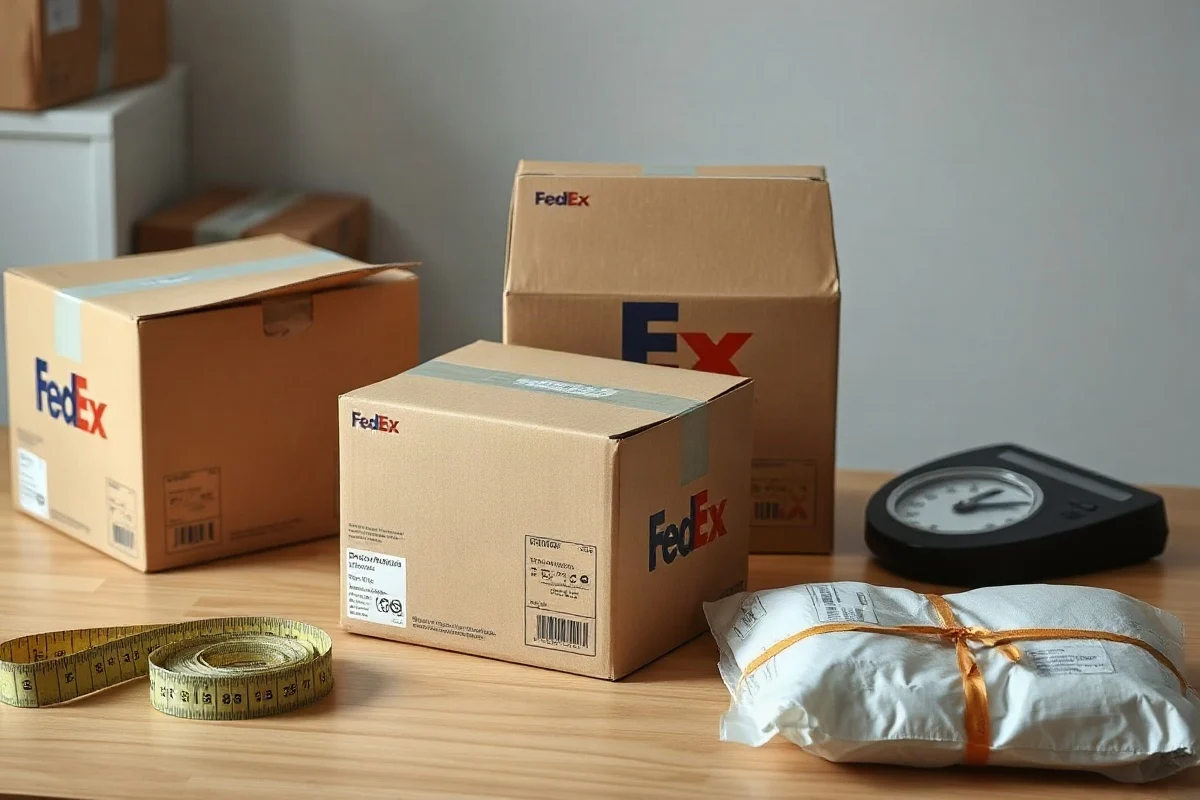
Common FedEx shipping box sizes include 6 x 6 x 6 inches for small items, 8 x 6 x 4 inches for compact products, 12 x 10 x 8 inches for everyday orders, 16 x 12 x 12 inches for several small items, and 18 x 14 x 12 inches for larger retail shipments. These are practical box examples, not universal FedEx requirements. The best size is the smallest sturdy box that protects the contents without excessive empty space, while also fitting the current limits and pricing rules for the FedEx service you select.
FedEx accepts many package sizes, but the dimensions that make sense for one shipment may be inefficient for another. A box that is physically light can still affect the shipping price if its outside measurements produce a high dimensional weight. Before buying supplies or printing a label, measure the finished package and check the current FedEx rules for the service, destination, package type, and account terms involved.
Popular box sizes for FedEx shipments
Box dimensions are normally listed as length x width x height. The following sizes are common starting points for ordinary shipments. They are not FedEx-branded packaging requirements, and the actual inside space will be slightly smaller because of the cardboard walls and protective materials.
| Box size | Good for | Packaging notes |
|---|---|---|
| 6 x 6 x 6 in | Small accessories, parts, gifts, and compact retail products | Use cushioning that does not leave the item moving freely |
| 8 x 6 x 4 in | Books, cosmetics, small electronics, and low-profile products | Avoid forcing tall or rigid items into the box |
| 10 x 8 x 6 in | Single-product orders and small household items | A useful general-purpose size for many lightweight shipments |
| 12 x 10 x 8 in | Clothing, several small products, and moderately padded items | Leave room for protection, but do not add loose filler unnecessarily |
| 16 x 12 x 12 in | Multiple products, larger retail goods, and compact equipment | Check the packed weight and dimensional weight before selecting service |
| 18 x 14 x 12 in | Bulky but not exceptionally large products | Use strong construction and reinforce seams when appropriate |
These examples cover many everyday packages, but they do not replace a product-specific fit test. A fragile item may need a larger carton for protective space, while a durable item may ship safely in a smaller one. For more examples, review this guide to common box sizes.
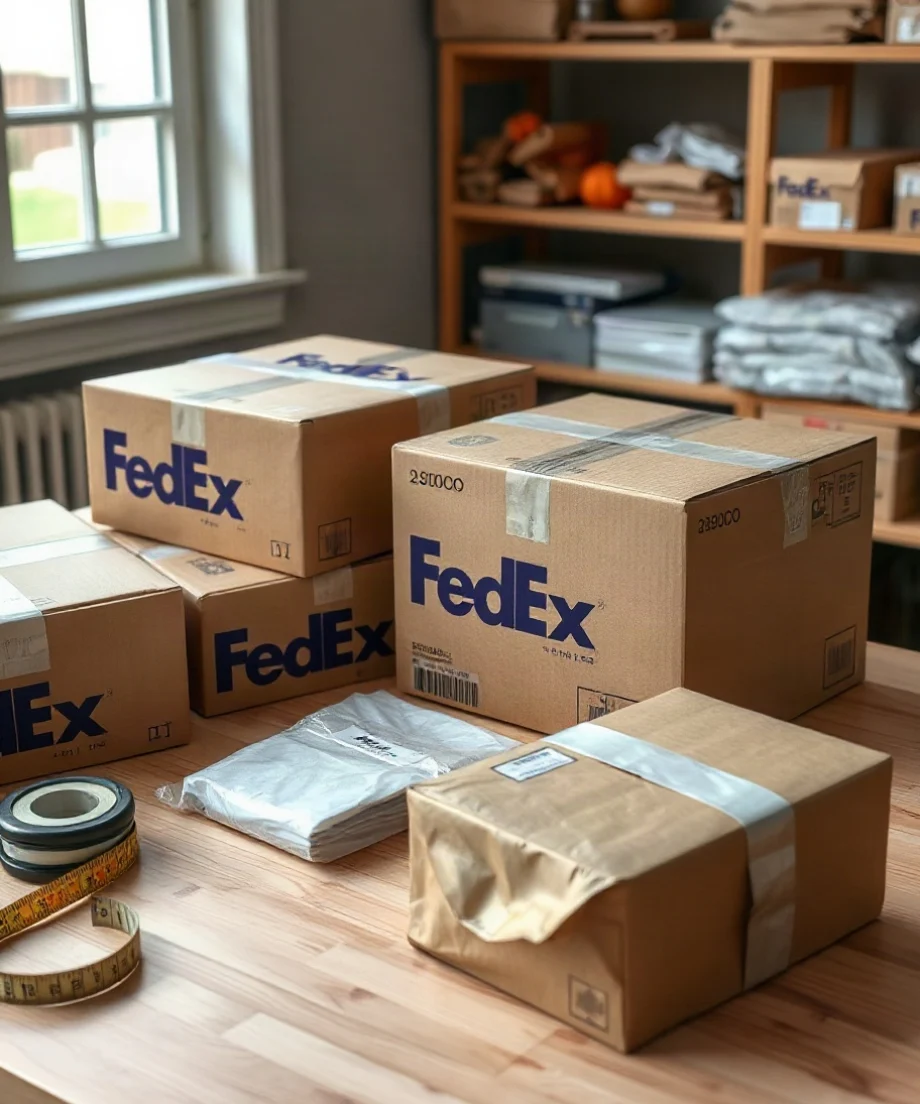
How to choose the right FedEx box size
Start with the product, not the shipping label
Measure the item at its widest, longest, and tallest points. If it has handles, protrusions, irregular shapes, or retail packaging, include the parts that require clearance. Then decide how much protection the item needs. Glass, ceramics, electronics, liquids, and products with corners generally need more cushioning and stronger packaging than soft or flexible goods.
A practical approach is to add protective space around the item, place it in a test carton, and shake the closed carton gently. The contents should not slide, rattle, or press directly against the box walls. Do not use so much filler that the flaps bow upward or the package becomes unnecessarily large. This guide to space inside a shipping box can help you balance protection and efficiency.
Compare inside space with outside dimensions
Manufacturers commonly advertise box sizes using inside dimensions, but carriers rate the completed package using its outside dimensions. Cardboard thickness, corner bulges, compression, and protruding tape can all increase the final measurement. For that reason, a box advertised as 12 x 10 x 8 inches may measure slightly differently after it is filled and sealed.
Use a rigid tape measure and round each outside measurement according to the current carrier instructions. Measure the longest side as length, the next-longest side as width, and the remaining side as height. If the package is not perfectly rectangular, measure at its widest points. Record the measurements before creating the label rather than relying on the carton manufacturer's stated size.
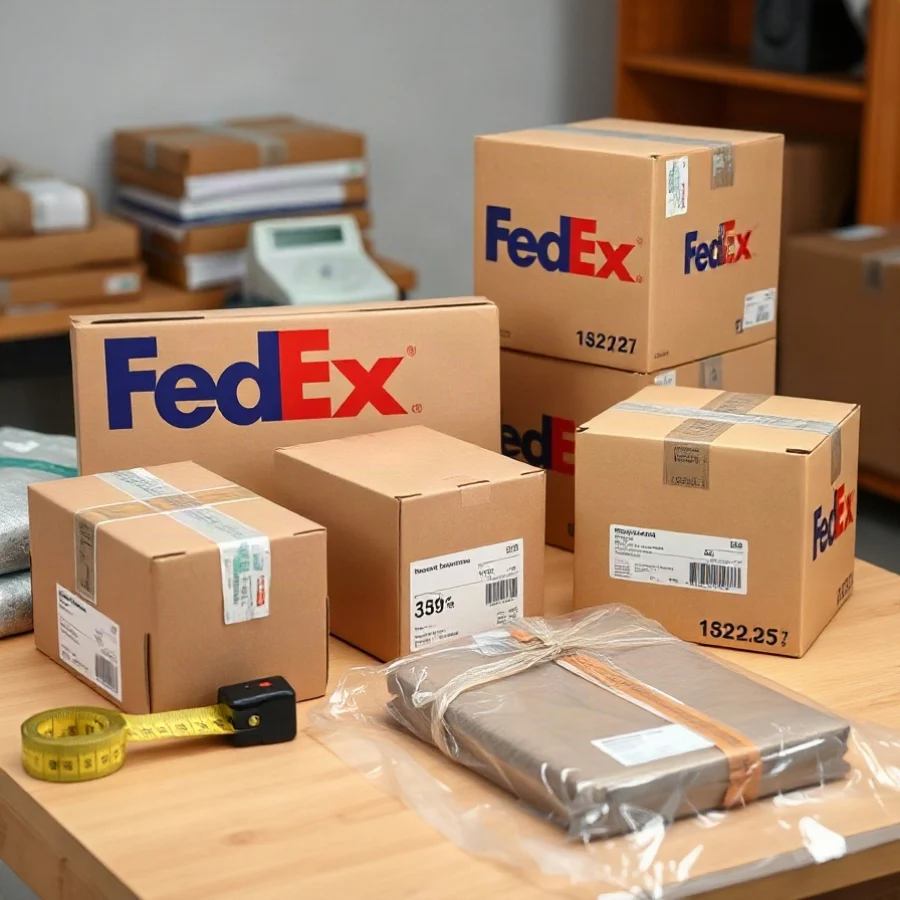
How FedEx package dimensions are measured
For a standard rectangular box, measure the three outside dimensions in inches:
- Length: the longest side.
- Width: the side perpendicular to the length.
- Height: the remaining side.
For example, a sealed carton might measure 13 x 10 x 7 inches from the outside. Use those finished measurements when entering package information. Do not substitute the product dimensions, the inside dimensions, or an estimate based on the box label.
For a step-by-step check, see how to measure a package before shipping with FedEx. Accurate measurements can help prevent billing adjustments and make the shipping quote more realistic, although the carrier's own measurement and rating process controls the final result.
Dimensional weight and box size
FedEx and other carriers may use dimensional weight when a package occupies more vehicle or aircraft space than its actual weight would suggest. The general calculation is:
Dimensional weight = length x width x height divided by the applicable dimensional divisor
The divisor, rounding method, minimum billable weight, and services affected can vary. They may also change over time or differ by destination and shipment type. Because of that, do not assume one divisor applies to every FedEx package. Check the current FedEx pricing or service documentation for the exact shipment, or use the carrier's current rating tool.
As a simple volume example, a 16 x 12 x 12 inch box has a dimensional volume of 2,304 cubic inches. That number is not itself the shipping charge or final billed weight. It must be evaluated using the applicable FedEx divisor and rounding rules. You can also compare package volume with a dimensional weight calculator, then verify the result against the current FedEx quote.
FedEx size limits and oversized packages
There is no single size rule that applies to every FedEx shipment. Limits and surcharges can depend on the FedEx service, domestic or international routing, package shape, actual weight, destination, and the current terms for the account or label provider. Some services may have separate requirements for maximum length, combined dimensions, weight, or handling categories.
Do not treat a common box size as proof that a package is accepted under every service. Before shipping a large carton, check the current official FedEx page for:
- the service's maximum package dimensions and weight;
- how FedEx defines length and combined dimensions;
- oversize, additional handling, or special handling conditions;
- packaging requirements for irregular, fragile, or cylindrical items;
- international restrictions and destination-specific requirements.
For context about larger cartons, read what counts as an oversized FedEx package, then confirm the current thresholds directly with FedEx. Carrier rules and fees can change, and third-party shipping platforms may display different options based on their contracts or account settings.
Packaging steps for a FedEx box
- Inspect the carton. Use a clean, dry box with intact corners, solid walls, and no serious crushing or punctures.
- Protect individual items. Wrap products separately when they could scratch or strike one another.
- Cushion the bottom. Add a suitable layer of protective material before placing the contents inside.
- Center the shipment. Keep the product away from the walls and corners, especially when the item is fragile.
- Fill empty spaces. Use enough material to prevent movement without creating pressure that distorts the carton.
- Seal every opening. Apply strong packing tape across the main seam and reinforce weak points as needed.
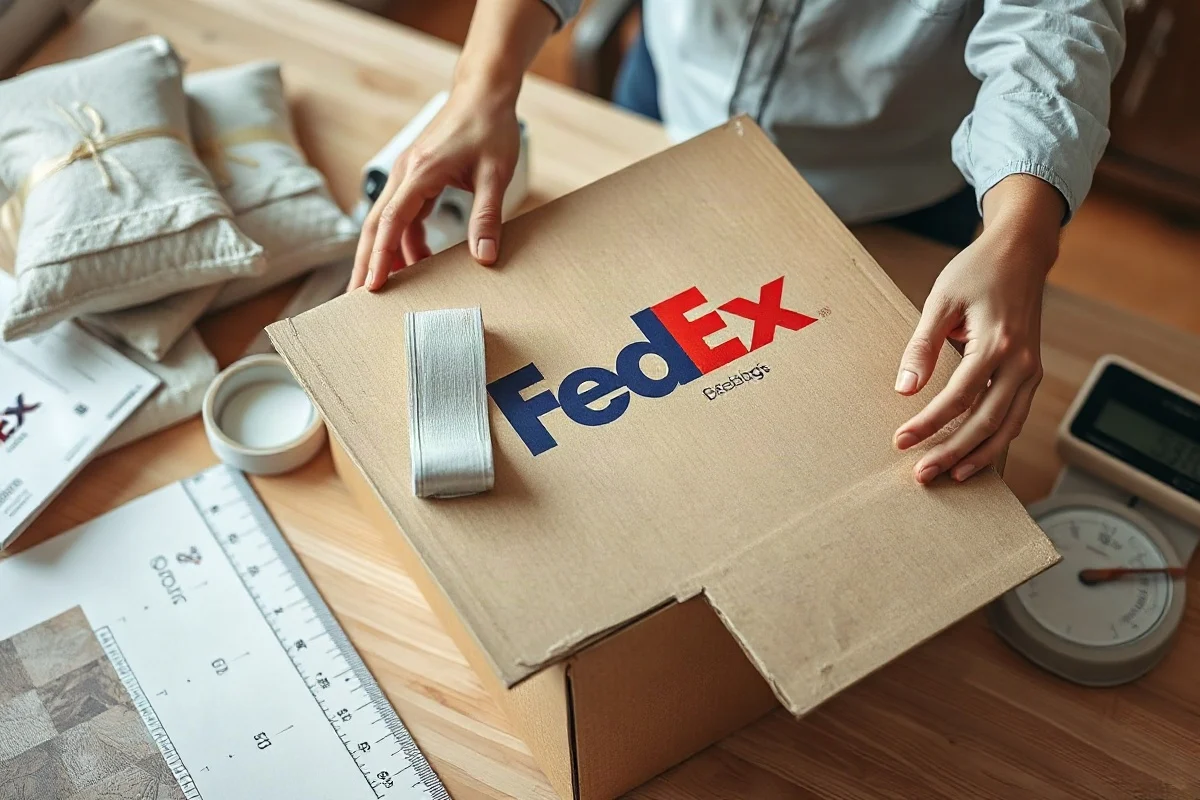
- Measure the sealed box. Record outside length, width, and height after taping.
- Weigh the completed package. Include the carton, cushioning, tape, and label if applicable.
- Check the quote and restrictions. Compare actual weight with dimensional weight and review the current FedEx service rules.
Place the shipping label on the largest flat surface, away from seams and edges. Remove or cover old barcodes and labels so automated equipment and employees do not scan the wrong information. If the package contains a regulated or restricted product, follow the current FedEx and applicable government requirements rather than relying on a general box-size guide.
When a standard box is not the best choice
A standard corrugated box may not be appropriate for every shipment. Long, narrow products can require a specialty carton, while heavy items may need a double-wall box or additional internal support. Soft products may fit better in a poly mailer or padded mailer if the selected FedEx service permits that packaging and the contents are protected from compression and punctures.
Do not choose a large carton simply because it is available. Extra space can increase dimensional weight, require more cushioning, and make the package harder to handle. At the same time, do not force an item into a box that causes bulging, weak seams, or direct contact with the walls. The right FedEx box is the smallest package that closes securely and protects the contents through ordinary handling.
Finally, save the finished measurements and weight for your records, especially if you ship the same product repeatedly. Rechecking a sample package after changing the carton, inserts, or product bundle can reveal a new billed-weight category before it affects multiple shipments.

Comments
0No comments yet. Be the first to share a helpful note or question.
Leave a Comment
Your email address will not be published. Comments are reviewed before appearing on the site.