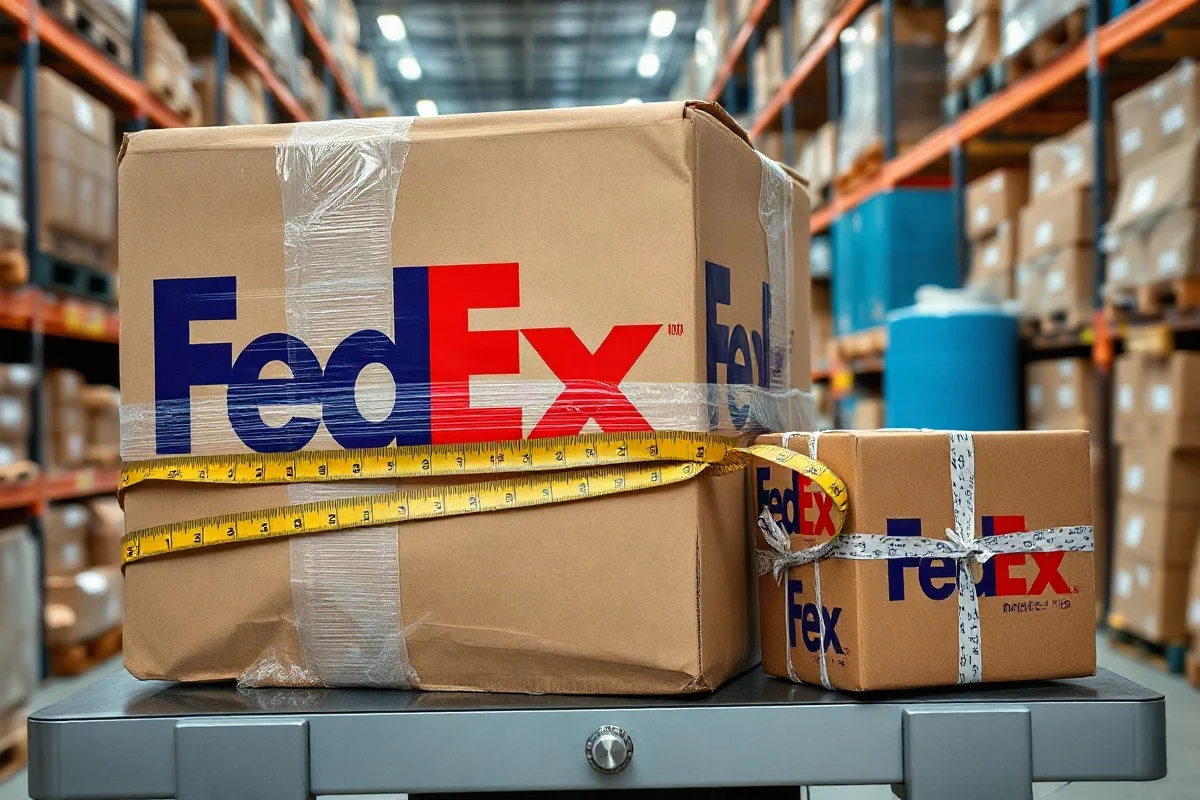
A box is too big for FedEx when it exceeds the current size limits for the specific FedEx service, package type, origin, destination, or account arrangement you are using. A large box may be accepted but priced differently, while another package may require a different service or may not be accepted through the shipping method you selected. Because FedEx size limits, surcharges, and dimensional-weight rules can change, check the current FedEx service guide or your shipping account before tendering an unusually large package.
Why “too big” does not have one universal answer
FedEx does not treat every shipment the same way. The applicable rules can depend on whether you use a parcel service, a freight service, an international service, a retail counter, or a negotiated business account. The package’s destination and the service level can also affect eligibility and pricing.
For that reason, a box can be too large for one FedEx option but acceptable under another. A shipment might also be accepted while receiving an additional handling or oversize charge. Acceptance does not necessarily mean that the package will receive ordinary parcel pricing.
Before buying a box or printing a label, confirm these details:
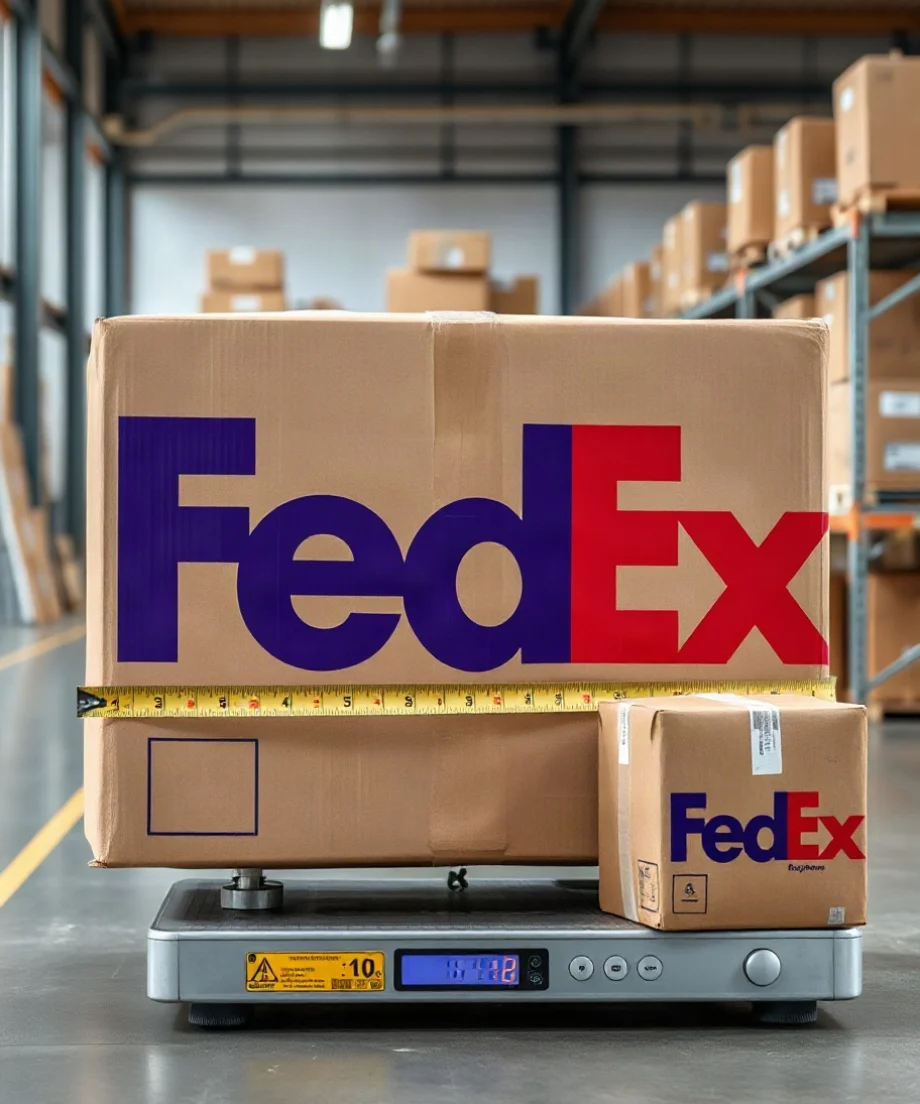
- The exact FedEx service you plan to use
- The maximum length, width, height, and weight allowed for that service
- Whether FedEx calculates a length-plus-girth measurement for the package
- Whether the package qualifies for oversize or additional-handling treatment
- Whether the destination has special restrictions
- Whether your quoted price uses actual weight, dimensional weight, or another rating method
For a broader overview of current carrier requirements, see the FedEx Package Guide, then verify the final details in FedEx’s current official documentation.
Measure the outside of the sealed package
FedEx rates a package based on its shipping dimensions, not simply the inside dimensions printed on a box. Measure the completed package after the product, cushioning, tape, labels, and any protective wrapping are in place.
Use the longest points
Measure the package in its shipping position:
- Length: the longest side
- Width: the side perpendicular to the length
- Height: the remaining side
Measure from the package’s outermost points. Do not press a flexible tape inward around a bulge, and do not ignore a handle, strap, protruding corner, or irregular section. If a box is slightly larger after taping or if its panels bow outward, use the larger finished measurement.
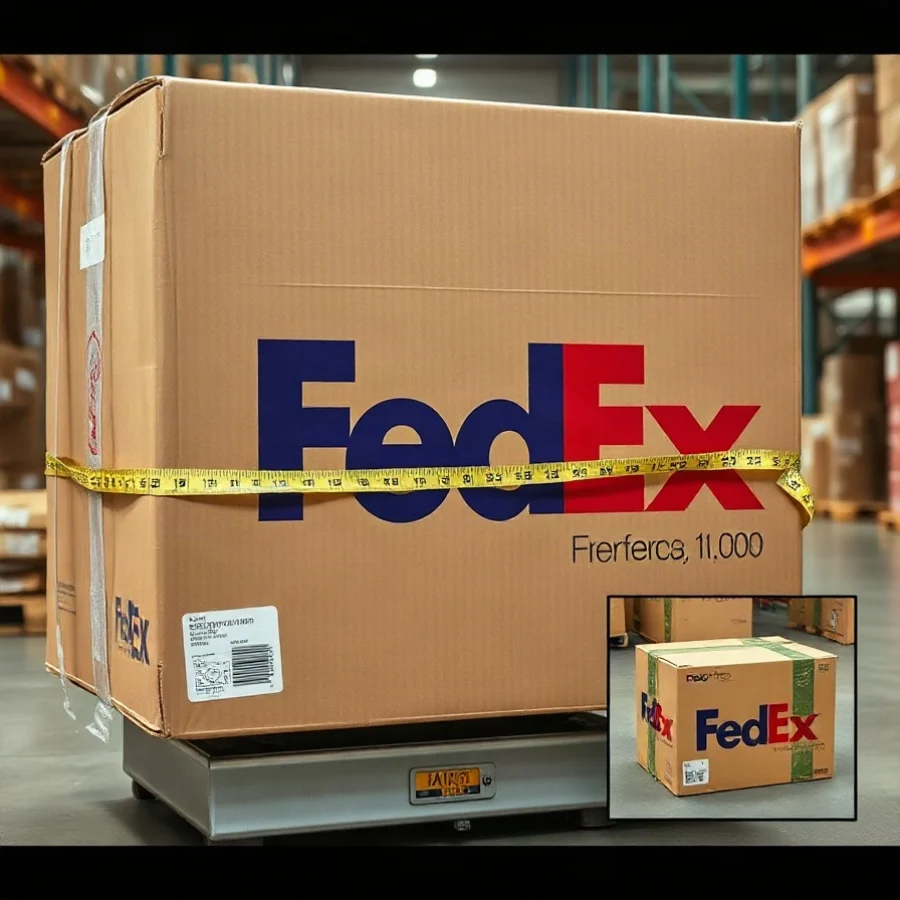
Round according to the current FedEx instructions for the service and label system you are using. When you are close to a threshold, measure carefully and leave a small margin rather than relying on a measurement that is exactly at the limit.
For a more detailed walkthrough, read how to measure a package before shipping with FedEx.
Check length and length-plus-girth
Large-package rules commonly consider more than the longest side. A carrier may evaluate both the longest dimension and the package’s length plus girth. The usual girth calculation is:
Length plus girth = length + 2 × width + 2 × height
For example, a carton measuring 40 × 20 × 18 inches has a length-plus-girth measurement of:
40 + (2 × 20) + (2 × 18) = 116 inches
This example shows the method, not a promise that the package is accepted or rejected. The relevant threshold depends on the FedEx service and the current rules that apply to your shipment. If your package is long, wide, or unusually shaped, calculate this number before requesting a quote.
For metric measurements, convert consistently before applying a formula. One inch equals 2.54 centimeters, and one foot equals 12 inches. Do not mix inches and centimeters in the same calculation.
Understand dimensional weight before choosing a large box
A large but lightweight package can cost more than its scale weight suggests. Carriers may compare the package’s actual weight with its dimensional, or volumetric, weight and rate the shipment using the applicable value. The dimensional-weight formula generally follows this structure:
Dimensional weight = length × width × height ÷ the applicable dimensional divisor
The divisor is not universal. It can vary by carrier, service, domestic or international movement, unit system, and account or contract terms. Do not assume that a divisor found on an old label, calculator, or third-party website still applies to your shipment. Check the current FedEx instructions or the rate shown for the exact shipment.
For example, a 24 × 18 × 16-inch box has a volume of 6,912 cubic inches. The shipping system may convert that volume into a dimensional weight using the current divisor, then compare it with the actual scale weight. The arithmetic illustrates why unused air inside a box can affect the price; it does not establish the billable weight for a particular FedEx service.
You can estimate the volume and compare package options with the Dimensional Weight Calculator. Use the result as a planning aid and rely on the current FedEx quote for the final charge.
Signs that a box may be too large for ordinary parcel shipping
Review the shipment carefully if it has any of these characteristics:
- One dimension is close to the service’s published maximum.
- The length-plus-girth measurement is unusually high.
- The package is light compared with its cubic size.
- The carton is not a regular rectangular box.
- The package has a long, narrow shape or an unstable center of gravity.
- The contents require a wooden crate, pallet, or special handling.
- The box has exposed edges, weak seams, or panels that flex when lifted.
- The shipment is traveling internationally or to a location with special service conditions.
A package with these traits may still be shippable, but it deserves a service-specific review. Large shipments can move from standard parcel handling into a different pricing category or freight process.
Oversize and additional-handling charges
“Too big” can mean more than “not accepted.” FedEx may apply an extra charge when a package is large, heavy, difficult to handle, irregularly shaped, or packaged in a way that does not fit normal automated sorting. The name and conditions of these charges can vary by service and may be updated over time.
Do not judge the likely cost from the box’s dimensions alone. A package can trigger a charge because of its shape, weight, packaging material, or combination of measurements. A non-box container, cylindrical package, banded bundle, or carton with protruding parts may be treated differently from a compact rectangular carton with the same approximate volume.
When comparing options, request a quote using the final package dimensions and weight. If the quote changes after FedEx measures the parcel, the carrier’s recorded measurements may be used for billing under the applicable terms.
How to reduce the risk of a too-large package
Choose the smallest protective box
Start with the product’s finished dimensions, then add only the cushioning space needed to protect it. Oversized void space increases dimensional weight and can allow the item to shift during handling. The right box is not the tightest possible box; it is the smallest box that leaves enough room for reliable protection.
Compare several standard carton sizes before selecting one. A box that is only a few inches smaller on each side can have substantially less volume. Use the Box Size Calculator to compare interior and exterior dimensions while planning the package.
Keep the package square and secure
Use a strong corrugated carton suited to the product’s weight. Reinforce seams with shipping tape, protect corners, and prevent the contents from moving. Avoid adding loose layers of cardboard or wrapping that make the outside dimensions larger without improving protection.
Repack unusually large items
If the item is long or bulky, consider whether it can be disassembled safely. Removing detachable legs, handles, or other nonessential protrusions may allow a shorter or more regular carton. Protect every part separately and follow the manufacturer’s handling requirements. Do not disassemble an item if doing so could cause damage, create a safety issue, or void a warranty.
A practical pre-shipment checklist
- Pack and seal the item completely.
- Measure the outside length, width, and height at the largest points.
- Calculate length plus girth when the shipment is large or close to a limit.
- Weigh the sealed package on a reliable scale.
- Estimate dimensional weight using the current service-specific divisor.
- Enter the exact origin, destination, service, dimensions, and weight into the FedEx shipping system.
- Review any oversize, additional-handling, residential, delivery-area, or other applicable charges shown in the current quote.
- Confirm that the selected service accepts the package before handing it to FedEx.
If the package is near a published maximum, get confirmation from FedEx rather than relying on a general online summary. Rules can change, and the terms for a retail shipment may not match the terms on a negotiated account.
When freight may be a better option
A very large, heavy, bulky, or palletized shipment may be better suited to a FedEx freight service than to ordinary parcel shipping. Freight is not automatically cheaper, and it has its own requirements for dimensions, weight, packaging, pickup, delivery, and access. Compare the complete quote and handling requirements instead of assuming that changing services will solve every size issue.
The practical answer is to measure the final package, calculate its relevant dimensions, and check the current rules for the exact FedEx service you intend to use. A box is not necessarily too big just because it is large, but it should not be treated as an ordinary package until FedEx’s current limits, rating method, and surcharge rules confirm that it qualifies.


Comments
0No comments yet. Be the first to share a helpful note or question.
Leave a Comment
Your email address will not be published. Comments are reviewed before appearing on the site.