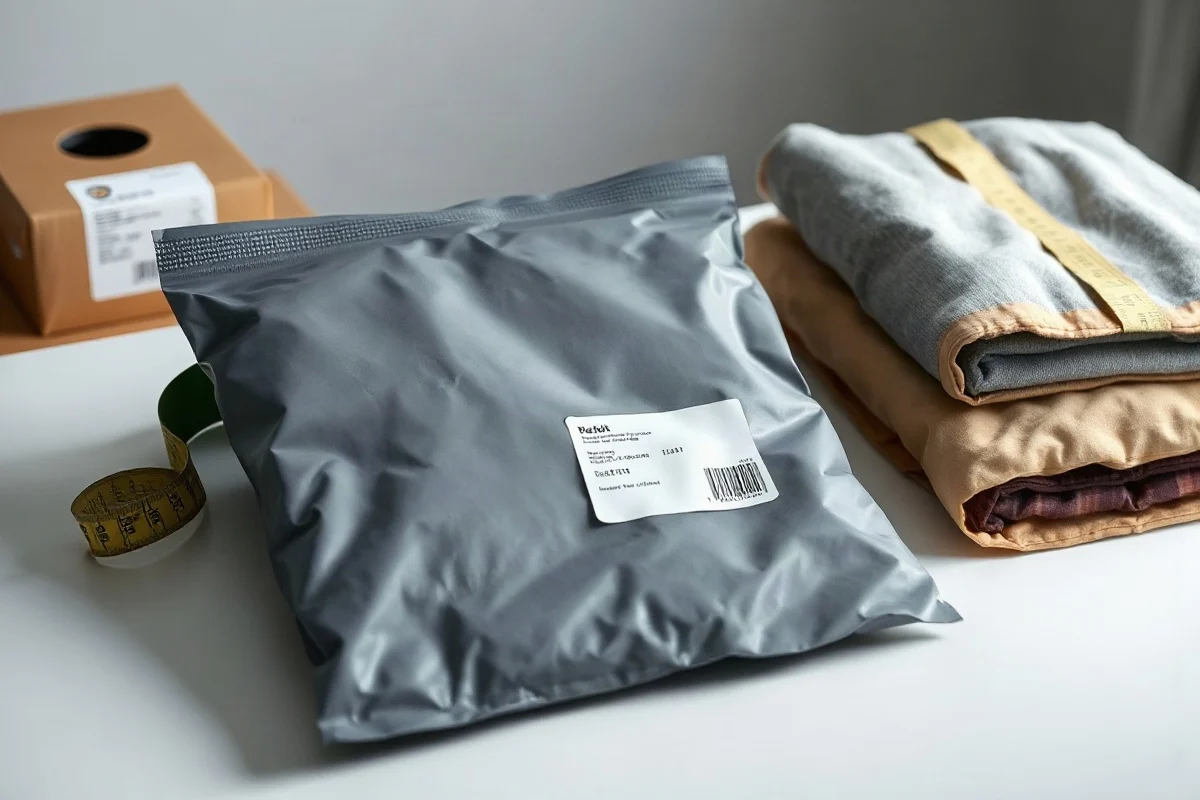
Yes, you can generally ship a poly mailer with UPS. A poly mailer is usually treated as a flexible package rather than a box, so it can be a practical choice for clothing, soft goods, and other items that are not fragile. The package still needs to be durable, completely sealed, easy to identify, and compatible with the UPS service and destination you select. Because carrier packaging requirements, handling rules, and charges can change, check the current UPS guidance before sending an unusual, oversized, heavy, or international package.
What is a poly mailer?
A poly mailer is a lightweight shipping envelope made from plastic film, commonly polyethylene. Most have a self-sealing adhesive strip and a plain exterior for a shipping label. Unlike a corrugated box, a poly mailer does not provide much protection against crushing, punctures, or sharp edges.
Poly mailers work best when the contents are flexible or already protected by their own packaging. Typical examples include shirts, pants, blankets, fabric items, soft accessories, and some non-fragile retail products. They are usually a poor choice for glass, electronics without protective packaging, liquids, products with sharp corners, or anything that could be damaged if the envelope is bent or compressed.
When a poly mailer is a good choice for UPS
A UPS poly mailer is most suitable when all of the following are true:
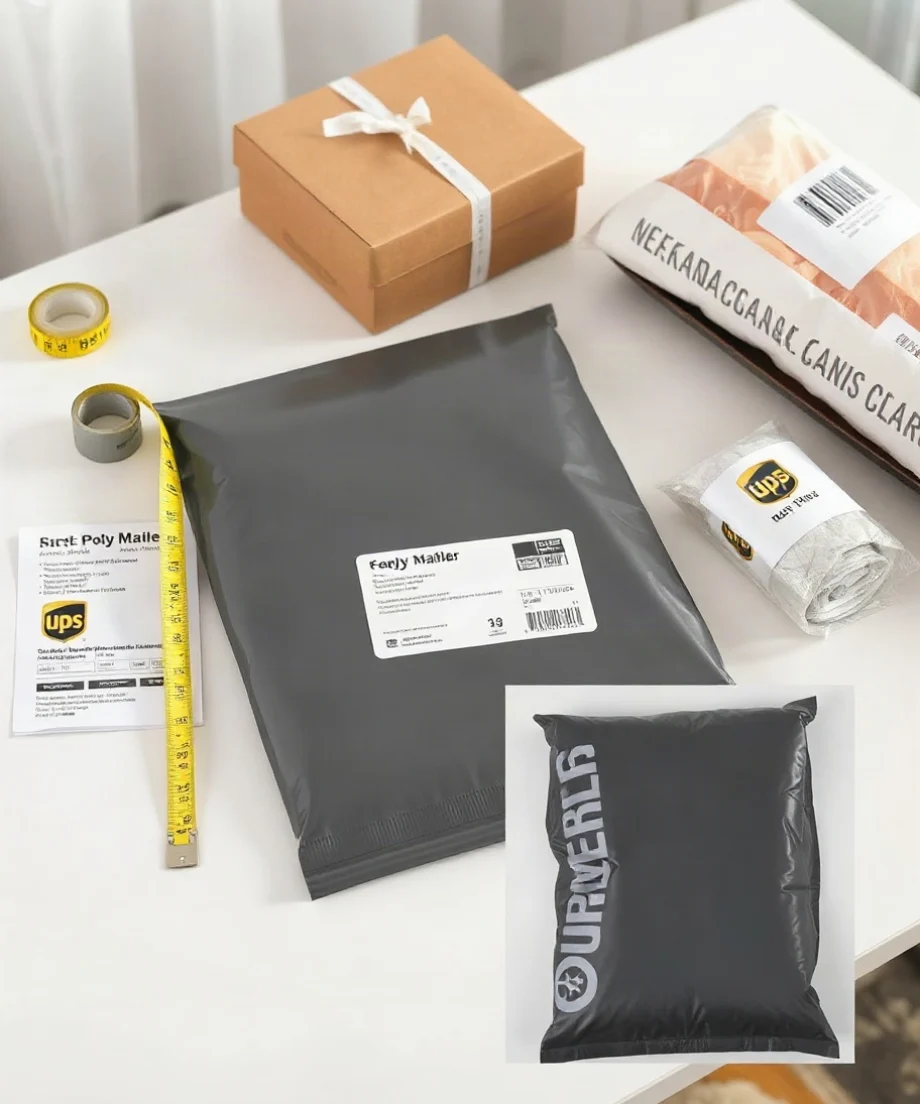
- The contents are lightweight and not easily crushed.
- The item fits without stretching the seams or adhesive closure.
- The mailer is made from sturdy material and has no holes, tears, or weak seals.
- The package can be sealed completely and keep its contents inside during handling.
- The shipping label can be attached to a smooth, readable area.
- The package does not contain a hazardous or restricted item that requires special packaging.
A common mistake is choosing a mailer because it is just large enough to hold the product. The product may fit, but the package can still fail if the seams are under tension or the closure cannot fully bond. Leave enough room for the contents to sit flat without forcing the envelope closed.
How to measure a poly mailer for UPS
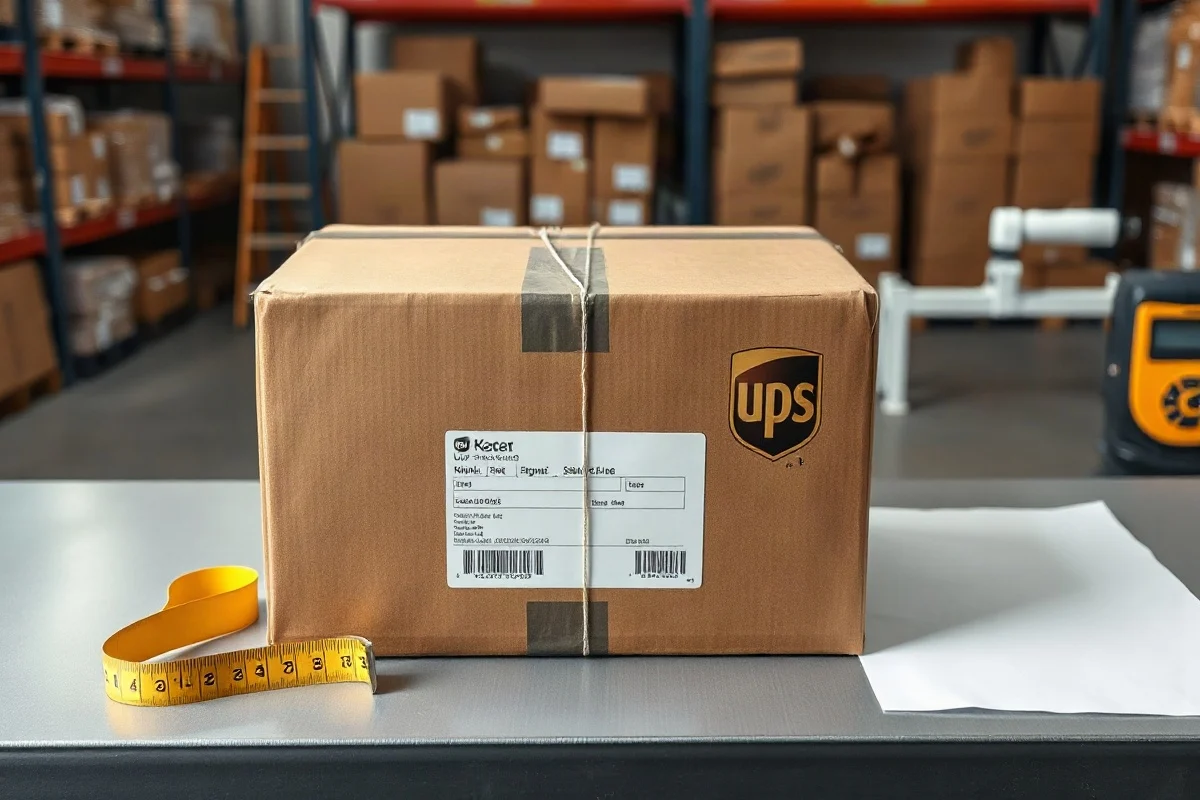
Measure the finished, sealed package rather than relying only on the mailer's advertised size. Manufacturers may list the mailer's outside dimensions, usable dimensions, or dimensions before filling, and these measurements are not always interchangeable.
Measure length and width
- Place the sealed mailer on a flat surface.
- Measure the longest side as the length.
- Measure the shorter side as the width.
- Include any portion that extends beyond the main body if it affects the package's overall footprint.
Do not measure the empty mailer and assume that the result represents the shipped package. A thick item can round the corners, create bulges, or change the package's effective dimensions. If the mailer is packed unevenly, measure the package in its final condition.
Measure thickness when it matters
For a flat, flexible mailer, thickness may be small and irregular. If the contents create a noticeable bulge, measure the thickest point with the item packed as it will be shipped. A flexible envelope can also become more rigid when filled, which may affect how it is handled or classified.
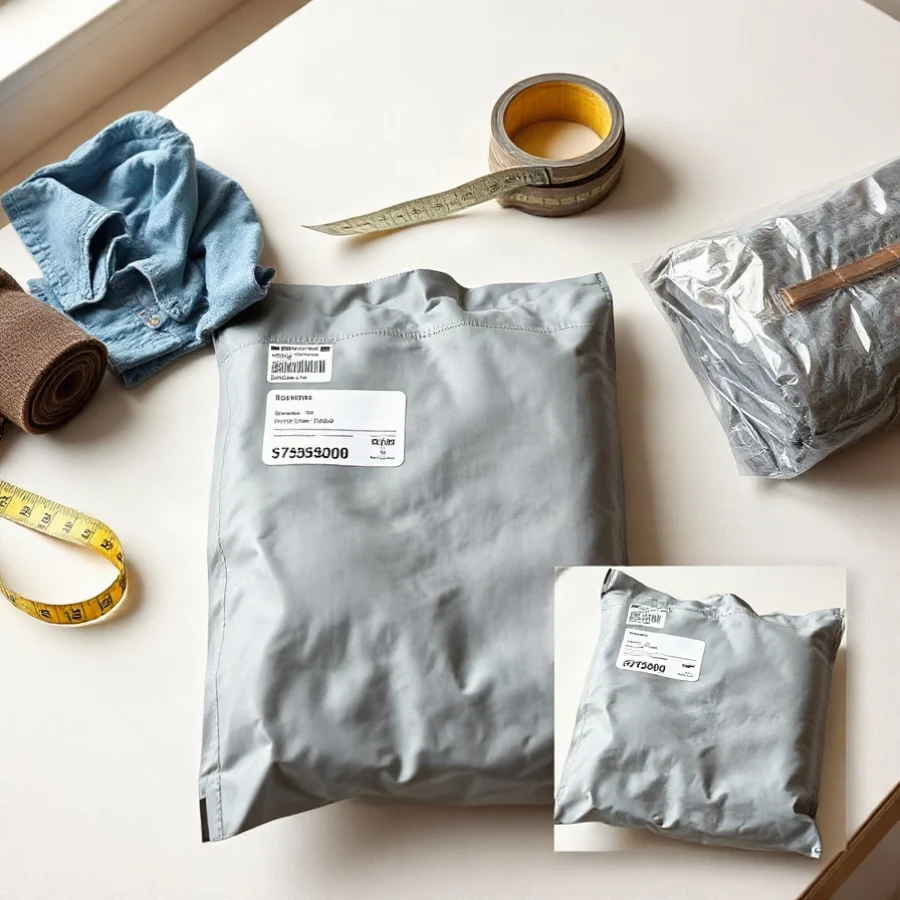
Use one unit consistently. To convert inches to centimeters, multiply by 2.54. To convert pounds to kilograms, multiply by 0.453592. Keep the recorded measurements and weight available in case a shipping system requests them or the package is remeasured during transit.
Does a poly mailer need a box?
Not usually. A poly mailer is designed to be shipped as its own package, so putting it inside a box is not automatically required. A box may be the better option when the item is fragile, has hard corners, needs protection from compression, or is too heavy for the mailer.
You can also use an inner bag, wrap, or small protective carton inside the poly mailer. This can protect the product from moisture and scuffing, but it does not turn the outer mailer into a rigid box. The complete package must still be strong enough for normal handling.
How to pack a poly mailer for UPS
1. Protect the product first
Use the product's original packaging when it provides meaningful protection. For clothing and other soft products, folding the item neatly and placing it in an inner plastic bag can help keep it clean and dry. For a product with corners, wrap those areas so they cannot puncture the outer mailer.
2. Remove unnecessary air and space
Do not leave a large empty section that can shift around during transport. At the same time, avoid compressing the item so tightly that it strains the seams. The goal is a compact package with enough room for the closure to seal normally.
3. Seal the entire opening
Press the adhesive strip firmly across the full closure. If the mailer has a flap, make sure it lies flat and is fully bonded. For a valuable or heavy item, consider additional packaging designed for that type of shipment rather than relying on a lightweight mailer and extra tape alone. Do not cover the label area with tape that creates glare or makes the barcode difficult to scan.
4. Check for weak spots
Run your hands along the seams and corners. Look for gaps, wrinkles that prevent adhesion, protruding contents, and areas where the plastic is stretched. If the package can open when lightly squeezed, repack it before applying the label.
5. Attach the label correctly
Place the shipping label on the largest flat surface. Keep the barcode unobstructed, avoid folding it over an edge, and remove or cover old labels and barcodes. If the mailer is glossy or wrinkled, choose the smoothest area available so the label remains readable.
Poly mailer dimensions, weight, and dimensional weight
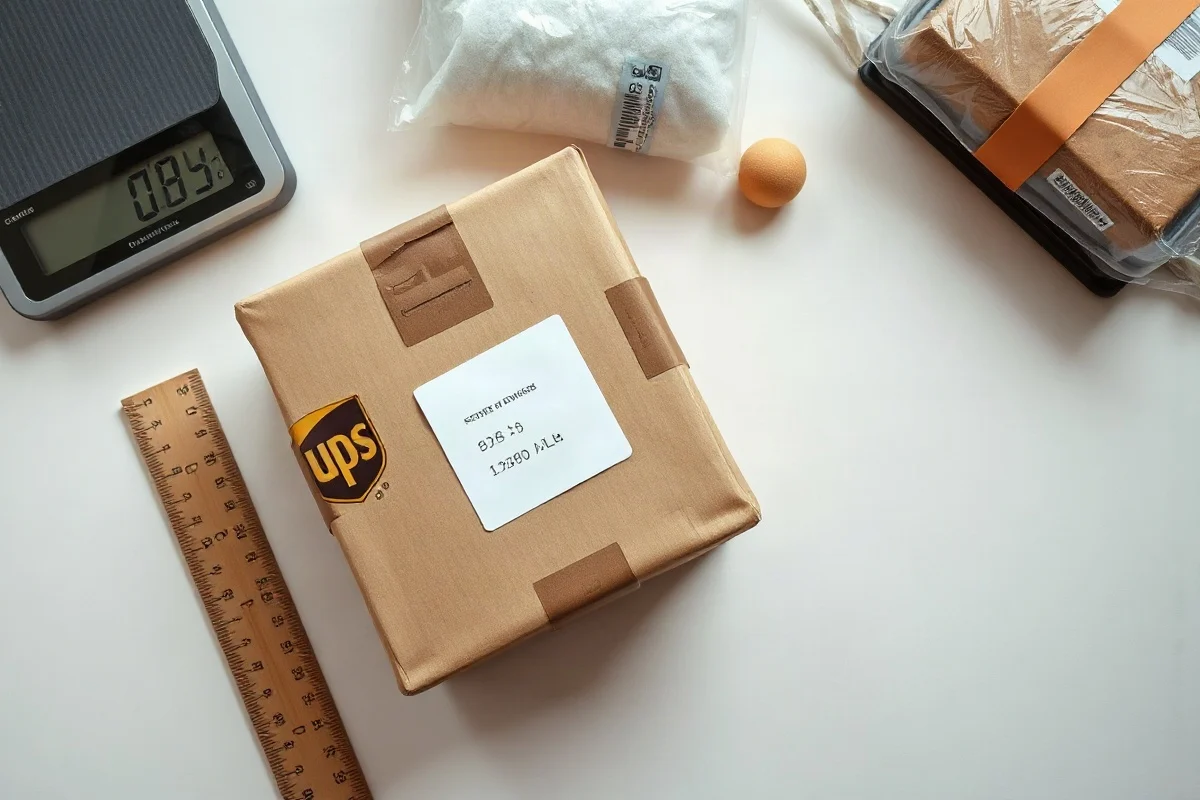
The cost and handling of a UPS shipment can depend on more than the packaging material. The destination, selected service, actual weight, dimensions, package type, and any applicable additional charges may all matter. These details are subject to current UPS terms and service-specific rules.
Dimensional weight is a method that compares a package's physical size with its actual scale weight. A simplified calculation is:
Dimensional weight = length × width × height ÷ the applicable dimensional divisor
The divisor and rounding method can vary by carrier, service, destination, and current pricing rules. Do not insert a divisor from an old example and assume it applies to your shipment. For a thin poly mailer, dimensional weight may be less important than actual weight, but a large, puffy, or unusually shaped mailer can still be evaluated according to the carrier's current measurement rules.
For a quick estimate, record the package's final length, width, height, and actual weight, then compare the result with the current UPS rate or shipping tool. You can also use the dimensional weight calculator to understand the calculation, but verify the applicable UPS divisor and rounding requirements before buying a label.
Are poly mailers cheaper than boxes?
They can be, especially when the item is light and compact. A poly mailer often uses less packaging material, weighs less, and takes up less storage space than a box. Those savings may help, but the final shipping price is determined by the shipment details and the service selected, not simply by whether the outer packaging is plastic.
A mailer can also create extra costs if it tears, leaks, exposes the contents, or requires repackaging. For products that need protection, a correctly sized box may be the more economical choice because it reduces the risk of damage and returns.
Situations that call for a box instead
Choose a box or another purpose-built container when the product is fragile, rigid with sharp edges, heavy for its size, vulnerable to crushing, or likely to shift inside the envelope. A box is also usually preferable for items that need cushioning on all sides or must remain in a defined shape.
Liquids require particular care. A poly mailer by itself is not dependable containment if a bottle leaks or a cap opens. Use packaging appropriate for the liquid, including secure closures and leak protection where required, and confirm that the item is allowed under the current UPS rules for the destination and service.
Before you hand over the package
Run through this short checklist:
- Is the item appropriate for flexible packaging?
- Does the mailer have enough room without being overfilled?
- Are the seams, closure, and corners intact?
- Is the package sealed completely?
- Are the final dimensions and weight accurate?
- Is the label flat, visible, and free of old barcodes?
- Have you checked current UPS requirements for the service, destination, and contents?
If you are comparing packaging options, the box size calculator can help you estimate a suitable box when a mailer is not protective enough. For broader carrier guidance, see the current UPS package guide and confirm any time-sensitive details directly with UPS.
The practical answer
A poly mailer is generally a valid UPS packaging option for suitable soft, lightweight, and non-fragile items. Use a strong mailer, pack the product so it cannot puncture the plastic, seal the opening completely, measure the finished package, and apply a clear label to a flat surface. When the item is fragile, sharp, leaky, unusually heavy, or likely to be crushed, switch to a box or packaging designed for the product. Finally, review the current UPS requirements and pricing for your exact shipment before you pay for the label.
Comments
0No comments yet. Be the first to share a helpful note or question.
Leave a Comment
Your email address will not be published. Comments are reviewed before appearing on the site.