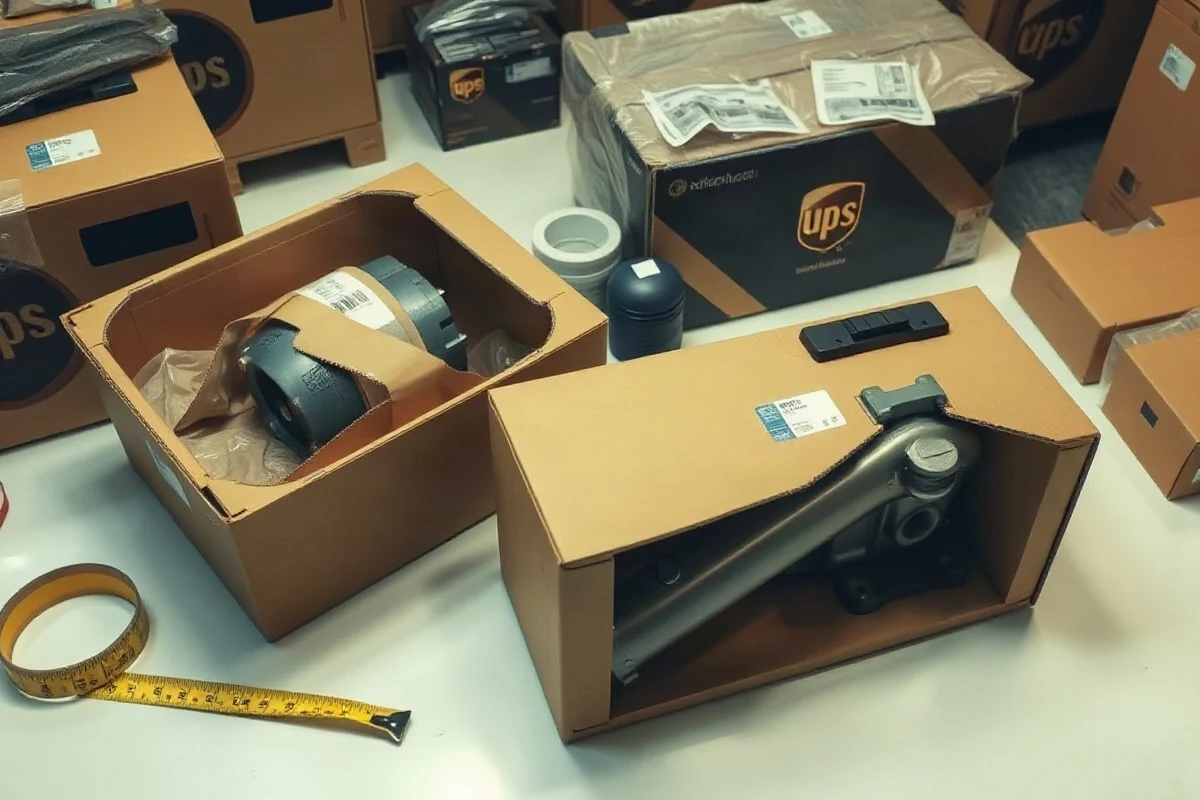
UPS can accept many irregular-shaped packages, but a package that is round, cylindrical, triangular, loosely wrapped, or difficult to measure may be handled and priced differently from a standard rectangular box. The package still needs to be securely wrapped, clearly labeled, and suitable for the selected UPS service. Because UPS requirements, surcharges, dimensional-weight rules, and service availability can vary by service, destination, package characteristics, and date, check the current UPS packaging and rate information before shipping.
What counts as an irregular-shaped package?
An irregular-shaped package is any shipment that does not behave like a closed rectangular carton during measurement, sorting, handling, or stacking. Common examples include:
- Rolled posters, blueprints, rugs, and fabric
- Long tubes and cylindrical containers
- Items packed in triangular tubes or wedge-shaped cartons
- Automotive, industrial, or machine parts with exposed protrusions
- Furniture components and oddly shaped household goods
- Soft packs that bulge or change shape when lifted
- Packages wrapped in paper, plastic film, or tape without a rigid outer box
- Multiple pieces bundled together as one shipment
A package does not have to look unusual to create a handling issue. A rectangular carton with a large bulge, an unsecured strap, a loose flap, or a label placed over a seam may be treated as nonstandard because it is harder to process safely and consistently.
How UPS may measure an irregular package
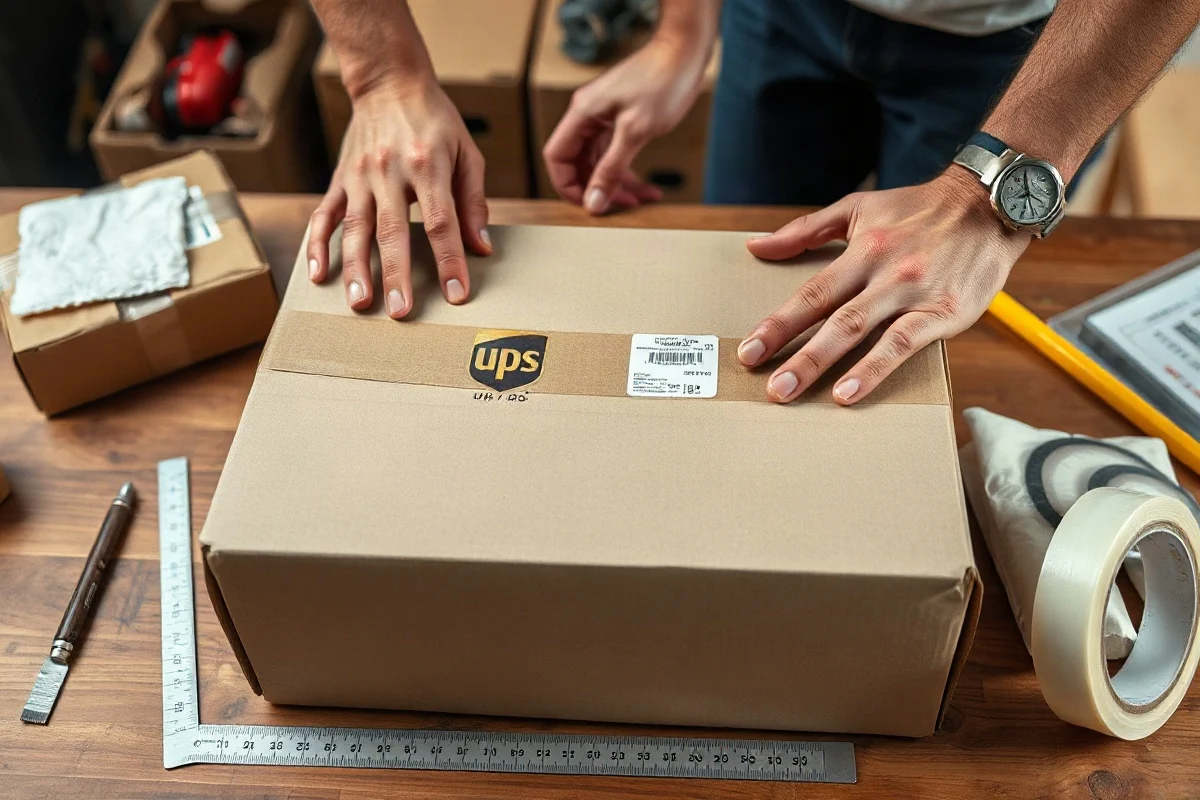
For a normal rectangular carton, the basic measurements are length, width, and height. Measure the outside dimensions after the item has been fully packed. Include the carton, padding, tape, protective corners, and any other material that changes the package's outer size.
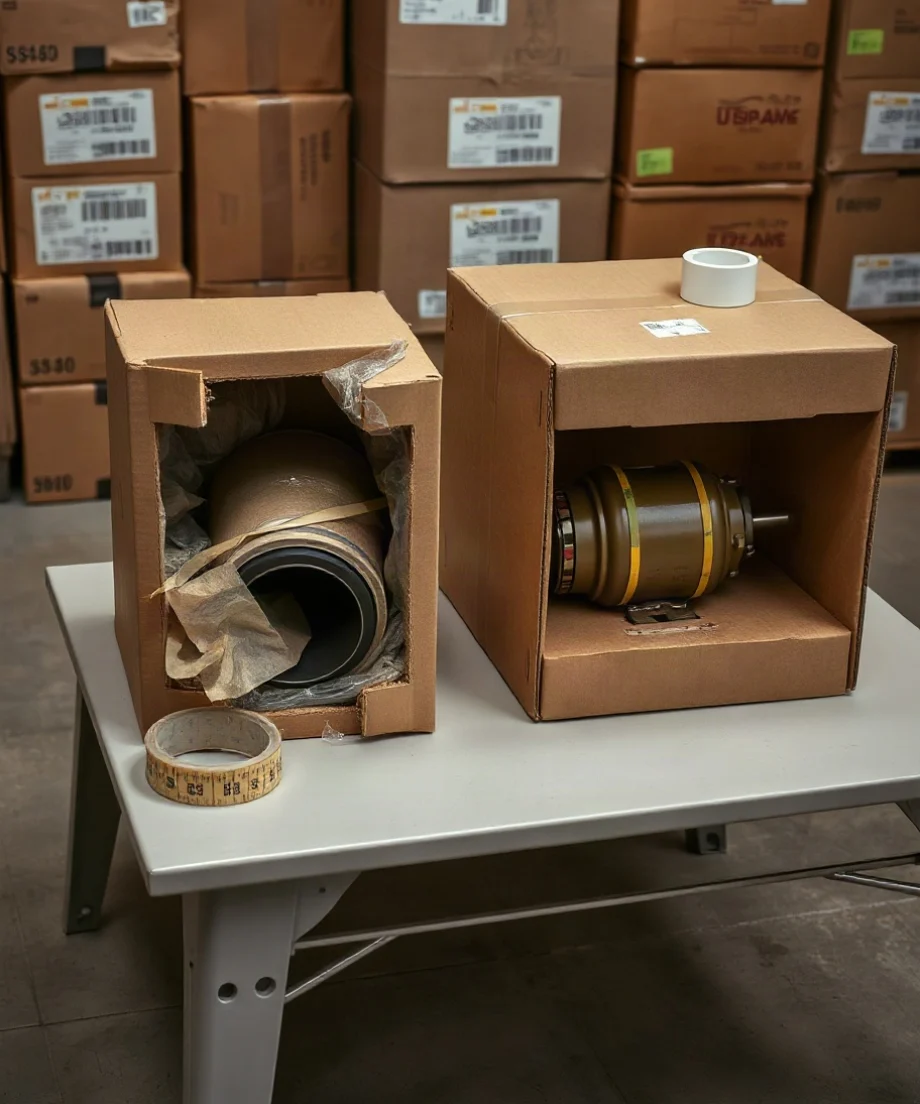
Irregular packages require more judgment. The practical goal is to identify the package's maximum usable length, width, and height rather than measuring only a narrow section or the product itself. If the package has a bulge, measure across the widest point. If it has a protruding part, include that part unless it is fully protected inside the shipping container. For a cylinder, measure the full end-to-end length and the outside diameter. The diameter represents the distance across the widest part of the round end.
Use a rigid tape measure and record each dimension in the unit required by the shipping tool or label process. If you measure in inches but need centimeters, multiply inches by 2.54. If you measure in centimeters but need inches, divide by 2.54. Do not round individual measurements too early; record the actual measurements first, then apply the rounding method required by the current UPS rating system.
Measuring a cylinder or tube
For a tube, record:
- The total outside length from one end to the other
- The outside diameter at the widest point
- The actual shipping weight after packing
Do not use the tube's inside diameter or the length of the product alone. End caps, plugs, padding, and protective sleeves can add to the shipping dimensions. A tube that is too flexible may also need a stronger outer container so it does not bend, roll unpredictably, or become damaged in transit.
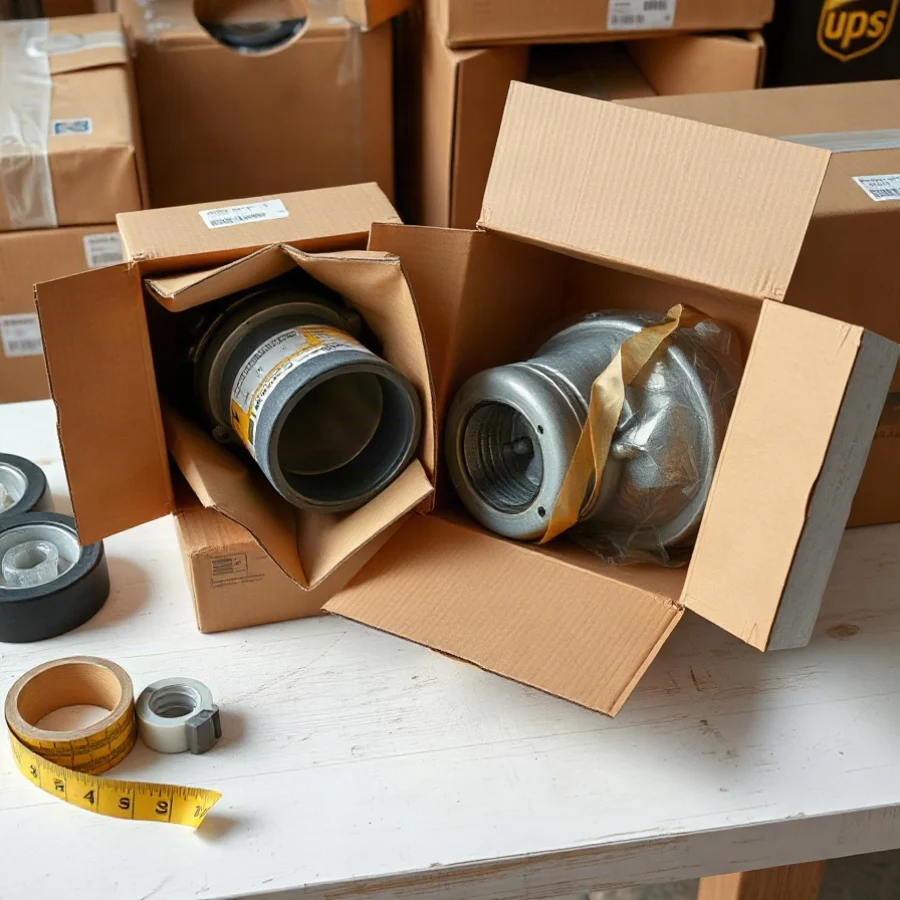
Measuring a package with protrusions
Exposed handles, wheels, brackets, knobs, hooks, and irregular edges can affect the package's overall dimensions and handling. Whenever possible, remove or fold the protruding part and protect it inside a rigid container. If it cannot be enclosed, measure to the farthest point and protect the part with cushioning and a durable cover.
A carrier's automated or manual measurement may differ from your estimate. The package can be remeasured during the shipping process, and the billed weight or applicable charge may be adjusted if the recorded size or weight differs from the information entered at shipment.
How dimensional weight can affect the shipping charge
Irregular packages often take up more space than their actual weight suggests. Carriers may therefore compare actual weight with dimensional weight and use the applicable rating method for the service and shipment. A general dimensional-weight formula is:
Dimensional weight = length × width × height ÷ dimensional divisor
The divisor is not universal. It can vary by carrier, service, destination, package type, and current tariff or rate rules. Some shipments may also be subject to minimum billable weights, rounding rules, or special measurement methods. For that reason, do not assume that a familiar divisor applies to every UPS shipment.
For a rectangular outer package measuring 24 by 12 by 10 inches, the volume is 2,880 cubic inches. To estimate dimensional weight, divide that volume by the divisor specified for the applicable UPS service, then follow the current rounding and billing rules. This example shows the process but does not provide a UPS rate or a guaranteed billable weight.
For a cylindrical package, do not automatically multiply the product's length by its diameter and treat the result as a standard rectangular measurement. The rating method can depend on how the package is presented and how UPS defines the applicable package dimensions. Enter the shipment details into the current UPS shipping system or confirm the method with UPS before sending a high-value or unusually shaped item.
You can also use the dimensional weight calculator to understand the general relationship between package volume and billable weight. Treat the result as an estimate unless it matches the current rules for your exact UPS service.
Possible extra charges and handling considerations
UPS may apply additional charges to packages that require special handling, do not conform to standard package characteristics, or exceed certain current size or weight thresholds. The name, amount, eligibility, and conditions for these charges can change. They may also depend on the service, destination, account terms, and whether the package is accepted through a retail location or another shipping channel.
Do not assume that an irregular shape automatically produces one specific fee. Instead, review the current UPS rate guide and terms for the service you plan to use. Check for rules covering nonstandard packaging, additional handling, large packages, package dimensions, weight, and prohibited or restricted articles. If a shipment is close to a published threshold, allow for the outer packaging and any carrier measurement or rounding rules.
Some unusual packages may be accepted only through selected services or locations, while others may require a freight solution, special preparation, or advance confirmation. A UPS Store or shipping counter may have its own packaging and acceptance procedures, so ask before arriving with an unboxed item.
How to package an irregular item for UPS
1. Choose a rigid outer container
Whenever practical, place the item in a strong corrugated carton or a purpose-built shipping container. A rigid outer package protects the item and creates more predictable dimensions. For tubes, use a durable tube with secure end caps. For long items, choose a container that prevents bending and does not leave large areas unsupported.
2. Protect every fragile or exposed area
Wrap corners, edges, handles, and delicate surfaces with cushioning. Prevent the item from touching the outer walls when impact protection is needed. Fill empty space so the contents cannot slide, rotate, or strike the ends of the container. Heavy parts may need extra support because ordinary loose-fill material can shift under load.
3. Prevent rolling and movement
Cylinders and rounded packages can roll on conveyors or during manual handling. Add a suitable outer carton, flat supports, end blocks, or other secure protection that keeps the package stable. Do not rely on a single strip of tape to stop a round item from moving. The package should remain closed and stable when lifted from different sides.
4. Seal the package completely
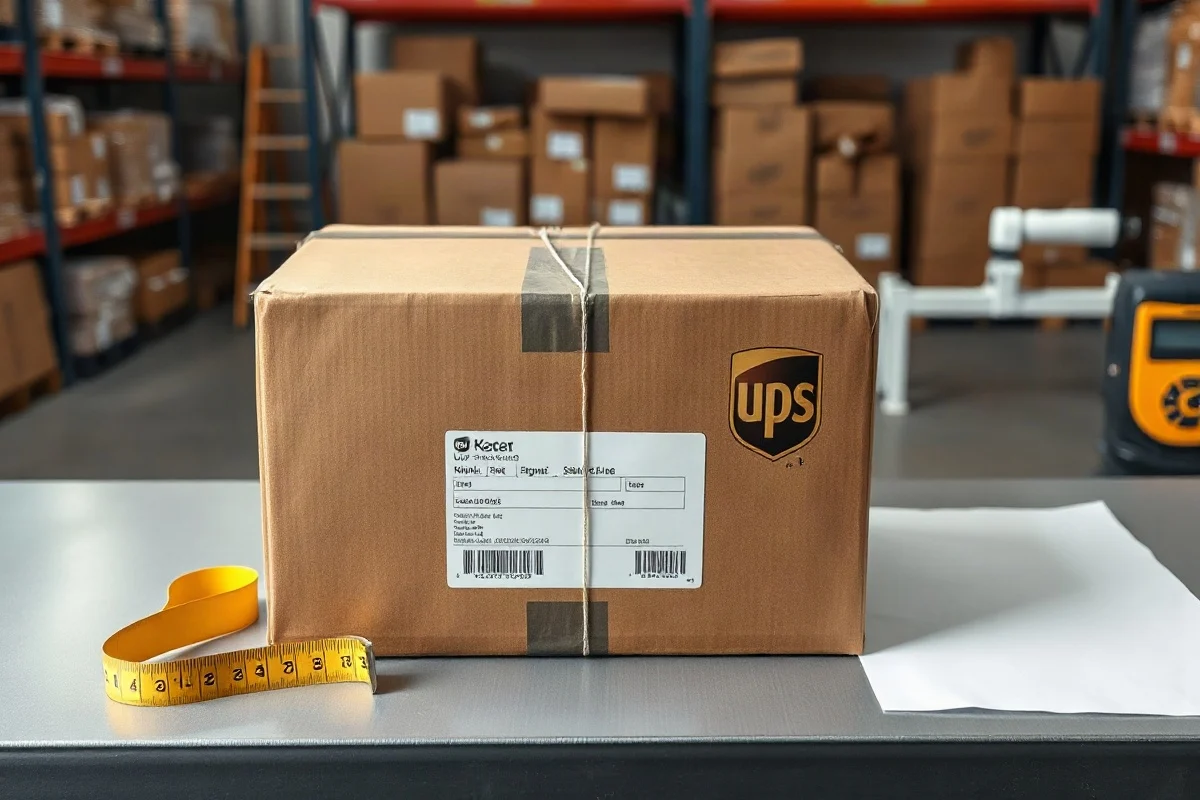
Use shipping tape designed for cartons and apply it across every major seam. Reinforce the ends of tubes and the corners of heavy packages. Avoid string, rope, loose straps, or decorative wrapping as the only closure. Paper wrapping can tear or separate from the package, while thin film may snag or fail to protect the contents.
5. Apply the label to a flat surface
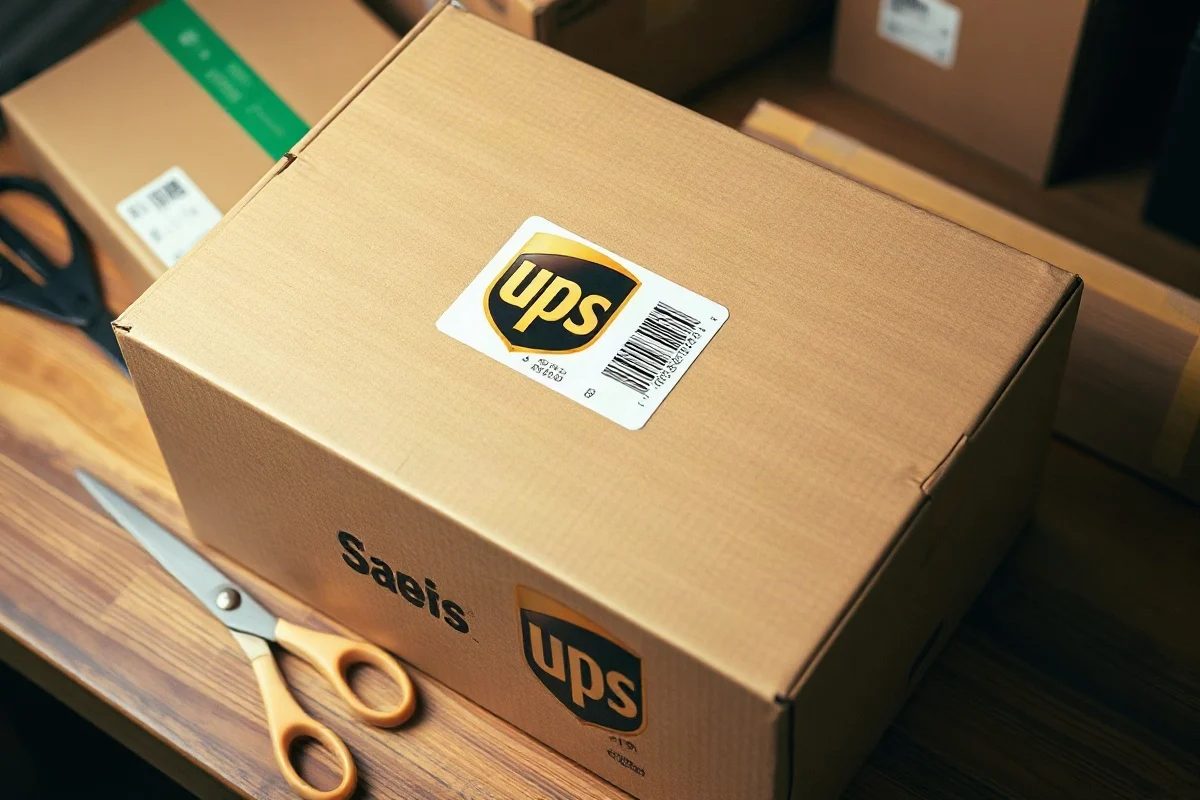
Place the shipping label on the largest flat surface available. Do not wrap the barcode around a curved tube, place it across an edge, or cover it with tape that creates glare or wrinkles. Remove old labels and barcodes from reused cartons. If the package shape makes label placement difficult, follow the current UPS instructions or ask the shipping location for an approved approach.
Common mistakes to avoid
- Measuring the item instead of the packed shipment: The outer package is what matters for shipping dimensions.
- Ignoring bulges: A soft package can expand after packing or when stacked.
- Using a thin retail box: Product packaging may not be strong enough for parcel handling.
- Leaving parts exposed: Protruding components can catch, break, or damage other packages.
- Covering the barcode with uneven tape: Wrinkles and curved surfaces can interfere with scanning.
- Assuming the cheapest estimate is final: Dimensional weight, remeasurement, and additional charges can change the final billed amount.
- Skipping service verification: Acceptance rules may vary by service, destination, package characteristics, and current UPS policy.
A practical pre-shipment checklist
Before handing over an irregular package, confirm the following:
- The item is enclosed or protected against normal handling.
- All protrusions are removed, covered, or included in the measurements.
- The package does not roll, shift, leak, or open when gently handled.
- The outside length, width, height, and actual weight have been recorded.
- The dimensions include padding, end caps, tape, and the complete outer container.
- The label is on a flat, visible surface and old labels are removed.
- The estimated charge accounts for dimensional weight when applicable.
- The current UPS service terms and package restrictions have been checked.
For more measurement guidance, see our package dimensions guide and UPS package guide. If the item is valuable, unusually large, fragile, or close to a size or weight threshold, confirm the details with UPS before shipping and keep the acceptance receipt and package measurements for your records.
Comments
0No comments yet. Be the first to share a helpful note or question.
Leave a Comment
Your email address will not be published. Comments are reviewed before appearing on the site.