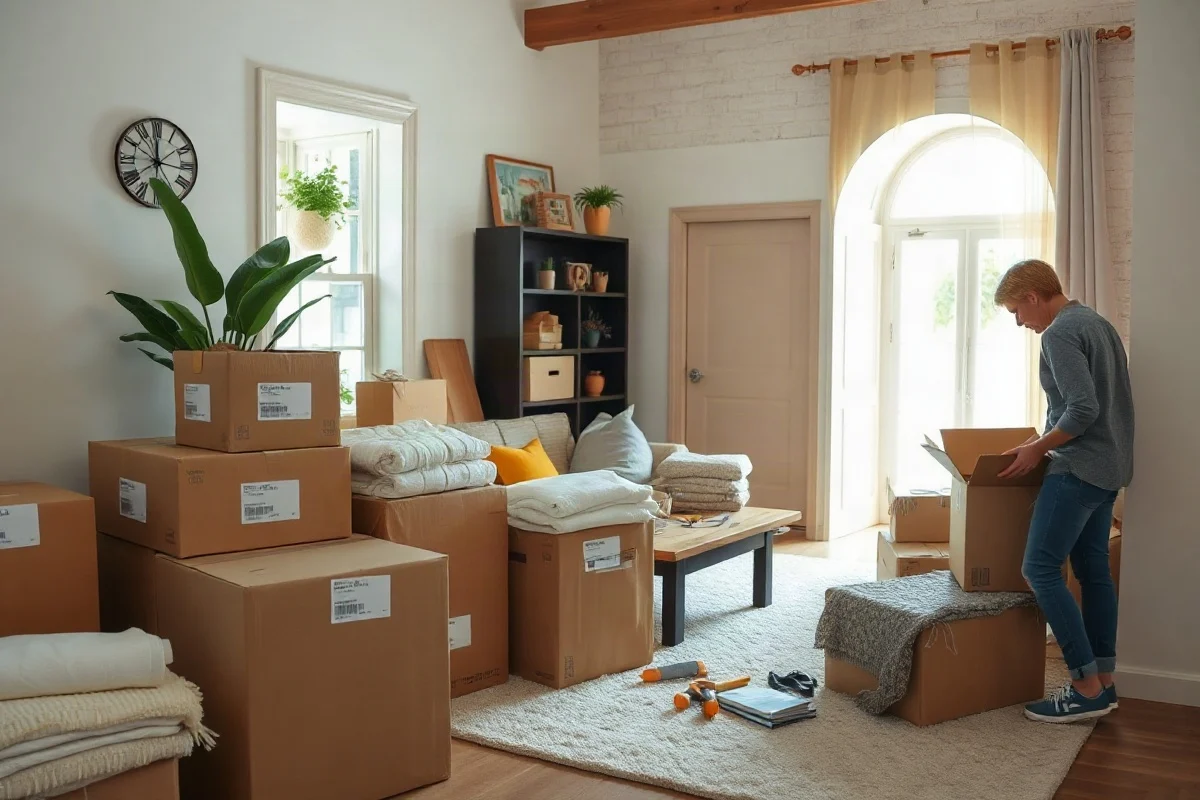
To unpack moving boxes efficiently, set up one essential room first, sort boxes by destination, and work in short room-by-room stages instead of opening everything at once. Start with a clearly labeled essentials box, assemble beds and basic bathroom supplies, then unpack the kitchen and main living areas before handling storage, decoration, and low-priority items. This approach gives you a usable home quickly while keeping unopened boxes and packing debris under control.
Prepare a Simple Unpacking Station
Before opening boxes, choose a central location for supplies and waste. A corner of the kitchen, entryway, or garage can work well, as long as it does not block walkways. Keep a utility knife, scissors, markers, trash bags, recycling bags, cleaning cloths, paper towels, and a small container for loose screws nearby.
Use one box or tote as a temporary supply station. Put tools and reusable items back in it after each session so you do not lose them among opened cartons. If you hired movers, check every room and closet for boxes before unpacking. A quick inventory helps you identify missing, damaged, or misdelivered items while the move is still fresh.
Protect floors and walking paths
Place flattened cardboard, a drop cloth, or a clean runner over high-traffic areas if the weather is wet or muddy. Keep sharp tools closed or stored safely when they are not in use. Break down empty cartons as you go, but do not stack cardboard where it can fall or block an exit.
Find and Open the Essentials First
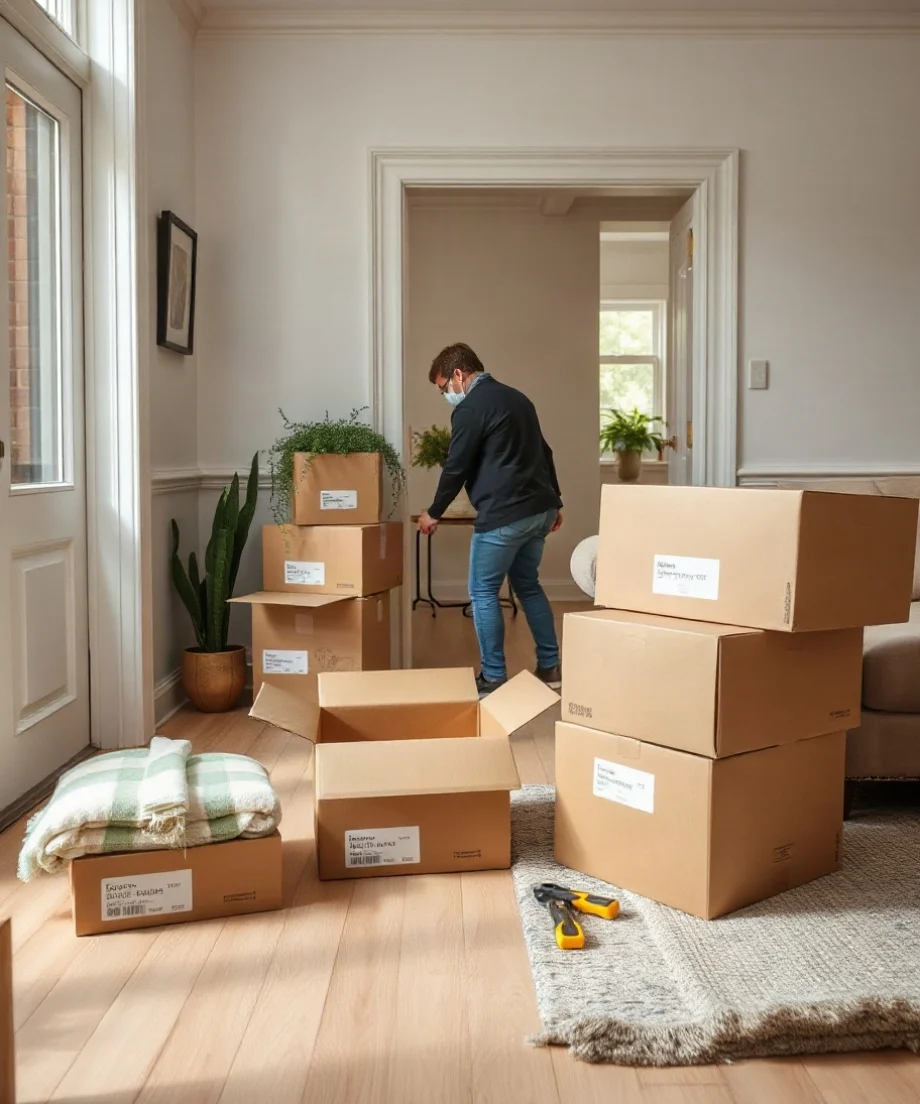
The first boxes should make the home functional, not attractive. Look for cartons labeled “open first,” “first night,” or “essentials.” If you packed these yourself, they should contain items such as toilet paper, hand soap, towels, basic toiletries, medications, phone chargers, work or school necessities, a change of clothes, bedding, simple dishes, snacks, water, and basic cleaning supplies.
If the essentials box is buried, unpack only the boxes needed to reach it. Avoid opening random cartons just because they are nearby. That often creates several piles of loose belongings before you have a place to put them.
Set up these areas in order:
- Bathroom: toilet paper, soap, towels, shower supplies, medications, and a basic first-aid kit.
- Bedroom: bed frame, mattress, sheets, blankets, pillows, and clothing for the next day.
- Kitchen: drinking glasses, a few plates and utensils, coffee or tea supplies, snacks, and any needed pet food.
- Charging area: chargers, power strips, and essential electronics.
There is no need to fully organize these rooms during the first pass. The goal is to create safe, usable spaces where you can sleep, wash, eat, and recharge.
Use Labels and Room Zones
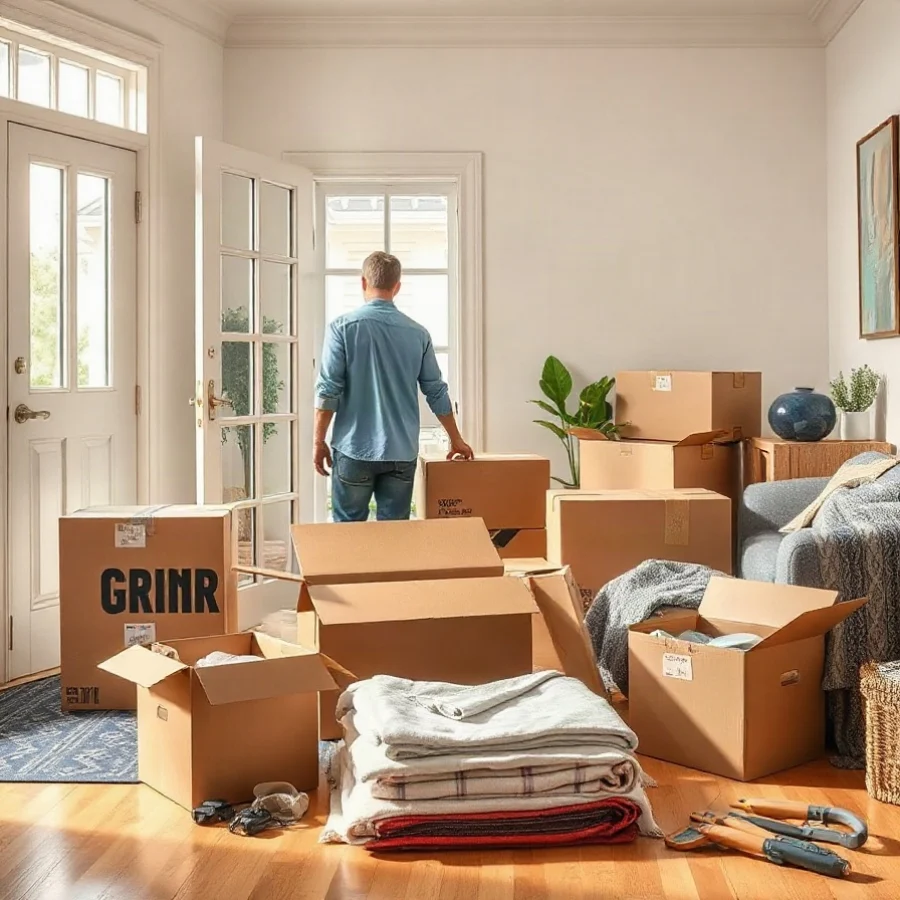
Sort each carton before cutting it open. Read the label, confirm the destination room, and carry the box to that room if it is safe to do so. If a box contains items for more than one room, place it in a temporary sorting area rather than scattering its contents throughout the house.
Within each room, create three zones:
- Put away: items with an obvious home.
- Decide later: items that need measuring, cleaning, or a more suitable storage location.
- Donate, recycle, or discard: items you no longer need, along with damaged packing materials.
Do not let the “decide later” zone become a permanent pile. Use a specific shelf, basket, or empty box for it, and review that container after the room is functional. If you are unpacking gradually, add a date to the label so you know how long the items have remained undecided.
Unpack One Room at a Time
Moving through one room at a time reduces the number of unfinished areas. A practical sequence is the bedroom, bathroom, kitchen, home office, living room, and finally storage areas. You can change the order based on your household, but finish the room that supports your immediate daily routine before starting another.
Bedroom
Assemble the bed first. Then unpack clothing, bedside items, lamps, and laundry supplies. Keep clothing in temporary categories if the closet is not ready: daily wear, work clothes, outerwear, and laundry. You can arrange hangers and drawers more carefully after the rest of the home is usable.
Bathroom
Unpack daily-use toiletries and towels before decorative items or backup supplies. Wipe shelves and drawers before filling them. Keep medications in a secure, dry location and follow their storage instructions. If the bathroom needs repairs or cleaning, use a small toiletry bag so important items remain easy to find.
Kitchen
Start with food, drinking water, basic cookware, dishes, utensils, and cleaning products. Next, unpack appliances and pantry items that you use often. Save specialty serving pieces, duplicate utensils, and rarely used gadgets for later. Before placing items in cabinets, wipe the interior and consider where they will be easiest to reach.
Home office
If you work from home, connect the computer, monitor, router, and essential accessories early. Label cables before plugging them in if you are unsure which device each cable serves. Create a temporary paper and document box rather than filing every document immediately. Important records should remain together and secure while you finish arranging the room.
Open Boxes in a Useful Order
Inside each room, unpack the items that create the most function first. A useful order is furniture, large appliances or equipment, frequently used items, clothing or linens, small accessories, and decoration. This sequence prevents small objects from covering the floor before larger pieces are positioned.
Open one carton at a time whenever possible. Remove the contents, place them in their intended locations, and dispose of the packing material before opening the next carton. If you find an item that belongs in another room, put it in a labeled transfer basket instead of leaving the room repeatedly.
For fragile goods, inspect each piece as you unpack it. Set aside cracked glass, chipped ceramics, bent frames, or damaged electronics. Photograph significant damage and keep the original box and packing material until you understand your mover’s or insurer’s claim process. Requirements and deadlines can vary, so check the applicable agreement and current official guidance rather than relying on a general rule.
Manage Boxes, Packing Material, and Returns
Break down empty cardboard as soon as you confirm that the contents are undamaged. Keep a small number of clean boxes for returns, storage, or items that need to be relocated. Separate cardboard, paper, plastic wrap, foam, and household trash according to your local recycling and disposal rules.
Some packing materials can be reused, but inspect them first. Damp, crushed, stained, or insect-damaged cardboard should not be used for long-term storage. Keep strong cartons flat in a dry location if you expect to need them for returns or future moves. Do not store heavy items in boxes that have weakened seams or crushed corners.
If you are sending unused items to another address, measure the packed carton after it is sealed. Record the outside length, width, and height, along with the package weight. For guidance on measuring a shipping carton and choosing a workable box, use the box size calculator. Carrier pricing and package limits can vary by carrier, service, destination, package type, and date, so verify current requirements with the carrier before shipping.
Prevent Unpacking Clutter
Use a small, repeatable rule: every opened box must end in one of three conditions—everything is put away, the remaining items are placed in a labeled temporary container, or the contents are assigned to donation or disposal. Do not leave half-empty cartons in multiple rooms without labels.
Keep a running list of tasks that require decisions, such as measuring a shelf, buying drawer organizers, or finding a replacement part. This prevents you from stopping the unpacking process every few minutes to solve a minor problem. Group errands together after the room is operational.
Take short breaks, especially when lifting cartons. Use two hands, keep heavy boxes low, and avoid carrying a load that blocks your view. Ask for help with furniture and awkward items. Efficient unpacking is not a race; avoiding injury and damage saves more time than rushing through a room.
Handle Oversized or Heavy Moving Boxes Carefully
Large cartons are not automatically better for moving or storage. Heavy contents can make a box difficult to carry and can damage the bottom or side panels. If you are repacking belongings, distribute weight among smaller cartons and reserve larger boxes for lightweight items such as bedding, pillows, lampshades, and clothing.
For boxes that will later be shipped, measure the outside dimensions at the widest points, including bulges and protruding parts. Carriers may calculate charges using actual weight, dimensional weight, or both. Dimensional-weight formulas and divisors vary, so use the carrier’s current rules or compare your measurements with a dimensional weight calculator before booking a shipment.
Do not assume that a carton accepted for a household move will meet the requirements of every parcel service. Check current official carrier information for maximum dimensions, weight restrictions, additional handling rules, and prohibited or restricted contents. The shipping rules guide can help you identify the details that need verification.
Create a Three-Stage Unpacking Plan
A three-stage plan keeps expectations realistic:
- First day: make the bathroom, bedroom, kitchen basics, charging area, and pet or child essentials usable.
- First week: unpack daily-use items, arrange closets and cabinets, set up work areas, and remove most empty cartons.
- Later: organize storage, hang artwork, sort keepsakes, optimize furniture placement, and decide what to donate or replace.
This schedule also makes it easier to identify what you actually use. After living with the contents for a while, you may find that some duplicates, oversized organizers, or rarely used items do not deserve valuable storage space.
Know When You Are Finished
You do not need every drawer perfectly arranged to finish unpacking. A room is functionally complete when the main furniture is placed, essential items are accessible, walkways are clear, waste is removed, and remaining boxes have a clear destination. Mark any unresolved box with its room and category instead of treating it as an anonymous task.
Once the final cartons are empty, do a room-by-room safety check. Confirm that exits are clear, cords are not creating trip hazards, heavy objects are stable, and cleaning products or medications are stored safely. Then update your address, return reusable moving supplies, and keep records of any damage or shipment that still needs follow-up.
The most efficient unpacking system is simple: establish the essentials, finish one useful area at a time, measure and handle boxes carefully, and postpone low-value decisions until daily life is working. That balance lets you settle in without turning every carton into an emergency.
Comments
0No comments yet. Be the first to share a helpful note or question.
Leave a Comment
Your email address will not be published. Comments are reviewed before appearing on the site.