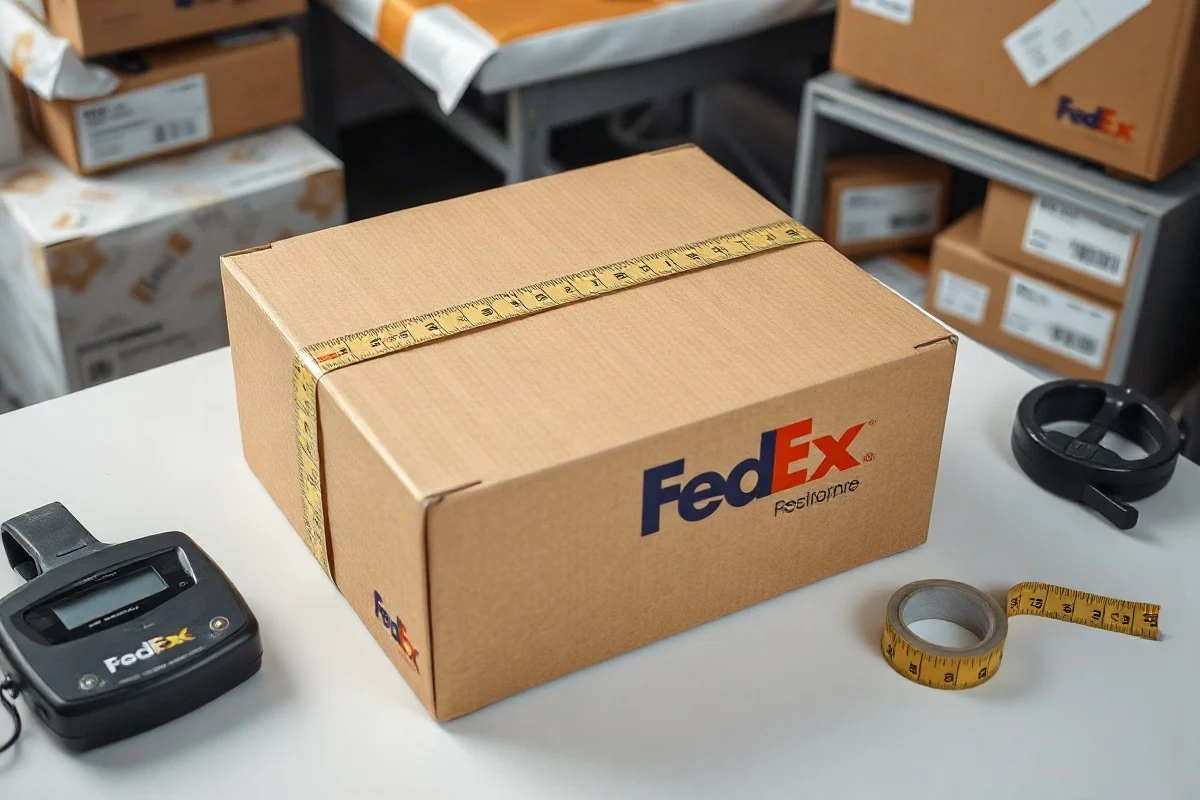
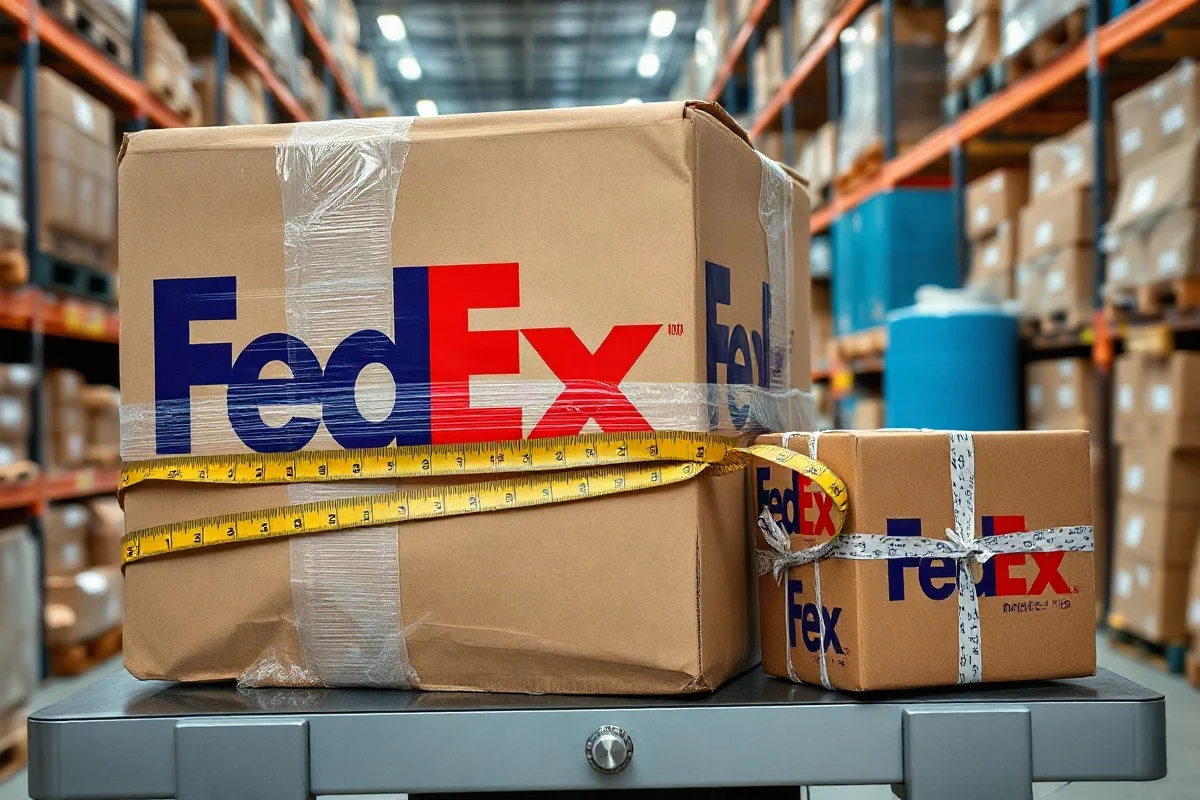
To measure a package before shipping with FedEx, pack and seal the box first, then measure its outside length, width, and height at the package’s longest points. Record the measurements in the unit required by the shipping tool, usually inches in the United States. Use those final measurements—not the empty box size—to estimate shipping cost, dimensional weight, and whether the package may be subject to special handling or size rules.
Measure the finished package, not the empty box
The package that FedEx handles includes the box, tape, labels, cushioning, and anything else attached to the shipment. Packing materials can increase the outside dimensions enough to affect the shipping charge, especially when the box is close to a size threshold.
For the most reliable measurement:
- Place the item inside the box with the intended cushioning and inserts.
- Close every flap and seal the package with shipping tape.
- Attach or account for anything that will remain on the package during transit.
- Set the box on a level surface with one of its largest faces facing you.
- Measure the outside dimensions at the widest or longest points.
Do not measure the inside of the carton, the manufacturer’s nominal box size, or the product alone. A box described as 12 by 8 by 6 inches may measure slightly differently after it is assembled and filled. Bulging sides, protruding tape, straps, handles, and irregular shapes can also change the final measurement.
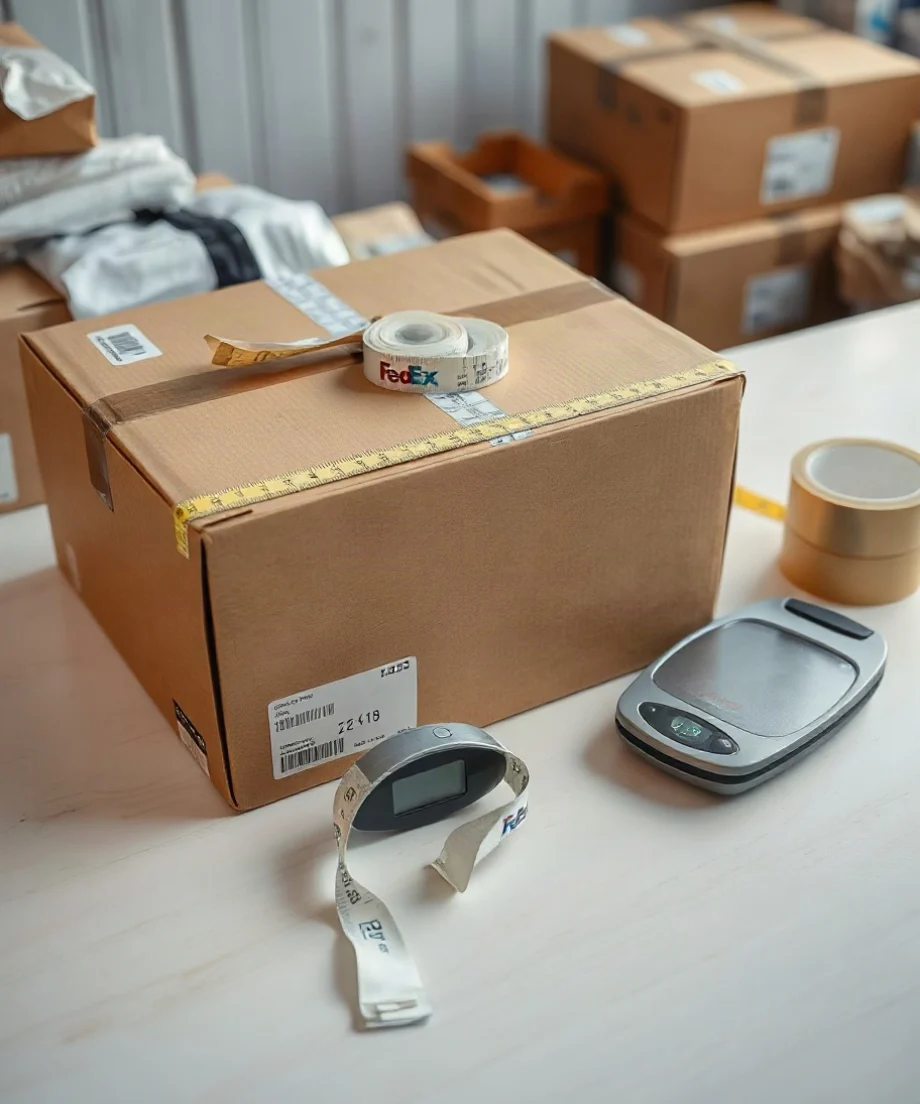
Which side is length, width, and height?
For a rectangular package, use the three outside dimensions as follows:
- Length: the longest side of the package.
- Width: the next-longest side, measured across the package.
- Height: the remaining side, measured from bottom to top when the package is positioned normally.
Shipping systems generally use the largest dimension as length, even if you hold the box in a different orientation. The order of width and height usually does not change the rectangular volume, but entering the dimensions consistently makes it easier to compare quotes and review size rules.
For example, if a sealed carton measures 18 inches long, 12 inches wide, and 10 inches high, enter it as 18 × 12 × 10 inches. If the carton is 18.25 inches long, do not automatically report it as 18 inches. Rounding down can understate the package size. When a carrier tool or rate quote requires whole numbers, follow the current instructions for that service and use a conservative measurement when the package falls between marks.
How to measure a box step by step
1. Measure length
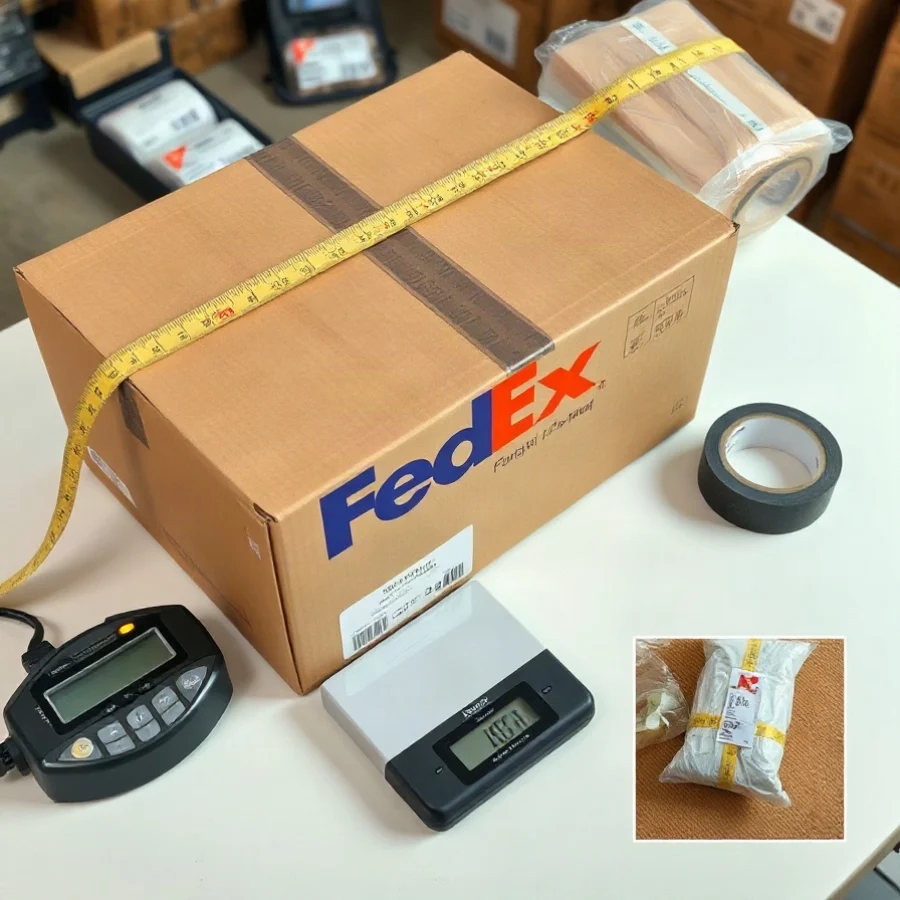
Use a rigid tape measure or ruler to measure the longest straight side of the sealed carton. Measure from the outside edge to the opposite outside edge. Include any part of the box that extends beyond the main panels.
2. Measure width
Measure the side perpendicular to length. Keep the tape straight rather than following the curve of a bowed panel. If the package is flexible or bulging, measure the greatest outside width after the box has been packed and sealed.
3. Measure height
Measure the remaining dimension from the bottom outside surface to the top outside surface. Keep the package in its normal shipping position when possible. For a soft mailer or irregular parcel, identify the maximum height rather than pressing the package flat.
4. Record all three measurements
Write the measurements in a clear order, such as 18 × 12 × 10 in. Include the unit every time you transfer the information to a spreadsheet, label worksheet, or shipping application. Mixing inches and centimeters is an easy way to create an incorrect quote.
How package dimensions affect FedEx shipping cost
FedEx pricing can depend on both actual weight and dimensional weight. Actual weight is the package’s physical weight on a scale. Dimensional weight is a volume-based calculation intended to reflect the space a package occupies in transportation. The billed weight may be based on the applicable comparison under the service and shipment terms.
The general dimensional-weight process is:
Length × width × height ÷ applicable dimensional divisor = dimensional weight
Use the divisor shown by the current FedEx rate information, shipping account, service, or online quoting tool. The applicable divisor can vary by service, package type, destination, shipment terms, and other conditions, so do not rely on a single number copied from an old chart. You can also compare the result with a dimensional weight calculator, but verify the calculator’s assumptions against the current FedEx source before purchasing postage.
For a simple volume example, a box measuring 20 × 14 × 10 inches has a cubic volume of 2,800 cubic inches:
20 × 14 × 10 = 2,800 cubic inches
That number is not itself the dimensional weight. Divide it by the current applicable divisor, then compare the result with the actual scale weight according to the rules for the FedEx service you plan to use. If the box is large but light, dimensional weight may be more important than the number shown on the scale.
How to measure an irregular package
Not every shipment is a simple rectangular carton. Cylinders, tubes, soft-sided parcels, long items, and packages with uneven surfaces require extra care.
Cylinders and tubes
Measure the full end-to-end length. For the cross-section, measure the greatest outside diameter. If the shipping system asks for rectangular dimensions, use the outer dimensions of the smallest rectangular space that would contain the tube, unless the current FedEx instructions specify another method.
Soft mailers
Pack the mailer completely, seal it, and measure its maximum length, width, and thickness. Do not compress it more than it will be compressed during normal handling. A soft package that expands after measurement may be larger when tendered to the carrier.
Oddly shaped or protruding items
Measure the maximum outside dimensions, including handles, wheels, corners, or other protrusions that remain exposed. If the shipment is not a standard parcel, check FedEx’s current packaging and service requirements before relying on an ordinary box calculation.
Check length and girth when required
Some carrier size calculations use a package’s length plus girth. For a rectangular package, girth is commonly calculated as:
Girth = 2 × (width + height)
Then the combined measurement is:
Length plus girth = length + 2 × (width + height)
For a package measuring 24 × 16 × 12 inches:
- Girth: 2 × (16 + 12) = 56 inches
- Length plus girth: 24 + 56 = 80 inches
This calculation is useful for screening a package, but it is not a universal FedEx acceptance limit. Size thresholds, additional handling conditions, oversize classifications, and service availability can change by service, destination, package characteristics, and date. Check the current FedEx service guide or the rate tool for the exact shipment before you assume the package qualifies.
Use the smallest safe box
A smaller, properly fitted box can reduce void fill, protect the product more effectively, and lower the chance that dimensional weight will exceed actual weight. Do not reduce the box size by removing cushioning that the product needs. Instead, choose packaging that holds the item securely with enough protective material around fragile surfaces.
Before sealing the carton, place the item in the center and test whether it can move. Add cushioning to prevent shifting, but avoid packing the box so tightly that its panels bulge. Bulging can increase the measured dimensions and may weaken the carton. If the product requires a second box, measure the completed outer box rather than the inner package.
For help choosing a carton, compare the item and protective-material dimensions with the options in our Box Size Calculator. The result is a planning aid, not a substitute for measuring the final sealed package.
Weigh and measure before buying the label
Use a reliable scale after the package is fully packed and sealed. Place the parcel so it is not resting against a wall or another object. Record the weight with the unit clearly marked, then record the three outside dimensions.
Review the quote using:
- Actual package weight
- Final length, width, and height
- Origin and destination ZIP Codes
- Selected FedEx service
- Residential, commercial, delivery-area, or other applicable shipment details
- Any declared-value, signature, or special-service selections
These details can affect the total charge. Rates, surcharges, service availability, dimensional-weight rules, and size classifications may change. Confirm the final quote in the current FedEx shipping system or official service documentation before purchasing the label. If you are comparing carriers, our shipping calculators can help organize the measurements, but the carrier’s current quote controls the shipment price.
A practical measurement checklist
Use this checklist each time you prepare a FedEx package:
- Pack the item completely.
- Seal the outer package.
- Measure the maximum outside length.
- Measure the maximum outside width.
- Measure the maximum outside height.
- Record the dimensions in inches or the required unit.
- Weigh the finished package.
- Calculate volume and review dimensional-weight assumptions.
- Check any applicable length-plus-girth or oversize requirements.
- Enter the measurements accurately in the current FedEx rate or label tool.
Accurate measurements are most useful when they are taken at the end of the packing process. Measuring the final package, using the correct units, and checking the current FedEx requirements can help you avoid an understated quote, an unexpected adjustment, or a package that does not qualify for the service you selected.

Comments
0No comments yet. Be the first to share a helpful note or question.
Leave a Comment
Your email address will not be published. Comments are reviewed before appearing on the site.