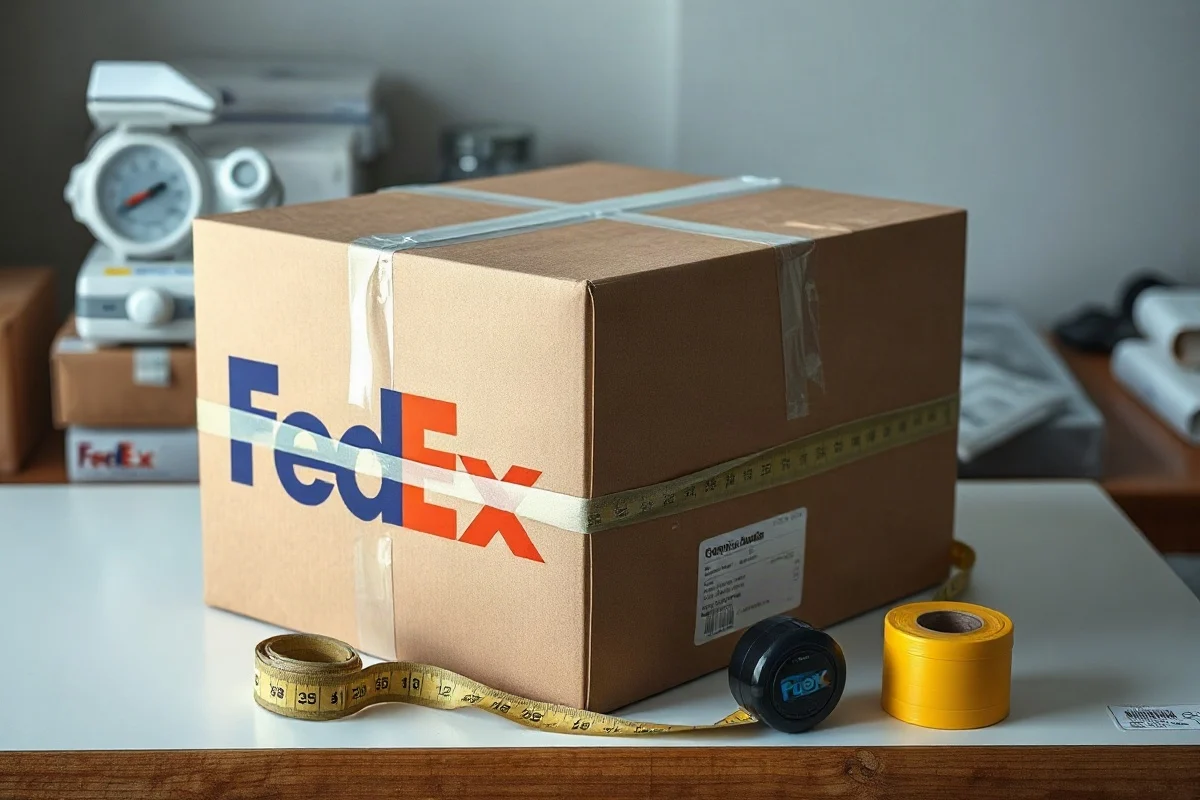
A FedEx package generally counts as oversized when its dimensions, dimensional weight, actual weight, or combined size exceed the limits for the selected FedEx service. There is not one universal oversized threshold that applies to every FedEx shipment. The classification can vary by service type, destination, package shape, billing method, and the current FedEx rate and service rules.
For that reason, the safest approach is to measure the completed package, calculate its dimensional weight, and compare the results with the current requirements for the exact FedEx service you plan to use. A package that is accepted by one service may be restricted, charged differently, or unavailable under another.
What FedEx considers when evaluating a large package
FedEx does not determine package size from the product alone. The relevant measurements are those of the sealed shipping package, including the box, cushioning, tape, labels, and any parts that extend beyond the main carton.
Several factors may affect how a shipment is classified:
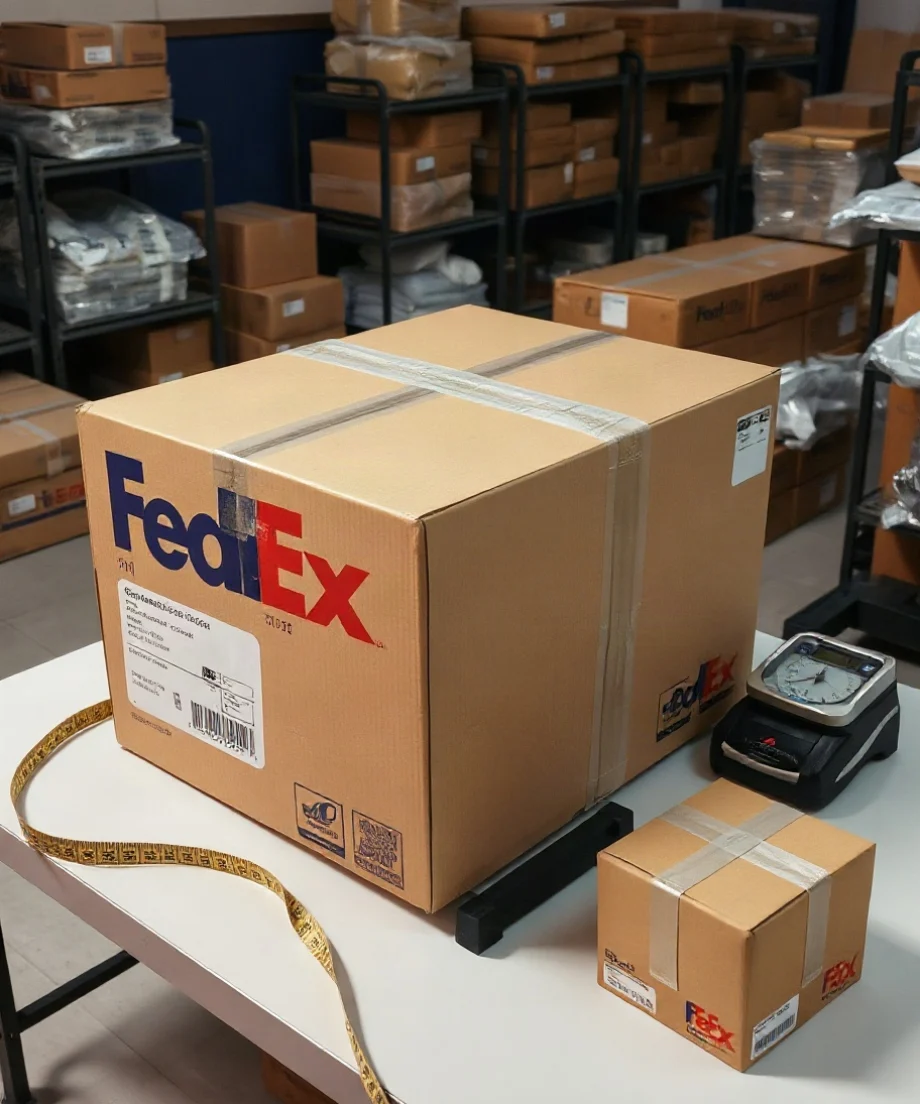
- Length: the longest side of the completed package.
- Width and height: the other two measurements, taken at their widest points.
- Length plus girth: a combined measurement commonly used for large-package screening.
- Actual weight: the package's weight on a scale.
- Dimensional weight: a calculated weight based on the amount of space the package occupies.
- Shape and packaging: irregular, cylindrical, bulging, or difficult-to-handle packages may receive different treatment from a standard rectangular carton.
FedEx may also apply additional charges or handling rules when a package is unusually large, heavy, or difficult to process. The name and amount of any charge can change, so do not rely on an old chart or a third-party shipping calculator as the final authority. Check the current FedEx service guide, rate information, and shipment-eligibility rules before tendering the package.
How to measure a package for FedEx
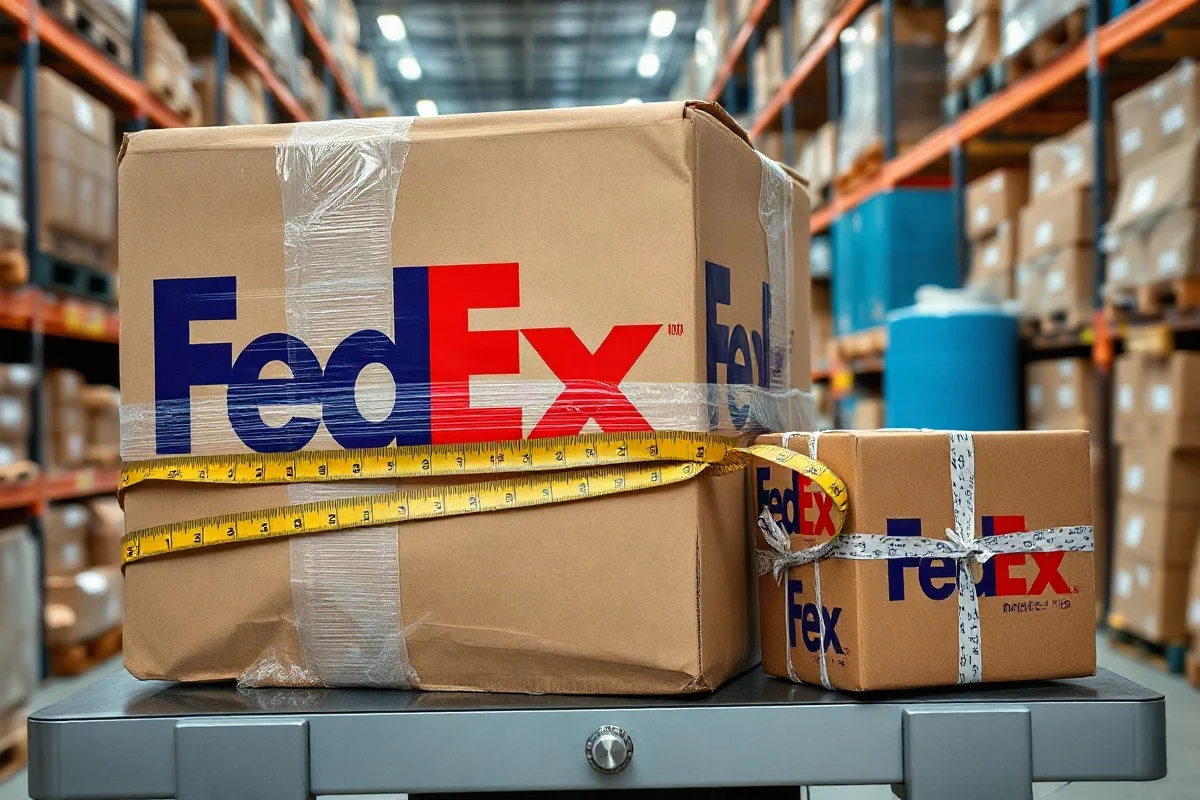
Measure the package after it is fully packed and closed. Use a rigid tape measure rather than estimating from the product dimensions. Round each measurement according to the current FedEx instructions for the service and destination; rounding practices can affect both dimensional weight and size calculations.
1. Measure the length
Identify the longest side of the box. This is the length. For a rectangular carton, it is usually the side with the greatest numerical measurement.
2. Measure the width and height
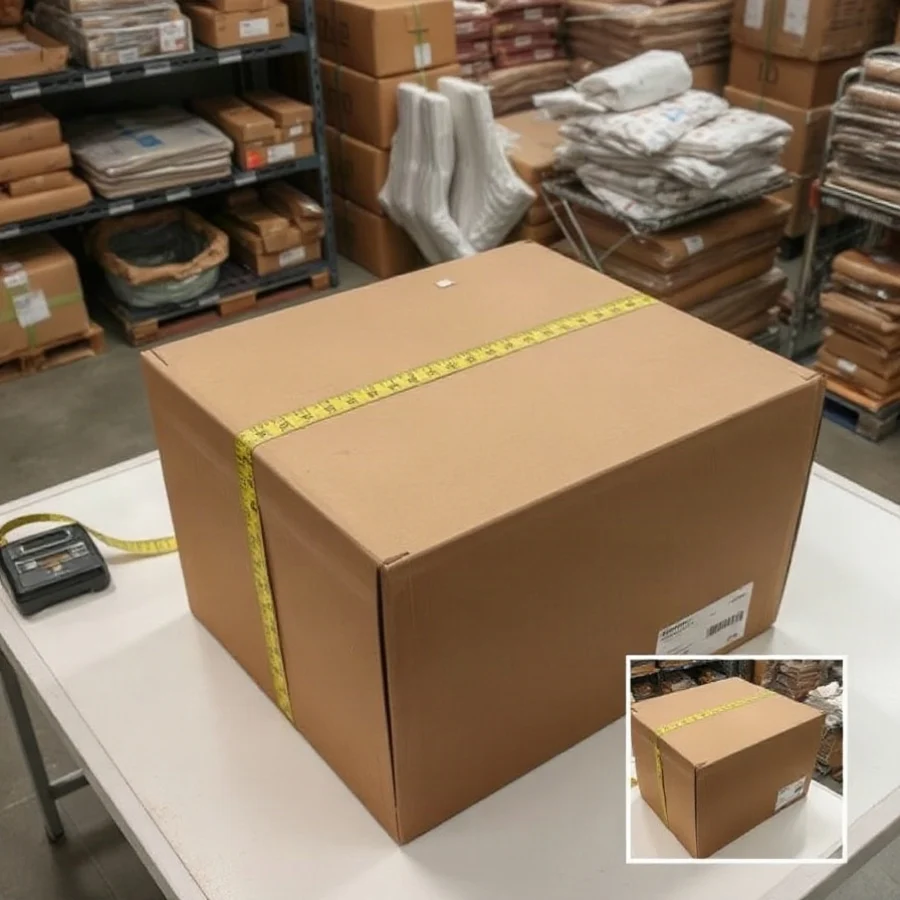
Measure the two remaining sides. Measure from the outside surfaces of the package, not from the inside of the box. Include bulges caused by overpacking, protruding straps, or packaging that changes the package's maximum dimensions.
3. Calculate length plus girth
For a rectangular package, girth is calculated as:
Girth = 2 × (width + height)
Then calculate:
Length plus girth = length + 2 × (width + height)
For example, a box measuring 30 × 20 × 16 inches has a length of 30 inches. Its girth is 2 × (20 + 16), or 72 inches. Its length plus girth is therefore 102 inches.
This calculation helps identify large packages, but the example does not establish a universal FedEx limit. Whether that carton is accepted without a special classification depends on the selected service, destination, account terms, and current FedEx rules.
For more detailed measuring guidance, see our guide to measuring a package before shipping with FedEx.
Dimensional weight can make a package expensive even when it is light
A package does not have to be physically heavy to receive a high shipping charge. Carriers use dimensional weight to account for the space a large box occupies in a vehicle or aircraft. The billed weight may be based on actual weight or dimensional weight, depending on the applicable rules and which produces the higher billable result.
The general dimensional-weight formula is:
Dimensional weight = length × width × height ÷ dimensional divisor
The divisor is not universal. It can vary by carrier, service, shipment type, destination, and current pricing rules. Use the divisor shown in the current FedEx documentation or the carrier's rating tool rather than assuming that a number found online still applies.
For instance, a 30 × 20 × 16-inch box has a volume of 9,600 cubic inches. Dividing that volume by the applicable divisor gives the dimensional-weight result. The package's billable weight may then be compared with its scale weight under the rules for the service selected.
You can use our dimensional weight calculator to understand the calculation, but confirm the final billable weight and price in the current FedEx quote or shipping system.
Is there one FedEx oversized-package limit?
No single number should be treated as the answer for every FedEx shipment. FedEx offers multiple domestic and international services, and each may have different maximums for length, weight, dimensions, package count, or acceptable packaging. The relevant limits may also differ for residential and commercial delivery, remote destinations, freight shipments, and packages requiring special handling.
In practice, a package is more likely to be treated as oversized when it has one or more of these characteristics:
- One side is unusually long compared with a normal parcel.
- The length-plus-girth measurement is high.
- The package exceeds a service's ordinary weight or size range.
- The package creates a large dimensional weight compared with its actual weight.
- The carton is nonstandard, unstable, round, tube-shaped, or difficult to sort mechanically.
- The shipment requires freight-style handling instead of ordinary parcel handling.
Rather than asking only whether a box is “oversized,” ask which FedEx service will carry it, whether that service accepts the package's measurements, and how the package will be rated. These questions provide a more reliable answer than a general threshold.
Examples of packages that may need extra attention
Long, narrow cartons
A long box containing a poster, rug, curtain rod, or sporting equipment may have a relatively low actual weight but a high length-plus-girth measurement. Protect the ends carefully, and verify that the selected FedEx service accepts the package's full dimensions.
Large boxes filled with lightweight material
A carton containing pillows, foam, clothing, or other low-density products can produce a much higher dimensional weight than actual weight. Reducing empty space may lower the billable weight, provided the product still has enough protection.
Irregularly shaped packages
Packages with handles, wheels, exposed corners, bulges, or uneven surfaces can be difficult to measure and process. If possible, place the item inside a correctly sized rectangular box. A compact outer carton is easier to measure, label, stack, and protect.
Heavy items in large cartons
A heavy product should not be placed in a box that is much larger than necessary. Excess space increases dimensional weight and can allow the contents to shift during handling. Use strong cushioning and choose a carton that leaves enough room for protection without creating avoidable volume.
How to reduce the chance of oversized-package problems
- Pack before measuring. Product dimensions are not the same as shipping dimensions.
- Use the smallest safe carton. Reduce empty space without compressing or damaging the contents.
- Keep the box square and stable. Reinforce weak seams and prevent the carton from bulging.
- Measure every outside dimension. Check opposite sides and use the largest measurement when surfaces are uneven.
- Weigh the finished package. Record actual weight after all packing materials are included.
- Calculate dimensional weight. Use the current divisor that applies to the FedEx service.
- Get a current quote. Enter the origin, destination, package dimensions, weight, and service into the current FedEx rating system.
- Check acceptance rules. Confirm that the package is eligible before scheduling pickup or taking it to a location.
Our box size calculator can help you compare box dimensions and estimate the outside size needed for a product. If the package is too large for ordinary parcel service, review whether a freight option is more appropriate instead of trying to force the shipment into a smaller service category.
What to verify before shipping
Before paying for a label, review the current FedEx information for the exact service and route. Confirm maximum package dimensions, maximum weight, dimensional-weight rules, oversized or additional-handling conditions, pickup or drop-off requirements, and any destination restrictions. International shipments may involve additional limits or customs-related requirements.
Also check the final package after labeling. A label, strap, corner protector, or exposed piece of packaging should not change the measurements beyond what you entered. If the package is remeasured by the carrier, differences between the declared and actual dimensions can affect the final charge.
For broader carrier comparisons and package-planning guidance, visit the FedEx Package Guide. The practical rule is simple: measure the sealed package, calculate both actual and dimensional weight, evaluate length plus girth, and verify the current FedEx requirements for the service you intend to use.

Comments
0No comments yet. Be the first to share a helpful note or question.
Leave a Comment
Your email address will not be published. Comments are reviewed before appearing on the site.