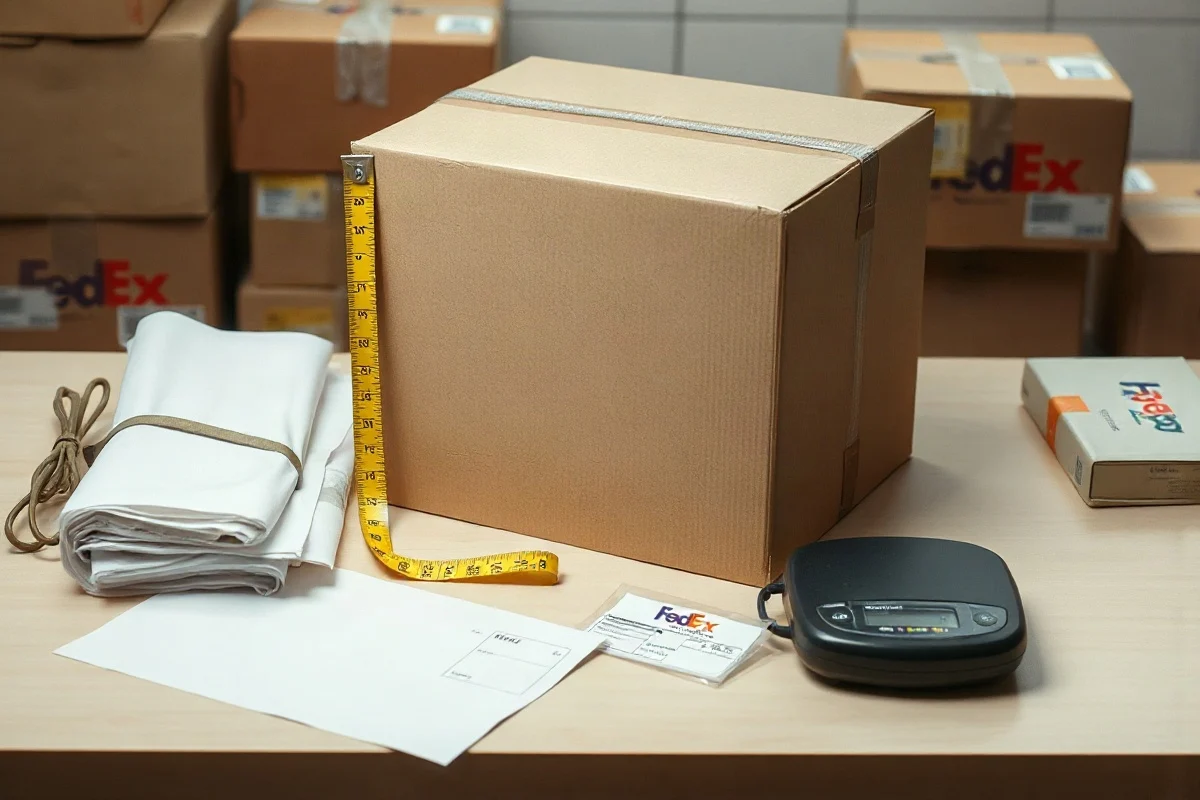
Yes, you can usually ship a package with FedEx in your own box. You do not generally need to buy a FedEx-branded box, as long as your box is strong enough for the contents, properly sealed, accurately measured, and suitable for the FedEx service you select. However, packaging requirements, size limits, surcharges, and dimensional-weight rules can vary by service, destination, and shipment date, so check the current FedEx requirements before shipping.
What kind of box can you use for FedEx?
You can use a new shipping box, a reused carton, or another sturdy corrugated box that protects the item throughout normal handling. The outside of the box does not usually need to display a FedEx logo. In fact, a plain box is often the simplest choice for most shipments.
The box should be rigid, clean, dry, and large enough to hold the item with protective cushioning. Avoid cartons that are crushed, soft, torn, water-damaged, or weakened by multiple layers of old tape. A box can look acceptable on the outside while its corners and bottom have lost much of their strength.
When a reused box is acceptable
A reused box can work well if it still has strong walls and intact seams. Remove or cover old shipping labels, barcodes, and address information so automated equipment and delivery personnel do not confuse the old markings with the current label. Check the bottom flaps carefully, especially if the box previously carried a heavy item.
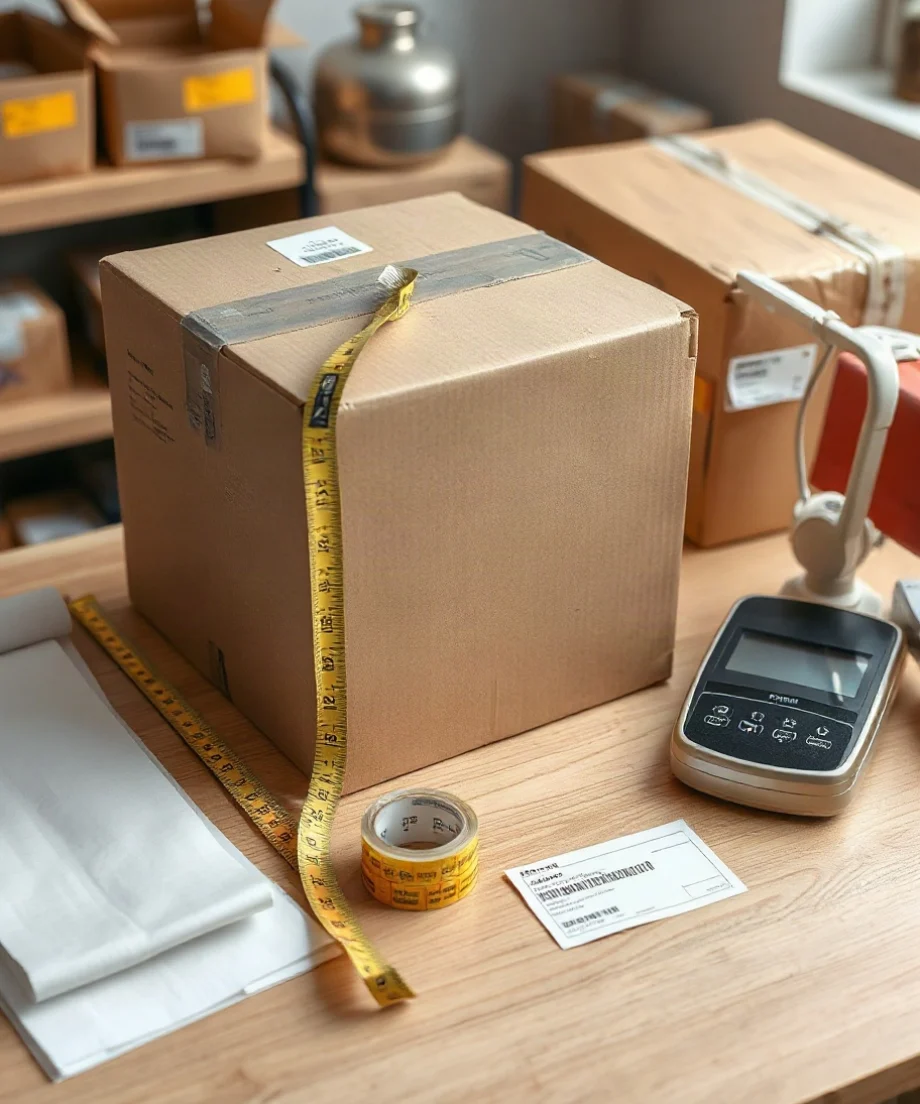
Do not use a reused carton if it has holes, crushed corners, oil stains, moisture damage, or large areas of missing cardboard. Do not put a new shipping label over an old barcode unless the old barcode is fully covered or removed.
How to choose the right box
Start with the item, not the box. Select a carton that leaves enough room for cushioning on every side without creating a large amount of unused space. A box that is too small may force the product against the walls. A box that is too large can increase package dimensions, dimensional weight, and the risk that the contents move during transit.
For fragile products, use cushioning that absorbs shock and keeps the item away from all six interior sides. Place the item in the center of the carton and fill empty areas so it cannot shift when the box is gently shaken. Heavy contents need especially strong bottom protection and a box designed for the item’s total weight.
If you are comparing several cartons, the smallest box that safely protects the contents is often the best starting point. You can use the Box Size Calculator to estimate an appropriate interior box size, then add space for the cushioning your product requires.
How to measure your FedEx package
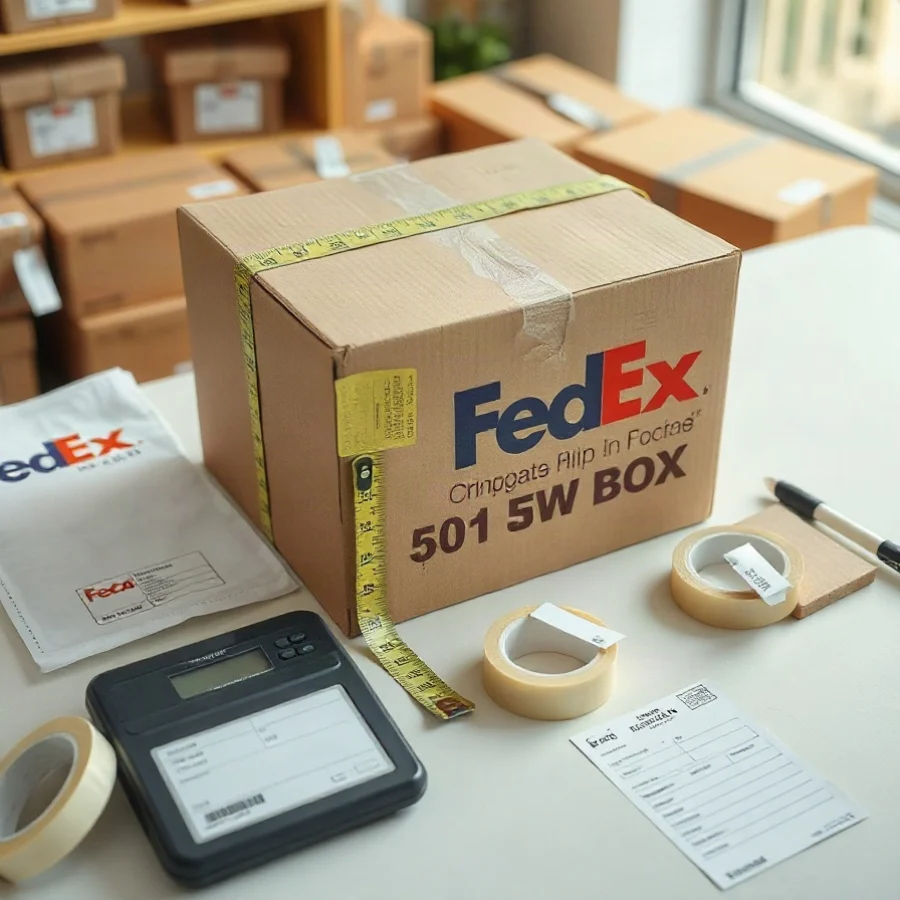
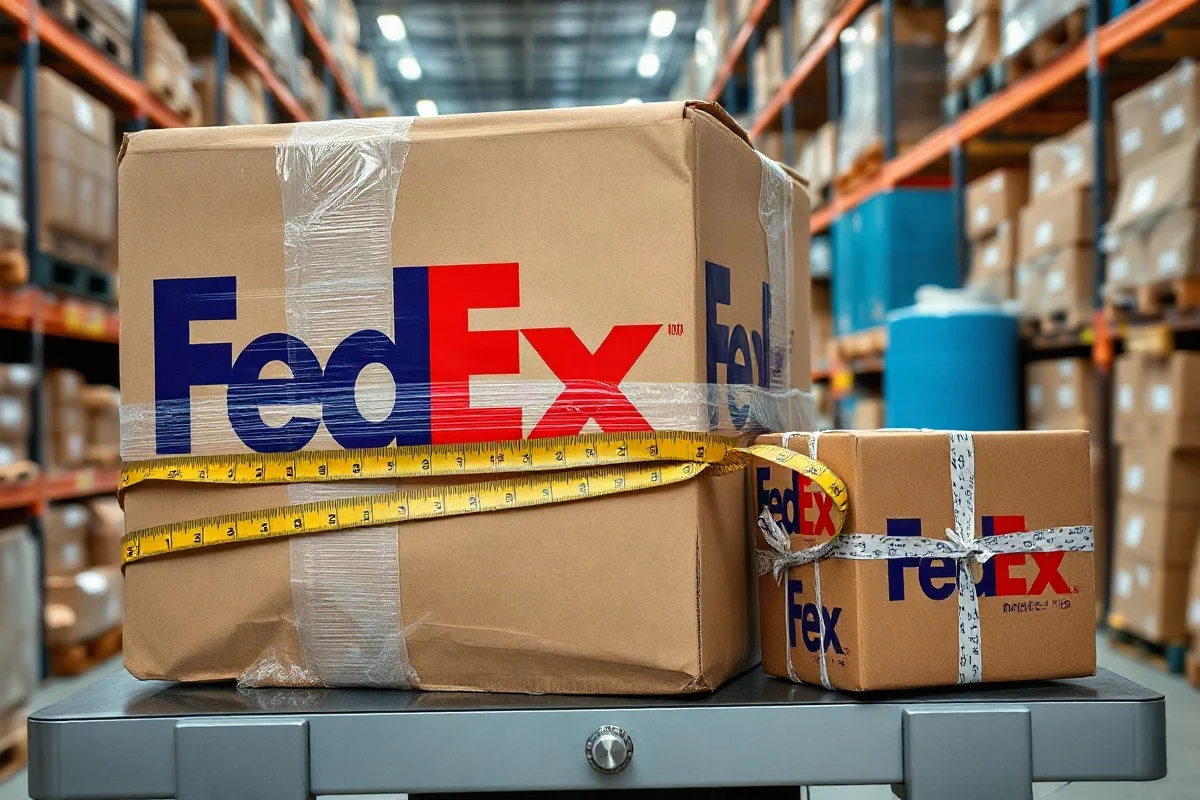
Measure the finished, sealed package rather than the product or the empty box. Place the package on a flat surface and measure the outside dimensions at the widest points.
- Length: the longest side of the package.
- Width: the side next to the length.
- Height: the remaining side, measured from the bottom to the top.
Record the measurements in the unit requested by the FedEx rate tool or shipping label system. If the box is irregular, measure its greatest usable length, width, and height. Include bulges, handles, protruding packing materials, and any part of the package that increases its outer dimensions.
For a rectangular carton, the dimensional formula is commonly expressed as:
Length × width × height ÷ applicable dimensional divisor = dimensional weight
The applicable divisor is not necessarily the same for every FedEx service, destination, or account. Because carriers can change divisors and apply different rules, do not rely on an old example or a number printed on a previous label. Enter the current package dimensions and weight into the official FedEx rate or label tool. You can also compare estimates with our Dimensional Weight Calculator, but confirm the final billable weight and charges with FedEx.
Example of dimensional weight
Suppose a sealed box measures 18 by 12 by 10 inches. Its volume is 2,160 cubic inches. The carrier may compare the actual scale weight with a dimensional-weight result calculated using the divisor that applies to the selected service. The billable weight may be based on the higher applicable value, subject to FedEx’s current rounding and rating rules.
This is why a lightweight item in a large box can cost more than expected. Reducing unnecessary empty space may lower the dimensional result, but never remove cushioning that the item needs for protection.
Check FedEx size and weight requirements
Using your own box does not exempt the shipment from FedEx size, weight, or packaging requirements. Limits can differ by FedEx service, package type, origin, destination, and whether the shipment is domestic or international. Oversize handling, additional fees, or service restrictions may also apply.
Before buying postage, review the current FedEx service guide or the requirements shown in the official FedEx shipping workflow. Verify at least the following:
- Maximum package weight for the selected service.
- Maximum length and combined size allowed for the shipment.
- Rules for unusually shaped, oversized, or non-standard packages.
- Packaging requirements for fragile, restricted, or regulated contents.
- Any additional handling or oversize charges that may apply.
- International documentation and destination-specific restrictions, when relevant.
These details can change, and a limit that applies to one FedEx service may not apply to another. If the package is close to a published threshold, measure and weigh it carefully and confirm the current rule directly with FedEx.
How to pack and seal your own box
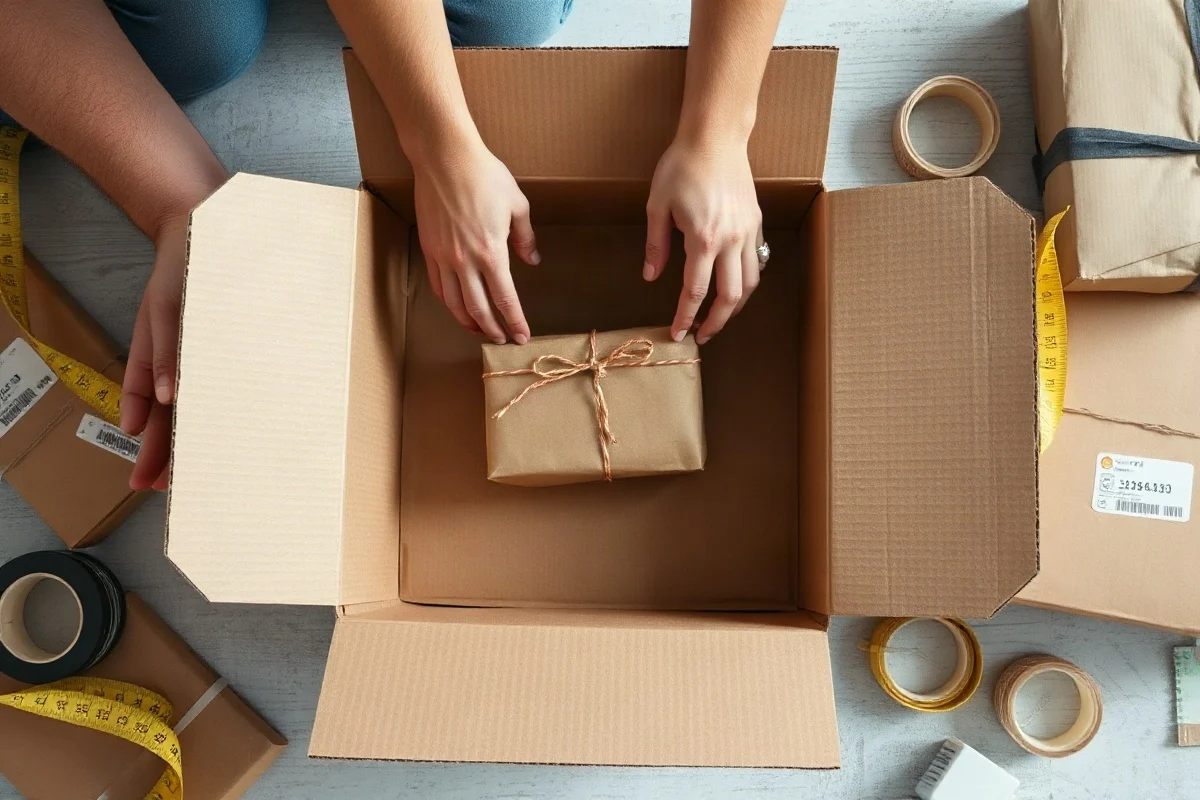
Use a packing method appropriate for the item’s weight and fragility. Place a layer of cushioning on the bottom, position the item in the center, and fill the side, top, and bottom spaces. The contents should not touch the outer walls if they need impact protection.
Close all flaps evenly and apply pressure-sensitive shipping tape across the center seam and the edge seams. For a heavy carton, reinforce the bottom and top seams with additional strips of tape. Do not depend on string, household wrapping paper, masking tape, or a single narrow strip of weak tape to hold the box together.
After sealing, perform a simple movement test. Lift the package carefully and tilt it from side to side. If the contents slide, rattle, or press against the walls, open the box and add or rearrange cushioning. This test does not replace a formal packaging evaluation, but it can reveal obvious empty space and movement.
Where to place the FedEx label
Attach the current shipping label to the largest flat surface of the box. Keep it away from seams, corners, curves, and edges where it could wrinkle or detach. Make sure the barcode is flat and readable, and do not cover it with tape that creates glare or distortion if the label instructions prohibit that.
Remove or cover old labels and barcodes. Do not place the new label over a flap that may be cut or opened. If you include a packing slip or return information, place it inside the package or use the location specified by the shipping system.
Before handing over the shipment, compare the label with the package and confirm the recipient’s name, address, service, package count, and tracking information. Keep a photo or copy of the label and receipt when the shipment is valuable or time-sensitive.
Can you use a box from another carrier?
A box printed with another carrier’s branding may create confusion and may not be the best choice for a FedEx shipment. The safest practical option is a plain, unmarked carton or a box whose old markings have been completely removed or covered. The important issue is that the package is properly prepared and clearly labeled for the carrier handling the shipment.
Carrier-branded packaging can also be tied to specific services or packaging programs. Do not assume that a box designed for one carrier’s flat-rate or special packaging service can be used under another carrier’s rules. Check the current service conditions before using branded packaging for a different shipping method.
How your own box affects the price
The box itself is only one part of the shipping price. FedEx may consider the package’s actual weight, dimensional weight, origin, destination, delivery speed, package dimensions, and selected service. Additional charges may apply depending on the shipment and current terms.
To get a more reliable estimate, weigh and measure the sealed package, not just the product. Enter the exact figures into the current FedEx rate calculator or label platform. If you use an online marketplace or shipping software, compare its package data with the final FedEx requirements because third-party systems may apply their own settings or update schedules.
For more background on the relationship between package size and cost, see Does Package Size Change the FedEx Shipping Price? You can also review our guide to measuring a package before shipping with FedEx.
A practical checklist before shipping
- Choose a rigid box that fits the item and cushioning.
- Inspect the carton for crushed corners, holes, moisture, and weak seams.
- Remove or cover every old label and barcode.
- Protect the item on all sides and prevent movement.
- Seal the top and bottom seams with strong shipping tape.
- Measure the outside of the finished package.
- Weigh the sealed package on a suitable scale.
- Check the current FedEx requirements for the selected service and destination.
- Compare actual and dimensional weight using current FedEx rules.
- Attach the label to a flat surface and confirm all shipment details.
Shipping in your own box is usually straightforward when the carton is strong, the contents are protected, and the package information is accurate. The most important step is to verify current FedEx rules for your specific service instead of assuming that an older label, rate, size limit, or dimensional-weight divisor still applies.
Comments
0No comments yet. Be the first to share a helpful note or question.
Leave a Comment
Your email address will not be published. Comments are reviewed before appearing on the site.