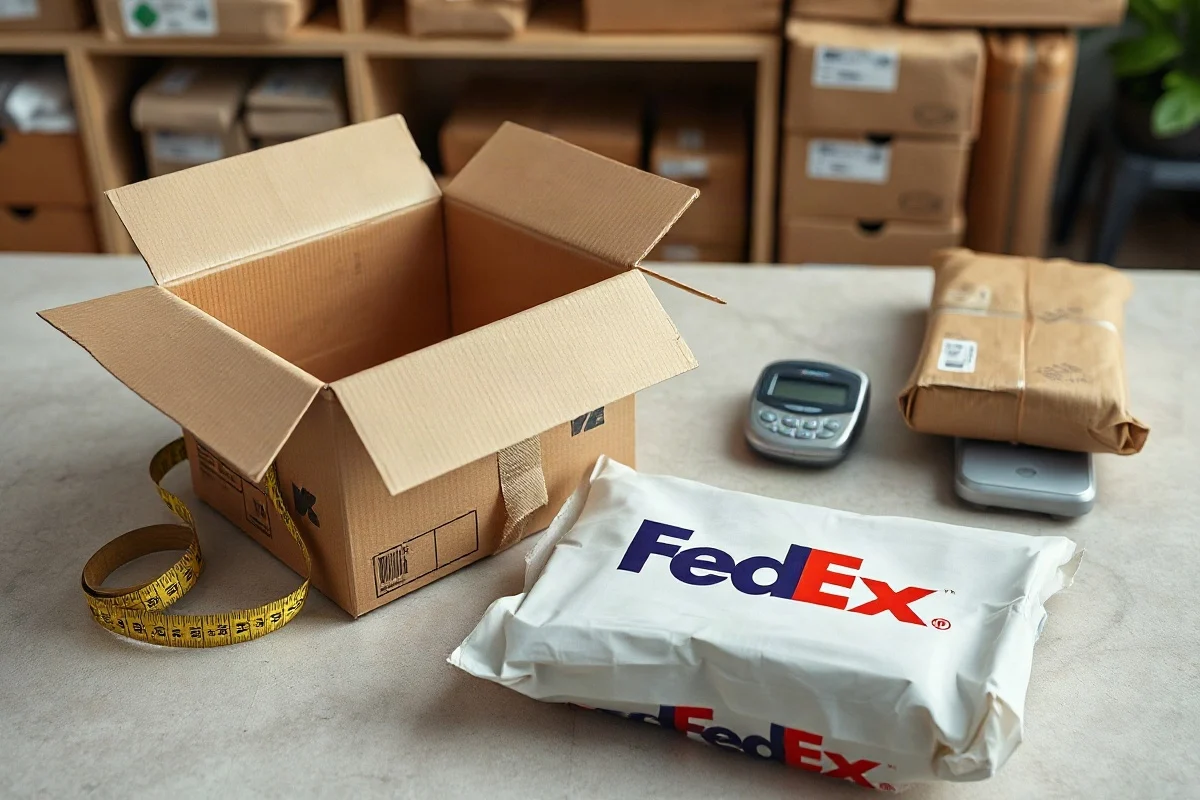
Yes, package size can change the FedEx shipping price. FedEx pricing may depend on the package’s actual weight, dimensional weight, service level, origin, destination, package type, and other shipment details. A large, lightweight box can cost more than a smaller box with the same scale weight because the larger package uses more space in a delivery vehicle or aircraft.
The exact price is not determined by box size alone. FedEx applies the pricing rules for the selected service and shipment, then may use the greater of actual weight and dimensional weight when calculating the billable weight. Because service rules, dimensional-weight factors, surcharges, and package limits can change, check the current FedEx rate information and the rate shown in the FedEx shipping tool before purchasing a label.
Why package dimensions affect FedEx shipping cost
Carriers cannot carry unlimited volume, even when packages are light. A box filled with pillows, clothing, or other low-density products may weigh only a few pounds while occupying substantial space. Dimensional weight, also called volumetric weight, estimates the amount of transportation space a package uses.
FedEx may compare the package’s actual weight with its dimensional weight. The higher value can become the billable weight for the shipment, depending on the service and the current FedEx rules. That means reducing empty space may lower the price even when the product itself weighs exactly the same.
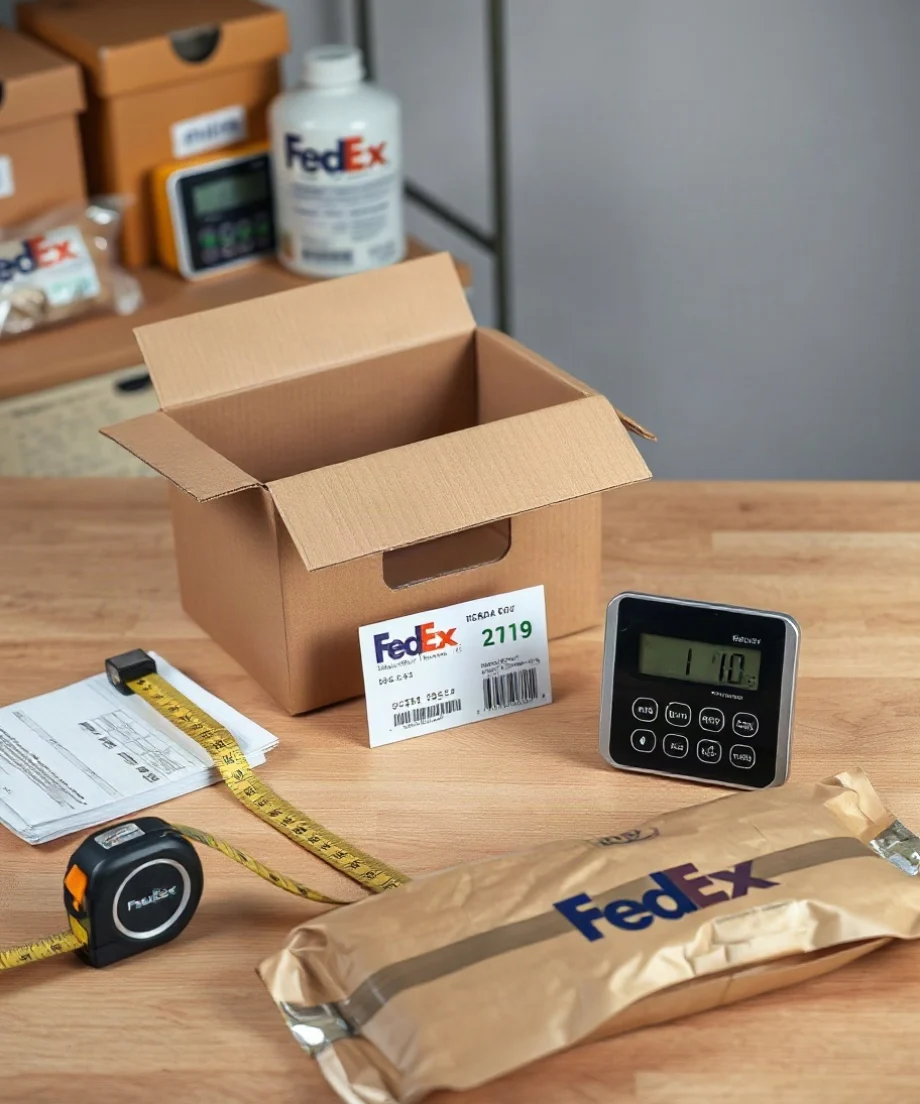
For a general explanation of the concept, see our guide to dimensional weight. You can also use a dimensional weight calculator to test different box sizes, but confirm the applicable divisor and rounding method in the current FedEx documentation for your shipment.
Actual weight versus dimensional weight
Actual weight
Actual weight is the physical weight of the packed shipment. Weigh the complete package after adding the product, box, cushioning, tape, labels, and any other packing materials. Do not use the product’s catalog weight unless it represents the finished shipping package.
For best results, use a scale that can accommodate the package and display the units required by the shipping system. If the package is near a weight threshold, a small difference in packing materials can affect the billed amount.
Dimensional weight
Dimensional weight is calculated from the package’s outside length, width, and height. The general structure is:
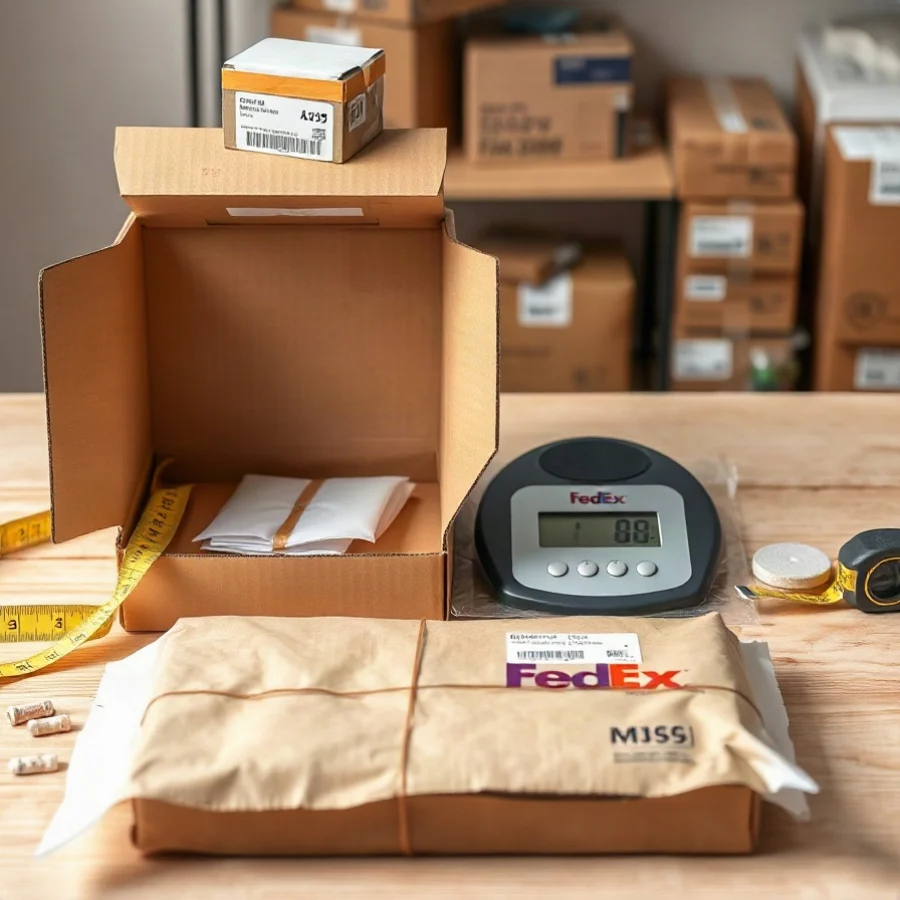
Dimensional weight = length × width × height ÷ applicable dimensional divisor
The measurements must normally be taken from the outside of the fully packed package. The dimensional divisor, unit conversion, rounding procedure, and situations in which dimensional weight applies can vary by carrier, service, package type, and destination. Do not assume that a divisor found in an old chart or a third-party calculator applies to every FedEx shipment.
For example, imagine two cartons that each weigh 8 pounds on a scale. One carton measures 12 × 10 × 8 inches, while the other measures 20 × 16 × 12 inches. The second carton has much greater volume. Depending on the applicable FedEx calculation, its dimensional weight may exceed its actual weight and raise the billable weight. The example shows why the same scale weight does not always produce the same shipping price.
How to measure a package for FedEx
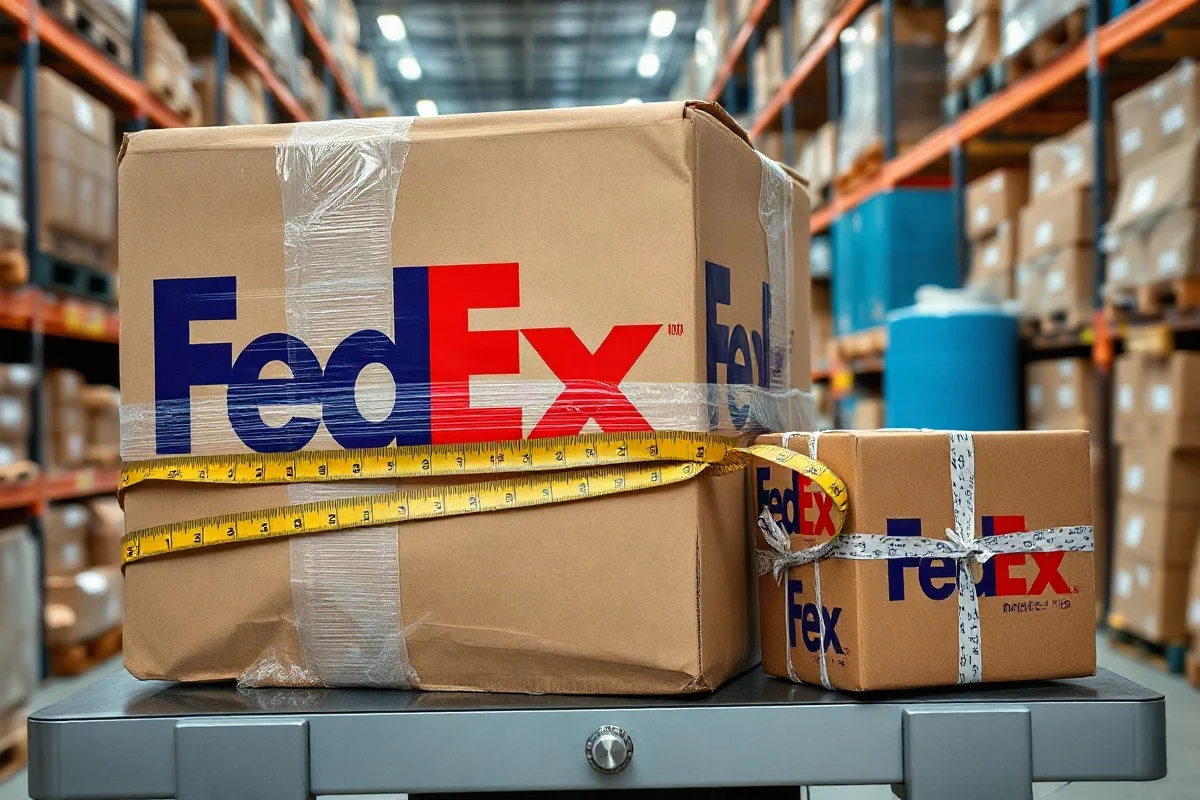
Measure the package after it has been closed and prepared for shipment. Use the longest side as the length, the next longest side as the width, and the remaining side as the height. Measure the outer dimensions, including bulges, protruding flaps, or unusually thick protective materials.
- Close the box first. Do not measure an empty carton and assume the packed version will have identical dimensions.
- Identify the three outside dimensions. Record length, width, and height in inches if the FedEx shipping tool requests U.S. customary units.
- Measure at the widest practical points. A flexible mailer or irregular package may need careful measurement around its full shape.
- Round only as required. Follow the current FedEx instructions for entering dimensions and rounding. Avoid rounding down simply to obtain a lower estimate.
- Weigh the finished package. Include all contents and packing materials.
- Enter matching information in the quote tool. Use the same origin, destination, service, package type, dimensions, and weight that will appear on the actual shipment.
For a more detailed measuring process, read how to measure a package before shipping with FedEx. Accurate measurements matter because a carrier may remeasure or reweigh a package, and the final charge can differ from an estimate based on incorrect information.
How box size can change the final price
A package can become more expensive when its dimensions increase in several common ways:
- Replacing a compact box with a larger carton: Extra empty space increases the volume used by the shipment.
- Adding excessive cushioning: Protective material is useful, but too much can increase all three dimensions.
- Using a box that is too tall or wide: A product may fit safely in a lower-profile carton.
- Choosing packaging for convenience rather than fit: A large standard box may be easy to find but expensive to ship.
- Using multiple packages: Splitting one shipment into separate cartons changes the weight, dimensions, and pricing calculation for each package.
Size is not always bad. A larger box may be necessary for fragile items, products that cannot be compressed, or packages requiring specific protective spacing. The goal is not to use the smallest possible carton at any cost. The goal is to use the smallest safe package that protects the contents and complies with the selected FedEx service.
How to reduce unnecessary dimensional weight
Choose a better-fitting carton
Start with the product’s finished dimensions, then allow enough room for cushioning and movement control. A box should not crush the product, but it should not leave large unused areas either. If you ship the same item frequently, compare several carton sizes rather than selecting the largest available box.
Our box size calculator can help you compare a product’s dimensions with possible box sizes. Treat any calculator result as an estimate and verify the final package against the current FedEx requirements.
Pack efficiently without weakening the shipment
Use cushioning where it provides protection, especially around corners, edges, and fragile surfaces. Fill voids so the contents do not shift, but avoid adding thick layers that enlarge the package unnecessarily. For soft goods, compression may reduce volume when it does not damage the item or violate a seller’s packaging requirements.
Check the closed package, not the product
The shipping measurement belongs to the finished package. A product may fit inside a carton based on its listed dimensions, but the final exterior can be larger because of protective wrap, inserts, an overbox, or a bulging closure. Measure the package that will actually receive the label.
What else can affect a FedEx shipping price?
Package size is only one part of the quote. The price can also vary according to the origin and destination ZIP Codes, delivery speed, residential or commercial delivery, pickup or drop-off arrangements, declared shipment details, fuel-related charges, additional handling, oversize or special-handling conditions, and other applicable adjustments.
Not every charge applies to every shipment, and the names or amounts of fees can change. A package that fits one service’s requirements may be priced differently under another service. Some services may also have different treatment for irregular shapes, tubes, freight shipments, international packages, or packages that exceed specified thresholds.
For that reason, do not estimate a FedEx shipment from dimensions alone. Enter the complete shipment information into the current FedEx rate or label tool, review the service terms, and compare the result with the carrier’s official documentation. If a package is close to a size or weight threshold, leave a reasonable margin and verify the exact rule before shipping.
A practical pre-shipment checklist
- Pack the product completely.
- Measure the outside length, width, and height.
- Record the finished package weight.
- Check whether the shape is regular or requires special handling.
- Enter accurate dimensions and weight in the current FedEx quote tool.
- Compare the displayed service options and total charges.
- Review the latest FedEx terms for size limits, dimensional-weight treatment, surcharges, and prohibited or restricted packages.
- Save the final measurements so you can repeat the process consistently for future shipments.
In short, a smaller package can cost less when it reduces dimensional weight, but it does not guarantee a lower price. The most reliable approach is to measure the completed package accurately, use the current FedEx pricing tool, and select packaging that balances protection with efficient use of space.

Comments
0No comments yet. Be the first to share a helpful note or question.
Leave a Comment
Your email address will not be published. Comments are reviewed before appearing on the site.