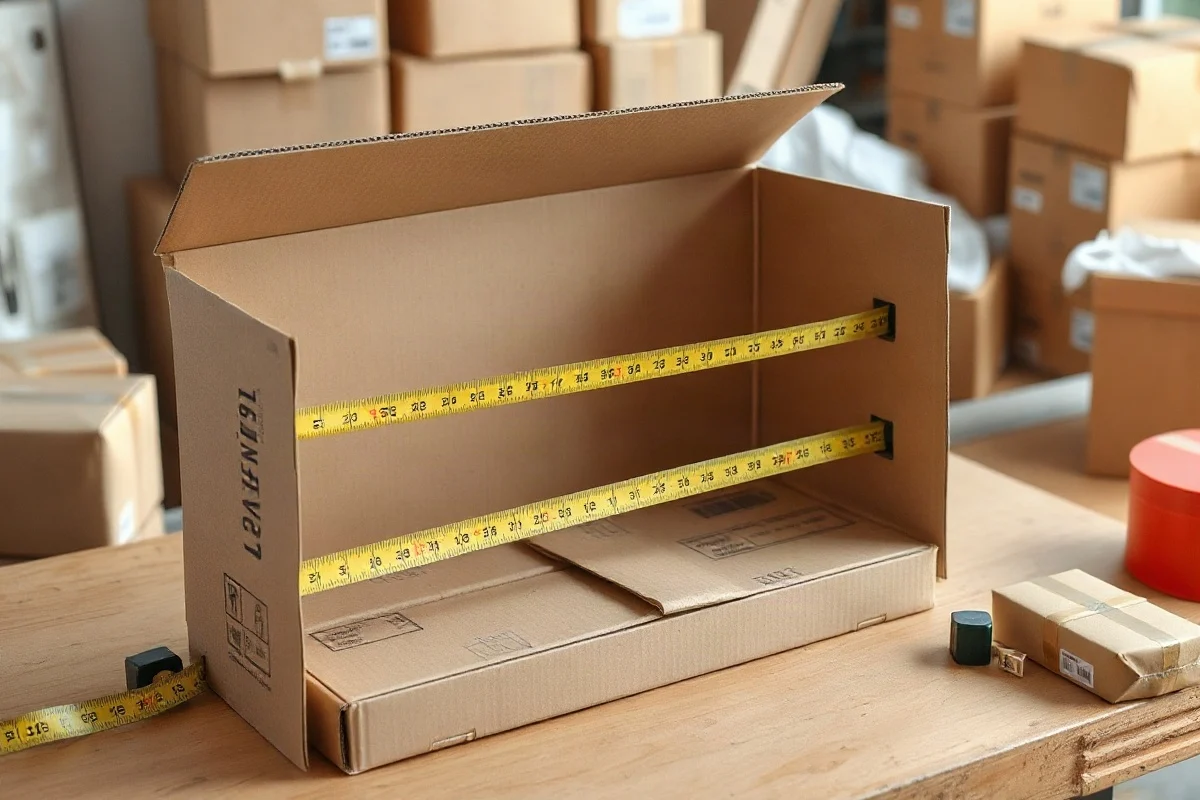
Box dimensions are usually written as length × width × height. Length is the longest side of the box, width is the shorter side measured across the opening, and height is the distance from the bottom to the top when the box is positioned for use. For example, a box listed as 16 × 10 × 8 inches is 16 inches long, 10 inches wide, and 8 inches high.
That simple order matters because box measurements affect fit, packing materials, shipping labels, dimensional weight, and carrier rules. A box that seems small enough may still cost more to ship if its outside dimensions create a large shipping volume. Learning how to read and measure the three dimensions gives you a reliable starting point for selecting packaging and estimating shipping requirements.
What length, width, and height mean
Most rectangular boxes have three measurements:
- Length: the longest horizontal side of the box.
- Width: the shorter horizontal side, measured from one side to the other.
- Height: the vertical distance from the bottom of the box to the top.
When a box is placed flat with its opening facing upward, length and width describe the base. Height describes how deep the box is. If the package is turned on its side, the physical edges do not change, but the way you orient the box may change which side is most convenient to call the height. For shipping and shopping, use the dimension order supplied by the box manufacturer or seller whenever possible.
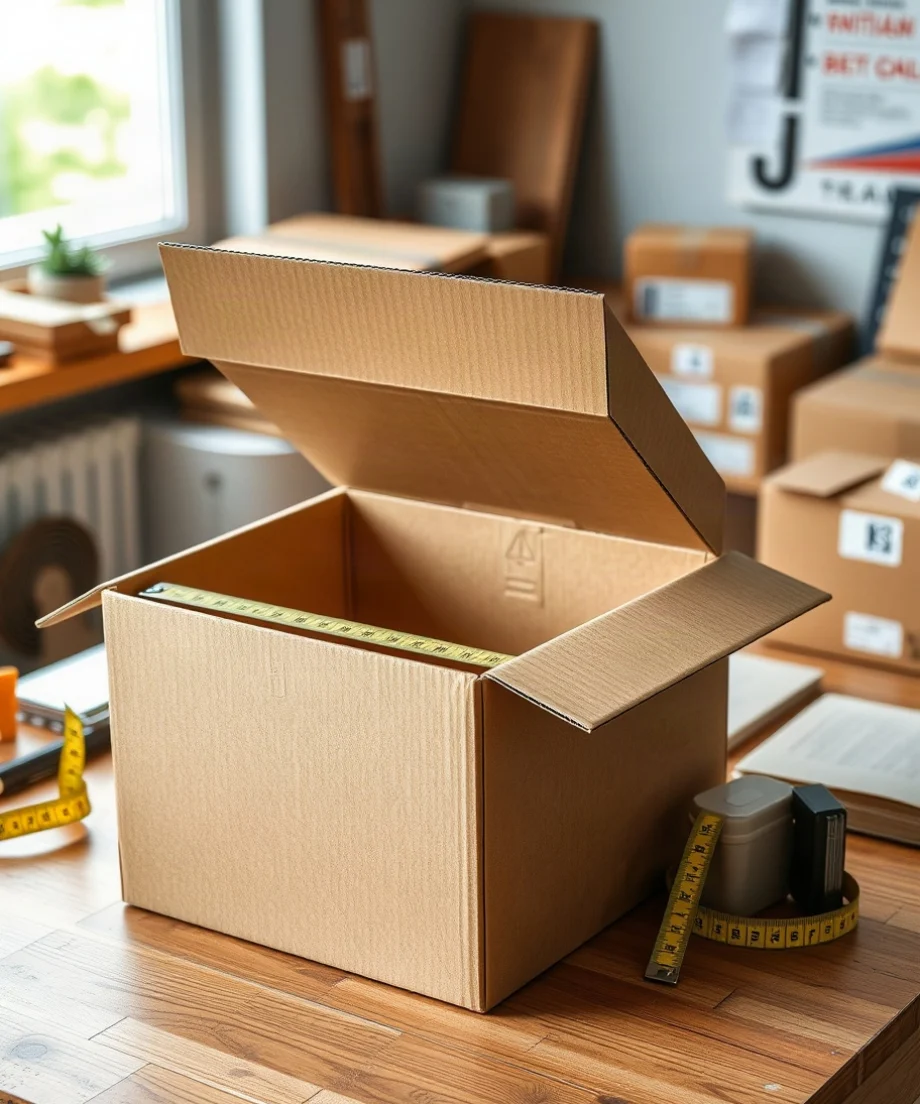
Not every source labels dimensions in exactly the same way. Some products may list measurements as length × width × depth, while others use length × width × height. Depth generally refers to the front-to-back measurement and often corresponds to height when a box is standing or open. Before comparing two boxes, confirm what each number represents.
How to read a box size
Suppose a carton is labeled 18 × 12 × 10 inches. Under the common length × width × height convention:
- Length: 18 inches
- Width: 12 inches
- Height: 10 inches
The measurements may describe either the box's inside dimensions or its outside dimensions. This distinction is important. Inside dimensions tell you how much room is available for the product and cushioning. Outside dimensions are used more often for shipping measurements because they describe the complete package, including the walls and sometimes the closure flaps.
If a product listing does not say whether measurements are internal or external, ask the seller or check the manufacturer's specification sheet. A small difference can matter when an item fits tightly or when a carrier applies size-based pricing.
How to measure a box correctly
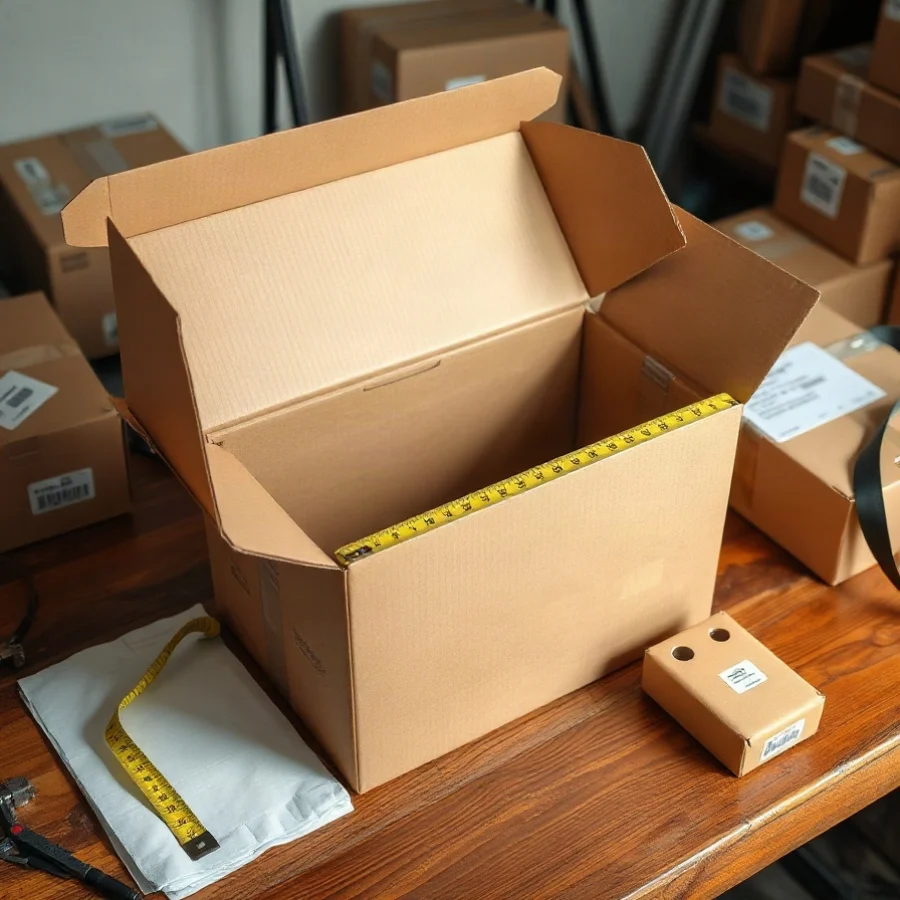
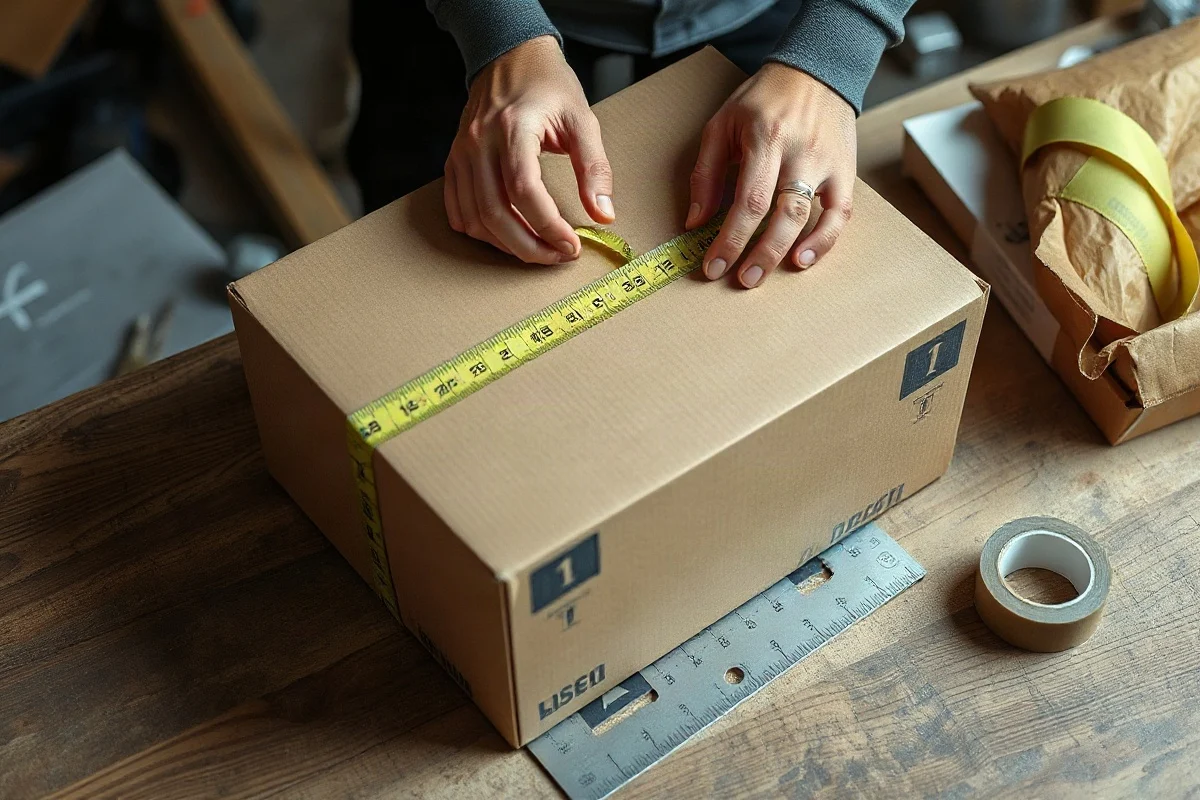
Use a rigid tape measure or ruler, and measure in a straight line rather than following a curved edge. For an assembled rectangular box, measure the three dimensions at their longest practical points.
Measuring the inside
- Open the box and place it on a flat surface.
- Measure the inside length from one interior end panel to the opposite end panel.
- Measure the inside width from one interior side panel to the other.
- Measure the inside height from the bottom panel to the top opening or opposite interior panel.
- Record the measurements in the same unit, such as inches or centimeters.
Inside measurements are useful when checking whether a product, insert, or protective padding will fit. Do not assume that the advertised box size is the usable space. Corrugated walls, folded flaps, corner supports, and inserts all reduce the room available inside.
Measuring the outside
For shipping, measure the closed package after the item, cushioning, tape, and other materials are in place. Measure the longest outside length, the widest outside width, and the outside height. Include anything that is part of the package's exterior, such as a bulging panel or protruding protective material.
Do not compress a soft package while measuring it. If a mailer or padded envelope has flexible sides, measure its dimensions in the condition it will have when handed to the carrier. Carrier measurement practices and pricing rules can vary, so check the current official requirements for the service you plan to use.
For a more detailed measuring process, see how to measure a box correctly.
Why dimension order matters
Dimension order helps people compare boxes consistently, but orientation can create confusion. A cube measuring 12 × 12 × 12 inches looks the same in every direction. A rectangular box does not. A 20 × 8 × 6 inch box has the same physical edges as a box described as 8 × 20 × 6 inches, but the labels are presented in a different order.
When entering dimensions into a shipping calculator or online form, use the fields exactly as labeled. Enter the longest side as length unless the tool gives different instructions. Avoid swapping width and height casually, especially when a rule depends on the longest side or on the sum of several dimensions.
Calculate box volume
Box volume shows how much three-dimensional space the measurements represent. For a rectangular box, use this formula:
Length × width × height = volume
For a box measuring 18 × 12 × 10 inches:
18 × 12 × 10 = 2,160 cubic inches
Volume is useful for comparing packaging options and estimating how much room a product and its cushioning may require. It is not the same as the product's actual weight, and it does not by itself determine the final shipping price.
To convert cubic inches to cubic feet, divide by 1,728 because one cubic foot contains 1,728 cubic inches. The example above is 2,160 ÷ 1,728, or 1.25 cubic feet. When using centimeters, the result is cubic centimeters. Keep the units consistent throughout the calculation.
Box dimensions and dimensional weight
Shipping companies may consider both actual weight and dimensional weight. Dimensional weight estimates the weight a package represents based on the space it occupies in a vehicle or aircraft. A large, lightweight box can therefore be priced differently from a compact box with the same actual weight.
The exact dimensional-weight formula, divisor, rounding method, minimum billable weight, and service conditions vary by carrier, service level, package type, destination, and current policy. Do not rely on one universal divisor. Check the carrier's current pricing or packaging guidance before quoting a shipping cost.
You can use the Dimensional Weight Calculator to organize the measurements, but verify the result against the rules for your selected service. Measure the package after packing, not just the empty carton, because cushioning and other materials may increase the outside dimensions.
Inside dimensions versus outside dimensions
The difference between inside and outside dimensions is usually related to the thickness of the box walls and the shape of the panels. A box with a nominal size of 12 × 10 × 8 inches may provide slightly less usable space inside. The difference may be minor for loose-fill packaging but significant for a rigid product that needs to fit precisely.
Use inside dimensions when:
- Checking whether the product will fit.
- Planning foam, paper, air pillows, or other cushioning.
- Designing a product insert or retail package.
- Estimating the amount of empty space around an item.
Use outside dimensions when:
- Entering package size into a shipping tool.
- Comparing the package with a carrier's size conditions.
- Estimating dimensional weight.
- Checking storage, shelf, or vehicle space.
How much extra space should a box have?
A shipping box should be large enough for the product and its protective materials, but not so large that the item moves freely inside. The right amount of extra space depends on the item's fragility, shape, weight, and the cushioning method.
Start by measuring the item at its longest, widest, and tallest points. Then account for the thickness of the protective material on each side. If the item measures 10 × 6 × 4 inches and you need approximately 2 inches of cushioning on every side, the inside box dimensions need to be about 14 × 10 × 8 inches. This is a planning estimate, not a universal packaging rule; test the packed product before shipping large quantities.
Allow additional room for irregular shapes, handles, corners, or parts that cannot be compressed. At the same time, avoid filling a large empty carton with excessive material simply because the box is available. A closer fit can reduce movement and may help control shipping volume. For more guidance, read how much bigger a box should be than the item.
Practical packing steps
- Measure the product. Record its maximum length, width, and height, including attached parts.
- Choose a suitable carton. Use a box with enough interior room for cushioning and closure.
- Protect vulnerable areas. Add padding around corners, edges, glass, screens, and other fragile sections.
- Center the item. Keep it away from the box walls when the contents require impact protection.
- Fill empty spaces. Prevent shifting without forcing the product against the panels.
- Close and reinforce the box. Apply tape securely along the main seams.
- Measure the finished package. Record the outside dimensions and actual weight after packing.
- Check the selected service. Confirm current carrier size, weight, and pricing conditions before purchasing a label.
Common mistakes to avoid
Measuring the product instead of the package
A shipping label uses the finished package, not just the item inside. Tape, padding, an outer carton, or a protruding flap can change the final measurements.
Using nominal box size as usable space
The size printed on a carton may be rounded or based on outside measurements. Confirm the inside dimensions when the fit is close.
Ignoring shape and bulges
A box that bows outward may measure larger than its flat-panel dimensions. Measure the package in its packed condition.
Assuming every carrier uses the same rule
Carrier requirements may differ by service and may change over time. Review the current official source for the carrier and service you are using. You can also compare related guidance in the Box Sizes section.
A quick dimension checklist
Before ordering boxes or buying a shipping label, confirm these details:
- Are the dimensions listed as length × width × height?
- Are they inside or outside measurements?
- Are all three measurements in the same unit?
- Will the product and protective materials fit without excessive movement?
- Did you measure the closed, finished package?
- Does the selected carrier service have current size, weight, or dimensional-weight conditions that apply?
Once these questions are answered, box dimensions become much easier to use. Measure consistently, distinguish inside space from outside package size, and check the current service rules before shipping. Those habits help you choose a better-fitting box and avoid surprises caused by inaccurate measurements or unnecessary package volume.
Comments
0No comments yet. Be the first to share a helpful note or question.
Leave a Comment
Your email address will not be published. Comments are reviewed before appearing on the site.