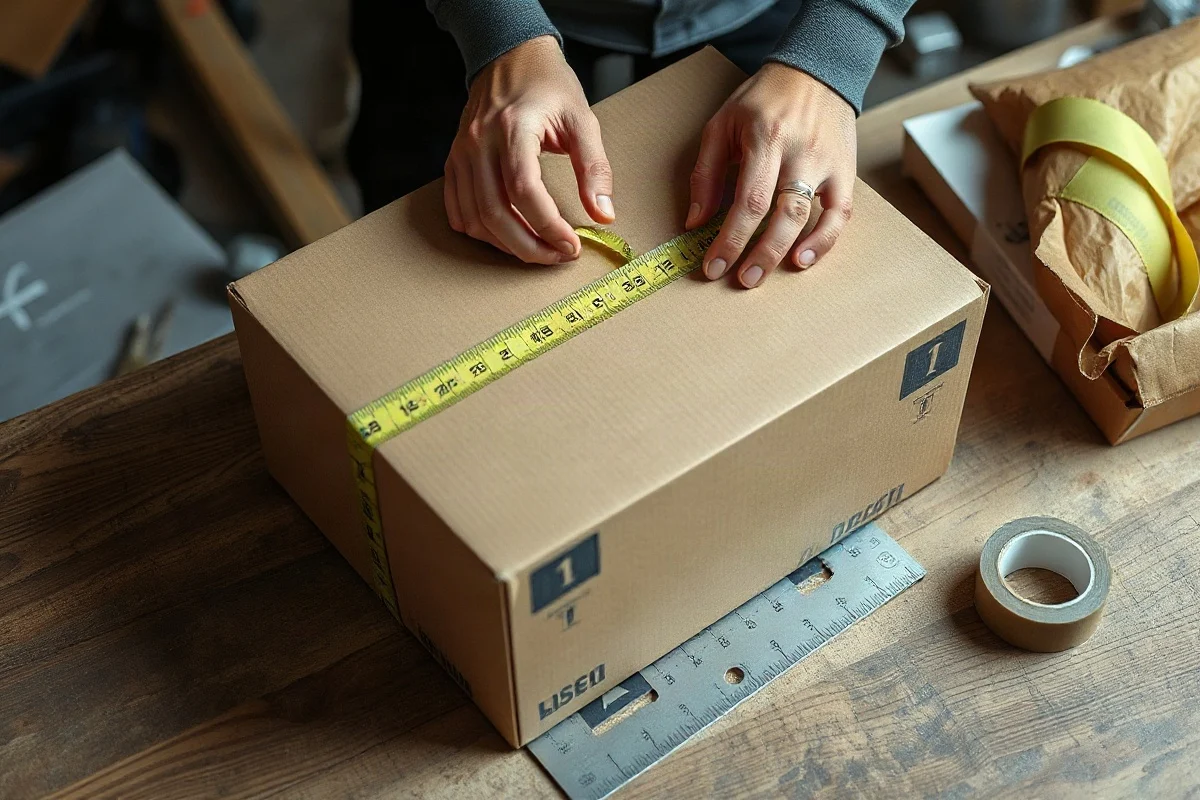
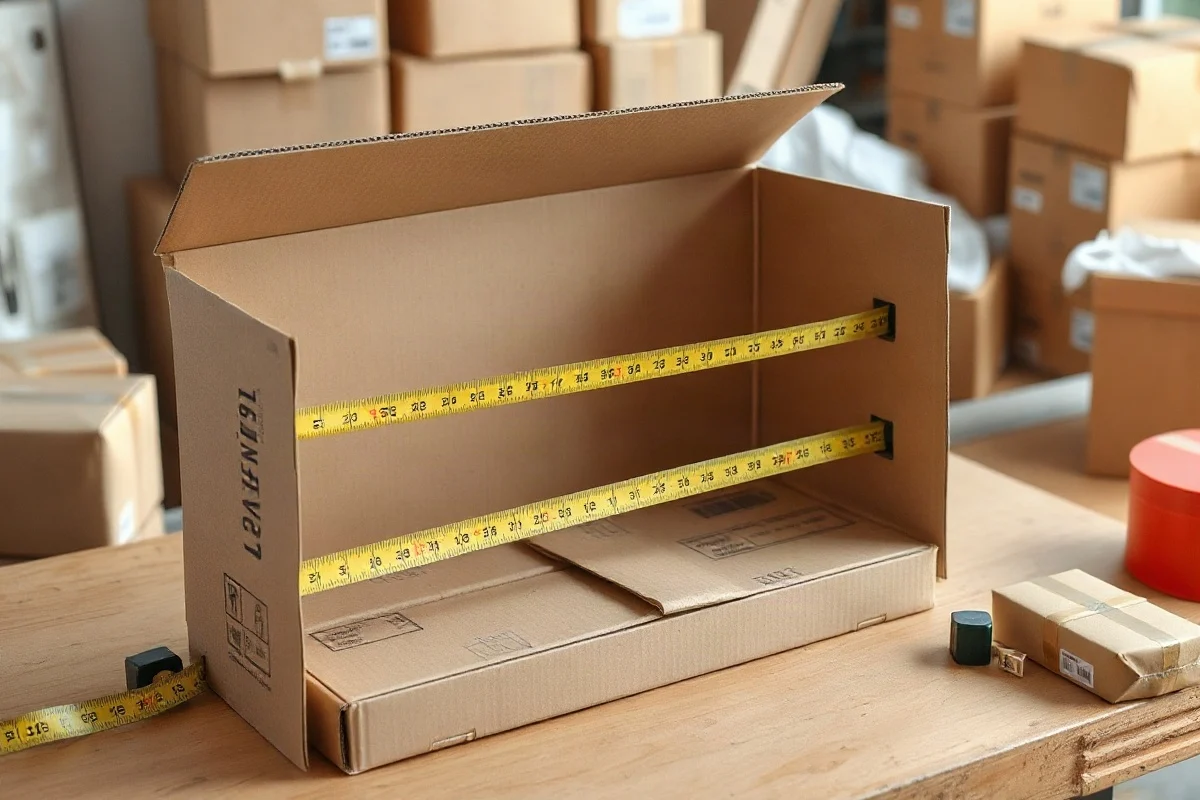
To measure a box correctly, place it on a flat surface and measure its length, width, and height in that order. For a standard rectangular box, length is the longest side, width is the shorter side across the opening, and height is the distance from the bottom to the top. Record the measurements in inches, usually as length × width × height, and measure the outside dimensions when preparing a package for shipping.
What the Three Box Dimensions Mean
Most boxes are described with three dimensions: length, width, and height. These measurements describe the space occupied by the box and help determine whether it will fit a product, storage area, conveyor system, mailbox, or carrier requirement.
- Length: Usually the longest side of the box.
- Width: The shorter side of the box when viewed from the top.
- Height: The vertical distance from the bottom of the box to the top.
A box measuring 12 × 8 × 6 inches is 12 inches long, 8 inches wide, and 6 inches high. The order matters because shipping systems, product listings, warehouse records, and packaging specifications commonly expect dimensions in this sequence.
Some manufacturers or retailers may use different conventions, especially for specialty packaging. If a box already has dimensions printed on its label, confirm what order the numbers follow before using them. When in doubt, identify each side by name rather than relying only on a sequence of numbers.
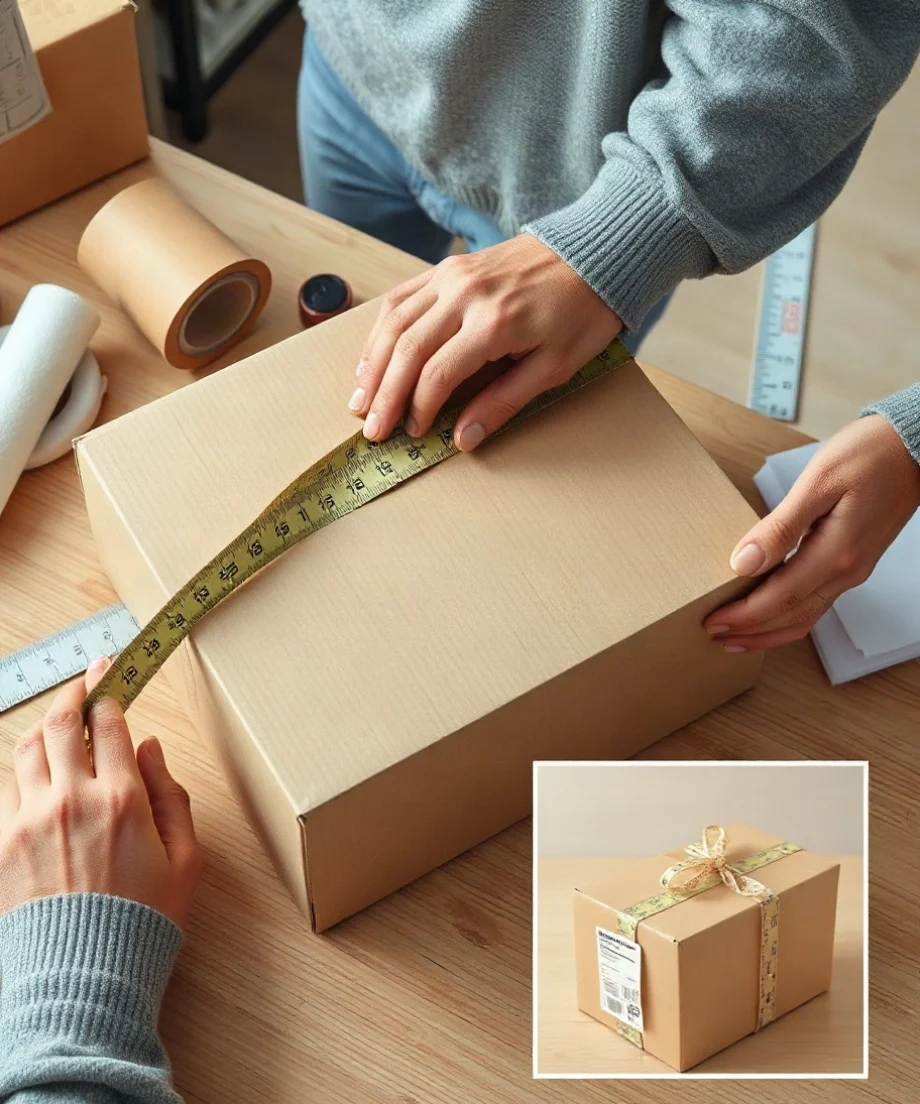
How to Measure a Box Step by Step
1. Gather a suitable measuring tool
Use a rigid ruler, yardstick, or tape measure with clear inch markings. A flexible tape measure is useful for large cartons, but keep it straight and level as you measure. For small boxes, a rigid ruler can provide better control.
Do not estimate the dimensions by comparing the box with your hand or another object. A small error may affect the fit of the item, the amount of protective material needed, or the shipping dimensions entered into an online label system.
2. Place the box on a stable surface
Set the box on a flat table or floor. Straighten any bent flaps and make sure the carton is sitting in its normal shape. If the box is crushed, bulging, or twisted, measurements taken while it is distorted may not represent the package after it is properly packed and sealed.
3. Identify the length
Start with the longest horizontal side of the box. Measure from one outside edge to the opposite outside edge. Keep the measuring tool parallel to the surface rather than measuring diagonally across the carton.
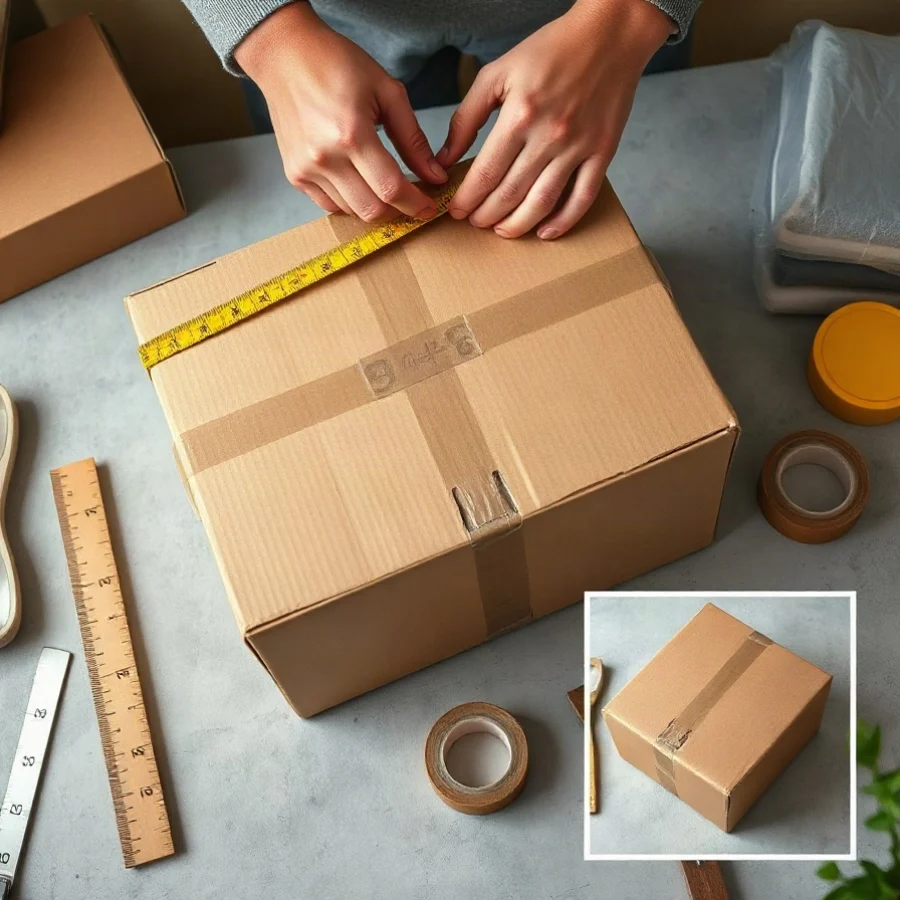
4. Measure the width
Measure the shorter horizontal side that runs perpendicular to the length. On a typical rectangular shipping carton, this is the side-to-side distance across the top or bottom panel.
5. Measure the height
Measure vertically from the bottom outside edge to the top outside edge. If the box is standing in its intended orientation, height is the dimension that runs upward. For a box lying flat on a table, rotate it mentally or physically so you can identify which side is height.
6. Round consistently
Write down the actual measurement before rounding. If a box measures slightly more than 12 inches, do not automatically record it as exactly 12 inches when a carrier, marketplace, or shipping platform requires precise package dimensions. Some systems use whole inches, while others accept fractions or decimals.
For shipping, it is generally safer to use the package's true outside measurement and follow the current instructions for the service you are using. Requirements can differ by carrier, service level, destination, and package type, so check the current official source before finalizing a label or account setting.
Inside Dimensions vs. Outside Dimensions
One of the most common measurement mistakes is confusing the inside dimensions of a box with its outside dimensions. The correct choice depends on what you are trying to determine.
Inside dimensions describe the usable space available for the product and cushioning. They are important when choosing a carton for an item. A box advertised as 12 × 8 × 6 inches may have slightly less interior space because the cardboard takes up room and the manufacturer may measure the carton differently.
Outside dimensions describe the total space occupied by the packed package. They are normally the relevant measurements for shipping labels, carrier size checks, storage planning, and dimensional-weight calculations.
If you are selecting a box for a product, compare the product's measurements with the usable interior space. If you are entering information for shipping, measure the closed and sealed package from the outside, including any protruding tape, bulges, or packaging features that affect its maximum dimensions.
How to Measure a Box for Shipping
Measure the box after it has been packed, closed, and prepared as it will travel. Packing materials can change the shape of a carton, and an item that presses against the sides can create a bulge. A sealed package may therefore be larger than the empty box measured before packing.
- Place the packed package on a flat surface.
- Make sure the flaps are closed and the tape is applied.
- Measure the longest outside dimension as the length.
- Measure the remaining horizontal dimension as the width.
- Measure the vertical dimension as the height.
- Check for bulges, protruding tape, uneven corners, or soft packaging that changes the maximum size.
- Record the measurements in the unit required by the shipping service or online form.
For a practical reference on entering package measurements, you can also review this package dimensions guide. The carrier's current official instructions should take priority if they specify a particular measuring method or rounding rule.
How Box Measurements Affect Dimensional Weight
Large, lightweight packages may be priced according to dimensional weight rather than actual scale weight. Dimensional weight is based on the amount of space a package occupies, so accurate outside measurements are essential.
A common structure for a dimensional-weight calculation is:
Length × width × height ÷ dimensional divisor = dimensional weight
The dimensional divisor is not universal. It may vary by carrier, service, package type, destination, and current pricing rules. Do not assume that one divisor applies to every shipment. Use the divisor shown in the current official rate or service documentation, or enter the measurements in a reliable calculator that reflects the service you are evaluating.
Even a small increase in one dimension can change the calculated volume. For example, a package that measures 18 × 12 × 8 inches has a different volume from one measuring 18 × 12 × 9 inches. The extra inch in height increases the total cubic measurement, even though the package may look nearly identical.
Our dimensional weight calculator can help you work through the volume and compare it with actual weight. Verify the result against the current carrier rules before purchasing postage.
How to Measure Irregular or Soft Packages
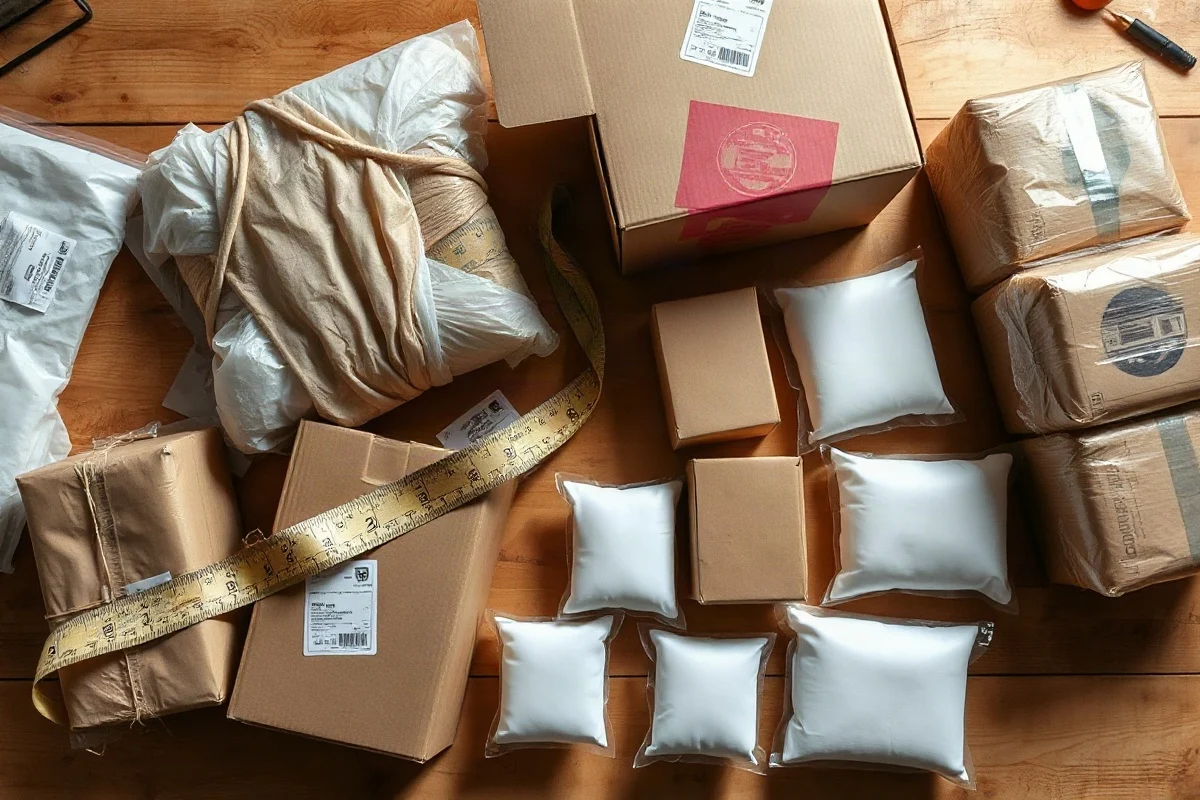
Not every shipment is a perfect rectangle. Poly mailers, padded envelopes, tubes, bags, and flexible cartons require a slightly different approach.
For a soft package, fill and close it as it will be shipped, then measure the maximum length, width, and thickness. Do not flatten a padded mailer if it will travel with contents inside. Measure the thickest point rather than an empty section of the package.
For a cylindrical tube, measure the longest dimension as the length. The other dimensions are based on the tube's diameter or the carrier's required method for nonrectangular packages. Because carrier handling and rating rules may differ for tubes and other unusual shapes, check the current service-specific guidance before buying postage.
For an irregularly shaped object, imagine the smallest rectangular box that could contain the entire package. Measure the maximum outside length, width, and height of that envelope. This prevents a narrow section from hiding the package's true overall size.
Measuring a Box for Product Fit
When the goal is to choose packaging rather than calculate postage, begin with the product's own measurements. Measure the item at its longest, widest, and thickest points. Include handles, corners, accessories, and parts that cannot be removed.
Then allow room for protective packaging. The amount depends on the item's fragility, the material being used, and how much movement is acceptable. Fragile products may need cushioning on multiple sides, while durable products may require less clearance.
A box should not be so tight that the product presses against the walls, but excessive empty space can increase material use and allow movement during transit. Before choosing a carton, consider both the interior fit and the final outside dimensions. This approach helps balance product protection, package stability, and shipping cost.
For additional planning, see our guide to how much bigger a box should be than the item.
Common Box-Measuring Mistakes
- Measuring the inside when outside dimensions are required: Shipping measurements usually describe the completed package's outside size.
- Using the wrong dimension order: Record measurements as length × width × height unless the form gives different instructions.
- Measuring an empty box: Packing and sealing can increase the package's final size.
- Measuring diagonally: Measure straight across each side, not from corner to corner.
- Ignoring bulges: A flexible or overfilled package may have a larger maximum dimension than its flat panels suggest.
- Rounding down: Recording a slightly oversized package as smaller can lead to inaccurate shipping information.
- Assuming every carrier uses the same rules: Size limits, dimensional-weight methods, and rounding practices may change by service and date.
A Quick Box Measurement Checklist
Before saving the dimensions or buying postage, confirm the following:
- The box is in its normal packed and sealed shape.
- You identified the longest side as the length.
- You measured width and height in the correct orientation.
- You used outside measurements for shipping purposes.
- You checked the largest point if the package is soft, rounded, or irregular.
- You recorded the unit required by the form.
- You followed the current rules for the selected carrier and service.
Accurate measurements make it easier to choose packaging, estimate dimensional weight, compare shipping options, and avoid surprises when a package is processed. If you regularly prepare shipments, keep a simple record of the outside dimensions of commonly used cartons and recheck them whenever the box design, packing method, or shipping service changes.
Comments
0No comments yet. Be the first to share a helpful note or question.
Leave a Comment
Your email address will not be published. Comments are reviewed before appearing on the site.