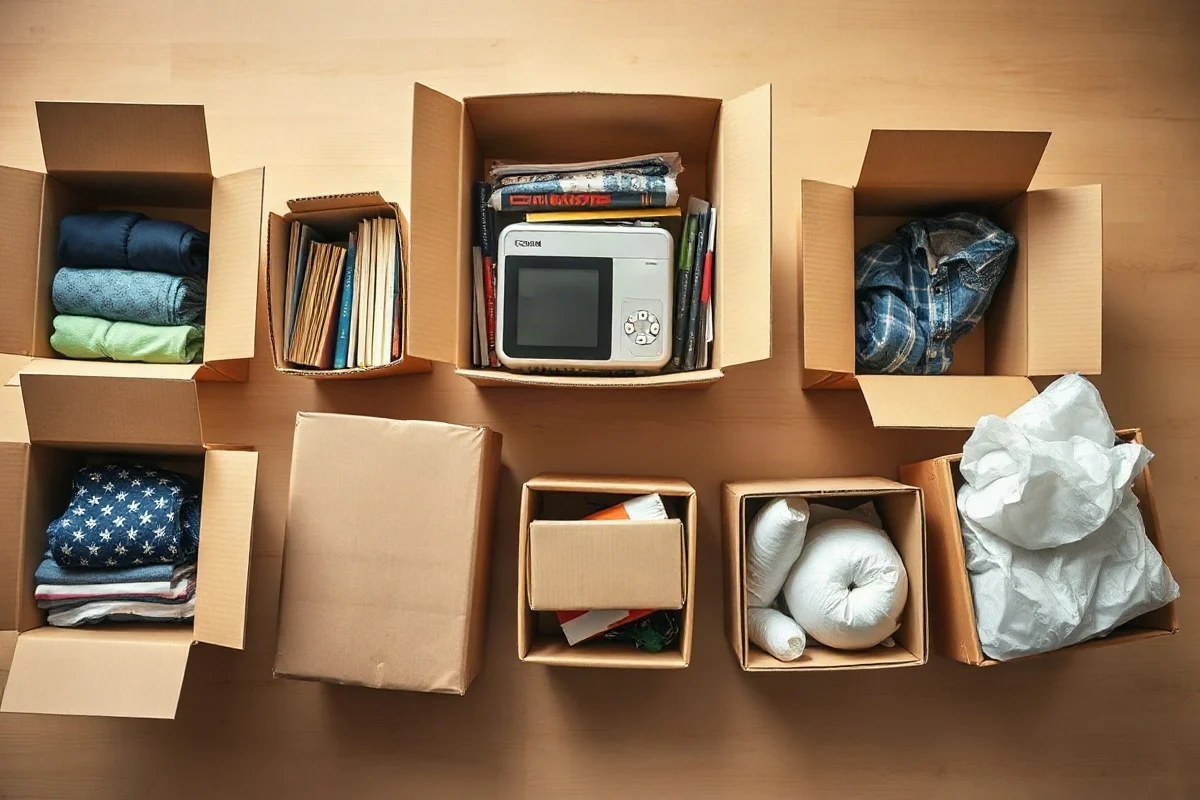
Common box sizes are useful because each one fits a different type of item, from small accessories and books to clothing, kitchenware, and larger household goods. Small boxes often work well for compact products, medium boxes handle several everyday items, and large boxes are best for lightweight or bulky contents that need protective space. The right choice depends on the item’s actual dimensions, the cushioning it needs, the box’s inside measurements, and the carrier or marketplace rules that apply to the shipment.
Common box sizes at a glance
Box dimensions are usually written as length × width × height. For example, a 12 × 9 × 6-inch box is 12 inches long, 9 inches wide, and 6 inches high. The following sizes are common examples in U.S. shipping and storage, but they are not universal industry standards. Manufacturers may list slightly different inside or outside measurements, and the same nominal size can have different wall thicknesses.
| Example box size | Typical uses | What to watch for |
|---|---|---|
| 6 × 4 × 4 inches | Jewelry boxes, small parts, accessories, cosmetics | Limited room for cushioning and labels |
| 8 × 6 × 4 inches | Small electronics, books, mugs, personal-care products | Measure the product before adding padding |
| 10 × 8 × 6 inches | Small retail orders, shoes, toys, office supplies | May need extra height for protective material |
| 12 × 9 × 6 inches | Clothing, several books, household items, subscription shipments | Keep loose items from shifting |
| 14 × 10 × 8 inches | Small appliances, multiple products, larger gifts | Check both weight and dimensional-weight effects |
| 16 × 12 × 12 inches | Kitchen items, toys, clothing bundles, office equipment | Use strong packing material for heavier contents |
| 18 × 14 × 12 inches | Bulky clothing, larger household goods, several retail items | Avoid overfilling or allowing internal movement |
| 24 × 18 × 18 inches | Large but relatively light goods, moving and storage applications | Large dimensions can affect handling and shipping charges |
These examples are starting points, not rules. A box that works for one product may be too tight for another product with the same general category. For more options, browse the box sizes guide and compare the box’s usable interior space with your item’s packed dimensions.
Small boxes: compact items and single-product orders
Small shipping boxes are often the best choice for items that do not need much space. A 6 × 4 × 4-inch box may suit small accessories, replacement parts, sample products, or compact gifts. An 8 × 6 × 4-inch box provides more room for a small product surrounded by paper, foam, or another protective layer.

Small boxes can reduce excess space and make it easier to keep a product from moving during transit. They also make efficient use of storage shelves and packing stations. However, a box should not be selected solely because it has the smallest outside dimensions. If the product touches the walls, the package may not provide enough protection. Fragile items usually need clearance on all sides, including the top and bottom.
Good uses for small boxes
- Phone accessories, cables, chargers, and small electronics
- Cosmetics, toiletries, and compact personal-care products
- Jewelry, craft supplies, and small replacement parts
- Paperback books and other small flat items
- Small toys, collectibles, and individual retail orders
For small products, compare the item’s dimensions with the box’s interior dimensions. A product that measures 7 × 5 × 3 inches will not fit comfortably in an 8 × 6 × 4-inch box once you add protective material on every side. The available clearance may be less than the difference between the nominal box size and the product size.
Medium boxes: the most flexible everyday sizes
Medium boxes, such as 10 × 8 × 6, 12 × 9 × 6, and 14 × 10 × 8 inches, are useful for many ordinary shipments. They can hold clothing, shoes, books, office supplies, toys, kitchen accessories, and multiple small products. For many businesses, a small group of medium box sizes covers a large share of daily orders without requiring a large inventory of packaging.
A 12 × 9 × 6-inch box can work well for folded clothing, several books, or a group of compact products. A 14 × 10 × 8-inch box gives more room for cushioning and can accommodate items that are too tall or wide for a shallow carton. When packing more than one item, place heavier products at the bottom and separate items that could scratch, dent, or break one another.

When a medium box is a better choice
- The product is too large for a small mailer or carton.
- Several small items are going to the same recipient.
- The contents need padding but do not require a large void.
- The item has irregular proportions that make a very tight fit impractical.
- You want one practical carton size for a range of standard orders.
Do not fill extra space with heavy material just to make the box feel full. Use lightweight void fill when appropriate, but first consider whether a smaller box would provide a secure fit. The article on choosing a box without wasting space explains how to reduce empty volume without squeezing the contents.
Large boxes: bulky or lightweight contents
Large boxes, including examples around 18 × 14 × 12 or 24 × 18 × 18 inches, are useful for bulky items that cannot fit into a compact carton. Common examples include pillows, blankets, large clothing bundles, lampshades, toys, seasonal decorations, and some household goods. A large box can also be appropriate when the item’s shape requires substantial protective spacing.
Large does not automatically mean better. A spacious carton can allow the contents to shift, increasing the chance of impact damage. It can also raise the package’s measured volume and may affect shipping charges under dimensional-weight rules. Carriers may use different formulas, thresholds, service conditions, and current pricing policies, so check the official carrier information for the service you plan to use. You can also estimate package volume with the dimensional weight calculator, then verify the result against the carrier’s current terms.
How to pack a large box safely
- Choose a carton with enough strength for the contents and total package weight.
- Place a protective layer on the bottom before adding the product.
- Center the contents so they do not press directly against the walls.
- Fill side, top, and corner gaps with suitable void fill.
- Close the flaps and gently shake the box to check for movement.
- Add more cushioning if the contents shift, but avoid forcing the carton closed.
- Seal the package with tape appropriate for the carton and shipment conditions.
How to measure a box correctly
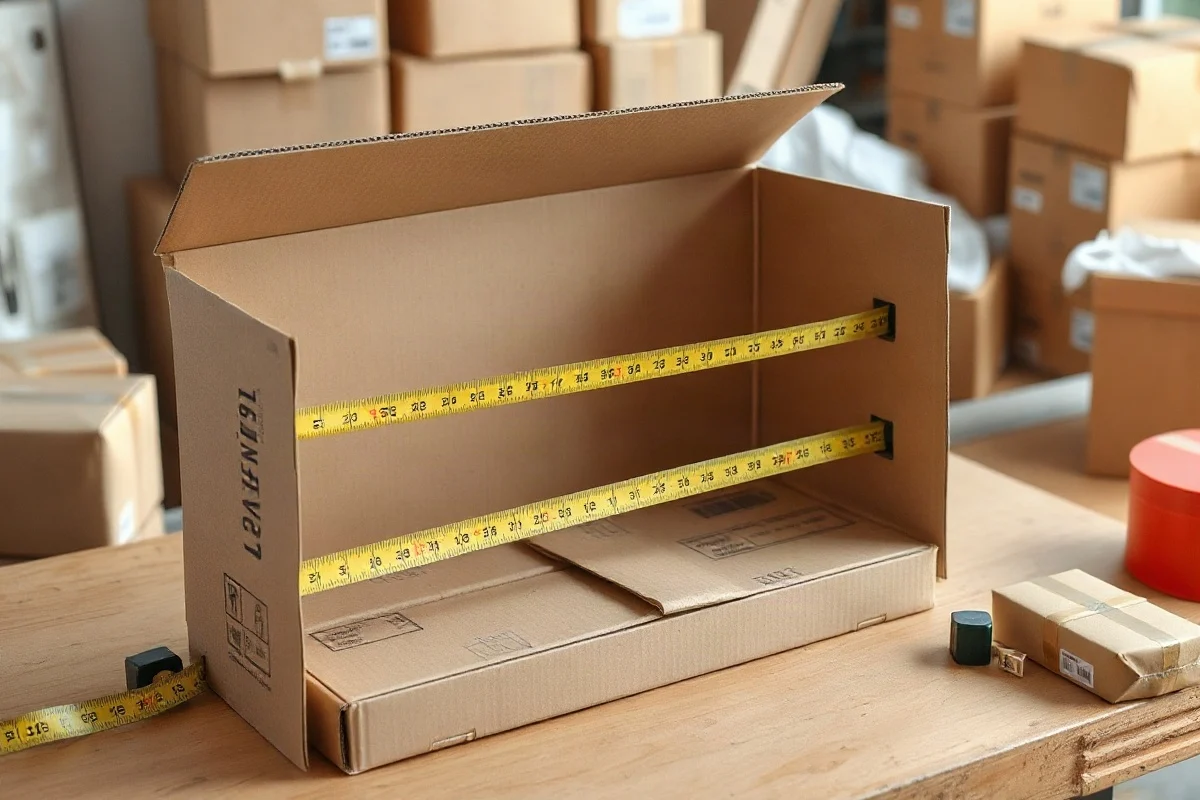
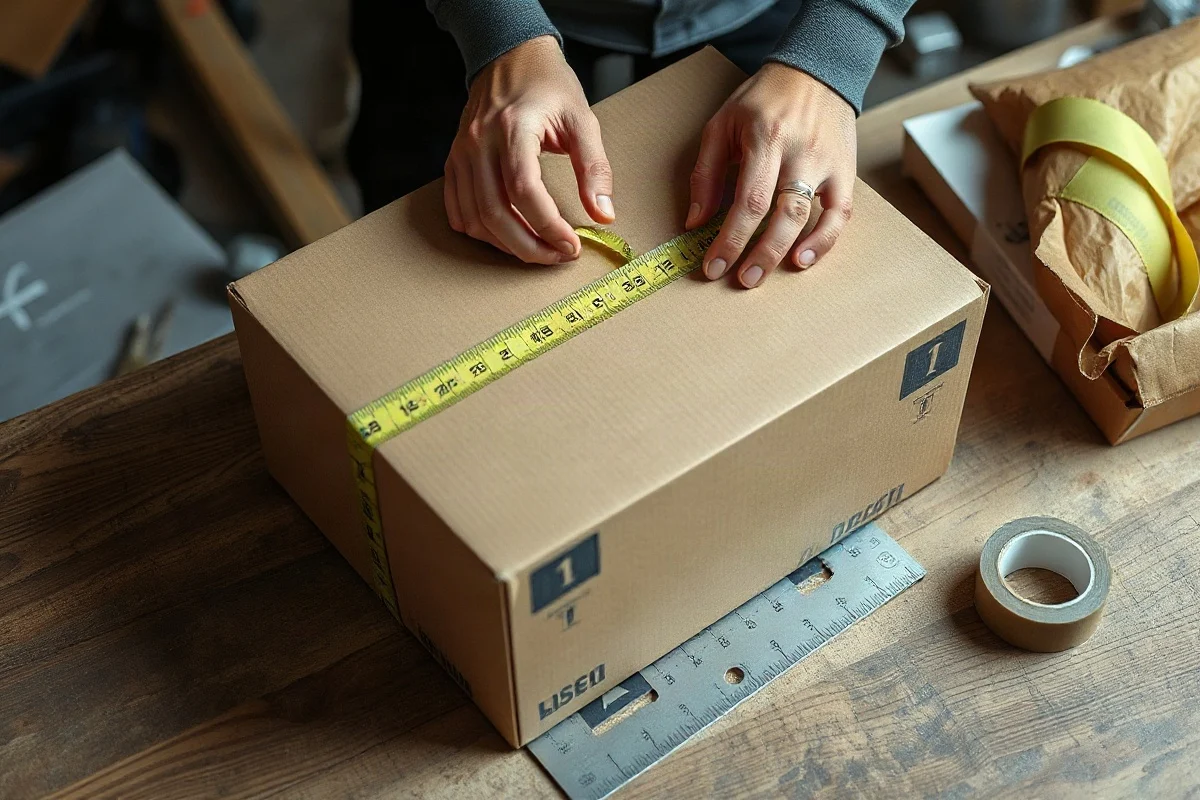
For shipping calculations, measure the outside of the sealed package unless the carrier or shipping system specifically asks for another measurement. Measure the longest side as the length, the next longest side as the width, and the remaining side as the height. Round measurements according to the instructions used by your carrier, label platform, or marketplace rather than applying a universal rounding rule.
For product fit, interior dimensions matter more. Measure the usable space inside the box, especially if the carton has thick walls, flaps, inserts, or a tapered shape. If the box is already packed, measure the finished package at its widest or longest points. Bulging sides, uneven tape, and protruding contents can change the final dimensions.
For a practical explanation of the process, see how to measure a box correctly. Keeping inside measurements and outside measurements separate prevents a common mistake: assuming that a box labeled with a nominal size has exactly that much usable interior space.
How much extra space should a box have?
The required clearance depends on the product’s fragility, shape, weight, and protective material. A durable item may need only enough room to prevent pressure on the walls. A fragile item needs a protective buffer around vulnerable surfaces, corners, and protruding parts. There is no single extra-space number that works for every shipment.
Start by measuring the product at its widest, longest, and tallest points. Then account for the thickness of the cushioning on each side. If the product is 10 inches long and needs one inch of protection at both ends, the box needs at least 12 inches of usable interior length. Repeat the calculation for width and height. If the item has an unusual shape, use the largest dimensions rather than relying on an average measurement.
Choosing between a box and another package type
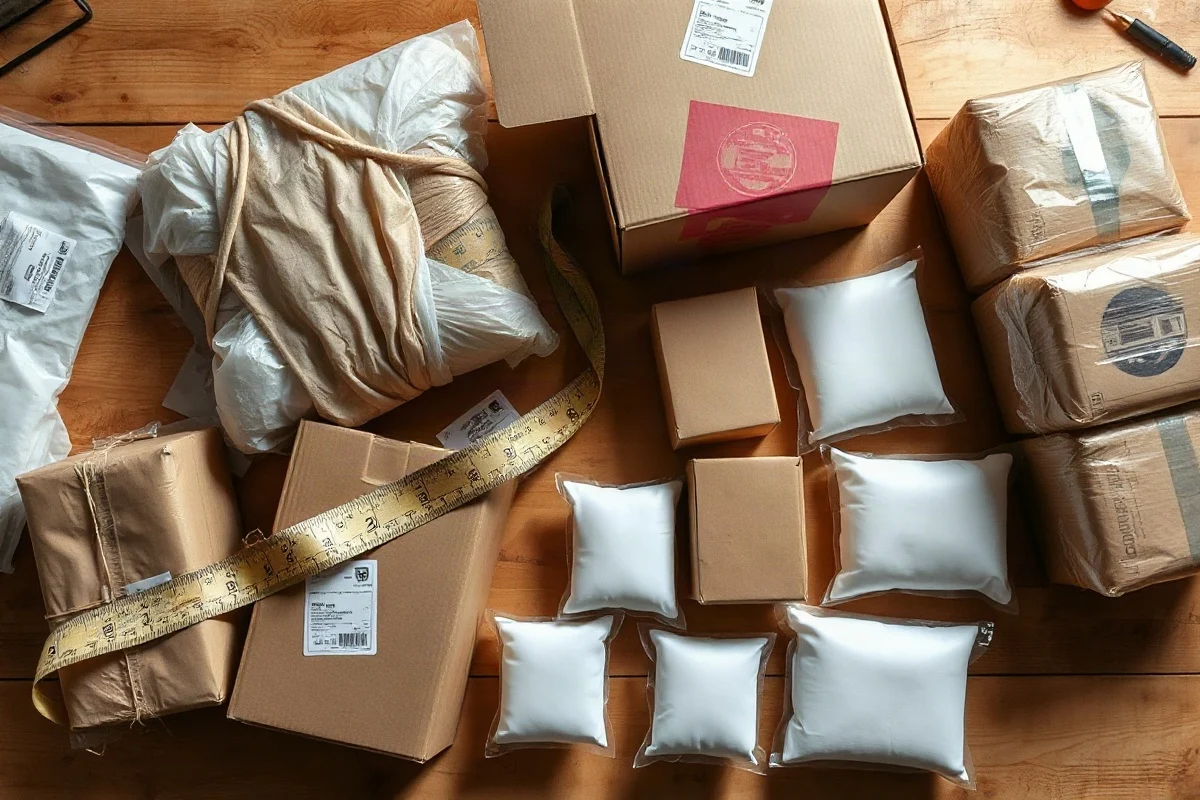
A rigid box is a useful choice when the contents need structure, stacking protection, or resistance to crushing. Soft goods that are not fragile may fit better in a poly mailer or another flexible package. Documents and very flat items may be better suited to a rigid mailer or envelope. The best format depends on the item, its vulnerability, the amount of protection required, and the shipping service.
Do not place a fragile or crush-sensitive product in a flexible package simply because it is smaller. Conversely, using a large rigid box for a soft, lightweight item may add unnecessary material and volume. Match the packaging format to the actual risk of damage.
Check carrier and marketplace requirements before shipping
Package size limits and charges can vary by carrier, service level, destination, package type, and date. Some services may distinguish between actual weight and dimensional weight, while marketplaces or fulfillment programs may impose separate packaging requirements. These rules can change, so confirm the current requirements with the official carrier or marketplace source before buying labels or preparing a large shipment.
When comparing box options, record the box’s outside length, width, height, empty weight, and usable interior dimensions. That information makes it easier to select packaging consistently, estimate shipping costs, and identify cartons that create too much unused space. A well-fitting box protects the item, simplifies packing, and can help prevent avoidable dimensional charges without treating any one box size as suitable for every order.
Comments
0No comments yet. Be the first to share a helpful note or question.
Leave a Comment
Your email address will not be published. Comments are reviewed before appearing on the site.