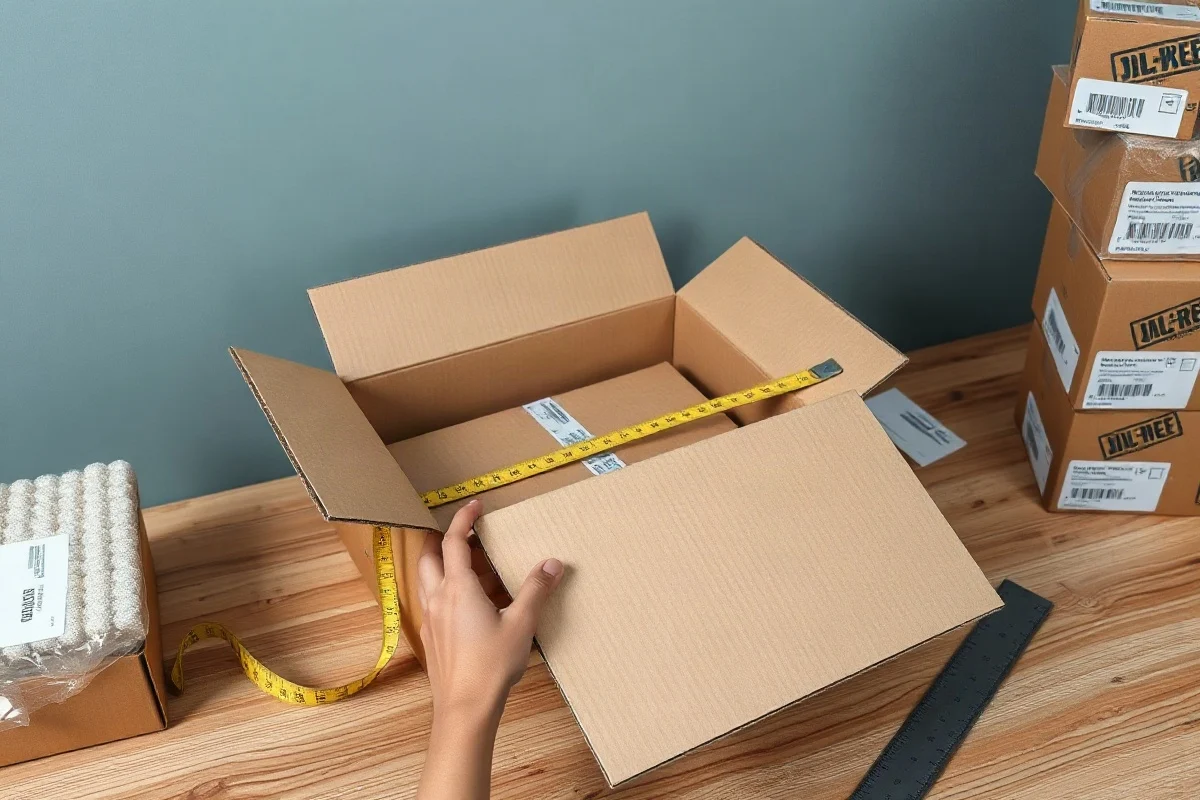
The right shipping box is usually the smallest sturdy box that fits your item, protective cushioning, and any required inner packaging without forcing or crushing the contents. Measure the item, add space for protection on every side, and choose a box with interior dimensions at least as large as that total. A close-fitting box generally reduces material use, movement inside the package, and the chance of paying for unnecessary dimensional weight.
Start with the item, not the box
Before shopping for a carton, measure the product or group of products you plan to ship. Record its length, width, and height in the same unit, usually inches for U.S. shipping. Measure the longest side as length, the next longest as width, and the remaining side as height. The names are less important than using the three actual dimensions consistently.
Measure the item at its widest or tallest points. Include handles, knobs, protruding parts, irregular corners, retail packaging, and anything that cannot be removed for shipping. If the product is soft and compressible, decide how much compression is safe. If it is fragile, assume that delicate parts need additional protection rather than treating the product's smallest possible shape as the measurement.
Allow room for protection
A box should not be the exact size of the bare item when the contents need cushioning. Add the planned protective space to both sides of each dimension. For example, if a product measures 12 by 8 by 4 inches and you want 2 inches of cushioning around it, the minimum interior box size is:

- Length: 12 + 2 + 2 = 16 inches
- Width: 8 + 2 + 2 = 12 inches
- Height: 4 + 2 + 2 = 8 inches
In this example, a box with interior dimensions of at least 16 by 12 by 8 inches may work. The actual amount of space depends on the packaging material and the item's fragility. Foam, molded inserts, paper, air pillows, and bubble cushioning do not all protect the same way or occupy the same amount of space.
Do not automatically add a large gap on every side. Too much empty space can let the item move, increase the package's billed size, and make the box harder to close securely. The goal is controlled protection, not a container that is mostly filler.
Interior dimensions and exterior dimensions are different
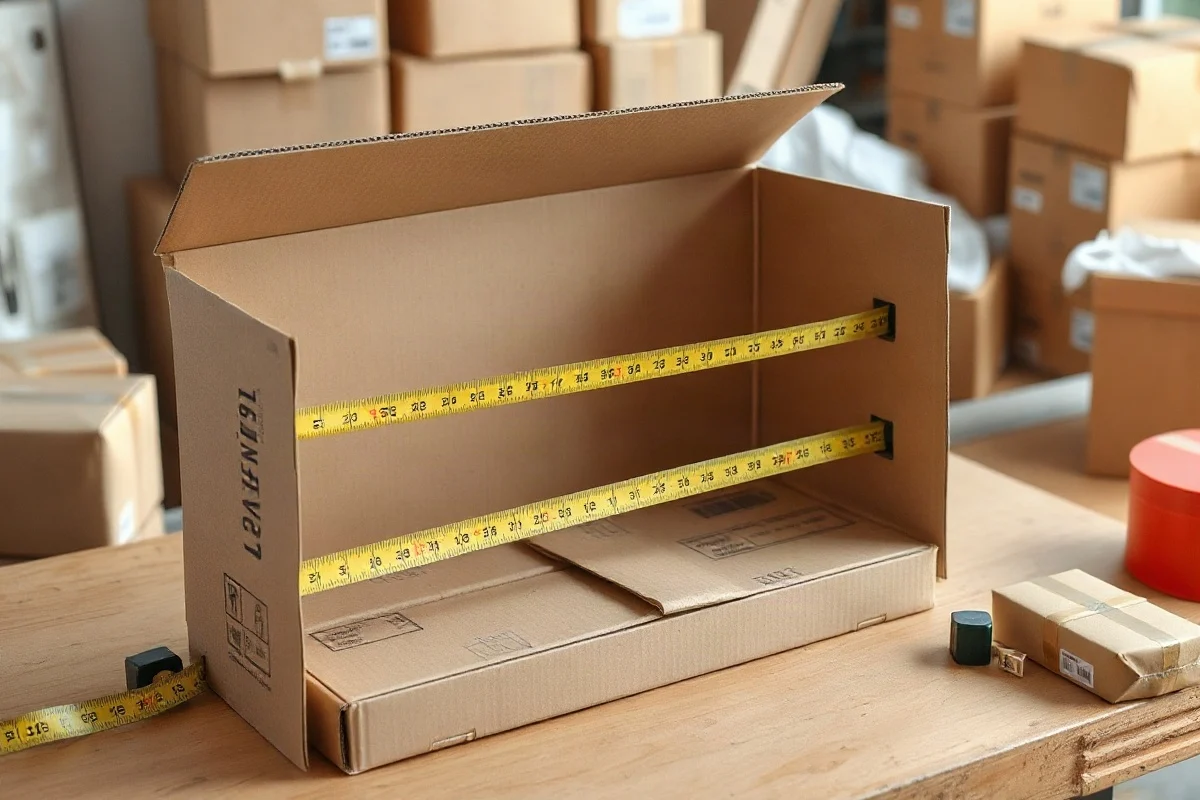
Box listings may show inside dimensions, outside dimensions, or both. Interior dimensions describe the usable space. Exterior dimensions describe the package's overall footprint and are the measurements a carrier may use when assessing the completed parcel. Cardboard thickness, flaps, seams, and bulging can make the exterior dimensions larger than the interior dimensions.
When a box is a close fit, check the manufacturer's dimension convention before ordering a large quantity. A listed size such as 12 by 10 by 8 inches may refer to inside dimensions, outside dimensions, or a nominal size. For a single shipment, test-fit the item and packing materials. For regular shipping, keep a record of the box's actual inside and outside measurements.

The finished package also matters. A box that is overfilled may bow outward, while an underfilled box may collapse when stacked. Measure or estimate the package after it is packed and closed, not only when it is empty and flat.
Choose a box shape that fits the contents
A rectangular corrugated box is a practical choice for many products because it stacks well and provides predictable measurements. Select a shape that lets the item sit flat or remain stable without excessive empty space. A long, narrow box may be suitable for posters, rods, or certain parts, while a shallow box may be better for books or flat merchandise.
For several items, arrange them before selecting the carton. Place heavier products at the bottom, separate items that can scratch one another, and leave enough room for cushioning between the contents and the walls. If the items cannot be arranged without pressure or excessive gaps, use a larger box with dividers, separate cartons, or a different packing method.
Do not use a large box merely because it is available. A bigger carton can add packing material, increase handling risk, and raise dimensional weight. On the other hand, forcing a product into a small carton can damage both the item and the package. A slightly larger strong box is usually preferable to a tight box that strains the seams.
Consider dimensional weight before sealing the package
Some shipping services price a package according to dimensional weight when its size makes it more expensive to transport than its actual weight. The exact calculation and threshold can vary by carrier, service, package type, destination, and current pricing rules. Do not assume that one carrier's formula applies to another.
The general calculation uses the package's outside length, width, and height:
Dimensional weight = (length × width × height) ÷ the carrier's applicable dimensional divisor
Use the divisor and rounding instructions published for the specific service you plan to buy. The carrier may compare dimensional weight with actual weight and charge according to the applicable rule. Because divisors and policies can change, verify the current official information before relying on a calculation for a shipment. You can also compare package scenarios with the dimensional weight calculator.
Reducing box length, width, or height by even a small amount can reduce the calculated volume, but only if the smaller package still protects the contents. Never remove necessary cushioning simply to lower a package measurement. Instead, consider a better-fitting carton, thinner but suitable protection, an insert designed for the product, or a different shipping service.
Check the carrier's measurement rules
Carriers may have different rules for how they measure packages, apply rounding, calculate dimensional weight, handle irregular shapes, or assess additional charges. Limits can also vary by service level and destination. A package that is acceptable for one service may require a different service or incur an additional charge elsewhere.
Before shipping an unusually large, long, heavy, or irregular package, check the current official rules for the selected carrier and service. Package limits, surcharges, and pricing are changeable details, so an older chart or a general rule of thumb may not be reliable. Our shipping rules guide can help you identify the issues to check, but the carrier's current terms control the shipment.
Pay particular attention to the completed package rather than the product alone. A box's length, width, and height may change after padding, taping, or reinforcement. If a carrier requires measurements rounded in a particular way, follow that carrier's instructions. When a package is near a limit, measure carefully and leave a practical margin instead of assuming an exact borderline fit will be accepted.
Pack the box in a controlled sequence
- Inspect the carton. Use a box that is clean, dry, rigid, and free from crushed corners, torn panels, or weak seams.
- Protect the bottom. Add an even layer of suitable cushioning or use an insert that supports the product.
- Wrap or separate the contents. Keep fragile surfaces from touching one another or the carton walls.
- Center the item. Maintain protective space around the contents, especially at corners and ends.
- Fill empty areas. Add enough material to prevent movement without compressing the product or distorting the box.
- Test for movement. Gently shake the closed-but-not-yet-sealed package. If the contents shift, improve the internal fit.
- Close and reinforce the seams. Use packaging tape suitable for the carton and shipment. Do not rely on household tape or string as the primary closure for a corrugated shipping box.
- Measure the finished package. Record the outside length, width, and height after sealing.
Common box-size mistakes
Choosing a box based only on the product dimensions
An item measuring 10 by 6 by 4 inches does not automatically fit a 10 by 6 by 4-inch box. That measurement leaves no room for cushioning, protective wrapping, or manufacturing tolerance. Add the protection first, then compare the result with the box's interior dimensions.
Using a box that is too large
A large carton may appear convenient, but empty space allows movement and usually requires more filler. It also increases the package's outside dimensions. Select a smaller carton when it can provide equal protection, or use an internal insert that keeps the contents stable without allowing the box to bow.
Ignoring weight distribution
Two packages with the same outside dimensions can behave differently if one has a concentrated heavy item. Put dense contents low and near the center, reinforce weak areas when appropriate, and make sure the bottom seam can support the packed weight. If the product is exceptionally heavy, use a carton and closure method designed for that load rather than simply adding more tape.
Assuming a standard box size is universally suitable
Common carton sizes are useful starting points, but the best choice depends on the product, packing material, destination, and shipping service. Marketplace fulfillment programs and carrier services may also have separate requirements. For current marketplace rules, including any program-specific packaging requirements, check the applicable official documentation before sending inventory.
A practical way to make the final choice
Write down three sets of numbers: the product dimensions, the required protective space, and the box's actual interior and exterior dimensions. First confirm that the interior is large enough. Then pack a sample and verify that the contents do not move. Finally, record the sealed package's outside measurements and weight, and compare the result with the current rules for your selected service.
If you ship the same product regularly, test several cartons and keep the smallest option that passes your protection test. Label your inventory with both inside and outside dimensions so employees do not confuse nominal box size with shipping measurements. For more detailed sizing comparisons, use the Box Size Calculator and review the box sizes guide.
The best shipping box is not necessarily the smallest box that closes. It is the smallest suitable carton that protects the item, stays structurally sound, and meets the current requirements of the service you are using. Measure the contents, allow for protection, control movement, and verify the finished package before purchasing postage.


Comments
0No comments yet. Be the first to share a helpful note or question.
Leave a Comment
Your email address will not be published. Comments are reviewed before appearing on the site.