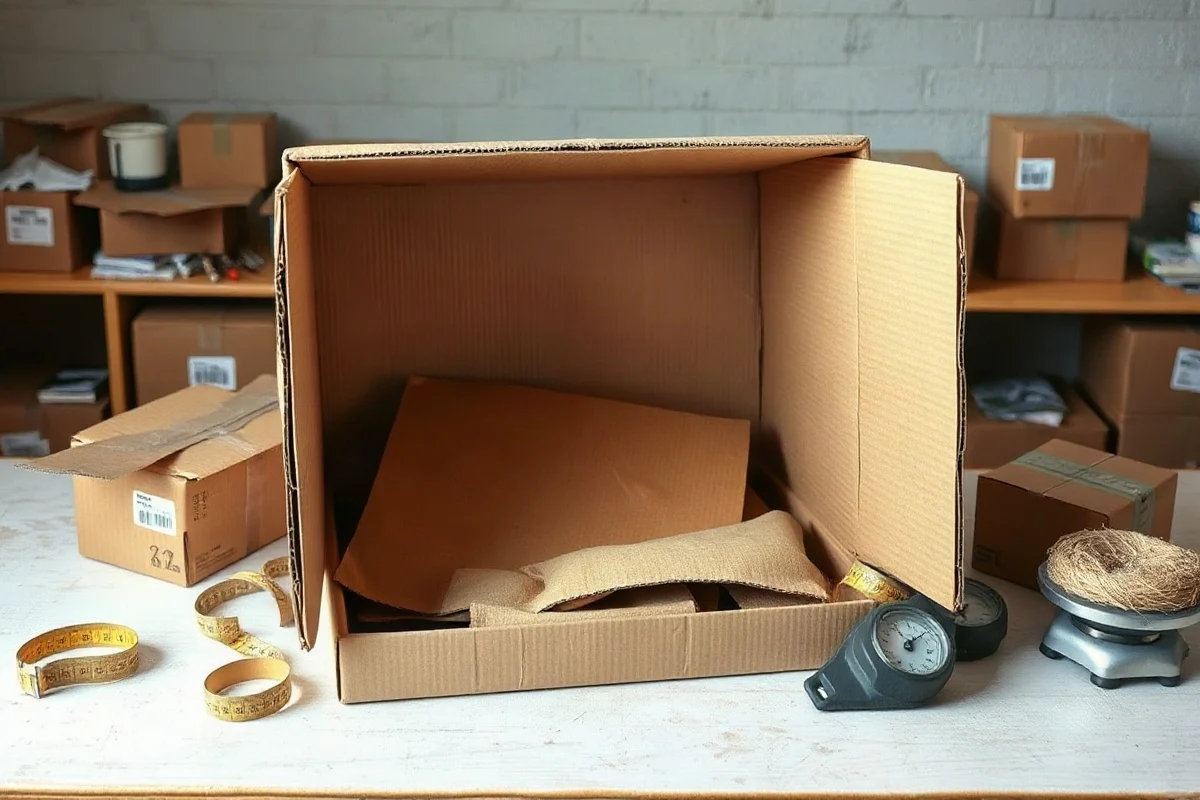
Use a large shipping box when the item is too long, wide, tall, heavy, fragile, or irregularly shaped for a smaller box that can still provide proper protection. The right box should leave enough room for cushioning and safe handling, but it should not be so large that the contents move freely or trigger avoidable dimensional-weight charges. In practice, choose the smallest new or structurally sound box that fits the item, protective materials, and required paperwork without forcing or compressing the contents.
What Counts as a Large Shipping Box?
There is no single universal size that makes a box “large.” A package may be considered large because of its outside dimensions, its total volume, its weight, or the way a carrier calculates oversized or dimensional shipments. A box that seems large for a small product may be ordinary for a lamp, framed artwork, appliance, or moving item.
For shipping decisions, focus on the finished package rather than the empty carton. The important measurements are the box’s outside length, width, and height after it has been packed and closed. Carrier systems may also use the package’s weight, longest side, combined dimensions, or other service-specific measurements. These rules can vary by carrier, service level, destination, package type, and date, so check the current official requirements before shipping an unusually large package.
When a Large Box Is the Better Choice
The item cannot fit without bending, crushing, or forcing it
Some products need a larger carton simply because their shape leaves no safe alternative. Clothing racks, floor lamps, framed prints, long tools, sports equipment, rolled materials, and certain furniture parts may require extra length or width. Never force an item into a box by bending a rigid product, pressing against a delicate surface, or closing the flaps over exposed edges.
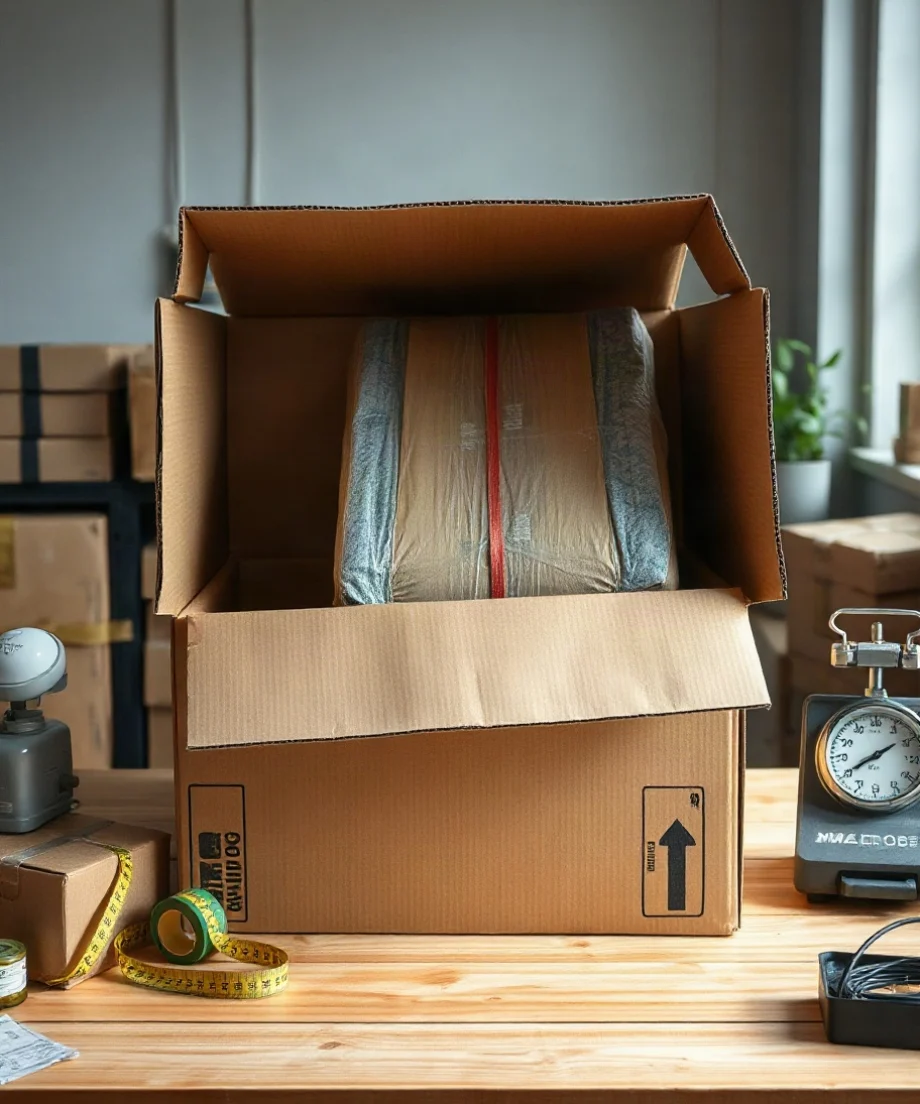
For long items, measure the item in the position in which it will be shipped. Add room for end protection, such as foam blocks, molded pulp, corner guards, or crumpled paper. If the item has a handle, protruding control, pointed edge, or fragile attachment, include that feature in the measurement.
The item needs a protective cushion on every side
A box should be larger than the product when cushioning is necessary. The extra space allows you to place protective material between the item and the carton walls, reducing the chance that an impact will reach the product directly.
The amount of clearance depends on the item’s fragility and the cushioning system. A durable plastic container may need less room than glassware, ceramics, electronics, or a framed object. Use enough material to prevent contact with the walls and enough compression resistance to keep the item from shifting. The goal is not to fill the box with random material; it is to create a stable protective structure.
For more guidance on clearance, see how much bigger a box should be than the item.

Several items must be packed together
A large box can make sense when multiple products belong in one shipment and can be separated safely. This is common for sets, bundled orders, household goods, and retail packages that need interior dividers. However, combining items is not automatically more efficient. The contents should be compatible, individually protected, and arranged so that heavier pieces do not crush lighter ones.
Use dividers, separate cartons, foam partitions, or other appropriate barriers when items could strike one another. Place dense or heavy products at the bottom and keep fragile items away from the outside walls. If the combined package becomes difficult to lift or unstable when carried, split the shipment into multiple boxes instead.
The item is unusually shaped
Irregular products often need a larger rectangular carton because a tight-fitting box leaves empty spaces around corners, handles, or projections. A box that accommodates the item’s widest and longest points may be larger than the product’s main body, but that extra volume can be necessary for safe packing.
Before choosing the largest carton available, consider whether the item can be packed more efficiently with custom-cut inserts, a smaller inner box, or a purpose-built container. A well-designed interior can reduce the outside dimensions while preserving protection.
How to Measure the Item and Box
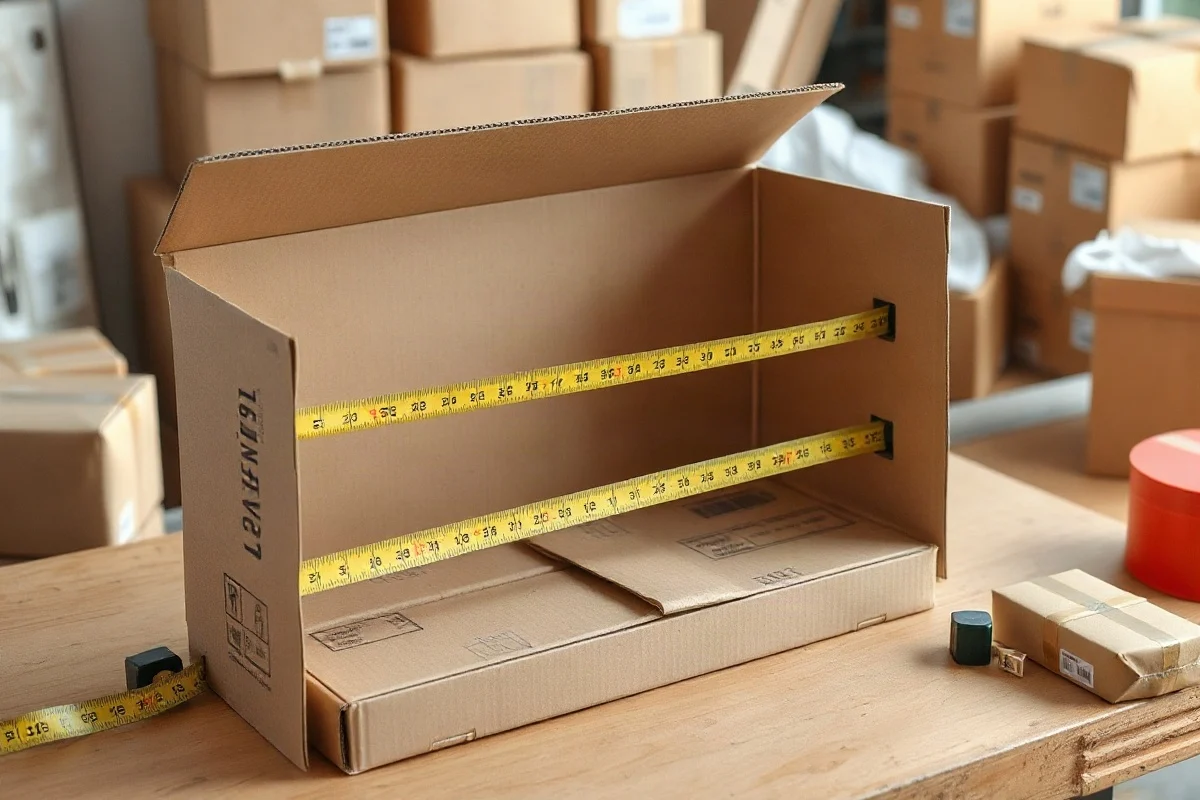
Measure the item at its maximum length, width, and height. Include attached parts, handles, feet, lids, and any features that cannot be removed for shipping. For soft goods, measure the item in its packed or folded condition rather than relying on a product description that shows retail dimensions.
Next, estimate the space required for protection. If cushioning surrounds the item, add that material on both sides of each dimension. For example, if a rigid item measures 20 by 12 by 8 inches and your packing system needs 2 inches of clearance on every side, the approximate interior box size would be:
- Length: 20 + 2 + 2 = 24 inches
- Width: 12 + 2 + 2 = 16 inches
- Height: 8 + 2 + 2 = 12 inches
This is an interior-space estimate, not necessarily the final outside measurement used for a shipping label. Box walls, flaps, inserts, and the way the carton bulges after packing can increase the outside dimensions. Measure the sealed package when precision matters.
When a product has a complex shape, place it on a flat surface and measure the maximum points in each direction. Do not measure only the central body if a corner, wheel, handle, or other part extends farther.
Why a Large Box Can Increase Shipping Costs
A larger box may weigh very little but still be rated according to the space it occupies. Many shipping services use dimensional weight, sometimes called volumetric weight, when the package’s volume produces a higher billable result than its actual scale weight. The exact calculation and divisor depend on the carrier, service, destination, and current pricing rules.
A common general form is:
Dimensional weight = length × width × height ÷ carrier divisor
Use the divisor and rounding instructions published for the specific service you are buying. Do not assume that one carrier’s formula applies to another carrier or to every service. Compare the calculated result with the package’s actual weight only after confirming the current rules.
You can use the Dimensional Weight Calculator to estimate volume-based weight, then verify the result against the carrier’s current terms. The estimate is most useful when comparing two box sizes. Reducing one or two inches from each dimension can substantially reduce package volume, especially for large cartons.
How to Avoid Using a Box That Is Too Large
Start with the item’s packed dimensions, not the size of the product’s retail packaging unless that packaging will remain inside the shipment. Test the item in the candidate carton before sealing it. Look for excessive empty space, weak support underneath, and areas where the product can slide from side to side.
A box is probably too large when:
- The contents shift when you gently tilt the closed package.
- You need an excessive amount of loose fill to stop movement.
- The item can reach a box wall despite the intended cushioning.
- The carton is difficult to carry or becomes unstable when lifted.
- The finished dimensions create a much higher dimensional-weight estimate than a smaller alternative.
Do not solve oversize problems by crushing or cutting down a carton in a way that weakens its corners or creates an uneven closure. If you resize a box, reinforce the new seams and make sure the flaps meet securely.
How to Pack a Large Shipping Box
1. Inspect the carton
Choose a clean, dry, rigid box with intact corners and flaps. A used carton may be acceptable if it has not been crushed, punctured, soaked, or weakened by previous labels and tape. Match the carton’s strength to the item’s weight and fragility.
2. Build a stable base
Cover the bottom with an appropriate protective layer, especially when the product has weight concentrated in a small area. The base should not compress completely under the item. For heavy products, use a stronger carton or an interior container rather than relying only on loose padding.
3. Center and protect the contents
Keep the item away from every wall, corner, and edge. Add corner protection or dividers where needed. Fill empty spaces with material that prevents movement, but avoid packing so tightly that pressure damages the product. For multiple items, wrap or separate pieces before placing them together.
4. Test movement before sealing
Close the flaps temporarily and gently tilt the box in several directions. If the contents slide, rattle, or strike the walls, reopen the package and improve the interior structure. This simple test is especially important for large cartons because small gaps become larger movement paths over a long package.
5. Seal and remeasure
Seal the main seams with shipping tape and reinforce weak areas without covering required labels or barcodes. Weigh the finished package and measure its outside length, width, and height. Record the measurements in the units required by the shipping service, and round only according to that service’s current instructions.
When to Use Multiple Smaller Boxes Instead
One large box is not always the safest or least expensive option. Divide the shipment when the combined weight is difficult to handle, when one item could damage another, or when a large carton would produce excessive dimensional weight. Multiple boxes may also be easier to store, label, and track, although they can create additional shipment charges or handling requirements.
Compare the complete shipment rather than looking only at the price of one carton. Consider the number of packages, total actual weight, dimensional weight, packing materials, and the carrier’s current rules for the selected service. For carrier-specific planning, review the current information in our shipping rules guide and confirm details with the official carrier source before purchase.
A Practical Decision Checklist
Before choosing a large shipping box, ask:
- Does the item fit without bending, crushing, or exposing fragile parts?
- Is there enough room for protective material on every side?
- Can the contents be kept from shifting during handling?
- Is the carton strong enough for the finished package’s weight?
- Would a smaller carton, custom insert, or separate shipment provide better protection?
- Have you measured and weighed the sealed package?
- Have you checked the current carrier and marketplace requirements that apply to this shipment?
The best large shipping box is not simply the biggest one that fits the product. It is the smallest practical carton that provides reliable protection, keeps the contents stable, and produces manageable finished dimensions. Measure the packed item, allow room for the right cushioning, and verify current carrier rules before buying a label. For an initial size comparison, use the Box Size Calculator, then confirm the final package measurements after packing.
Comments
0No comments yet. Be the first to share a helpful note or question.
Leave a Comment
Your email address will not be published. Comments are reviewed before appearing on the site.