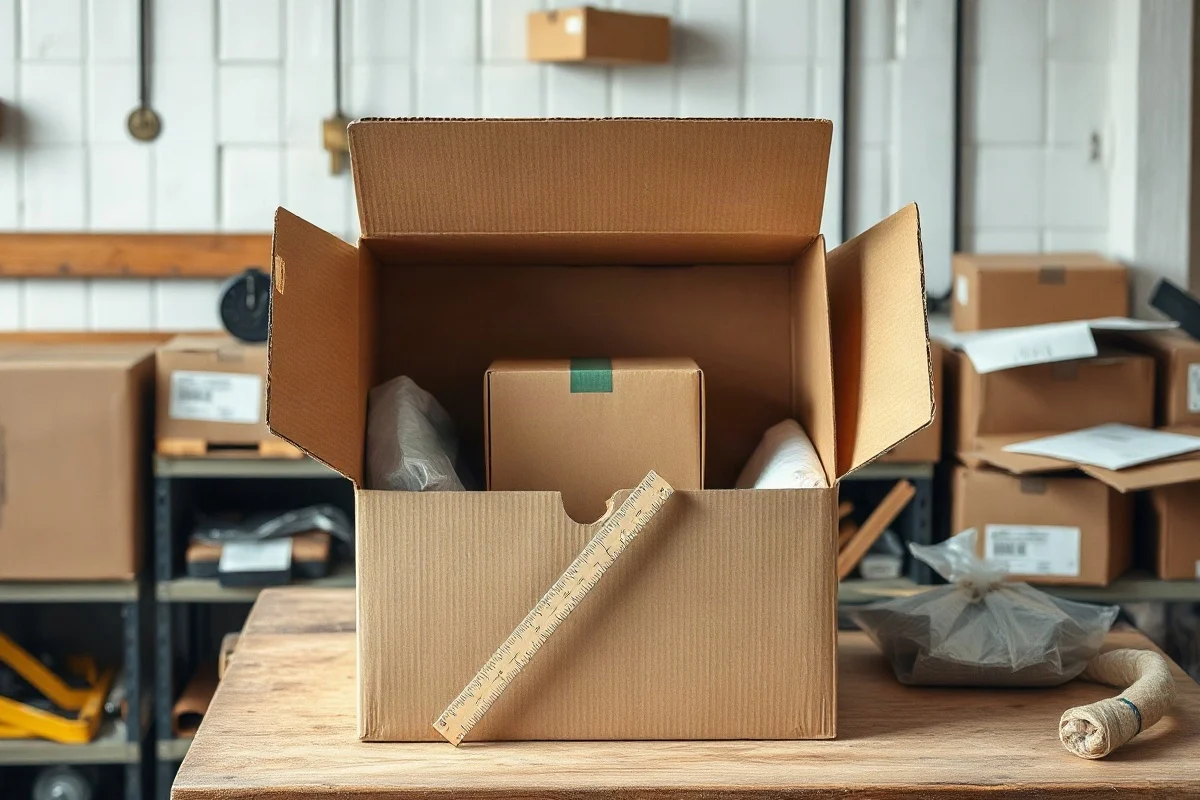
Leave about 1 to 2 inches of cushioning space between the product and the inside walls of the shipping box when the item needs ordinary protection. Fragile, heavy, or irregularly shaped products may need more room, while durable items that already fit securely may need less. The goal is not to fill every empty area or use the largest box available; it is to choose a box that allows enough cushioning to prevent movement without adding unnecessary size, weight, or shipping cost.
For DHL shipments, the final package should be compact, fully closed, and strong enough to withstand handling and stacking. The right amount of interior space depends on the product, the cushioning material, the box construction, and the distance the package will travel. A short domestic shipment and a long international shipment may require different levels of protection, even when they contain the same item.
What the Empty Space Inside a Box Is For
Empty space is useful only when it is filled with protective material or provides room for the product to settle without touching the box walls. Unprotected air around an item does not absorb much impact by itself. During transportation, a product can shift, drop against the sides, or be compressed by other packages if the space is not properly managed.
The interior gap serves several practical purposes:
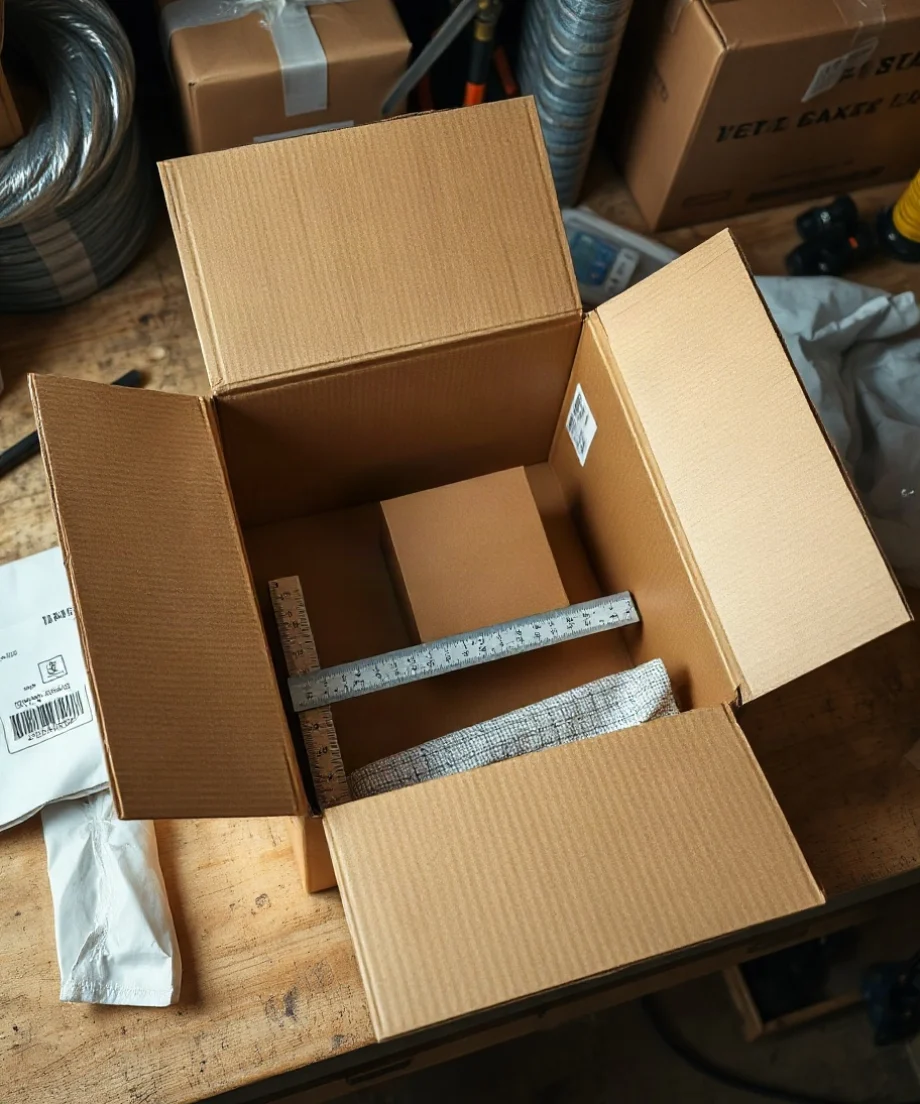
- It creates room for cushioning around the product.
- It keeps the item away from corners, seams, and box edges.
- It reduces direct impact when the package is dropped or bumped.
- It helps prevent surface scratches, dents, and abrasion.
- It allows you to separate multiple products inside one carton.
Too little space can be just as problematic as too much. If a product is forced into a box, the walls may press against it, the box may bulge, and there may be no protective layer at the corners. Too much space can require excessive filler, increase the outside dimensions, and allow the contents to move before the filler settles.
A Practical Rule for Measuring the Gap
Start with the product's longest, widest, and tallest measurements. Then add enough room for cushioning on every side. If you plan to use approximately 1 inch of cushioning on each side, add 2 inches to each product dimension when estimating the minimum inside size of the box.
For example, suppose a product measures 12 by 8 by 4 inches and will be wrapped with cushioning that is about 1 inch thick on all sides. A suitable interior target would be approximately:
- Length: 12 + 2 = 14 inches
- Width: 8 + 2 = 10 inches
- Height: 4 + 2 = 6 inches
This is an estimate, not a guarantee that every 14-by-10-by-6-inch box will work. The product may need extra clearance for corners, handles, protrusions, or a fitted insert. Also, stated box dimensions may refer to outside dimensions, inside dimensions, or a manufacturer's nominal size. Check the box specifications before relying on the measurement.
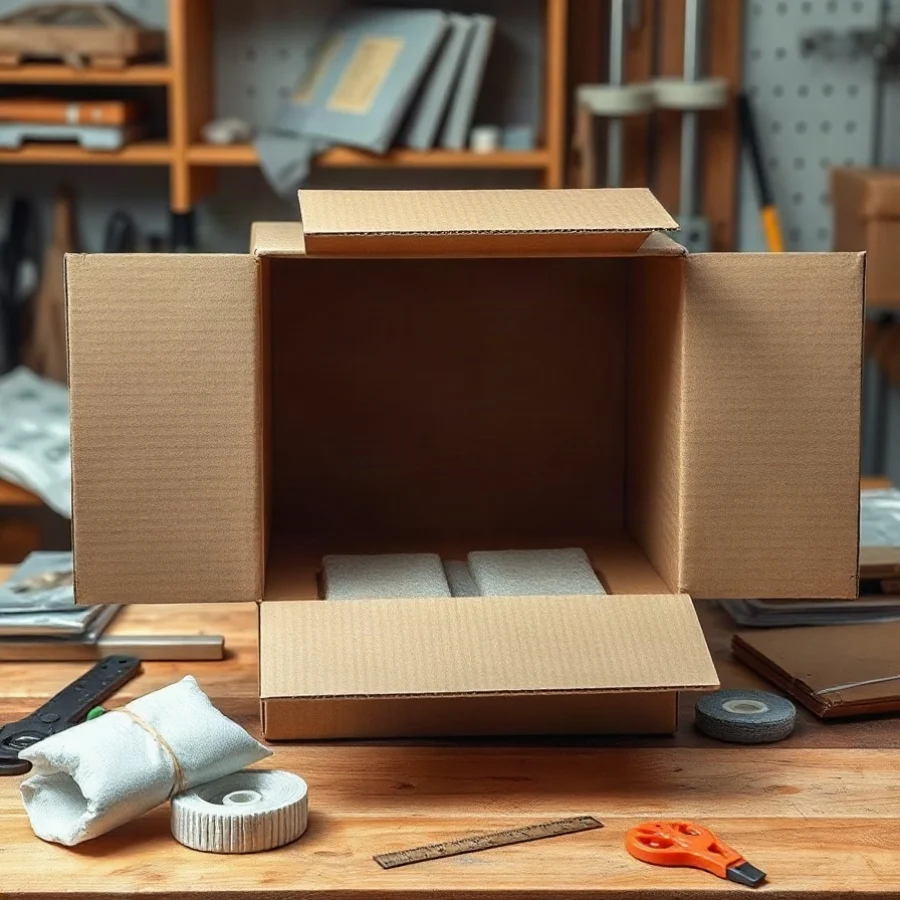
If the item is already inside a retail carton, measure the packaged product rather than the bare product. The retail carton may need an additional protective layer, especially if it is decorative, thin, or not designed for parcel shipping.
How Much Space Different Products Usually Need
There is no single clearance that works for every shipment. Use the product's fragility and shape to set the starting point.
Durable, compact products
Small, sturdy items such as sealed hardware, books, or durable plastic goods may need only a modest protective layer. The product should not slide freely, but it also should not be pressed tightly against the box walls. Paper padding, corrugated inserts, or a suitable mailer may be enough when the item has no delicate surfaces.
Glass, ceramics, and other fragile items
Fragile products generally need more clearance and more structured protection. Each item should be wrapped separately, and the cushioning should surround the product on all sides, including the top and bottom. Keep fragile items away from the box corners and prevent them from contacting one another.
For a fragile shipment, test the packed box gently before sealing it. If you can hear the product moving, there is too much uncontrolled space. If the box closes only when forced, there is not enough clearance or the packing material is too bulky.
Heavy or dense products
Heavy items can crush weak filler and damage the bottom of a box. They usually need a strong carton, support underneath, and cushioning that will not collapse easily. Avoid leaving a large open area above a heavy product. The item may shift downward during handling and place excessive pressure on the lower panels.
Irregularly shaped products
Measure around the product's widest points, not just its main body. Handles, corners, knobs, and other projections can create pressure points. A box that appears large enough based on the central dimensions may still be too tight at one end. Use shaped inserts or layered cushioning to keep the item centered.
How to Pack the Box Correctly
1. Choose a suitable box
Use a clean, dry, rigid box with enough strength for the product's weight. The box should not be soft, crushed, torn, or weakened by previous use. A smaller strong box is often better than a large box that requires a substantial amount of filler.
2. Protect the product itself
Wrap the product or place it in an inner container before putting it into the shipping box. Protect sharp edges and delicate surfaces. If the item has removable parts, secure them separately so they cannot strike the main product during transit.
3. Cushion the bottom
Place a protective layer on the bottom of the box before adding the product. This layer should keep the item from resting directly on the cardboard. For heavy products, use material that provides stable support rather than loose filler that can flatten under load.
4. Center the contents
Position the product so there is protective material between it and every interior wall. Pay particular attention to corners and the top of the package. If shipping several items, separate them so they cannot collide or rub against each other.
5. Fill and test the remaining space
Add cushioning gradually. The product should remain centered when the box is moved gently from side to side. Do not pack filler so tightly that it bows the box panels or prevents the flaps from meeting naturally.
6. Close and inspect the carton
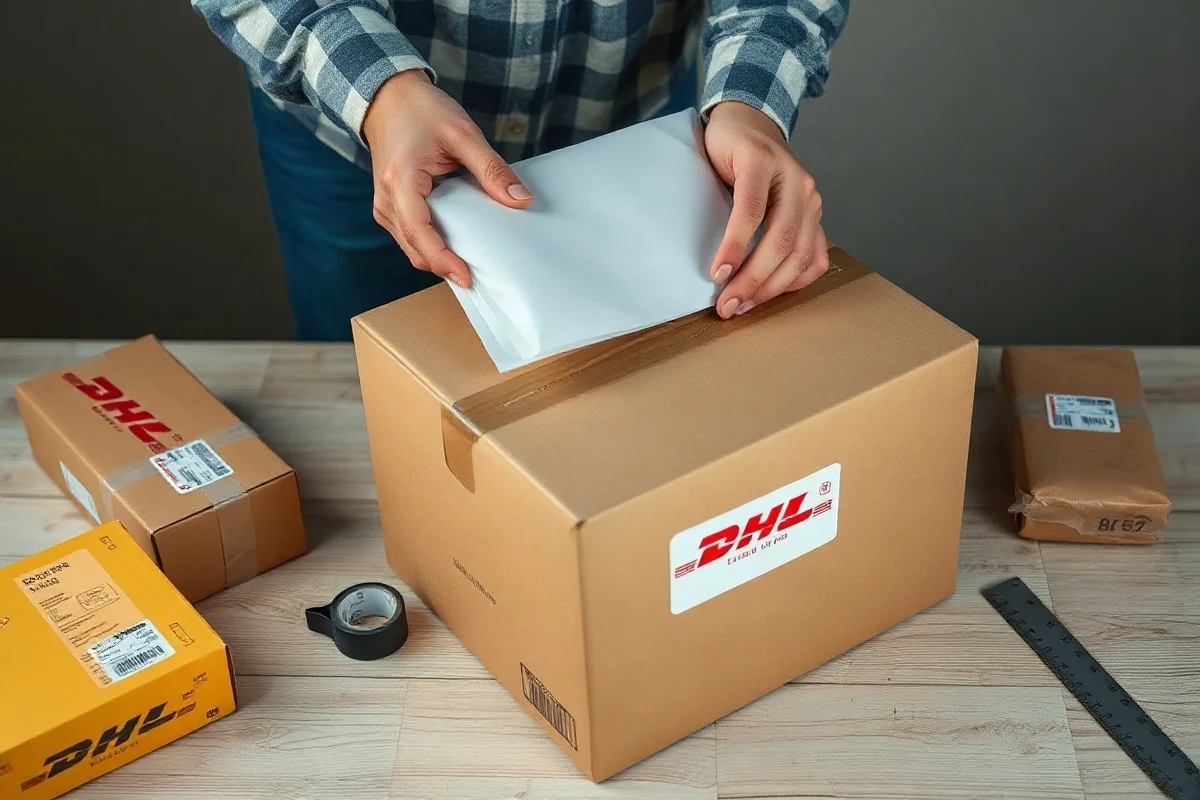
Close the box without forcing the flaps. The finished package should have flat sides, secure seams, and no visible bulges. Use a durable packing tape appropriate for the carton and its weight. If the box is difficult to close, choose a larger box or reduce the thickness of the packing material without reducing protection.
How Box Space Can Affect DHL Shipping Cost
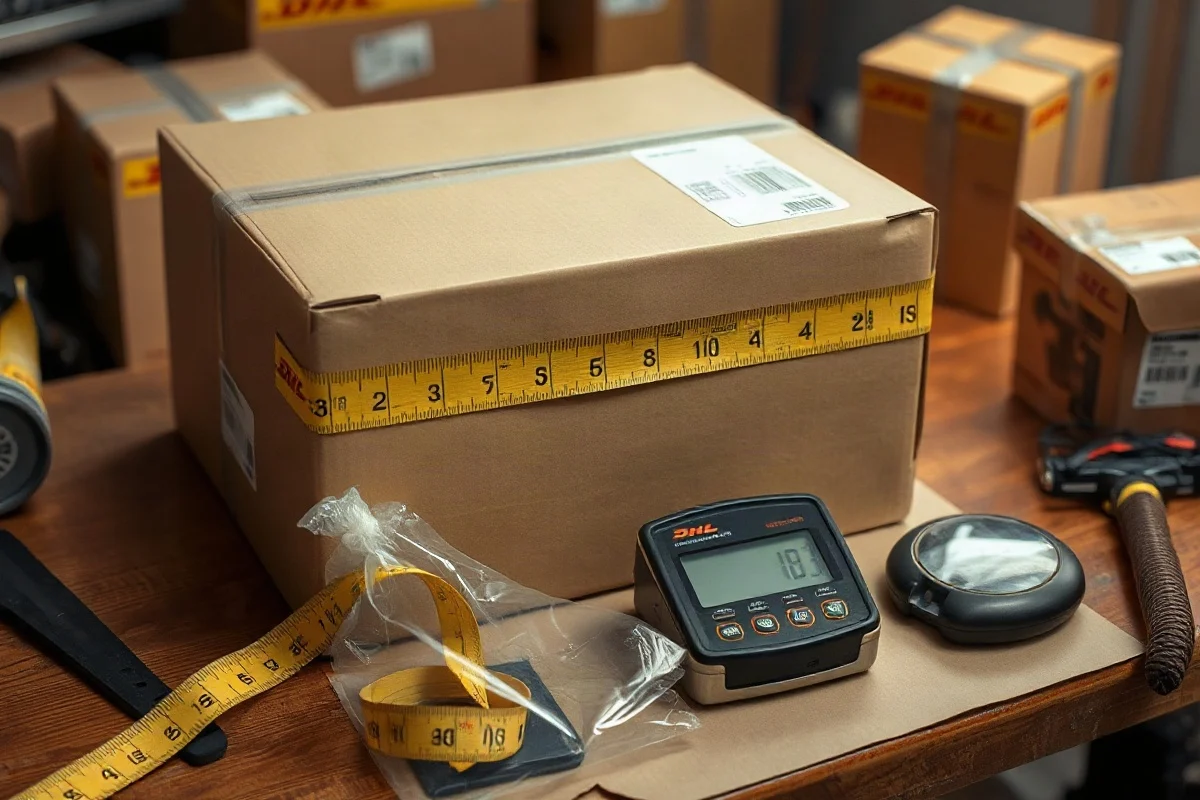
A larger box can cost more to ship even when the product itself is light. Carriers may assess a package using its actual weight, dimensional weight, or another applicable pricing method, depending on the shipment details and service. Dimensional-weight calculations use the package's outside dimensions and a carrier-specific divisor or rule.
Because the applicable method can vary by DHL service, destination, account arrangement, and current pricing terms, do not rely on one permanent divisor or rate. Measure the sealed package and check the current DHL quote or official shipping documentation for the shipment you are preparing. You can also compare the measurements with the Dimensional Weight Calculator as an estimate, then confirm the result with DHL.
Reducing the box by an inch may lower dimensional weight in some situations, but protection must come first. A smaller package that arrives damaged is not a successful optimization. The best approach is to remove unused space while preserving a continuous protective layer around the product.
Inside Dimensions Versus Outside Dimensions
When selecting a box, compare the product and cushioning with the box's usable inside dimensions. When preparing shipping information, use the sealed package's outside dimensions unless the carrier's current instructions say otherwise. The cardboard thickness, seams, flaps, and packing material all contribute to the final exterior size.
Measure the completed package at its longest points. For a rectangular parcel, record the length, width, and height in the unit requested by the carrier. If you work in centimeters but need inches, divide each measurement by 2.54. If you work in inches but need centimeters, multiply by 2.54. Round only as permitted by the shipping system or carrier instructions; premature rounding can produce an inaccurate total.
For more guidance on the finished parcel measurement, see how to measure a package for DHL. A careful measurement should include tape, bulges, straps, and any part of the package that extends beyond the main panels.
Common Packing Mistakes to Avoid
- Using empty space as protection: Air alone does not stop an item from moving.
- Choosing a box based only on product length: Width, height, corners, and protrusions also matter.
- Putting fragile items against the wall: The sides and corners receive direct impacts during handling.
- Overfilling the carton: Excessive filler can bow the box and prevent secure closure.
- Underfilling the top: The product may move upward or be exposed when the box is stacked.
- Ignoring the box condition: A damaged or weakened carton may not provide adequate support.
- Measuring before sealing: The final tape and contents can change the package's exterior dimensions.
A Simple Final Check Before Shipping
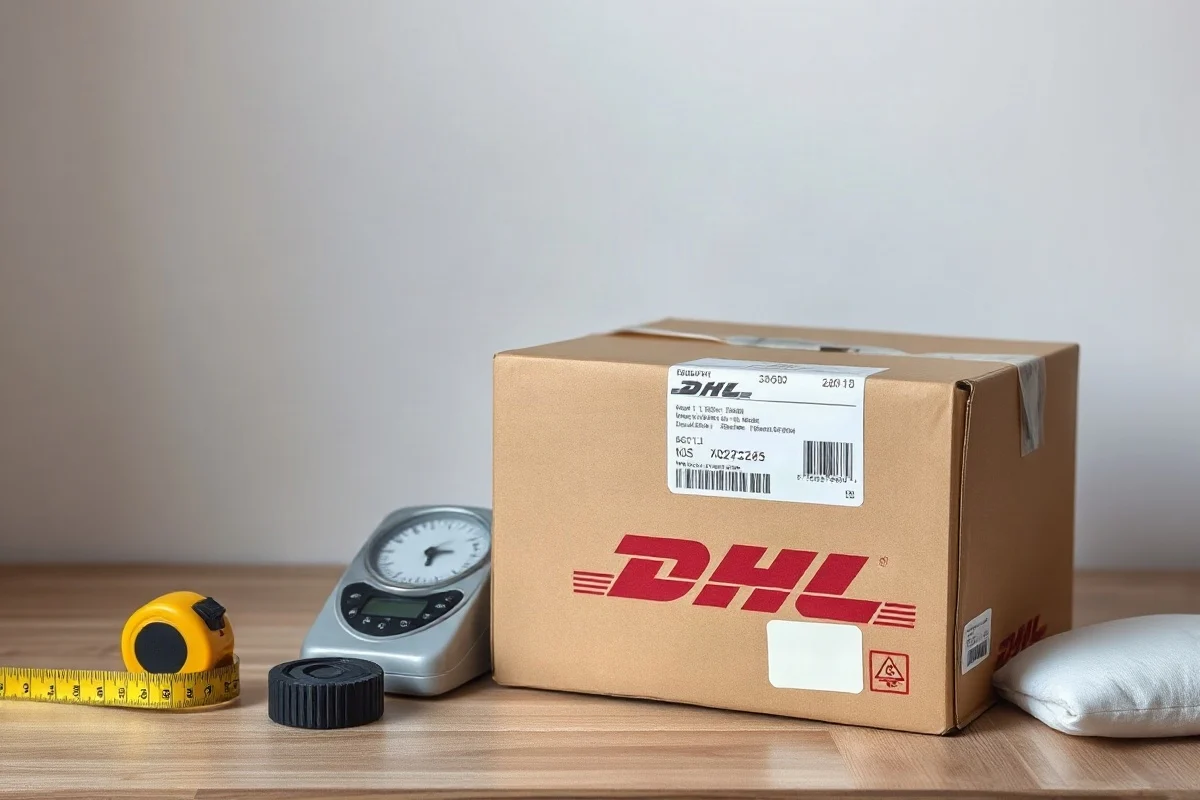
Before attaching a DHL label, confirm five things: the product is protected on every side, nothing moves freely, the box closes without bulging, the seams are securely taped, and the outside dimensions have been measured after packing. Weigh the completed parcel as well, then compare the actual and dimensional measurements using the current DHL shipment terms for the service and destination.
If you are unsure which carton will provide enough protection without excess space, compare the product's packed dimensions with a box size calculator. For additional planning, the guide to choosing the right box for international shipping can help you evaluate box strength, cushioning, and exterior size together.
The right amount of space is the smallest practical clearance that allows complete cushioning and safe closure. Start with roughly 1 to 2 inches around the product when appropriate, adjust for fragility and weight, and judge the finished package by its stability rather than by empty volume alone.
Comments
0No comments yet. Be the first to share a helpful note or question.
Leave a Comment
Your email address will not be published. Comments are reviewed before appearing on the site.