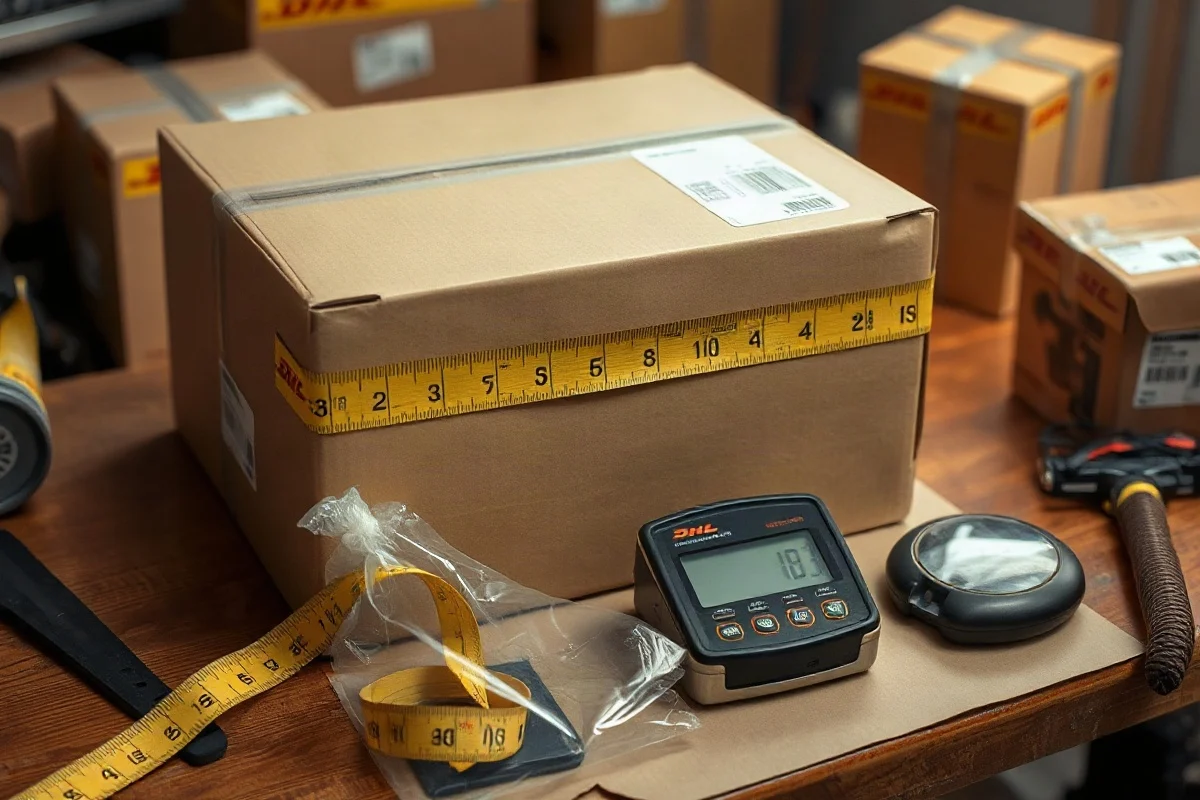
To measure a package for DHL, place the fully packed box on a flat surface and measure its outside dimensions at the longest points: length, width, and height. Record the measurements in the unit required by your DHL service or shipping label, round them consistently according to the current instructions, and use the final packed dimensions—not the product or empty box size. Accurate measurements help you compare shipping options, estimate dimensional weight, and reduce the chance of unexpected charges or delays.
What You Need to Measure a DHL Package
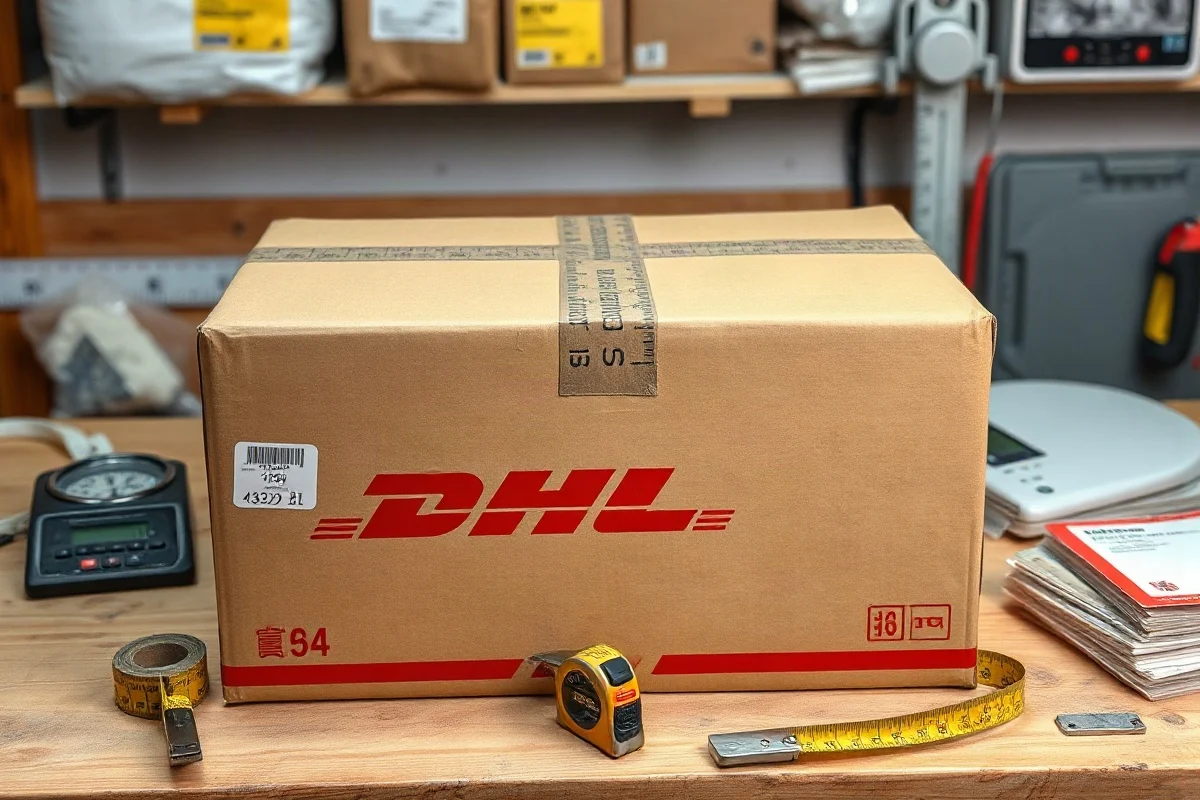
You do not need specialized equipment for most parcels. Gather:
- A rigid tape measure or ruler long enough to span the box
- A flat surface where the package can sit without rocking
- A scale if you also want to check actual weight
- A pen, phone, or shipping worksheet for recording measurements
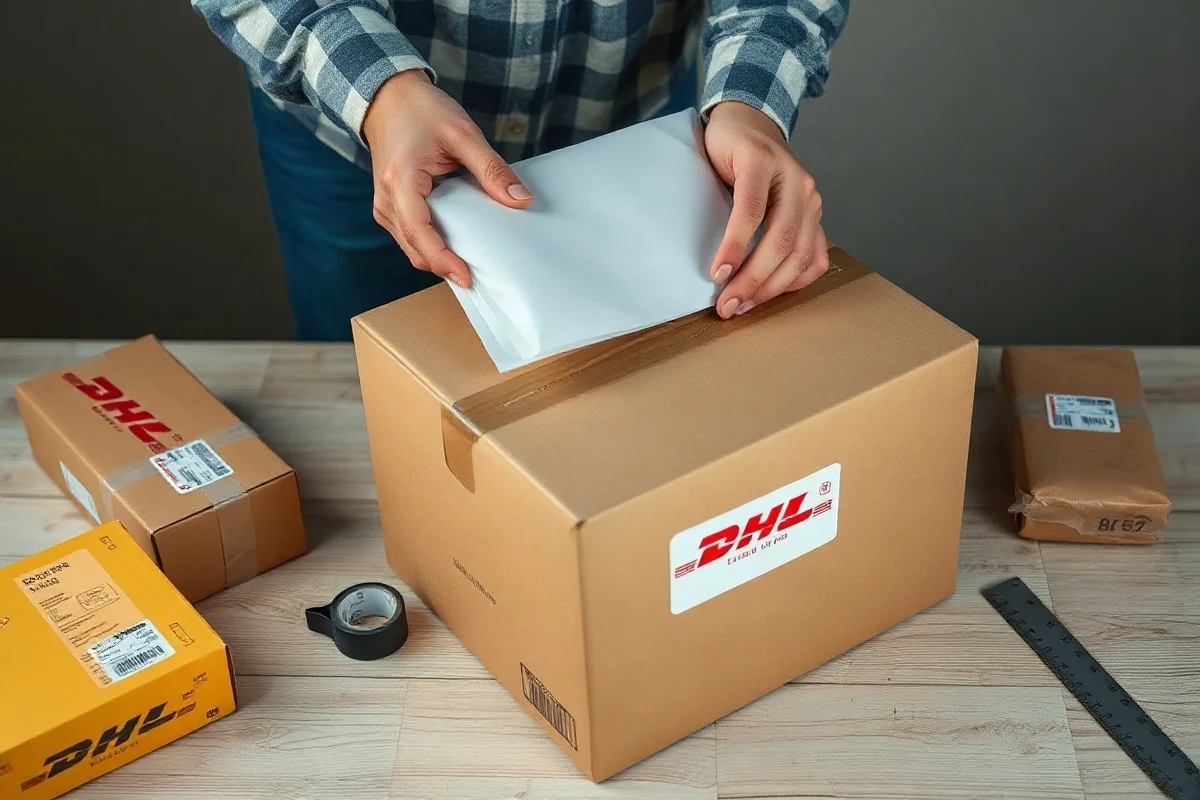
A flexible sewing tape can work for unusual shapes, but a rigid tape measure usually gives more consistent results on cartons. Measure the package after packing, taping, and attaching any required outer packaging. If a label pouch, strap, protective sleeve, or other material changes the outside profile, account for it when determining the final dimensions.
Understanding Length, Width, and Height
For a conventional rectangular box, the three measurements are usually described as:
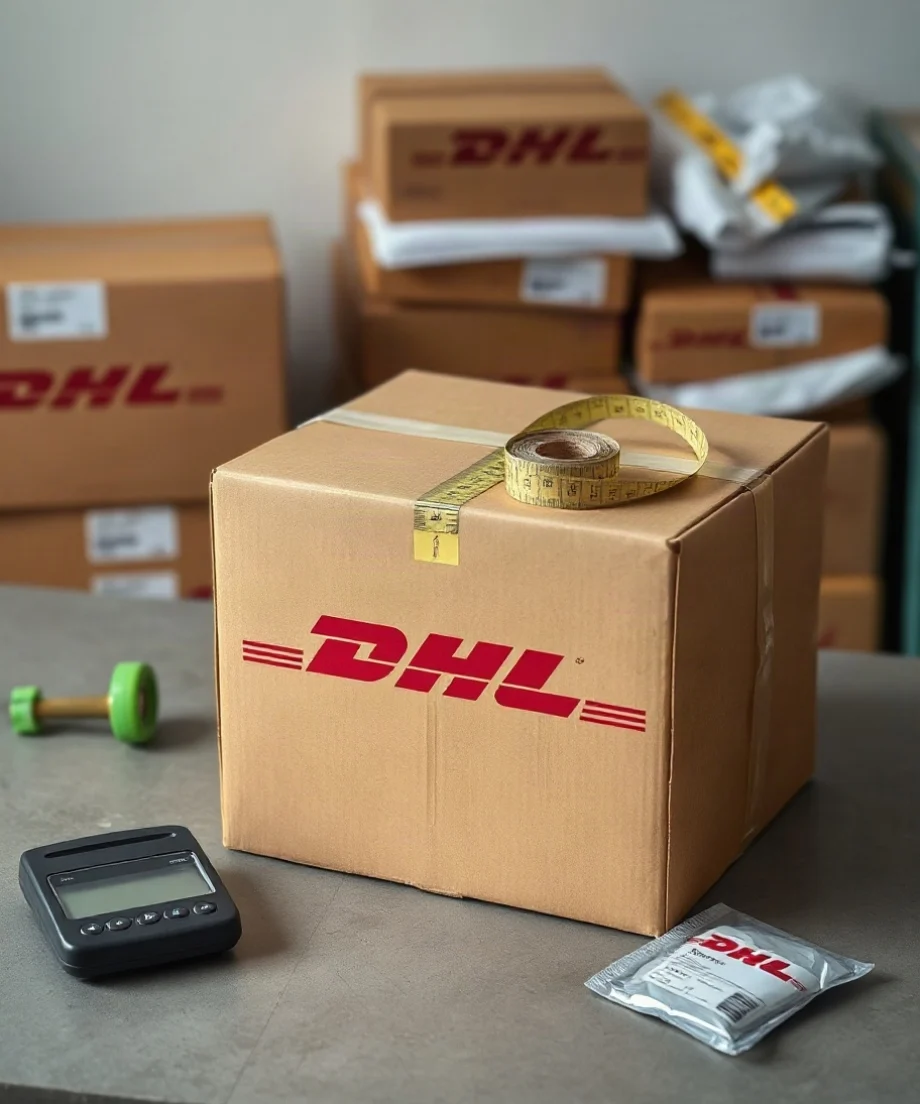
- Length: the longest side of the package
- Width: the next-longest side, measured across the package
- Height: the remaining side, measured from the bottom to the top
The orientation is less important than recording three complete outside measurements in a consistent order. DHL shipping tools or a shipping account may display the fields in a particular order, so enter the values into the matching fields rather than assuming the box must be positioned a certain way.
For example, if a packed carton measures 18 inches along its longest side, 12 inches across, and 8 inches from bottom to top, record it as 18 × 12 × 8 inches. Do not record the product dimensions inside the carton, and do not use the advertised dimensions of an empty box if tape, padding, or bulging contents make the finished package larger.
How to Measure a Rectangular Box
1. Pack and seal the box first
Put the product, cushioning, paperwork, and any other contents inside the carton. Close all flaps and apply the tape or sealing method you will use for shipment. Contents can push out the panels, especially when the box is filled with soft goods or protective material, so measuring before packing may understate the final size.
2. Find the longest outside dimension
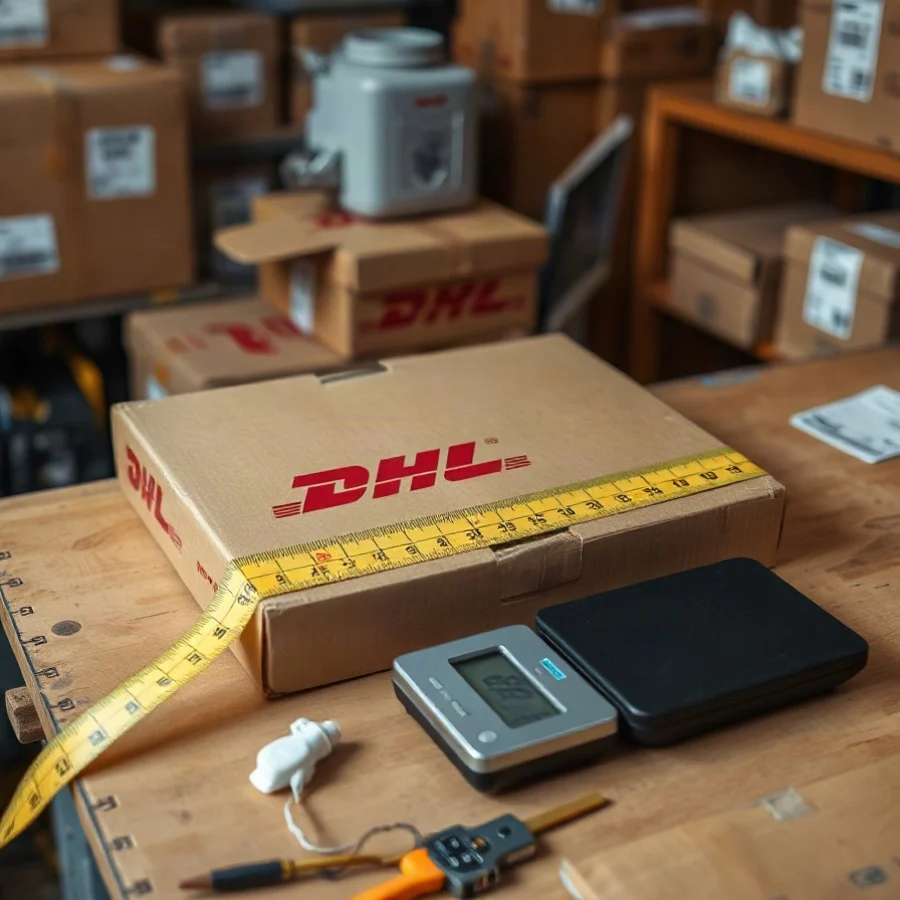
Run the tape along the longest side of the sealed carton. Measure from the outermost edge to the opposite outermost edge. Include the thickness of the cardboard and any exterior material. If one corner is slightly crushed or an edge is uneven, use a practical measurement that represents the package's maximum outside length rather than measuring only a short, undamaged section.
3. Measure the width
Measure the side that runs across the package, perpendicular to the length. Keep the tape straight and level. If the box is bulging, measure the greatest outside width. A package that is technically a box but no longer has flat, well-defined panels may need special handling in a carrier's rating system.
4. Measure the height
Measure from the lowest outside surface to the highest outside surface. Keep the package in the same orientation while measuring. Include raised seams, protruding packaging, or other features that increase the outside height.
5. Record and verify the numbers
Write down all three dimensions immediately. Then measure each side a second time, especially if the result is close to a service threshold or if you are entering the data into an online shipping tool. A one-inch difference can affect a dimensional-weight calculation or determine whether a package falls into a different pricing category.
Measuring Irregular DHL Packages
Not every shipment is a neat rectangular carton. Cylinders, tubes, soft packs, triangular cartons, and irregularly shaped packages require a little more care.
For a cylindrical package, measure the full end-to-end length and the outside diameter across the widest part. If a DHL service asks for rectangular dimensions, confirm how that service wants tube or cylindrical measurements entered before buying the label.
For a soft mailer, measure the package after it has been filled, closed, and flattened as it will be shipped. Do not compress it aggressively just to produce a smaller number if it will expand again during handling.
For an irregular package, measure the maximum outside length, width, and height. You can also imagine the smallest rectangular box that would completely enclose the item and use that overall envelope for planning. Carrier rating methods can differ for nonrectangular packages, so check the current DHL service terms or shipping platform instructions for the destination and service you selected.
Choose the Correct Measurement Units
U.S. shippers commonly work in inches and pounds, while international shipping tools may request metric units. Use the units shown by the DHL quote tool, account, or label form. If you convert measurements, convert all three dimensions and the weight consistently rather than mixing inches with centimeters.
Useful conversions include:
- 1 inch = 2.54 centimeters
- 1 foot = 12 inches
- 1 pound is approximately 0.453592 kilograms
For a precise shipping quote, avoid converting a rounded measurement too early. Keep the original readings, convert them using the same method, and apply the rounding instructions required by the relevant DHL service or shipping platform.
How Package Measurements Affect Dimensional Weight
A large, lightweight package may be priced according to the space it occupies rather than only its scale weight. This is commonly called dimensional weight, volumetric weight, or dimensional pricing. The exact formula, divisor, rounding method, and package eligibility can vary by carrier, service, destination, account, and date. Do not assume that one DHL service uses the same calculation as another.
The general planning formula is:
Dimensional weight = length × width × height ÷ applicable dimensional divisor
The divisor must come from the current DHL rate information or the shipping platform you are using. Because this value can change and may differ between services or regions, this article does not provide a universal divisor. You can use the dimensional weight calculator to estimate package volume, then verify the final calculation against the current DHL documentation or quote.
For example, suppose a packed carton measures 20 × 14 × 10 inches. Its cubic volume is 2,800 cubic inches. That volume is not itself the dimensional weight; it must be divided by the applicable divisor, with any required rounding applied afterward. The carrier or shipping platform may then compare the dimensional result with the actual scale weight and rate the package according to the applicable rule.
Actual Weight Still Matters
Measure the package and weigh it after packing. Actual weight can affect the quote even when dimensional weight is also considered. Use a scale that can support the full package without the carton touching the floor, wall, or another object. Record the weight in the unit requested by the label system.
If your home scale is difficult to read, weigh yourself, weigh yourself while holding the package, and subtract the two readings. This is only a rough check and may not be suitable for heavier shipments or packages near a pricing threshold. A commercial scale or carrier drop-off measurement may produce a different result because of scale precision, package placement, or rounding.
How to Pack for More Accurate Measurements
Good packing prevents measurement problems and protects the contents at the same time.
- Choose a carton that leaves enough room for cushioning without forcing the flaps outward.
- Fill empty space so the contents do not shift, but avoid overpacking that creates bulges.
- Use strong tape across all required seams and check that no flap is raised.
- Remove or cover old labels and barcodes so automated equipment is less likely to misread the package.
- Keep exterior straps, handles, or loose wrapping from extending beyond the main package unless the shipping instructions allow them.
- Place the shipping label on a broad, flat surface and avoid seams, corners, and edges.
If the box is visibly swollen after sealing, measure the swollen profile. Repacking it in a larger but properly shaped carton may produce a more predictable result and offer better protection than forcing the original box closed.
Common Measurement Mistakes
Measuring the empty carton
Manufacturers often list approximate box dimensions, and those dimensions may describe the interior, exterior, or a nominal box size. Use them for selecting packaging, not as a substitute for measuring the final shipment.
Ignoring cushioning and protrusions
Foam, air pillows, stretch wrap, corner protectors, and other materials can change the outer dimensions. Measure what the carrier will physically handle.
Rounding inconsistently
Do not round one side down, another side up, and the weight to a separate standard without checking the applicable instructions. Follow the current rules in the DHL tool or service documentation.
Confusing inside and outside dimensions
Inside dimensions help you decide whether a product will fit. Outside dimensions are generally the relevant measurements for the shipping package. When a box listing provides only one set of measurements, confirm whether they are internal or external.
Using the product size instead of the package size
A product may be small, but its carton can be much larger because of protective packaging. Shipping calculations should use the sealed package presented for pickup or drop-off.
Verify DHL Requirements Before You Ship
DHL services are not all identical. Requirements may vary by DHL business unit, origin, destination, service level, package shape, account, and shipping date. Size limits, maximum weights, surcharge rules, dimensional-weight calculations, and accepted packaging can change. Check the current official DHL source or the shipping platform that will issue your label before sending an unusual, oversized, heavy, or international package.
When comparing options, keep a record of the final length, width, height, actual weight, destination, and selected service. You can also review the DHL Package Guide for related measurement and packaging topics. If you are comparing carrier requirements, the site's shipping rules guide can provide general planning context, but the current carrier documentation controls the shipment.
A Practical Pre-Label Checklist
- Is the package fully packed and sealed?
- Did you measure the outside length, width, and height?
- Did you measure the bulging or widest points?
- Did you record actual weight after packing?
- Are all measurements in the units requested by the DHL tool?
- Did you check whether dimensional weight applies to the selected service?
- Did you verify current DHL limits and packaging requirements?
- Is the label on a flat surface and clear of seams and old labels?
Taking these steps before creating the label gives you a more reliable shipping estimate and makes it easier to explain any difference between your records and a later carrier measurement. For additional planning, you can use the box size calculator to compare carton dimensions before packing.
Comments
0No comments yet. Be the first to share a helpful note or question.
Leave a Comment
Your email address will not be published. Comments are reviewed before appearing on the site.