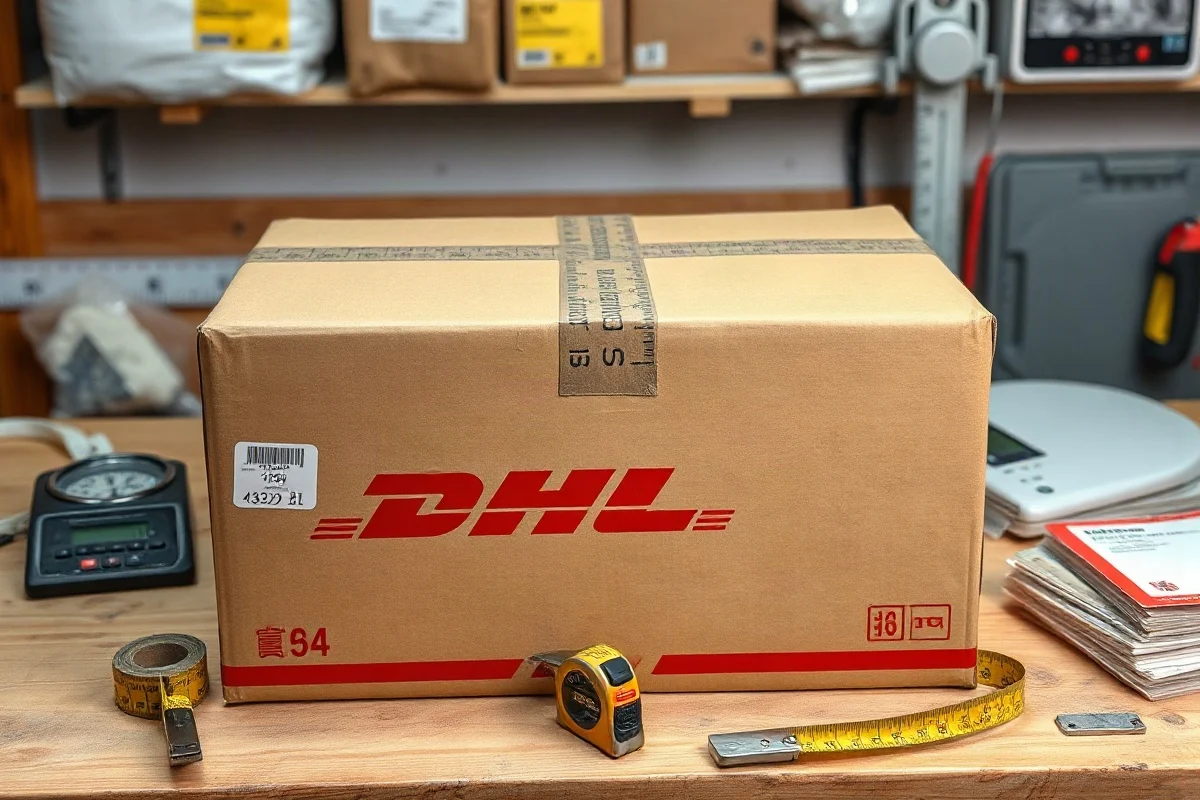
A package is too large for DHL when it exceeds the maximum dimensions, weight, or combined-size limit for the specific DHL service and destination you are using. There is no single worldwide “DHL maximum” that applies to every shipment. Limits can vary by DHL division, service level, origin, destination, package type, and whether the shipment is accepted through an account, a retail location, or an online booking platform. Before paying for shipping, measure the packed parcel, calculate its dimensional weight, and compare the results with the current requirements shown by the relevant DHL service.
Large packages can also be rejected or charged differently when they are unusually shaped, difficult to handle, poorly packaged, or subject to oversize surcharges. A box that is below a stated weight limit may still be unsuitable because its length or total dimensions are too great. For current requirements, use the official DHL site for your country and the exact service you plan to purchase.
What makes a package too large for DHL?
DHL can evaluate a parcel using several measurements rather than weight alone. The most important factors are:
- Actual weight: The weight of the fully packed shipment, including the box, cushioning, tape, labels, and any outer wrapping.
- Package dimensions: The outside length, width, and height after packing.
- Dimensional weight: A calculated weight based on the space the package occupies in a vehicle or aircraft.
- Maximum side length: Some services set a limit for the longest side of a parcel.
- Combined dimensions: A formula using the length and the two shorter sides may apply to larger packages.
- Shape and handling: Cylinders, irregular parcels, bundles, long items, and packages that cannot move safely through sorting equipment may have special conditions.
A shipment may be accepted under one DHL product but unavailable under another. International express, domestic parcel, freight, and specialized services can have different requirements. Even when a shipment is technically within a published limit, DHL may require a different service or a freight booking for very large or heavy pieces.
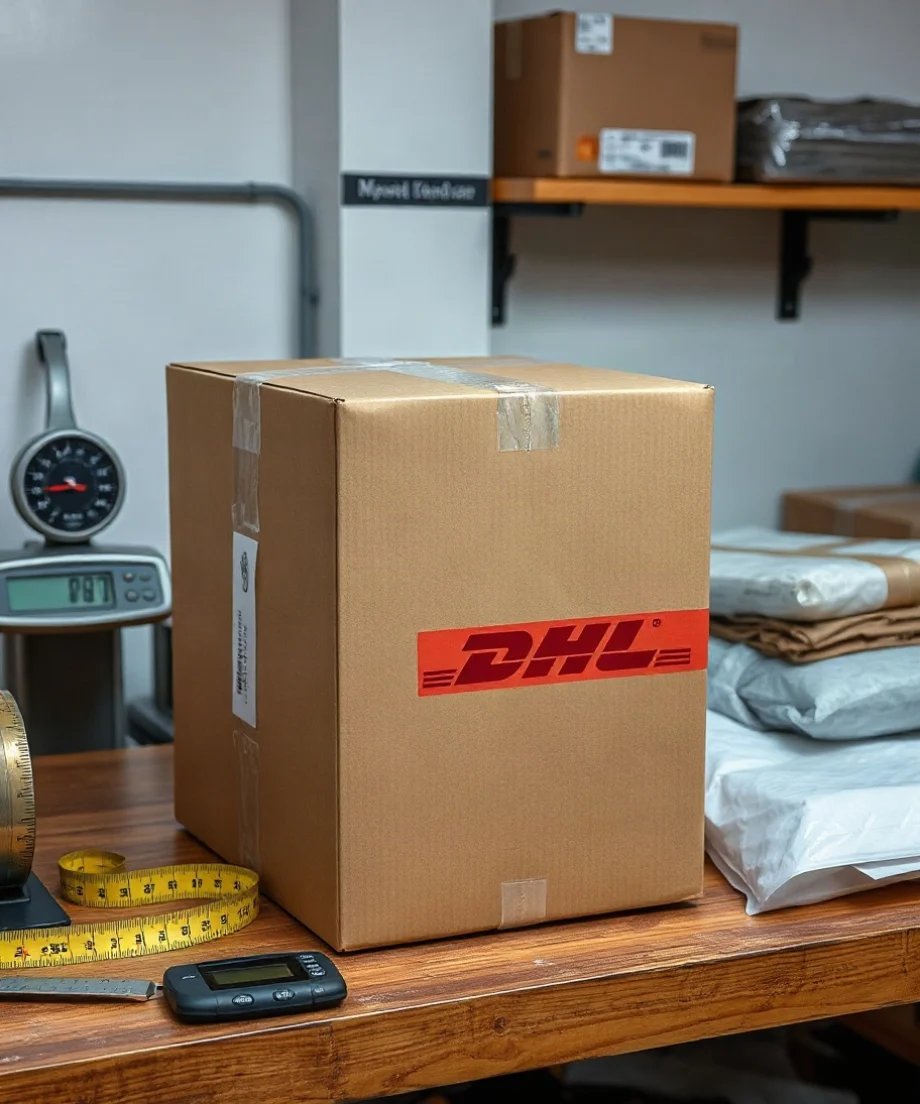
How to measure a DHL package correctly
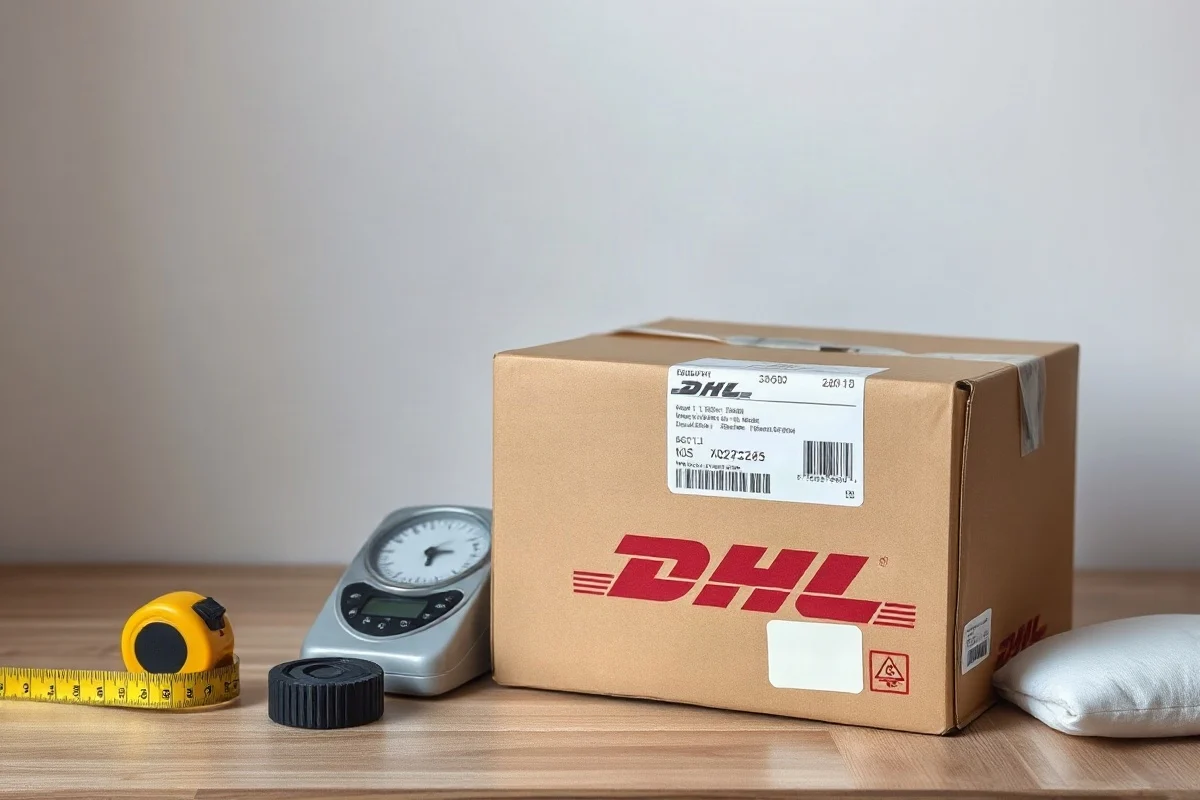
Measure the package only after it is completely packed and sealed. Use the outside dimensions, not the size of the product or the empty box.
Length, width, and height
- Place the finished parcel on a level surface.
- Identify the longest side. This is the length.
- Measure the side running from front to back as the width.
- Measure the remaining side as the height.
- Round measurements according to the instructions for the DHL service or booking system. Do not assume that a fraction of an inch will be ignored.
Measure from the package’s outermost points. Include bulging cardboard, protruding corner protection, handles, straps, and other parts that increase the parcel’s footprint. If the box is soft-sided or slightly irregular, use the largest practical measurements rather than compressing it by hand.
For a detailed walkthrough, see our guide to measuring a package for DHL. Accurate measurements matter because a carrier may remeasure a shipment after acceptance, and billing can be adjusted when the declared size does not match the carrier’s measurement.
Understanding DHL size limits
DHL’s size rules should be read as service-specific requirements. Look for separate limits covering maximum weight, maximum length, maximum dimensions, and any length-plus-girth formula. The exact definitions and units may differ by service and country.
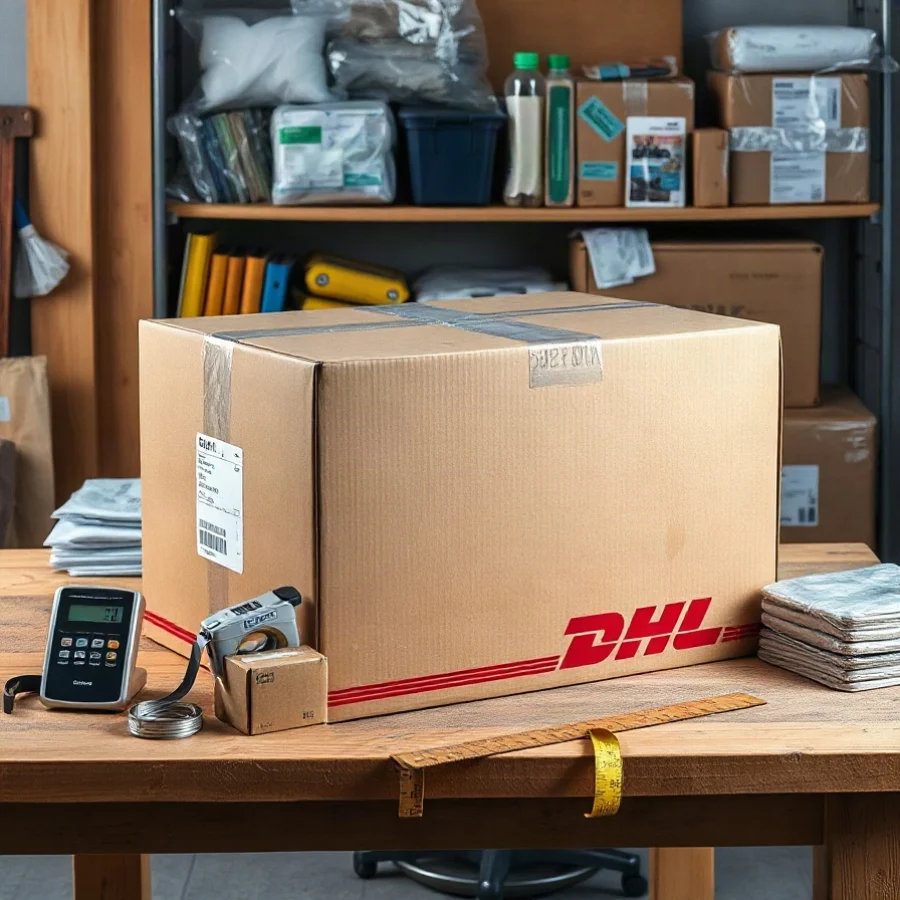
A common way carriers describe a large parcel is with a combined measurement such as:
Length + (2 × width) + (2 × height)
This is often called length plus girth, but you should not assume that every DHL service uses this formula or the same threshold. Some services may use a different dimensional rule, while others may list a maximum size as a set of three dimensions. Always apply the formula shown in the current DHL terms for your selected service.
For example, suppose a packed box measures 40 × 20 × 18 inches. Its length-plus-girth calculation would be:
40 + (2 × 20) + (2 × 18) = 116 inches
This calculation does not prove that the box is accepted or rejected. It only gives you a measurement to compare with the applicable DHL requirement. The shipment’s destination, service, account terms, and package category still matter.
Why dimensional weight matters for large boxes
A large, lightweight box may be charged according to dimensional weight because it takes up more space than its actual weight suggests. The general calculation is:
Dimensional weight = length × width × height ÷ dimensional divisor
Use the units and divisor specified by the DHL service. The divisor is not universal and may vary by service, country, shipment type, or current pricing rules, so do not copy a divisor from an old label or an unrelated carrier’s website.
For a box measuring 24 × 18 × 16 inches, first calculate the cubic volume:
24 × 18 × 16 = 6,912 cubic inches
You would then divide 6,912 by the applicable DHL dimensional divisor and compare the result with the package’s actual weight. The billable weight may be based on the higher value, subject to the rules of the service. You can use our dimensional weight calculator to check the arithmetic, but verify the divisor and rounding method against current DHL documentation before booking.
Dimensional weight does not necessarily make a package physically too large for DHL. However, it can make an oversized box much more expensive to ship. A smaller box with tighter protective packing may reduce both the dimensional weight and the risk of oversize handling.
Signs that your package needs a different DHL service
Consider asking DHL or your shipping provider about another service when the parcel:
- Exceeds the published maximum length or combined dimensions.
- Is heavy enough to approach the service’s parcel limit.
- Has a long, narrow, round, unstable, or irregular shape.
- Contains multiple items strapped together rather than enclosed in one rigid box.
- Cannot be safely stacked or moved by standard parcel equipment.
- Requires a pallet, special handling, freight transport, or a scheduled pickup.
- Is traveling internationally and may be affected by destination-specific restrictions.
Do not rely solely on a shipping label generated by a marketplace or third-party platform. The platform may offer only selected DHL services, may apply its own package-entry rules, or may display limits that do not cover every destination. Confirm that the service shown on the label accepts your package’s actual size, weight, contents, and route.
How to reduce the size of a DHL shipment
Choose a closer-fitting box
Leave enough room for cushioning, but avoid filling a large carton with unnecessary void space. A box that is only a few inches smaller on each side can have a substantially lower volume. If you are unsure which carton will fit, our box size calculator can help estimate a suitable box based on the item and packing clearance.
Protect the item efficiently
Use cushioning that protects against impact without creating oversized gaps. Wrap fragile items individually, reinforce vulnerable corners, and keep the contents from shifting. Do not remove protection simply to reduce measurements; damage, claims problems, and unsafe handling can cost more than dimensional-weight charges.
Check the finished parcel again
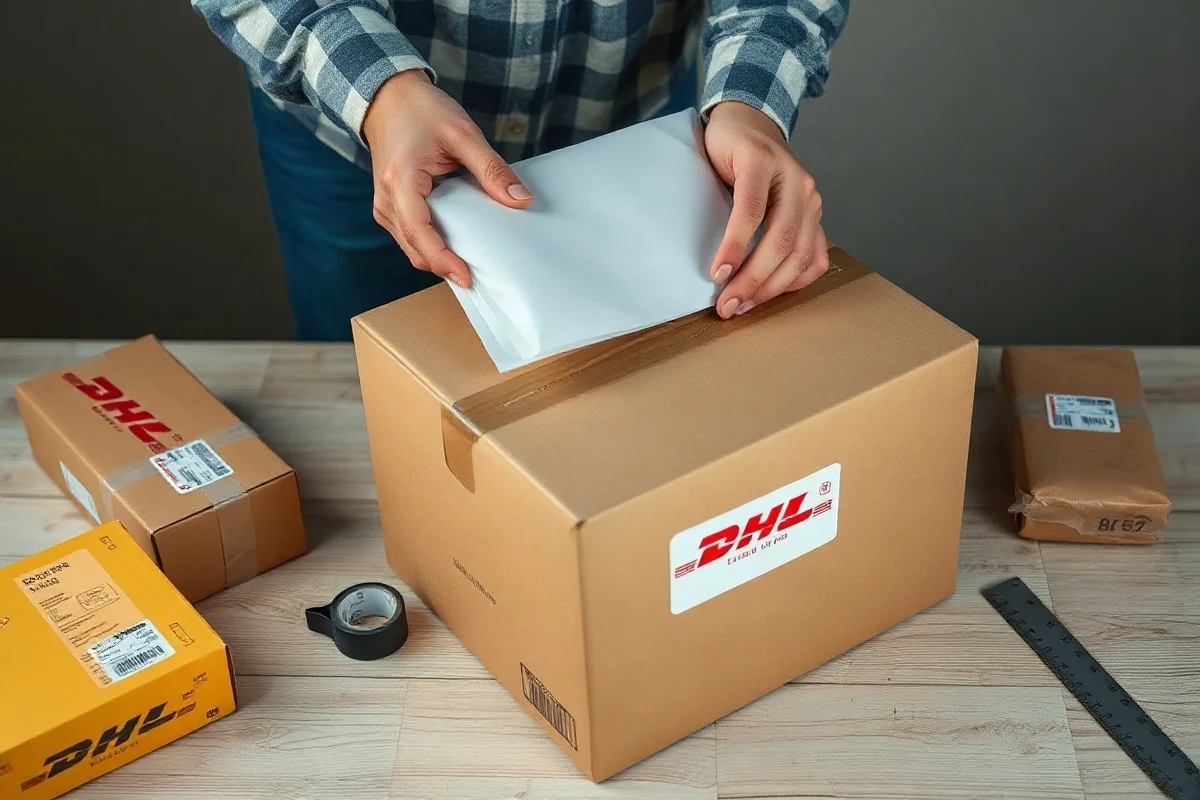
After taping the carton, measure all three sides and weigh it. Record the measurements in the same unit requested by the booking system. A box can expand after it is filled, and compression can change its dimensions. If the parcel is close to a limit, leave a margin rather than relying on a borderline measurement.
What to verify before you book
Before purchasing a DHL label, confirm all of the following:
- The DHL division and service name.
- The origin country and destination country or postal code.
- The packed length, width, height, and actual weight.
- The applicable dimensional-weight divisor and rounding rules.
- Any maximum side, combined-dimension, or length-plus-girth requirement.
- Whether oversize, non-conveyable, remote-area, or special-handling charges may apply.
- Whether the item’s contents and packaging are permitted on the selected route.
Because carrier requirements, pricing, and service availability can change, check the current official DHL source for your shipment’s origin and destination. If the website does not clearly address an unusually large parcel, contact DHL or the authorized shipping provider before tendering the package. Ask for confirmation using the exact measurements, weight, contents, and service you intend to use.
For additional carrier-specific guidance, browse our DHL package guide. The safest approach is simple: measure the parcel after packing, compare every dimension with the current service rules, calculate dimensional weight using the correct divisor, and choose freight or specialized handling when the package no longer fits ordinary parcel requirements.
Comments
0No comments yet. Be the first to share a helpful note or question.
Leave a Comment
Your email address will not be published. Comments are reviewed before appearing on the site.