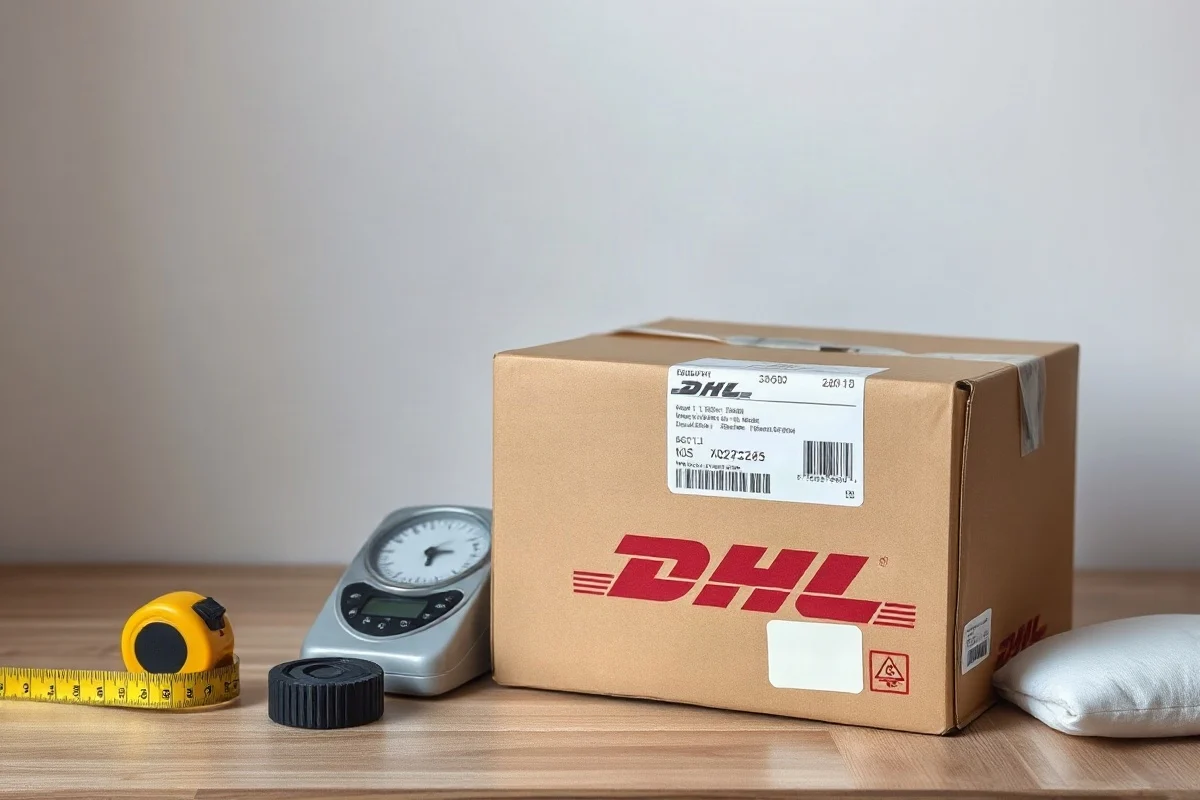
The best box size for DHL shipping is the smallest sturdy box that fits your item, protective material, and required documents without crushing or bending the contents. Leave enough room for cushioning on every side, but avoid a large box filled with excess air, because DHL pricing may depend on the package’s actual weight, dimensional weight, destination, service, and other shipment details. Before buying a box, measure the packed item, compare the finished dimensions with the current DHL requirements for your service, and review the quoted shipping price.
Start with the item, not the shipping label
Choose packaging based on the product’s actual shape and fragility. A compact rectangular carton is usually easier to measure, label, stack, and protect than an oversized or irregular container. For clothing, soft goods, and other nonfragile items, a strong poly mailer or padded mailer may be suitable if the DHL service and destination allow it. For electronics, ceramics, glass, cosmetics, tools, and other breakable products, a corrugated box with internal cushioning is generally a safer starting point.
The box should be large enough to prevent the product from touching the outer walls after packing. It should not be so large that the contents can move freely. Movement creates impact risk and can also increase the package’s billable size. If a product has an unusual shape, measure its longest, widest, and highest points after adding the protection that will remain inside the package.
How to measure a DHL package
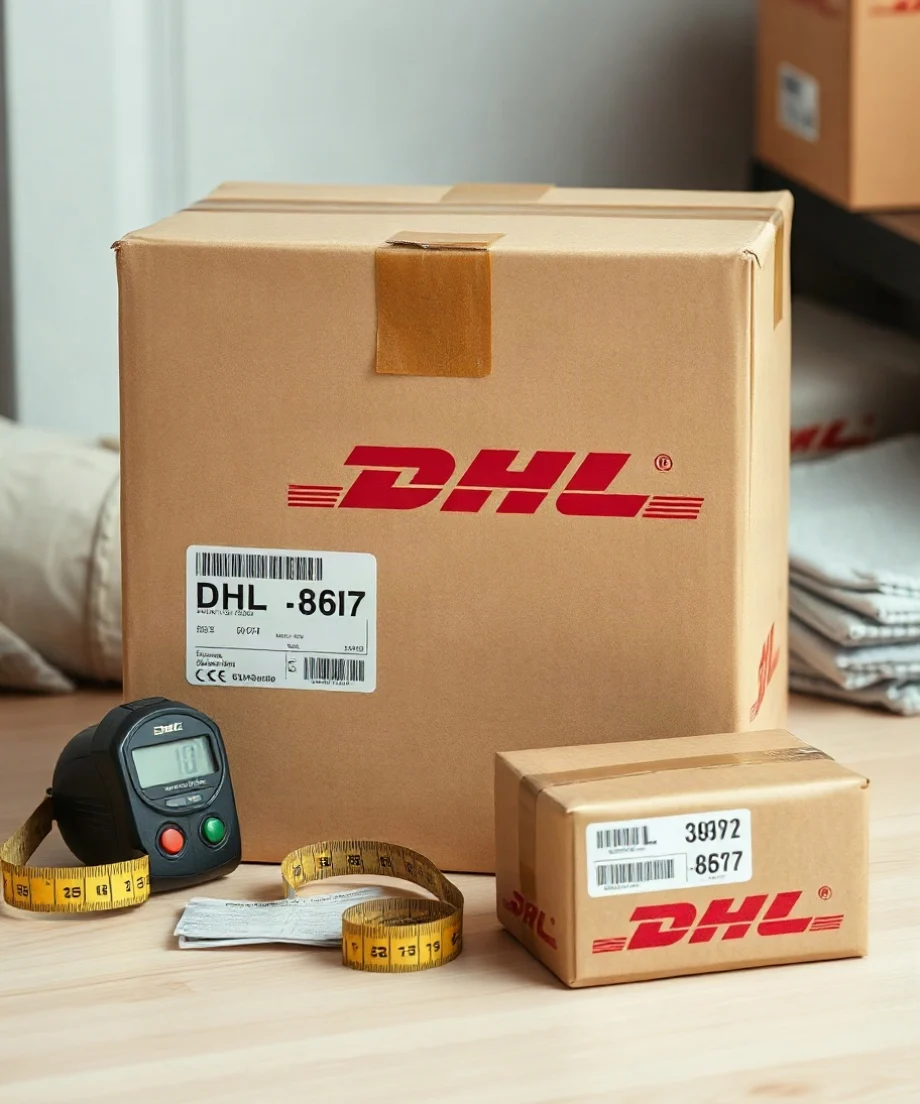
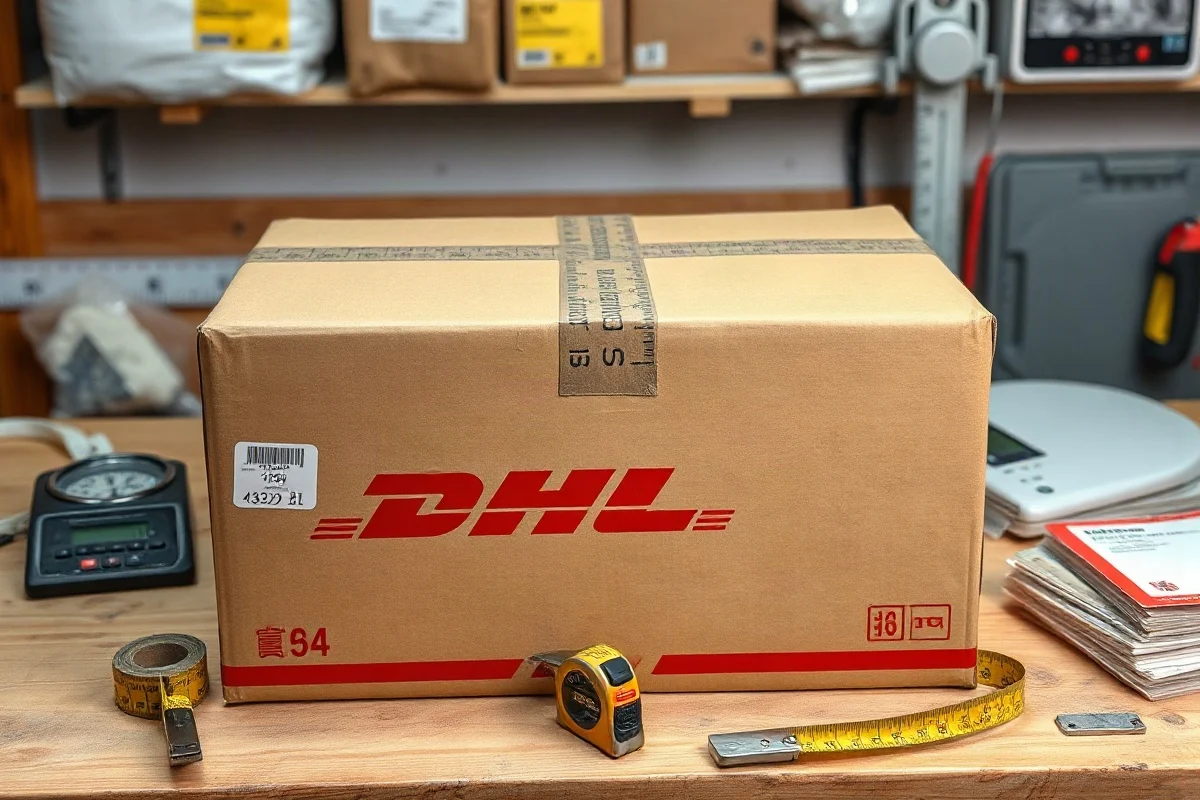
Measure the outside of the completed package, not just the inside dimensions printed on the box. Use a tape measure and round each measurement consistently according to the instructions used by the DHL service you select. If the package has bulging sides, a rounded surface, or protruding parts, measure the maximum length, width, and height. Include anything that remains attached to the shipment, such as a handle, rigid sleeve, or protective corner.
Length, width, and height
For a typical rectangular box, identify the three outside dimensions as follows:
- Length: the longest side.
- Width: the side across from the length, usually the shorter horizontal side.
- Height: the remaining vertical dimension when the box is positioned for shipping.
The exact orientation matters less than recording all three dimensions accurately and entering them in the correct fields when you create the shipment. A box measuring 18 by 12 by 8 inches has the same rectangular volume regardless of which side you call height, but a carrier’s online form may still require a specific order.
Do not measure an empty carton and assume that number is the final package size. Tape, labels, corner protection, an overfilled box, or a second outer carton can change the dimensions. Pack the shipment first, seal it, and then measure the outside edges.
How much extra space should the box have?
There is no single extra-space allowance that works for every DHL shipment. The right amount depends on the item, the cushioning material, and how much protection the product needs. A small, durable item may need only a modest layer of padding. A fragile item may need thicker cushioning and a stronger box, which can make the outer dimensions substantially larger than the product itself.
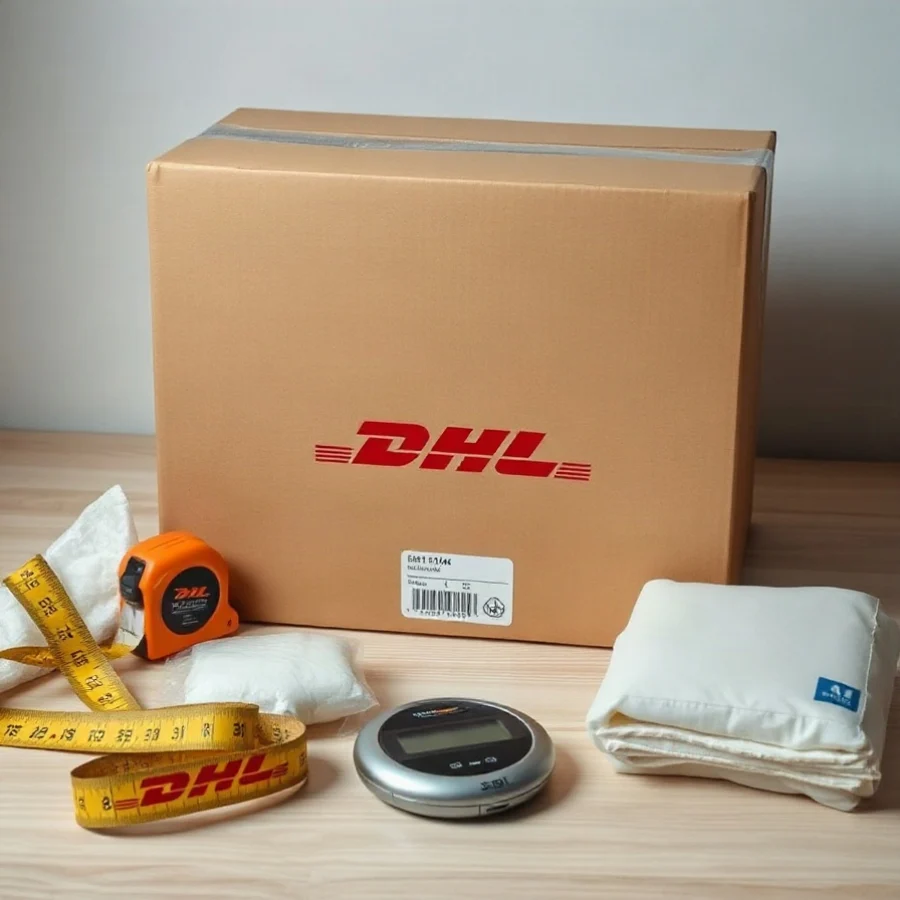
As a practical method, place the item in a box that allows cushioning on all sides. Add enough material to stop the item from contacting the box walls and to limit movement when you gently shake the closed carton. For fragile goods, use a stronger packing method: wrap the item individually, separate multiple pieces, protect corners and surfaces, and fill empty spaces so the contents cannot shift. Do not rely on loose scraps that compress easily or on a thin product box as the only shipping container.
When possible, test the packed box before sealing it permanently. If the contents slide from end to end, add or reposition cushioning. If the flaps bulge or the item presses against the walls, move up to a larger and stronger carton. A box that is slightly larger but properly protected is usually a better choice than a tight box that transfers impact directly to the product.
Actual weight and dimensional weight
DHL may assess a shipment using the greater of its actual weight and dimensional weight, depending on the service and shipment terms. Dimensional weight reflects the amount of aircraft or vehicle space a package occupies. A lightweight box with large outside dimensions can therefore cost more to ship than a smaller, heavier package.
For a rectangular package, the basic dimensional-weight calculation is:
Length × width × height ÷ dimensional-weight divisor = dimensional weight
Use the measurement system and divisor specified for the DHL service, origin, destination, and account or quote. Divisors and rounding procedures can vary, so do not copy a number from an old shipment or assume that one DHL service uses the same calculation as another. Check the current DHL rate guide, shipping tool, or account-specific instructions before relying on the result.
For example, suppose a sealed carton measures 20 by 14 by 10 inches. Its dimensional volume is 2,800 cubic inches. That volume must then be divided by the applicable divisor for the selected DHL service. Compare the resulting dimensional weight with the package’s actual scale weight, using the current rounding rules. The billable weight is determined by the applicable DHL calculation, not by the volume alone.
Our dimensional weight calculator can help you compare package volume and estimated dimensional weight. Treat the result as a planning estimate unless its settings match the current DHL requirements for your shipment.
Common box choices by shipment type
Small products and accessories
Small products such as cables, books, accessories, and packaged household goods often work well in a compact corrugated box. Select a carton that leaves room for a thin protective layer without forcing the item into a larger dimensional-weight category. If the product is not fragile, a padded mailer may be more efficient, but make sure the outer packaging resists tearing and protects the contents from pressure.
Clothing and soft goods
Fold clothing or linens neatly and use a moisture-resistant inner bag when appropriate. A durable mailer can reduce package volume, while a small box may provide better protection for structured garments or items that must arrive without severe creasing. Avoid choosing a carton so large that the contents can shift or become compressed unevenly.
Electronics
Use the manufacturer’s retail box only if it is designed to withstand the shipment environment and has enough outer protection. Otherwise, place the device in a protective inner package and use a rigid outer carton. Keep chargers, cables, and accessories from pressing against screens or other delicate surfaces. Fill empty space around the inner package rather than allowing it to move inside the shipping box.
Fragile or irregular items
Fragile and oddly shaped products often need more than one layer of protection. Wrap removable or delicate components separately, cover sharp edges, and prevent direct contact between the product and the carton. For multiple items, use dividers or individual wrapping so pieces cannot strike each other. A double-box method may be appropriate for especially vulnerable products, but it increases both dimensions and weight, so include the final outer package in your shipping estimate.
Check DHL service and destination requirements
DHL does not use one universal box-size rule for every shipment. Requirements can differ by DHL business unit, service level, domestic or international routing, destination country, package type, and account arrangement. Maximum dimensions, maximum weight, surcharge thresholds, packaging restrictions, and acceptable contents may also change over time.
Before purchasing packaging in bulk or promising a delivery price, check the current official DHL information for the exact service you plan to use. Confirm whether the shipment is going through DHL Express, a national DHL operation, or another DHL-branded service, because their tools and requirements may not be interchangeable. Also verify customs-document requirements for international shipments and make sure the contents, declared value, and description are accurate.
If the package is close to a stated maximum, leave a margin rather than targeting the limit exactly. Small differences in measuring, rounding, or package shape can affect acceptance or charges. For shipments that exceed standard parcel dimensions, ask DHL or your shipping provider about the correct service before tendering the package.
Practical packing steps
- Measure the product and identify its most vulnerable surfaces.
- Select a strong carton or approved mailer that allows the needed protection.
- Wrap the item and protect corners, screens, openings, or sharp edges.
- Place cushioning on the bottom, around the contents, and above them.
- Fill empty spaces until the product cannot move freely.
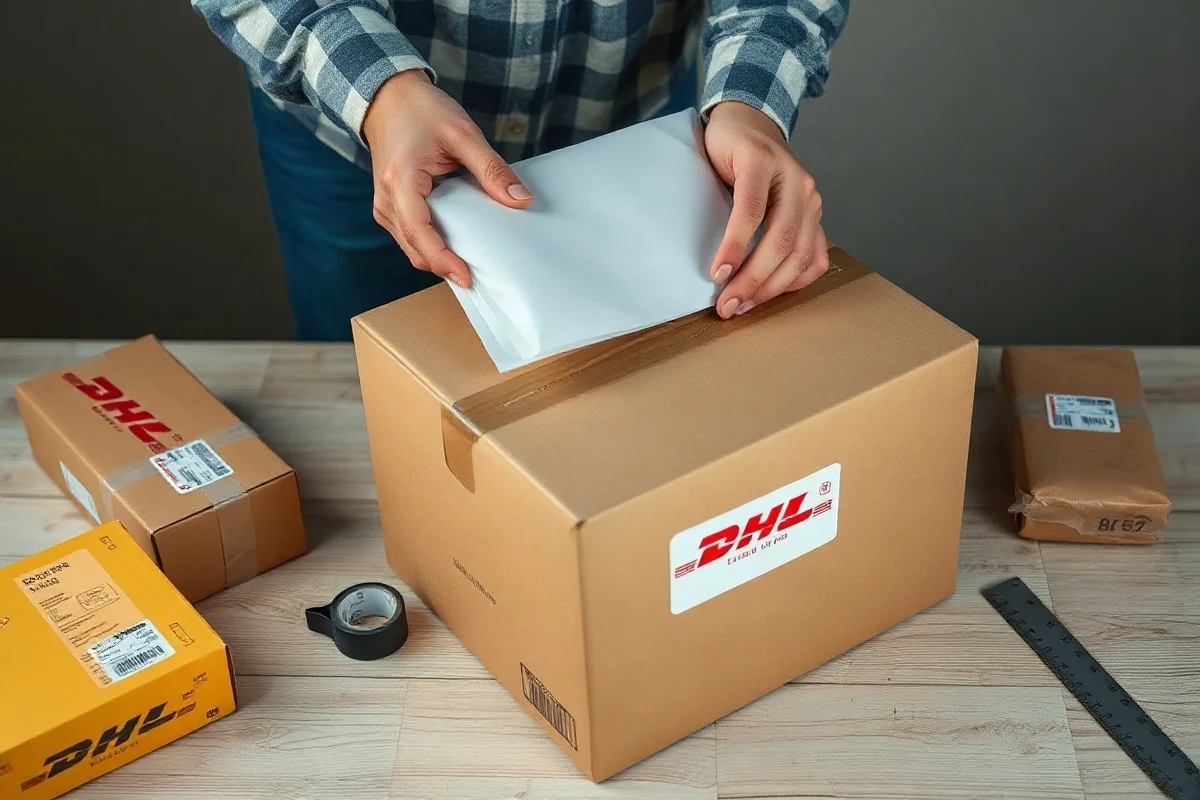
- Close the carton with suitable packing tape across the main seams.
- Measure the sealed package at its largest outside points.
- Weigh it on a reliable scale, including all packaging and documents.
- Enter the final measurements and weight into the current DHL quote tool.
- Attach the label flat on the largest available surface and remove or cover old labels and barcodes.
How to reduce shipping cost without weakening the package
Start by reducing empty space rather than removing necessary protection. Compare several box sizes for the same product, especially if you ship the item regularly. A carton that is only a few inches smaller in one dimension may lower dimensional weight, but a weaker box or insufficient cushioning can lead to damage and replacement costs.
Use an efficient product configuration, compact protective materials, and a box that closes without bulging. Avoid adding an unnecessary decorative outer box unless it serves a protective purpose. For a repeat shipment, record the final dimensions and actual weight of the successfully packed version, then confirm the quote again whenever the service, destination, or DHL pricing information changes.
For more planning help, compare the box size calculator with your measured product and packaging. You can also review the DHL package guide for related measurement and shipping considerations. The final authority should always be the current DHL source associated with the service you are booking.
Comments
0No comments yet. Be the first to share a helpful note or question.
Leave a Comment
Your email address will not be published. Comments are reviewed before appearing on the site.