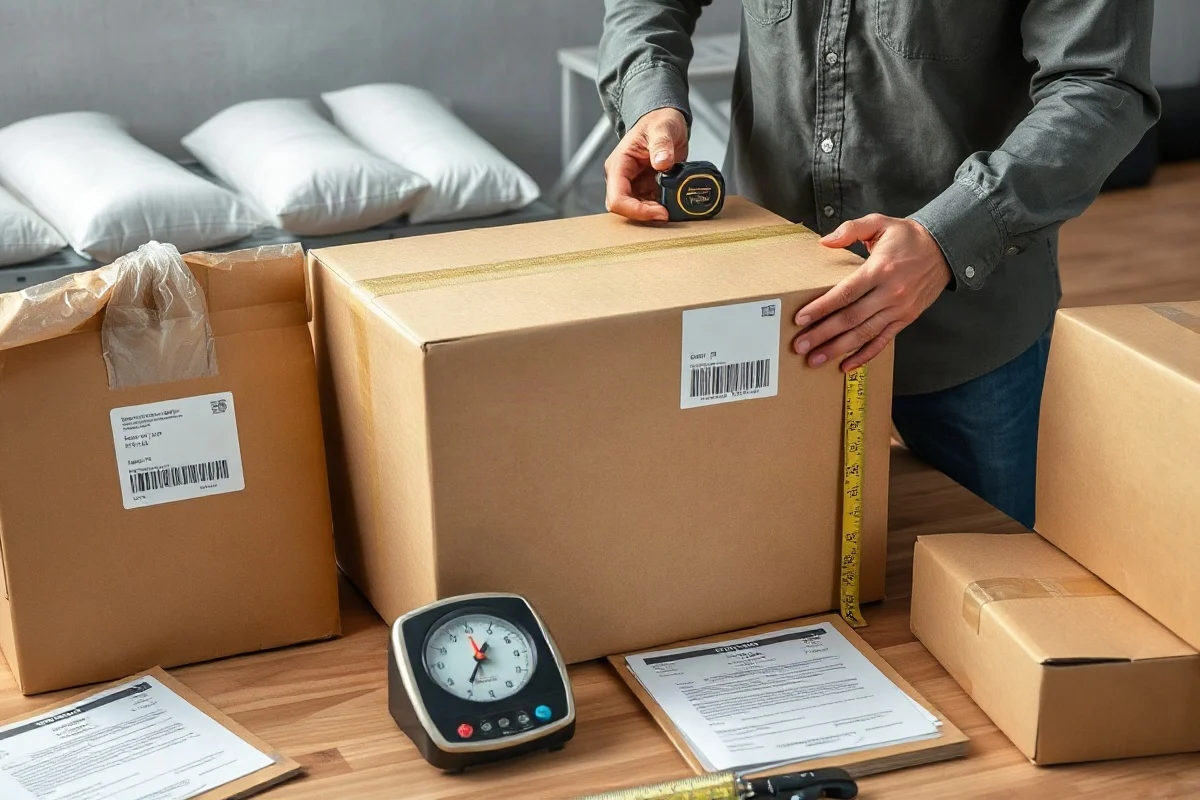
The right box for international shipping is the smallest sturdy box that fits the item, its protective materials, and any required documentation without forcing or crushing the contents. Choose a new or structurally sound corrugated box, leave enough room for cushioning, and measure the sealed package from the outside before checking the current requirements and pricing for your selected service.
Start with the item, not the box
International shipments may pass through several handling points, transfers, and climate conditions. A box that works for a short domestic delivery may not provide enough protection for a longer route. Begin by examining the product and identifying its most vulnerable areas:
- Fragile parts such as glass, screens, handles, corners, or hinges
- Surfaces that can scratch, dent, leak, or become contaminated
- Parts that could shift, bend, or separate during handling
- Items that are sensitive to moisture, temperature, or pressure
- Products that may require extra labeling or documentation
Measure the product at its longest, widest, and tallest points. Include attached parts, handles, caps, and protrusions. If the item needs a protective sleeve, bag, bubble wrap, foam, or an inner carton, account for those materials before selecting the outer box.
Choose a box with practical clearance
A box should not be so tight that the product presses against the walls, but empty space should not be excessive. A useful starting point is to allow room for cushioning on every side, then test whether the contents remain centered when the box is gently moved.

For a single item, compare the product's packed dimensions with the internal dimensions of the box. Box dimensions are commonly listed as length by width by height, but manufacturers may measure them differently. Confirm whether a listed size refers to internal or external dimensions before relying on it. Internal dimensions are the most useful when deciding whether an item will fit; external dimensions matter when calculating shipping costs and checking carrier restrictions.
When the product has unusual shapes, use the smallest rectangular space that fully encloses it. Do not compress a product merely to fit a smaller carton. A slightly larger box with effective cushioning is usually safer than a tight box that transfers impacts directly to the item.
Why the smallest suitable box matters
Box size affects more than material use. Many international shipping services consider both actual weight and dimensional weight. A large, lightweight parcel can be priced according to the space it occupies rather than only the number shown on a scale.
The exact dimensional-weight formula, unit system, and divisor can vary by carrier, service, package type, origin, destination, and account terms. For a general check, convert the measurements into the units required by the carrier, multiply length by width by height, and divide by the applicable divisor published for that shipment. Compare the resulting dimensional weight with the actual weight, then confirm which value the carrier uses for billing.
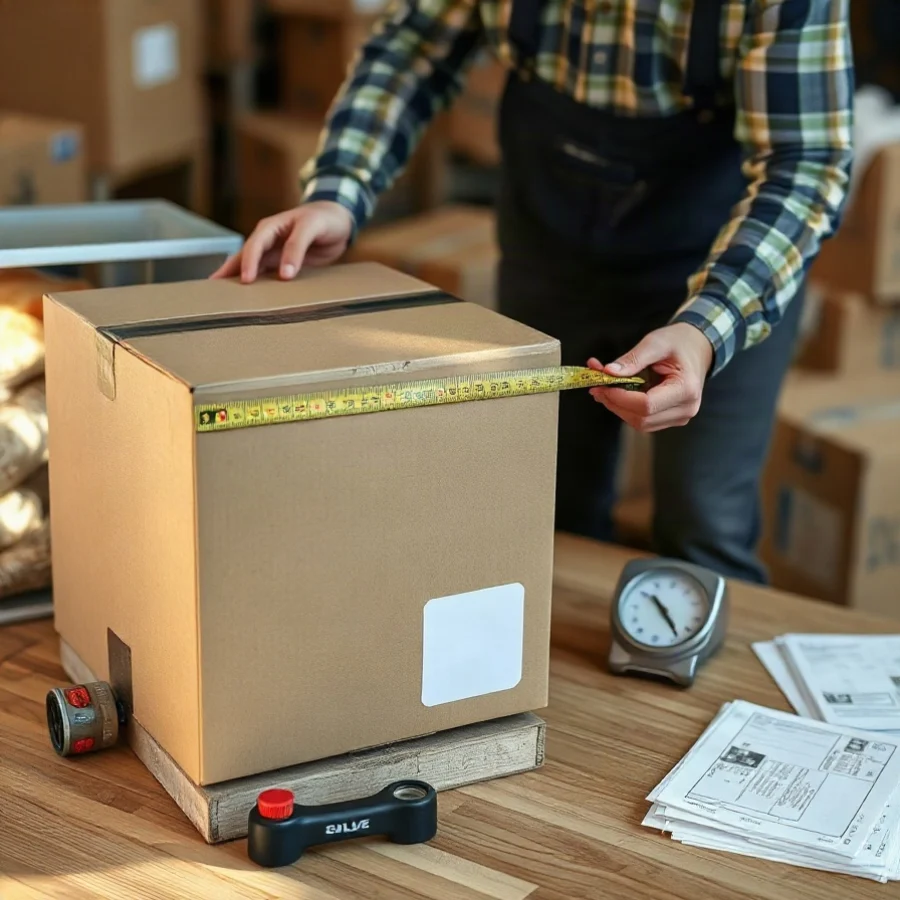
Do not copy a divisor from an old shipment or from a different carrier. Current DHL terms and service documentation should control the calculation. You can also compare scenarios with the Dimensional Weight Calculator, then verify the result against the official quote for your route and service.
Use the right box construction
Select a corrugated shipping carton that matches the weight, shape, and fragility of the contents. A clean, rigid carton with intact corners and strong flaps is preferable to a worn box that has already been compressed or exposed to moisture.
For heavier or fragile contents, look for a box with construction appropriate to the load rather than choosing based only on appearance. A double-wall carton may provide more rigidity than a single-wall carton, but the best choice depends on the product, packing method, and handling environment. If the product is especially delicate, consider using an inner box inside a larger outer box. This creates a protective buffer and helps keep the product from touching the exterior walls.
Avoid cartons with oil stains, soft spots, torn edges, crushed corners, or old shipping labels. Remove or cover obsolete barcodes and addresses. Conflicting labels can slow handling or cause scanning errors.
Protect the contents inside the box
Good packing prevents movement, absorbs shocks, and keeps the item away from the carton walls. Place a cushioning layer on the bottom, position the product in the center, and fill the sides, top, and remaining gaps. The product should stay in place when the closed box is gently turned or tilted.
For fragile items
- Wrap each separate component so pieces cannot strike one another.
- Protect corners, edges, screens, and other impact-sensitive areas.
- Use enough cushioning to prevent contact with all six interior sides.
- Keep heavy components below lighter components when the package contains multiple items.
- Use an inner carton when the product needs additional separation from the outer box.
Do not rely on a thin layer of paper or a small amount of loose fill for a heavy or breakable product. Cushioning should remain effective after compression and should not allow the item to settle against the bottom of the carton.
For liquids, powders, and leak-prone products
Check the current carrier and destination-country rules before packing liquids, batteries, chemicals, food, cosmetics, or other regulated goods. A sealed container may still need secondary containment, absorbent material, special labeling, or a specific service. Some products may be prohibited or subject to additional documentation.
Even when the contents are accepted, place leak-prone containers in a sealed inner bag or other suitable secondary package when appropriate. Protect caps and closures from being pressed open, and leave enough room for cushioning without allowing the container to move freely.
Seal and reinforce the carton correctly
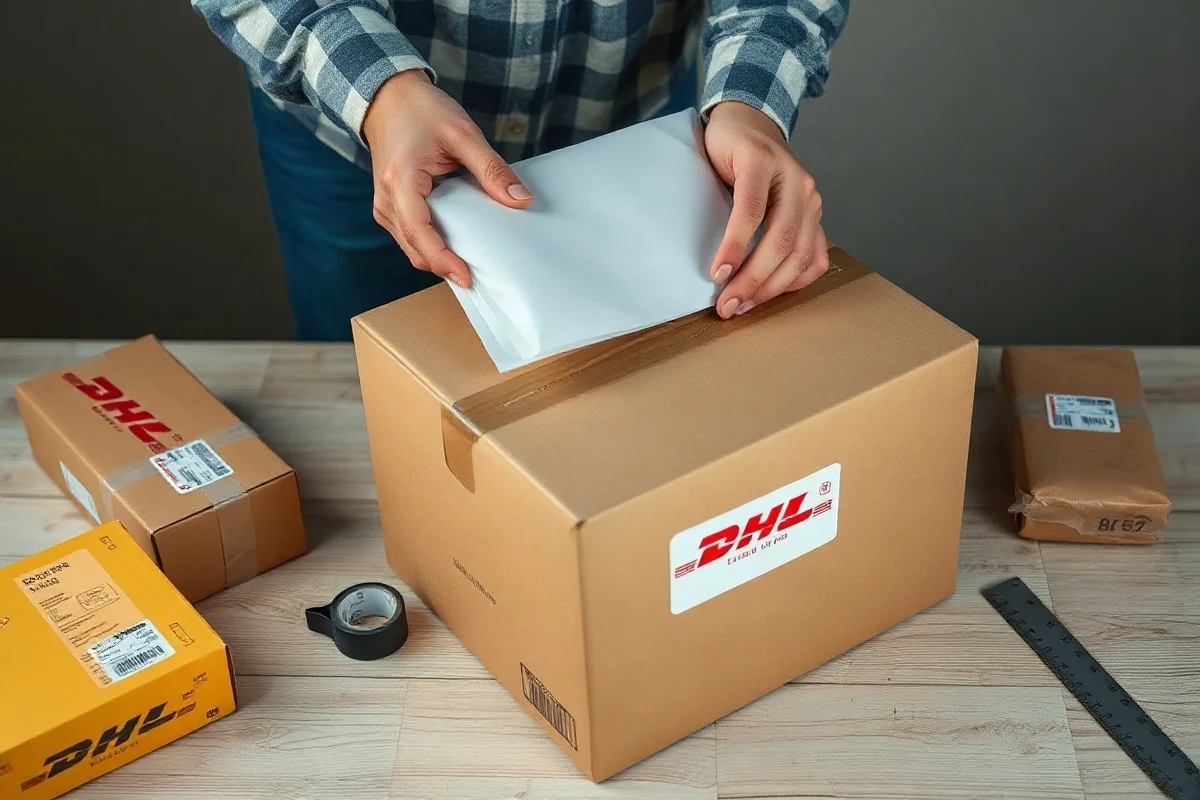
Use strong packaging tape designed for shipping. Seal the main center seam and the edge seams of the bottom flaps. Reinforce heavy cartons or long seams when needed, but avoid wrapping the entire box in a way that hides required labels or makes inspection difficult.
After placing the contents inside, close the top flaps without bulging or gaps. Apply the tape evenly so the flaps remain aligned. If the carton is overfilled, select a larger box rather than forcing the top closed. If it is underfilled, add suitable cushioning instead of allowing the contents to rattle.
Measure the finished package
Measure only after the box is packed, sealed, and ready to ship. Use the outside dimensions of the finished parcel:
- Measure the longest side from end to end. This is the length.
- Measure the side running across the package. This is the width.
- Measure from the bottom to the top. This is the height.
- Record the actual weight with all packaging, labels, and included documents.
Measure each dimension at its widest or longest point, including bulges, tape, handles, or other projections. Round only as required by the carrier's instructions or the online shipping form. Do not estimate from the nominal box size because packing materials and sealed flaps can change the final dimensions.
If you need to convert inches to centimeters, multiply inches by 2.54. To convert pounds to kilograms, multiply pounds by 0.453592. Use the unit system requested by the carrier and keep the original measurements available in case the quote or customs information requires them.
For a detailed measurement walkthrough, see how to measure a package for DHL. A box size calculator can also help compare the packed product with available carton dimensions before you buy supplies.
Check international shipping requirements
Box selection is only one part of an international shipment. Before paying for postage, confirm the current rules for the exact origin, destination, service, and contents. Check whether the selected service accepts the package type and whether the destination has restrictions on the product.
Customs information normally needs a clear description of the contents, the quantity, the value, and other shipment details requested by the carrier or destination authorities. Use an accurate description rather than a vague term such as “goods” or “gift.” The correct classification, country-of-origin information, and supporting documents may depend on the product and destination. Do not guess when a form asks for a regulated or technical detail.
Carrier size limits, weight limits, surcharges, dimensional-weight rules, prohibited items, and documentation requirements can change. They may also differ between DHL services and destinations. Check the current official DHL source and the applicable customs or government guidance before shipping, especially for commercial goods, batteries, dangerous goods, food, medicine, or high-value products. The DHL Package Guide provides related planning information, but the carrier's current terms and quote should take priority.
Run a final pre-shipment check
Before handing over the parcel, confirm that the recipient's name, address, postal code, phone number, and email address are complete and accurate. Make sure the shipping label is flat, readable, and attached to the largest surface. Keep the barcode away from seams, corners, heavy tape, and curved areas.
- Does the item remain centered and protected from every side?
- Are there any empty spaces that allow movement?
- Is the carton dry, rigid, and free of old labels?
- Have you recorded the sealed package's outside dimensions and actual weight?
- Did you compare actual weight and dimensional weight using the current service rules?
- Are customs descriptions, values, invoices, and required declarations complete?
- Have you checked the current restrictions for the exact contents and destination?
The best international shipping box is not necessarily the strongest or largest carton available. It is a sound box that fits the protected contents closely, withstands handling, and keeps the parcel's billable size under control. Pack first for safety, measure the finished shipment accurately, and verify the current DHL requirements before you purchase postage.
Comments
0No comments yet. Be the first to share a helpful note or question.
Leave a Comment
Your email address will not be published. Comments are reviewed before appearing on the site.