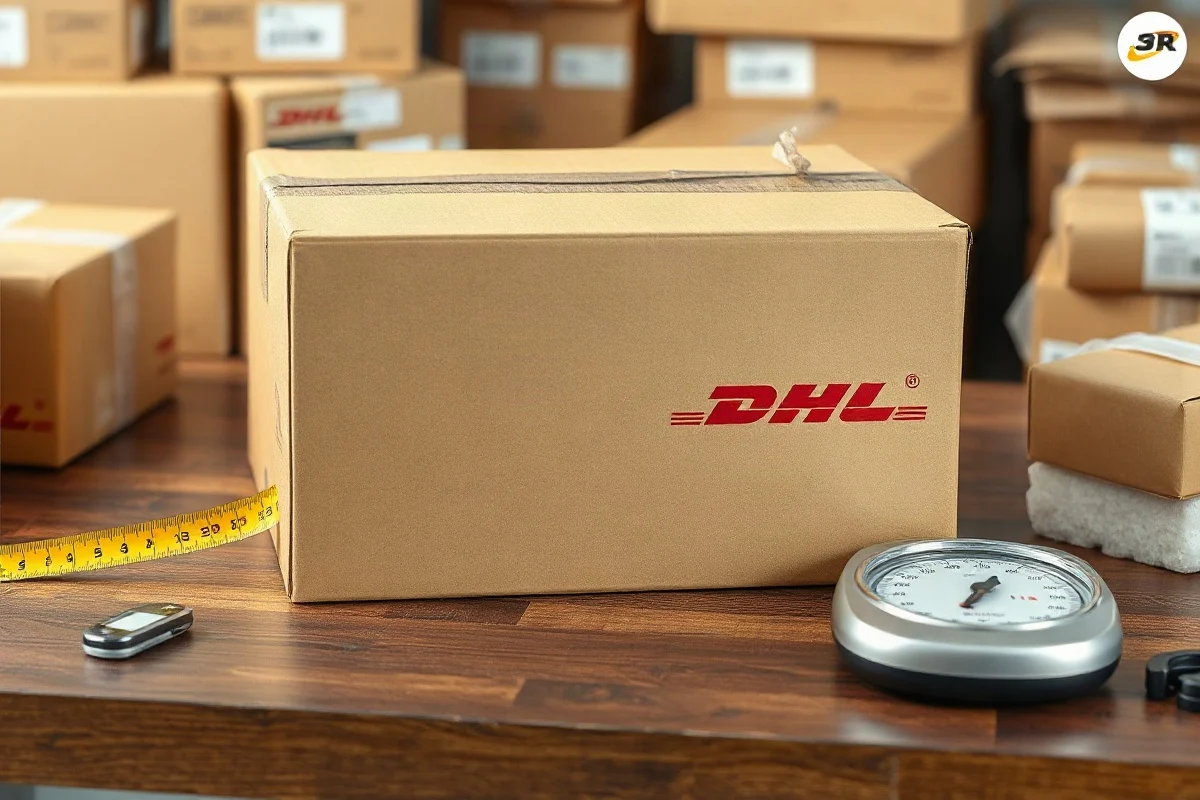
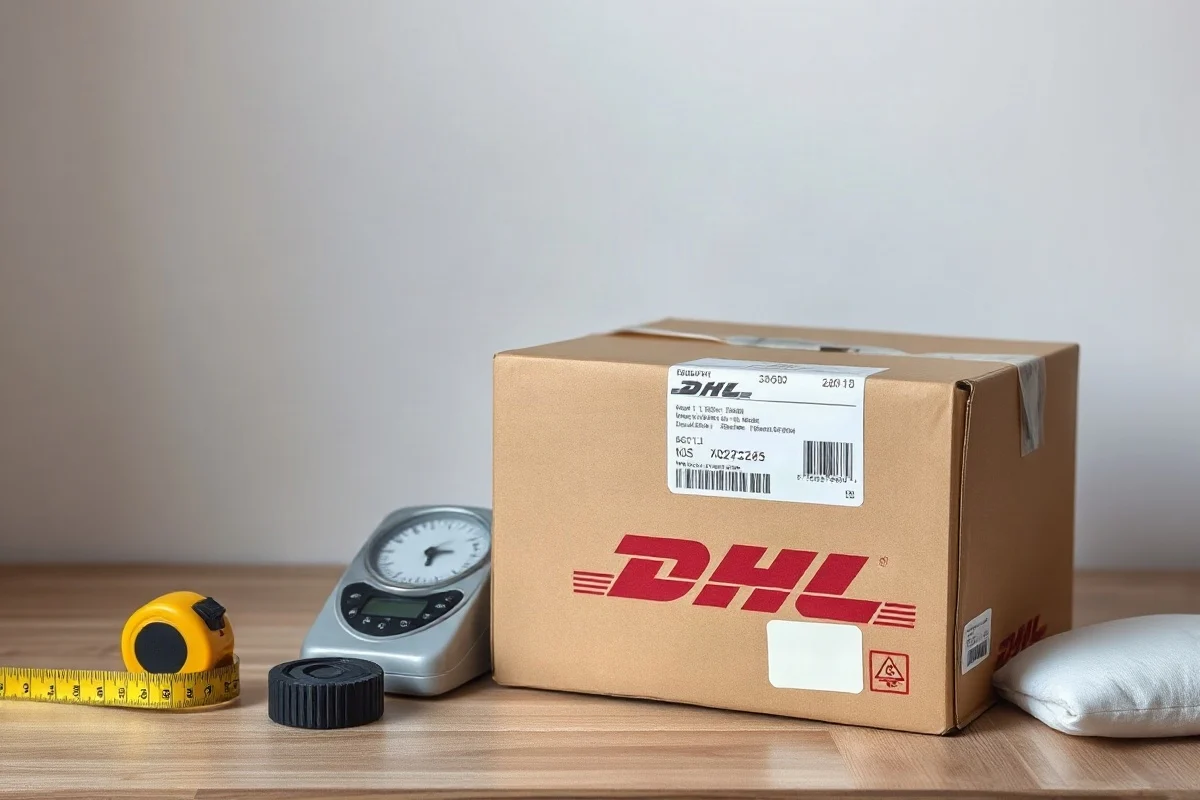
DHL calculates package dimensions by measuring the parcel after it is fully packed and sealed, then using those measurements to assess size, dimensional weight, and any applicable shipment limits. The exact formula, dimensional-weight divisor, rounding method, and size restrictions can vary by DHL service, destination, account, and date, so confirm the current rules in the official DHL shipping tool or service guide before buying a label. In practice, measure the package’s outside length, width, and height at the largest points, record the actual weight, and compare the actual weight with the dimensional weight used for the service.
What DHL means by package dimensions
Package dimensions are the external measurements of the completed shipping parcel. They are not the product’s measurements and usually should not be based on the empty box. The measurements should include the box, mailer, protective materials, tape, labels, and any part of the packaging that extends beyond the main body of the parcel.
For a rectangular carton, the three dimensions are generally recorded as:
- Length: the longest side of the package.
- Width: the next-longest side.
- Height: the remaining side.
Some shipping systems expect the dimensions in a particular order, while others may accept the three measurements and identify the longest side automatically. Enter the dimensions in the order requested by the DHL system you are using. A package that is 18 by 12 by 8 inches has the same rectangular volume regardless of order, but entering dimensions consistently can reduce errors when checking a label or comparing quotes.
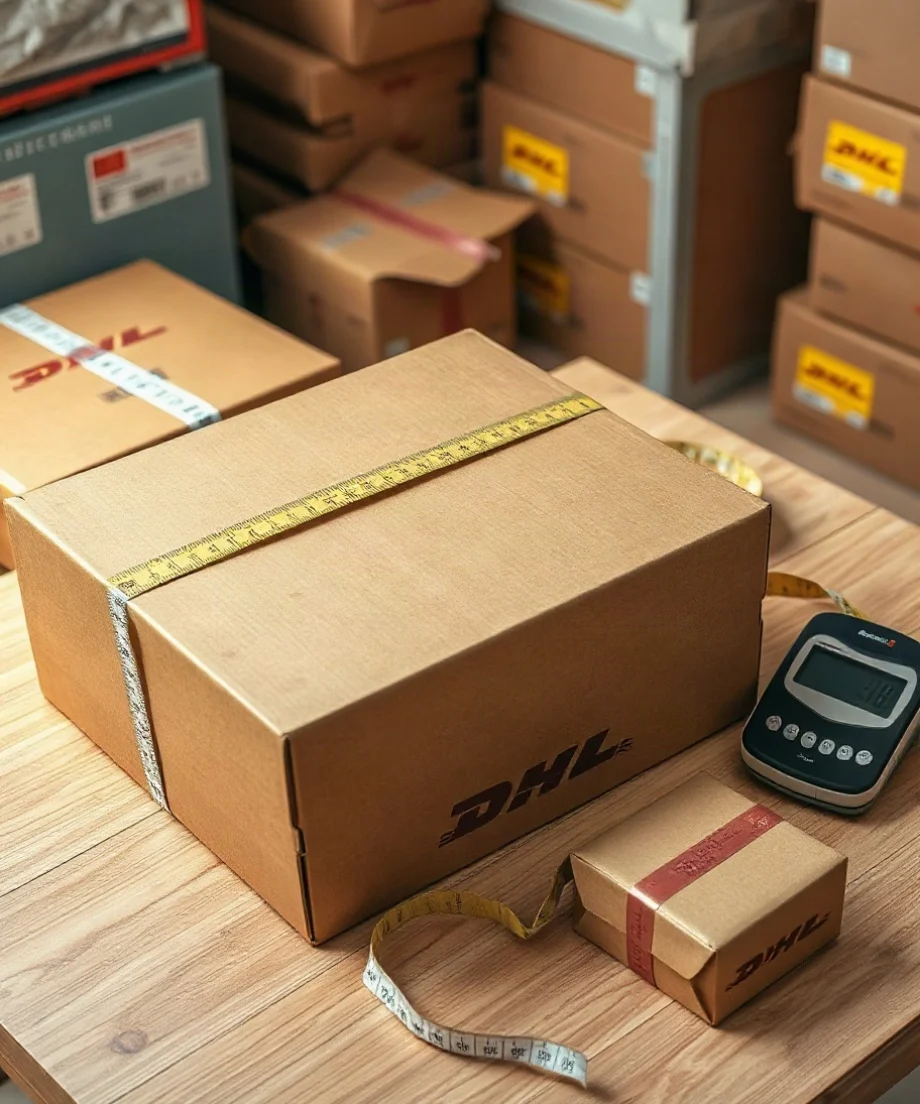
How to measure a DHL package correctly
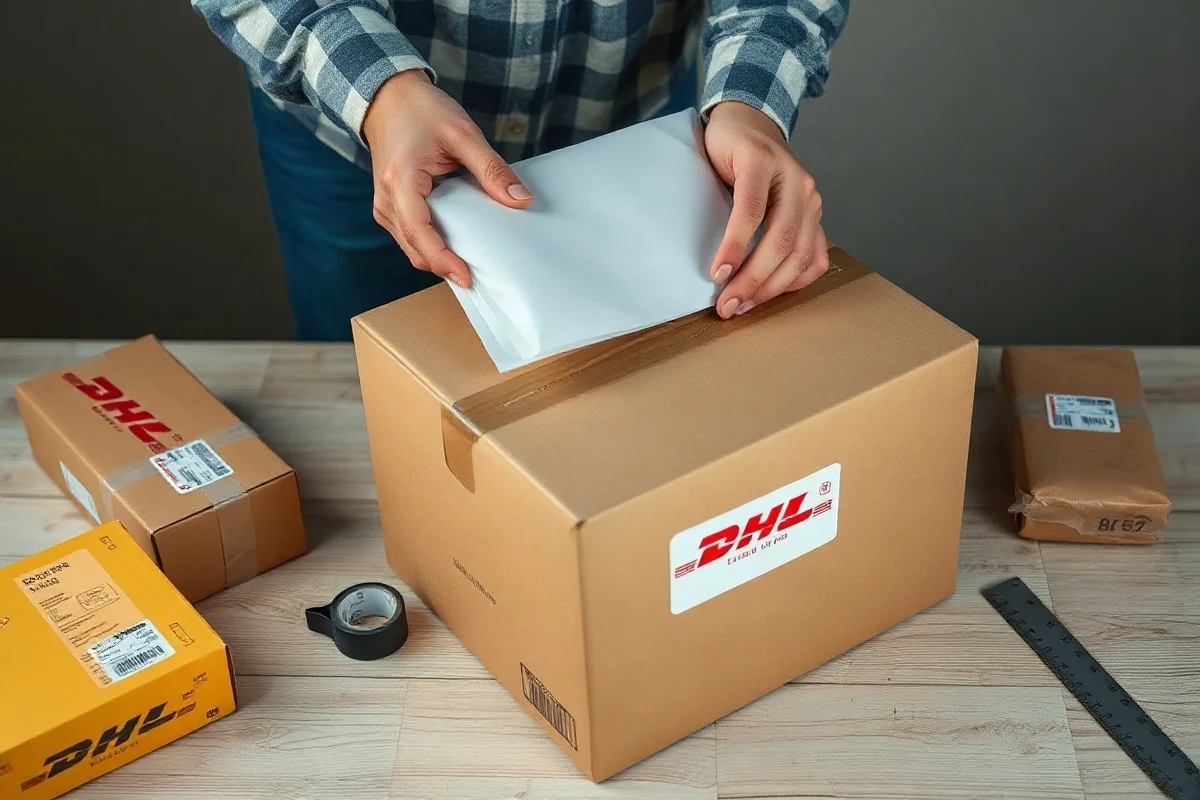
Measure the package only after the contents are inside, the void fill is placed, and the box is sealed. Compression, bulging, or an oversized flap can change the outside dimensions enough to affect a shipping calculation.
1. Measure the longest side
Place the package on a flat surface and identify its longest straight side. Measure from one end to the other along the outside of the box. Do not measure only the inside of the carton or the product sitting inside it.
2. Measure the width and height
Measure the other two sides at their widest or tallest points. If the carton is slightly distorted, use the maximum practical outside measurement rather than a narrow point in the middle. For a soft-sided parcel, measure the package as it will appear when prepared for shipment, including noticeable bulges.
3. Account for packaging features
Include protruding handles, rigid corners, straps, or other permanent packaging features when they add to the parcel’s overall footprint. A small label normally does not change the dimensions, but a large pouch, attached sleeve, or uneven closure may matter if it extends beyond the package.
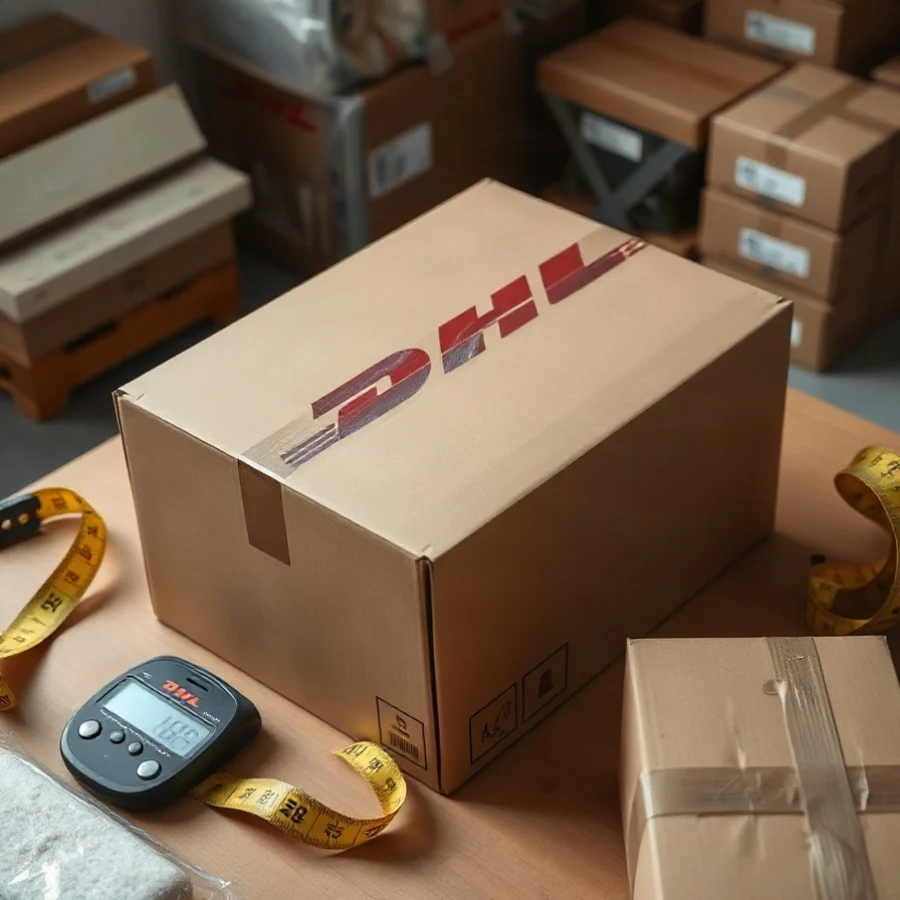
4. Record the actual weight
Weigh the sealed parcel on a scale that can handle its size and weight. Use the same unit system requested by the DHL label or quote form. If you are converting units, keep the conversion precise until the final entry and follow the shipping system’s rounding instructions.
For a practical walkthrough, see this guide to measuring a package for DHL.
Why package size can affect DHL shipping cost
Shipping price is not always based only on the number shown on a scale. A large, lightweight box occupies more aircraft or delivery-vehicle space than its actual mass suggests. For qualifying services, DHL may therefore use dimensional weight, sometimes called volumetric weight, to represent the space the parcel takes up.
The general process is:
- Measure the package’s length, width, and height.
- Multiply the three dimensions to find cubic volume.
- Divide that volume by the dimensional-weight divisor applicable to the service and unit system.
- Compare the resulting dimensional weight with the actual package weight.
- Use the weight selected by the applicable DHL rules for rating the shipment.
The divisor is not universal. It can vary by DHL product, origin, destination, measurement units, and the terms attached to an account or shipment. Because this value can change, do not assume that a divisor found on an old label, blog, or unrelated DHL service applies to your package. Check the current DHL documentation or quote screen for the shipment you are preparing.
You can also estimate the size-based portion of a shipment using the dimensional weight calculator, but treat the result as an estimate unless its settings match the current DHL service requirements.
Example of the calculation process
Suppose a sealed carton measures 20 by 14 by 10 inches and weighs 8 pounds. Its cubic volume is calculated as follows:
20 × 14 × 10 = 2,800 cubic inches
To estimate dimensional weight, divide 2,800 by the divisor specified for the DHL service. If the result is greater than 8 pounds, the shipment may be rated using the higher dimensional figure, subject to DHL’s current rounding and billing rules. This example demonstrates the process only; it does not establish a universal DHL divisor or a guaranteed billable weight.
For an international shipment, the same logic may be expressed in centimeters and kilograms. Do not mix inches with a divisor intended for centimeters, and do not convert a result between pounds and kilograms after applying the wrong unit system. Enter compatible dimensions, weight units, and service settings from the beginning.
Rounding and measurement details matter
A fraction of an inch can affect a volume calculation when it appears in all three dimensions. For example, a carton that is slightly larger because of thick corner protection may produce a higher calculated volume than the nominal box size shown on its packaging.
Rounding can occur at several stages: the individual dimensions, the calculated dimensional weight, the actual weight, or the final billable weight. The applicable DHL service may specify different treatment for domestic and international shipments or for different package types. Do not round down simply to make a parcel fit a quoted price. Use the current instructions in the DHL booking system, and when in doubt, enter the measured value conservatively.
How to avoid overstating package dimensions
Accurate measurement does not mean adding unnecessary extra inches. Oversized packaging can increase dimensional weight and may expose the shipment to additional handling rules. Use a box that protects the contents without leaving large empty spaces.
- Choose a carton that fits the item with room for the required cushioning.
- Use void fill that prevents movement without forcing the box outward.
- Close the flaps flat and apply tape without creating a raised ridge along an entire side.
- Replace crushed or bulging cartons before measuring the final parcel.
- Keep fragile items away from the walls while avoiding a much larger box than necessary.
- Measure the finished package, not the manufacturer’s stated interior box size.
A box-sizing tool such as the Box Size Calculator can help estimate a suitable carton before packing. The final DHL measurement should still come from the sealed package placed on the scale.
Irregular, cylindrical, and soft-sided packages
Not every shipment is a neat rectangular box. Cylinders, tubes, padded mailers, bags, and parcels with irregular shapes may be handled differently depending on the DHL product. A tube may be measured by its overall length and diameter, while an irregular parcel may be assessed using the smallest rectangular or cuboid space that can contain it, depending on the carrier’s rules.
Do not assume that an irregular package will be charged as though it were a small rectangle. Before shipping, check the current DHL instructions for nonrectangular packaging and any additional handling or acceptance requirements. If the parcel is flexible, measure it in its packed and closed condition. If it has a rigid part that creates the maximum length or diameter, include that feature.
Dimensions and DHL size limits are separate questions
The dimensional-weight calculation helps determine how a shipment may be rated, but it does not automatically tell you whether DHL will accept the parcel. DHL services can have separate limits for maximum length, combined dimensions, weight, package type, destination, and transportation mode. Some shipments may also require special booking or approval.
Do not rely on one general “DHL limit” for every shipment. The applicable requirements may differ between express, parcel, freight, domestic, and international services. The destination country can also affect what is accepted or how a shipment is handled. Check the current official DHL source for the exact product and route before packing a large or unusual parcel. Our related guide explains when a package may be too large for DHL, but current carrier rules take priority.
A reliable pre-shipment checklist
Before completing a DHL label, verify the following:
- The parcel is fully packed and sealed.
- The length, width, and height are outside measurements taken at the largest points.
- The actual weight comes from the completed shipment, including packaging.
- The dimensions and weight use compatible units.
- The DHL quote or label system has the correct service, origin, destination, and package type.
- The dimensional-weight divisor and rounding treatment come from the current DHL instructions for that shipment.
- The package satisfies the current size, weight, packaging, and destination requirements.
Save a photo or written record of the measured parcel when shipping valuable goods or sending repeated orders. If DHL later remeasures a package, a record can help you compare the entered information with the parcel as it was prepared, although the carrier’s official measurement and billing process controls the shipment.
The most dependable approach is simple: pack first, measure the outside of the finished parcel, weigh it, and then use the current DHL service rules to determine how those figures will be rated. Smaller, well-fitted packaging can reduce dimensional weight, but accuracy matters more than guessing at a lower measurement.
Comments
0No comments yet. Be the first to share a helpful note or question.
Leave a Comment
Your email address will not be published. Comments are reviewed before appearing on the site.