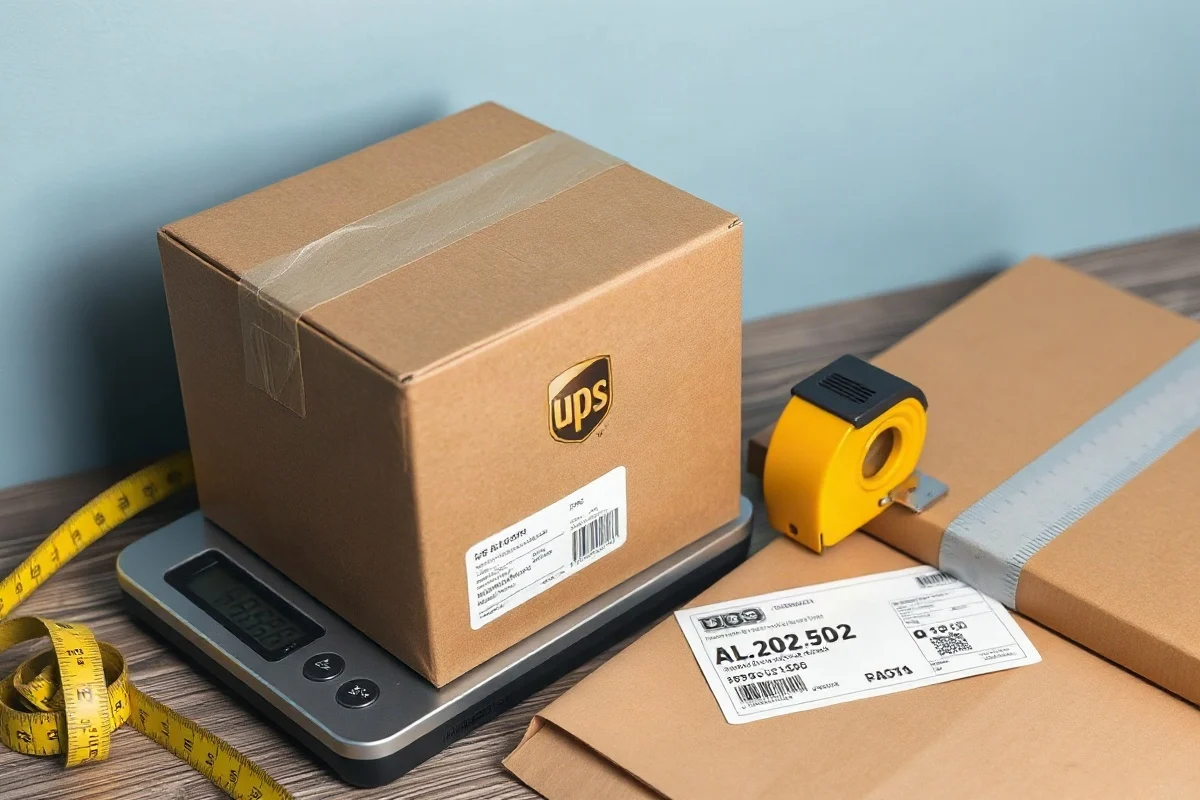
Yes, box size can affect UPS shipping cost, even when the package is relatively light. UPS may base the billable weight on either the package’s actual weight or its dimensional weight, depending on the shipment details and service. A larger box can therefore cost more because it takes up more space in the carrier’s network. Oversize or unusually shaped packages may also be subject to additional charges or special handling. To estimate the price accurately, measure the sealed package—not just the product or the empty box—and check the current UPS rules for the service and destination you plan to use.
Why a larger box can cost more
Carriers transport packages using both weight and available space. A heavy, compact package uses more handling capacity because of its mass. A large, lightweight package uses more room in a truck, aircraft, or sorting facility. Dimensional weight is designed to account for that space.
When dimensional weight applies, the carrier calculates a weight based on the package’s outside dimensions. The shipment is then generally rated using the greater of actual weight or dimensional weight, subject to the applicable UPS service rules. The exact calculation can vary by service, shipment type, destination, and current pricing policy, so do not rely on an old divisor or rate table without confirming it in the official UPS tools or terms.
For a practical estimate, enter the finished package dimensions and weight in a dimensional weight calculator. Treat the result as an estimate until UPS provides the final quote.
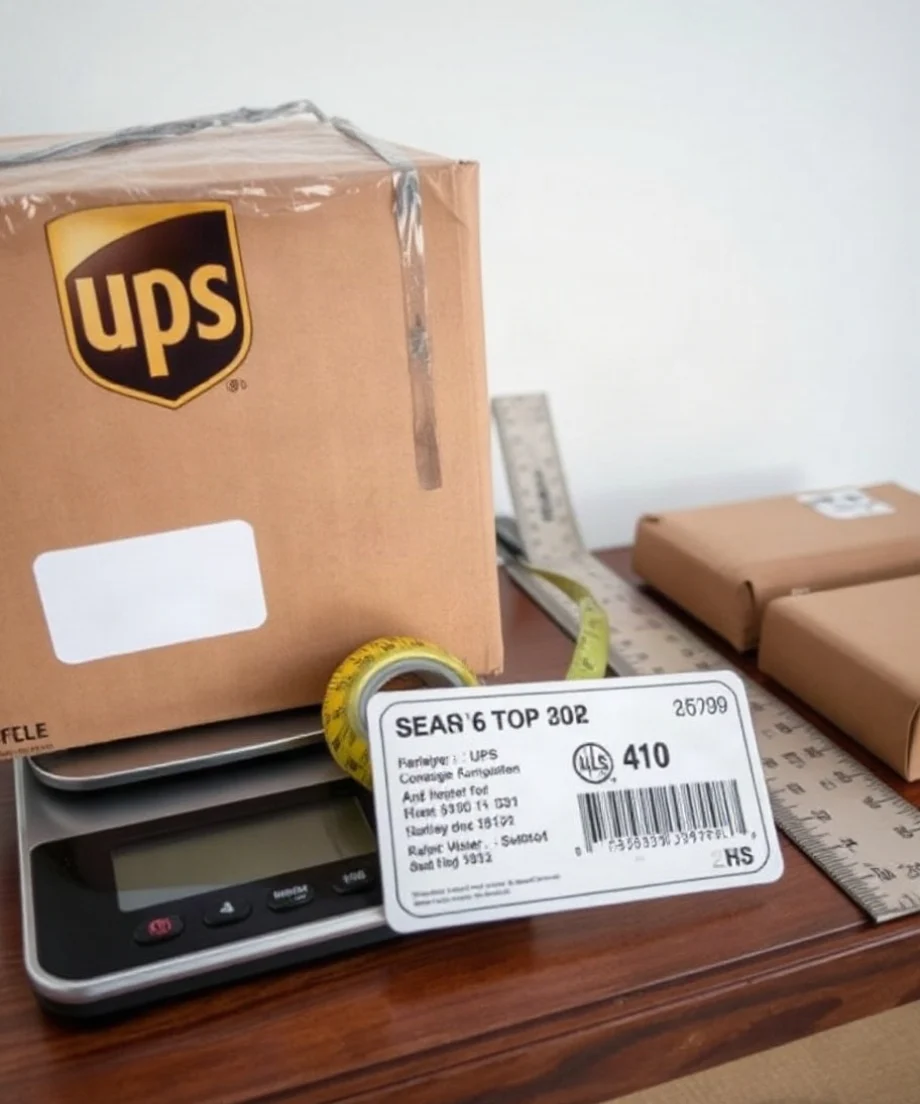
How to measure a UPS package correctly
Use the package after it has been packed, taped, and prepared for shipment. Shipping labels, cushioning, bulging cardboard, and the final arrangement of the contents can all change the measurements.
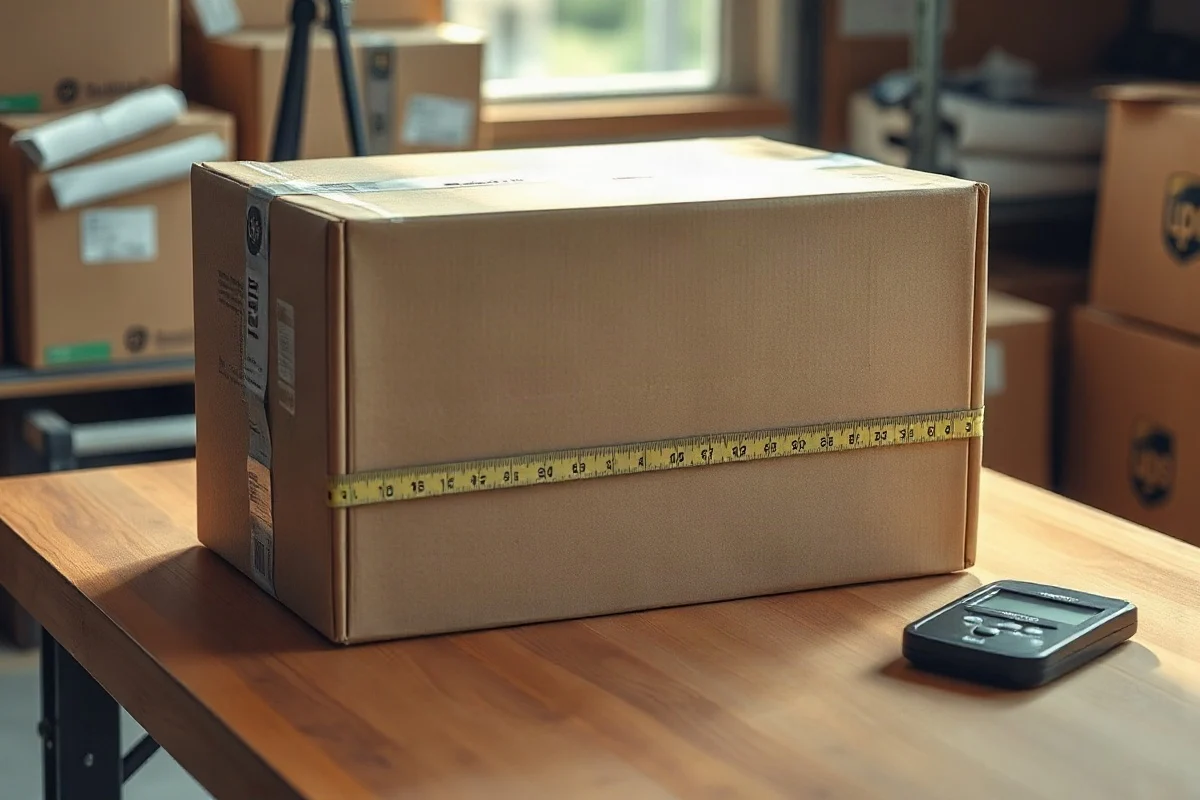
Measure the outside length, width, and height
Measure the longest side as the length. Measure the shorter side across the top as the width, and measure from the bottom to the top as the height. Use the outside dimensions, including any protruding flaps, bulges, or irregular areas that affect the package’s maximum size.
For a standard rectangular carton, record the measurements in inches in this order:
- Length: the longest side
- Width: the side perpendicular to the length
- Height: the remaining dimension
Round measurements according to the current UPS instructions for the shipment you are preparing. If a package measures just under a whole inch but expands slightly after taping or padding, use the dimensions that represent the finished package. A small difference can affect a dimensional-weight calculation or a size threshold.
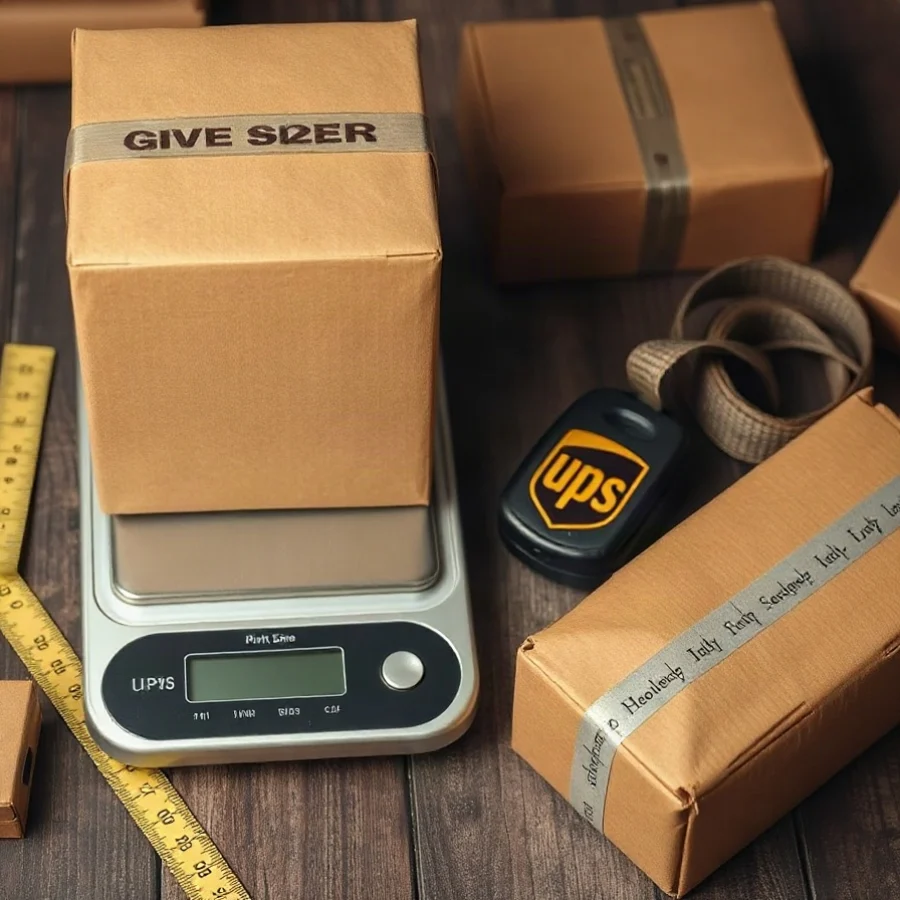
Weigh the sealed package
Place the completed package on a reliable shipping scale. Include the box, inner packaging, cushioning, tape, label, and product. Do not estimate the weight from the product listing or the manufacturer’s packaging specifications. If the package is close to a weight threshold, recheck it after sealing and use the current UPS guidance for how weight is recorded and billed.
For irregular packages, measurement can be less straightforward. A tube, wrapped bundle, or carton with an uneven surface may be evaluated using its maximum external dimensions or under special package rules. When in doubt, use UPS’s current measurement guidance or ask UPS how the specific package type will be rated.
How dimensional weight is calculated
The general structure of a dimensional-weight calculation is:
Length × width × height ÷ dimensional divisor = dimensional weight
The dimensional divisor is not universal. It may differ by carrier, service, destination, package type, or contract. UPS can also update its pricing and rating rules. For that reason, this formula explains the method but should not be treated as a complete UPS rate quote. Confirm the applicable divisor and rounding instructions in the current UPS calculator or service terms.
For example, imagine a sealed box measuring 24 × 18 × 12 inches. Its volume is 5,184 cubic inches. If the applicable UPS divisor were represented by the current official calculation, dividing that volume by the correct divisor would produce the package’s dimensional weight. The billable weight would then depend on the comparison with the actual scale weight and the rules for the selected service.
That same product might fit in a 20 × 15 × 10-inch box after better folding or repositioning. The smaller carton has a volume of 3,000 cubic inches, which is substantially less space than the first box. Even if the product’s actual weight stays exactly the same, reducing the outer dimensions may reduce the dimensional-weight result.
Use a box size calculator to compare possible carton dimensions before purchasing supplies. The goal is not simply to choose the smallest box available; it is to choose a box that protects the contents without adding unnecessary volume.
When actual weight matters more than box size
Box size does not always increase the price. If the package’s actual weight is greater than its dimensional weight, the actual weight may determine the billable weight under the applicable UPS rules. A compact box filled with dense items can therefore be priced mainly by its scale weight.
Even in that situation, size still matters. A larger package can affect eligibility for a service, trigger an additional handling rule, or move the shipment into a different pricing category. These rules can depend on current UPS policies and may change over time. Check the official UPS service guide and rate calculator for the package’s origin, destination, service level, dimensions, and weight.
Can a small box reduce every UPS shipping charge?
No. A smaller box can reduce volume-related costs, but it cannot eliminate every possible charge. The final price may also depend on service speed, origin and destination, residential or commercial delivery, pickup arrangements, declared options, fuel-related adjustments, and other factors. Some charges are unrelated to the carton’s size.
A package that is too small can also create damage and claims problems. If the product touches the walls or has no cushioning, it may be more likely to break during handling. Saving a little cubic space is not worthwhile if the contents arrive damaged or the box fails in transit.
How to reduce box-related UPS costs safely
Choose the smallest protective carton
Start with the product’s finished dimensions and add only the cushioning space it actually needs. Avoid selecting a large standard box simply because it is convenient to store or easy to fill. Compare several carton sizes when shipping the same product repeatedly.
Control empty space
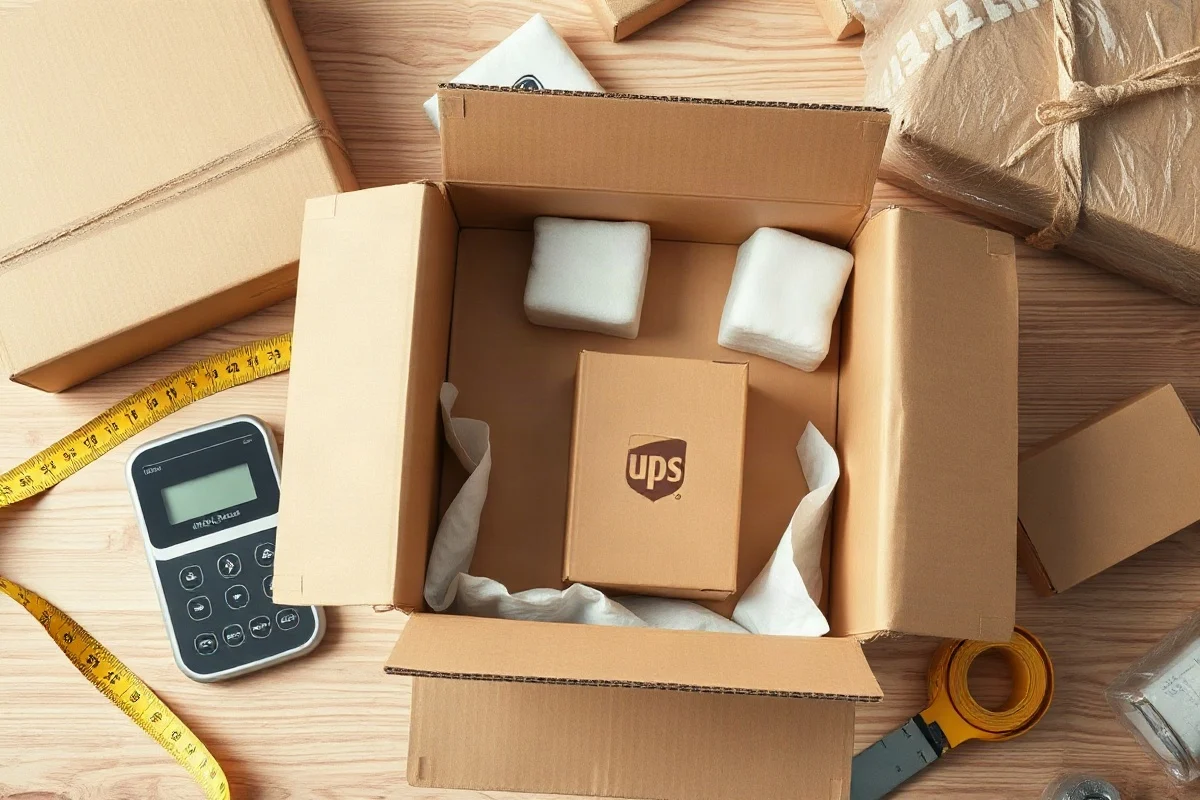
Fill voids so the product cannot shift, but do not use excessive padding that forces the flaps upward or makes the package bulge. Lightweight paper, air pillows, foam, molded inserts, or other materials may be appropriate depending on the product. The correct choice depends on fragility, movement, compression, and the expected handling environment.
For more guidance on balancing protection and volume, see how much empty space a shipping box should have.
Use packaging designed for the item
Product-specific inserts can keep an item centered while using less space than loose layers of generic material. If you ship the same product often, test the packed carton by measuring it, weighing it, and checking whether the contents move when the box is gently turned. A repeatable packing method helps keep dimensions consistent across orders.
Review the quote before buying labels
Enter the actual shipment details into the current UPS rate tool before finalizing a packaging change. Compare the quote for the old carton with the quote for the smaller carton using the same origin, destination, service, and package weight assumptions. If the packaging changes the outer dimensions, update the saved shipping settings in your store or shipping software as well.
Box size limits and oversize concerns
UPS services have package size and weight requirements, and those requirements may vary by service, destination, account arrangement, and time. A package can be accepted by one service but restricted, surcharged, or unavailable under another. Large packages may also be subject to additional handling or oversize rules based on their dimensions, weight, or combined measurements.
Do not use a general maximum from an old article as a guarantee that your package is eligible. Review the current UPS requirements before shipping unusually long, heavy, or bulky cartons. Our guide to measuring a package for UPS can help you gather the information needed for that check.
A practical checklist before shipping
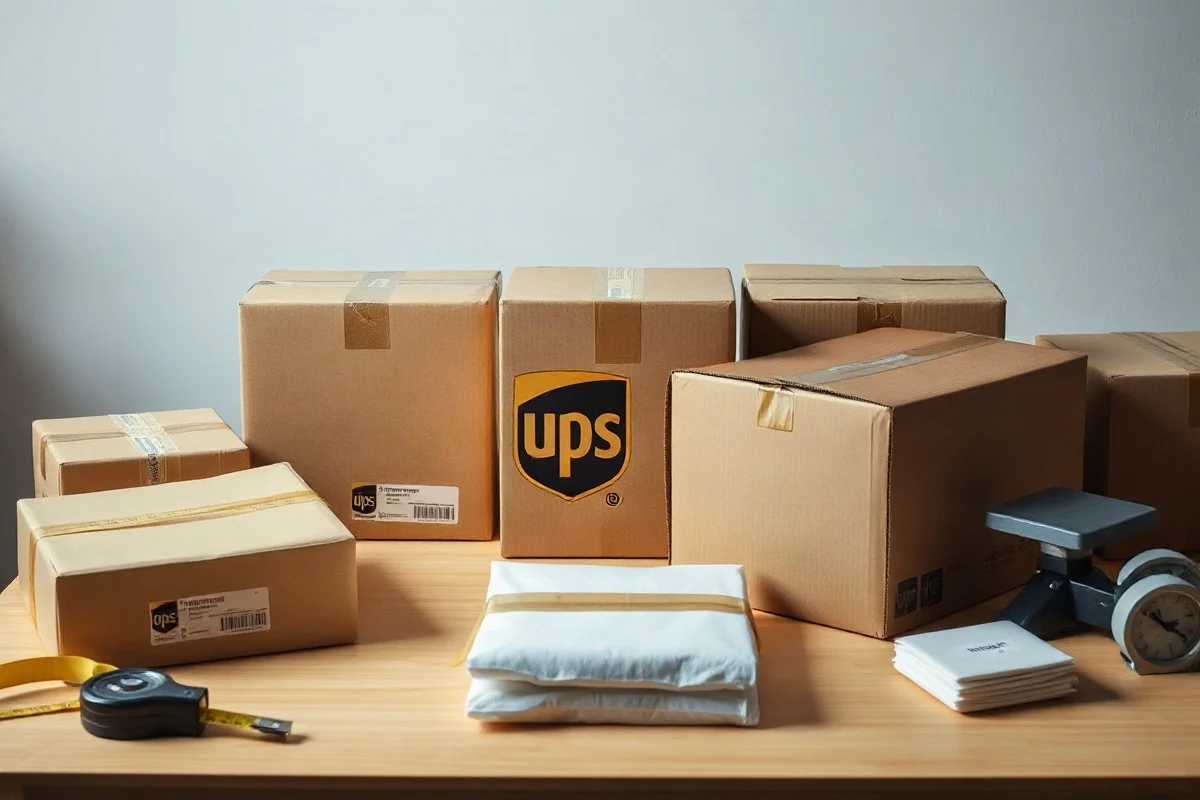
- Pack the product completely, including all cushioning and inserts.
- Seal the box before taking measurements.
- Measure the outside length, width, and height.
- Weigh the finished package on a scale.
- Calculate or estimate dimensional weight using the current UPS method.
- Compare actual and dimensional weight as required by the selected service.
- Check the current UPS size, weight, and surcharge rules.
- Compare the final quote before choosing a label or shipping service.
The short answer remains yes: box size can affect UPS shipping cost, especially when the carton’s volume produces a higher dimensional weight than its actual scale weight. The best approach is to use a protective carton with minimal practical empty space, measure the sealed package accurately, and verify the final price and eligibility with UPS’s current official tools.
Comments
0No comments yet. Be the first to share a helpful note or question.
Leave a Comment
Your email address will not be published. Comments are reviewed before appearing on the site.