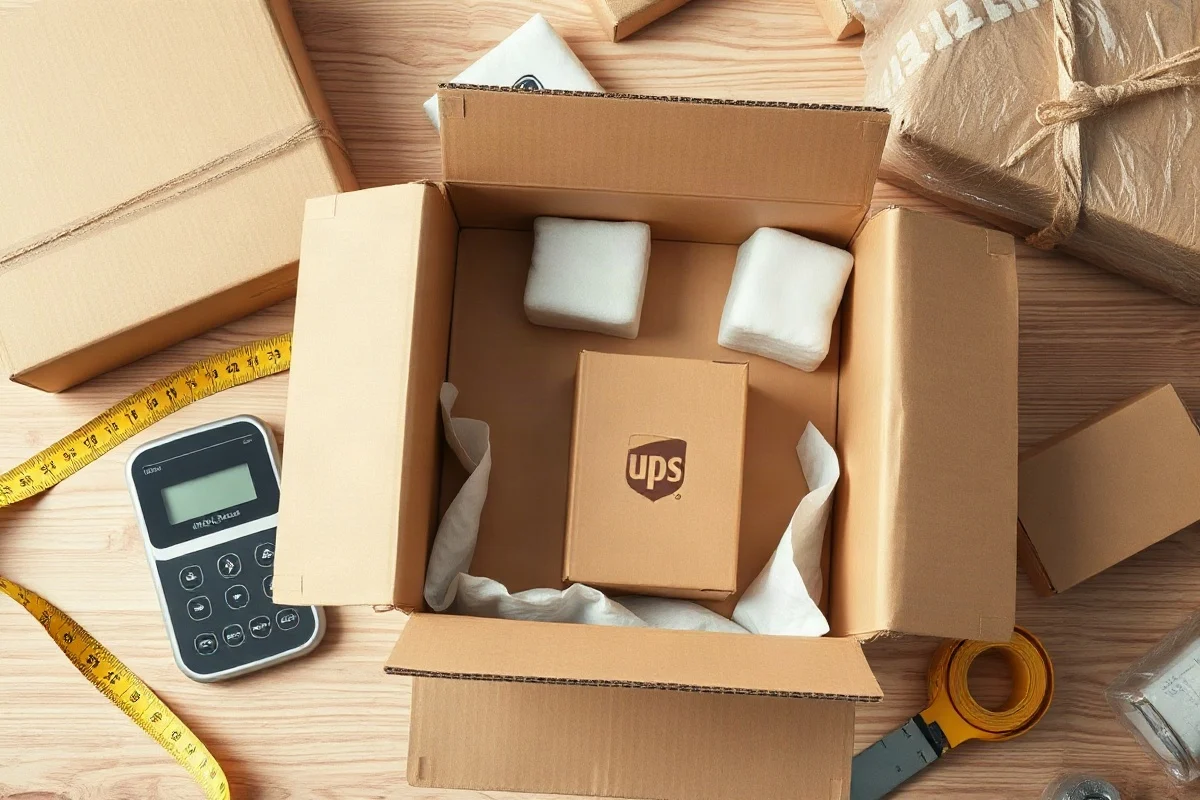
The best box size for UPS shipping is the smallest new, sturdy carton that fits your item with enough room for protective cushioning on every side. Measure the product, add space for padding, and then compare the packed box’s dimensions and weight with the current requirements for your selected UPS service. A box that is too large can raise the shipping cost through dimensional weight, while a box that is too small can leave the contents vulnerable to damage.
Start with the item, not the shipping label
Before choosing a carton, measure the item at its longest, widest, and tallest points. Include handles, corners, protruding parts, or any other feature that affects how the item sits inside the box. Record the measurements in inches if you are comparing standard U.S. shipping options.
Next, decide how much protection the item needs. A hard, durable product may need only a modest layer of cushioning, while glass, ceramics, electronics, framed objects, and products with delicate finishes usually need more space for shock absorption. The box should not be selected based only on the product’s bare measurements.
A simple box-size formula
For a basic estimate, add twice the planned cushioning thickness to each item dimension:
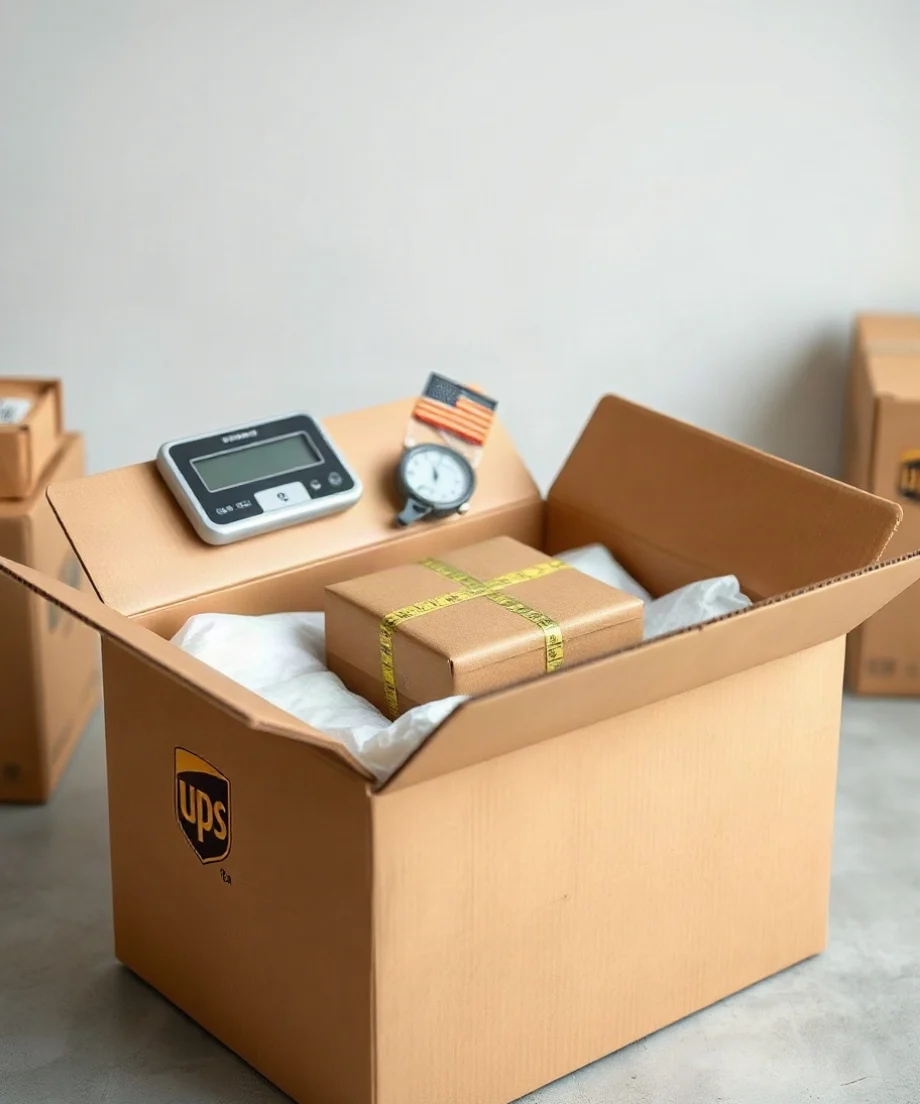
Required inside length = item length + 2 × cushioning thickness
Required inside width = item width + 2 × cushioning thickness
Required inside height = item height + 2 × cushioning thickness
For example, suppose a product measures 12 by 8 by 4 inches and you want about 2 inches of cushioning around it. The approximate interior space needed would be 16 by 12 by 8 inches. Because box dimensions may be listed as inside or outside measurements, compare the calculated space with the manufacturer’s specification before ordering cartons.
This formula is a starting point, not a guarantee of safe packing. Loose-fill material, molded inserts, foam corners, corrugated dividers, and crumpled paper all occupy space differently. The item should be immobilized so it cannot move freely when the sealed carton is gently shaken.
Choose the smallest practical carton
The ideal UPS box is not necessarily the smallest box that physically holds the product. It is the smallest practical box that leaves enough room for protection, closes without bulging, and remains structurally sound after packing.

A carton that is much larger than the contents creates several problems:
- It may produce a higher dimensional-weight calculation.
- It requires more fill material and may be harder to seal securely.
- The contents can shift during handling, increasing the risk of damage.
- The carton may be more likely to crush if the product does not support the box walls.
On the other hand, an undersized carton can compress the product, prevent proper cushioning, or force the flaps to bow upward. Do not use a box if the item presses against the walls or the tape must hold the carton under constant strain.
Understand the three box measurements
Shipping cartons are normally described by length, width, and height. The order can vary by supplier, but the longest side is generally treated as the length for common shipping calculations. Measure the final sealed package rather than relying only on the carton’s nominal size.
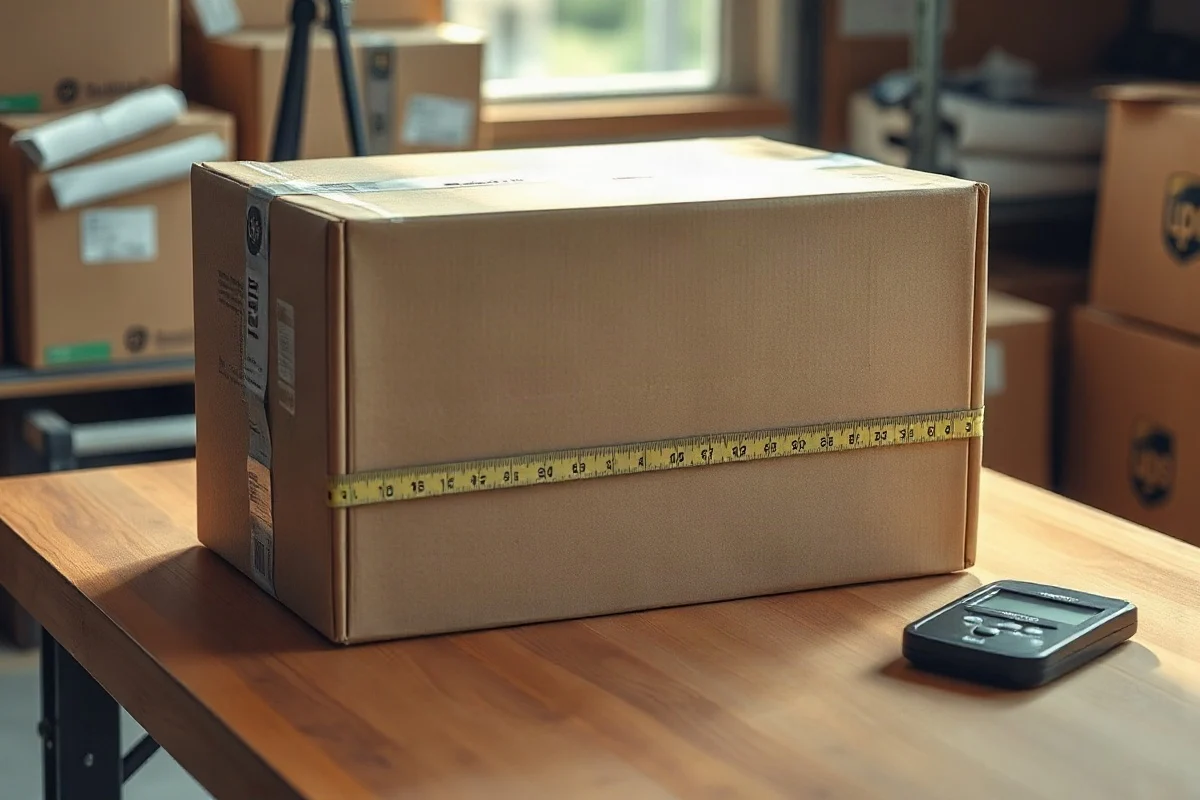
Use a straight ruler or tape measure and round consistently according to the instructions for the service or shipping system you are using. Measure from the package’s actual outer edges, including bulges, protruding tape, or irregular surfaces when they affect the package’s maximum dimensions.
For a rectangular box, write the measurements in this order:
- Length: the longest side.
- Width: the side next to the length.
- Height: the remaining side, measured from the bottom to the top.
Do not confuse the product’s dimensions with the package dimensions. A 12-inch product may require a 14-inch or larger outside dimension after padding, inner packaging, and the carton walls are included.
Check dimensional weight before you finalize the box
UPS shipping costs may depend on more than the scale weight. Carriers can use dimensional weight, sometimes called volumetric weight, when a package takes up substantial space compared with its actual weight. The calculation generally uses the package’s length, width, and height, along with a divisor set by the carrier and service.
Because dimensional-weight divisors, rounding methods, service rules, and pricing can change, do not rely on an old chart or a general formula as the final quote. Check the current UPS rate tool, service terms, or shipping software settings for the specific service, origin, destination, and package type. You can also use the dimensional weight calculator to estimate how a larger carton may affect billable weight, then confirm the result with the current carrier information.
The practical lesson is simple: reducing empty space can matter even when the package’s scale weight does not change. A box measuring 20 by 16 by 12 inches occupies far more shipping volume than one measuring 16 by 12 by 8 inches. If both packages contain the same product, the larger carton may be charged differently under the applicable dimensional-weight rules.
Common box-size examples
These examples illustrate the selection process rather than promising a specific UPS rate or service result.
Small clothing order
Folded shirts or other soft goods may fit in a compact corrugated carton or an appropriate poly mailer if the item is not fragile and the packaging is allowed for the chosen service. Avoid using a carton with excessive empty space. Soft goods can often be packed efficiently, but the outer package still needs to resist tearing and compression.
Small electronic device
For a device such as a tablet, camera, or small appliance, measure the product with its accessories and retail packaging. Add cushioning between the retail box and the shipping carton. A strong outer carton only slightly larger than the protected inner package is usually more practical than placing the retail box in a much larger carton with loose fill.
Glass or ceramic item
Fragile products need more than a tight fit. Wrap each piece separately, protect corners and edges, and prevent pieces from contacting one another. If multiple items share one carton, use dividers or separate inner packaging. Select a box that leaves enough room for cushioning without allowing the contents to move. Test the packed carton by carefully checking for movement before sealing it.
Long or irregular product
Posters, tools, lamps, sports equipment, and other elongated products may need a long carton or a custom-shaped package. Do not force an irregular item into a box that bends or leaves an exposed end. Measure the finished package carefully, since an unusual length or shape may affect the available service options and price.
How to pack a UPS box correctly
- Inspect the carton. Use a clean, dry, rigid box without crushed corners, weakened seams, or old shipping labels.
- Build a cushion at the bottom. Place an appropriate layer of packing material between the product and the carton floor.
- Center the item. Keep the contents away from every wall, corner, and flap.
- Fill empty spaces. Add cushioning so the product cannot shift, but do not overfill the box.
- Protect individual parts. Wrap fragile components and separate items that could scratch, chip, or puncture one another.
- Close the flaps evenly. The carton should close flat without bulging or gaps.
- Seal the seams. Apply strong shipping tape across the main seam and reinforce other openings as needed.
- Remove old labels. Cover or remove previous barcodes and addresses so automated handling systems do not read the wrong information.
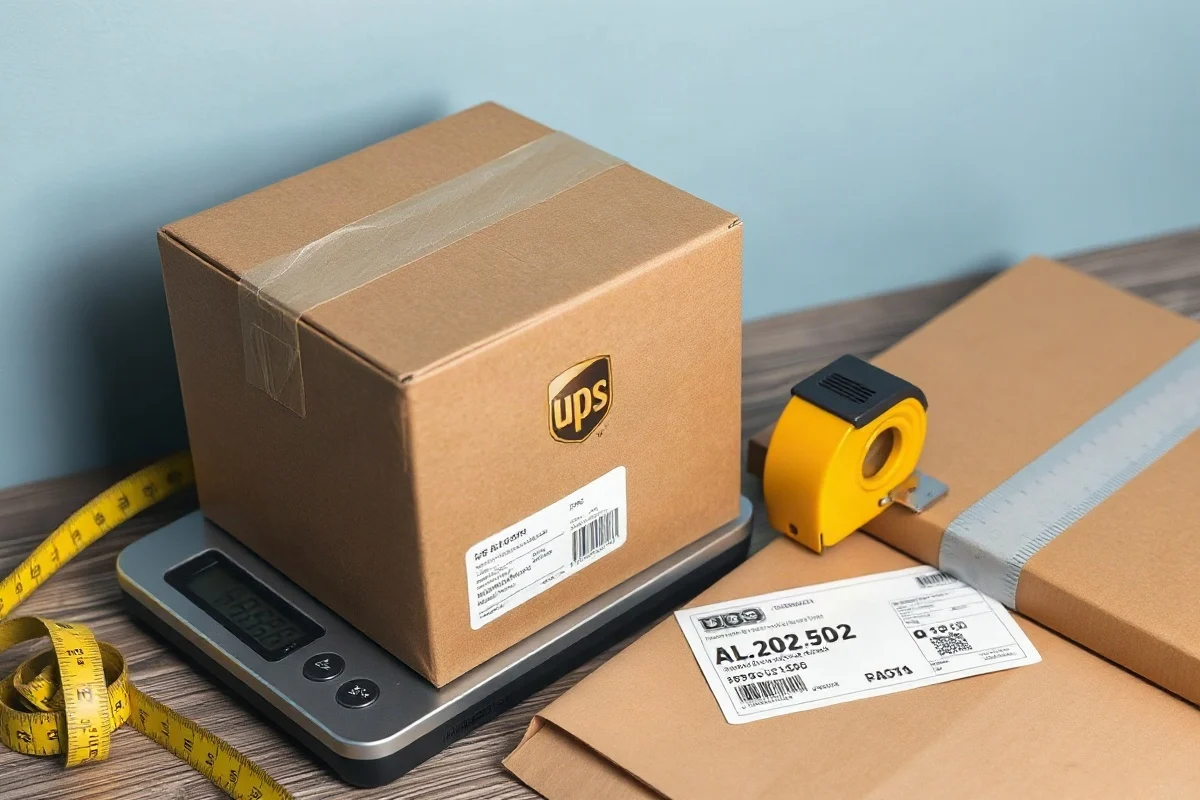
- Measure and weigh the finished package. Record the actual outer dimensions and scale weight after packing.
Should I use a UPS-branded box?
You do not automatically need a UPS-branded box for every UPS shipment. A suitable plain corrugated carton may be appropriate, provided it is strong enough for the contents and meets the packaging requirements for the service and item being shipped. Some special packaging programs, restricted articles, or service-specific options may have additional requirements, so verify the current UPS instructions when those conditions apply.
Reusing a box can be economical, but inspect it carefully. Corrugated material loses strength when it has been crushed, exposed to moisture, or used repeatedly. Remove old markings and make sure the box has no holes, delamination, oil stains, or weak corners.
Account for service and package restrictions
There is no single box size that works for every UPS shipment. Requirements can vary by service level, destination, package category, surcharge rules, and the contents of the package. Oversize or unusually shaped packages may be treated differently from standard cartons. Packages containing hazardous materials, perishables, or other regulated items may also have separate packaging and labeling requirements.
Before buying cartons in bulk or promising a delivery cost to a customer, check the current official UPS requirements for the exact service you plan to use. Confirm the allowed dimensions, maximum weight, packaging conditions, and any applicable additional charges directly with UPS or your shipping platform. Rules and prices can change, and an older online chart may no longer reflect the current terms.
A practical way to choose the final box
If you ship the same product regularly, create a packing specification for it. List the product dimensions, the approved cushioning material, the preferred carton’s inside and outside dimensions, the packed weight, and the sealing method. Then test the packed product for movement and visible damage after normal handling.
For several product sizes, keep a small range of cartons instead of trying to use one oversized box for everything. A box-size planning tool such as the box size calculator can help compare product dimensions with available cartons. For broader guidance, see the UPS package guide.
The most reliable choice is the carton that protects the item with minimal unused volume. Measure the packed package, calculate or estimate dimensional weight using current information, and verify the result before purchasing postage. That combination gives you a safer shipment and a more realistic UPS shipping cost than choosing a box by product size alone.
Comments
0No comments yet. Be the first to share a helpful note or question.
Leave a Comment
Your email address will not be published. Comments are reviewed before appearing on the site.