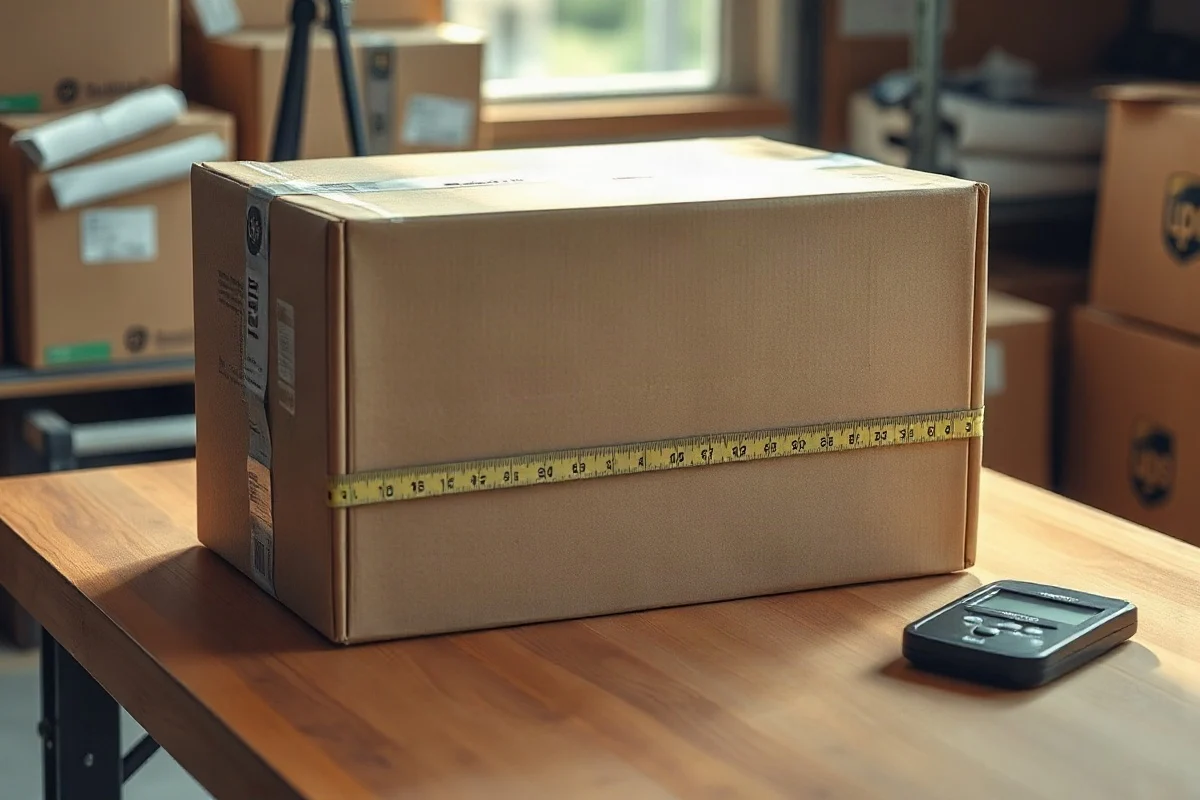
To measure a package for UPS, place the fully packed box on a flat surface and measure its outside length, width, and height at the box’s longest, widest, and tallest points. Record the measurements in inches, round each measurement up according to the current UPS instructions for the service you are using, and enter them in the order length × width × height. Measure the finished package—not the empty box—because tape, padding, bulging sides, and irregular shapes can affect the billable size.
What You Need to Measure a UPS Package
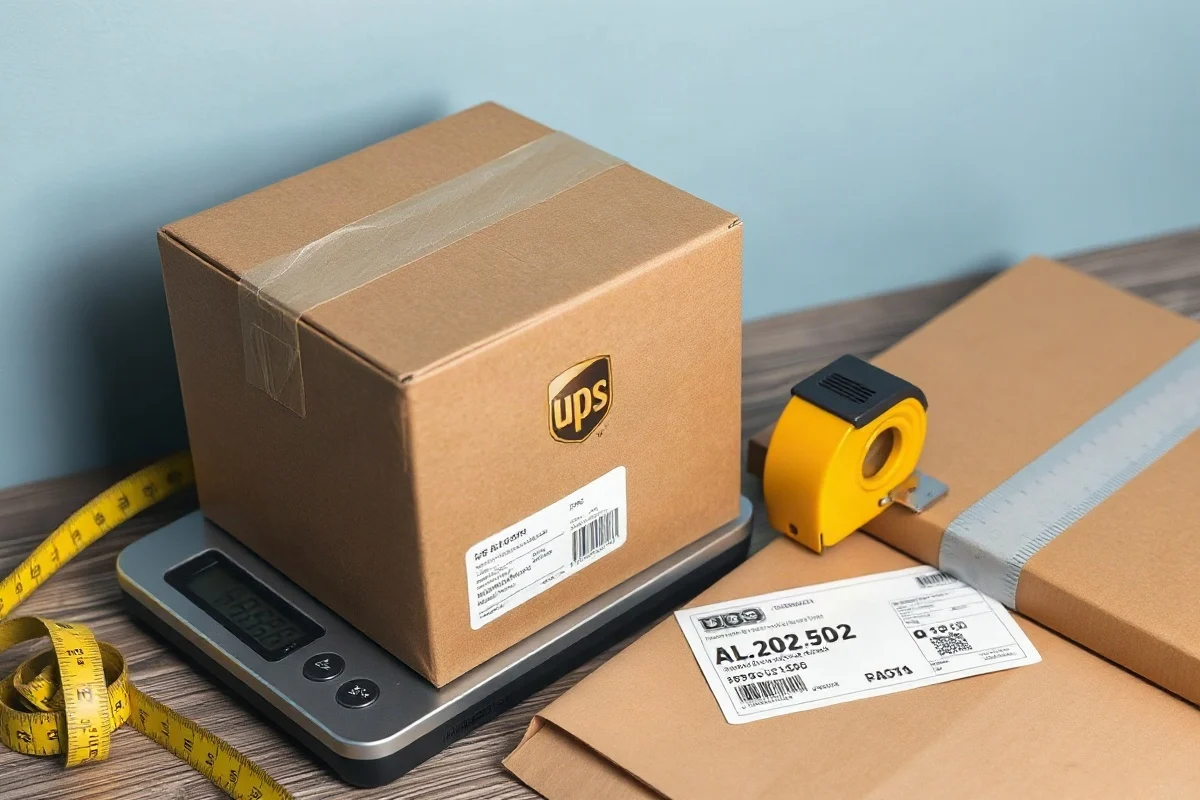
Accurate measurements do not require special equipment, but the right tools make mistakes less likely. Use a firm tape measure or ruler, a flat surface, a scale if you are also checking weight, and a pen or phone note for recording the results. A rigid measuring tool is especially useful for large cartons because flexible tape can sag or follow a curved surface.
Before measuring, make sure the package is ready to ship. Close the box, apply the tape you plan to use, and place the contents and protective materials inside. Do not measure an open box and then assume the final dimensions will be identical. A tightly packed carton may bulge, while a box with loose fill may settle after it is sealed.
How to Measure Length, Width, and Height
For a standard rectangular box, identify the three dimensions as follows:
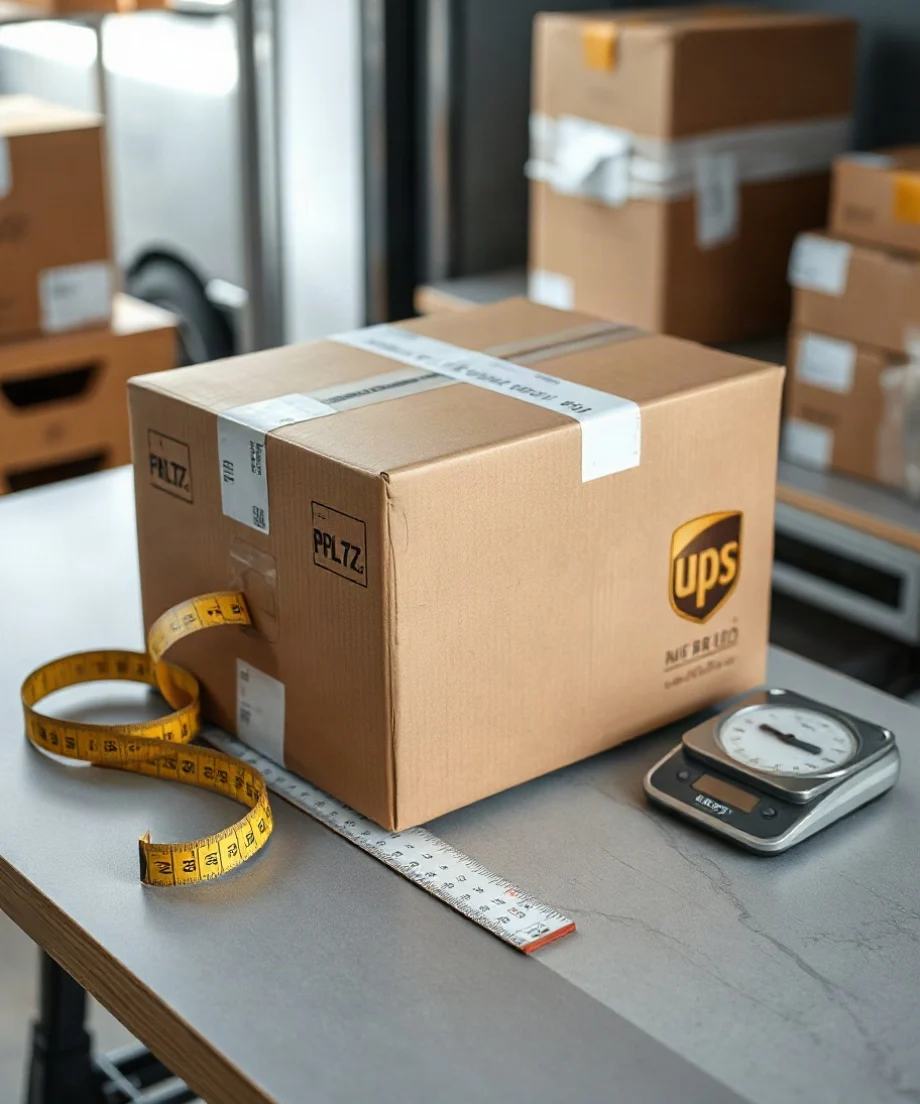
- Length: the longest side of the package.
- Width: the shorter side across the package, usually measured from the front edge to the back edge when the box is positioned with its longest side running left to right.
- Height: the vertical distance from the bottom of the box to the top when the package is sitting in its normal shipping position.
The physical orientation can change which side you call width or height, but the three measurements must describe the same finished package. The most important detail is identifying the longest side as length. If one side measures 18 inches, another measures 12 inches, and the remaining side measures 8 inches, record the package as 18 × 12 × 8 inches—not 12 × 18 × 8.
Measure the outside dimensions
Measure from the outermost point on one side to the outermost point on the opposite side. Include the cardboard, tape, protective corners, straps, or other parts that make the package larger. Do not use the manufacturer’s printed box size unless you have confirmed that it represents the exterior dimensions of the closed carton.
Measure each dimension at its largest point. A box that is slightly crushed, bowed, or overfilled may not have perfectly straight sides. If the top panel rises because the contents press against it, measure to the highest point. If a shipping bag or padded mailer contains a thick item, measure its filled thickness rather than its flat, unused thickness.
Round measurements consistently
Shipping systems may apply their own rounding rules, and those rules can vary by carrier, service, package type, and destination. Do not assume that a fraction of an inch will always be ignored. For a reliable quote, follow the current measurement and rounding instructions shown by UPS or the shipping platform you are using. If you are comparing rates, use the same rounded dimensions in every quote.
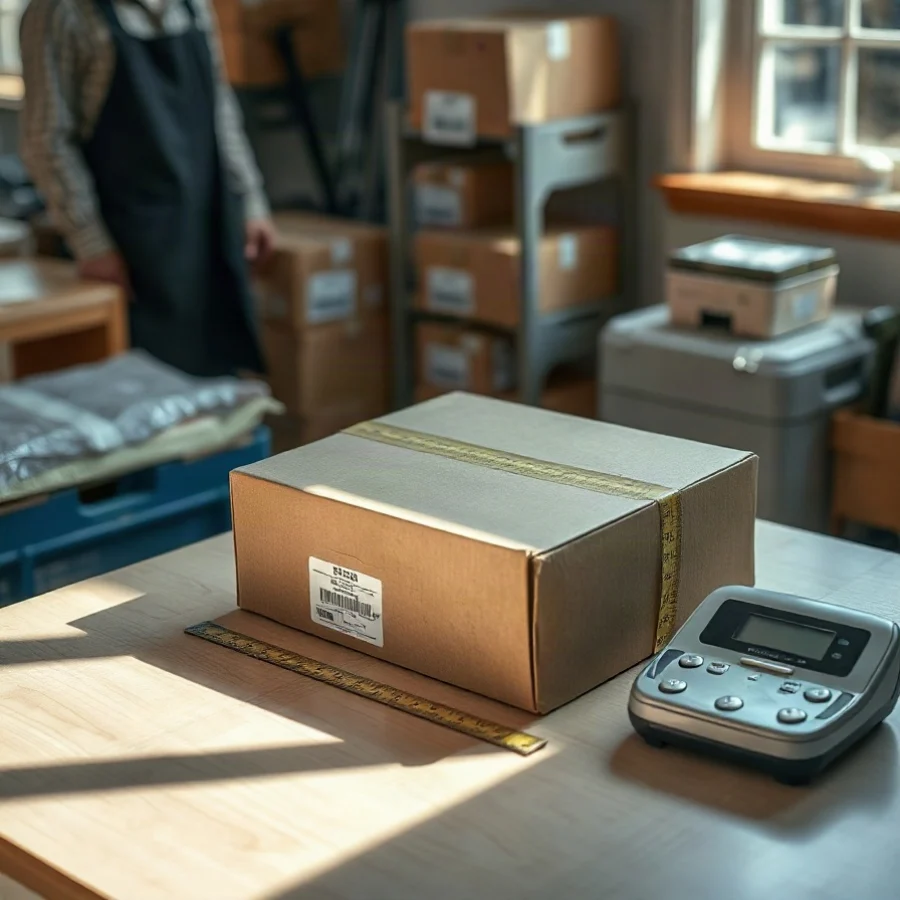
When a package is close to a size threshold, measure it again and avoid estimating. A small difference caused by a bulging panel or an extra layer of packaging can change the classification or price. It is usually safer to leave enough room in your shipping estimate for normal measurement variation rather than relying on dimensions that are smaller than the finished parcel.
Example: Measuring a Rectangular Box
Suppose a sealed box measures 16 inches along its longest side, 10 inches across its shorter side, and 6 inches from bottom to top. Its recorded dimensions are:
16 × 10 × 6 inches
Those numbers are used for both the package description and any dimensional-weight calculation that applies. If the box has tape or padding that increases one side to 6.5 inches, measure and record the finished dimension according to the applicable UPS rounding instructions instead of continuing to use 6 inches.
For help checking carton proportions before you pack, you can use the Box Size Calculator. It can help you think through the space required for the product and protective material, but the final shipment should still be measured after packing.
How Package Dimensions Affect UPS Shipping Cost
Package size can affect the price even when the carton is relatively light. Carriers may compare the package’s actual weight with a calculated dimensional weight, which estimates how much transportation space the package occupies. The charge may be based on the applicable billable weight rather than simply the number shown on a household scale.
The general dimensional-weight process is:
- Multiply length × width × height.
- Divide the cubic volume by the dimensional divisor that applies to the shipment.
- Compare the resulting dimensional weight with actual weight under the current service rules.
The divisor, rounding method, minimum charges, and circumstances in which dimensional weight applies can change by service and destination. Do not use a generic divisor as a permanent UPS rule. Check the current UPS rate information, shipping label system, or official service documentation for the shipment you are preparing. You can also review the Dimensional Weight Calculator to estimate volume, then verify the result against the current carrier rules.
For example, a large carton containing a lightweight item may have a higher dimensional weight than actual weight. Reducing empty space, choosing a more suitable carton, or improving the product’s protective packaging can sometimes lower the billable size without compromising protection.
How to Measure Irregular UPS Packages
Not every shipment is a neat rectangle. Cylinders, tubes, soft bags, triangular cartons, and packages with protruding parts require extra care.
Cylinders and tubes
Measure the package’s overall length, including end caps, and measure the outside diameter at the widest point. If the carrier or service asks for rectangular dimensions, use the dimensions of the smallest imaginary rectangular box that would enclose the item, unless current UPS instructions specify another method. A tube that is measured only by its paper label or interior dimensions may be recorded too small.
Soft-sided packages
Fill and close the bag or mailer as it will be shipped. Measure the length, width, and thickness while the contents are inside. Do not compress the package more than the normal handling process would. If the package expands after being measured, the larger finished size is the one that matters.
Packages with protrusions
Handles, wheels, straps, corners, and other attached parts may increase the overall dimensions. Measure to the farthest point on each side. If an item is not fully enclosed, review the current UPS requirements for acceptable packaging and special handling before creating a label.
Packaging Steps That Improve Measurement Accuracy
Good packing technique makes the dimensions more predictable and helps prevent damage.
- Choose a box that fits the item. Leave enough room for cushioning, but avoid a carton that is substantially larger than necessary.
- Protect fragile surfaces. Wrap the product and add cushioning around corners, edges, and exposed components.
- Distribute the contents evenly. Uneven weight can bow the box or make one side difficult to measure.
- Fill empty space. Use an appropriate filler so the contents do not shift, but do not overfill the carton.
- Close the box without forcing it. A panel that is pushed upward or downward can change the final height.
- Seal all openings. Apply shipping tape in a way that keeps the carton’s outside shape as flat as practical.
- Measure again. Check the finished package after sealing, particularly if the contents are soft, flexible, or tightly packed.
For additional guidance on selecting a carton, see What Box Size Should I Use for UPS Shipping?. The right box is not always the smallest box available; it must provide enough room for protection while keeping unused space under control.
Common UPS Measurement Mistakes
Using the inside dimensions
Inside dimensions describe the space available for the product, not necessarily the space occupied by the finished shipment. Exterior dimensions are generally the practical starting point for a carrier quote.
Measuring the empty carton
Padding, tape, and product pressure can change the package after it is closed. Always measure the ready-to-ship parcel.
Ignoring small bulges
A carton that looks almost rectangular may have a raised top, bowed side, or compressed corner. Measure the largest outside dimensions instead of relying on an average.
Confusing actual weight with dimensional weight
A scale reading is only one part of the shipping calculation. Package volume may also affect the billable weight, depending on the current UPS service rules.
Reusing old measurements
Two packages containing the same product can have different dimensions if they use different cartons or amounts of cushioning. Record each shipment’s finished measurements separately.
Verify Current UPS Requirements Before Shipping
UPS requirements and pricing can vary by service level, destination, package type, account terms, and date. Size limits, weight limits, additional handling criteria, dimensional-weight methods, and surcharges should be checked in the current official UPS documentation or the shipping system that will purchase the label. If a package is close to a published limit, use the carrier’s latest instructions rather than an older chart or an estimate from a third-party calculator.
After measuring, enter the dimensions exactly as required by the label system, confirm the package weight, and review the quote before payment. Keeping a simple record of the carton size, actual weight, and final billed amount can help you choose better packaging for future shipments.
Comments
0No comments yet. Be the first to share a helpful note or question.
Leave a Comment
Your email address will not be published. Comments are reviewed before appearing on the site.