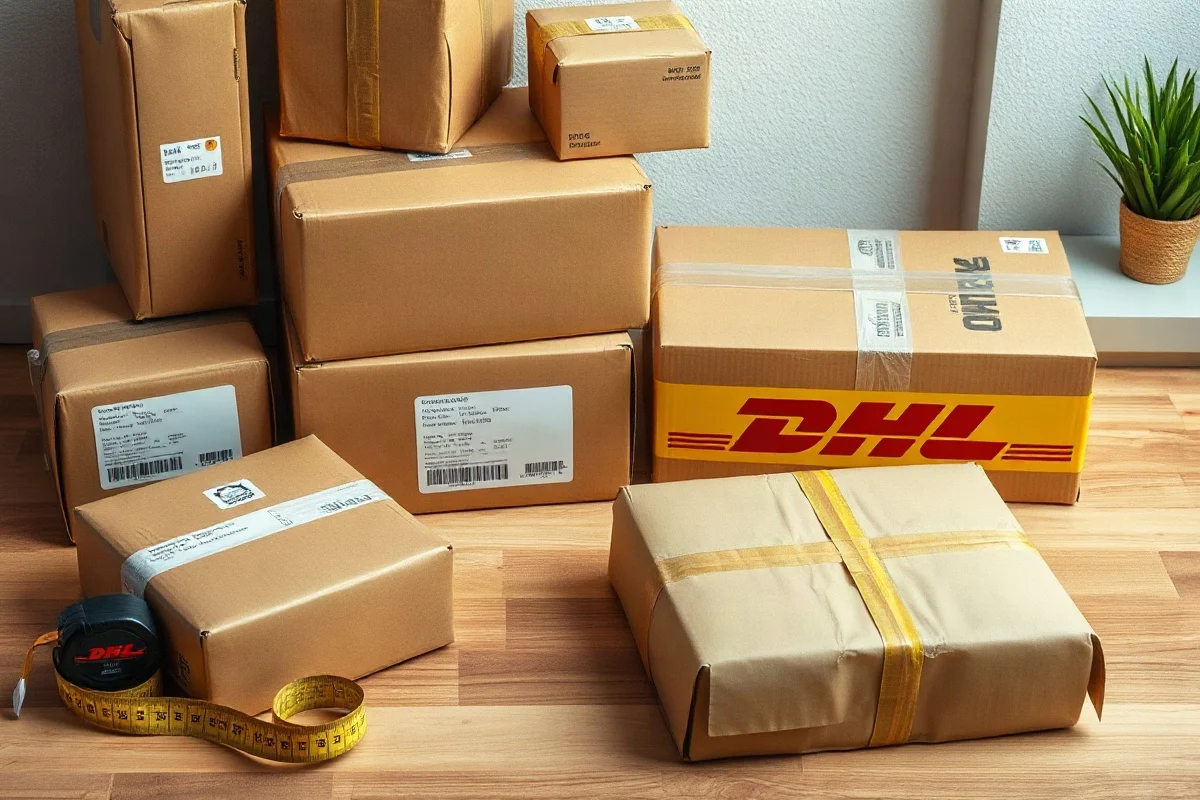
Common box sizes for DHL shipments include compact cartons such as 8 × 6 × 4 inches, medium boxes around 12 × 10 × 8 inches, and larger cartons such as 18 × 14 × 12 inches. These are practical starting points, not universal DHL-approved sizes. The right box depends on the contents, destination, DHL service, packed weight, and current dimensional and maximum-size rules. Before buying labels, compare your finished package with the requirements for the specific DHL service you plan to use.
Useful DHL box sizes by shipment type
DHL does not require every shipment to use one standard carton size. In many cases, you can use a sturdy box that protects the contents and fits the carrier's current size and weight requirements. Choosing a common carton size makes packing and rate estimates easier, but the outside dimensions of the sealed package are what matter.
Small boxes for compact items
Small cartons are useful for accessories, cosmetics, books, replacement parts, small electronics, and other items that do not need much protective material. Examples include:
- 6 × 4 × 4 inches for very small products with light padding
- 8 × 6 × 4 inches for accessories, small devices, and boxed retail goods
- 10 × 8 × 6 inches for several small items or one item needing more cushioning
Small packaging can reduce wasted space, but do not force an item into a carton that leaves no room for cushioning. Fragile goods should have enough protective material to prevent movement and contact with the box walls.
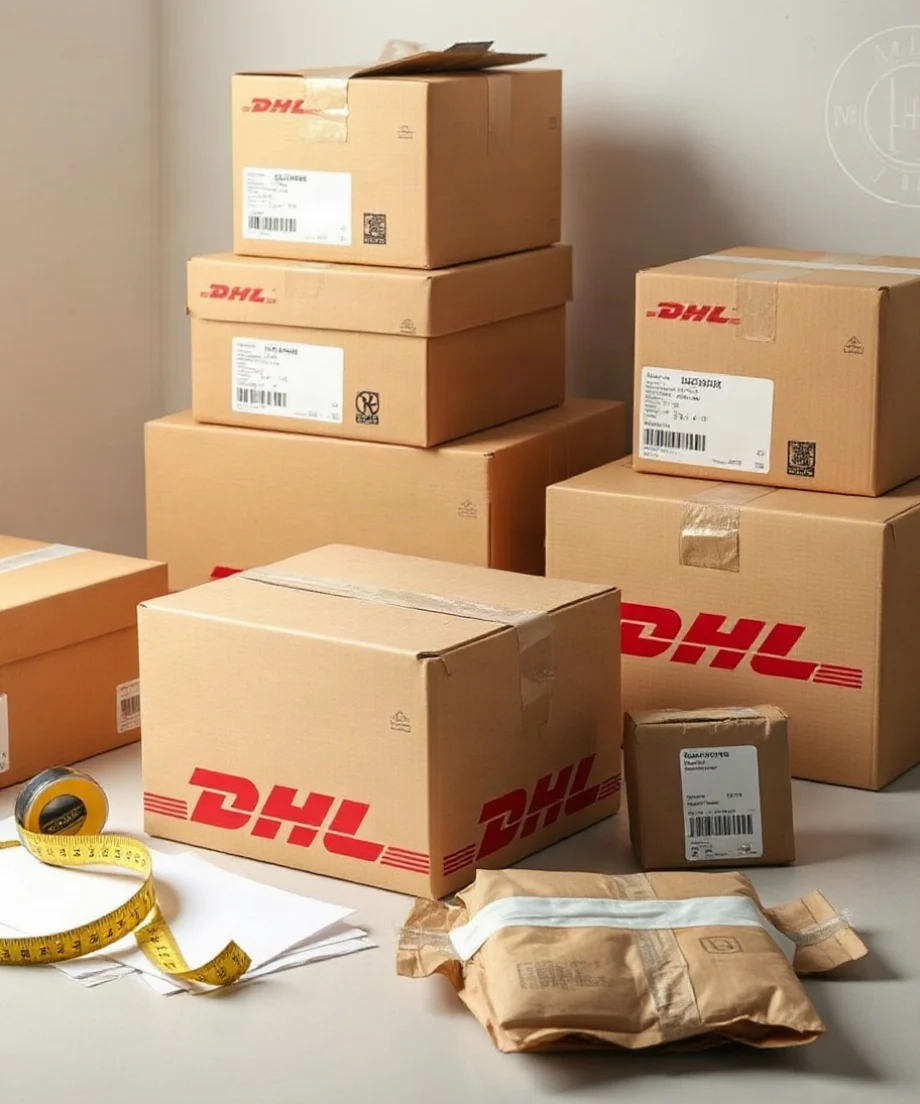
Medium boxes for everyday shipments
Medium cartons are often the most versatile choice for online orders and international shipments. Common examples include:
- 12 × 10 × 8 inches for clothing, household items, and multiple small products
- 14 × 10 × 8 inches for longer or irregularly shaped contents
- 16 × 12 × 10 inches for larger retail orders or several boxed items
These dimensions are examples rather than DHL service limits. A box that fits one DHL product or destination may not qualify under another service's rules. Always check the current DHL shipping terms, booking screen, or account-specific guidance before shipment.
Large boxes for bulky contents
Larger cartons can be appropriate for lightweight apparel, household goods, trade materials, and products that cannot be compressed. Examples include 18 × 14 × 12 inches, 20 × 16 × 12 inches, and 24 × 18 × 18 inches. As box size increases, pay closer attention to:
- Actual weight and dimensional weight
- Maximum length and combined-dimension rules
- Oversize or non-conveyable-package conditions
- Strength of the carton and its closure
- Whether the destination country permits the contents
A large box is not automatically unacceptable, but it may be more expensive or subject to additional handling under the applicable DHL service. Because these conditions can vary by destination, service level, and date, verify the current official DHL requirements for the shipment you are creating.
How to choose the right box dimensions
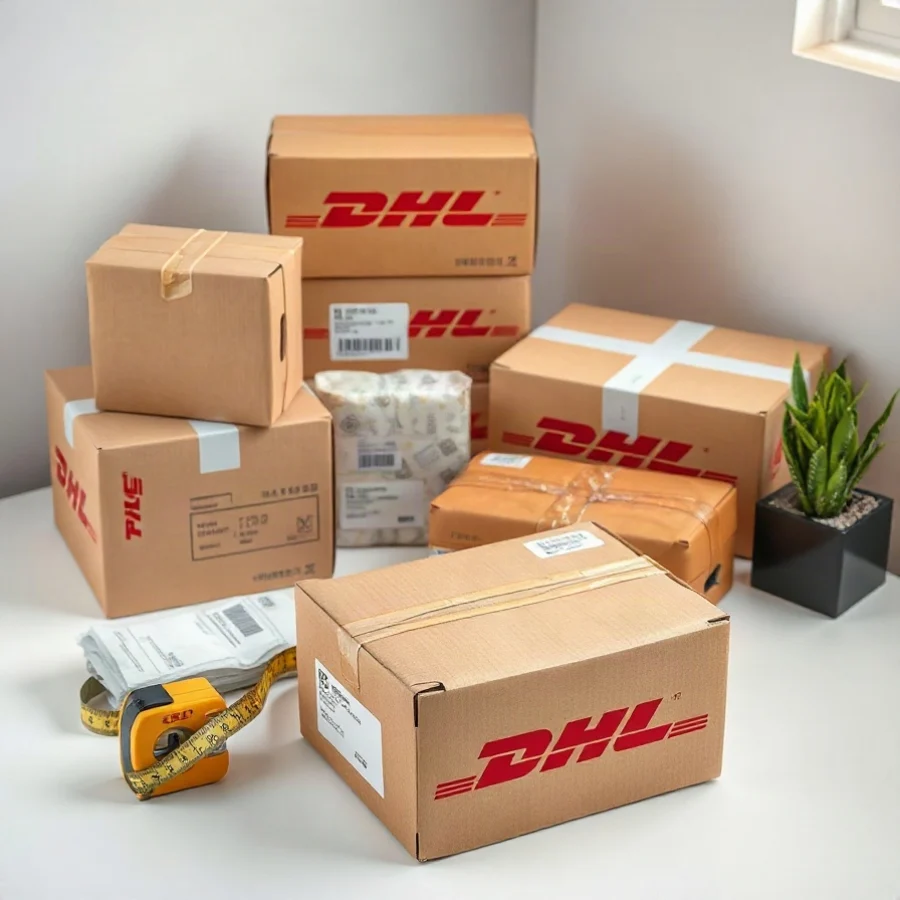
Start with the item, not the shipping label. Measure the product at its widest, longest, and tallest points. Then add the space required for padding, dividers, bags, or other protective materials. The interior of the box should be large enough to hold the protected item without compression, while avoiding unnecessary empty space.
For example, suppose a product measures 10 × 7 × 3 inches and needs approximately 1 inch of cushioning on every side. A box with interior dimensions near 12 × 9 × 5 inches may be a practical starting point. The exact choice depends on the cushioning thickness and how the product is positioned. If the box is sold by its outside dimensions, remember that the inside space will be smaller because of the cardboard walls.
For several items, arrange the contents in the most space-efficient orientation, but do not place heavy objects on fragile ones. Use dividers when products can strike each other during transit. A slightly larger box with proper protection is usually safer than a tight carton that transfers impact directly to the contents.
Measure the sealed package, not just the empty box
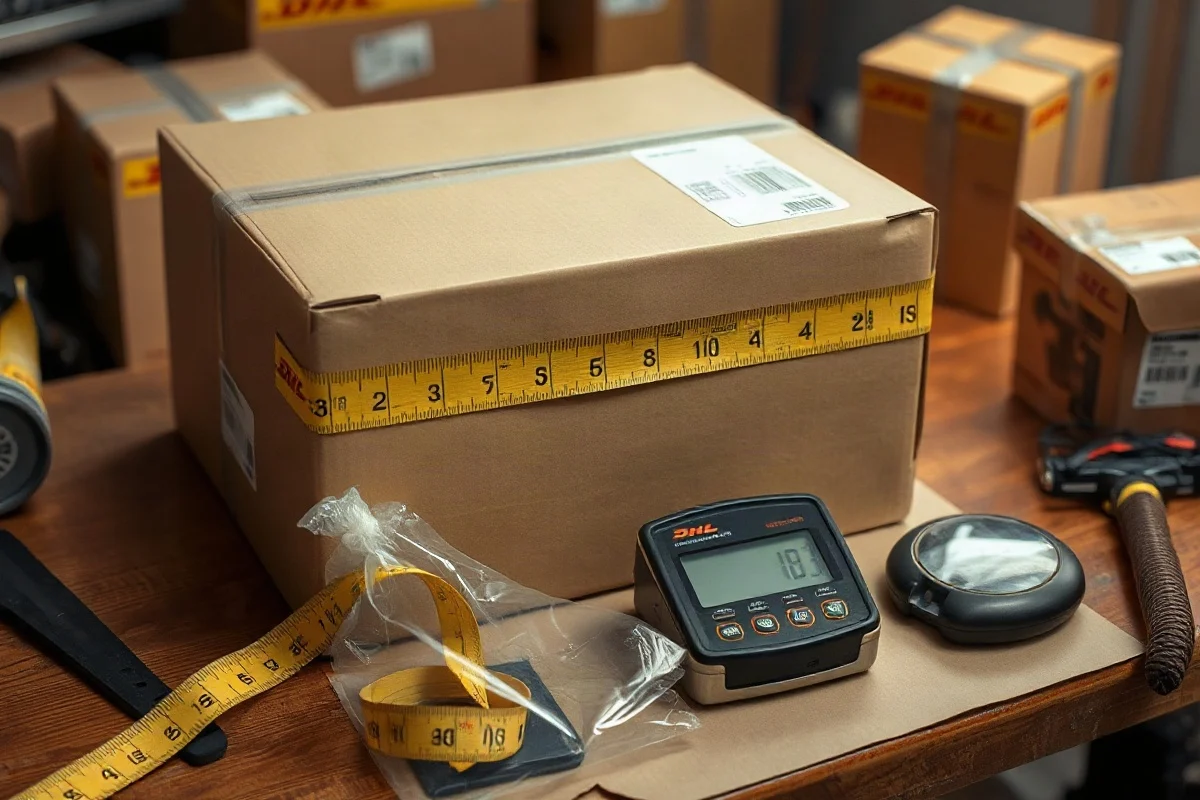
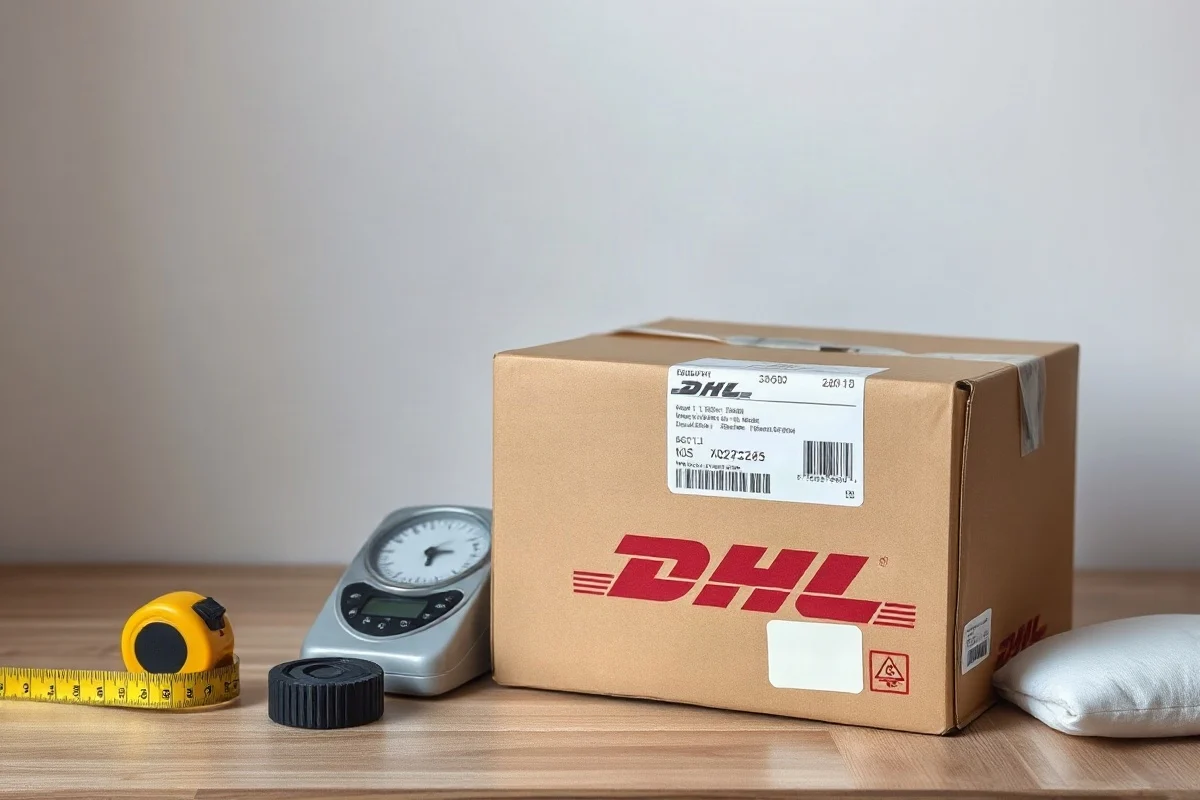
Shipping calculations generally use the completed package. After packing, close and seal the carton, then measure its outside length, width, and height. Measure from the package's extreme points, including bulges, protruding tape, rounded padding, or other features that increase its overall footprint.
Use one consistent unit. If your measurements are in inches, record length, width, and height in inches. If a form requires centimeters, convert each dimension rather than converting only the final result. One inch equals 2.54 centimeters, so the conversion is:
centimeters = inches × 2.54
For a rectangular carton, identify the longest side as the length. The other two sides are the width and height. If the package is irregular, follow the carrier's current instructions for measuring it. Do not round down to make the carton appear smaller; use a measurement that represents the actual sealed package and follow any rounding method specified by the relevant DHL service.
For more measuring guidance, see this guide to measuring a package for DHL. It is also helpful to review common package-measuring mistakes before purchasing postage.
Why box size can affect DHL shipping cost
Shipping price is not always based only on the scale weight. A large, lightweight carton may occupy more aircraft or vehicle space than its actual weight suggests. Depending on the DHL service and shipment details, the carrier may compare actual weight with dimensional weight and use the applicable chargeable amount.
A common dimensional-weight structure is based on:
length × width × height ÷ dimensional divisor
However, the divisor, rounding method, unit system, and other conditions can vary by service, destination, account, and current carrier rules. Do not assume that one divisor applies to every DHL shipment. Use the current DHL rate tool or shipment quote for the exact service, and compare the result with a dimensional weight calculator as an estimate rather than a guaranteed price.
For example, a 20 × 16 × 12-inch carton has a volume of 3,840 cubic inches. That volume may matter even if the box contains lightweight clothing. Reducing unnecessary empty space can lower dimensional weight, but shrinking the carton should never compromise protection.
Packaging steps for DHL shipments
1. Inspect the product and select protection
Consider impact, vibration, moisture, and compression during handling. Wrap fragile items individually, separate pieces that could scratch one another, and use an insert or divider when needed. If the product has a retail box, place that box inside an outer shipping carton rather than relying on thin retail packaging alone.
2. Choose a strong, appropriately sized carton
Use a box with intact corners, dry surfaces, and enough strength for the packed weight. Avoid cartons with crushed edges, torn flaps, or large holes. Reused boxes can work if they remain rigid and all old labels and barcodes are removed or covered.
3. Eliminate movement
Fill empty spaces so the contents do not shift when the carton is gently shaken. Do not overfill the box to the point that the flaps bulge. For heavier shipments, distribute weight evenly and place dense items near the center when possible.
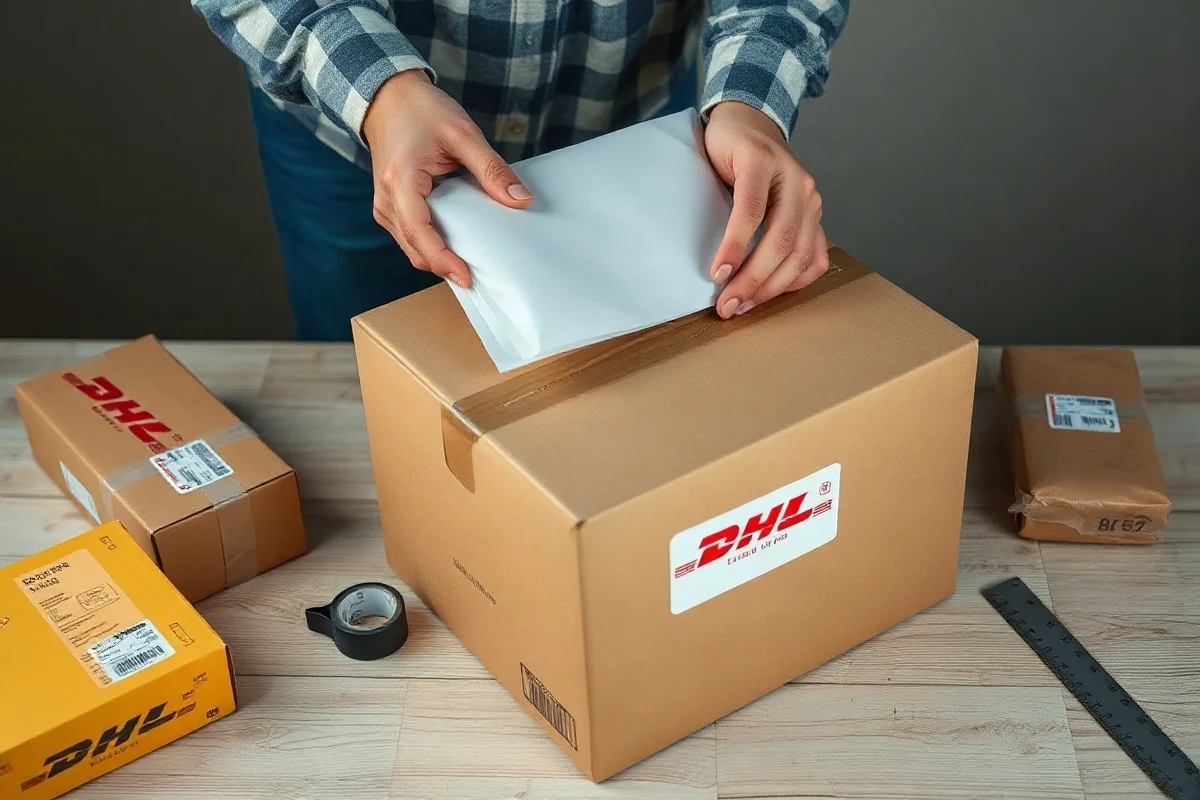
4. Seal every opening securely
Apply shipping tape across the center seam and reinforce the edges or other openings as needed. The carton should remain closed without relying on string, household wrapping, or loose adhesive. Keep the label on a flat surface and avoid placing it across a seam or corner.
5. Weigh and measure the finished package
Record the packed weight after sealing. Then measure the outside dimensions and enter them accurately in the DHL booking or label system. If the package changes after the initial quote, recalculate it. A different carton, extra padding, or a swollen soft package can change the billable measurements.
When a common box size may not be suitable
A standard carton is not always the best solution. Long products may need a narrow box, while dense items may require a smaller, stronger carton to keep the package manageable. Fragile goods may need a double-boxing method, and liquids or restricted items may have special packaging and documentation requirements.
Do not assume that a box is acceptable simply because it fits within a general size range. DHL rules can differ for express and freight services, domestic and international movements, destinations, account arrangements, and unusual shapes. Some items may also be prohibited or restricted by the origin, destination, or transport mode. Check the current official DHL service guide and destination-specific requirements before tendering the shipment.
A practical box-selection checklist
- Measure the product and add realistic room for protection.
- Choose the smallest strong carton that protects the contents.
- Confirm that the carton is dry, rigid, and free of conflicting labels.
- Pack tightly enough to prevent movement without crushing the contents.
- Seal the package before taking final measurements.
- Record outside length, width, height, and packed weight.
- Check the current DHL service rules for size, weight, contents, and destination.
- Compare actual and dimensional weight when estimating cost.
For a quick comparison of package dimensions, you can use the box size calculator. The most reliable box choice is the one that protects the shipment while keeping the finished package as compact and accurately measured as practical.
Comments
0No comments yet. Be the first to share a helpful note or question.
Leave a Comment
Your email address will not be published. Comments are reviewed before appearing on the site.