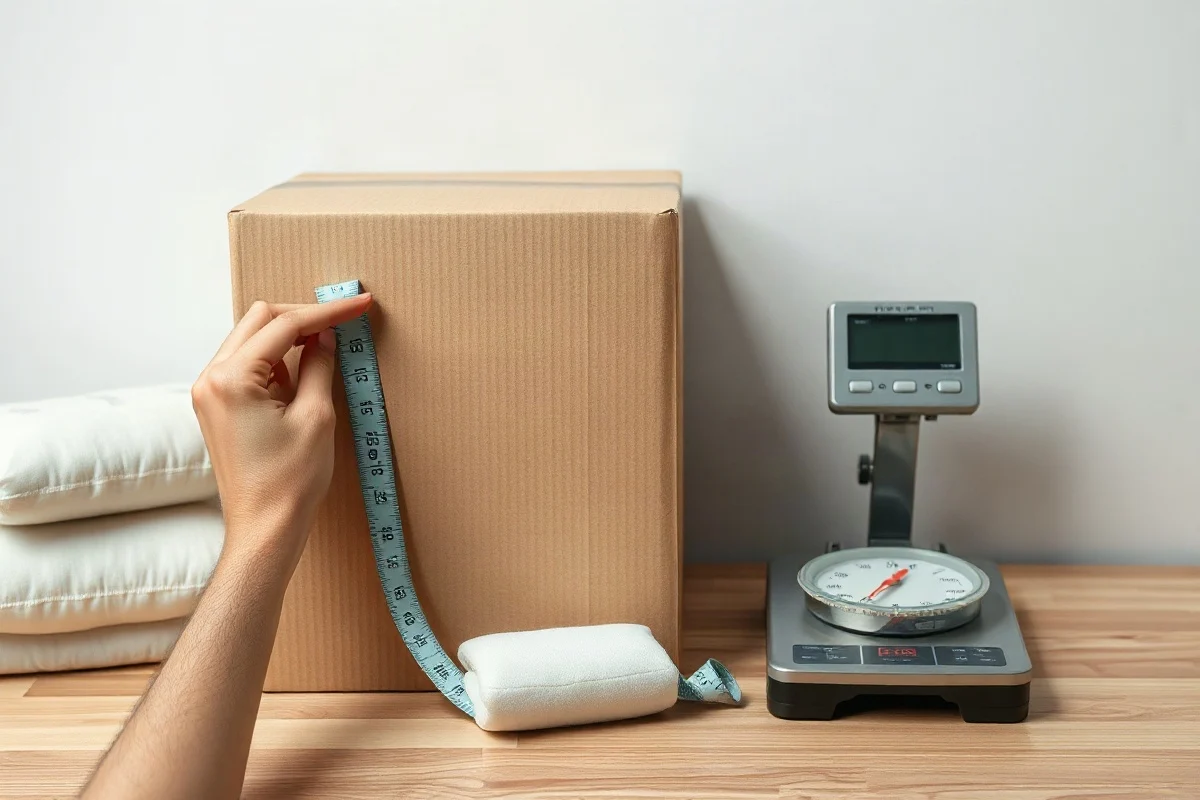
The right shipping package is usually the smallest box or mailer that safely fits your item, its protective padding, and any required paperwork without crushing or bending the contents. Start by measuring the product, add enough room for cushioning on every side, then compare the finished package with the size and weight rules for your chosen carrier and service. A package that is too small can arrive damaged, while an oversized package may cost more because of its greater weight, size, or dimensional weight.
Start With the Item, Not the Box
Before choosing packaging, measure the item you are actually shipping. Do not rely only on a product listing’s advertised dimensions, because those measurements may exclude handles, protruding parts, retail packaging, or accessories. If the item is flexible, measure it in the shape it will have inside the package. If it is fragile, plan for the extra space needed for protective material.
Record the item’s:
- Length: the longest side
- Width: the side running across the package
- Height or depth: the remaining side
- Weight: the item plus any retail packaging or accessories
Use the same unit throughout your calculations. In the United States, package dimensions are commonly listed in inches and weight in pounds, but some shipping tools and international services may require centimeters and kilograms. To convert inches to centimeters, multiply by 2.54. To convert pounds to kilograms, multiply by 0.453592. Round only after you have completed the calculation, because early rounding can produce a package size that is slightly too small.
How Much Extra Space Should You Add?
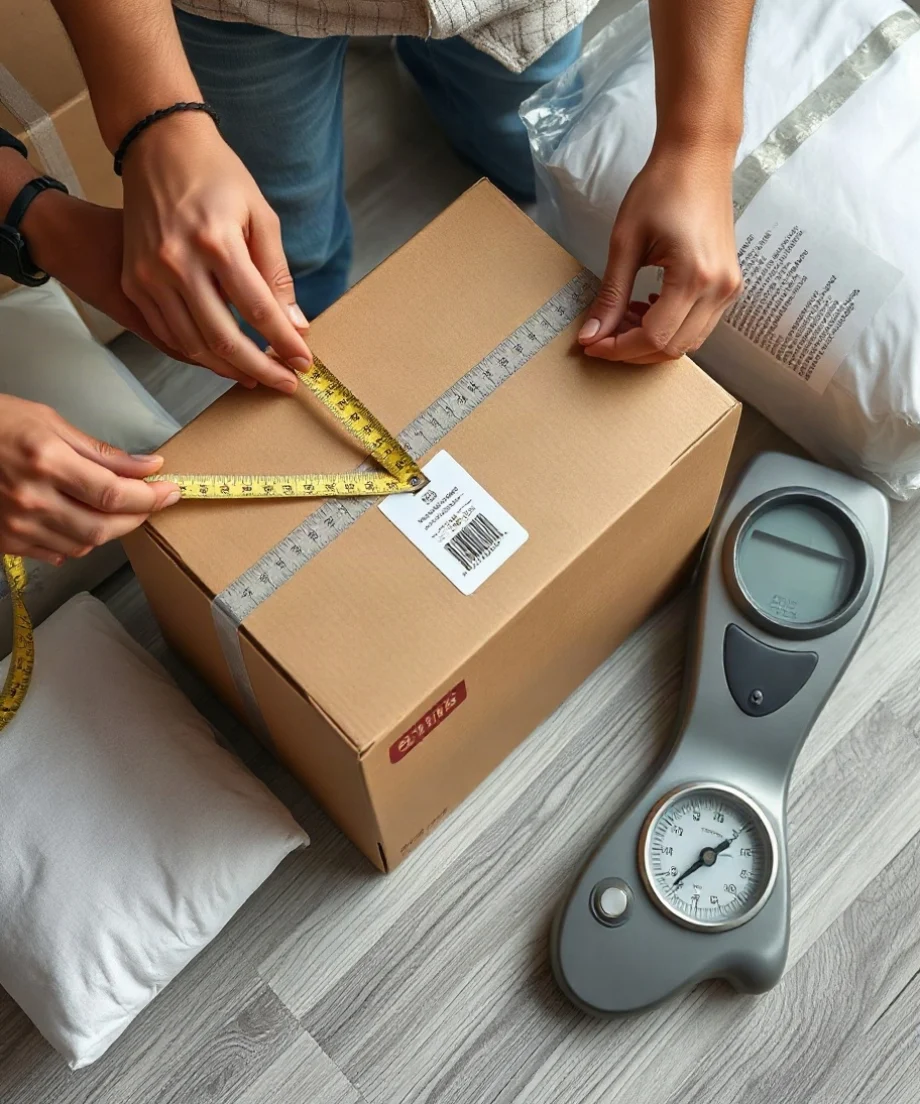
The amount of clearance depends on the product and the protection it needs. A durable clothing item may need only a poly mailer or a small amount of void fill. Glass, ceramics, electronics, framed goods, and other breakable products generally need more space for cushioning and separation from the box walls.
A practical starting method is to add the planned protection to both sides of each dimension. For example, suppose a product measures 12 by 8 by 3 inches and you want approximately 2 inches of protective material around it. The interior space you need would be about:
- Length: 12 + 2 + 2 = 16 inches
- Width: 8 + 2 + 2 = 12 inches
- Height: 3 + 2 + 2 = 7 inches
This gives you a target interior size of approximately 16 by 12 by 7 inches. You may be able to use less space with a fitted insert, molded pulp, foam, or a sturdy protective sleeve. The goal is not to fill the box with loose material. The goal is to prevent movement while keeping the item away from the walls, corners, and seams.
Interior Dimensions and Exterior Dimensions Are Different
Box dimensions may be stated as interior or exterior measurements. Interior dimensions describe the usable space inside the box. Exterior dimensions include the cardboard thickness and therefore may be slightly larger. When deciding whether an item will fit, compare the item and padding with the interior dimensions. When entering package information into a carrier calculator, use the measurement method requested by that carrier or shipping platform.
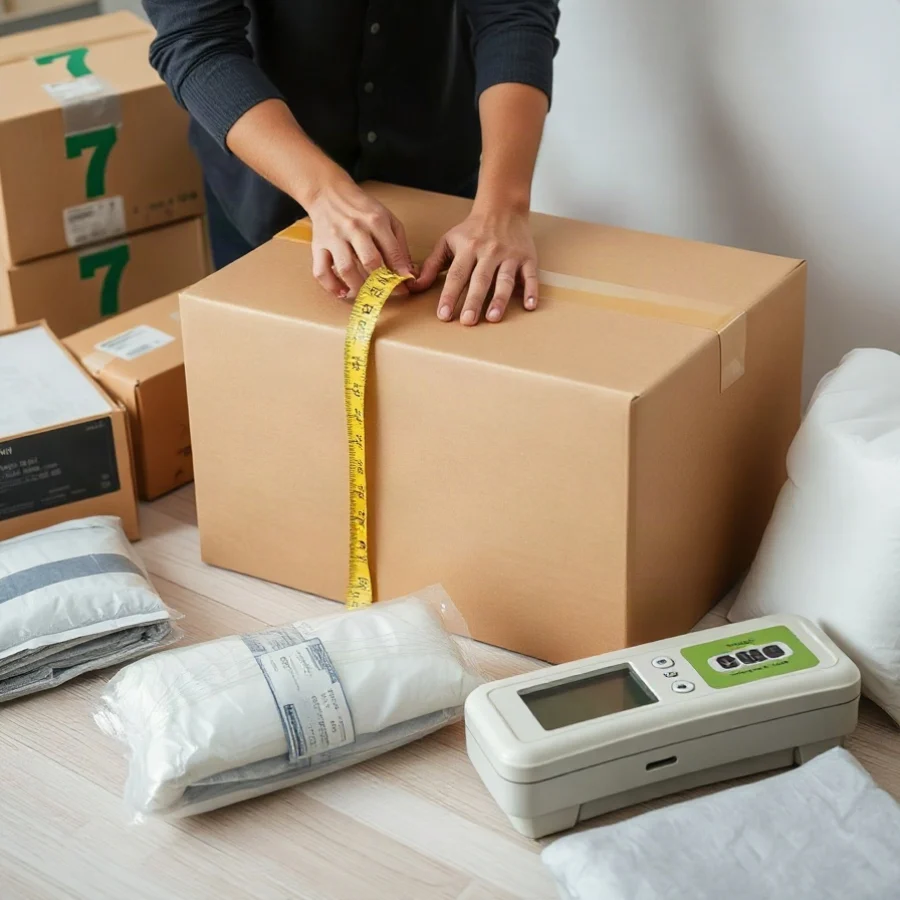
Boxes can also vary slightly by manufacturer, style, and material. A regular-slotted carton, an exceptionally rigid box, and a mailer may not provide the same usable space even when their listed dimensions appear similar. If the fit is close, measure the actual package after assembling it rather than assuming the nominal box size is exact.
Choose the Packaging Format
Most shipments use one of three basic formats: a box, a padded mailer, or a flexible mailer. Each works best for different products.
Use a box when the item needs structure
A corrugated box is usually the safer choice for fragile, rigid, heavy, sharp, or irregularly shaped products. It creates a protective shell and gives you room to place cushioning around the item. Choose a box that is strong enough for the product’s weight and stacking conditions. A box that is much larger than necessary may require more void fill and may increase the billed size.
Use a padded mailer for compact, durable items
Padded mailers can work well for clothing accessories, books that will not bend, small tools, and other products that are not easily crushed or broken. They are often more efficient than a box for flat or flexible goods. Do not use a mailer simply because the item fits inside it. Consider whether the item can tolerate compression, bending, moisture exposure, and handling without a rigid outer shell.
Use a flexible mailer only when the contents allow it
Unpadded poly mailers are best suited to soft goods that are not vulnerable to impact. They are not a substitute for a box when the contents need corner protection or must remain flat. If the product has a hard edge, wrap it so it cannot puncture the mailer during transport.
Check Weight and Dimensional Weight
Shipping cost is not always based only on the scale weight. Some services compare the package’s actual weight with a dimensional, or volumetric, weight based on the space it occupies. The carrier or service generally bills according to the applicable rule for that shipment, but the exact calculation can vary by carrier, service, package type, destination, and current pricing terms.
A common form of the calculation is:
Dimensional weight = length × width × height ÷ dimensional divisor
The dimensional divisor is not universal. It can differ between carriers and services, and it may change. Use the divisor shown in the current official documentation or in the shipping platform you are using rather than assuming a number from an old example. You can also use our dimensional weight calculator as a planning tool, then confirm the result against the applicable carrier terms.
Measure the finished package, not just the product. A box that gains several inches because of oversized padding can have a noticeably larger volume. For this reason, reducing empty space can matter even when the package’s scale weight stays the same. Do not remove necessary protection solely to reduce dimensions; a damage claim, replacement, or return can cost more than a modest shipping difference.
Measure the Finished Package Correctly
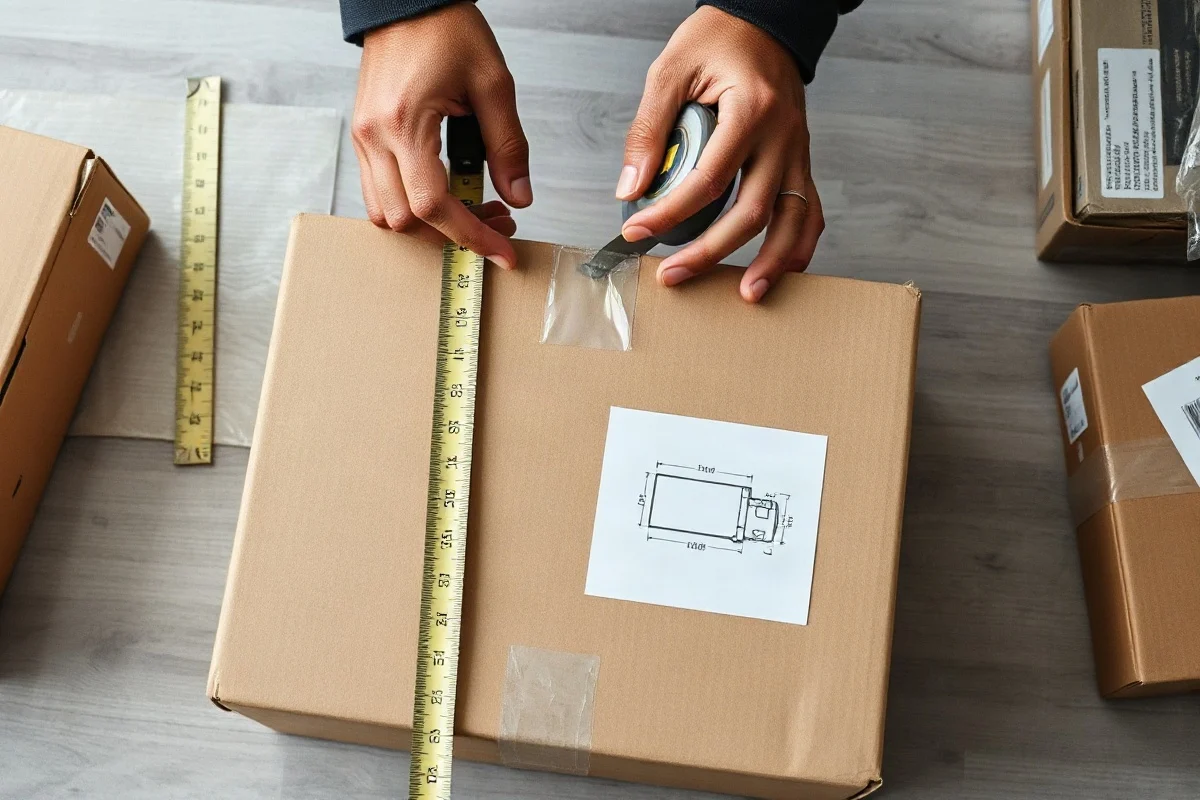
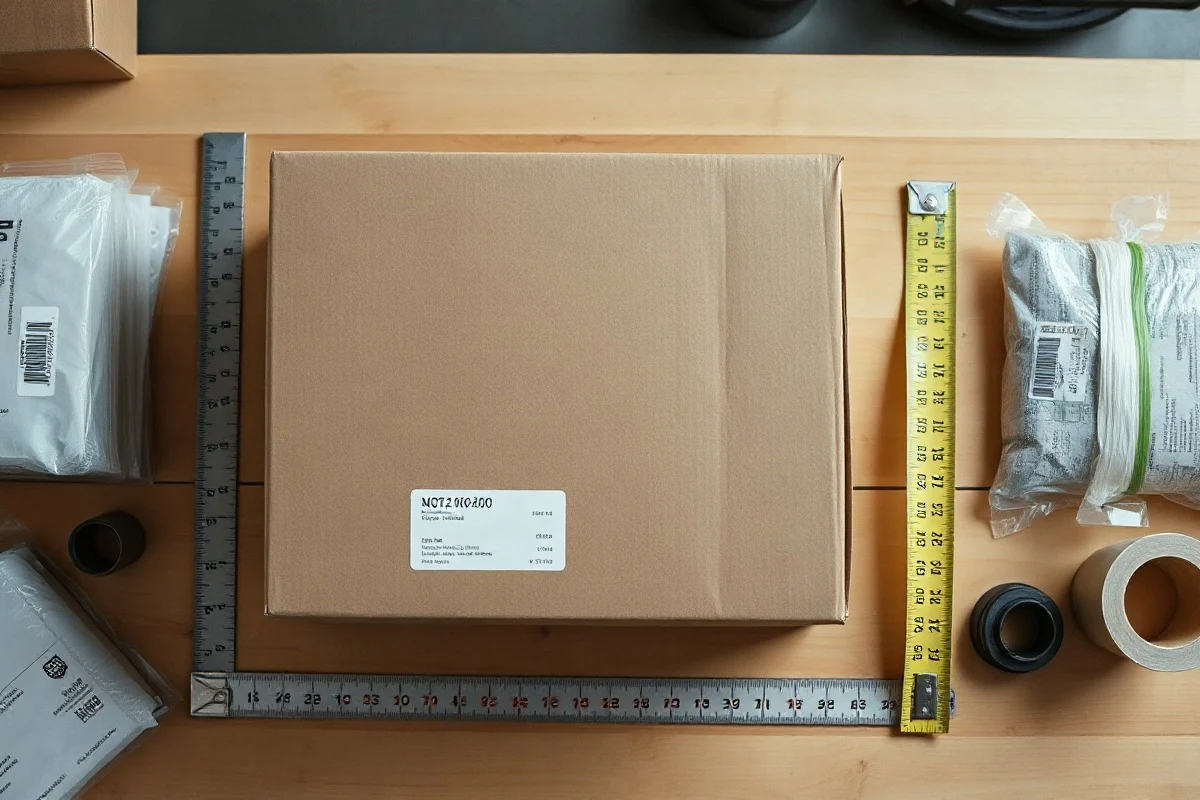
Once the item is packed, close the box as it will be shipped. Do not compress the package while measuring it unless the packaging is specifically designed to be compressed. Place the package on a flat surface and measure the three dimensions at their longest points.
- Length: the longest side
- Width: the side perpendicular to the length
- Height: the remaining side
Include bulges, rigid corners, handles, straps, and other parts that increase the package’s overall size. If a carrier defines its measurement method differently, follow that carrier’s current instructions. Some carriers also calculate an additional size measure from the longest side and the other sides, so check the relevant service rules before shipping an unusually large or irregular package.
For a quick planning estimate, you can use a box size calculator after entering the product dimensions and planned padding. The result is a starting point, not a replacement for checking the actual assembled package.
How to Pack the Item Efficiently
- Inspect the item. Remove unnecessary retail packaging, but keep any protection needed for the product.
- Wrap vulnerable surfaces. Cover glass, screens, corners, finishes, and other areas that can scratch or crack.
- Protect the bottom. Add a cushioning layer before placing the item in the box.
- Center the product. Keep it away from every wall, corner, and seam when the item is fragile.
- Fill empty spaces. Use enough material to stop movement, but avoid forcing the box closed.
- Test for movement. Gently shake the closed package. If the item shifts, add or reposition the protective material.
- Seal all seams. Use packaging tape appropriate for the box and its weight, and reinforce weak points without creating sharp exposed edges.
- Recheck the measurements and weight. Record the final dimensions after sealing.
For products with multiple pieces, wrap or separate each piece so that parts cannot strike one another. Heavy items should be placed low and centered when possible. Liquids need leak protection in addition to an outer container, and their packaging may be subject to service-specific requirements. Always check the current carrier rules for restricted, fragile, hazardous, or temperature-sensitive contents before handing over the shipment.
When the Smallest Box Is Not the Best Box
The smallest possible package is not always the most practical choice. A tight fit may leave no room for cushioning, make sealing difficult, or place pressure on the product. A slightly larger box can be better when it allows a consistent protective layer and reduces the chance of damage. The best package balances protection, handling, and shipping efficiency.
For repeat shipments, test more than one package size. Compare the packed weight, exterior dimensions, packing time, material cost, and damage risk. A standardized box can simplify storage and fulfillment, but it should still fit the products safely. If you ship several products together, calculate the package for the actual combination rather than adding individual box sizes.
Verify Carrier and Marketplace Requirements
Carrier limits and pricing rules can depend on the service level, destination, package shape, weight, and date of shipment. Marketplace fulfillment programs may add their own packaging, labeling, or size requirements. These rules can change, so do not rely on an old chart or a general rule when the shipment is close to a limit.
Before purchasing postage, enter the final package information into the selected carrier or marketplace system and review the current official requirements. For carrier-specific planning, you can also browse our guides for USPS packages and UPS packages. Confirm the current limits, dimensional-weight method, surcharges, and accepted packaging types directly with the carrier or marketplace before shipping.
In practical terms, choose packaging by working outward from the product: measure the item, add the protection it genuinely needs, select a suitable box or mailer, seal it, and measure the finished package. That process gives you a reliable package size for postage estimates while protecting the shipment from avoidable damage and excess empty space.
Comments
0No comments yet. Be the first to share a helpful note or question.
Leave a Comment
Your email address will not be published. Comments are reviewed before appearing on the site.