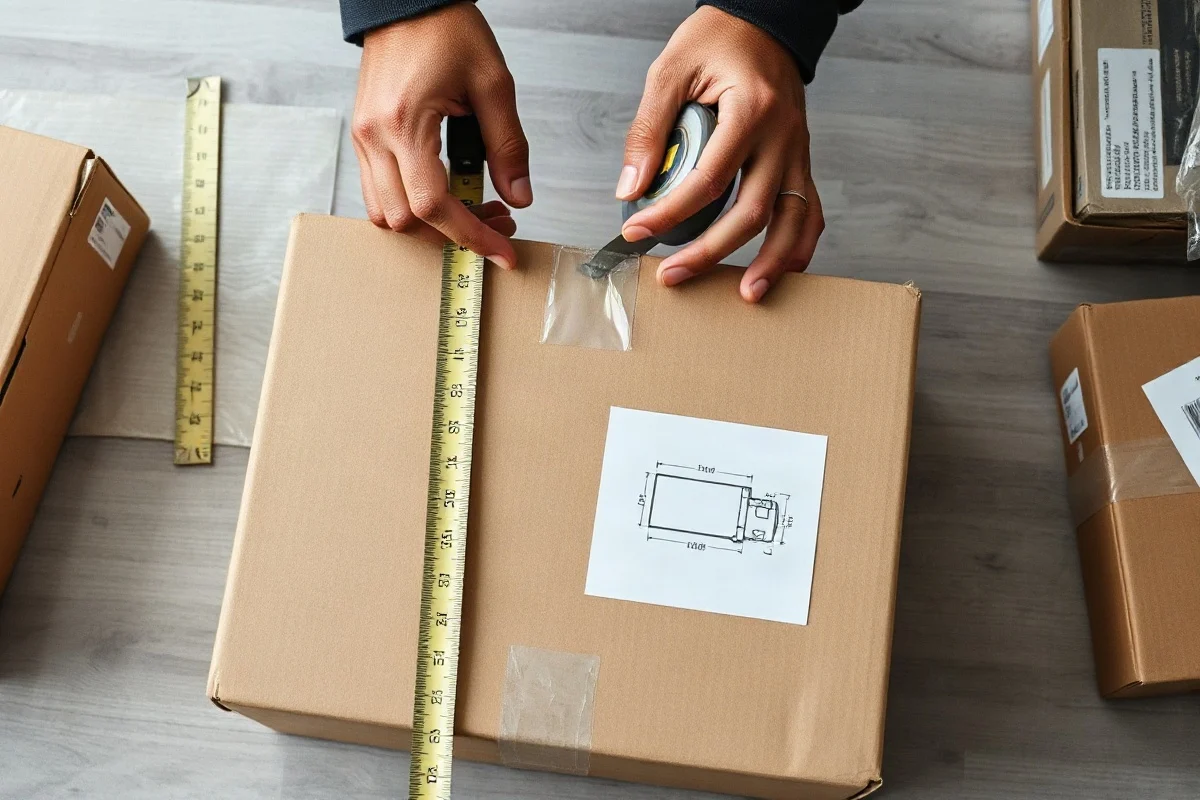
Read box dimensions as length × width × height, usually written as L × W × H. In most cases, length is the longest side, width is the shorter side of the opening or base, and height is the distance from the base to the top. For example, a box listed as 12 × 8 × 6 inches is 12 inches long, 8 inches wide, and 6 inches high. The order matters because shipping forms, calculators, and carrier systems commonly ask for each measurement separately.
Although the three numbers can be multiplied in any order to find cubic volume, confusing their labels can lead to incorrect package records, poor packing decisions, or a mismatched shipping quote. The safest approach is to identify the box’s orientation, measure the outside dimensions, and record the measurements in the unit requested by the carrier or marketplace.
What L × W × H Means
Box dimensions describe the space occupied by a rectangular package. The standard format is:
- Length: commonly the longest side of the box.
- Width: the side-to-side measurement across the box’s base or opening.
- Height: the vertical measurement from the bottom to the top when the box is standing in its normal position.
Some manufacturers, retailers, and shipping systems may use a different orientation. A box can sometimes be turned on its side without changing its physical size, so the labels may depend on the product’s intended position or the system’s instructions. When a carrier or online shipping form gives specific directions, follow those directions rather than assuming that every seller uses the same convention.
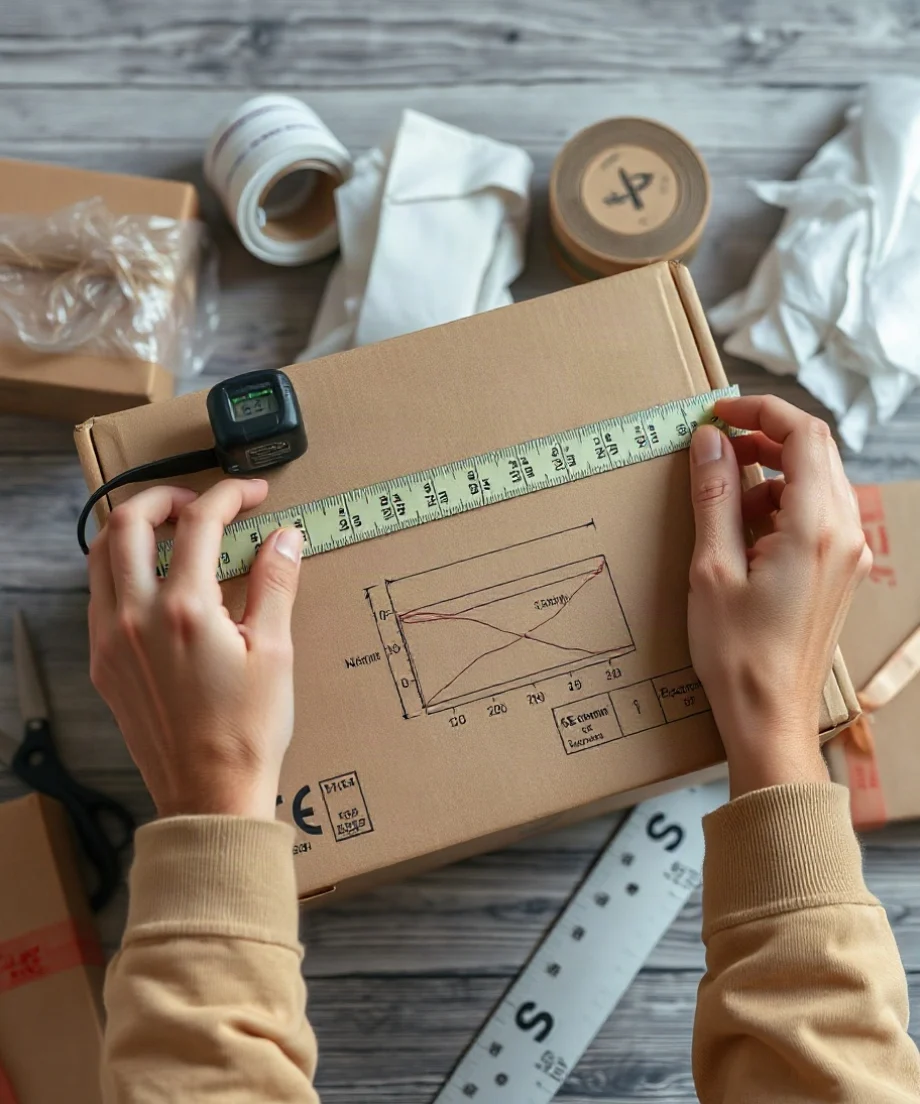
For a standard rectangular carton, an outside measurement of 16 inches long, 10 inches wide, and 8 inches high is written as 16 × 10 × 8 inches. Do not rewrite it as 16 × 8 × 10 simply because the box is rotated during packing unless the form specifically defines the orientation differently.
Inside Dimensions vs. Outside Dimensions
One of the most important details is whether the listed measurements describe the inside or outside of the box. These dimensions are not interchangeable.
Inside dimensions describe the usable space available for the product and cushioning. They help you decide whether an item will fit. Outside dimensions describe the package’s external footprint, including the walls and usually the closed flaps. They are more relevant to shipping labels, carrier size checks, storage space, and dimensional-weight calculations.
A box labeled 12 × 10 × 8 inches may have slightly less interior space because the cardboard has thickness. If the item is close to the stated size, check the manufacturer’s specification or measure the box yourself. A product that exactly matches the inside dimensions may not fit once protective wrap, corner padding, or other materials are added.
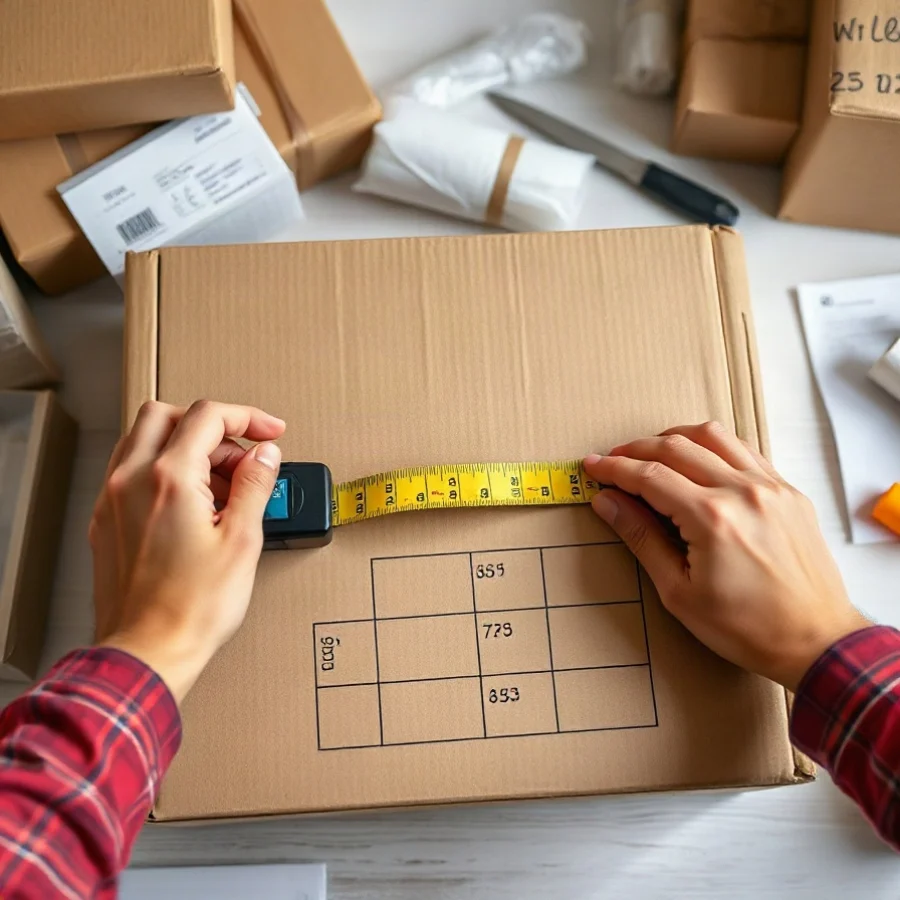
When comparing package sizes, look for wording such as “inside dimensions,” “internal dimensions,” “usable dimensions,” “outside dimensions,” or “assembled dimensions.” If the listing does not clarify the measurement type, contact the seller or use a physical sample before ordering a large quantity.
How to Measure a Box Correctly
Measure an assembled box
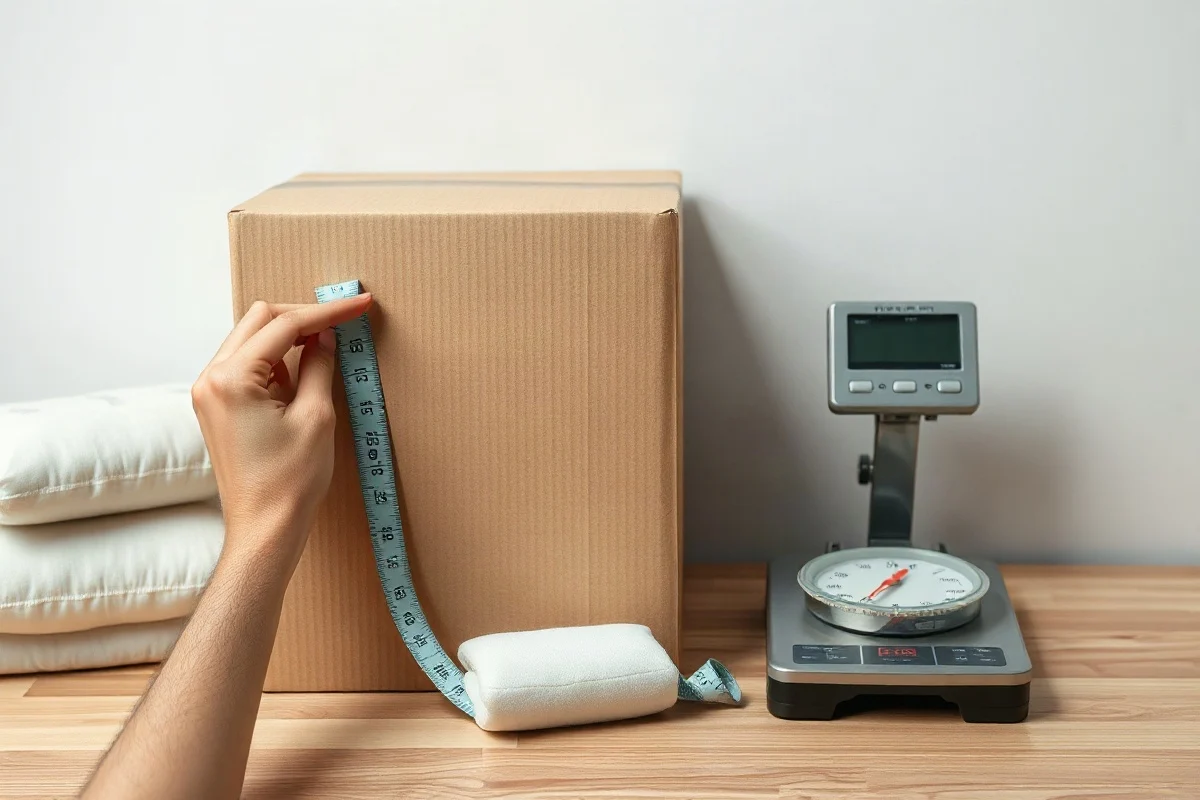
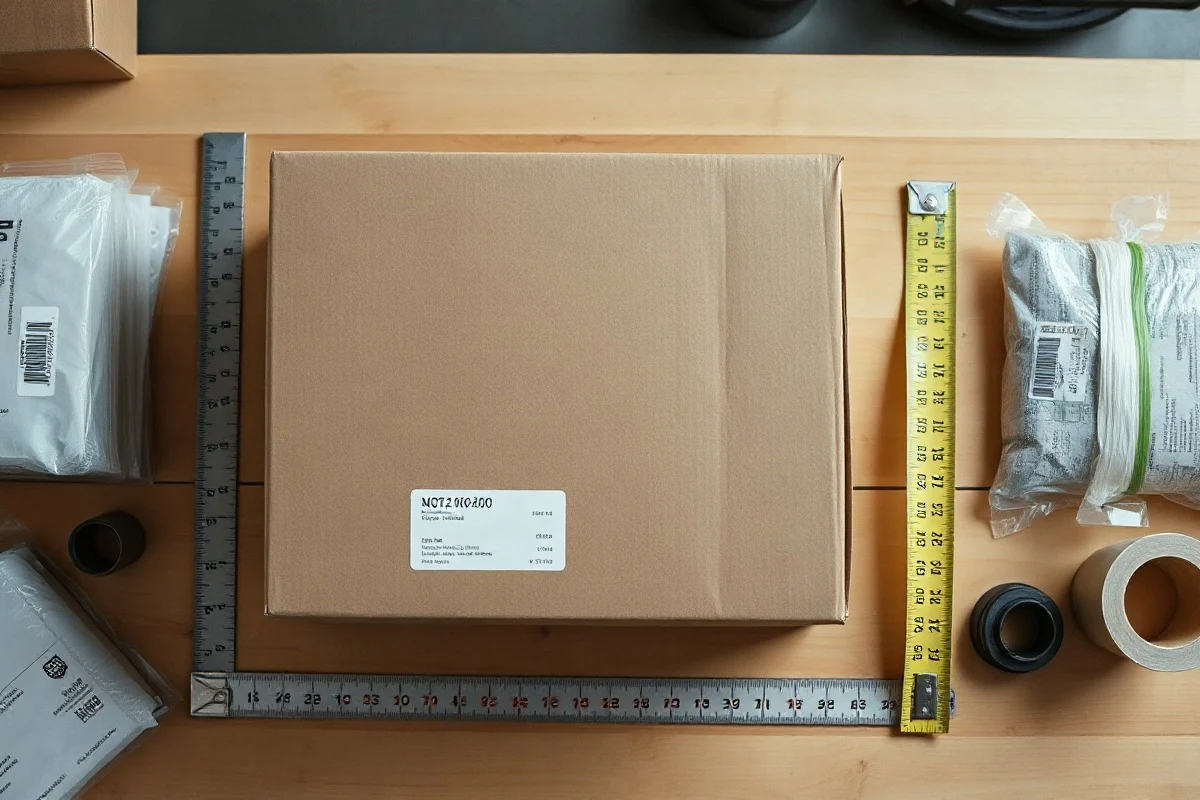
For a closed shipping carton, use a rigid tape measure or ruler and measure the outside of the package. Keep the tape straight and measure from edge to edge rather than following the curve of a bulging side.
- Place the box on a level surface.
- Identify the longest outside panel or edge and measure it from end to end. Record this as the length.
- Measure the perpendicular side of the base or opening for the width.
- Measure from the bottom surface to the highest point of the closed box for the height.
- Record all three measurements in the same unit, such as inches or centimeters.
Measure the box after it is packed and closed if the goal is to create a shipping label. Tape, protruding flaps, an overfilled carton, or a soft package that expands under pressure can change the final dimensions. For a rigid box, measure the largest external points that a carrier or automated dimensioning system could detect.
Measure a flat box blank
A flat, unfolded carton is not measured the same way as a sealed box. Its panels, flaps, score lines, and manufacturer’s board thickness must be assembled before you can determine the package’s final outside dimensions. If the carton is supplied flat, use the manufacturer’s assembled dimensions when available.
Do not add every panel measurement together and call that result the box length, width, and height. That calculation describes the flat layout, not the space or external size of the finished carton.
Measure irregular packages
For a soft mailer, padded envelope, or package with an unusual shape, measure the longest length, the widest width, and the greatest thickness after the item is packed. Avoid compressing the package while measuring. If the package has a bulge, use the maximum dimensions rather than the average dimensions.
Irregular packages may be subject to special carrier handling or measurement rules. Before buying postage, review the current requirements for the selected carrier and service. A package can qualify as a rectangular parcel for one service but be handled differently by another.
How Box Dimensions Affect Shipping
Package dimensions can affect more than whether an item fits in a carton. They may influence shipping charges, oversize handling, storage charges, and whether a shipment meets a service’s size requirements. These rules vary by carrier, service level, package type, destination, and date, so check the current official source before relying on a size limit or fee.
Many shipping systems use both actual weight and dimensional weight. Dimensional weight estimates the amount of transportation space a package occupies. A common general formula is:
Dimensional weight = (length × width × height) ÷ dimensional divisor
The divisor is not universal. It can differ by carrier, service, destination, package type, and account terms. Some services also apply rounding rules or compare dimensional weight with actual weight before determining the billable weight. Do not assume that a divisor found in an old chart or another carrier’s calculator still applies. Use the carrier’s current calculator or published terms for the shipment you are preparing.
For example, a package measuring 20 × 12 × 10 inches has a volume of:
20 × 12 × 10 = 2,400 cubic inches
You would then divide 2,400 by the applicable dimensional divisor, if the service uses dimensional weight. That result is only an example of the calculation structure; it is not a quote or a universal billable-weight rule. You can also use a dimensional weight calculator and then confirm the result against the selected carrier’s current terms.
Calculating Cubic Volume
To find the rectangular volume of a box, multiply its three dimensions:
Volume = length × width × height
If the box is 14 × 9 × 5 inches:
14 × 9 × 5 = 630 cubic inches
Cubic volume is useful for comparing cartons, estimating storage space, planning pallet layouts, and preparing dimensional-weight calculations. It does not tell you whether a product will fit because usable interior space is smaller than the outside volume and because the item may need clearance for cushioning.
For a closer fit, compare the product’s dimensions with the box’s inside dimensions. Leave enough room for protective material without forcing the product into the carton. At the same time, avoid choosing a much larger box than necessary, since unused space can increase material use and may increase transportation costs when dimensional weight applies.
Converting Box Dimensions Between Units
Use one unit consistently across all three measurements. In the United States, shipping forms commonly request inches and pounds, but product specifications may be listed in centimeters and kilograms.
Useful length conversions include:
- 1 inch = 2.54 centimeters
- 1 centimeter = 0.3937 inch
- 1 foot = 12 inches
For example, a box measuring 30 × 20 × 15 centimeters can be converted by dividing each measurement by 2.54:
30 cm ≈ 11.81 in
20 cm ≈ 7.87 in
15 cm ≈ 5.91 in
Do not convert only one side. Converting length, width, and height separately keeps the dimensions consistent. Also check whether the shipping system wants exact decimals or whole-number entries. Rounding may affect the final size or weight used by the system, so follow the form’s instructions and the carrier’s stated rounding method.
Common Mistakes When Reading Box Sizes
Assuming the first number is always the longest side
Many listings place length first, but not every manufacturer presents dimensions in the same order. Check the labels or product description instead of relying only on position.
Using interior dimensions for a shipping label
Interior measurements are useful for packing, but the package’s outside dimensions are generally the relevant measurements for the final parcel. Confirm the selected carrier’s measurement instructions.
Measuring before the box is fully closed
Open flaps can extend beyond the final height, while an overfilled carton can swell after sealing. Measure the finished package when preparing a label.
Ignoring cushioning and clearance
A product that measures 10 inches long may not fit in a box with a 10-inch interior length once padding is added. Allow room for the materials needed to protect the item.
Mixing units
Entering length in inches, width in centimeters, and height in inches creates an invalid calculation. Convert every side to the same unit first.
A Practical Box-Selection Process
Start by measuring the product at its widest, longest, and highest points. Add the clearance required for bubble wrap, foam, paper, corner protection, or other cushioning. Then compare those results with the box’s usable interior dimensions.
After packing, close and seal the carton. Measure the outside length, width, and height again. Record the actual finished dimensions, not just the nominal size printed on the carton. If you ship the same product repeatedly, save the finished package measurements in your shipping system and recheck them whenever the box, cushioning, or packing method changes.
For more planning tools, use a box size calculator or browse practical guidance on package dimensions. If you are shipping through a particular carrier, verify the current requirements in its official documentation before purchasing postage, especially for unusually large, heavy, nonrectangular, or international packages.
Reading box dimensions correctly comes down to three habits: identify what each number represents, distinguish inside measurements from outside measurements, and measure the completed package in consistent units. Those simple steps make it easier to choose the right carton, protect the contents, calculate volume, and avoid preventable shipping surprises.
Comments
0No comments yet. Be the first to share a helpful note or question.
Leave a Comment
Your email address will not be published. Comments are reviewed before appearing on the site.