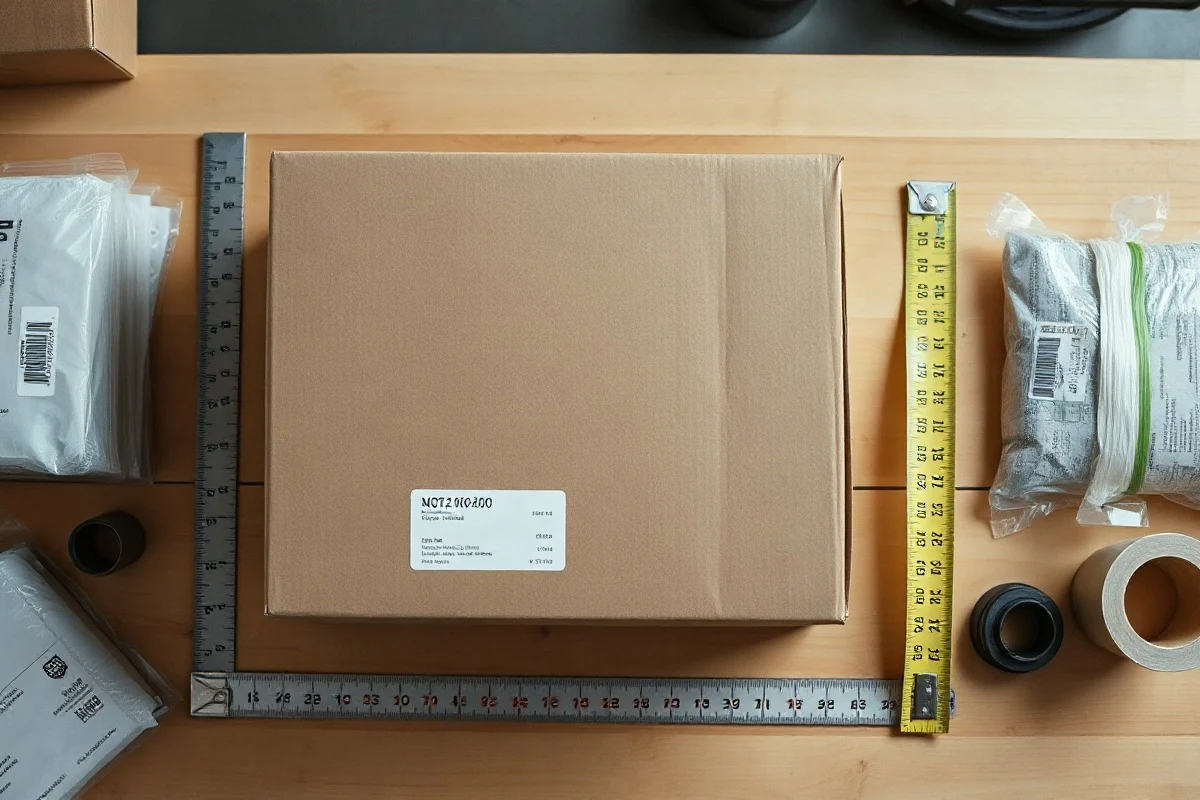
On a box, length, width, and height describe the package’s three outside measurements: the longest side is usually the length, the shorter side across the opening is the width, and the vertical distance is the height. For shipping, measure the outside of the fully packed box, not the product alone, and enter the dimensions in the order requested by the carrier or calculator.
What length, width, and height mean
A rectangular box has three dimensions because it extends in three directions. These measurements are commonly written as length × width × height, such as 12 × 8 × 6 inches.
- Length: Usually the longest horizontal side of the box.
- Width: The shorter horizontal side, measured across the box.
- Height: The vertical distance from the bottom of the box to the top when the box is standing in its normal position.
The order matters when a form asks for specific fields, although multiplying the three numbers produces the same cubic volume regardless of order. A box listed as 12 × 8 × 6 inches has the same volume as one listed as 8 × 12 × 6 inches, but entering the dimensions in the wrong fields can cause confusion or affect rules that identify a longest side, girth, or dimensional category.
How to identify each dimension
Start by placing the box in a stable position with the opening or top facing upward. Look at the top panel. The longer horizontal edge is generally the length, and the shorter horizontal edge is the width. Then measure from the bottom surface to the top surface to find the height.
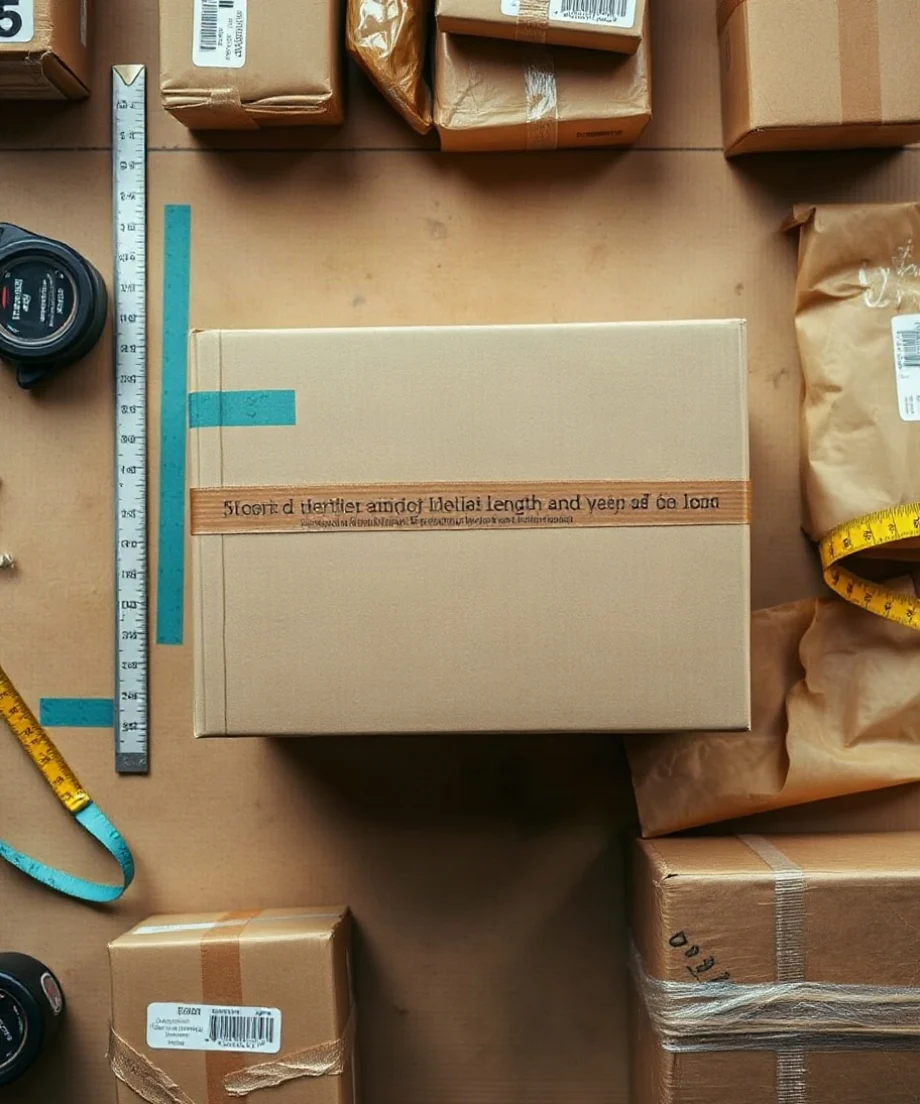
This convention is common, but packaging manufacturers do not always label dimensions in exactly the same way. A box may be described by its outside dimensions, inside dimensions, or a manufacturer’s own length-width-height convention. If you are comparing a product to a box, confirm whether the listed measurements refer to the usable interior or the exterior.
Outside dimensions versus inside dimensions
Inside dimensions describe the space available for the product and cushioning. They are useful when deciding whether an item will fit.
Outside dimensions describe the full exterior of the assembled box. They include the thickness of the cardboard and are the measurements normally needed for shipping quotes, carrier limits, and dimensional-weight calculations.
For a shipping label or rate estimate, use the outside dimensions after the box has been packed and sealed. If the box bulges, has a loose flap, or contains padding that changes its shape, measure the package in the condition in which it will actually be handed to the carrier.
How to measure a box correctly
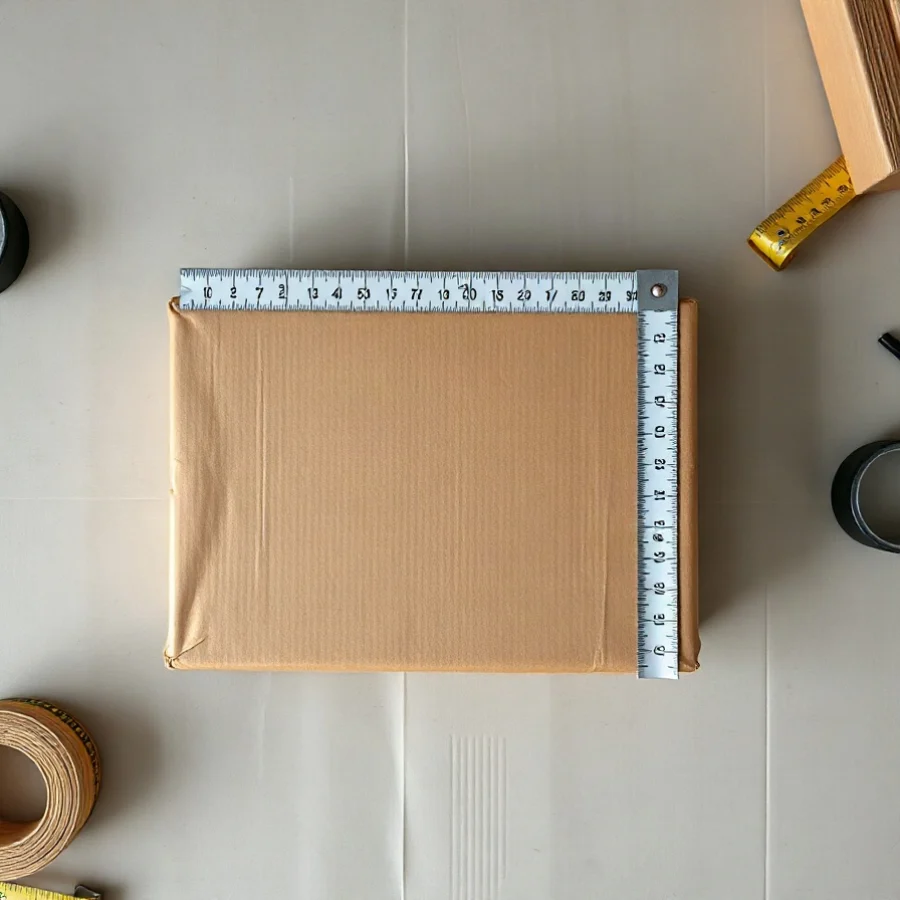
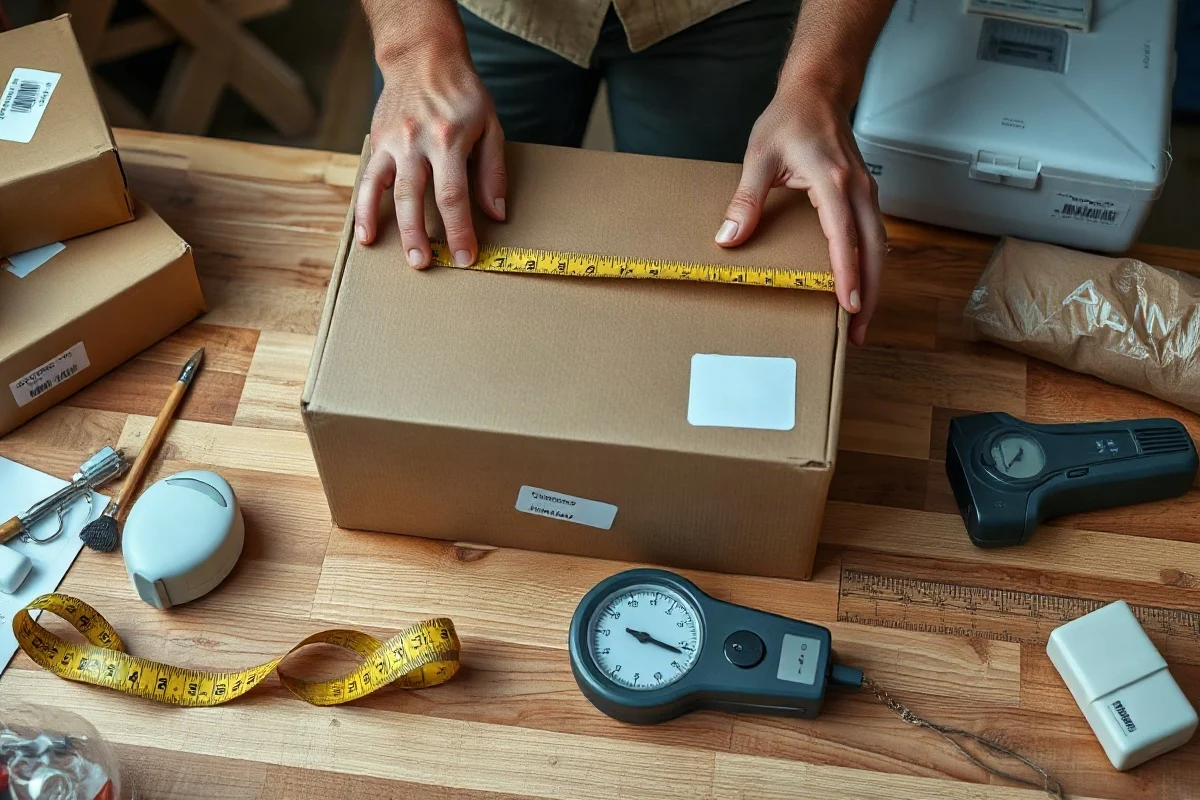
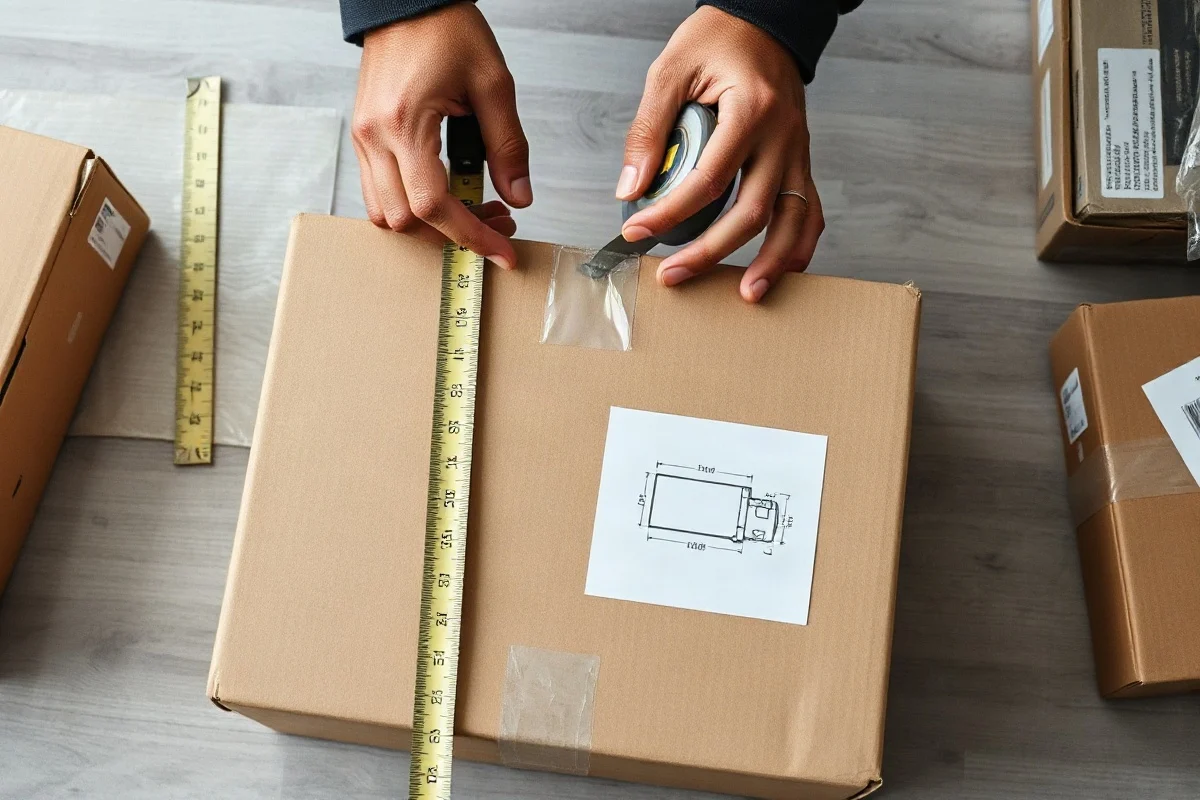
Use a rigid tape measure or ruler rather than a flexible measuring tape. Measure to the nearest whole inch when the carrier or shipping tool asks for whole numbers. If it accepts fractions or decimals, follow that tool’s instructions and use the same unit for all three dimensions.
- Assemble the box. Fold and close the flaps as they will be closed for shipping.
- Pack the contents. Add the product, void fill, inserts, and other materials that will remain inside.
- Seal the package. Apply tape before taking the final measurements.
- Measure the longest side. This is normally the length.
- Measure the side perpendicular to the length. This is normally the width.
- Measure the remaining vertical side. This is the height.
- Record the measurements in the requested order. Write them as length × width × height unless the form specifies another order.
Measure from the outside edges, including any part of the box that extends beyond a flat panel. Do not press down a soft or flexible package to make it smaller unless the shipping instructions specifically explain how to measure that package type. For irregular parcels, the carrier may use the smallest rectangular shape that can contain the package, or another measurement method. Check the current rules for the service you plan to use.
Example: measuring a common shipping box
Imagine a sealed box with an exterior length of 12 inches, a width of 8 inches, and a height of 6 inches. Its listed dimensions are:
12 × 8 × 6 inches
Here, 12 inches is the longest horizontal side, 8 inches is the shorter horizontal side, and 6 inches is the vertical side. If the box is turned on its side, its physical dimensions do not change. You may see the same box described as 8 × 12 × 6 or 6 × 8 × 12, but a shipping form that asks specifically for length, width, and height should use the form’s required convention.
To calculate the box’s cubic volume, multiply the three dimensions:
12 × 8 × 6 = 576 cubic inches
Cubic volume helps compare package capacity and may be used in dimensional-weight formulas. It does not by itself tell you the shipping price. Actual charges can depend on the carrier, service, destination, package weight, billable-weight rules, oversize provisions, and the date of shipment.
Why the dimensions matter for shipping
Shipping companies use package dimensions for more than identifying a box. The measurements can affect whether a parcel qualifies for a service, whether it falls within a maximum size rule, and whether its billable weight is based on space rather than physical weight.
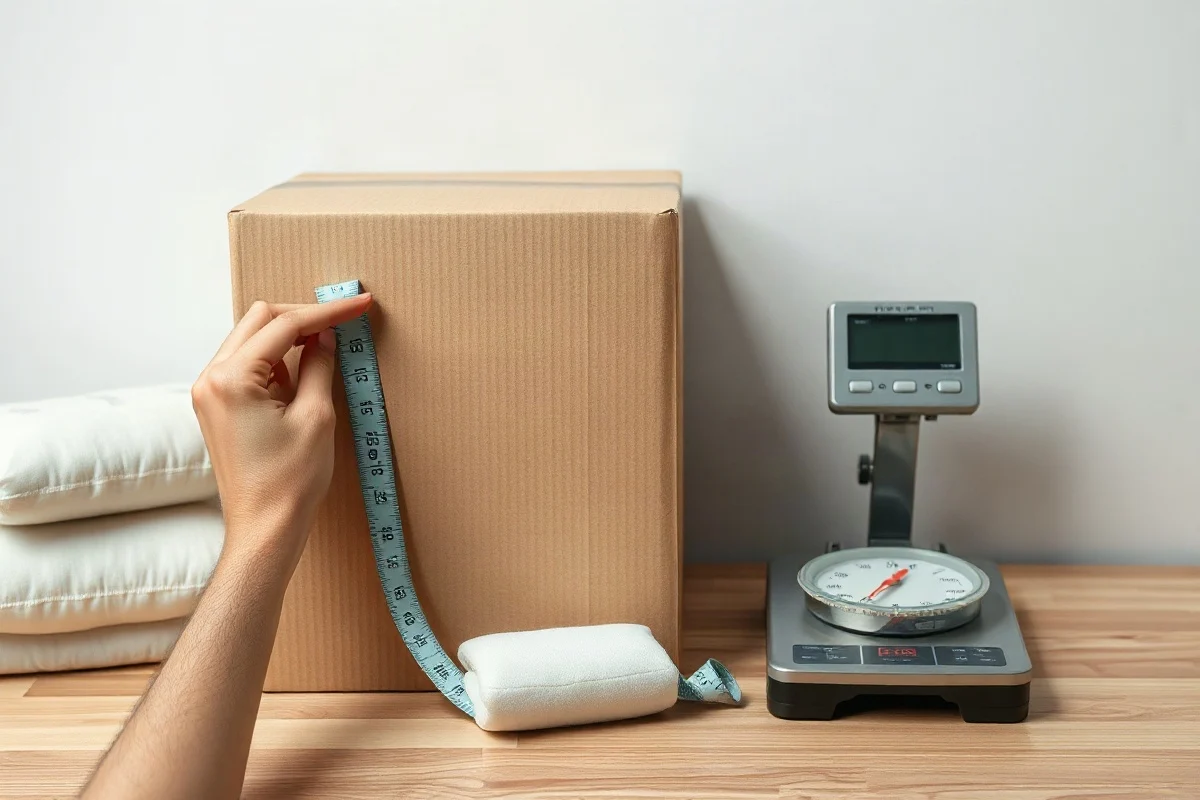
A lightweight box filled with pillows may take up much more vehicle or aircraft space than its scale weight suggests. In that situation, a carrier may compare the actual weight with a dimensional-weight calculation and charge according to the applicable billable-weight rule. The divisor and rounding method can vary by carrier, service, destination, and current policy, so do not assume one formula applies to every shipment.
For a quick estimate, use the dimensional weight calculator after confirming the current divisor and rounding instructions for your selected service. You can also review the carrier-specific guides for USPS, UPS, and FedEx. Always verify final size limits, fees, and measurement rules on the carrier’s current official website before shipping.
Length, width, and height in dimensional-weight formulas
A common dimensional-weight structure is:
Length × width × height ÷ applicable dimensional divisor
The result is usually expressed as a weight unit, such as pounds, when the dimensions are entered in inches and the carrier’s formula uses an inch-based divisor. The exact divisor is not universal. Some services also round dimensions before calculating, round the calculated weight upward, or apply special rules to large or irregular packages.
For this reason, accurate outside measurements matter. Being off by even an inch on several sides can increase the calculated volume, especially for a large box. Use the same measurement units throughout and avoid mixing inches with centimeters.
Converting box dimensions between inches and centimeters
In the United States, shipping forms commonly request inches and pounds, but international services and manufacturers may use centimeters and kilograms.
- Inches to centimeters: multiply inches by 2.54.
- Centimeters to inches: divide centimeters by 2.54.
For example, a 12 × 8 × 6 inch box is approximately 30.48 × 20.32 × 15.24 centimeters. Keep extra precision during conversion, then round only according to the destination form’s instructions. A small difference caused by early rounding can affect a size threshold or a dimensional-weight result.
How to choose the right box dimensions
The best box is not necessarily the largest box that fits the product. A box with too much empty space requires more cushioning, may increase the package’s outside dimensions, and can raise dimensional-weight exposure. A box that is too small can crush the contents or place stress on the seams and flaps.
Allow room for protective packaging
Measure the product first, then account for cushioning on every side. Fragile items may need more clearance than durable items. Include corner protection, molded inserts, bubble cushioning, paper, foam, or other materials that will occupy space inside the box.
Leave enough room to close the flaps
Do not calculate the box size based only on the product’s length, width, and height if the product protrudes above the box walls. The flaps must close without excessive pressure, and the finished package should have a reasonably flat, secure exterior.
Consider the final outside size
Two boxes with the same interior capacity can have different exterior dimensions because of different wall thicknesses or construction styles. When comparing shipping options, use the final outside dimensions rather than relying only on the box manufacturer’s interior measurements.
Common measurement mistakes
- Measuring the product instead of the package: Shipping dimensions normally describe the sealed parcel.
- Using inside dimensions for a rate quote: Exterior dimensions are usually required for carrier calculations.
- Ignoring tape, bulges, or protruding flaps: Measure the finished package, including its largest outside points.
- Guessing from a box label: A printed size may be nominal, interior, exterior, or rounded.
- Mixing measurement systems: Enter all three dimensions in inches or all three in centimeters.
- Reversing fields on an online form: Enter length, width, and height according to the form’s labels.
- Measuring before packing: Added cushioning can change the final box size.
When the package is not a rectangular box
Poly mailers, padded envelopes, tubes, triangular packages, and irregular parcels may not have three obvious box dimensions. A carrier or marketplace may require the package’s length, width, and height anyway, often based on the smallest rectangular enclosure that could contain it. Other rules may define length as the longest side and use girth or another measurement for the remaining dimensions.
Because these methods vary, check the current instructions for the carrier, service, marketplace, or label platform you are using. Do not apply a rectangular-box formula to an irregular package unless the applicable instructions support it.
A practical checklist before buying a label
- Pack the product completely.
- Seal the package as it will travel.
- Measure the outside length, width, and height.
- Confirm whether the label system requests inches, centimeters, or another unit.
- Weigh the finished parcel.
- Check the carrier’s current size, weight, rounding, and dimensional-weight rules.
- Enter the dimensions in the requested order.
- Save the measurements for repeat shipments, then recheck them if the packaging changes.
Accurate dimensions begin with a simple habit: measure the sealed package, not an idealized version of the box. For more package-planning help, use the Box Size Calculator and browse the latest guidance in our package dimensions guide. When a carrier or marketplace has a rule that can change, its current official documentation should be the final source for the shipment.
Comments
0No comments yet. Be the first to share a helpful note or question.
Leave a Comment
Your email address will not be published. Comments are reviewed before appearing on the site.