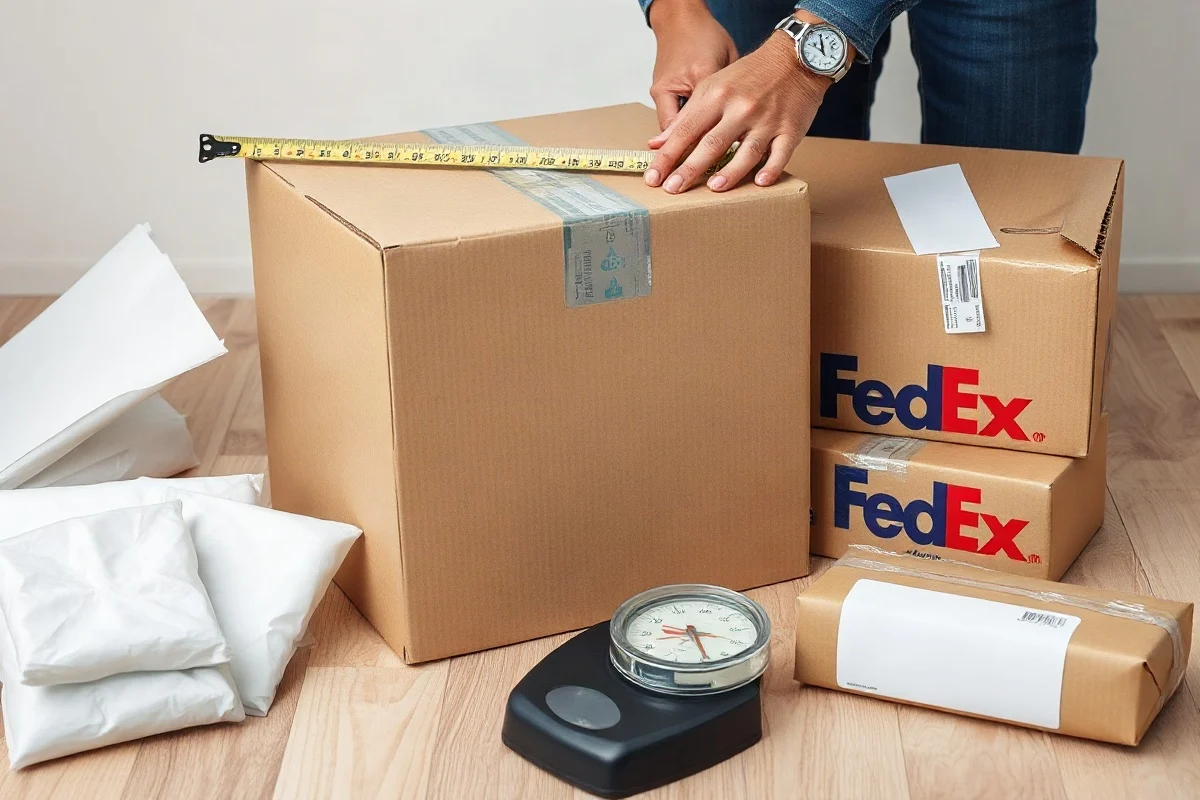
The best box size for FedEx shipping is the smallest sturdy box that fits your item, protective material, and required paperwork without forcing or crushing the contents. Start by measuring the product, add enough clearance for cushioning on every side, and then compare the finished package’s actual weight with its dimensional weight. The right box is not always the smallest box available: an oversized carton can increase shipping charges, while an undersized carton can damage the item.
Start with the item, not the shipping label
Before choosing a carton, measure the item you are actually shipping. Do not rely only on the manufacturer’s advertised dimensions. Products may have handles, corners, protruding parts, removable accessories, or packaging that changes the space they need.
Measure the item at its longest, widest, and tallest points. Use the same unit throughout the process, usually inches in the United States. If the product is soft or flexible, measure it in the shape it will have inside the box. If it is fragile, allow room for the protective materials that will surround it.
For multiple items, place them together in the arrangement that uses the least space while keeping them from touching in ways that could cause damage. Then measure the combined arrangement. Do not simply add each item’s length, width, and height unless the items will actually be stacked or positioned that way.
How much extra space should the box have?
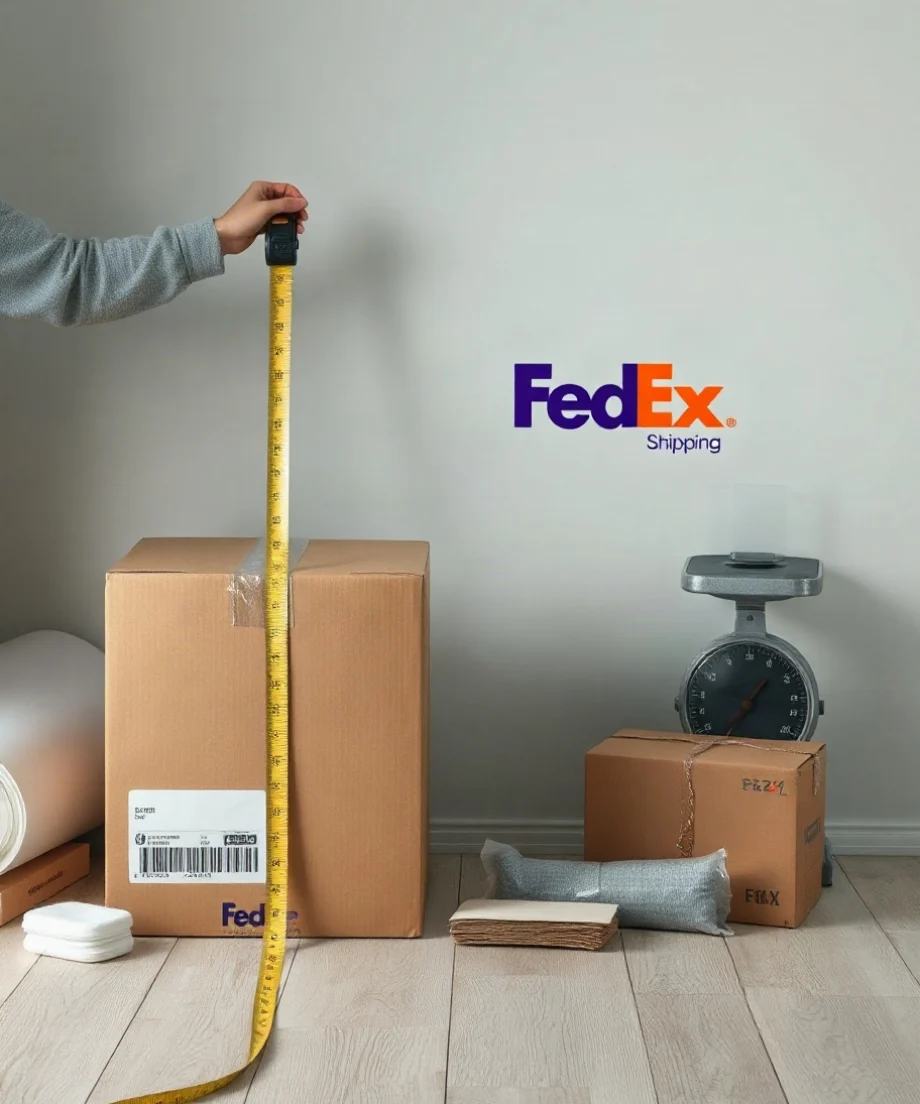
A box needs enough interior space for cushioning, but empty space should not be excessive. As a practical starting point, allow about 1 to 3 inches of clearance on each side of a fragile item, depending on its strength, shape, and the type of cushioning used. A durable product may need less. Glass, ceramics, electronics, and items with delicate finishes may need more protection and a stronger box.
Think in terms of interior clearance. If an item measures 12 by 8 by 4 inches and you want 2 inches of cushioning around every side, the approximate interior box dimensions should be:
- Length: 12 + 2 + 2 = 16 inches
- Width: 8 + 2 + 2 = 12 inches
- Height: 4 + 2 + 2 = 8 inches
This gives a target interior size of about 16 by 12 by 8 inches. The outside dimensions will be slightly larger because of the carton walls. When shopping for a box, choose a carton whose usable interior space is close to this target, rather than assuming the printed outside dimensions are exact.
Some boxes have thick walls, built-in inserts, or flaps that reduce usable space. If a box is advertised by its outside measurements, account for that difference. When precise fit matters, measure the inside of the box or check the manufacturer’s specifications.
Common box choices for FedEx shipments
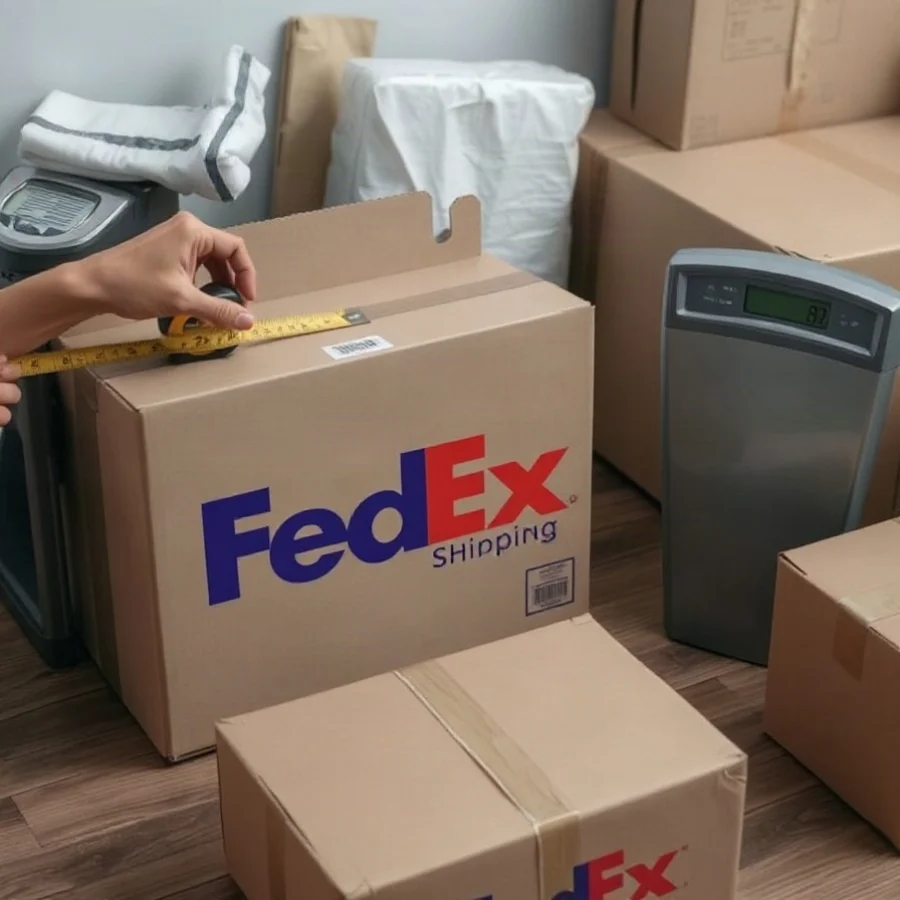
The best carton depends on the product and the service you select. A small single-wall corrugated box may work well for books, clothing, household goods, and other durable items. A stronger carton with reinforced construction is a better choice for heavier products or shipments that will experience more handling.
Small boxes
Small cartons are useful for compact, dense products such as accessories, tools, small electronics, and boxed merchandise. They usually reduce empty space and can help control dimensional weight. Fill gaps so the item cannot move, but do not compress the contents or overfill the carton.
Medium boxes
Medium cartons are flexible for clothing, shoes, kitchen items, small appliances, and several related products packed together. Use dividers, paper, foam, or other suitable material when items could strike one another. A medium box should not become a loose collection of objects surrounded by a small amount of filler.
Large boxes
Large cartons are appropriate only when the product truly needs the space. They can be difficult to handle and may be charged based on dimensional weight rather than actual weight. For large but lightweight items, compare several box designs before packing. Two smaller cartons may be more practical than one oversized carton, although shipping multiple packages can change the total cost and service details.
Measure the completed package correctly
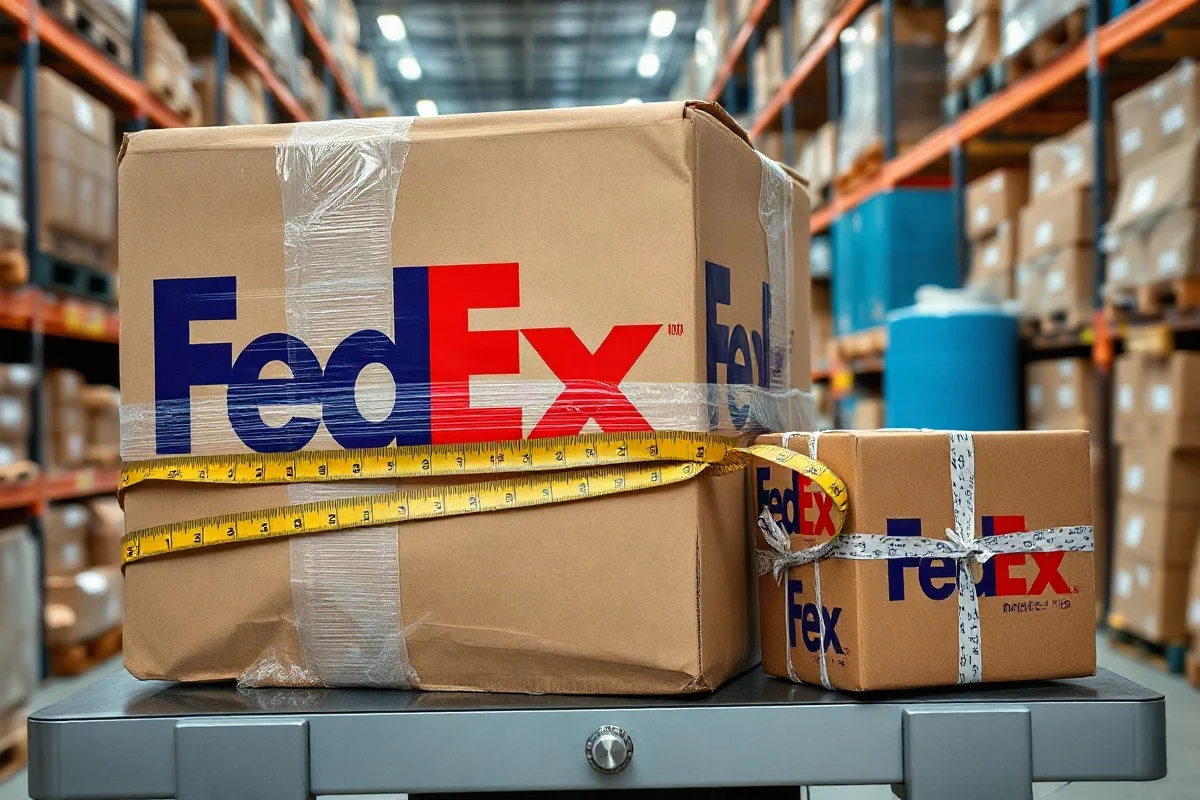
After packing, close and seal the box as it will travel. Then measure the outside dimensions, including any part that extends beyond the main carton. Record length, width, and height in the order required by the shipping tool or label system. For a rectangular box, length is normally the longest side. The other two measurements are width and height.
Round measurements consistently. If the package is close to a whole-inch boundary, use the measurement and rounding method required by the current FedEx shipping system, rate quote, or account process. Do not assume that a fraction of an inch will always be ignored. Small differences can matter when a package crosses a dimensional or size threshold.
For irregular packages, measure the greatest outside length, width, and height. Bulges, rounded sides, exposed handles, and uneven packing can affect how the package is classified. If the shipment uses a tube, soft-sided mailer, crate, or another nonrectangular package, check the current FedEx requirements for that package type before buying a label.
Actual weight versus dimensional weight
Shipping charges may be based on the package’s actual weight or its dimensional weight, depending on the shipment and the applicable FedEx service rules. Dimensional weight represents the amount of space a package occupies in a vehicle or aircraft.
The general calculation is:
Dimensional weight = length × width × height ÷ dimensional divisor
The applicable divisor can vary by carrier, service, package type, destination, account terms, and current pricing rules. Because it can change, do not use an old divisor copied from another shipment as a universal FedEx rule. Enter the completed package dimensions into the current FedEx rate tool or verify the applicable divisor in the official service documentation. You can also use the dimensional weight calculator to understand the calculation, then confirm the result with the current carrier quote.
For example, imagine a package measuring 20 by 14 by 10 inches. Its dimensional volume is:
20 × 14 × 10 = 2,800 cubic inches
That volume is not yet a billable weight. You must divide it by the applicable dimensional divisor and follow the current rounding rules. Compare that result with the package’s actual scale weight. The chargeable weight may be the greater of the two, but the exact treatment should be confirmed for the FedEx service and shipment you are using.
Reducing a box from 20 by 14 by 10 inches to 18 by 12 by 8 inches changes the volume from 2,800 cubic inches to 1,728 cubic inches. That is a substantial reduction in occupied space, even though the product inside has not changed. This is why careful box selection matters for lightweight products.
How to choose between two possible boxes
If two cartons both protect the item, compare them using four questions:
- Which box leaves less empty space? Less unused volume generally makes packing easier and may reduce dimensional weight.
- Which box provides enough protection? The smaller carton is not better if it leaves no room for cushioning or puts pressure on the item.
- Which carton is strong enough? Heavy contents need a box that can support the load without collapsing or tearing.
- Which option is practical to handle? A long, wide, or awkward carton may be harder to seal, label, stack, and deliver safely.
When the cost difference is important, get a quote for the sealed package using its final dimensions and weight. A box that appears cheaper to purchase may create higher transportation charges if it adds significant volume.
Pack the box so the measurements remain accurate
Use clean, dry corrugated packaging that is free from old labels and markings that could confuse scanning. Place a cushioning layer on the bottom, center the item, and fill the remaining gaps. The item should not slide when the box is gently moved, but the packing material should not deform or damage it.
For multiple items, wrap or separate products that could scratch, dent, or break one another. Keep heavier items below lighter items when the package contains several products. If the contents have sharp edges, cover them before adding filler. Liquids require special care: seal the container, use leak-resistant secondary protection, and check current FedEx rules for the product and destination.
Close the flaps evenly and use strong packing tape across the main seams. For a heavy or large shipment, reinforce the seams and consider whether the carton needs strapping or a stronger construction. Do not depend on string, household gift wrap, or weak tape as the primary closure.
Check FedEx requirements before buying the label
FedEx package limits, surcharges, dimensional-weight treatment, prohibited items, and service conditions may vary by service level, destination, package type, account, and date. A box that is acceptable for one shipment may require additional handling or may not qualify for another service.
Before purchasing postage, enter the final package dimensions and actual weight into the current FedEx rate or shipping tool. Review any alerts related to size, additional handling, declared value, dangerous goods, address type, or delivery service. If the shipment is unusually large, heavy, fragile, irregular, or international, check the current official FedEx documentation rather than relying on a general box-size chart.
For more carrier-specific packing guidance, see the FedEx Package Guide. You can also compare your product measurements with the Box Size Calculator before selecting a carton.
A practical box-selection checklist
- Measure the product at its longest, widest, and tallest points.
- Decide how much cushioning the item needs on every side.
- Calculate a target interior box size.
- Choose a carton with enough strength for the item’s weight.
- Pack the item so it cannot shift, rattle, or press against the walls.
- Seal the box before taking final measurements.
- Measure the outside length, width, and height.
- Weigh the completed package on a reliable scale.
- Compare actual weight with dimensional weight using current FedEx rules.
- Check the current official FedEx requirements before buying the label.
In most cases, the right FedEx box is a close-fitting, durable carton with enough room for protection and no unnecessary air space. Measure the finished package rather than guessing from the product description, and make the final decision using the current FedEx quote for the exact service and destination.

Comments
0No comments yet. Be the first to share a helpful note or question.
Leave a Comment
Your email address will not be published. Comments are reviewed before appearing on the site.