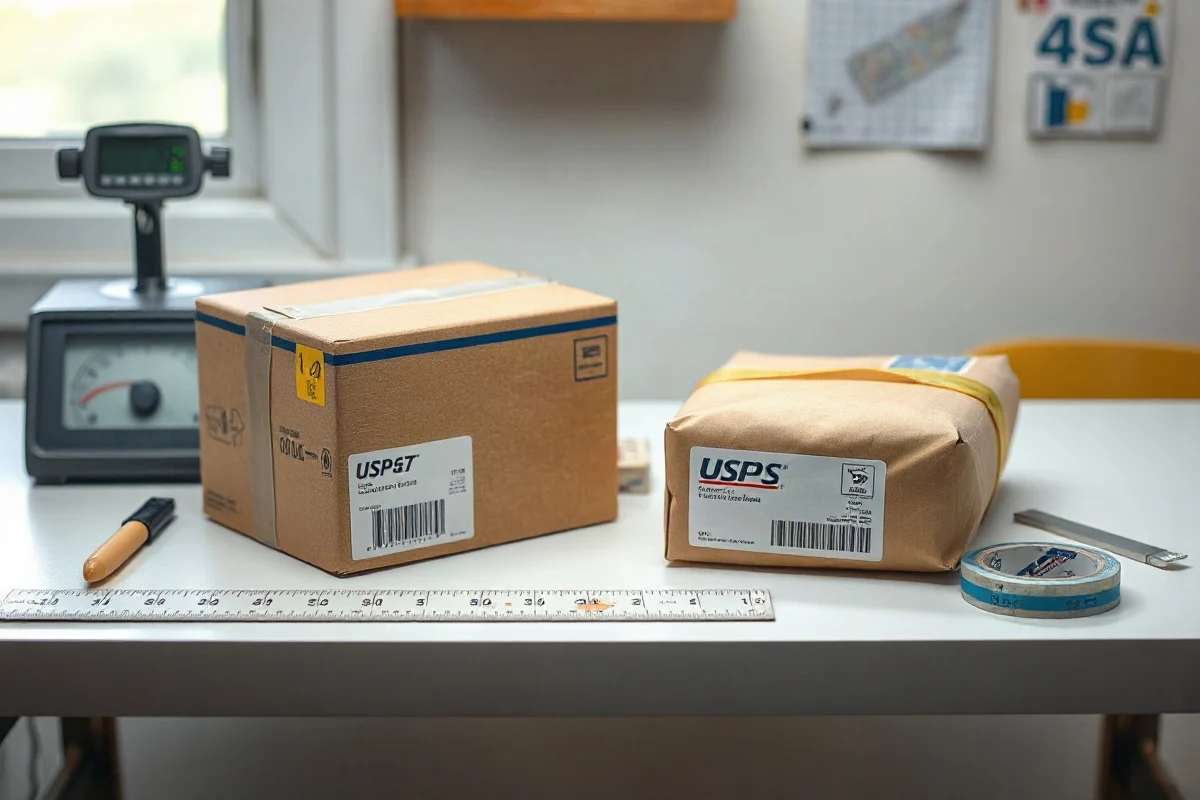
If you are searching for USPS First-Class Mail package size and weight requirements, the most important update is that USPS no longer lists First-Class Package Service as the standard name for lightweight parcels. That service was replaced by USPS Ground Advantage. First-Class Mail still applies mainly to letters, cards, and flats, while packages are generally handled under a package service such as Ground Advantage. Because USPS requirements, prices, and acceptance rules can change, check the current USPS service page and postage calculator before mailing.
The practical rule is simple: choose a service that accepts your package type, weigh the fully packed parcel, measure its outside dimensions, and compare those measurements with the current limits for the destination and service you select. Do not rely only on the product name “First-Class,” because a letter, a flat, and a parcel can have different preparation and pricing rules.
What “First-Class package” means today
Many online sellers and shipping guides still use “First-Class Package” because it was a familiar USPS service name. USPS moved that package service into Ground Advantage, which combines features previously associated with lightweight package services. As a result, an older listing, marketplace setting, or shipping template may use terminology that no longer matches the current USPS product.
First-Class Mail remains a separate mail category for items such as machinable letters, nonmachinable letters, and flats. A small box or padded mailer containing merchandise should not automatically be treated as a First-Class Mail letter or flat. Its thickness, flexibility, shape, and contents may place it in a package category instead.
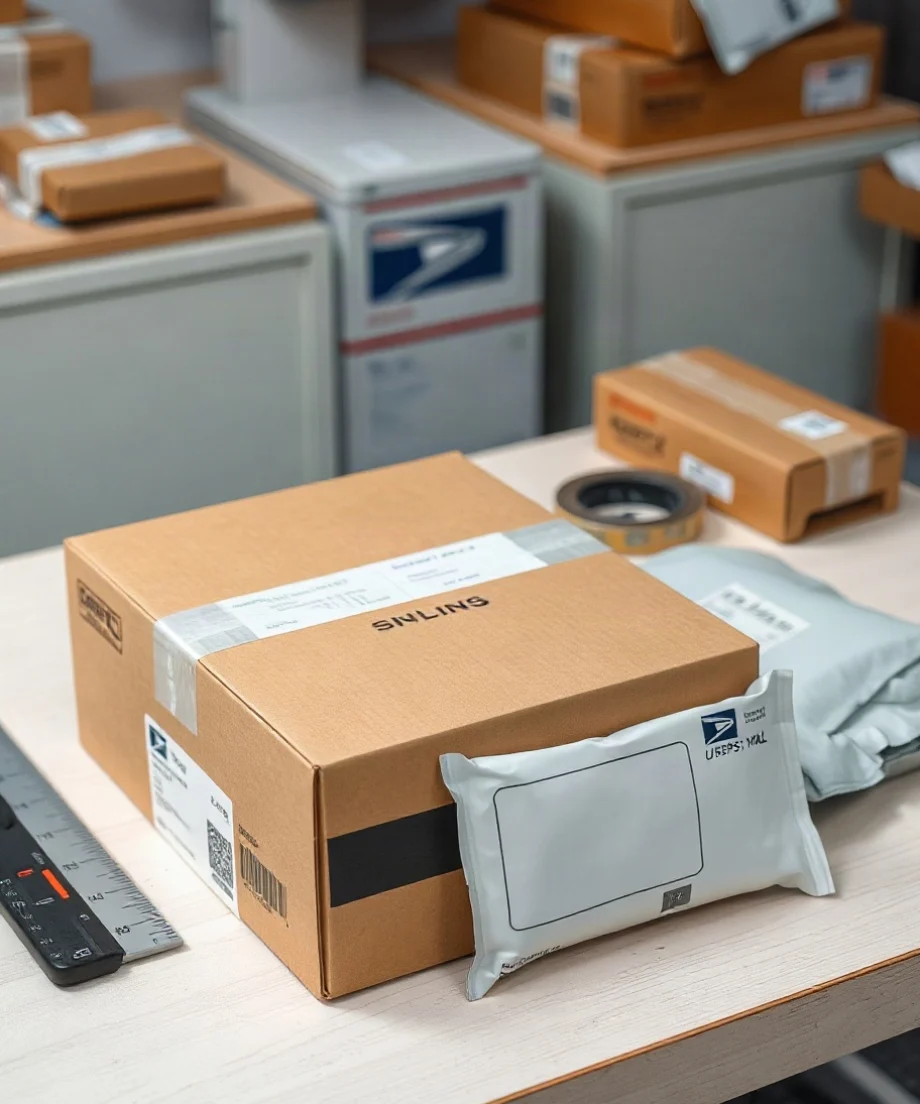
Before buying postage, confirm these details:
- Whether the item is a letter, flat, or package
- The current USPS service available for its weight and dimensions
- Whether the destination is domestic, international, military, or a U.S. territory
- Whether the package has unusual characteristics, such as an irregular shape or restricted contents
- The current price, maximum weight, and dimensional requirements shown by USPS
For related explanations of length, width, height, and girth, see our guide to package dimensions.
How to measure a USPS package
Measure the package after it is packed and sealed. USPS evaluates the mailing piece as presented for shipment, not as an empty box before padding, tape, or labels are added.
Length, width, and height
For a rectangular box, identify the three outside dimensions:
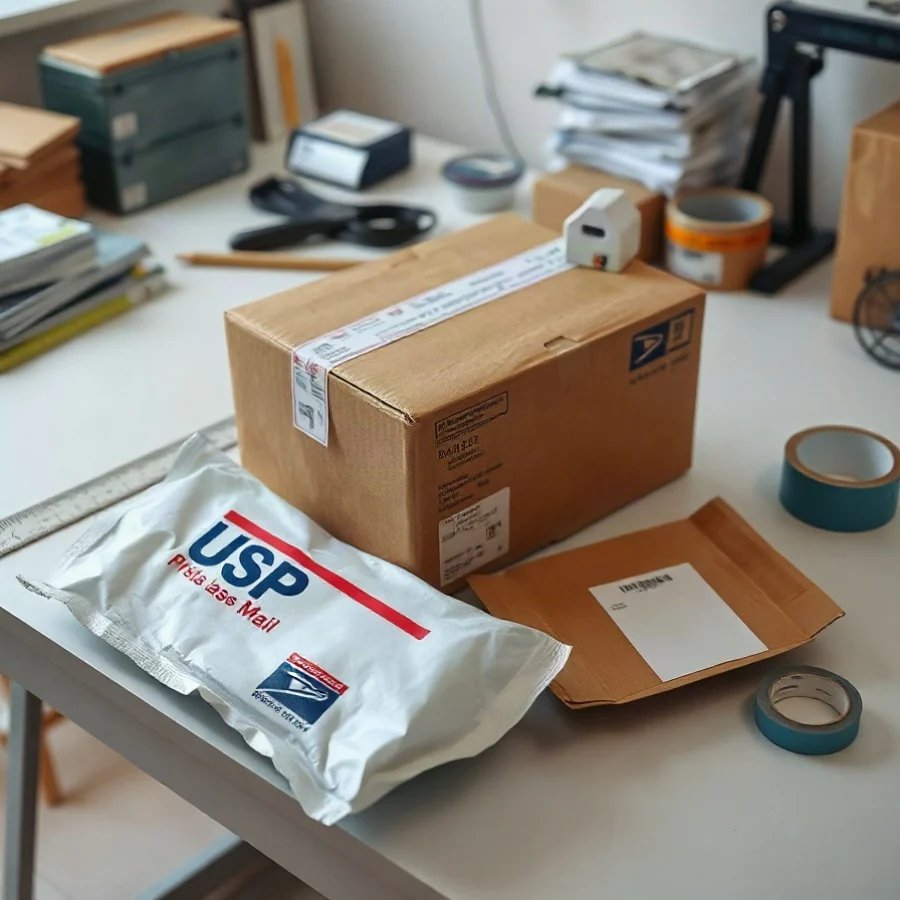
- Length: the longest side
- Width: the side running across the package, usually the next longest side
- Height: the remaining side
For example, a box measuring 12 inches long, 8 inches wide, and 4 inches high should be recorded as 12 × 8 × 4 inches. The order matters less than recording all three measurements accurately, but using a consistent order prevents mistakes when entering information into a postage tool.
Measure from the farthest outside points. Include protruding parts that are part of the package, such as a bulging seam, an attached handle, or an uneven flap. A soft mailer should be measured at its packed thickness, not while it is empty or compressed by hand. If the contents make the package rounded or irregular, use the greatest practical outside measurements.
Length plus girth
Some USPS package limits use length plus girth. Girth is the distance around the package in the direction perpendicular to its length. For a rectangular parcel, calculate it this way:
Girth = 2 × width + 2 × height
Then calculate:
Length plus girth = length + 2 × width + 2 × height
Using a 12 × 8 × 4-inch box:
- Girth = 2 × 8 + 2 × 4 = 24 inches
- Length plus girth = 12 + 24 = 36 inches
This example only demonstrates the measurement method. It does not establish a universal USPS limit for every package service. The applicable maximum can depend on the service, package type, destination, and current USPS rules.
Weight requirements and postage
Weigh the complete package, including the box or mailer, cushioning, tape, label, and contents. A kitchen scale may work for very light parcels, but a shipping scale is easier to read and usually more practical for online sellers. Round or enter the weight exactly as the USPS postage system requests. If the parcel is close to a weight boundary, do not estimate.
Package weight can affect more than the postage amount. It may determine which USPS services are available, whether the item qualifies for a particular rate category, and whether the package must be presented under a different product. Always compare the final packed weight with the current service description rather than assuming that a low-weight item automatically qualifies for a First-Class option.
For some package services, USPS may also apply dimensional requirements or nonstandard fees. These rules can change and may differ from rules used by UPS, FedEx, or a marketplace shipping program. A USPS price shown in an older blog post or saved shipping profile may be outdated.
Package size issues that commonly cause problems
Using an envelope for a thick item
A padded envelope is not automatically treated like a letter. If it is too thick, rigid, lumpy, or irregular for letter or flat standards, it may need to be entered as a package. Entering an incorrect mailpiece type can produce the wrong postage or lead to an adjustment.
Measuring the empty packaging
Box manufacturers often describe boxes by inside dimensions, while shipping forms and carrier systems generally need the outside dimensions of the completed parcel. Padding can also increase the final size. Measure the sealed package whenever possible.
Ignoring bulges and weak seams
An overfilled mailer can expand after it is sealed. A box with a bulging lid may also measure larger than its nominal size. Use a stronger or larger package when necessary, but leave enough room for cushioning without forcing the seams outward.
Assuming the cheapest service is always available
Service availability can vary by package characteristics, destination, mailing date, and the way postage is purchased. A service shown in a marketplace checkout may also have different eligibility rules from postage purchased directly through USPS. Confirm the service at the time of mailing.
How dimensional weight fits into USPS package planning
Dimensional weight is a pricing method that estimates the space a package occupies rather than relying only on its scale weight. It is more commonly associated with larger parcels and commercial carrier services, but USPS package pricing can also include size-related rules or additional charges in specific situations. Do not assume that every small parcel is priced by dimensional weight, and do not apply a UPS or FedEx formula to a USPS shipment without checking the current USPS terms.
The general dimensional-weight concept is:
Dimensional weight = length × width × height ÷ the applicable divisor
The divisor and the circumstances in which dimensional weight applies are service-specific and may change. For a clear overview of the calculation, visit our dimensional weight guide, then verify the current USPS rule before using the result to buy postage.
Practical packing steps for a small USPS parcel
- Choose a box or padded mailer that fits the item without excessive empty space.
- Protect fragile contents with cushioning and prevent movement inside the package.
- Close every seam with suitable shipping tape. Do not depend on string, household wrapping, or a single narrow strip of tape.
- Weigh the sealed package.
- Measure the outside length, width, and height.
- Check whether the package is rectangular, flexible, unusually shaped, or oversized.
- Enter the destination ZIP Code, package type, dimensions, and weight into the current USPS postage tool or an approved postage provider.
- Compare the displayed service with the service name on your shipping label.
- Remove or cover old barcodes and labels before applying the new label.
- Place the label on the largest flat surface and keep it away from seams, corners, and heavy tape.
If you ship frequently, record the final packed dimensions and weight of common products. A small packaging change can affect postage, especially when a mailer becomes thicker or a box moves into a different size category. Our shipping calculators guide can help you organize the information you need before comparing services.
Where to verify current USPS requirements
Use the current USPS service page, Domestic Mail Manual, postage calculator, or a USPS retail clerk for the final decision. Check the official source whenever you see an older reference to First-Class Package Service, a stated maximum weight, a size ceiling, a nonstandard fee, or a special preparation rule.
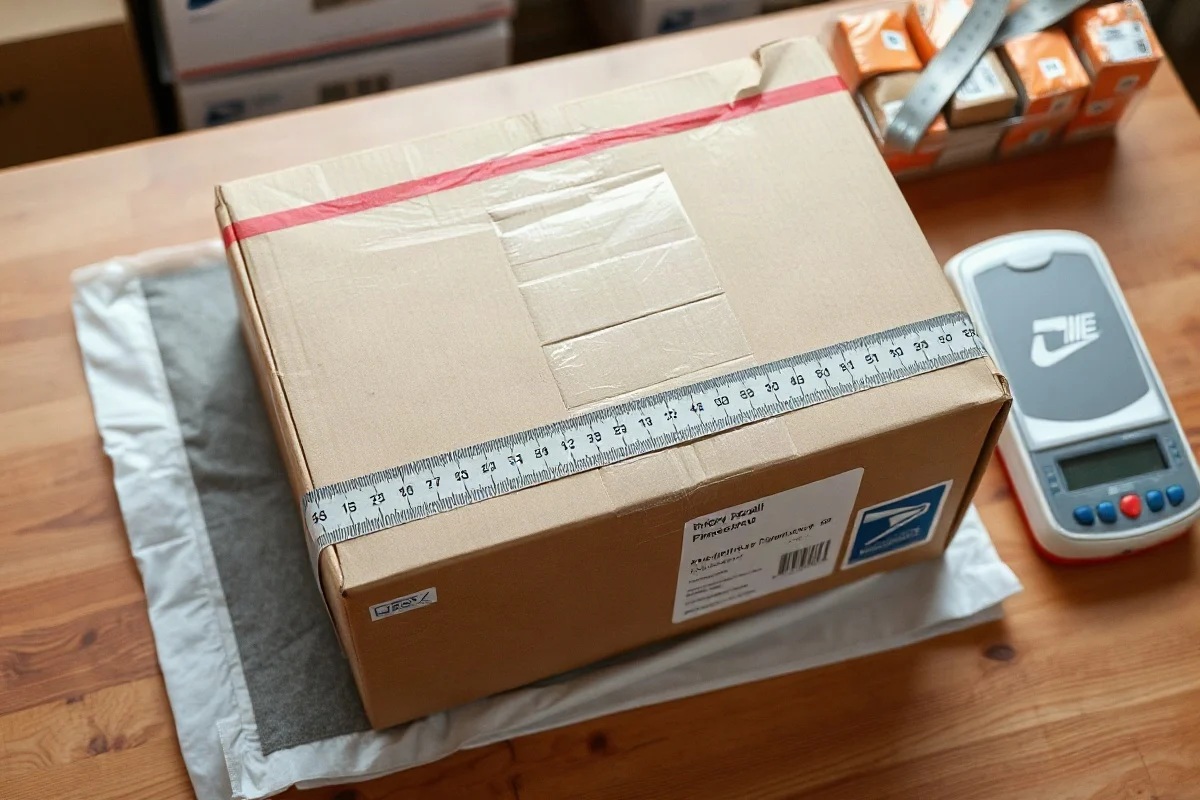
The safest approach is to treat the package as a measured physical object rather than relying on a product name. Identify the mailpiece category, measure the sealed parcel, weigh it accurately, and confirm the current service rules for the destination. That process reduces postage adjustments and helps ensure that a package labeled “First-Class” is actually being mailed under the USPS service available for its size and weight.
Comments
0No comments yet. Be the first to share a helpful note or question.
Leave a Comment
Your email address will not be published. Comments are reviewed before appearing on the site.