UPS oversize package rules depend on the package’s final outside measurements, actual weight, shape, destination, service, and current pricing terms. A package may be treated differently when it exceeds a carrier’s published size or weight thresholds, requires special handling, or is difficult to load and sort. Because UPS limits, surcharges, and service conditions can change, check the current UPS terms for your specific service and destination before shipping. The safest approach is to measure the sealed package accurately, calculate its dimensional weight, compare its size with the applicable UPS requirements, and confirm the shipment details in the UPS rate or shipping system.
What makes a UPS package oversize?
“Oversize” is not always a single measurement. Carriers may evaluate length, a length-and-girth calculation, total package weight, dimensional weight, or a combination of these factors. A package can also require additional handling because it is unusually shaped, poorly protected, difficult to stack, or likely to damage other packages.
UPS may apply different rules based on the service selected, whether the shipment is domestic or international, the origin and destination, and whether the item is a regular parcel, freight shipment, or another specialized shipment type. Large packages can also be subject to additional charges or restrictions even when they are accepted for transport.
Do not assume that a package is acceptable simply because an online label can be created. A carrier may inspect or remeasure it after pickup. If the measurements or weight differ from the information entered during checkout, the final billed amount may change.
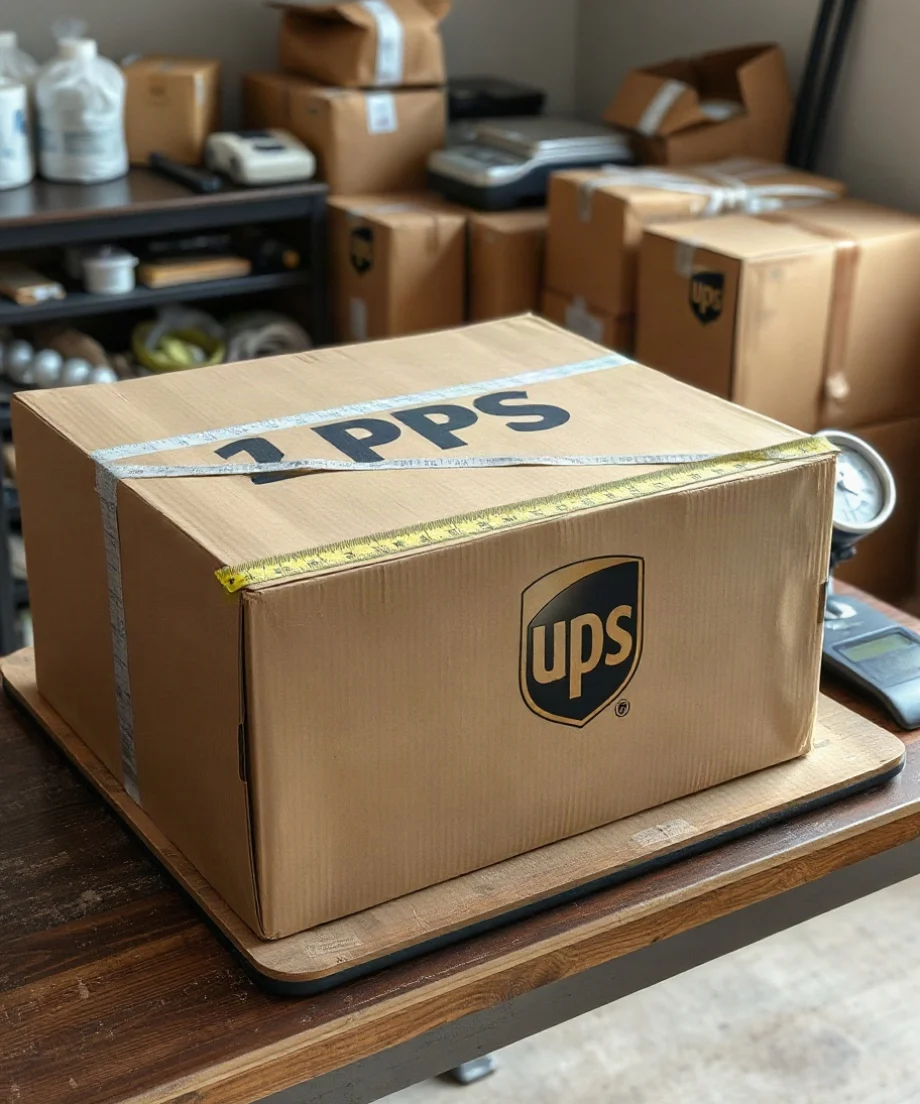
Measure the sealed package, not the product
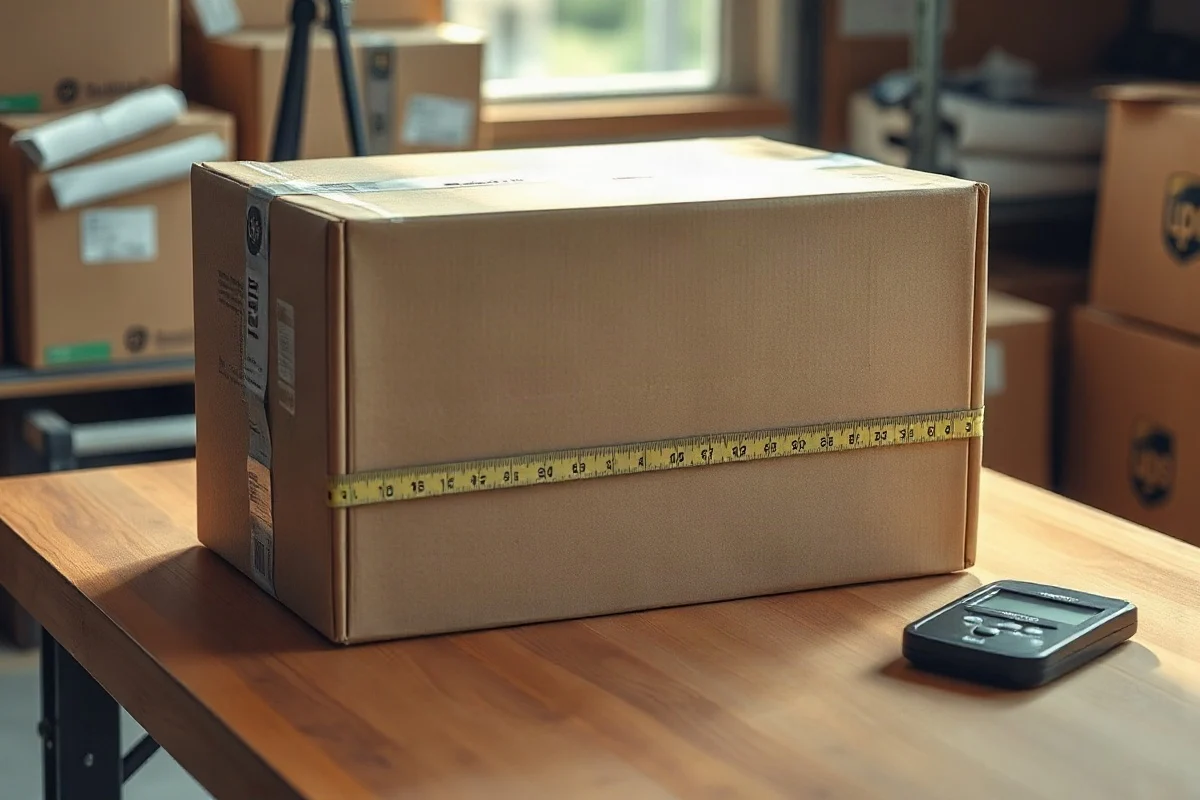
Measure the package after it has been packed, taped, and prepared for shipment. Use the outside dimensions of the finished parcel, including protruding flaps, handles, straps, bulges, or other features that affect its maximum length, width, or height.
How to measure length, width, and height
- Place the sealed box on a level surface.
- Identify the longest side. This is the package length.
- Measure the side that runs from front to back or from one end to the other. This is usually the width.
- Measure the remaining vertical side. This is the height.
- Round measurements according to the current UPS instructions or the shipping software being used. If no rounding instruction is shown, keep the unrounded measurements until the final calculation and avoid entering dimensions that are smaller than the actual package.
For irregular packages, measure the smallest rectangular box that could fully contain the shipment. If a bag, tube, tapered carton, or soft parcel has an uneven shape, use its maximum outside dimensions rather than an average measurement. A few inches of difference can affect dimensional weight or move a package into a different handling category.
For a practical visual walkthrough, see this guide to measuring a package for UPS.
Length and girth: the basic calculation
Many carrier size rules use a length-and-girth formula. The general calculation is:
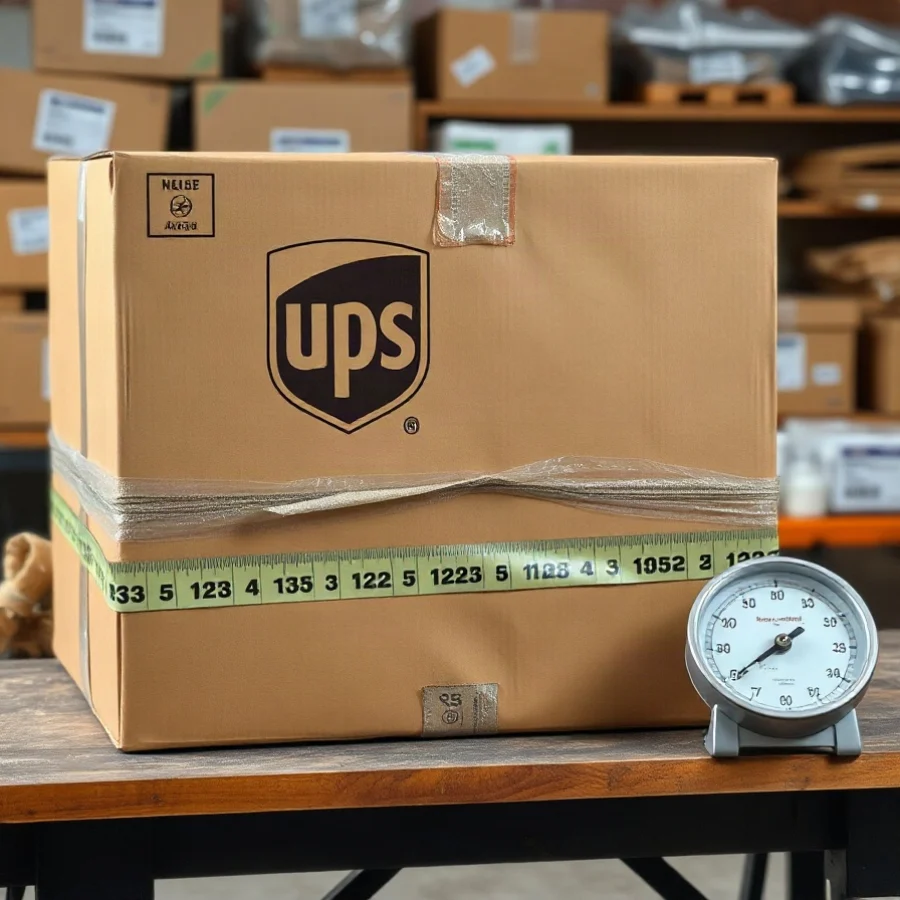
Length + 2 × width + 2 × height
In this formula, length is the longest side. Width and height are the other two sides. For example, a carton measuring 30 × 20 × 18 inches has:
30 + (2 × 20) + (2 × 18) = 106 inches
This calculation is useful for screening a package, but it is not a substitute for checking the current UPS rule that applies to your shipment. UPS may define its measurements, rounding method, and oversize categories in a particular way. The same carton may also be treated differently depending on the selected service or destination.
Dimensional weight can matter more than scale weight
Large, lightweight packages take up valuable vehicle and aircraft space. For that reason, carriers often calculate dimensional weight, sometimes called volumetric weight, in addition to actual weight. The billed weight may be based on the greater of the actual weight and the dimensional weight, subject to the carrier’s current rules.
The general dimensional-weight formula is:
Length × width × height ÷ dimensional divisor
The divisor is not universal. It can vary by carrier, service, package type, destination, and current tariff. Do not use a divisor from an old label, a third-party calculator, or another carrier without confirming that it applies to your shipment.
For example, a 30 × 20 × 18-inch box has a volume of:
30 × 20 × 18 = 10,800 cubic inches
To calculate dimensional weight, divide 10,800 by the divisor specified for the UPS service you are using. Then apply the current rounding rule. A package weighing 22 pounds on a household scale could therefore be billed at a higher weight if it occupies much more space than its actual weight suggests.
You can compare package volume and estimated dimensional weight with the dimensional weight calculator, but always confirm the result against the current UPS shipping system before purchasing postage.
Common oversize problems to check before shipping
Using the product dimensions instead of package dimensions
A product listed as 28 inches long may need a carton that is 30 inches or longer after adding protective padding and clearance. Enter the dimensions of the closed carton, not the item’s catalog dimensions.
Measuring before the box is taped
Cartons can expand slightly when filled, especially when packing paper, foam, clothing, or other compressible material pushes against the panels. Seal the box first, then measure its widest and longest points.
Ignoring bulges and protrusions
Loose straps, exposed handles, wheels, corners, and uneven panels can increase the package’s effective dimensions. They can also create conveyor or stacking problems. Remove unnecessary protrusions and use a box that fits the contents more closely.
Choosing a long, narrow box without checking service rules
Long packages can be difficult to sort even when their total volume is modest. Tubes, rolled materials, furniture parts, sports equipment, and framed items may have special handling requirements. Confirm that the selected UPS service accepts the package’s shape and measurements before buying a label.
Relying on an old surcharge amount
Large-package fees, additional-handling fees, minimum billable weights, and other charges may change. They may also depend on the account, service, zone, package characteristics, and effective date. Avoid publishing or budgeting around a number unless it comes directly from the current UPS rate guide or quote for the shipment.
How to reduce the risk of an oversize charge
- Use the smallest safe carton. Select a box that leaves enough room for cushioning but does not create large empty spaces.
- Replace oversized void fill. Excessive paper or loose-fill material can force the carton panels outward. Use appropriately sized foam, molded pulp, corrugated inserts, or other protective material.
- Disassemble where practical. Removing detachable legs, handles, shelves, or other components may reduce length and make the shipment easier to protect.
- Use a stronger, smaller box. A double-wall carton or custom insert may cost more per package but can reduce dimensional weight and damage risk.
- Keep the contents centered. Balanced packing helps prevent bulges and reduces the chance that the box will collapse during handling.
- Weigh and measure after sealing. Record the final dimensions and weight at the same time you create the label.
- Compare services before paying. A different UPS service, packaging configuration, or freight option may be more suitable, but the available choices depend on the shipment.
For help selecting a carton before packing, use the box size calculator and allow room for the product, cushioning, and closure method.
When a large package may need freight instead
Some shipments are too heavy, too long, too fragile, or too awkward for ordinary parcel handling. Multiple cartons, pallets, machinery, furniture, and unusually dense products may be better candidates for freight. Freight classification, packaging, pickup requirements, and pricing follow different processes from standard parcel shipping.
Do not split one shipment into several boxes solely to avoid a size rule unless the contents can be safely and legally separated. Splitting may change the total cost, damage exposure, delivery process, and insurance or claims documentation. Compare the complete shipment rather than looking only at the price of one label.
What to verify in the current UPS source
Before sending a large package, verify the following details in the current official UPS documentation or rating tool:
- The maximum permitted length and length-plus-girth measurement for the selected service
- Any maximum actual weight or dimensional-weight requirement
- How UPS defines and rounds package dimensions
- Whether the package shape, contents, or destination triggers special handling
- Current large-package, additional-handling, or other applicable charges
- Whether the destination is subject to regional, international, or service-specific restrictions
- Whether the shipment should move through parcel, freight, or another UPS service
Rules and charges can change, so the current UPS website, rate guide, account portal, or shipping quote should take priority over a general article. For related planning, browse the UPS package guide.
A simple pre-shipment checklist
Before handing over the package, confirm that the carton is fully closed, the label is attached to a flat surface, and no old barcodes or shipping labels remain visible. Measure length, width, and height at the package’s maximum points. Weigh the sealed shipment on a reliable scale. Calculate length plus girth and estimate dimensional weight using the current UPS divisor for the exact service. Enter accurate information when requesting the quote, then compare the result with the current UPS requirements.
If the parcel is close to a size threshold, do not rely on a borderline measurement. Repack it into a smaller carton, confirm the measurement with a second person, or ask UPS how the package should be classified. Accurate measurements and conservative packing are usually less expensive than correcting a shipment after it has been accepted, remeasured, or returned.

Comments
0No comments yet. Be the first to share a helpful note or question.
Leave a Comment
Your email address will not be published. Comments are reviewed before appearing on the site.