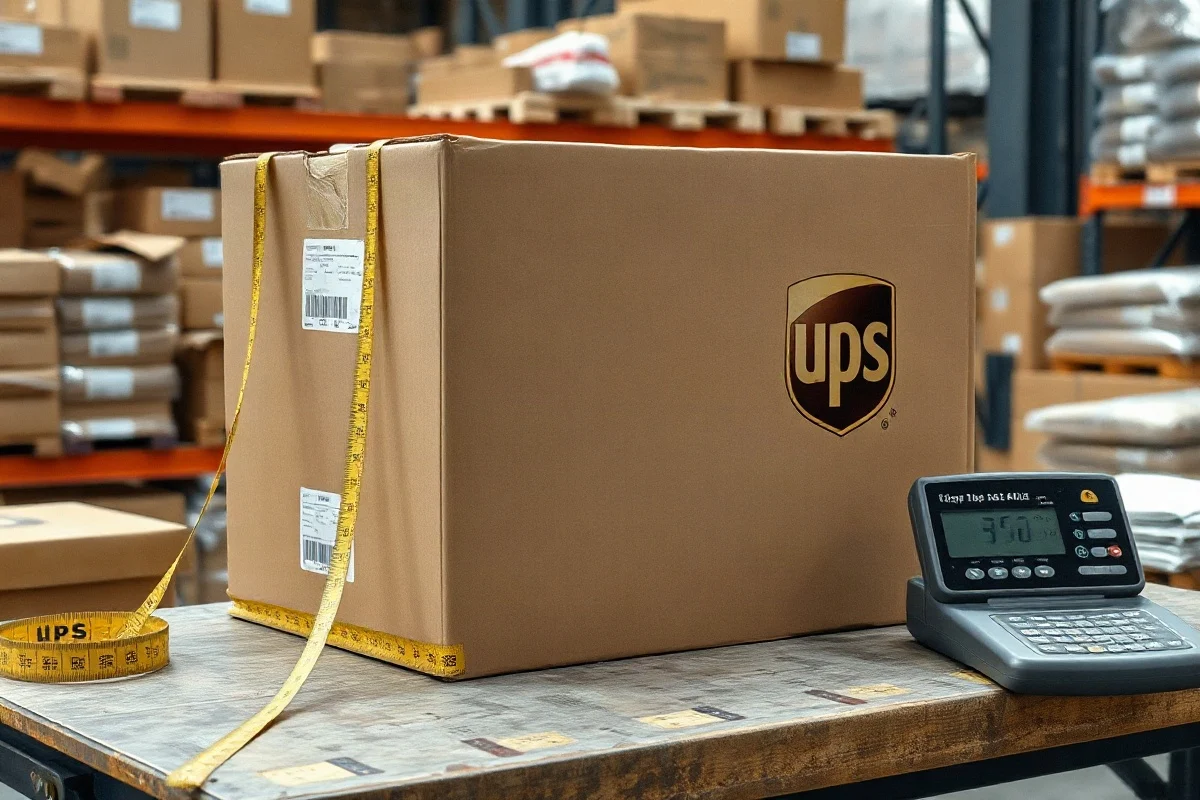
UPS box size and weight limits depend on the service, destination, package type, and the current UPS rate and service rules. Before shipping, measure the fully packed box, weigh it with all packaging included, and compare the results with the official requirements for the specific UPS service you plan to use. Do not rely on an empty-box measurement or on a limit shown in an old shipping account, label tool, or marketplace listing.
What UPS measures on a package
Carriers generally evaluate more than the number on a scale. The important details include the package's actual weight, outside dimensions, combined length and girth, and sometimes whether the shipment qualifies as oversized, heavy, irregular, or otherwise subject to special handling. A package can therefore create a problem because it is too large even when it is relatively light, or because it is heavy even though it fits inside a compact box.
UPS requirements can also vary by service level and route. International shipments may have different documentation and handling considerations than domestic shipments. Large packages, unusually shaped cartons, and packages that require special handling may be treated differently from ordinary rectangular parcels. Check the current UPS service guide, rate information, and package acceptance rules before buying postage, especially when a shipment is close to a stated threshold.
How to measure a UPS box correctly
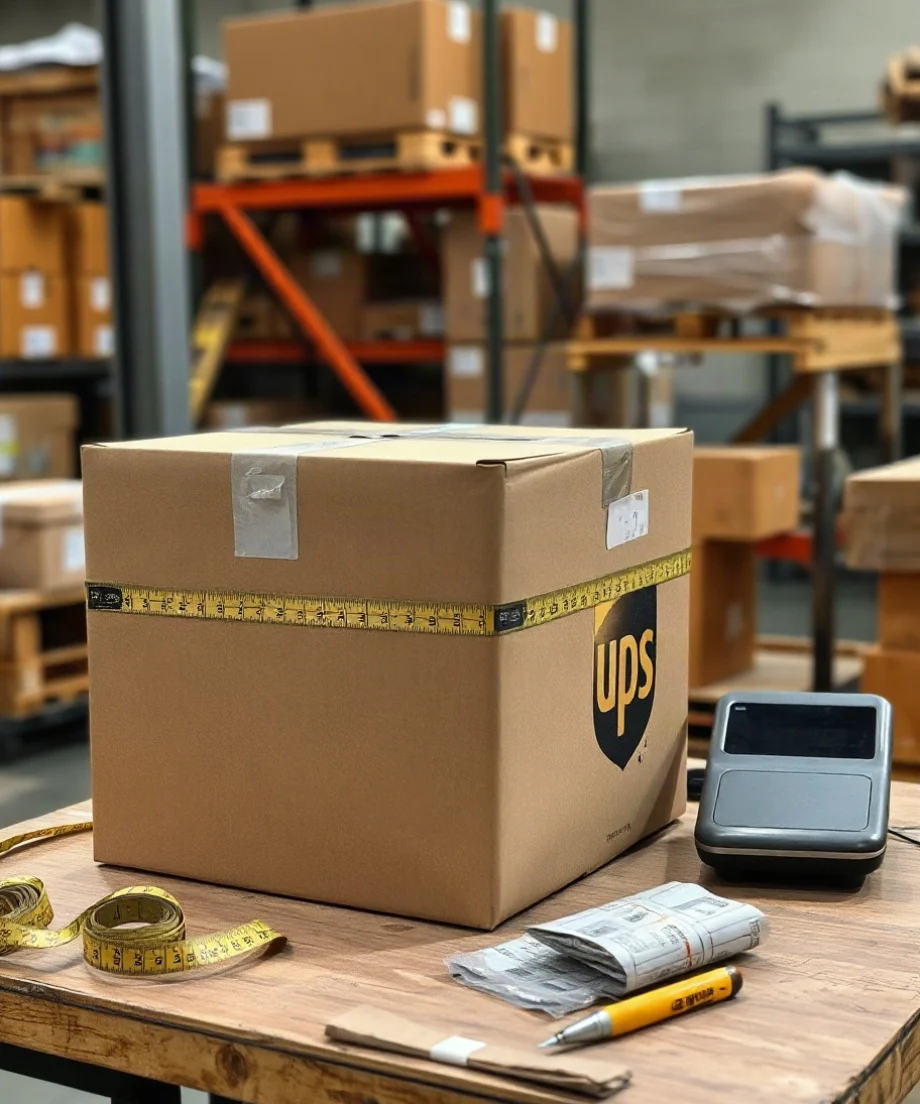
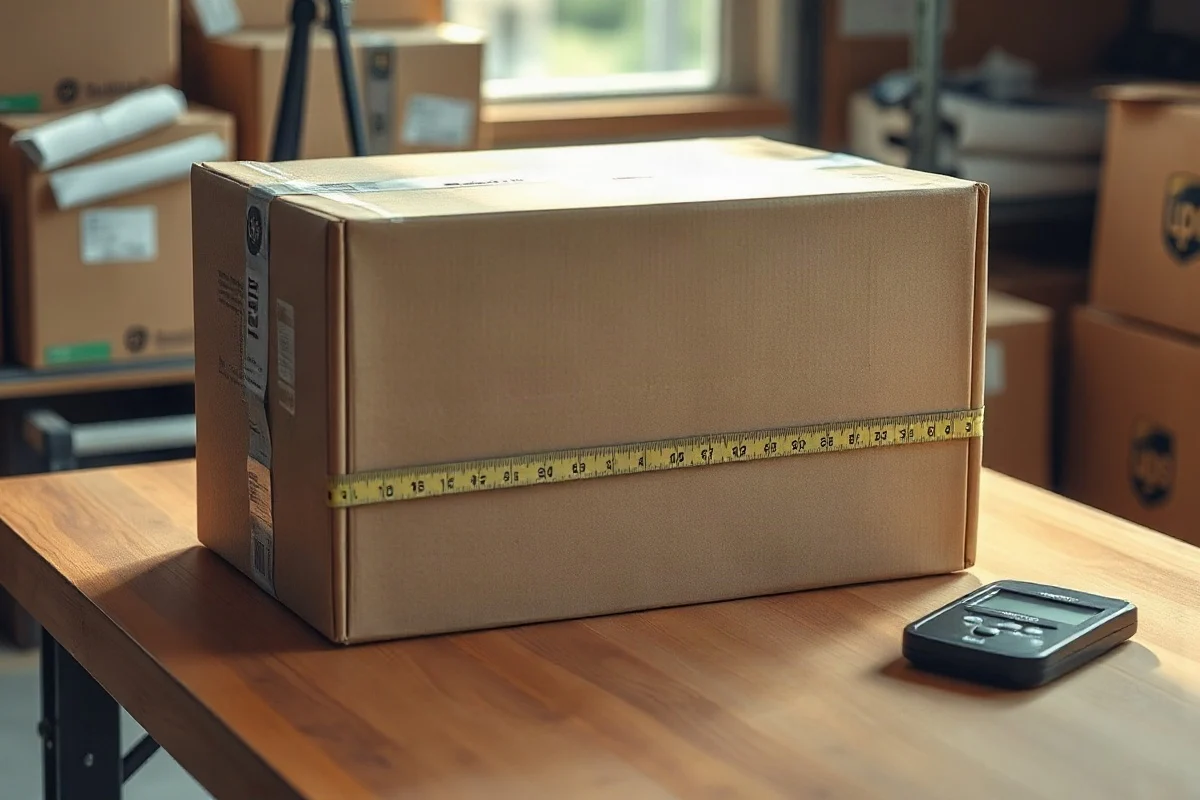
Measure the outside of the sealed package, not just the inside of the carton. Use a ruler or tape measure and record the largest outside length, width, and height after the box is packed and closed. If the cardboard bows outward, measure the widest points. Include protective corners, bulges, straps, and other packaging that changes the parcel's overall footprint.
Length, width, and height
For a rectangular box, identify the longest side as the length. The remaining two sides are the width and height. The order of those two smaller measurements does not affect the basic volume calculation, but recording the dimensions consistently makes labels, rate quotes, and shipping records easier to review.
For example, a carton that measures 18 inches long, 12 inches wide, and 10 inches high should be recorded as 18 × 12 × 10 inches. If the finished package measures 18.5 × 12.25 × 10.5 inches, use those finished measurements rather than rounding down to the nominal box size. Rounding practices can differ by carrier or system, so follow the instructions used by the UPS rating tool or account creating the shipment.
Length and girth
Many carrier size tests use length plus girth. For a rectangular package, calculate girth as:
Girth = 2 × width + 2 × height
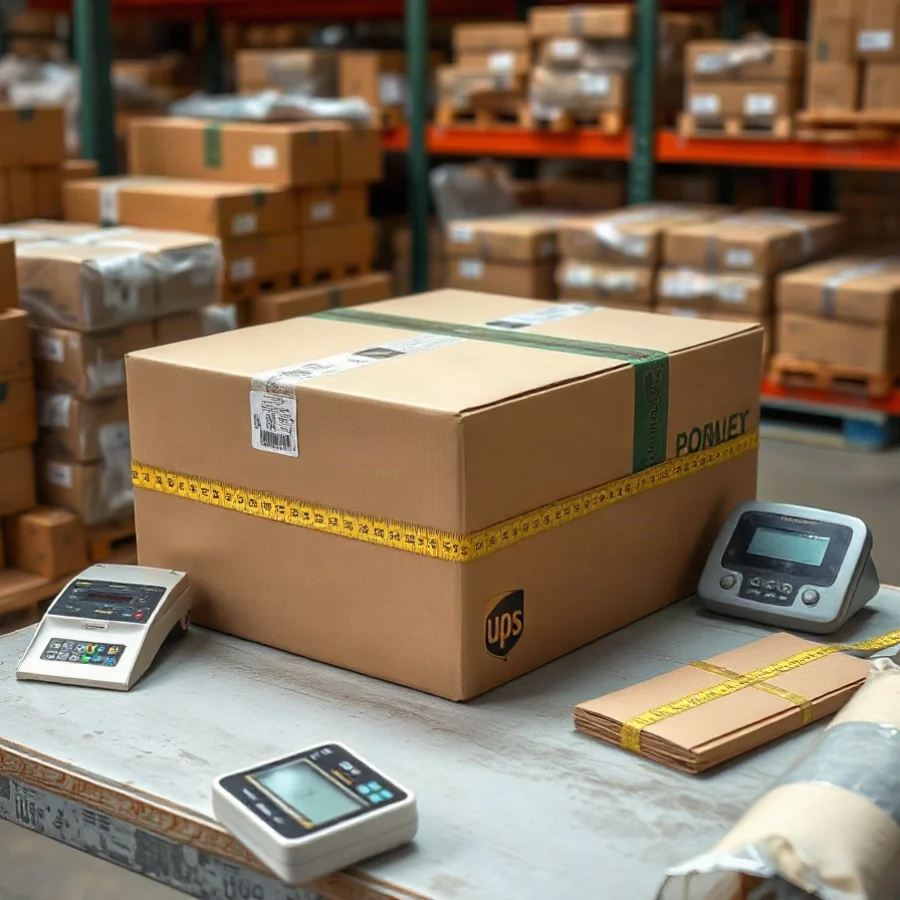
Length plus girth = length + 2 × width + 2 × height
Using an 18 × 12 × 10 inch box:
- Girth = 2 × 12 + 2 × 10 = 44 inches
- Length plus girth = 18 + 44 = 62 inches
This calculation is useful for screening a package, but it is not a substitute for checking the current UPS rule for the service and destination. Some services use additional measurements, special classifications, or separate procedures for packages that exceed standard dimensions.
Actual weight versus dimensional weight
Actual weight is the package's physical weight, including the product, box, cushioning, tape, label, and any other materials that ship with it. Weigh the finished parcel on a scale that can handle its size and display the needed precision.
Dimensional weight, sometimes called volumetric weight, estimates how much transportation space a package occupies. A large box filled with lightweight material may be rated by dimensional weight instead of actual weight. The general calculation is:
Dimensional weight = length × width × height ÷ the applicable dimensional factor
The dimensional factor is not universal. It may vary by carrier, service, package type, destination, account, or current rate schedule. Because of that, do not insert a remembered divisor into a shipping quote without verifying it. Use the divisor shown by the current UPS rating tool or official UPS documentation for the shipment you are preparing.
For example, a 24 × 18 × 16 inch carton has a volume of 6,912 cubic inches. That volume can produce a billable dimensional weight that is much greater than the contents' scale weight, depending on the applicable UPS factor. You can compare the alternatives with the Dimensional Weight Calculator, then confirm the result in the current UPS quote before purchasing the label.
How to determine the billable weight
In many shipping situations, the carrier compares actual weight with dimensional weight and uses the applicable billable result. The exact calculation and rounding procedure can depend on the service and the current UPS terms. A label platform may also display a rounded value or apply account-specific rating logic.
To estimate your package responsibly:
- Measure the sealed package at its largest outside points.
- Record length, width, and height using the units requested by the rating system.
- Calculate the package volume.
- Apply only the dimensional factor currently shown for the UPS service.
- Compare dimensional weight with the finished package's actual weight.
- Review the final quote for oversize, additional handling, or other applicable charges.
Do not assume that a free online calculator has the latest UPS divisor, rounding rules, or accessorial-charge logic. A calculator is useful for planning, while the current official UPS quote is the better source for a final shipping decision.
Choosing a box that stays within practical limits
The best UPS box is usually the smallest strong carton that protects the contents without leaving excessive empty space. A box that is too small can crush the product or force the flaps open. A box that is too large can increase dimensional weight, require more cushioning, and move around inside the carton.
Measure the product before the carton
Start with the item's longest, widest, and tallest points. Add room for cushioning on every side, then select a carton with enough internal space for the product and the protective material. Soft items may compress, but fragile items should not be forced into a box merely to reduce dimensions. For a quick starting point, use the Box Size Calculator and then test the finished packed box rather than relying only on theoretical product measurements.
Reduce empty space carefully
Fill voids so the product cannot shift, but avoid compressing materials so tightly that the carton bulges. Paper, molded inserts, foam, air cushions, and other materials have different protective properties. The right choice depends on the product's weight, fragility, shape, and the amount of movement expected during handling.
Keep heavy items low and centered when packing multiple products. Separate fragile surfaces from the carton walls, reinforce weak seams with appropriate tape, and make sure the shipping label remains flat and readable. If a package needs multiple layers of boxing, measure the final outer box and weigh the complete shipment.
Common UPS packaging mistakes
- Using catalog dimensions: A box listed as 12 × 12 × 12 inches may measure differently after manufacturing tolerances, compression, or sealing.
- Measuring before packing: Added cushioning and product weight can change both the dimensions and the billable weight.
- Ignoring protrusions: Handles, straps, exposed product parts, and bulging panels can affect the package's measured size.
- Using the wrong dimensional factor: A divisor from another carrier or service may produce an incorrect estimate.
- Forgetting packaging weight: The shipping weight is the packed shipment, not the product alone.
- Trusting an old quote: Carrier rules, prices, surcharges, and service conditions may change.
What to verify before buying a UPS label
Confirm the selected service, origin, destination, package count, package type, actual weight, and outside dimensions. Then review the quoted transportation charge and any listed additional handling or oversize treatment. If the package is close to a limit, consider rebuilding it with a smaller or stronger carton rather than assuming a small measurement difference will be ignored.
For shipments that require a specialized service, cross-border paperwork, or unusual packaging, consult the current UPS documentation for that service. Rules may also differ when shipping through a marketplace, third-party postage platform, or negotiated business account. The platform's estimate is not necessarily a replacement for the carrier's current terms.
For related carrier guidance, see our UPS Package Guide and broader information about package dimensions. The essential habit is simple: measure the finished parcel, weigh it after packing, calculate dimensional weight using the current applicable factor, and verify the final result with UPS before shipment.

Comments
0No comments yet. Be the first to share a helpful note or question.
Leave a Comment
Your email address will not be published. Comments are reviewed before appearing on the site.