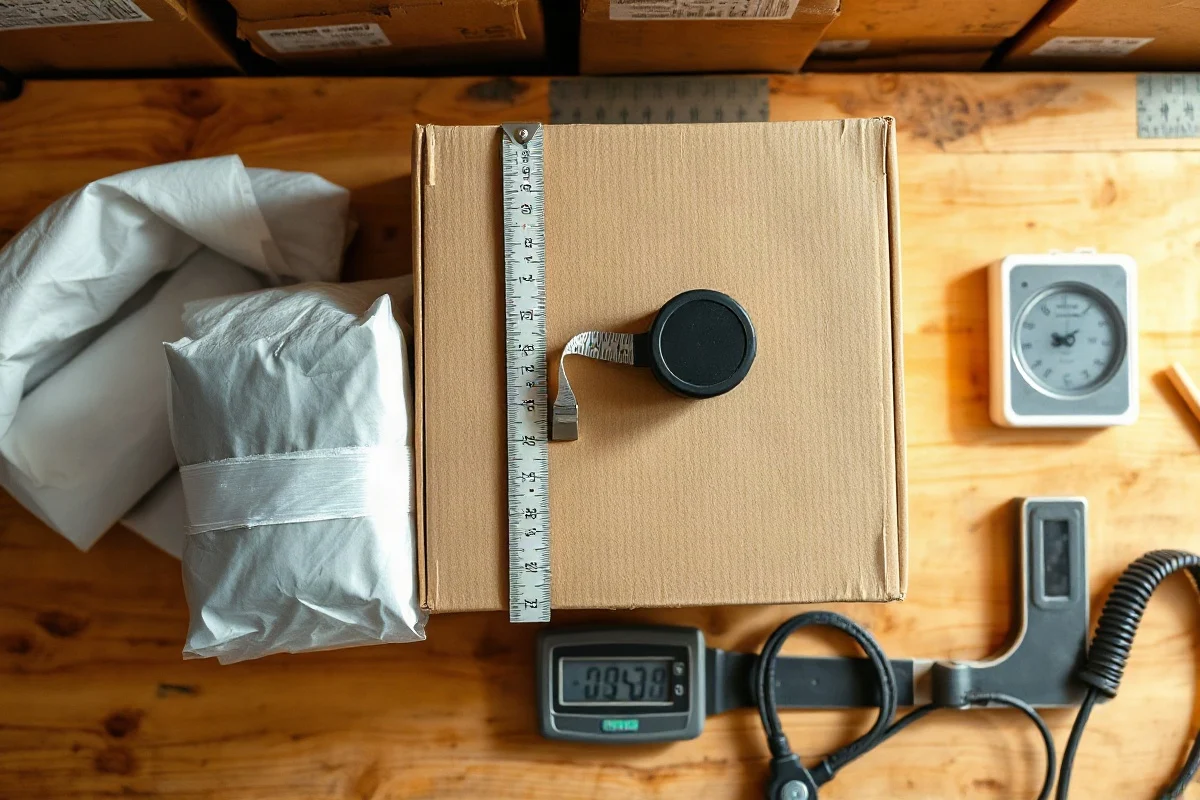
Standard package dimensions are usually expressed as length, width, and height, measured at the package’s longest, second-longest, and shortest points. There is no single box size that works for every shipment, but using this order consistently helps you compare boxes, estimate shipping costs, check carrier requirements, and select packaging that protects the contents without wasting space.
What package dimensions mean
When a carrier, marketplace, or shipping calculator asks for package dimensions, it normally wants the outside measurements of the fully packed package. A box listed as 12 x 8 x 6 inches should have an exterior length of approximately 12 inches, a width of 8 inches, and a height of 6 inches after it has been closed and prepared for shipment.
Dimensions are generally written in this order:
- Length: the longest side of the package.
- Width: the side next longest to the length.
- Height: the remaining side, often the vertical or depth measurement.
The orientation is less important than consistency. A rectangular box can be turned on its side, but the same three side measurements still describe its size. If a shipping form specifically labels fields as length, width, and height, enter the measurements according to the form’s instructions rather than guessing based on how the box is positioned.
How to measure a box correctly
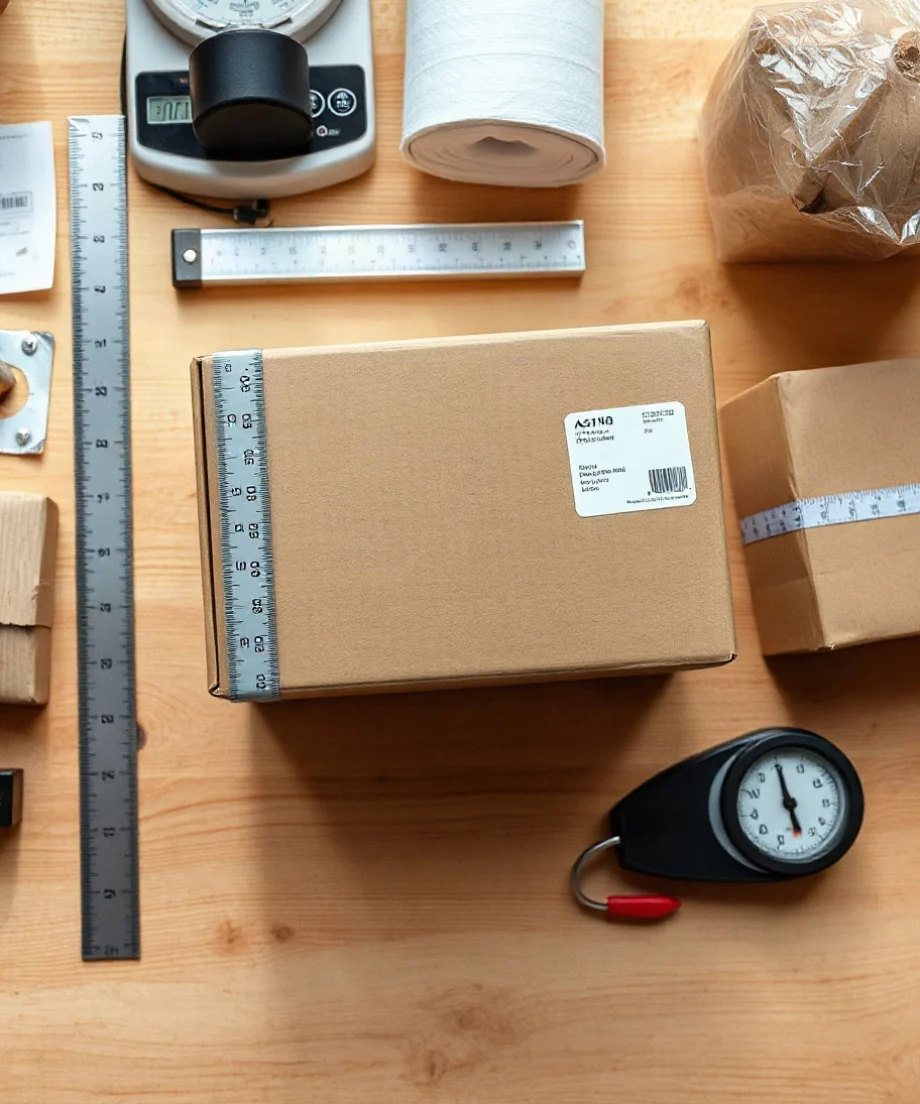
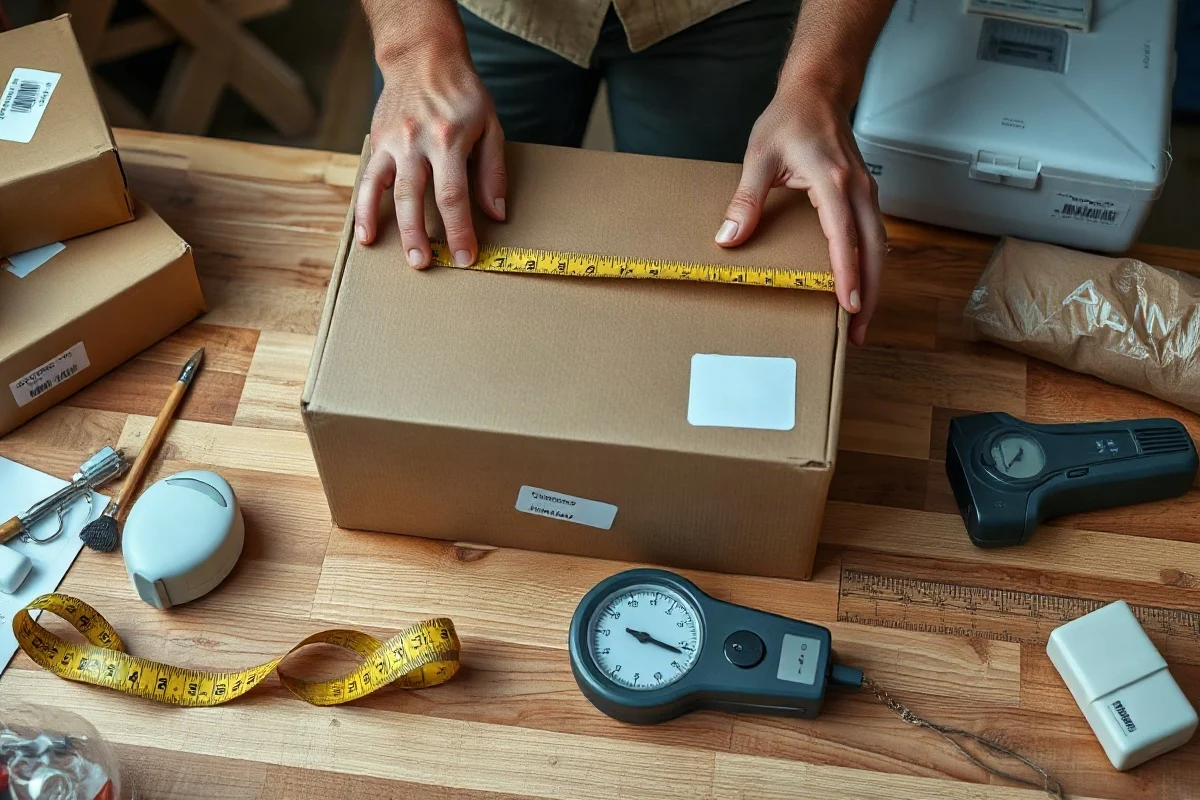
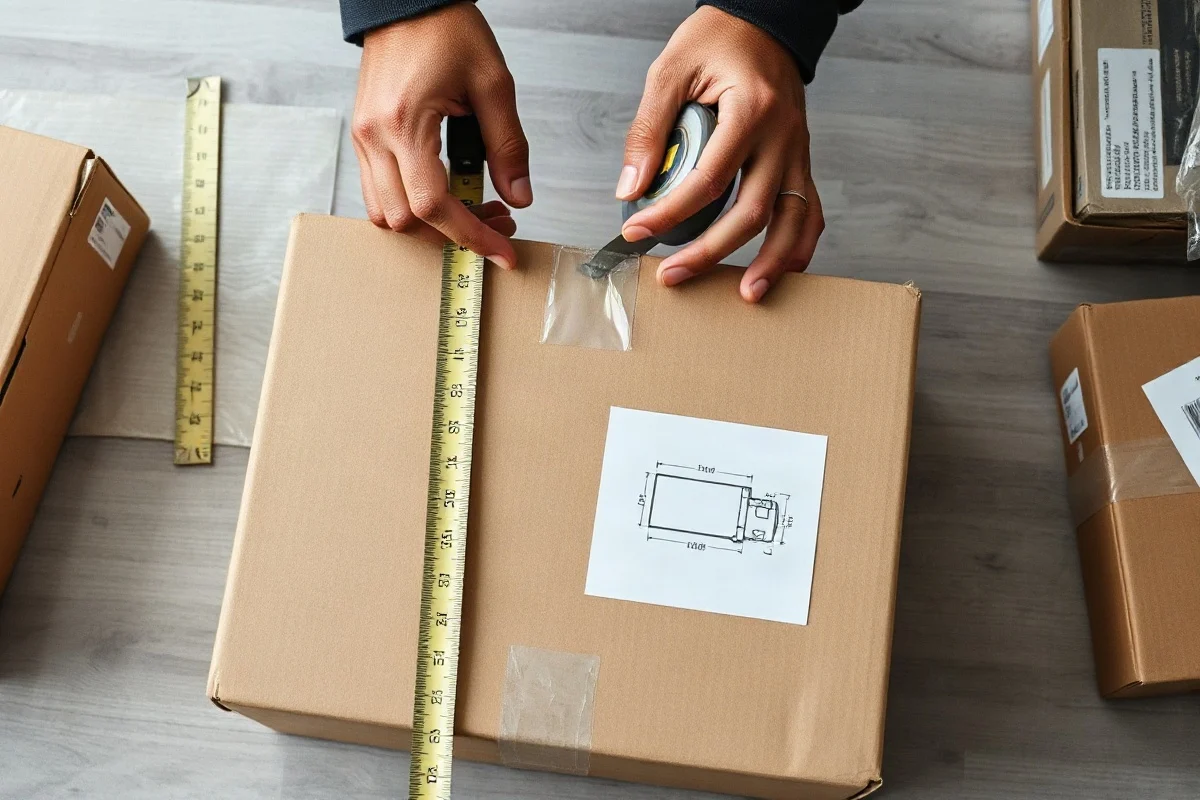
Use a rigid tape measure or ruler and measure the outside of the package after packing. For a corrugated box, measure from outside edge to outside edge. Do not measure only the interior dimensions unless the form specifically asks for inside measurements.
Measuring a rectangular box
- Close the box as it will travel, including any flaps, tape, bands, or protective wrapping.
- Measure the longest exterior side. Record this as the length.
- Measure the side perpendicular to the length. Record this as the width.
- Measure from the bottom exterior surface to the top exterior surface. Record this as the height.
- Round measurements only as required by the carrier, calculator, or shipping form. If no instruction is provided, use a conservative measurement rather than reporting a smaller size.
Include anything that increases the package’s outside profile. This may include a bulging poly mailer, a rounded protective sleeve, a handle, a strap, exposed corner protection, or a pallet overhang. A package that is difficult to measure should be measured at its widest or longest points, not where the material happens to be compressed.
Inside dimensions versus outside dimensions
Box manufacturers may describe products using either inside or outside dimensions. Inside dimensions are useful when deciding whether an item and its cushioning will fit. Outside dimensions are more relevant to transportation charges and carrier size checks.
For example, a box with an advertised inside size of 12 x 8 x 6 inches may have slightly larger outside dimensions because of the corrugated walls. The difference depends on the box construction and manufacturer. If an exact shipping quote matters, measure the packed box rather than relying only on the product listing.

Common standard box sizes and their uses
Retail and shipping suppliers sell many recurring box sizes, but “standard” does not mean that one size is accepted everywhere or that it is always the least expensive choice. Common rectangular package formats include small cube boxes, shallow book-style boxes, medium shipping cartons, long narrow cartons, and larger moving boxes.
A small cube box may work well for accessories, small electronics, cosmetics, or compact household items. A shallow carton can be useful for books, documents, apparel, and products that need protection without much vertical space. Medium cartons are often practical for several small items packed together, while long cartons may be better for posters, trim, tools, or other narrow products.
Choose the box based on the packed product, not just the product’s bare dimensions. A product measuring 10 x 6 x 4 inches may need a larger carton once you add cushioning, corner protection, and clearance around each side. At the same time, an unnecessarily large box can increase material use, dimensional weight, and the chance that the contents shift during handling.
For additional examples, review the box sizes guide and compare the actual internal space needed for your product and packing materials.
How much extra space should packaging include?
The required clearance depends on the product’s fragility, shape, weight, and cushioning system. A durable item may need only enough room for a protective sleeve or a small amount of void fill. A fragile item may need a larger gap so that foam, molded inserts, air pillows, paper, or other cushioning can absorb impact.
Do not fill empty space automatically. Excess space can allow an item to move, but too little space can leave the product pressed against the box walls. Pack the item so it cannot shift freely when the closed carton is gently moved, while avoiding pressure that could damage the product.
A practical box-selection method
- Measure the product at its widest, longest, and tallest points.
- Identify the cushioning or insert that will surround it.
- Add the necessary clearance for the cushioning system on all relevant sides.
- Compare the resulting size with available box interiors.
- Test the packed box before purchasing packaging in large quantities.
For repeated shipments, record the final outside dimensions and packed weight for each product. This creates a reliable reference for shipping labels, inventory systems, and customer-service estimates.
Package dimensions and dimensional weight
Shipping charges may be based on actual weight, dimensional weight, or whichever applicable method produces the higher billable weight. Dimensional weight reflects the space a package occupies in a transportation network. The calculation is commonly based on length multiplied by width multiplied by height, divided by a carrier- and service-specific dimensional factor.
The exact factor, rounding method, minimum billable weight, and package eligibility can vary by carrier, service level, destination, package type, and current pricing rules. Because these details can change, do not apply a memorized divisor to every shipment. Check the current official carrier information or the terms shown in the shipping platform you are using.
The basic volume calculation is:
Length × width × height = cubic volume
For a 16 x 12 x 8 inch box:
16 × 12 × 8 = 1,536 cubic inches
That number is the package’s approximate exterior volume. To estimate dimensional weight, divide the volume by the applicable dimensional factor for the selected service, then follow that service’s rounding rules. A dimensional weight calculator can help organize the calculation, but the final charge should be confirmed against the carrier’s current terms and the actual shipment details.
Why small changes in dimensions matter
Because the three dimensions are multiplied, increasing one side can increase the calculated volume even if the change seems minor. Reducing unnecessary space can therefore make a meaningful difference for packages charged by dimensional weight.
For example, replacing a 20 x 14 x 10 inch carton with a 20 x 12 x 8 inch carton changes the volume from 2,800 cubic inches to 1,920 cubic inches. The package still needs to protect the contents, and a smaller carton is not automatically better, but the comparison shows why right-sizing is useful.
Do not compress a product or remove essential protection solely to reduce dimensions. Damage, returns, and replacement shipments can cost more than the original packaging savings.
Package size limits and carrier requirements
Carriers may set limits for maximum length, combined length and girth, package weight, or special handling. These requirements can differ by carrier and service. They may also distinguish between ordinary packages, oversized shipments, irregular shapes, tubes, freight, and international shipments.
Never assume that a package accepted by one service will qualify for another. Before shipping, check the current official rules for the selected carrier and service level. Confirm whether the carrier measures the package after packing, whether surcharges apply to particular shapes, and whether the destination changes the available limits or pricing.
Our guides for USPS packages, UPS packages, and other carriers can provide useful starting points, but current carrier documentation should control when a limit, fee, or eligibility question affects a shipment.
Special shapes and flexible packages
Poly mailers, padded envelopes, tubes, and soft-sided packages require careful measurement. Measure the package after the item is inserted and the closure is complete. If the contents create a bulge, measure across that bulge. A flexible package may not have perfectly defined sides, so use the maximum length, width, and thickness rather than pressing it flat during measurement.
For cylindrical packages, measure the longest dimension as the length and measure the diameter across the circular end. Some shipping services calculate girth using a formula such as the circumference around the package, but the applicable definition and acceptance rules can vary. Verify the carrier’s current instructions before relying on a particular measurement method.
Common measurement mistakes
- Using product dimensions: The item’s size is not necessarily the packed package size.
- Using inside box dimensions for a shipping quote: Transportation calculations commonly depend on the package’s exterior size.
- Ignoring tape and bulges: The final closed package may be larger than the empty carton.
- Estimating by eye: A small measurement error can affect volume calculations.
- Reporting the smallest possible side: Measure the maximum exterior points.
- Reusing old measurements: Changes in inserts, product bundles, or packing materials can change the final size.
- Relying on outdated rules: Carrier limits, fees, and calculation methods may change, so confirm them before purchase or dispatch.
A final pre-shipment check
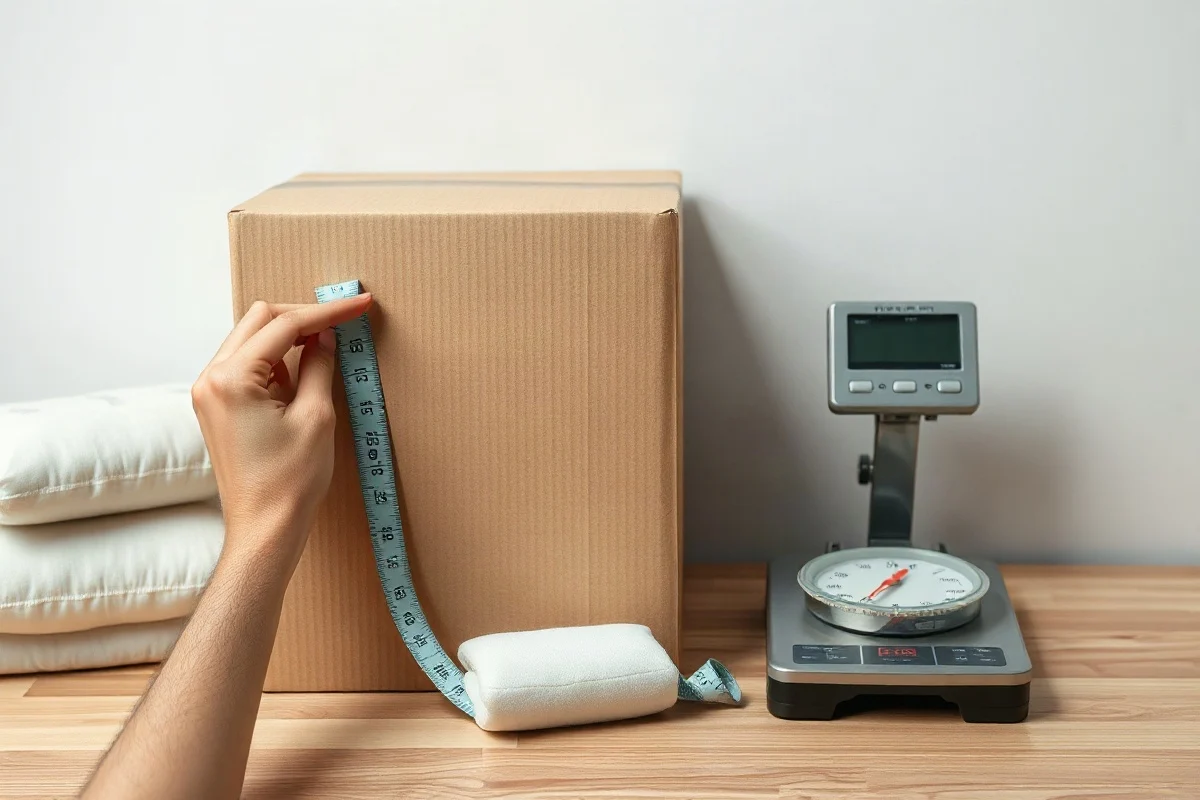
Before creating a label, place the item and all packing materials in the final package. Close and seal it as it will travel. Measure the outside length, width, and height, then weigh the package using a suitable scale. Compare those details with the selected service’s current requirements and enter the measurements exactly as requested by the shipping platform.
Keep a record of the final packed dimensions for products you ship regularly. Accurate records make it easier to choose packaging, compare services, estimate costs, and identify when a product needs a different carton. When you need help comparing dimensions or volume, the box size calculator can help you evaluate possible box configurations before you pack an order.
Comments
0No comments yet. Be the first to share a helpful note or question.
Leave a Comment
Your email address will not be published. Comments are reviewed before appearing on the site.