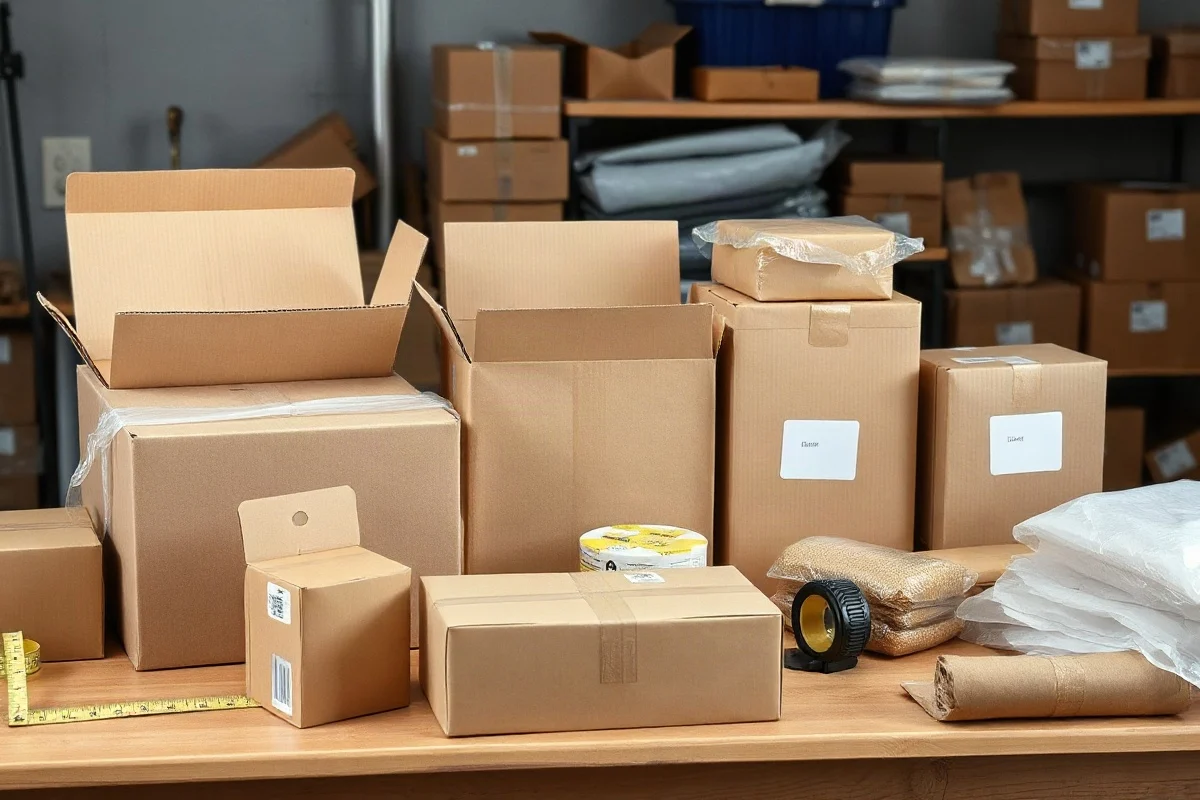
Standard shipping box sizes are not a single official set of dimensions, but several commonly stocked box formats that fit many everyday products. Popular examples include small boxes around 6 × 4 × 4 inches, medium boxes around 12 × 9 × 6 inches, and larger boxes around 18 × 14 × 12 inches. The right choice depends on your item, protective material, shipping service, destination, and whether dimensional weight applies.
A good box should hold the product securely, leave enough room for cushioning, and avoid unnecessary empty space. Before buying packaging in bulk, measure the item, compare a few box options, and check the current requirements for the carrier and service you plan to use.
What Are Standard Shipping Box Sizes?
In the United States, “standard shipping box” usually refers to a readily available corrugated box with practical dimensions rather than a formally defined industry standard. Retailers, manufacturers, office-supply stores, packaging distributors, and carriers may stock different sizes, so names such as small, medium, and large are not universal.
Common box dimensions are listed as length × width × height. For example, a 12 × 9 × 6-inch box is 12 inches long, 9 inches wide, and 6 inches high. The order of the dimensions may vary between sellers, so check the supplier’s definition before ordering. In most cases, the dimensions describe the inside measurements, but some vendors list outside measurements instead.

Common box size examples
- Small boxes: Approximately 6 × 4 × 4 inches to 10 × 8 × 6 inches. These can work for small accessories, books, cosmetics, compact electronics, and individual retail products.
- Medium boxes: Approximately 12 × 9 × 6 inches to 16 × 12 × 8 inches. These are useful for clothing, several small products, shoes, household items, and many subscription-box shipments.
- Large boxes: Approximately 18 × 14 × 12 inches to 24 × 18 × 18 inches. These may suit multiple products, bulky soft goods, kitchen items, and larger household merchandise.
- Long boxes: Often narrow and extended, such as 24 × 6 × 6 inches or longer. These are designed for posters, tools, sporting goods, artwork, and other elongated products.
These examples are practical reference points, not carrier limits. A carrier’s rules may differ by service, package type, destination, and date. For current restrictions, surcharges, and acceptance requirements, verify the package details with the official carrier source before shipping.
How to Measure a Shipping Box
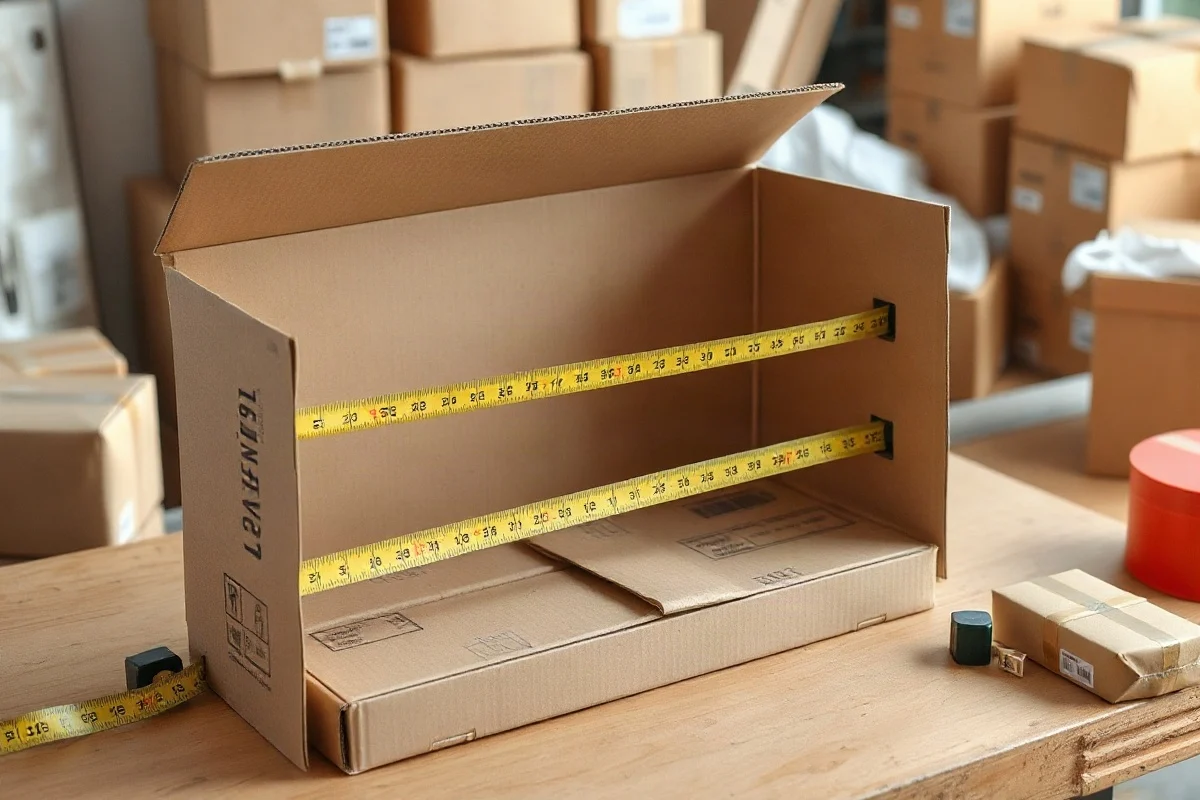
Measure a box with a rigid tape measure or ruler. For a rectangular box, record the three inside dimensions as length, width, and height. Length is normally the longest side of the box. Width is the shorter side of the opening, and height is the distance from the bottom to the top when the box is standing in its normal shipping position.
- Measure the inside length from one end panel to the opposite end panel.
- Measure the inside width from side to side.
- Measure the inside height from the bottom panel to the top panel.
- Record each measurement in inches or centimeters, but do not mix units in the same calculation.
- Confirm whether your carrier or shipping system requests inside dimensions, outside dimensions, or the final sealed package dimensions.
When a box is already packed, measure the sealed package at its widest points. Tape, bulges, protruding flaps, and irregular shapes can affect the dimensions used for rating or acceptance. Round measurements only as required by the carrier or shipping platform. Do not assume that rounding down is acceptable.
Inside versus outside dimensions
Inside dimensions tell you how much room is available for the product and cushioning. Outside dimensions are more relevant when estimating the space the parcel occupies during transportation. Corrugated board adds material thickness, and double-wall boxes add more than single-wall boxes. As a result, a box advertised as 12 × 9 × 6 inches may not have exactly those measurements on both the inside and outside.
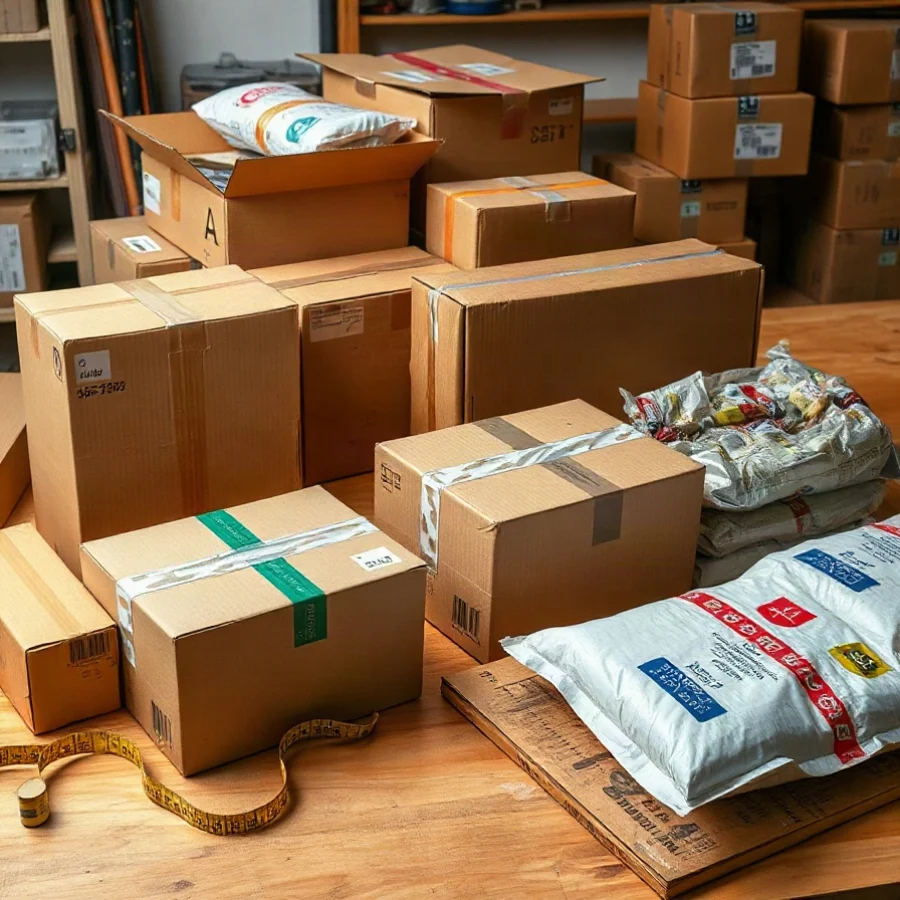
If you are selecting a box for a close-fitting product, use the supplier’s interior dimensions. If you are estimating shipping charges, use the final exterior package dimensions according to the carrier’s instructions.
How to Choose the Right Box Size
Start with the product rather than the box. Measure the item at its longest, widest, and tallest points, including handles, corners, caps, or other parts that cannot be compressed. Then add the space needed for protective packaging.
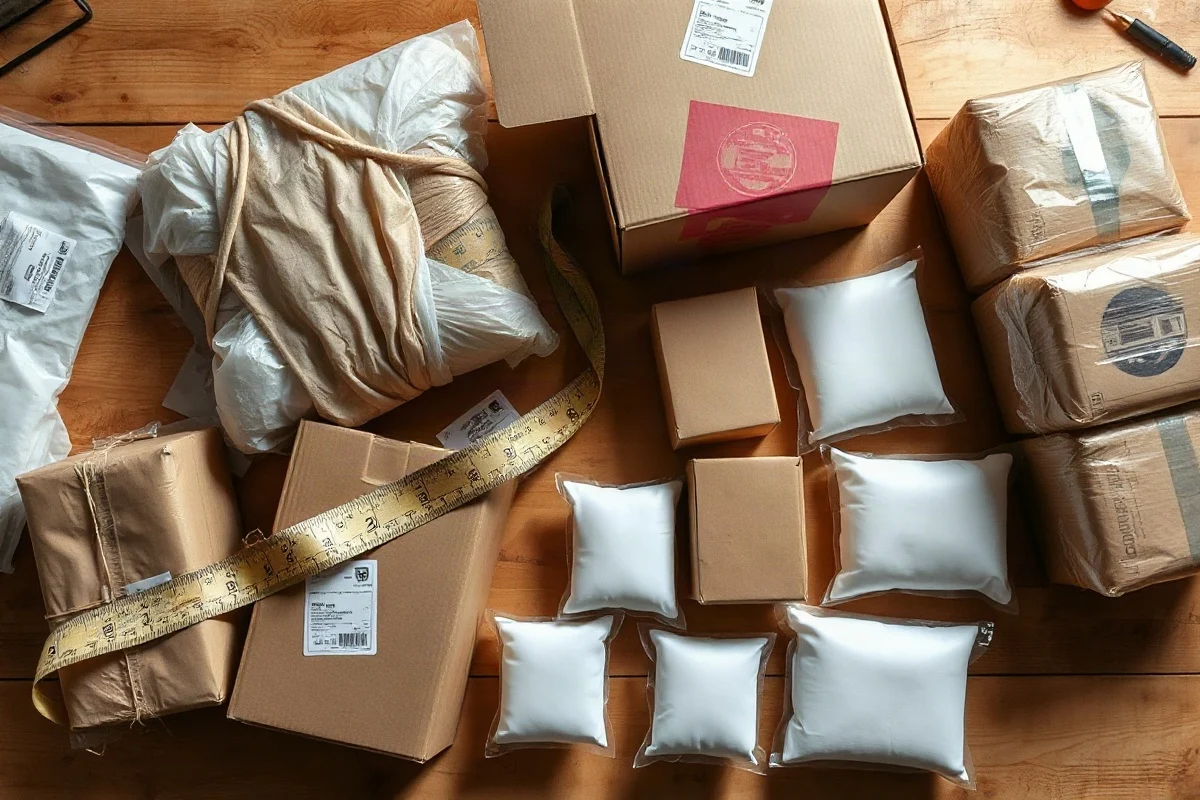
For fragile items, the required clearance depends on the item’s material, shape, weight, and the cushioning method. Foam, molded inserts, paper, air pillows, and bubble cushioning do not provide the same protection. A delicate product may require more clearance than a durable item, even when both have identical dimensions.
A simple planning method is:
Required inside length = product length + protective clearance
Required inside width = product width + protective clearance
Required inside height = product height + protective clearance
For cushioning placed on both sides, include material on both sides in the total. For example, if a product is 10 inches long and needs 1 inch of cushioning at each end, the box needs at least 12 inches of usable interior length. The same principle applies to width and height.
Choose the smallest box that accommodates the item and its protection without forcing the product into place. A box that is too tight can crush corners, compress cushioning, or place pressure on the product. A box that is much too large increases material use and may increase shipping cost if dimensional weight is used.
Our guide on choosing the right box for any item provides a practical way to compare product dimensions, cushioning, and box fit.
Why Box Size Affects Shipping Cost
Shipping charges may depend on actual weight, package dimensions, or both. When a parcel occupies more space than its actual weight would suggest, a carrier may calculate dimensional weight. The exact formula, divisor, rounding method, and services affected can vary by carrier and service level.
A general dimensional-weight formula is:
Dimensional weight = length × width × height ÷ dimensional divisor
Use the divisor published for the specific carrier and service. Do not rely on an old calculator or a divisor copied from another carrier. Compare the resulting dimensional weight with the actual scale weight only after checking the current rules, because the billable weight method may vary.
For example, a 20 × 15 × 10-inch carton has a volume of 3,000 cubic inches. That volume can be used in the carrier’s current dimensional-weight calculation, but the final billable weight cannot be determined without the applicable divisor, rounding rules, service, and destination. The dimensional weight calculator can help organize this comparison when you have the current carrier inputs.
Reducing a box by just a few inches on each side can significantly reduce its volume. However, never remove protective space merely to lower the package size. A damaged product can cost more than the packaging savings through replacement, return shipping, and customer service work.
Popular Box Styles and Their Uses
Regular slotted cartons
Regular slotted cartons are the familiar rectangular shipping boxes with flaps that meet in the center. They are versatile, easy to seal with packing tape, and available in many dimensions. They work well for books, clothing, household goods, and boxed products.
Bookfold boxes
Bookfold mailers have a scored, folding design that can accommodate different product thicknesses. They are often used for books, apparel, small electronics, and flat retail items. Because the package can fit closely around the product, they may reduce empty space compared with a deep carton.
Long and narrow cartons
Long boxes are useful for items such as posters, fishing rods, trim pieces, and certain tools. Keep long products centered and add protection at both ends. A narrow box should not be so tight that the product presses against the walls during handling.
Cube boxes
Cube-shaped boxes can be convenient for small, dense products or products that need similar clearance on all sides. They may also be easier to stack, but their volume can be inefficient if the product is flat or elongated.
Packing Steps for a Secure Shipment
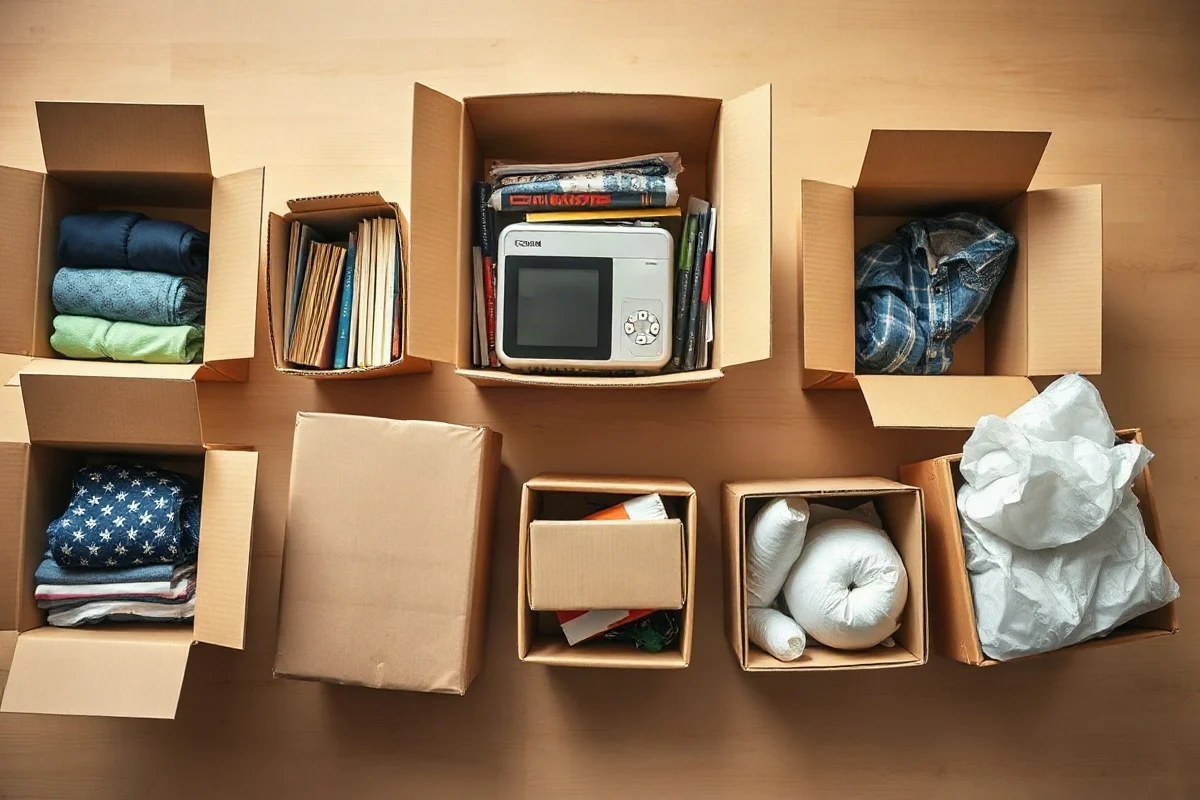
- Inspect the box. Use a clean, dry carton with no crushed corners, punctures, water damage, or weakened seams.
- Protect the product. Wrap individual items and separate products that could scratch or collide.
- Cushion the bottom. Add a protective layer before placing the product inside.
- Center the contents. Keep the item away from all six interior walls when the product requires impact protection.
- Fill empty space. Use enough material to prevent movement, but do not overfill the carton and create bulges.
- Protect the top. Add cushioning above the product before closing the flaps.
- Seal the seams. Apply strong packaging tape to the main center seam and reinforce other seams when appropriate.
- Test the package. Gently shake the sealed box. If the contents move, reopen it and add or reposition cushioning.
Heavy products need a sturdy carton and a secure base. Do not assume a thin retail box is suitable for parcel shipping. For multiple items, distribute the weight so that one corner or panel does not carry most of the load.
Box Size, Carrier Rules, and Marketplace Requirements
Carrier and marketplace requirements can change. Maximum dimensions, size classifications, oversize handling, dimensional-weight methods, packaging requirements, and prohibited-item rules may vary by destination and service. A box that is accepted by one service may be priced or handled differently by another.
Before buying labels, check the current official documentation for the selected service. Confirm how the carrier defines length, girth, package dimensions, rounding, and billable weight. If you sell through a marketplace or fulfillment program, also check its current packaging and product-preparation requirements rather than relying on a general box-size chart.
For a broader reference, see our package dimensions guide and the relevant shipping rules resources.
A Practical Box-Selection Checklist
- Measure the product at its largest points.
- Allow space for the actual cushioning method you will use.
- Confirm whether the listed box dimensions are inside or outside measurements.
- Select a carton that is strong enough for the product’s weight and fragility.
- Minimize empty space without compressing the contents.
- Calculate estimated dimensional weight using the current carrier information.
- Measure the sealed package before purchasing postage.
- Check current carrier or marketplace requirements for the exact service.
The best standard shipping box is not necessarily the smallest box on the shelf or the most commonly advertised size. It is the smallest suitable package that protects the product, closes securely, and fits the current shipping rules. For a quick comparison of length, width, height, and package volume, use the box size calculator before ordering supplies.
Comments
0No comments yet. Be the first to share a helpful note or question.
Leave a Comment
Your email address will not be published. Comments are reviewed before appearing on the site.