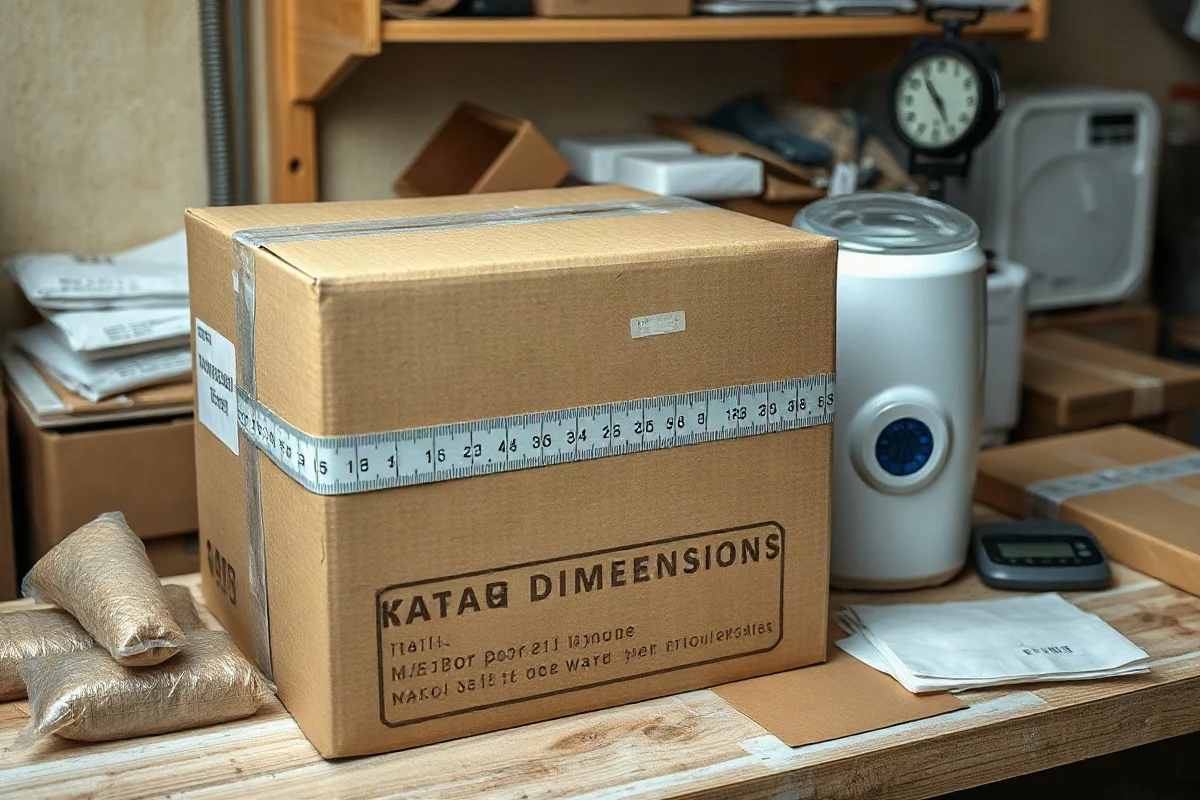
Package dimensions are the package’s outside length, width, and height, usually written as length × width × height. Measure the fully packed parcel at its widest points, including bulges, flaps, and protective materials. These measurements help determine whether a box fits a carrier’s requirements and whether shipping charges are based on actual weight, dimensional weight, or whichever is greater.
What package dimensions mean
When a box is listed as 12 × 8 × 6 inches, the numbers normally describe its outside length, width, and height in that order. The exact orientation may change depending on how the package is placed, but the three measurements describe the same rectangular space:
- Length: Usually the longest side of the package.
- Width: The next-longest side.
- Height: The remaining side, measured from the base to the top.
For a standard rectangular box, the order is not always important when calculating volume, because multiplying the same three numbers produces the same result. However, order matters when you are checking a carrier’s maximum length, a length-plus-girth rule, an automated shipping form, or a marketplace listing. Use the format requested by the carrier, marketplace, or shipping software.
How to measure a package correctly
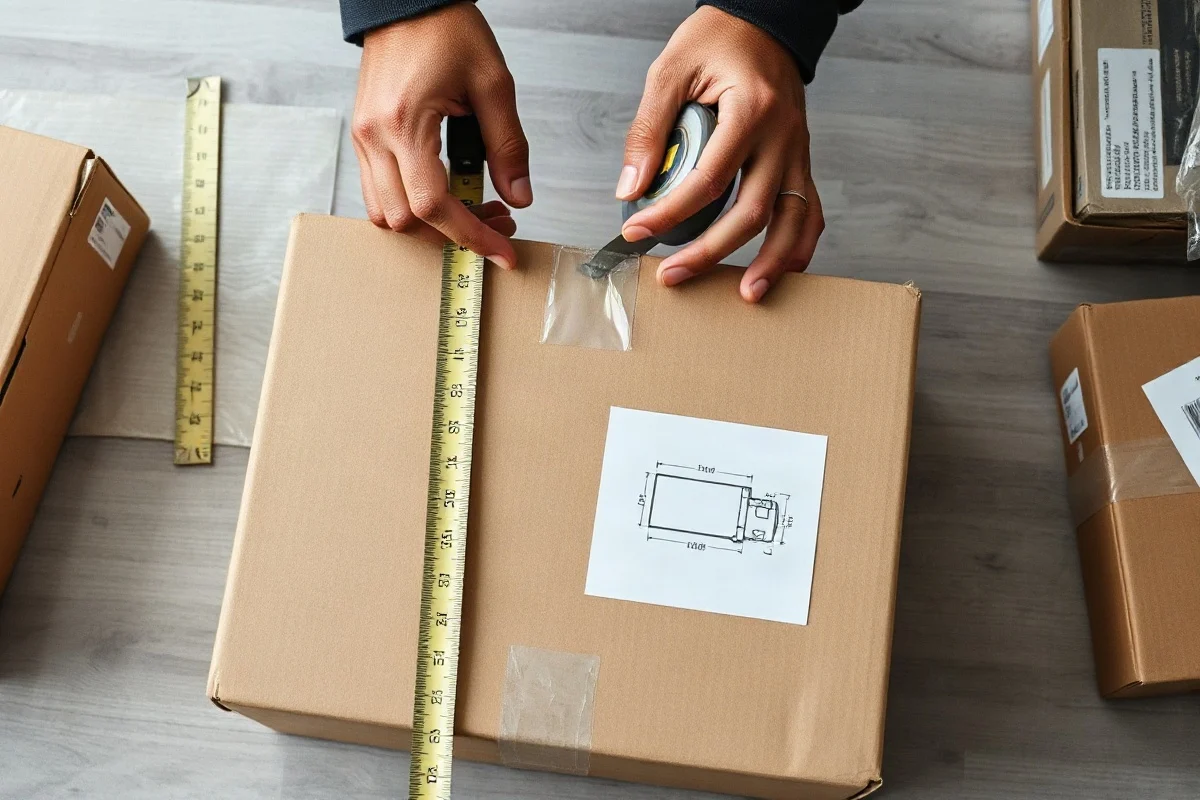
Measure the package after it is packed and sealed, not while it is still empty. Use a ruler or tape measure with clear units, and round according to the instructions of the carrier or shipping platform. If no instruction is provided, avoid rounding down. A package that measures slightly more than a whole number may be treated as the next higher measurement by a shipping system.
Measure the outside, not the inside
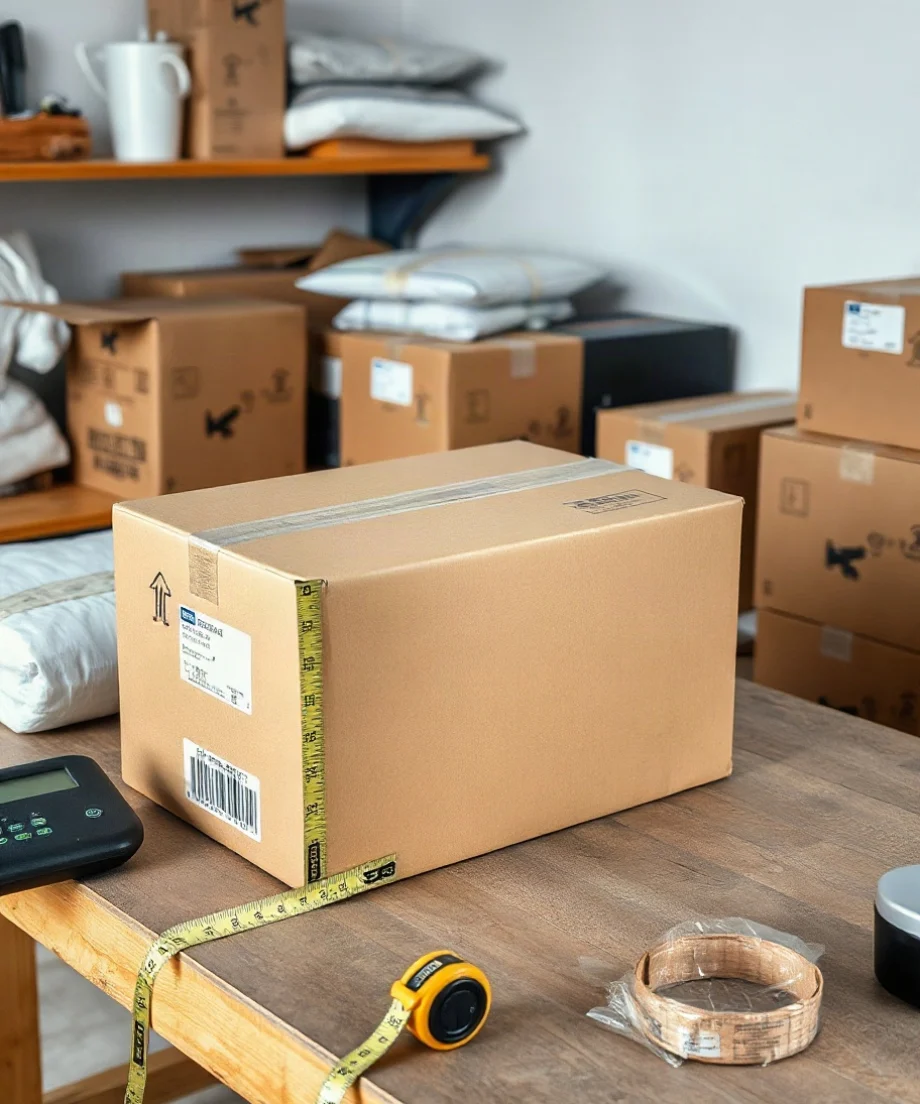
Box descriptions often refer to approximate inside dimensions, while shipping charges and size limits commonly depend on the package’s outside dimensions. Measure from the outermost surface on one side to the outermost surface on the opposite side. Include the cardboard thickness, tape, labels, handles, straps, and any other part that increases the parcel’s overall size.
Use the longest side as length
Place the sealed box on a flat surface. Identify the longest side and record it as the length. Measure the next-longest side as the width, then measure from the bottom surface to the top surface as the height. If the package is an irregular shape, measure the maximum outside length, width, and height rather than measuring only a narrow section.
Account for bulges and soft packaging
Padded mailers, poly bags, fabric parcels, and cartons with overfilled tops can be difficult to measure. Do not compress the package more than it would normally be compressed during handling. A soft parcel may expand after packing, so measure it in its final shipping condition. If a package is flexible, use the dimensions it occupies when placed in the position required by the shipping service.
Inside dimensions versus outside dimensions
Inside dimensions describe the usable space for a product. Outside dimensions describe the space occupied by the finished package. The difference comes from the walls of the box, cushioning, overhang, closure material, and other components.
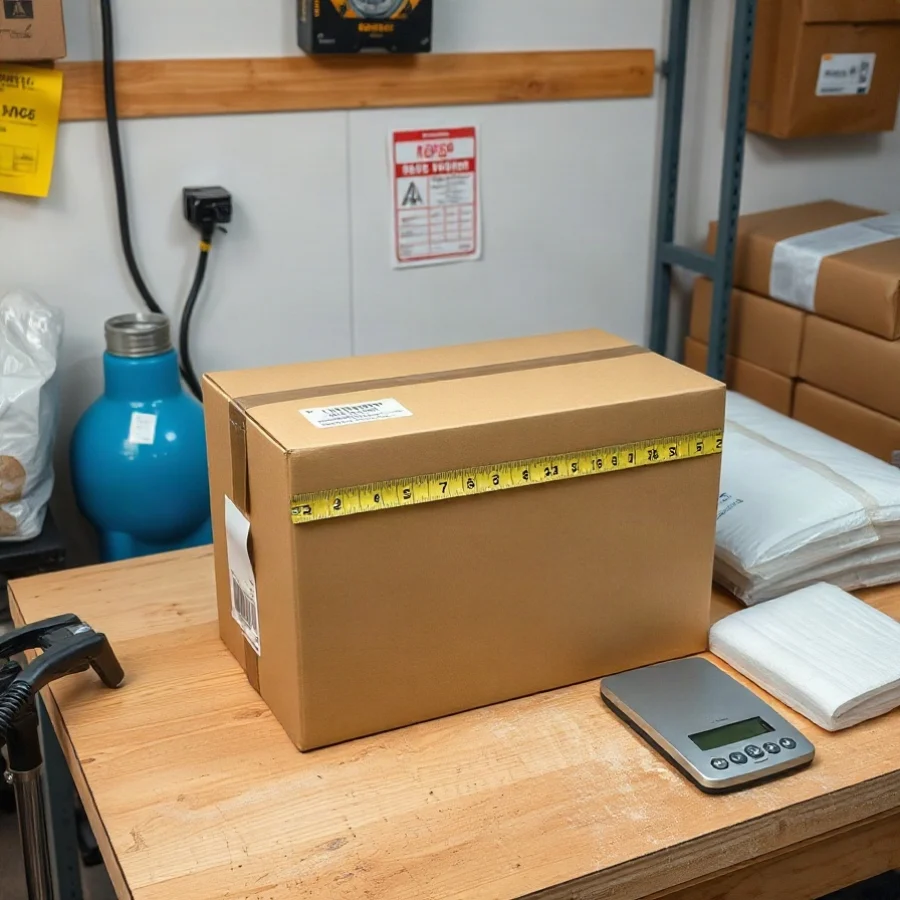
For example, a box may have enough interior room for an item measuring 11 × 7 × 5 inches, but its outside measurements may be closer to 12 × 8 × 6 inches. That larger outside size is usually the important figure for transportation and rate calculations. Always check whether a box manufacturer is listing interior or exterior dimensions before comparing boxes.
Calculating package volume
Package volume is the amount of three-dimensional space inside a rectangular measurement. The basic formula is:
Length × width × height = cubic volume
For a package measuring 12 × 8 × 6 inches:
12 × 8 × 6 = 576 cubic inches
This number is useful for comparing packaging options and understanding how much space a parcel occupies. Volume alone does not determine the final shipping price. The carrier may also consider actual weight, dimensional weight, service type, destination, surcharges, package shape, and other current rules.
For cubic feet, divide cubic inches by 1,728, because one foot contains 12 inches and 12 × 12 × 12 equals 1,728. The same example is 576 cubic inches, or one-third of a cubic foot. Do not mix inches and feet in the same calculation.
How dimensional weight works
Dimensional weight, sometimes called volumetric weight, estimates how much shipping capacity a package uses based on its size. A large, lightweight box can take up more space in a vehicle or aircraft than a smaller, heavier box. In those cases, a carrier may compare actual weight with dimensional weight and use the higher billable amount.
The general formula is:
Length × width × height ÷ dimensional divisor = dimensional weight
The divisor is not universal. It can vary by carrier, service level, package type, destination, unit system, and current pricing rules. Because divisors and rounding practices can change, use the divisor shown in the carrier’s current documentation or shipping tool. Do not assume that a divisor used by one service applies to another.
For a practical estimate, a 12 × 8 × 6 inch box has a volume of 576 cubic inches. You would divide 576 by the applicable current divisor, then apply the carrier’s stated rounding method. Compare that result with the package’s actual weight. The final billable weight may also be affected by minimum charges or additional rules, so a calculator estimate is not a guaranteed quote.
You can use the dimensional weight calculator to compare package size with actual weight. For a broader explanation of the concept, see the dimensional weight guide.
Why package size affects shipping cost
Two packages that weigh the same may not cost the same to ship. The larger package may occupy more room, require more handling space, or fall into a different pricing category. Package dimensions can also affect whether a parcel qualifies for a particular service, requires an oversize assessment, or must be handled through a different shipping method.
Carrier limits and pricing are not identical. They may differ by origin, destination, service level, packaging type, and account arrangement. Some services evaluate the longest side, while others may use length plus girth or other measurements. Check the current official rules for the exact service before buying postage, especially for unusually long, heavy, fragile, or irregular packages. The shipping rules guide can help you organize the information you need to verify.
Choosing the right box size
The best box is usually large enough to protect the item without leaving excessive empty space. A box that is too small can crush the product or force you to over-compress cushioning. A box that is too large may increase material use, dimensional weight, movement inside the carton, and damage risk.
Start with the product measurements
Measure the product at its widest points. Add room for cushioning on every side, including space above the item if the top needs protection. If the item has corners, handles, or protruding parts, measure those features rather than relying on a flat product description.
Allow for protective material
Foam, molded inserts, paper, bubble cushioning, and air pillows each require a different amount of space. The needed clearance depends on the product’s fragility and the material’s compression. Place the product in a sample box, close the flaps without forcing them, and check that the item cannot shift excessively.
Test the packed box
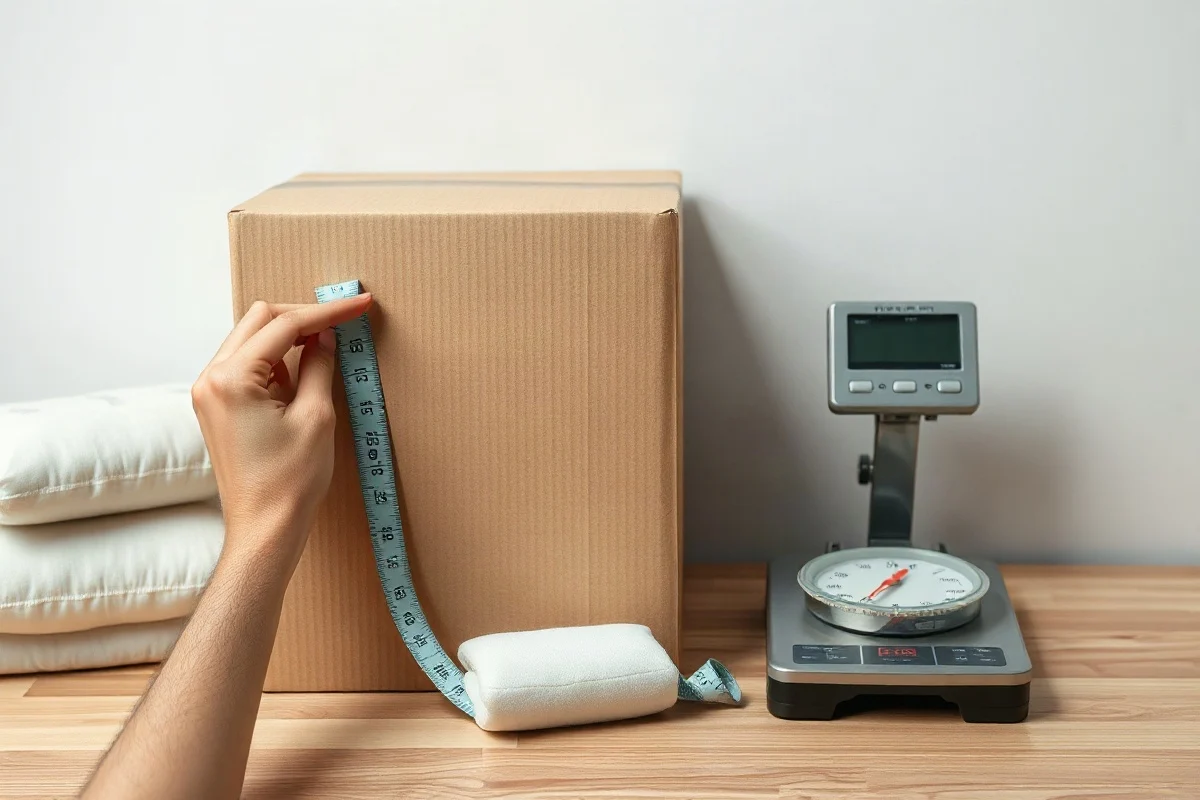
After selecting a box, pack a representative sample exactly as you intend to ship it. Seal the box, measure its outside dimensions, and weigh it. This test can reveal that the actual parcel is larger than the product and empty-box measurements suggested. If the package is close to a size or weight threshold, test more than one box style before committing to a packaging design.
Common package measurement mistakes
- Measuring the empty carton: The final packed box may bulge or require extra closure material.
- Using product dimensions as package dimensions: The product does not include cushioning or the box walls.
- Rounding down: This can produce measurements smaller than the parcel actually is.
- Mixing units: Entering inches in one field and centimeters in another makes the result unreliable.
- Ignoring irregular shapes: A protruding corner or rounded side can increase the usable measurement.
- Using an old carrier rule: Limits, divisors, rounding methods, and fees may change.
Inches, centimeters, and unit conversion
U.S. shipping forms commonly use inches and pounds, although some international services and marketplaces may request centimeters and kilograms. One inch equals exactly 2.54 centimeters. To convert inches to centimeters, multiply by 2.54. To convert centimeters to inches, divide by 2.54.
For example, a 12 × 8 × 6 inch box is approximately 30.48 × 20.32 × 15.24 centimeters. Keep the original measurements available, because a converted value may need to be rounded according to the receiving system’s instructions.
A simple packing and measurement checklist
- Measure the product at its maximum length, width, and height.
- Select a box with enough space for cushioning and safe closure.
- Pack the item so it cannot move freely inside the box.
- Seal the package using the intended tape, label, and closure method.
- Measure the outside length, width, and height at their maximum points.
- Weigh the sealed package, including all packaging materials.
- Enter the dimensions and weight in the correct units.
- Compare actual weight and dimensional weight when the service uses dimensional pricing.
- Verify current carrier or marketplace requirements before purchasing postage or publishing a package specification.
Accurate dimensions make shipping estimates more dependable and help prevent avoidable adjustments. If you need to compare cartons before packing, try the box size calculator, then confirm the result by measuring the finished parcel.
Comments
0No comments yet. Be the first to share a helpful note or question.
Leave a Comment
Your email address will not be published. Comments are reviewed before appearing on the site.