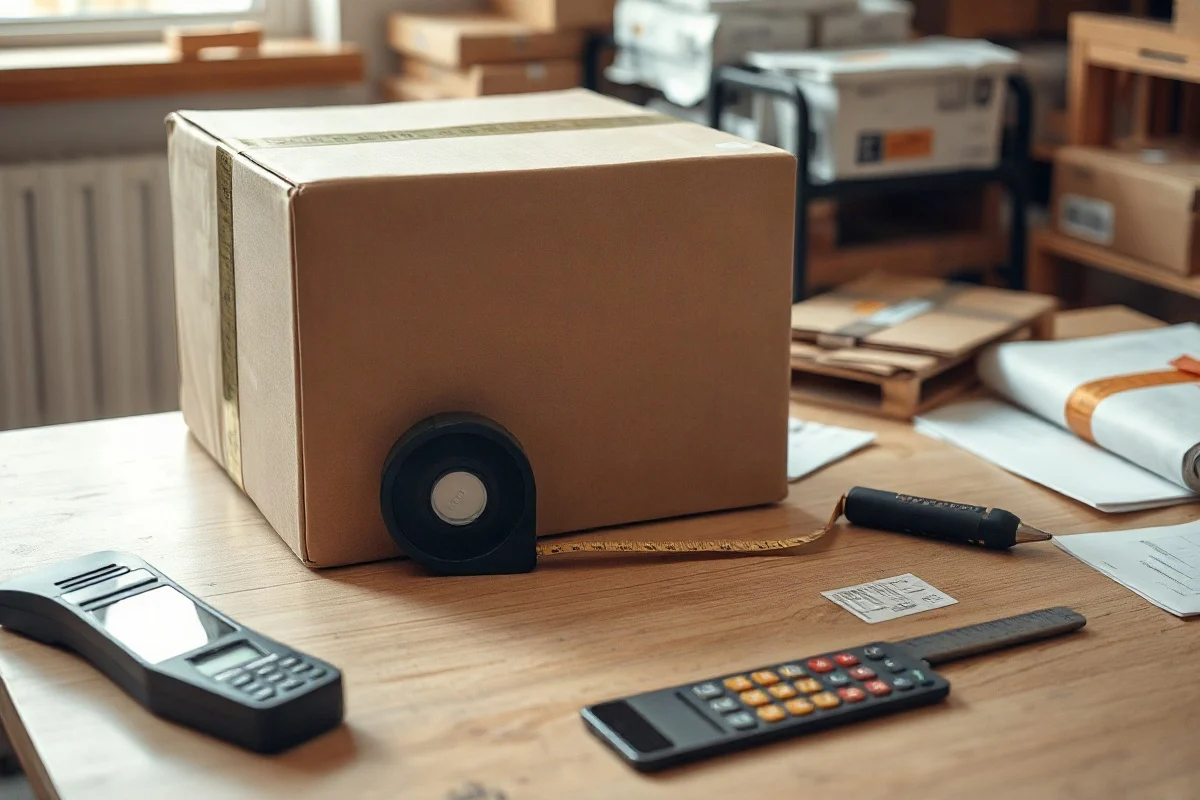
A package may be too large to ship when its length, combined dimensions, weight, or dimensional weight exceeds the limits for the carrier and service you selected. To check it, measure the sealed package at its widest points, identify the longest side, calculate the length-plus-girth measurement when required, and compare every result with the current rules for your specific service. Also check whether the package is unusually shaped, oversized, or subject to special handling.
Why package size matters
Carriers do not evaluate a shipment by weight alone. A large, lightweight box can take up more vehicle or aircraft space than a compact, heavy box. For that reason, shipping systems may use the package's physical weight or its dimensional weight, whichever produces the billable weight under the applicable pricing rules.
Size can also affect whether a package qualifies for a particular service, whether an oversize handling charge applies, and whether the shipment must be sent through a different service or transportation method. These rules can vary by carrier, service level, destination, package shape, and date. Always verify the current requirements in the official rate or service guide before buying a label.
Measure the package after packing
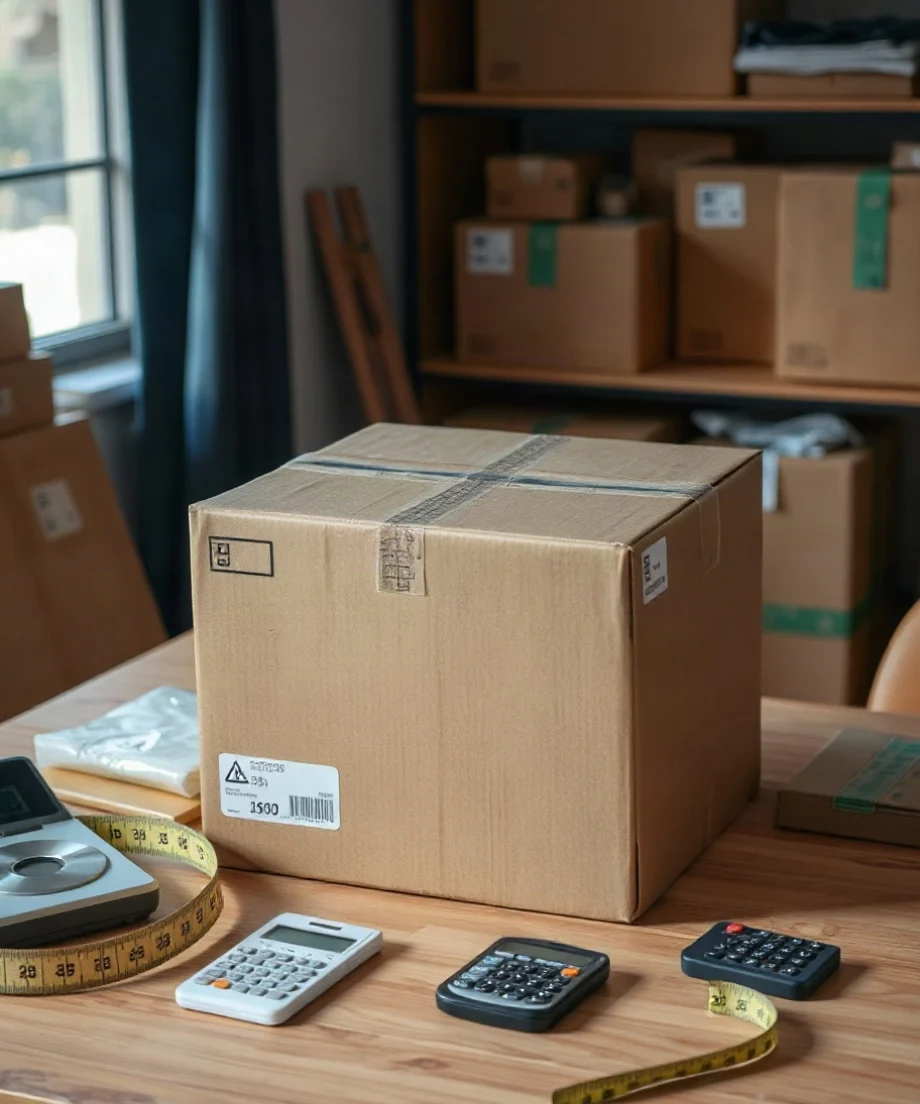
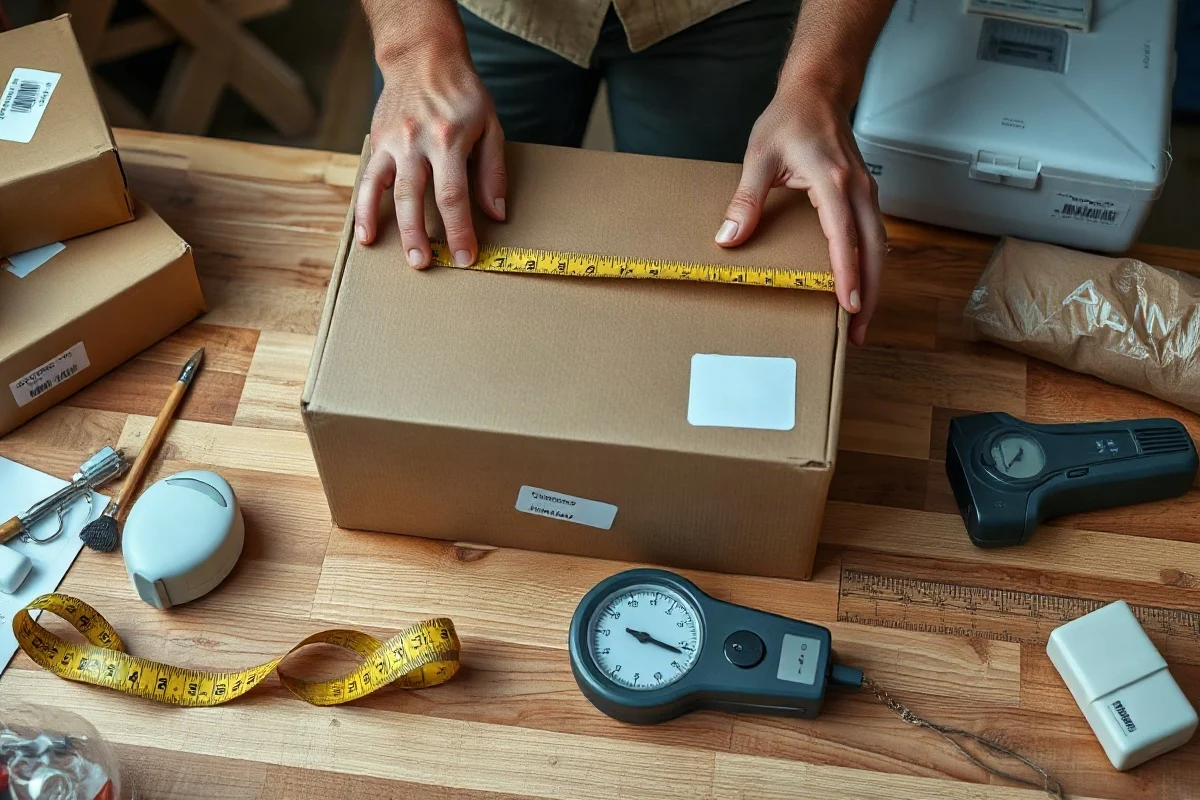
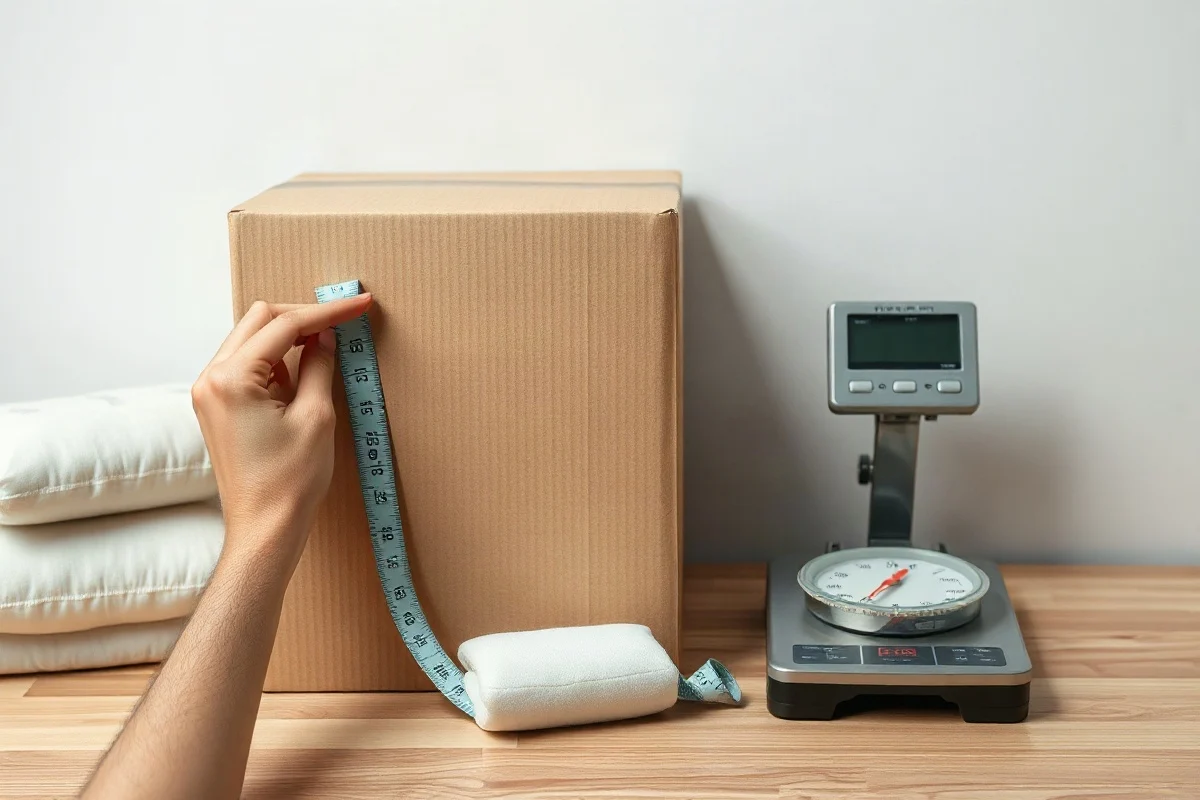
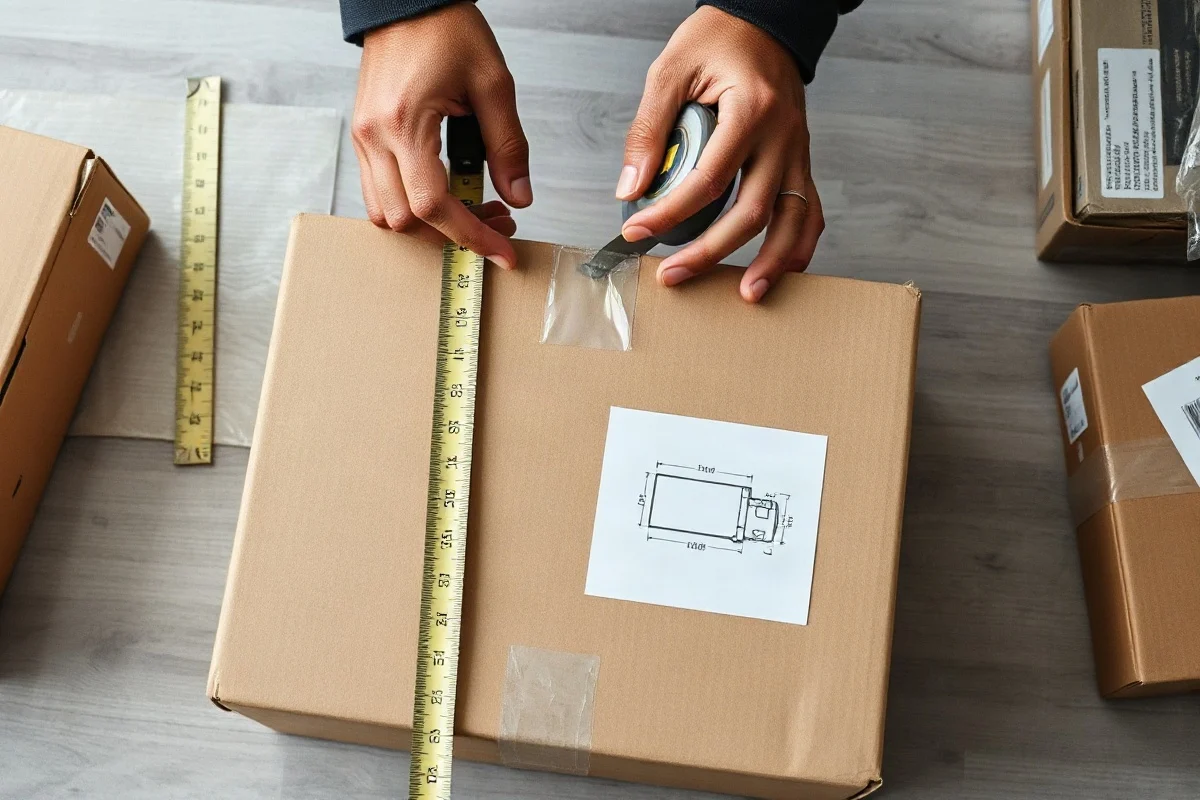
Measure the finished package, not just the product or the empty box. Tape, protective material, corner guards, bulging contents, and other packing materials can change the final dimensions. Place the sealed package on a flat surface and use a rigid tape measure or ruler.
Record length, width, and height
For a rectangular box, record the three outside measurements:
- Length: the longest side of the package.
- Width: the shorter side of the base or face.
- Height: the remaining dimension.
Use the package's maximum outside dimensions. If the box is slightly swollen, measure the bulging area rather than pressing it flat. If the package has irregular sides, round or measure according to the carrier's stated instructions. Do not assume that a soft mailer can be measured like a rigid carton if its contents create an uneven shape.
Use one unit consistently
Most U.S. shipping measurements are entered in inches and pounds, but international services may use centimeters and kilograms. Convert every dimension before applying a formula. For example, a box measuring 40 centimeters by 30 centimeters by 20 centimeters is approximately 15.75 inches by 11.81 inches by 7.87 inches. Avoid mixing inches and centimeters in the same calculation.
When a carrier asks for whole-number dimensions, follow that carrier's current instructions for rounding. The software used to price a shipment may round each dimension, the calculated volume, or the final billable weight in a specified way. A small difference near a limit can change the result, so use the carrier's published method rather than relying on a general estimate.

Calculate length plus girth
Some carrier services evaluate a package using length plus girth. For a rectangular box, the usual calculation is:
Length plus girth = longest side + 2 × width + 2 × height
For example, suppose a sealed box measures 30 inches long, 16 inches wide, and 12 inches high. The length is 30 inches, and the girth is:
2 × 16 + 2 × 12 = 56 inches
The length-plus-girth measurement is therefore:
30 + 56 = 86 inches
This calculation is useful, but it is not a universal pass-or-fail test. Different services may use different maximums, definitions, or additional conditions. Some may also apply separate rules to tubes, rolls, irregular parcels, international shipments, or packages with one especially large dimension. Compare your result with the current guide for the exact service you intend to use.
Check dimensional weight
A package can be accepted by size but still cost more because of dimensional weight. Dimensional weight estimates the space a package occupies using a carrier-specific divisor. The general structure is:
Dimensional weight = length × width × height ÷ dimensional-weight divisor
The divisor is not universal. It may differ by carrier, service, shipment type, destination, or account agreement, and carriers can change their pricing rules. Some services also require the result to be rounded in a particular way. Do not insert a remembered divisor into a final quote unless it matches the current official pricing information for your shipment.
For a rough example, a 30-by-16-by-12-inch box has a volume of:
30 × 16 × 12 = 5,760 cubic inches
You would then divide 5,760 by the applicable current divisor and compare the result with the package's actual weight. The carrier's billing system determines which weight is used under its rules. Our Dimensional Weight Calculator can help you organize the calculation, but confirm the divisor and rounding method with the carrier before purchasing postage.
Compare the package with the correct carrier rule
There is no single maximum package size that applies to every shipment. A package limit may depend on all of the following:
- Carrier and service level
- Domestic or international destination
- Actual package weight
- Length, width, and height
- Length plus girth
- Package shape and packaging type
- Residential, commercial, or pickup requirements
- Oversize, large-package, or special-handling classifications
Start with the carrier's current official service guide or online rate calculator. Enter the origin, destination, package dimensions, weight, and service level exactly as they will appear on the shipping label. If the result shows an oversize classification, surcharge, unavailable service, or an error message, do not assume that changing only the weight will solve the problem.
For practical reference, you can also compare guidance in our USPS Package Guide, UPS Package Guide, and FedEx Package Guide. Treat carrier-specific information as subject to change and verify the current official source before shipping.
Watch for signs of an oversized package
Your package deserves a closer review when any of these conditions apply:
- One side is much longer than the others.
- The box is light but takes up substantial space.
- The package is close to a published size or weight threshold.
- The box has a round, triangular, cylindrical, or irregular shape.
- The contents push against the panels or create bulges.
- The package contains a long item that cannot be placed in a standard carton.
- The online label tool displays a surcharge, warning, or service restriction.
- The shipment is going to an address or destination with special requirements.
When a package is close to a limit, measure it twice and keep a written record or photograph of the measurements. This helps you identify whether a discrepancy came from the product, the packing material, the carrier's measurement, or data entered during label creation.
Reduce the size before buying the label
If the package is too large or more expensive than expected, redesign the packaging before changing carriers. Start by choosing a box that fits the product with enough protection, but not several inches of unused space on every side.
- Remove empty space. Replace an oversized carton with a closer-fitting box when the contents can remain adequately protected.
- Use efficient protective material. Select padding that protects against impact without creating unnecessary bulk.
- Reposition the product. A different orientation may reduce the longest dimension or allow a smaller box.
- Eliminate unnecessary outer packaging. Extra cartons, decorative boxes, and oversized retail packaging may increase billable size.
- Seal and remeasure. Tape can add small amounts to the outside dimensions, and overfilled boxes can expand after sealing.
- Compare multiple services. A different service may have different size rules or pricing, but verify its current terms before relying on the comparison.
Do not remove protective material simply to meet a size target. A damaged product, weak carton, or open seam can cost more than the original shipping charge. Packaging should survive normal handling while staying as compact as practical.
What to do with irregular or very large items
Long furniture parts, rolled materials, sports equipment, machinery, and other unusual items may not fit ordinary parcel rules. Measure every outside dimension, note the shape, and check whether the carrier treats the item as a nonstandard package, freight shipment, tube, roll, or special-handling piece.
If the item cannot be safely packed in a conventional carton, ask the carrier or a qualified shipping provider which service is appropriate. Do not force an irregular object into a box that can split, expose sharp edges, or shift during transport. For valuable or fragile items, consider whether a stronger custom package or freight service is more suitable than a parcel label.
A quick pre-shipment checklist
Before you pay for postage, confirm these details:
- The package is sealed and fully packed.
- Length, width, and height were measured at the outside edges.
- All measurements use the same unit.
- The actual weight was taken with the completed package.
- Length plus girth was calculated when the service uses it.
- Dimensional weight was checked using the current applicable divisor.
- The destination and service level match the quote.
- The carrier's current official rules were reviewed.
- Any oversize or special-handling charge is included in the estimate.
When in doubt, use the larger realistic measurement rather than an optimistic one. Accurate package data reduces label adjustments, unexpected charges, rejected services, and delivery delays. For additional sizing tools and guidance, visit the Package Dimensions section of Package Size Guide.
Comments
0No comments yet. Be the first to share a helpful note or question.
Leave a Comment
Your email address will not be published. Comments are reviewed before appearing on the site.