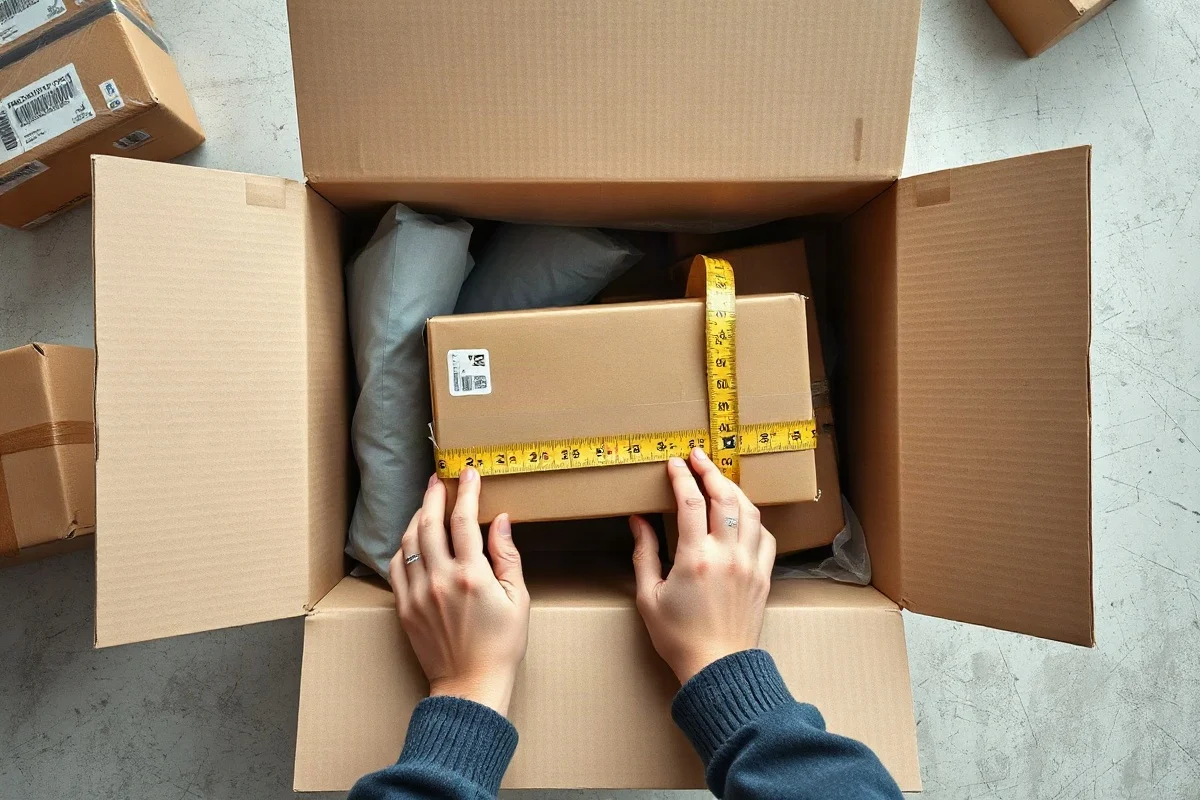
The best shipping box is usually the smallest box that fits your item, its protective packaging, and a secure closing flap without crushing or overfilling anything. Leave enough room for cushioning on every vulnerable side, but avoid large gaps that let the product move during transit. The right size depends on the item’s packed dimensions, fragility, weight, shipping service, and the carrier’s current size and weight rules.
Start with the item’s packed dimensions
Do not size a box from the product’s catalog dimensions alone. First prepare the item as it will actually ship. Include a retail package, inner carton, protective sleeve, folded clothing, bag, or any other packaging that will remain inside the box.
Measure the packed item at its longest, widest, and thickest points. For a rectangular item, record these measurements as length, width, and height. Use the same unit throughout the process, such as inches or centimeters. If the item is irregularly shaped, measure the smallest rectangular space that can contain it without forcing or compressing it.
How to measure a box
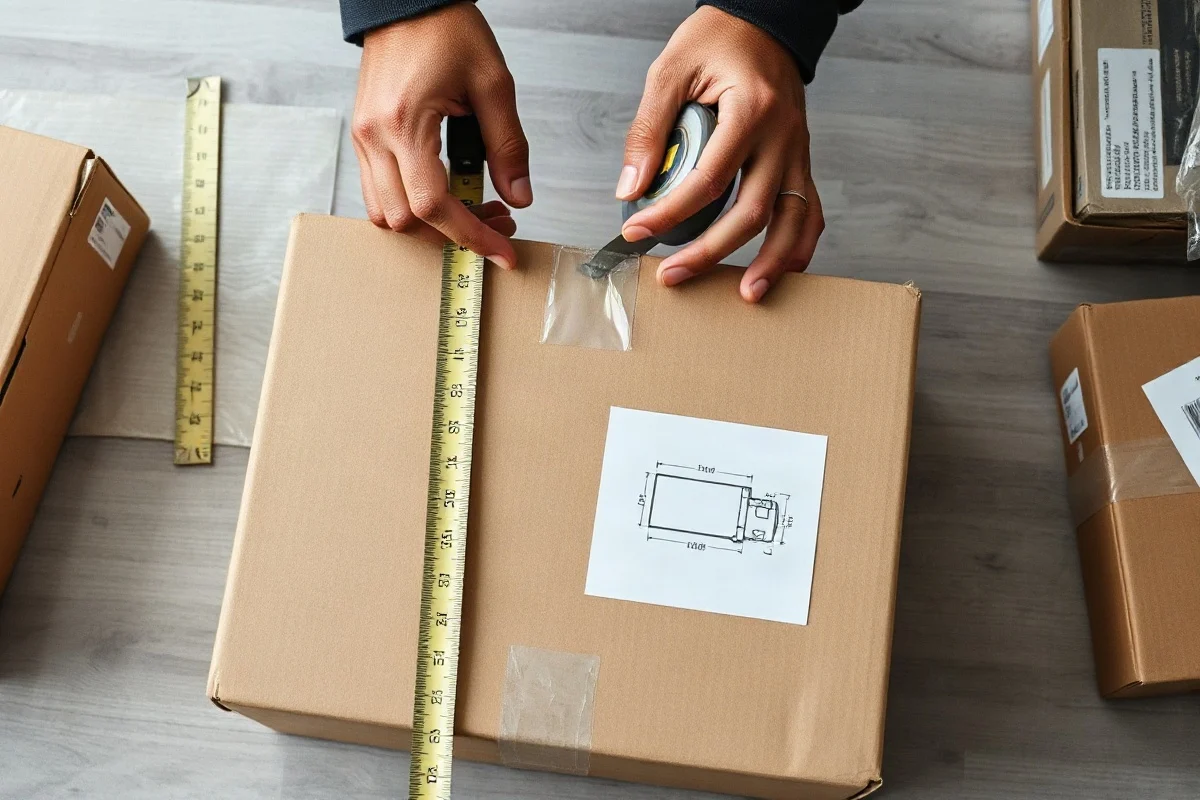
Shipping box dimensions are commonly listed as length × width × height. Measure the inside dimensions when choosing a box for a product. Manufacturers may advertise outside dimensions, and the difference between inside and outside measurements can matter when the fit is close.

For a typical rectangular carton:
- Length: the longest interior side
- Width: the shorter side of the box opening
- Height: the distance from the bottom inside surface to the top inside surface when closed
Measure the actual box with a ruler or tape measure rather than relying only on a label. Corrugated cardboard thickness, flap construction, and manufacturer tolerances can reduce usable interior space.
How much extra space should a box have?
There is no single clearance measurement that works for every shipment. The amount of extra space depends on the item and the cushioning method. A rigid, durable product may need only a small amount of protective material. A fragile glass object, electronic device, ceramic item, or product with a delicate finish needs more controlled cushioning and stronger separation from the box walls.
A practical starting point is to add room for protection on all sides, then test the packed box. The item should not touch the carton walls, top, or bottom when protection is required. At the same time, the packing material should not be compressed so tightly that it loses its ability to absorb impact.

For loose-fill material, paper, air pillows, or similar cushioning, use enough material to prevent movement after the box is closed. For foam sheets, molded inserts, or corner protectors, measure the thickness of the material and add that space to each relevant dimension.
For example, suppose an item measures 12 × 8 × 4 inches and needs about 1 inch of protective material on every side. A starting interior box size would be approximately:
(12 + 2) × (8 + 2) × (4 + 2) = 14 × 10 × 6 inches
This is a planning example, not a universal packaging rule. The final size should be based on the item’s fragility, the actual cushioning, and a shake test after packing.
Use the smallest safe box, not the tightest box
A box that is too small can be just as problematic as one that is too large. If the product is forced into the carton, the walls may bow, the flaps may not meet properly, and pressure may transfer directly to the item. A tight fit can also leave no room for impact protection.
A box that is too large creates different problems. The item may slide, corners may collapse, and extra void fill may add weight without improving protection. Larger cartons can also increase the package’s dimensional weight, depending on the carrier, service, destination, and current pricing rules.
Compare available options in the box sizes guide, but confirm the box’s usable interior dimensions before ordering a large quantity.
Account for dimensional weight
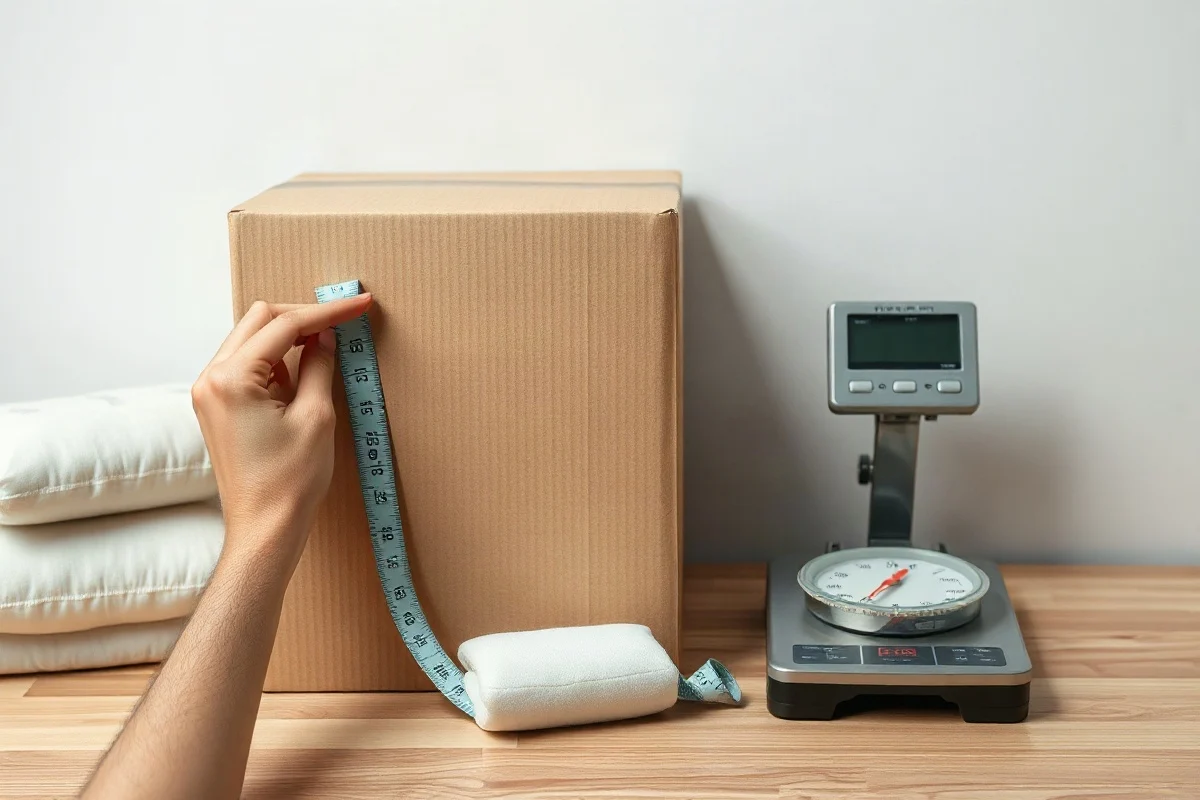
Some shipments are priced using dimensional weight, also called volumetric weight, when the package takes up more space than its actual weight would suggest. The exact formula and divisor can vary by carrier, service, destination, package type, and date, so do not assume that one carrier’s calculation applies to another.
The general concept is:
Dimensional weight = package volume ÷ the applicable dimensional divisor
Package volume is usually calculated from the outside length, width, and height. Depending on the carrier’s rules, measurements may need to be rounded in a particular way before the calculation. The billable weight may also be based on the greater of actual weight and dimensional weight.
Before choosing between two boxes, compare their packed outside dimensions and actual weights using the current rules for the service you plan to purchase. The dimensional weight calculator can help you compare package volume, but verify the applicable divisor and rounding requirements with the carrier.
Choose a box shape that protects the item
Box dimensions should follow the product’s shape whenever practical. A long, narrow product may need a rectangular carton rather than a wide box filled with unnecessary void space. A flat item may fit a shallow box or rigid mailer, while a heavy object usually benefits from a compact carton with strong panels and limited internal movement.
For products with sharp corners, exposed edges, handles, or protruding parts, add protection before measuring the final package. These features can puncture cardboard or concentrate force during handling. Use edge guards, corner protection, or an inner box when appropriate.
Do not select a box based only on its nominal volume. Two cartons with similar cubic volume can perform very differently because one may leave a long unsupported gap or make it difficult to place cushioning around the item.
Pack the box in a practical sequence
- Inspect the carton. Use a clean, dry box with no crushed panels, punctures, or weakened seams.
- Reinforce the bottom. Close the bottom flaps securely with shipping tape, especially for heavier items.
- Add a base layer. Place cushioning on the bottom if the product needs impact protection.
- Protect the item. Wrap or cover the product so it cannot scrape against the carton or another item.
- Center the contents. Keep the item away from the sidewalls, corners, top, and bottom when cushioning is needed.
- Fill empty spaces. Use suitable void fill so the contents do not shift when the package is gently moved.
- Check the top clearance. The flaps should close without pressing hard against the product.
- Seal and test. Apply strong tape across the main seam, then gently shake the package. Repack it if the contents move or make contact with the walls.
How to choose a box for fragile items
Fragile items need more than a larger carton. They need controlled movement, separation from hard surfaces, and protection against compression. Wrap individual pieces separately, prevent them from touching one another, and keep heavier components below lighter ones when packing multiple items.
For especially delicate or valuable products, consider double boxing. Place the protected inner package inside a larger outer box with cushioning between the two cartons. The outer box should be large enough to hold the inner box without forcing it against the walls, but not so large that the inner box shifts freely.
Test the finished package based on the risks it may face. A gentle shake can reveal movement, but it does not replace appropriate packaging for a fragile shipment or a formal carrier and product test.
Consider weight and box strength
A compact box is not automatically a strong box. Check the carton’s construction and any manufacturer strength rating when shipping heavy, dense, or concentrated items. A box with a large footprint may bend under a heavy load, while a smaller carton may distribute the weight more effectively.
Keep heavy products low and centered when packing several items. Do not exceed the box manufacturer’s guidance, and avoid reusing cartons that are damp, crushed, or structurally weakened. If the shipment contains liquids, confirm that the container and outer packaging meet the current requirements for the selected carrier and service.
Check carrier and marketplace requirements
Carriers may apply different rules for maximum weight, length, combined dimensions, oversize handling, surcharges, rounding, and dimensional weight. These rules can also vary by service and destination and may change over time. Before purchasing postage, check the current official requirements for the carrier and service you intend to use.
If you are shipping through a marketplace or fulfillment program, review its current packaging and size requirements separately. Marketplace rules may differ from the carrier’s general rules. This is especially important for fulfillment centers, storage programs, returns, and products classified as fragile, dangerous, oversized, or restricted.
For a broader comparison, use the box size calculator to estimate a suitable carton from the product dimensions and protective clearance. Then verify the finished package by measuring and weighing it as it will be tendered to the carrier.
A quick box-sizing checklist
- Measure the product after adding any inner packaging.
- Use interior box dimensions when checking fit.
- Add enough clearance for cushioning on vulnerable sides.
- Prevent the item from touching the carton walls.
- Eliminate movement without crushing the contents.
- Compare the sealed package’s outside dimensions and actual weight.
- Check current carrier or marketplace requirements before shipping.
- Choose a stronger carton when the product is heavy, dense, sharp, or fragile.
The ideal shipping box balances protection, stability, cost, and usable space. Start with the packed item, add only the cushioning it genuinely needs, and validate the sealed package before buying postage. A snug, well-supported fit is usually more efficient than either a cramped carton or a large box filled with excess material.

Comments
0No comments yet. Be the first to share a helpful note or question.
Leave a Comment
Your email address will not be published. Comments are reviewed before appearing on the site.