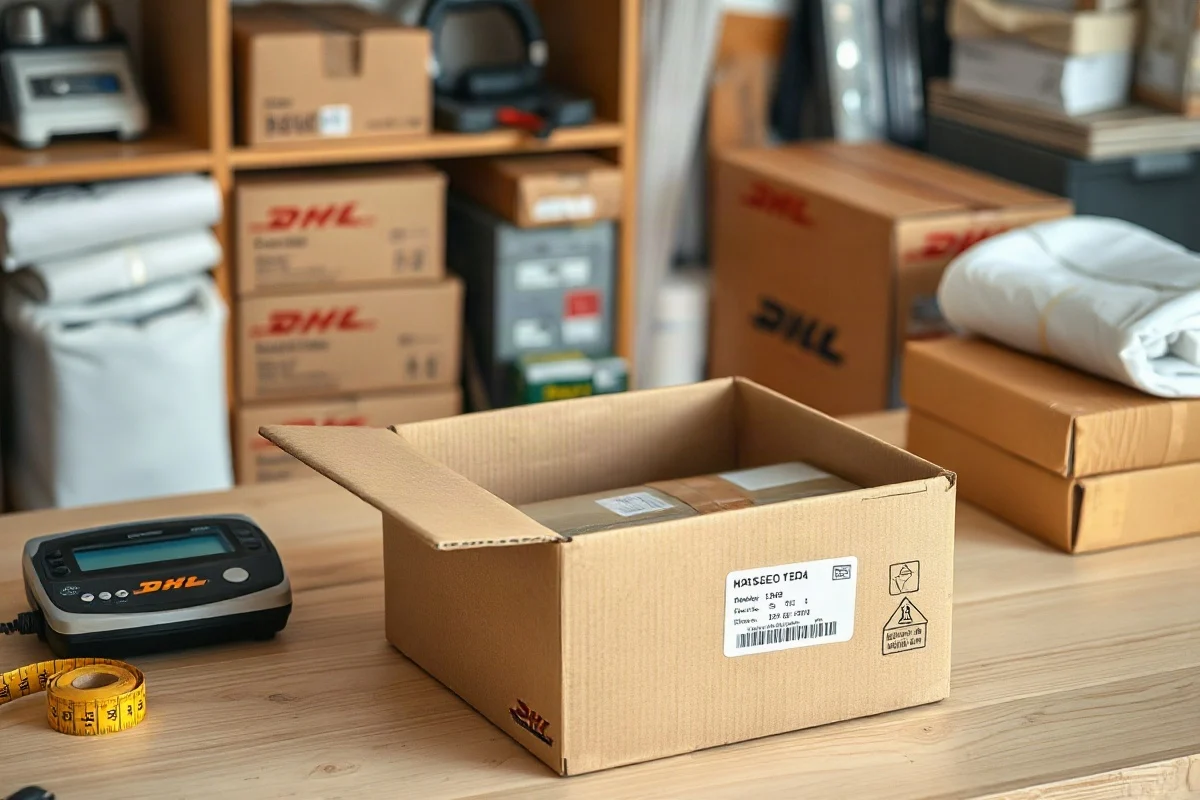
Yes, box size can affect DHL shipping cost even when the package is relatively light. DHL may price a shipment using its actual weight, dimensional weight, or another applicable rating rule, depending on the service, destination, package characteristics, and current terms. A larger box can also affect whether a shipment falls under special size or handling conditions. To avoid paying for unused space, choose the smallest protective box, measure the sealed package accurately, and compare the quote using the current DHL rate tool or account pricing.
Why the size of a box matters to DHL
Shipping companies transport both weight and occupied space. A lightweight package with large outside dimensions can take up as much room in a vehicle or aircraft as a heavier shipment. For that reason, a carrier may calculate a package's dimensional weight, also called volumetric weight, from its length, width, and height.
The chargeable weight is generally based on the applicable comparison between actual weight and dimensional weight, but the exact method can vary. Service level, origin, destination, shipment type, package count, currency, contract terms, and other conditions may affect the final price. DHL Express and other DHL services may not use identical pricing structures. Always confirm the current rules and quote for the specific service you intend to buy.
Box size can affect cost in several ways:
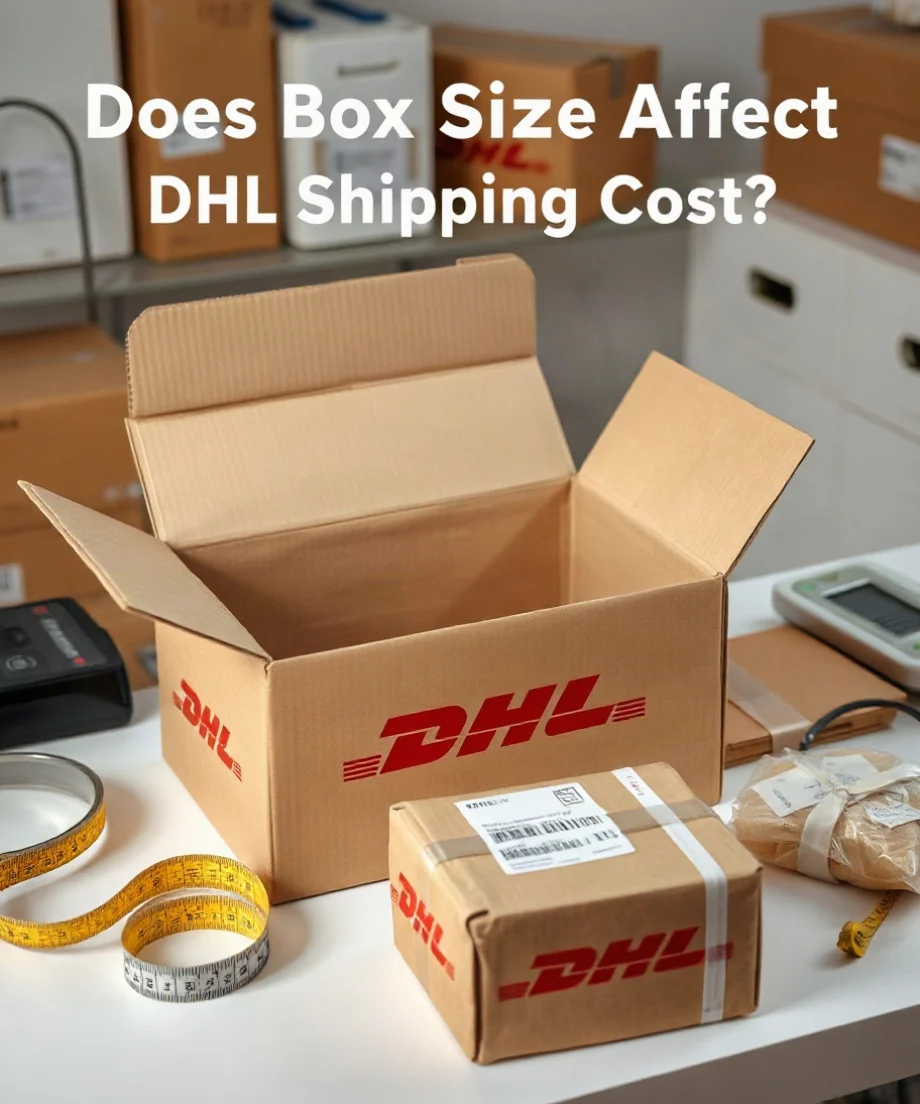
- Dimensional weight: A large package may be rated above its scale weight.
- Size-based surcharges or handling: Oversized, unusually shaped, or difficult-to-handle packages may receive additional charges under the applicable service rules.
- Packaging materials: A larger box usually requires more corrugated board, cushioning, tape, and void fill.
- Damage risk: Excess space can allow products to move during transit, increasing the chance of damage and replacement costs.
- Storage and fulfillment impact: For businesses, larger cartons may require more warehouse space and can reduce the number of packages loaded into a vehicle.
Actual weight versus dimensional weight
Actual weight is the package's physical weight after the item has been packed. Weigh the complete shipment, including the box, inner packaging, labels, and any accessories traveling with the order.
Dimensional weight is calculated from the package's outside dimensions. A general form of the calculation is:
Dimensional weight = length × width × height ÷ applicable dimensional divisor
Use the dimensions of the sealed package and the unit system required by the DHL service. For inch measurements, the divisor is typically a service-specific number supplied in the applicable DHL rate information. Do not assume that one divisor applies to every DHL product, lane, country, or account. If you are shipping internationally, the quote may also involve metric measurements and different rounding or billing conventions.
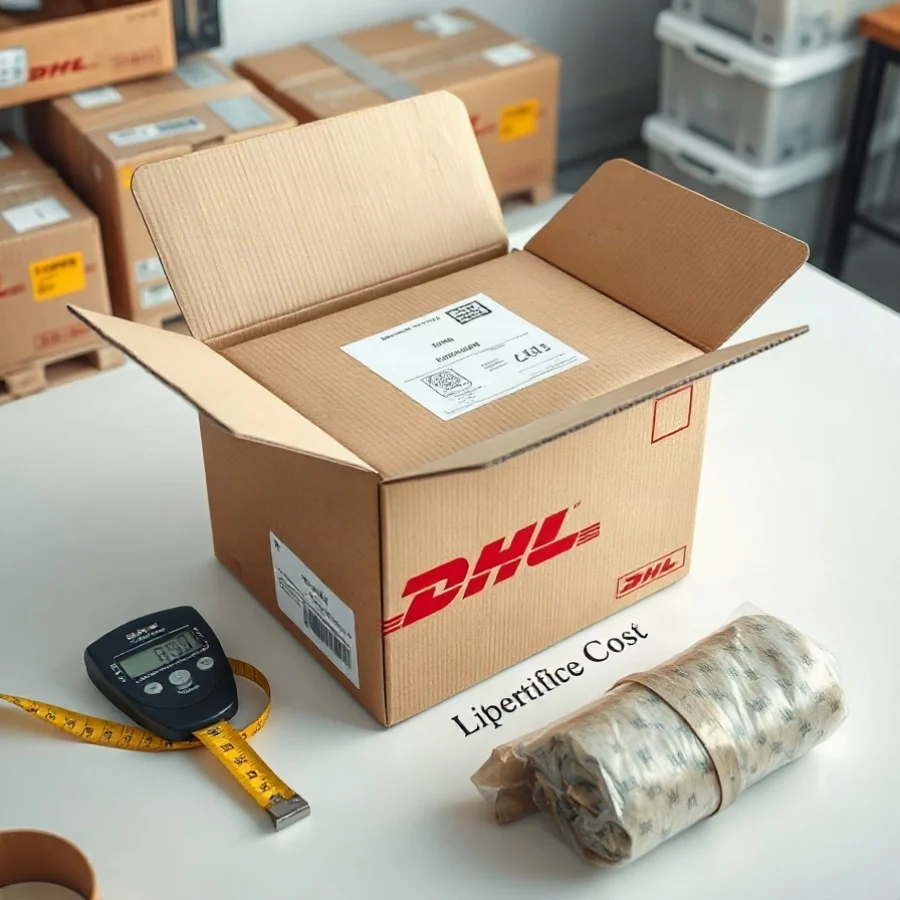
For example, imagine a packed carton measuring 20 × 14 × 10 inches. Its volume is:
20 × 14 × 10 = 2,800 cubic inches
That volume is not itself the shipping weight. To find dimensional weight, divide 2,800 by the divisor specified for the shipment. Then compare the result with the package's actual weight according to the current DHL pricing method. If the package weighs 8 pounds but its calculated dimensional weight is higher, the larger figure may influence the transportation charge. The final quote can still include other adjustments or fees.
You can use the Dimensional Weight Calculator to check the volume and estimate dimensional weight, but treat the result as a planning aid. The DHL quote and current service documentation control the price.
How to measure a box for a DHL quote
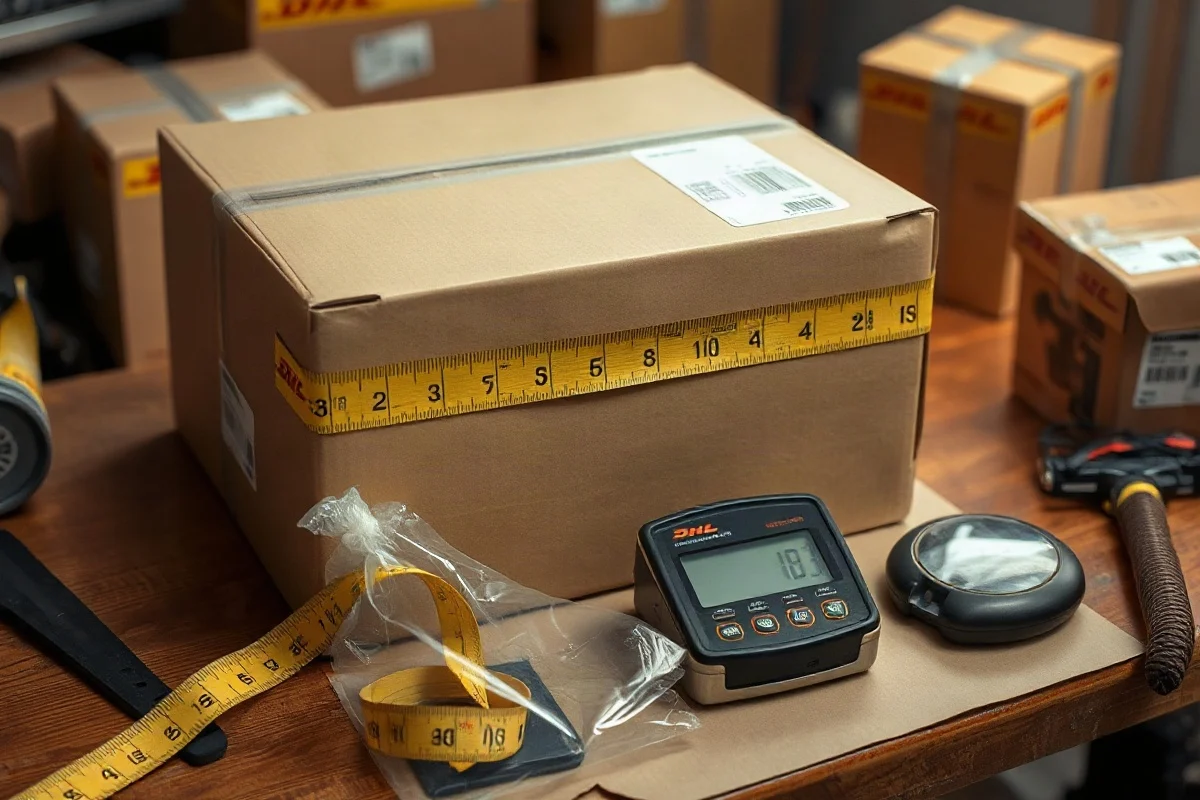
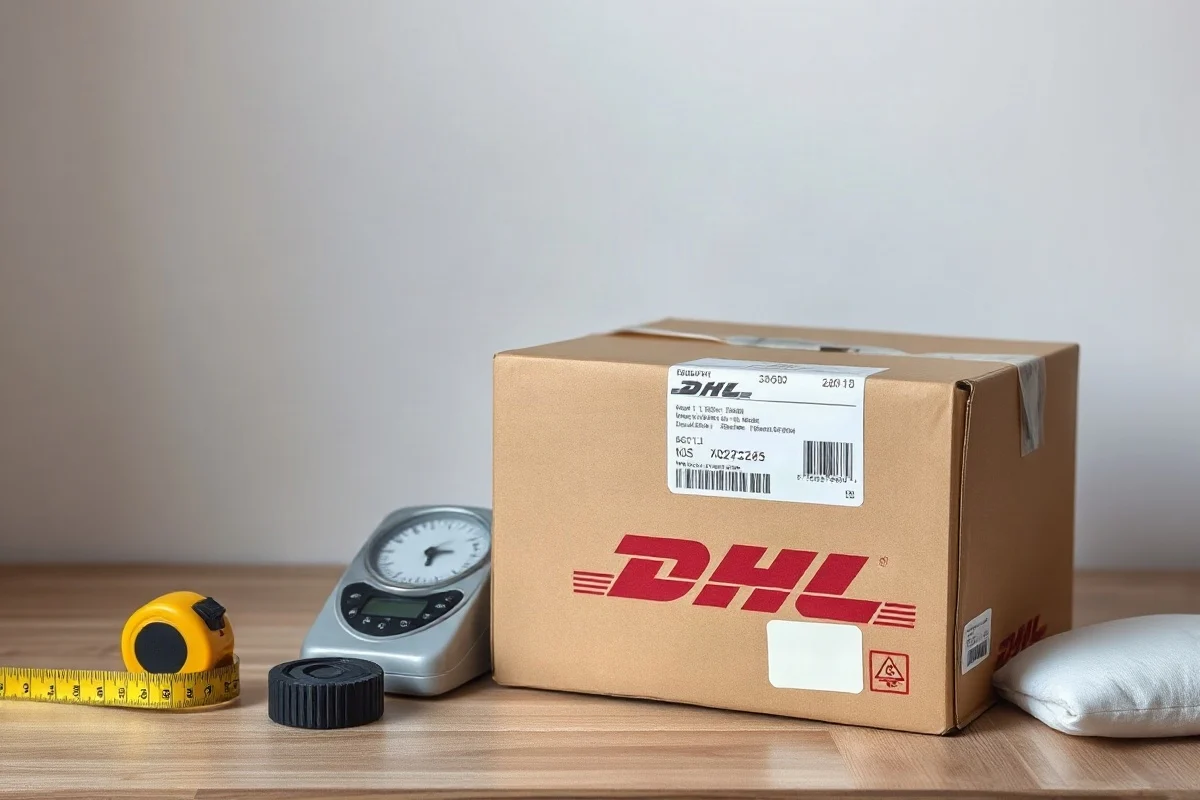
Measure the outside of the finished package, not the empty box or the product before packing. Small differences can matter when a package is close to a rating threshold.
1. Pack the item first
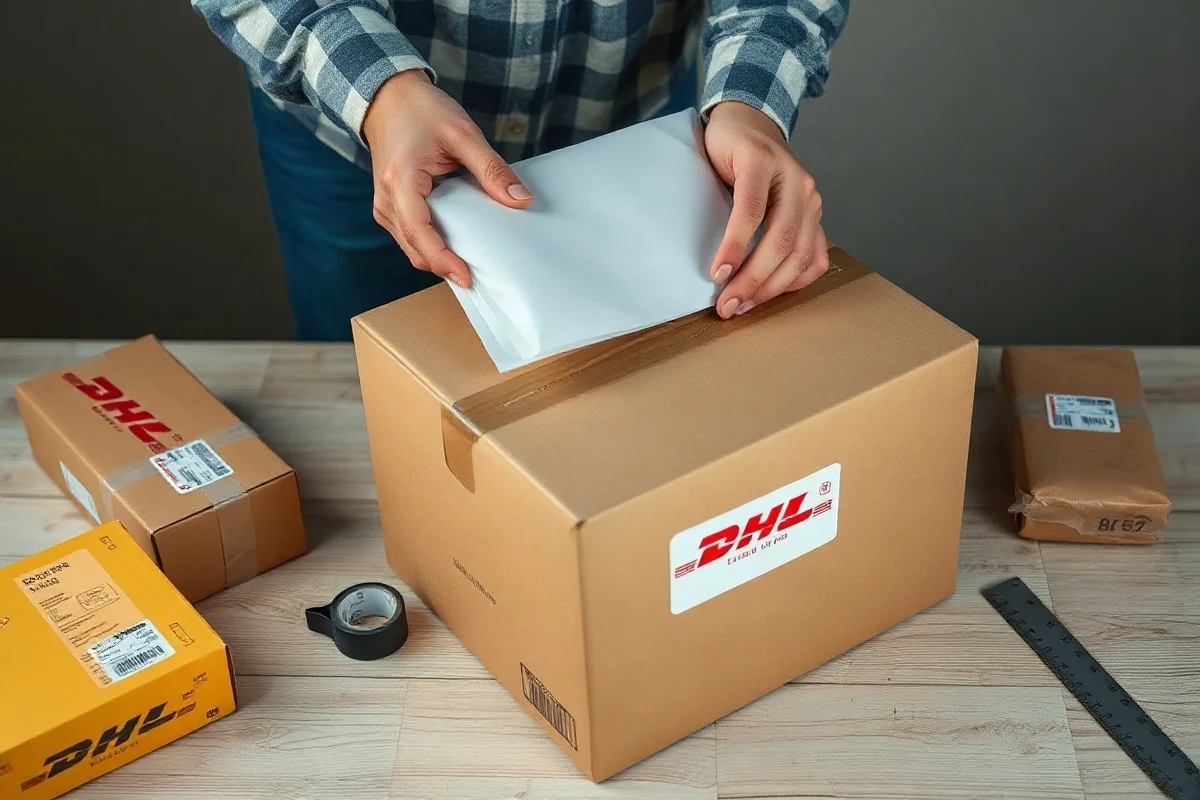
Place the product, cushioning, inserts, and paperwork inside the carton. Close and seal every flap in the way you plan to ship it. Tape can add a small amount to the finished dimensions, while soft packaging may compress after sealing.
2. Measure the longest side
Hold the package so the longest straight edge is the length. Measure from one outer edge to the opposite outer edge. Do not measure only the manufacturer's printed box dimensions if the sealed package bulges beyond them.
3. Measure the width
Measure the next-longest side at a right angle to the length. Include protruding tape, straps, or other permanent parts of the shipping package when they affect the outer profile.
4. Measure the height
Measure the remaining side from the bottom to the top. If the carton is not perfectly rectangular, use the measurements required by the applicable DHL instructions and account for the greatest relevant points.
5. Weigh the complete parcel
Use a scale that can measure the package consistently. Record the weight after all labels and packing materials are attached. If your scale displays a value in kilograms but the quote requires pounds, convert it before entering the information. One kilogram equals approximately 2.205 pounds, and one pound equals approximately 0.454 kilograms. Keep extra decimal places during the calculation, then follow the rounding rules shown in the current quote system.
For more detailed measuring guidance, see how to measure a package for DHL.
How a bigger box can raise the price
Consider a product that weighs 6 pounds. If it fits safely in a 12 × 10 × 8-inch carton, the package has 960 cubic inches of outside volume. If the same product is placed in a 24 × 16 × 12-inch carton, the volume becomes 4,608 cubic inches. The product has not changed, but the package occupies almost five times as much measured volume.
Depending on the applicable divisor and DHL service, that larger carton may produce a much higher dimensional weight. It could also be more likely to trigger a size-related condition. The example does not establish a DHL price or a universal threshold; it shows why box selection can matter even when the item itself is unchanged.
Similarly, a small product packed in a heavy-duty oversized carton may be charged by actual weight if the materials are dense, or by dimensional weight if the box is mostly empty. You need both the final scale weight and the final dimensions to make a reliable comparison.
How to reduce DHL shipping cost without underpacking
The goal is not simply to use the smallest possible carton. The correct box must protect the contents through handling, sorting, stacking, and transport. Cutting away too much cushioning can create damage claims, returns, and replacement costs that exceed the shipping savings.
- Start with the product's packed footprint: Measure the item after adding the minimum cushioning needed around fragile surfaces.
- Choose a close-fitting carton: Leave enough room for protective material, but avoid large empty areas that require excessive void fill.
- Use efficient shapes: A rectangular box is usually easier to measure, stack, and handle than an irregular package.
- Compress suitable materials: Clothing, soft goods, and other non-fragile items may need less space when packed correctly. Never compress an item if doing so can cause damage.
- Review inserts and retail packaging: Remove unnecessary outer packaging when product requirements and customer expectations allow it.
- Test the packed design: Drop, vibration, compression, or transit testing may reveal whether a smaller package still provides adequate protection.
- Compare packaging options: Check whether a slightly smaller carton, mailer, or custom package produces a lower chargeable weight without increasing damage risk.
For help selecting a carton, use the Box Size Calculator as a starting point. The result should be adjusted for the product's fragility, cushioning requirements, closure method, and the dimensions of the actual finished package.
Do DHL size limits affect the cost?
They can. DHL services may have limits or special conditions involving maximum length, combined dimensions, weight, package shape, or handling requirements. These conditions are not necessarily the same for every country, service, account, or shipment type. A package that is accepted by one DHL service may require a different service, approval, or surcharge under another.
Do not rely on an old chart, a third-party calculator, or a limit copied from a different DHL website. Before shipping, check the current official DHL page and the rate quote for your origin, destination, service, and package details. If you are shipping through a marketplace or fulfillment program, check that program's current packaging and carrier requirements separately.
What information to enter when comparing quotes
For a meaningful comparison, enter the same information each time:
- Origin and destination postal codes or addresses
- Shipment date, if requested
- Service level and delivery option
- Number of packages
- Final length, width, and height of each package
- Actual weight of each complete package
- Declared contents and any required customs information
- Account, pickup, insurance, or other options that affect the quote
Changing the box dimensions while leaving the weight unchanged can produce a different quote. Changing the service or destination can also change the result, so compare like with like. Save the quoted package details and recheck them if the carton design, contents, or packing materials change.
The practical answer for shippers
Box size does affect DHL shipping cost, but it is only one part of the rating calculation. A compact, well-protected package can reduce dimensional weight and may avoid size-related handling conditions. An oversized box can increase the chargeable weight even when the contents are light.
Measure the sealed package, weigh it after packing, calculate its volume, and enter accurate figures into the current DHL quoting system. Then verify any applicable size limits, dimensional-weight rules, rounding practices, and surcharges in the official documentation for your service and lane. The most reliable savings usually come from eliminating unused space while preserving enough cushioning to deliver the product safely.
Comments
0No comments yet. Be the first to share a helpful note or question.
Leave a Comment
Your email address will not be published. Comments are reviewed before appearing on the site.