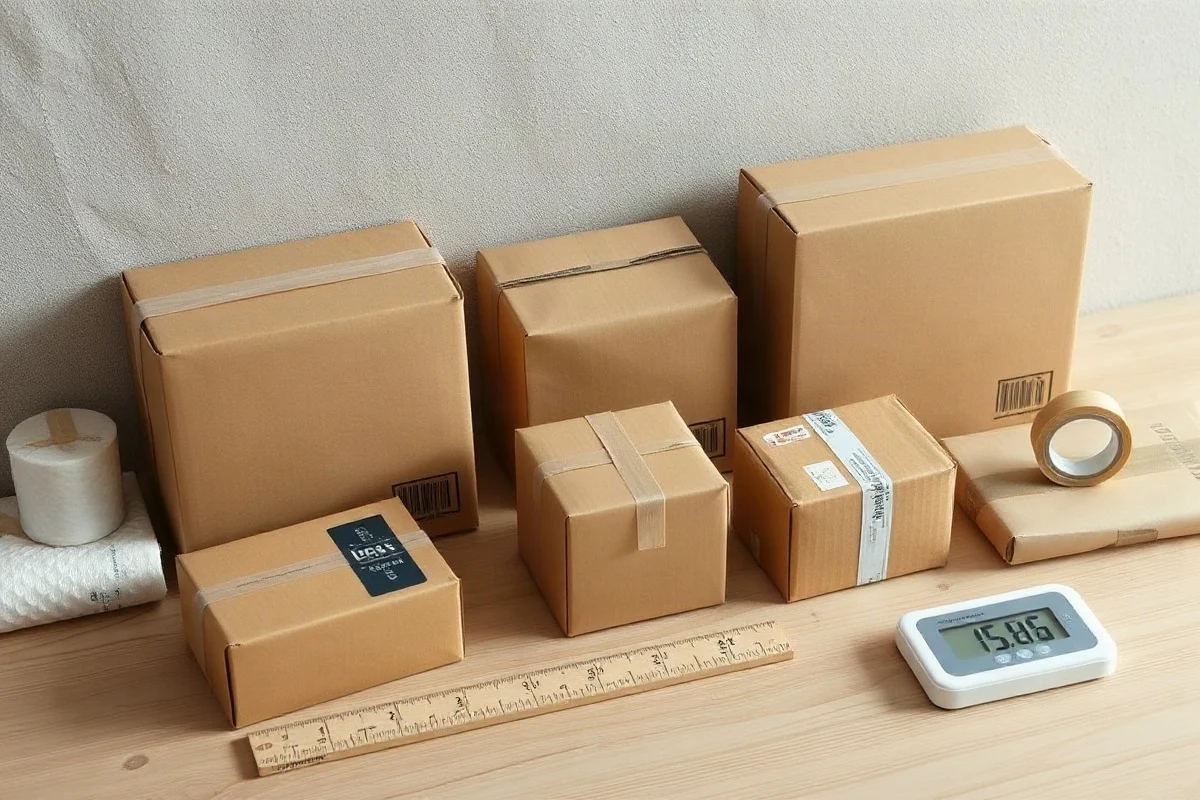
For most small products, the best box is the smallest standard-sized carton that fits the item, its protective material, and a little working room without allowing the product to move freely. In practice, many small shipments work well in boxes measuring about 4 x 4 x 4 inches, 6 x 4 x 3 inches, 8 x 6 x 4 inches, or 8 x 6 x 6 inches, but the right choice depends on the product’s actual dimensions, shape, fragility, and shipping method.
A box that is too tight can crush the product or leave no room for cushioning. A box that is too large adds material, creates movement inside the package, and may increase shipping charges when dimensional weight applies. The goal is not to find the smallest box at any cost. It is to choose a compact box that protects the product reliably and closes without bulging.
Common Box Sizes for Small Products
Small-product packaging is easier when you begin with a short list of practical box sizes. The following examples are starting points, not universal standards. Interior dimensions can vary by manufacturer, and some boxes have thicker walls or different construction styles.
| Box size | Products it may fit | Typical considerations |
|---|---|---|
| 4 x 4 x 4 inches | Small accessories, samples, compact parts, and gift items | Useful for items that need light cushioning and have a compact shape |
| 6 x 4 x 3 inches | Small electronics, cosmetics, jewelry boxes, and handheld accessories | Works well for low-profile products that do not need much vertical space |
| 6 x 6 x 4 inches | Mugs, small bundled products, candles, and boxed accessories | Provides a more balanced shape for wider or rounded products |
| 8 x 6 x 4 inches | Books, clothing accessories, small kits, and multiple compact items | A versatile choice when the product needs length and moderate cushioning |
| 8 x 6 x 6 inches | Small fragile items, product bundles, and thicker retail packaging | Allows more cushioning but should not be oversized for lightweight items |
| 10 x 8 x 4 inches | Flat products, apparel accessories, stationery, and several small items together | Helpful for products that are long or wide but not very deep |
These sizes are commonly useful because they cover several basic shapes without requiring a large inventory of cartons. If you ship many different products, create a small box-size range rather than trying to force every order into one carton.
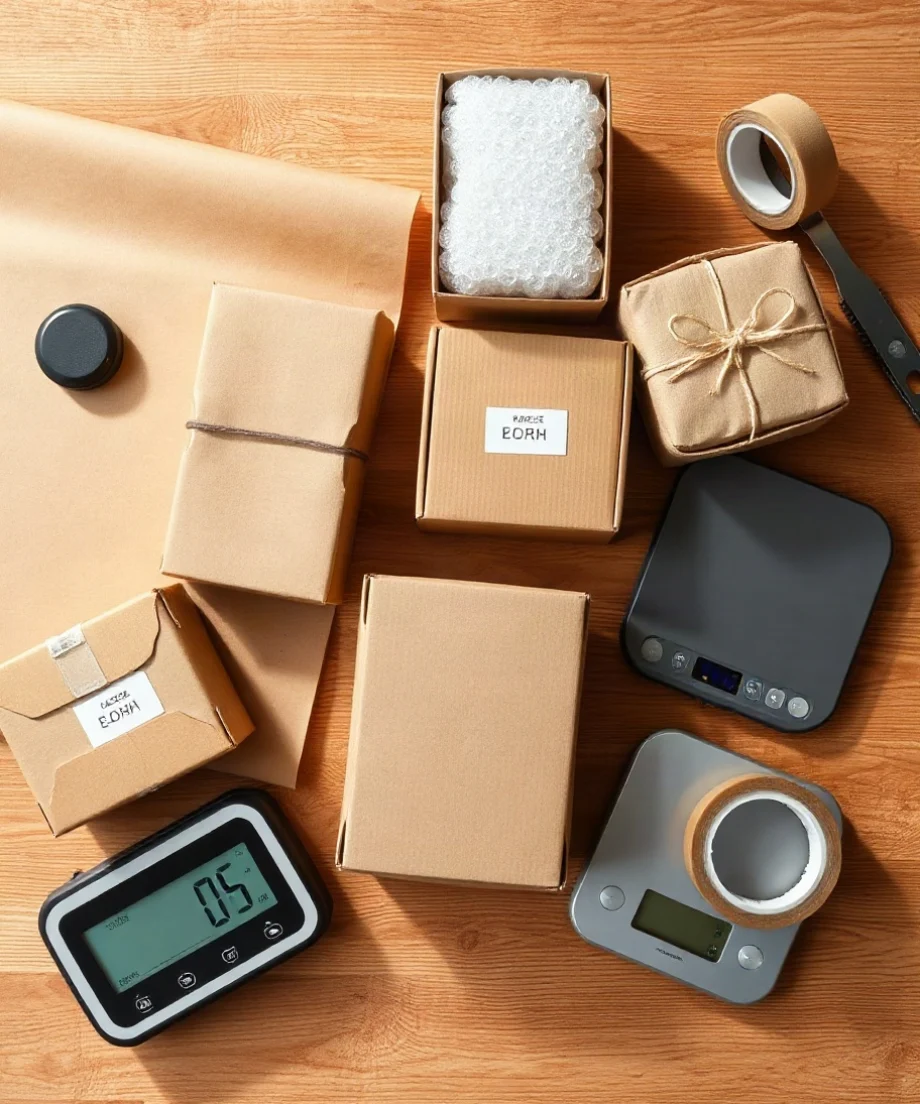
Measure the Product Before Choosing a Box
Measure the product at its widest, longest, and tallest points. Include permanent parts such as handles, caps, buttons, protruding hardware, and irregular edges. Record the measurements in inches if you primarily ship within the United States.
Use the product’s packed shape
If the item already has a retail box, measure the retail box rather than the loose product. If you are shipping multiple units together, arrange them in the orientation you expect to use and measure the combined group. Products that can be safely nested, stacked, or placed side by side may require less space than the same items packed separately.
Do not measure only the main body of an irregular item. A bottle with a pump, a tool with a long handle, or a product with a fragile attachment must fit with all of its components in place. For a useful overview of package measurement conventions, see our guide to package dimensions.
Allow room for protection
After measuring the product, add space for the protective material. The amount depends on the item and the type of cushioning. A durable item may need only a small buffer to prevent scuffing and movement. A fragile item may need a thicker, consistent layer around every vulnerable side.
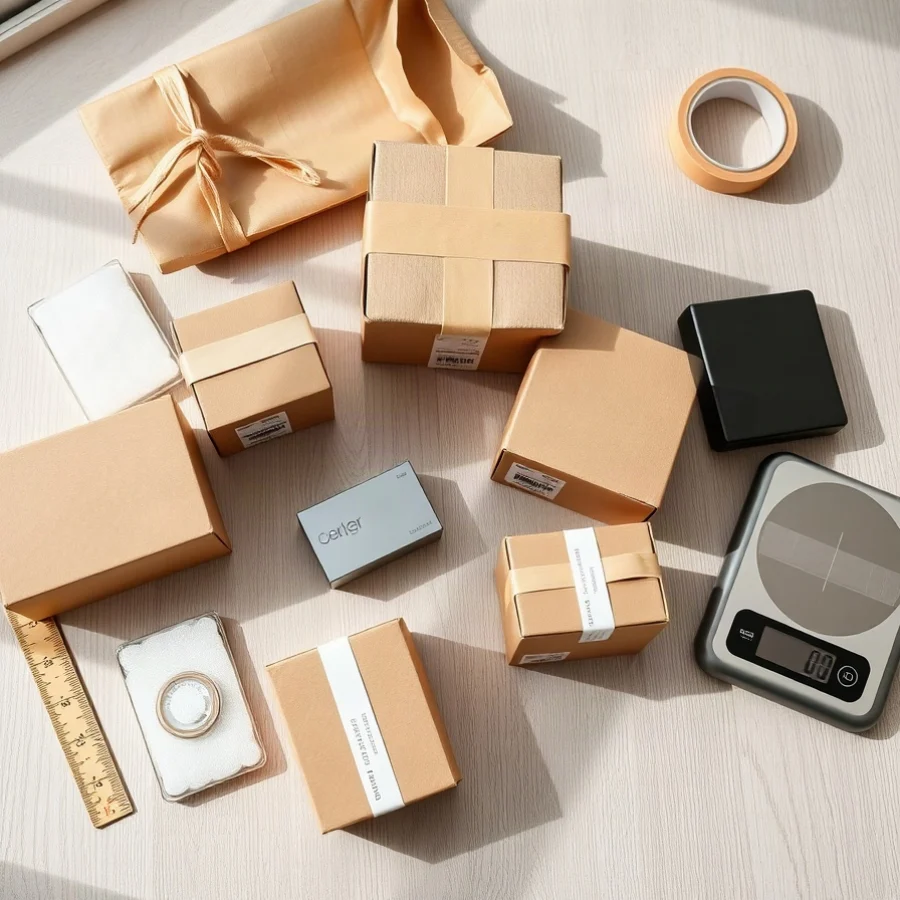
A practical planning method is to estimate the required cushioning on each side and add it twice to each corresponding product dimension:
Required interior length = product length + cushioning on both ends
Required interior width = product width + cushioning on both sides
Required interior height = product height + cushioning on top and bottom
For example, if a product measures 5 x 3 x 2 inches and you plan to use approximately 1 inch of protective space around it, look for an interior box size of at least 7 x 5 x 4 inches. You may choose the next available box size if the exact dimensions are not available. The box should close normally without compressing the product.
How Much Empty Space Should Be in a Small Box?
There should be enough space to install cushioning and stop the product from touching the carton walls, but not so much that the item shifts during handling. Empty space is not automatically a problem; uncontrolled movement is.
For many small, non-fragile products, a modest layer of paper, foam, bubble cushioning, or another suitable protective material may be enough. Fragile products generally need more deliberate protection, including reinforced corners, separation between multiple items, and cushioning that does not collapse easily under pressure.
Test the package by gently shaking it after sealing. If you can feel or hear the product moving, open the box and add or reposition packing material. If the carton bulges, the product or cushioning is being compressed too tightly, and a larger box may be safer.
Choose the Box Shape That Matches the Product
Length, width, and height matter equally, but the shape of the carton can make packing more efficient. A flat product such as a notebook, clothing accessory, or framed print may fit better in a long, shallow carton. A compact, cube-shaped product may use space more efficiently in a nearly square box.
Flat products
Use a shallow box when the product is broad but not tall. Avoid placing a flexible product in a carton that is much deeper than necessary, because it may shift and require additional filler. For flat items, protect corners and surfaces from bending, abrasion, and pressure from other packages.
Round and cylindrical products
Round items often need more attention than their basic diameter suggests. Measure the full height and diameter, then leave enough room to prevent rolling or direct contact with the box walls. Blocking material, molded inserts, or snug paper cushioning can keep a cylindrical product centered.
Multiple small products
When shipping several units together, first decide whether each unit needs individual protection. Then arrange the products to minimize unused space while preventing contact between fragile surfaces. A divider, inner carton, or separate wrapping may be more effective than filling a large outer box with loose material.
Box Strength and Construction Matter
Box dimensions are only part of the decision. A carton must also withstand stacking, handling, moisture exposure, and the weight of its contents. Lightweight products may not need a heavy-duty carton, but a weak or previously damaged box can fail even when the size is correct.
Inspect used cartons for crushed corners, tears, punctures, water damage, and weakened seams. Avoid reusing a box when its structure no longer feels firm. For heavier products, choose a carton designed for the load and use a strong sealing method on the main seams.
Keep the product weight, packaging material, and shipping label in mind when selecting a box. A very small carton can still be unsuitable if the contents place excessive stress on the bottom or seams.
Consider Shipping Cost and Dimensional Weight
A larger carton can cost more even when the contents are light. Some carriers and service levels calculate charges using dimensional weight, which is based on package volume as well as actual weight. The formula, divisor, minimums, and billing rules can vary by carrier, service, destination, and date, so do not rely on a single rule for every shipment.
For a general estimate, dimensional weight is commonly calculated from the package’s outside length, width, and height using a carrier-specific divisor. The carrier may compare that result with actual weight and use the applicable billable figure. Confirm the current method with the carrier or service you plan to use before setting shipping prices.
Use our dimensional weight calculator to compare package volume, then verify the result against the current official carrier guidance. Measuring the sealed package is important because exterior dimensions, not just the product size, affect the calculation.
Measure the Finished Package Correctly
After packing, close the carton normally and measure the outside dimensions. Measure the longest side as the length, the next-longest side as the width, and the remaining side as the height. Round measurements only as required by the carrier’s current instructions; different services may handle fractions and package dimensions differently.
Weigh the sealed package, including the box, cushioning, tape, inserts, and label. Record both the actual weight and the outside dimensions. This information makes it easier to compare box options and identify whether a larger carton is adding avoidable cost.
A Simple Small-Product Packing Process
- Measure the product. Record its maximum length, width, and height, including protruding parts.
- Select a compact carton. Choose a box with enough interior space for the product and its protective material.
- Protect vulnerable surfaces. Wrap delicate areas and keep sharp edges from contacting the carton.
- Place cushioning around the item. Support the bottom, sides, and top as needed for the product’s fragility.
- Fill open spaces. Prevent movement without forcing the product into the box.
- Close and test the package. Check for bulges, weak seams, and movement when gently shaken.
- Measure and weigh the sealed carton. Use the final outside dimensions when comparing shipping options.
Build a Practical Box Inventory
If you ship small products regularly, track which carton sizes you use most often. A compact inventory might include one shallow box, one medium rectangular box, one cube-shaped box, and one slightly larger box for cushioning or product bundles. This reduces improvisation while avoiding the cost and storage demands of carrying every possible size.
Store cartons flat in a dry area and keep protective materials organized by type. Review your packaging choices when a product changes, when damage occurs, or when shipping costs rise. A box that worked for one product may be inefficient for another.
For additional planning, compare our box size calculator with the current packaging requirements of your chosen carrier or marketplace. Carrier and marketplace rules can change, and some programs may apply separate requirements to labels, packaging, dimensions, or fulfillment preparation. Always check the current official source before shipping a high-volume order.
The best box size for a small product is the smallest practical carton that protects the contents, closes securely, and avoids unnecessary volume. Start with accurate measurements, add protection based on the product’s risks, test for movement, and evaluate the finished package rather than the empty box. That process usually produces a safer package and a more predictable shipping cost.
Comments
0No comments yet. Be the first to share a helpful note or question.
Leave a Comment
Your email address will not be published. Comments are reviewed before appearing on the site.