
A lightweight box can cost more to ship because carriers may charge by dimensional weight instead of the package’s actual scale weight. Dimensional weight estimates how much space a package occupies in a vehicle or aircraft. If that calculated weight is higher than the package’s actual weight, the carrier may use the higher figure to determine the shipping charge. The exact calculation, rounding method, and billing rules vary by carrier, service, package type, destination, and date, so always verify the current terms for the service you plan to use.
Why package size matters as much as package weight
Shipping networks have limited space. A large box filled with lightweight materials can take up as much room as a much heavier shipment. If carriers priced every parcel only by the number on the scale, a large box of pillows, foam products, empty containers, or clothing could occupy valuable space without reflecting that cost.
Dimensional weight addresses this problem by converting a package’s volume into a weight-based number. The carrier compares that number with the actual weight and may bill the shipment using whichever is greater, subject to the carrier’s published rules. This is why a box weighing only a few pounds can sometimes cost more to ship than a compact box that weighs considerably more.
For an overview of related terms and examples, see the dimensional weight guide.
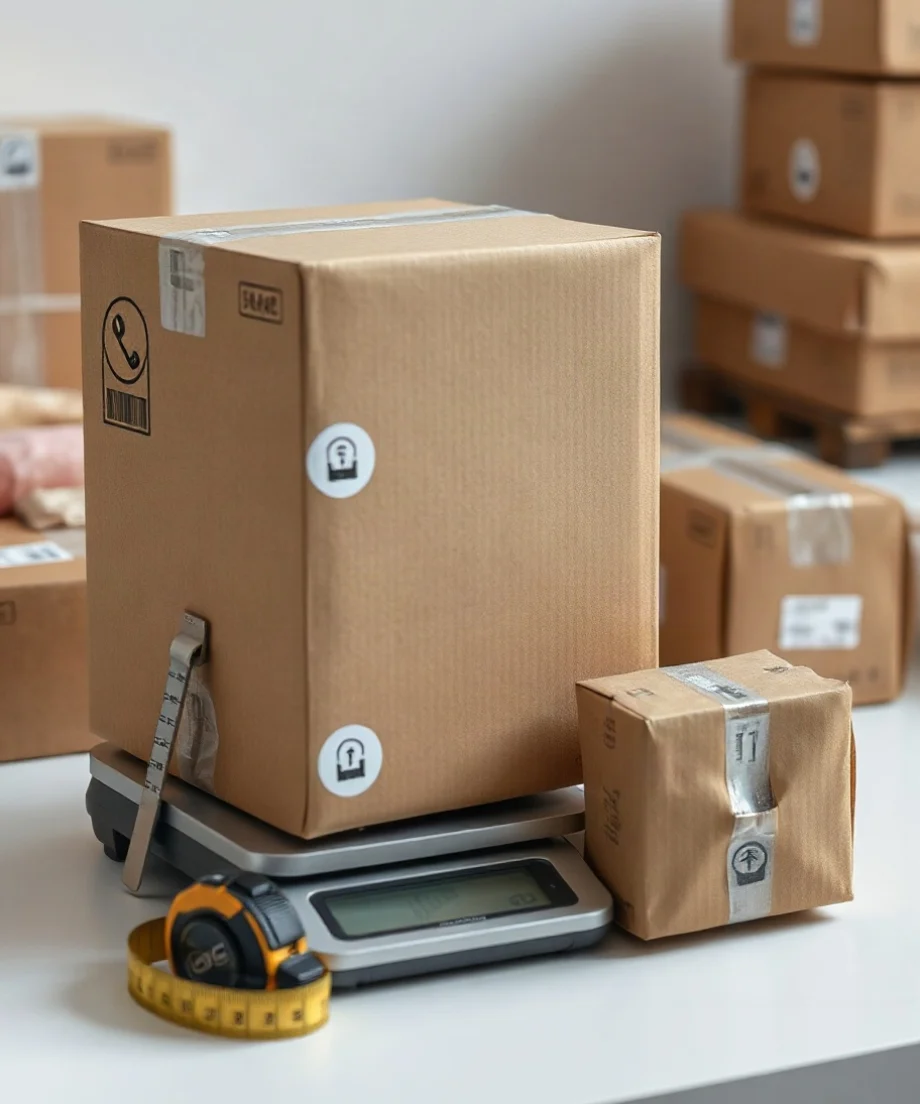
How dimensional weight is calculated
The basic formula uses the package’s outside length, width, and height:
Dimensional weight = length × width × height ÷ dimensional factor
The dimensional factor, sometimes called the dimensional divisor, is set by the carrier or service. It is not universal. Different carriers and services may use different factors, and rules can also vary between domestic and international shipments. Some services may apply additional conditions, such as minimum billable weight, rounding requirements, or special handling for large packages.
For that reason, do not insert a familiar divisor into every calculation and assume the result is the final chargeable weight. Use the factor specified for the carrier, service, origin, destination, and package type. You can also compare the result with a dimensional weight calculator, then confirm the result against the carrier’s current pricing documentation.

A simple example
Imagine a carton with outside dimensions of 24 by 18 by 12 inches. Its volume is:
24 × 18 × 12 = 5,184 cubic inches
If a particular service uses a dimensional factor of 139, the unrounded dimensional weight would be approximately:
5,184 ÷ 139 = 37.3 pounds
If the actual package weighs 8 pounds, the dimensional result is much higher. The carrier may therefore treat the shipment as weighing about 38 pounds after applying that service’s rounding rules. This example illustrates the math only; it does not establish a universal divisor, rounding policy, or shipping price.
Measure the outside of the completed package
One of the most common causes of an unexpected dimensional-weight charge is measuring the product or the empty box instead of the sealed package. Carriers generally need the package’s final outside dimensions after packing.
Measure the longest side as the length. Measure the shorter sides as width and height. Include bulges, rounded sections, protruding flaps, handles, straps, protective corners, and other features that increase the package’s maximum outside dimensions. If a carton is not perfectly square, use the dimensions that reflect the largest practical length, width, and height according to the carrier’s measurement method.
Measure after taping the box closed. Packing materials can push out the walls, and a box that appears to be a standard size may become slightly larger when overfilled. Even small increases matter because the three dimensions are multiplied together.
Use one unit system consistently
Do not mix inches and centimeters in the same calculation. If you measure in centimeters, convert all three dimensions to the unit required by the formula or carrier documentation before calculating. One inch equals 2.54 centimeters, but rounding during conversion can affect the final result, especially near a carrier’s rounding threshold.
For shipping estimates, record both the package dimensions and the actual scale weight. Keeping these values together makes it easier to compare services and identify whether size or mass is driving the quote.
Why small increases in size can have a large effect
Dimensional weight is based on volume, not on a single measurement. Increasing length, width, or height increases the product of all three dimensions. A box that grows by only a few inches in one direction can create a meaningful increase in cubic volume.
For example, compare these two cartons:
- Box A: 20 × 14 × 10 inches = 2,800 cubic inches
- Box B: 24 × 18 × 12 inches = 5,184 cubic inches
Box B weighs less than twice as much by volume calculation? No—the volume is about 1.85 times Box A’s volume, even though the length increased by only 20 percent, the width by about 29 percent, and the height by 20 percent. If both packages contain lightweight goods, the larger carton can produce a substantially higher dimensional-weight result.
This is why “there is plenty of room left in the box” is not necessarily a benefit. Unused space may increase the package’s billable size without adding useful protection.
Packaging choices that can reduce dimensional weight
Choose a box that fits the product
Start with the item’s actual dimensions, then allow enough room for the cushioning required to protect it. Avoid selecting a large standard carton simply because it is available. A smaller custom carton, mailer, or appropriately sized box may reduce both dimensional weight and material use.
Do not remove necessary protection just to make the package smaller. A damaged product can create replacement, return, and customer-service costs that exceed the original shipping savings. The goal is a secure fit, not the smallest possible box at any cost.
Reduce empty space carefully
Fillers such as air pillows, paper, foam, and bubble cushioning protect products, but they also require space. Use the appropriate amount for the item and its vulnerability. Place cushioning where it prevents movement and absorbs expected impacts rather than filling the entire carton with unnecessary material.
If the product itself is flexible or compressible, consider whether a durable poly mailer or padded mailer is appropriate. That choice depends on the product, the level of protection needed, moisture exposure, and the carrier’s package rules. Fragile, rigid, or sharp items may require a box even when a mailer would be smaller.
Review the product’s presentation packaging
Retail packaging can be attractive but inefficient for shipping. Oversized inserts, decorative sleeves, rigid display boxes, and empty cavities may add volume without improving protection during transit. Where appropriate, redesign the inner packaging so the finished shipping package is more compact.
For more planning ideas, browse the guide to product packaging and shipping dimensions.
Check whether the box triggers other carrier rules
Dimensional weight is only one part of a shipping quote. A large package may also be affected by oversize classifications, additional handling, nonstandard package rules, length-and-girth measurements, or service-specific restrictions. These rules are not identical across carriers and may change over time.
Before buying labels, check the current official information for the selected service. Confirm the permitted package dimensions, maximum weight, measurement method, rounding rules, and any extra charges that may apply. A package that fits one service’s requirements may be treated differently by another.
Our shipping calculators and guides can help organize the comparison, but the carrier’s current quote and official terms should control the final decision.
How to compare actual weight and dimensional weight
Use this practical process for each package:
- Pack and seal the shipment exactly as it will be tendered to the carrier.
- Measure the final outside length, width, and height.
- Weigh the completed package on a suitable scale.
- Record the destination, service level, and package type.
- Find the current dimensional factor and rounding instructions for that service.
- Calculate the dimensional weight.
- Compare dimensional weight with actual weight.
- Check for oversize, handling, length-and-girth, or other applicable rules.
- Compare the final quotes from the services you are considering.
When the dimensional result is higher, focus on reducing cubic volume. When actual weight is higher, reducing empty space may not change the billable weight unless it also reduces the physical weight or avoids another package category. This distinction helps prevent wasted packaging changes.
When a larger box may still be the right choice
A smaller package is not automatically better. Some products need generous cushioning, separation between multiple items, or a rigid outer carton to prevent crushing. Combining several small items in one carefully packed carton may also be more efficient than shipping them separately, even if the combined package has a higher dimensional weight.
Evaluate the complete cost: postage, packaging materials, labor, damage risk, returns, and the customer experience. A slightly larger box may be justified if it substantially lowers breakage or simplifies fulfillment. The useful target is the smallest package that protects the contents reliably and meets the selected carrier’s rules.
Make package size part of your shipping process
Lightweight shipments become expensive when their cubic size consumes more transportation capacity than their scale weight suggests. Measure the sealed package, calculate using the current service-specific factor, compare actual and dimensional weight, and check all applicable carrier rules before purchasing postage.
For recurring shipments, record the dimensions and weights of your most common package configurations. Then test smaller cartons, better-fitting inserts, or alternative mailers without compromising protection. A few inches removed from every shipment can make a meaningful difference when the package is billed primarily for the space it occupies.



Comments
0No comments yet. Be the first to share a helpful note or question.
Leave a Comment
Your email address will not be published. Comments are reviewed before appearing on the site.