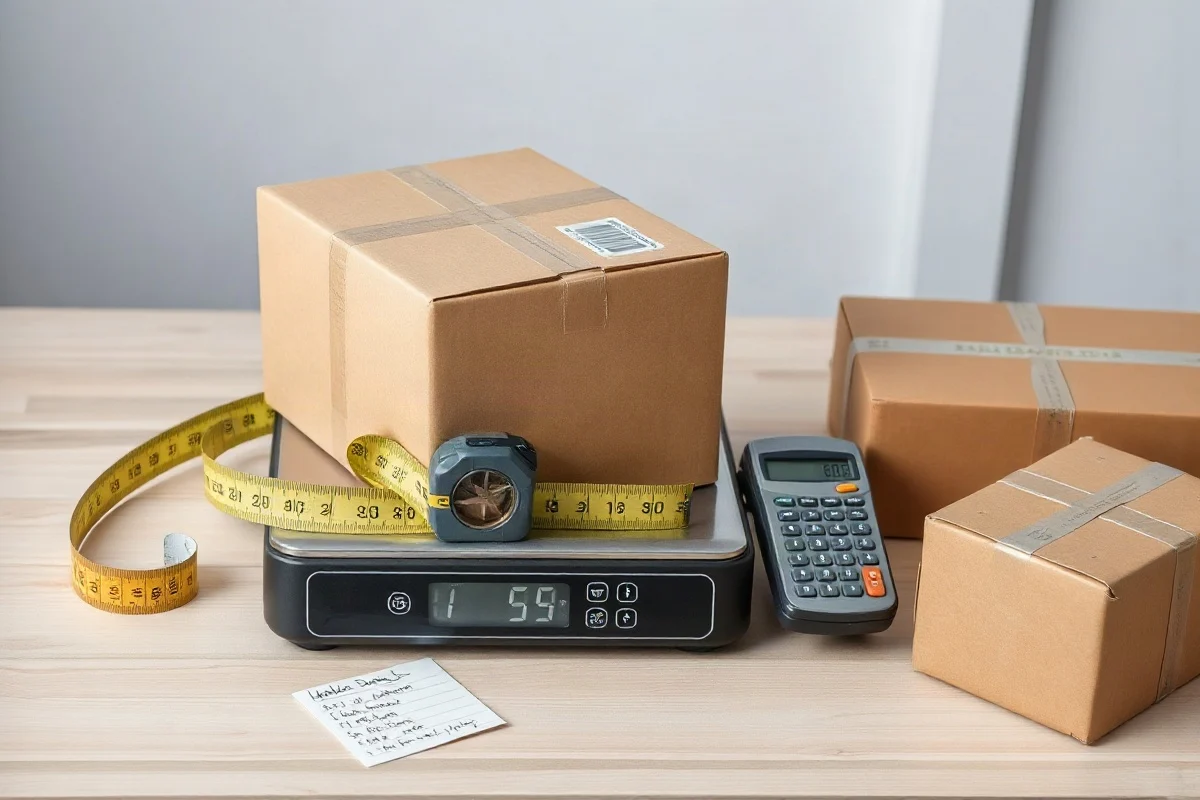
To calculate dimensional weight, multiply a package’s length, width, and height, then divide the cubic volume by the dimensional-weight divisor used by the carrier and service. Compare that result with the package’s actual scale weight; the carrier may rate the shipment using whichever applicable weight is greater. Because dimensional-weight divisors, rounding methods, package rules, and billable-weight policies can vary, confirm the current requirements with the carrier before buying a label.
What dimensional weight means
Dimensional weight, sometimes called volumetric weight, estimates how much space a package occupies in a truck, aircraft, or delivery network. A lightweight box filled with air can take up as much room as a much heavier shipment. Dimensional pricing helps carriers account for that space when the package’s size is more important than its scale weight.
This calculation is especially relevant for large cartons containing clothing, pillows, household goods, product displays, gift items, and other low-density products. A compact box filled with dense material may be priced mainly by actual weight, while a large box with a light item may be priced by dimensional weight.
The result is not automatically your final shipping price. Rates also depend on the carrier, service level, origin, destination, package type, surcharges, account terms, and other current rules. Use the calculation as a planning estimate, then check the carrier’s current rating information or shipping label preview.
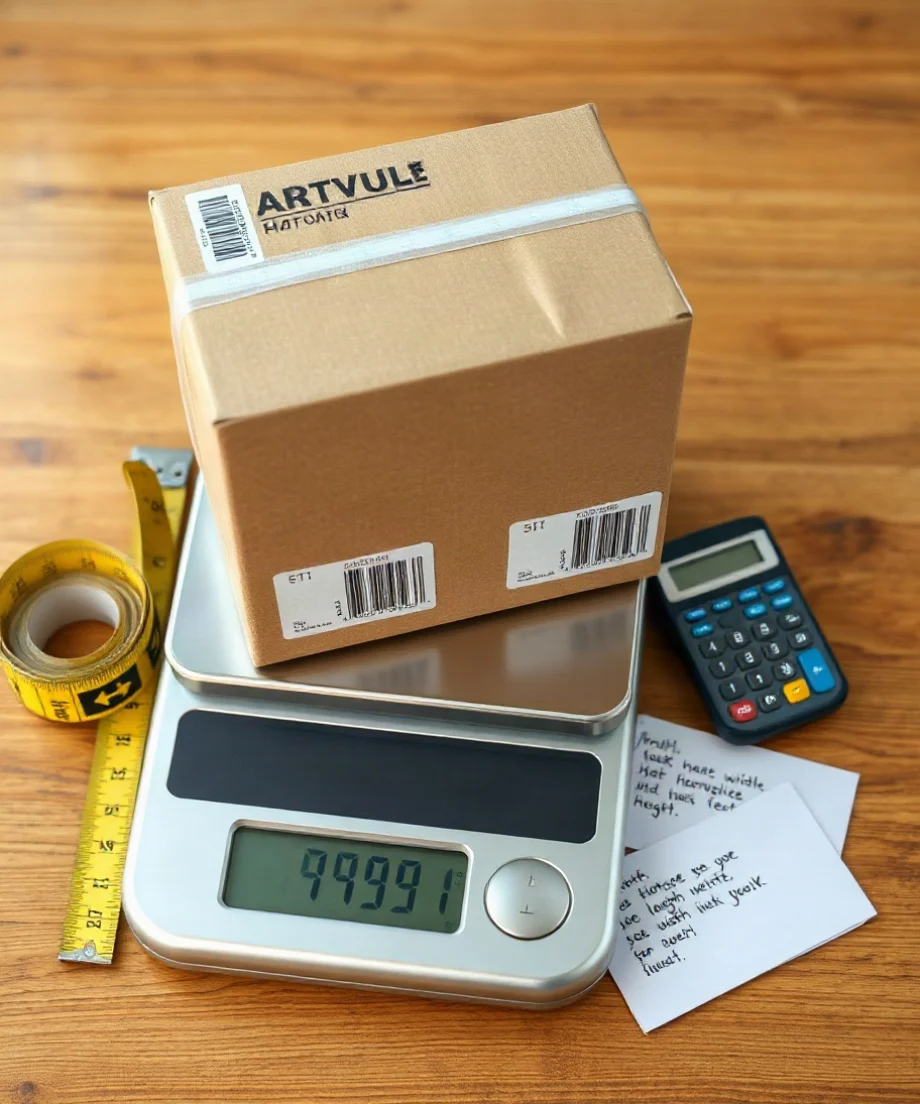
The dimensional-weight formula
For measurements in inches, the basic formula is:
Dimensional weight = (length × width × height) ÷ dimensional-weight divisor
Length, width, and height should represent the package’s outside dimensions after it has been packed and closed. The divisor is a carrier- and service-specific number. It is not universal, so do not assume that a divisor from one carrier, service, country, or shipping account applies to another.
For metric measurements, carriers may use a different divisor and unit system. A common approach is to calculate cubic centimeters and divide by the applicable metric divisor, but the correct number depends on the shipping service. Always use the units and divisor shown in the carrier’s current documentation or rating tool.
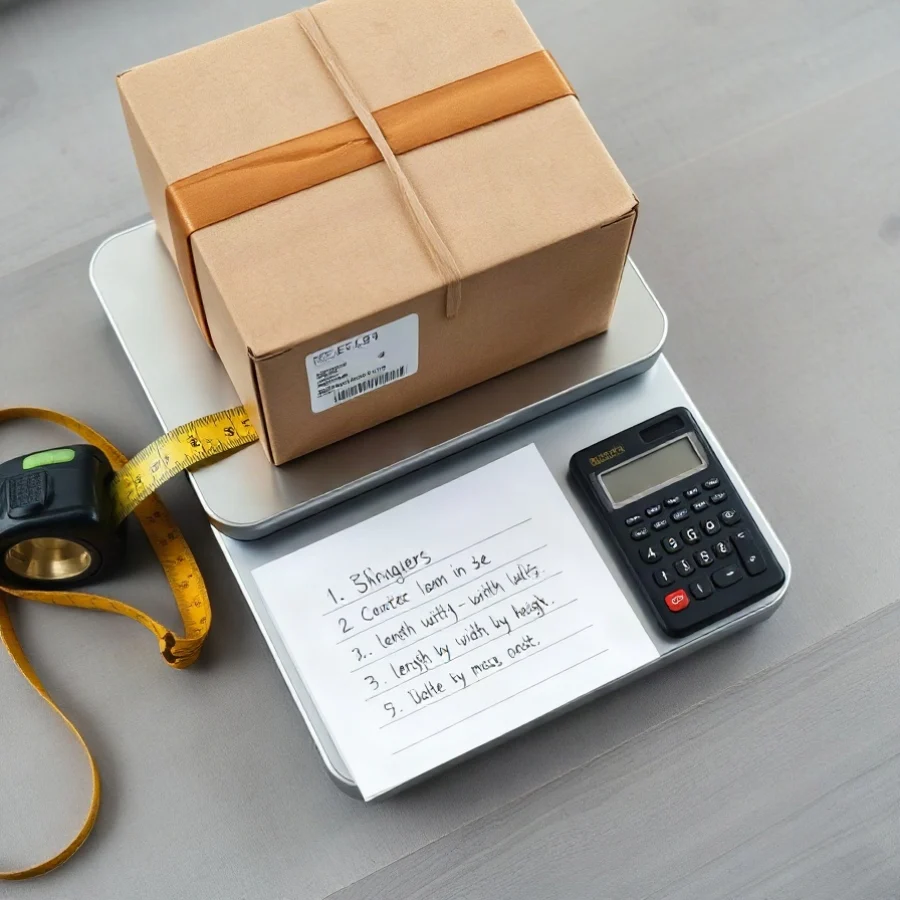
For a quick online calculation, use the Dimensional Weight Calculator. You can also compare related tools in the shipping calculators section.
How to measure a package correctly
Small measurement errors can change the calculated volume, especially when a package is close to a carrier’s rounding threshold. Measure the finished parcel rather than the product or the empty box.
1. Pack and seal the shipment first
Place the product, cushioning, inserts, and paperwork inside the box. Close every flap and apply the normal amount of tape. If the package bulges, has an uneven surface, or contains an item that extends beyond the carton, measure the largest finished dimensions. Do not compress the box temporarily just to obtain a smaller measurement.
2. Identify length, width, and height
For a rectangular carton, length is usually the longest side. Width is the next-longest side, and height is the remaining side. The order does not change the multiplication result, but using a consistent order makes records and shipping forms easier to review.
Measure from the outside edges, including protruding tape, cushioning that affects the carton’s shape, and other permanent packaging features. If a carrier instructs shippers to use a particular measurement method for irregular packages, follow that method instead.
3. Round only as instructed
Do not automatically round dimensions up or down before calculating. Some carriers or services apply their own rounding rules to dimensions, volume, or billable weight. Early rounding can produce a different result from the carrier’s rating system. Record the measured dimensions and apply the current carrier instructions at the appropriate step.
Worked example using a placeholder divisor
Suppose a sealed carton measures 20 inches long, 16 inches wide, and 12 inches high. Its cubic volume is:
20 × 16 × 12 = 3,840 cubic inches
If the applicable service uses a divisor represented by D, the dimensional weight is:
3,840 ÷ D
For example, if the current service documentation specifies a divisor of 139, the unrounded result would be approximately 27.6 dimensional pounds before any required rounding. That number is only an illustration of the formula, not a universal carrier rule. Another carrier or service may use a different divisor or calculation method.
Now compare the result with the package’s actual scale weight. If the actual weight is 18 pounds and the carrier’s rules require rating by the greater of actual or dimensional weight, the dimensional figure may control. If the actual weight is 35 pounds, actual weight may control under that type of rule. Verify the carrier’s current policy rather than relying on this example as a promise of how a particular shipment will be rated.
Actual weight versus dimensional weight
Actual weight is the package’s physical weight on a scale, including the product, box, cushioning, labels, and other contents. Use a scale that can measure the full parcel accurately, and make sure the reading is stable.
Dimensional weight is calculated from the package’s size. It may be higher or lower than the actual weight. The carrier’s billable weight rules determine which figure is used, how it is rounded, and whether additional minimums or package classifications apply.
For a useful shipping estimate, record both values:
- Finished outside dimensions: length, width, and height
- Actual packed weight
- Applicable carrier and service
- Dimensional-weight divisor or metric method
- Required rounding instructions
- Any applicable package-type or oversize rules
Keeping these details together makes it easier to investigate an unexpected adjustment on an invoice. If the carrier remeasures the package, its recorded dimensions may differ from the measurements taken at your packing station.
Why package shape and size matter
Dimensional weight is based on volume, so every extra inch can matter. Increasing one side of a carton increases the total cubic volume even if the product itself has not changed. An oversized box also requires more filler and may be harder to stack efficiently.
Use the smallest protective package that safely fits the product. The goal is not to force an item into a box that could cause damage; it is to eliminate unused space that does not improve protection. A properly fitted carton can lower dimensional weight, reduce material use, and make handling easier.
For help choosing a carton before packing, try the Box Size Calculator. Our guides to package dimensions can also help you distinguish product measurements from finished shipping-package measurements.
Practical ways to reduce dimensional weight
Choose a better-fitting box
Compare several box sizes instead of automatically using the largest carton on hand. A box that is only slightly smaller in one or more dimensions can reduce cubic volume significantly.
Use efficient cushioning
Protective material should fill necessary gaps without creating large empty cavities. Consider whether thinner, properly rated cushioning can provide the same protection as bulky material, but do not remove protection that the product needs.
Review multipiece shipments carefully
Splitting one shipment into multiple cartons can change the total cost in either direction. Each package may receive its own actual and dimensional-weight calculation, and additional handling or service rules may apply. Compare the complete shipment under the specific carrier and service rather than assuming that one large box or several small boxes is always cheaper.
Measure your common packages
Create a packing reference sheet with the finished dimensions and typical weights of your most-used cartons. Recheck the measurements when you change the box supplier, tape method, inserts, or product presentation. Small packaging changes can affect the billable dimensions.
Common dimensional-weight mistakes
- Using product dimensions: The formula generally needs the outside dimensions of the completed package, not the item before packing.
- Using empty-box dimensions: The sealed box may be larger because of bulging, padding, or other packaging features.
- Assuming one divisor applies everywhere: Divisors can differ by carrier, service, destination, and current policy.
- Ignoring rounding: The carrier may apply specific rounding rules that differ from your spreadsheet.
- Confusing an estimate with a rate: Dimensional weight is only one part of a shipping charge.
- Forgetting irregular-package rules: Cylinders, soft parcels, long cartons, and unusually shaped packages may be handled differently.
How to verify your calculation before shipping
Start with the carrier and service you plan to use. Find the current dimensional-weight instructions, including the divisor, accepted units, dimension-rounding method, billable-weight rounding, and any package-specific rules. Then enter the finished measurements and actual weight into the carrier’s shipping tool or label workflow.
If you ship through a marketplace, fulfillment program, or third-party platform, check its current documentation separately. Marketplace fees and fulfillment classifications may use their own size or weight bands, which are not necessarily identical to a parcel carrier’s dimensional-weight calculation. For carrier-specific background, explore the shipping rules resources and verify all time-sensitive details with the official source.
When the shipment is important or the package is near a size threshold, save a photo of the measured parcel, the scale reading, and the rating details used to create the label. This record can help you identify whether a difference came from measurement, rounding, a package adjustment, or a changed carrier rule.
A simple checklist
- Pack and seal the product exactly as it will ship.
- Measure the outside length, width, and height.
- Record the actual weight on a scale.
- Confirm the carrier, service, units, divisor, and rounding rules.
- Multiply the three dimensions to find cubic volume.
- Divide by the applicable dimensional-weight divisor.
- Apply the carrier’s rounding and billable-weight rules.
- Compare the result with the actual weight and review the complete quote.
Once this process becomes part of your packing routine, dimensional weight is easy to estimate and much easier to control. Accurate finished-package measurements give you a more realistic shipping budget, reveal oversized packaging, and help you choose boxes that protect the product without paying to transport unnecessary air.


Comments
0No comments yet. Be the first to share a helpful note or question.
Leave a Comment
Your email address will not be published. Comments are reviewed before appearing on the site.