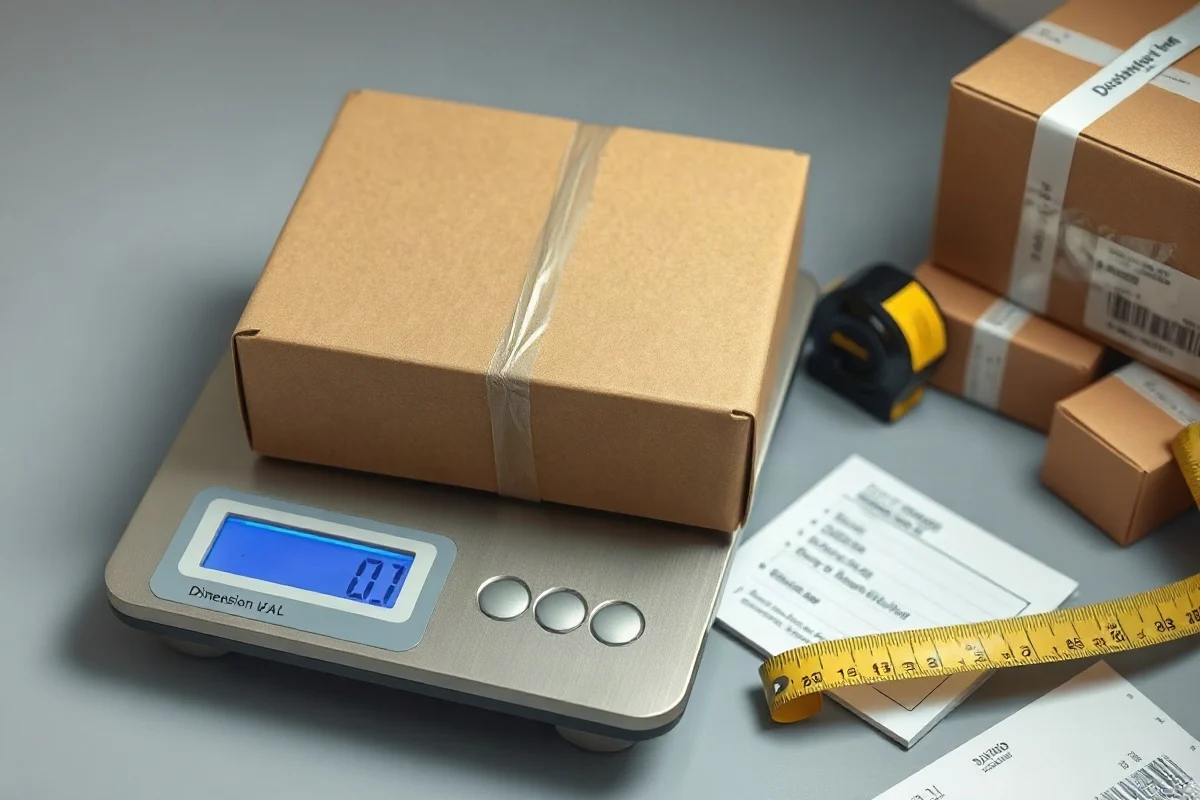
Dimensional weight applies when a package is relatively large for its actual weight and the carrier’s dimensional-weight calculation is higher than the package’s scale weight. In that situation, the carrier may price the shipment using dimensional weight instead of actual weight. The exact trigger, formula, rounding method, and exceptions depend on the carrier, service, package type, destination, and current pricing rules, so always verify the details with the official carrier before shipping.
What dimensional weight means
Dimensional weight, sometimes called volumetric weight, converts a package’s outer size into a billable weight. The calculation reflects the amount of space the package occupies in a truck, aircraft, or delivery vehicle. A lightweight box filled with pillows, for example, can use as much transportation space as a much heavier shipment.
Carriers generally compare two measurements:
- Actual weight: The package’s weight on a scale.
- Dimensional weight: A weight calculated from the package’s length, width, and height.
When dimensional weight is greater than actual weight, the carrier may use the dimensional figure as the billable weight. Some services also apply minimum billable weights, rounding rules, or special handling provisions. Those details are not universal, so a formula that works for one carrier or service may not apply to another.

When carriers usually compare the two weights
Dimensional weight is most relevant when the package has a high volume-to-weight ratio. Common examples include large boxes containing clothing, bedding, toys, empty displays, foam products, lampshades, and other lightweight items. A small, dense box of books or hardware is less likely to produce a dimensional-weight charge because its actual weight may be higher than its calculated volume-based weight.
The comparison may occur during rate calculation, label creation, package acceptance, sorting, or invoice auditing. A shipment can therefore appear to qualify for one weight at the time of purchase and receive an adjustment later if the carrier measures the package differently or finds that the declared dimensions were inaccurate.
For a practical starting point, enter the package’s final outside dimensions and actual weight into a dimensional weight calculator. Treat the result as an estimate unless it uses the current rules for your selected carrier and service.
How to calculate dimensional weight
The basic calculation uses the package’s outside dimensions:

Length × width × height ÷ dimensional factor = dimensional weight
For inch measurements, the dimensional factor is commonly expressed as a divisor in cubic inches per pound. However, the divisor can vary by carrier, service, shipment type, destination, or account arrangement. Do not assume that one standard divisor applies to every shipment.
For example, suppose a carton measures 24 inches by 18 inches by 12 inches. Its volume is:
24 × 18 × 12 = 5,184 cubic inches
To find the dimensional weight, divide 5,184 by the divisor listed by the carrier for the specific service. Because that divisor is not universal, the correct result depends on the service you are selecting. After the calculation, apply the carrier’s current rounding and billable-weight rules.
Some international services use centimeters and kilograms rather than inches and pounds. A metric calculation typically follows the same concept: multiply the three outside dimensions in centimeters and divide by the applicable metric dimensional factor. Confirm the required units before entering measurements into a shipping system.
Use the package’s outside measurements
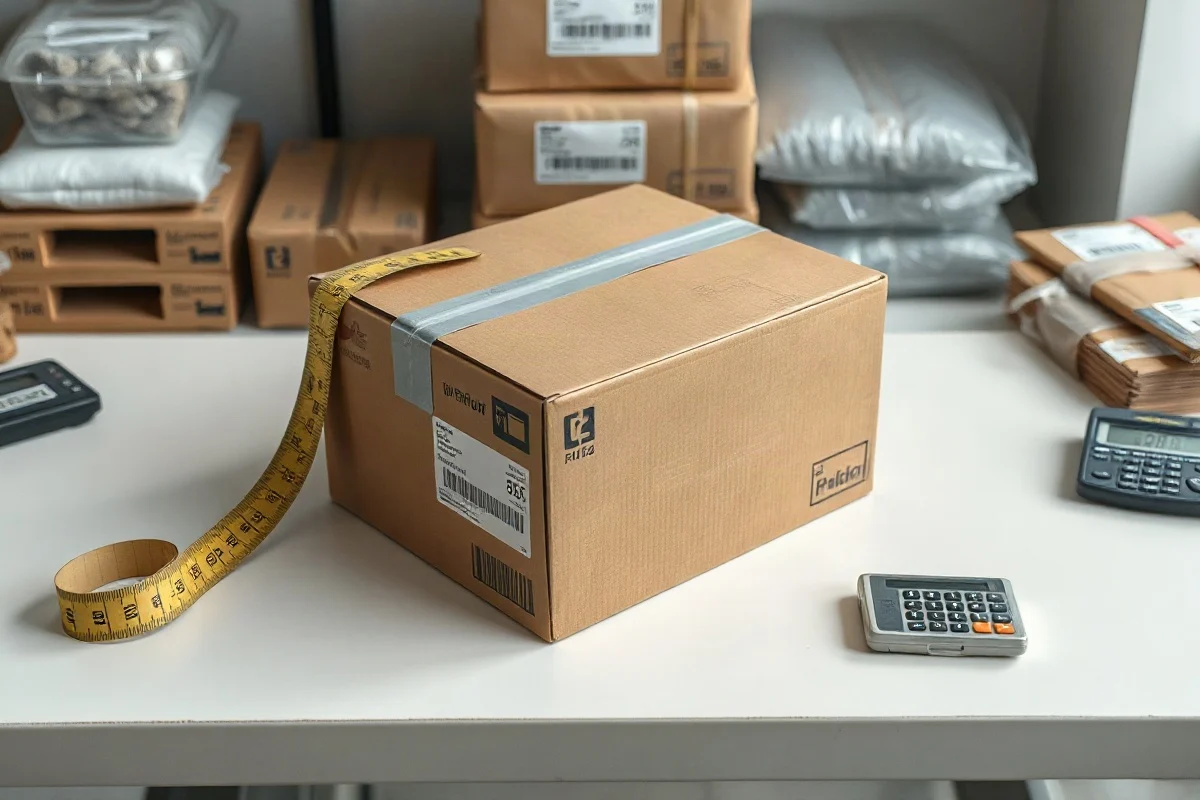
Measure the finished package, not just the product or the empty box. Include the outside length, width, and height after the flaps are closed and the contents are packed. If tape, protective wrapping, bulging material, or an irregular shape increases the package’s maximum dimensions, those changes can affect the calculation.
For a rectangular carton, measure each side at its longest practical point. Use the same unit for all three measurements. Do not mix inches and centimeters, and do not use interior box dimensions unless the carrier specifically requests them.
Actual weight versus dimensional weight
Consider a package with an actual weight of 8 pounds. If its size produces a dimensional weight of 12 pounds under the applicable carrier formula, the shipment may be rated at 12 pounds rather than 8 pounds. If the same box contains a dense product weighing 18 pounds, the actual weight may be higher, making 18 pounds the relevant billable weight instead.
The important point is that dimensional weight does not usually add a second independent weight charge to the shipment. It is commonly used as a comparison figure. The carrier applies the applicable rule to determine which weight, or which rounded version of that weight, becomes billable.
Some services use different methods for additional handling, large-package assessments, oversize packages, or unusual shapes. A package may also be subject to a separate size-based fee even when dimensional weight is not the main pricing factor. Check the current terms for the service you plan to use.
Situations that commonly create dimensional-weight charges
Large boxes with lightweight contents
Oversized cartons filled with low-density products are the most familiar example. A box that is only partly full can occupy substantial space while adding very little actual weight. This is common when a shipper chooses a box for convenience rather than selecting one that closely fits the product.
Excessive protective packaging
Protection is important, but too much void fill can increase the outside dimensions of a shipment. Thick foam, multiple inner cartons, large air pillows, and oversized corner protection may make a box much larger than necessary. The goal is a package that protects the product without leaving avoidable empty space.
Retail or manufacturer packaging placed inside another box
A product’s original packaging may already include empty space, display features, or structural protection. When that package is placed in a second carton, the combined dimensions can increase quickly. Before shipping, compare the protection provided by the original package with the space required by a more efficient outer carton.
International and air shipments
Space is especially important in air transportation, so dimensional-weight rules are common in many air and international services. The applicable formula can differ from domestic ground services. Destination, package type, and service level may also change the result.
How to measure a package accurately
- Pack the item completely. Add the actual product, inner packaging, cushioning, paperwork, and closure materials.
- Close and seal the carton. Do not measure an open box or a box before the contents cause it to expand.
- Measure the longest side. This is normally the length.
- Measure the other two sides. Record the width and height using the carrier’s required units.
- Check for bulges. Flexible mailers and soft cartons may have a greater maximum dimension than their flat or empty measurements suggest.
- Weigh the finished package. Use a scale that can measure the shipment with reasonable accuracy.
- Keep the measurements together. Save the final dimensions and weight with the shipment record in case a billing adjustment needs review.
Rounding is important. A carton that measures just over a whole-number dimension may be treated differently from one that measures just under it, depending on the carrier’s measurement and rounding practice. When a package is close to a pricing threshold, use the carrier’s published measurement instructions rather than relying on informal estimates.
How to reduce dimensional-weight costs
Choose a closer-fitting box
Select the smallest carton that provides adequate protection and leaves enough room for cushioning. A box-size reference or box size calculator can help you compare internal product dimensions with common carton options. The final choice should account for the product’s fragility, orientation, and required protective materials.
Reduce empty space safely
Fill voids so the product cannot move excessively, but avoid adding unnecessary layers. Test the packed carton by gently shaking it and checking whether the product can contact the walls or corners. Reducing empty space should never mean removing protection that prevents breakage, crushing, moisture damage, or abrasion.
Review packaging design
For recurring shipments, measure several completed packages and compare their volume with the product’s actual size. A custom carton, redesigned insert, or more compact product configuration may lower dimensional weight across many orders. Packaging changes should be tested for drop protection and compression strength before being used at scale.
Enter accurate dimensions when buying the label
Understating dimensions can produce an attractive initial quote but may lead to a later adjustment. Use the final sealed package measurements, and update saved package profiles when your carton, cushioning, or packing method changes.
Do all packages receive dimensional-weight pricing?
No. Dimensional-weight treatment varies. A carrier may apply it only to certain services, package types, destinations, or packages above a stated size or volume. Some shipments may be priced primarily by actual weight, while others may use dimensional weight, a minimum billable weight, or a separate oversize calculation.
Rules can also differ between postal products, parcel carriers, freight services, third-party postage platforms, and marketplace shipping programs. For current details, review the official rate guide and service terms for the carrier and service you are using. If you ship through a marketplace or fulfillment program, check its current packaging and billing documentation as well.
A simple pre-shipment check
Before purchasing postage, write down the finished package’s length, width, height, and actual weight. Identify the carrier, service level, destination country, and package type. Then calculate dimensional weight with the current divisor or tool provided for that service and compare it with the actual weight. Finally, check for minimum charges, rounding, oversize rules, and possible measurement adjustments.
For recurring shipments, keep a small table of your most-used carton sizes, average actual weights, and calculated dimensional weights. This makes it easier to spot packages that need a smaller box or a different shipping service. You can also review related carrier guidance through the shipping rules section and compare package planning resources on package dimensions.
Dimensional weight matters whenever a package’s size represents more transportation space than its scale weight suggests. Accurate outside measurements, a service-specific calculation, and right-sized packaging are the best ways to predict the billable weight and avoid preventable adjustments.


Comments
0No comments yet. Be the first to share a helpful note or question.
Leave a Comment
Your email address will not be published. Comments are reviewed before appearing on the site.