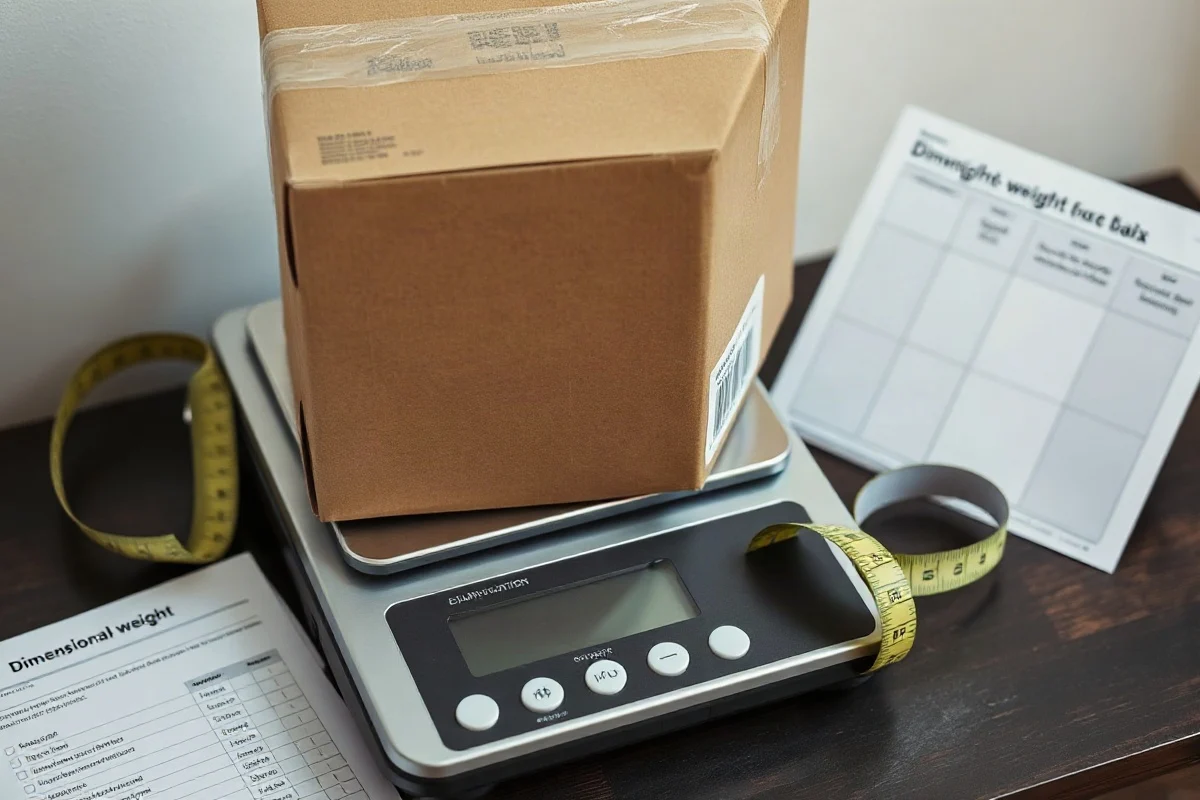
When dimensional weight is higher than a package’s actual weight, the carrier may use the dimensional weight to calculate the shipping charge. In practical terms, a light package in a large box can cost more to ship than its scale weight suggests. The exact rule, dimensional-weight divisor, rounding method, and billing process vary by carrier, service, package type, destination, and date, so check the current official rate and service guide before buying a label.
Why dimensional weight can replace actual weight
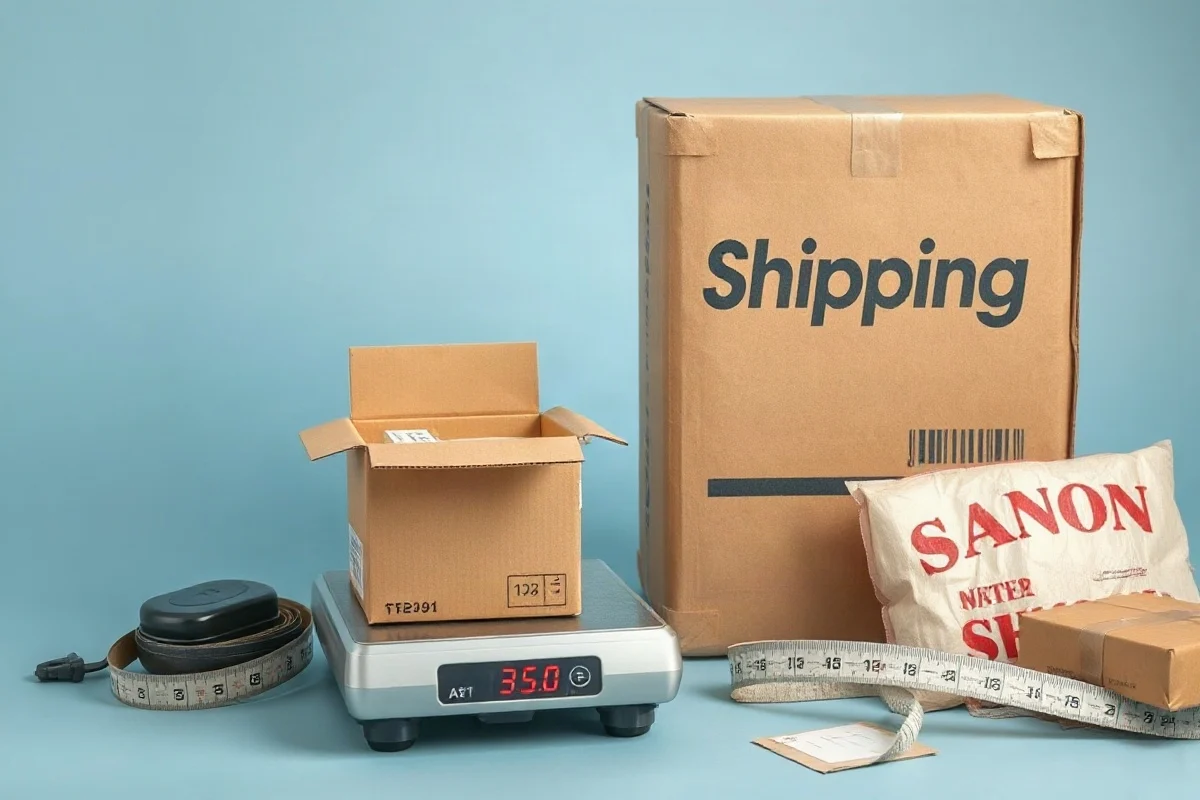
Actual weight is the package’s physical weight on a scale. Dimensional weight, often called DIM weight, is an estimate of how much transportation space the package occupies. A carrier uses the package’s length, width, and height to calculate that space and then converts it into a billable weight using a divisor.
For example, a box holding a lightweight lamp may weigh only 6 pounds but take up much more truck or aircraft space than a compact 6-pound parcel. If the package’s calculated DIM weight is 12 pounds, the carrier may rate it at 12 pounds rather than 6 pounds. This is why a shipment can be billed at a weight that is greater than the number shown on the scale.
This pricing method is intended to account for limited vehicle and aircraft capacity. A large, low-density package can prevent a carrier from loading other shipments, even when the package itself is not heavy.
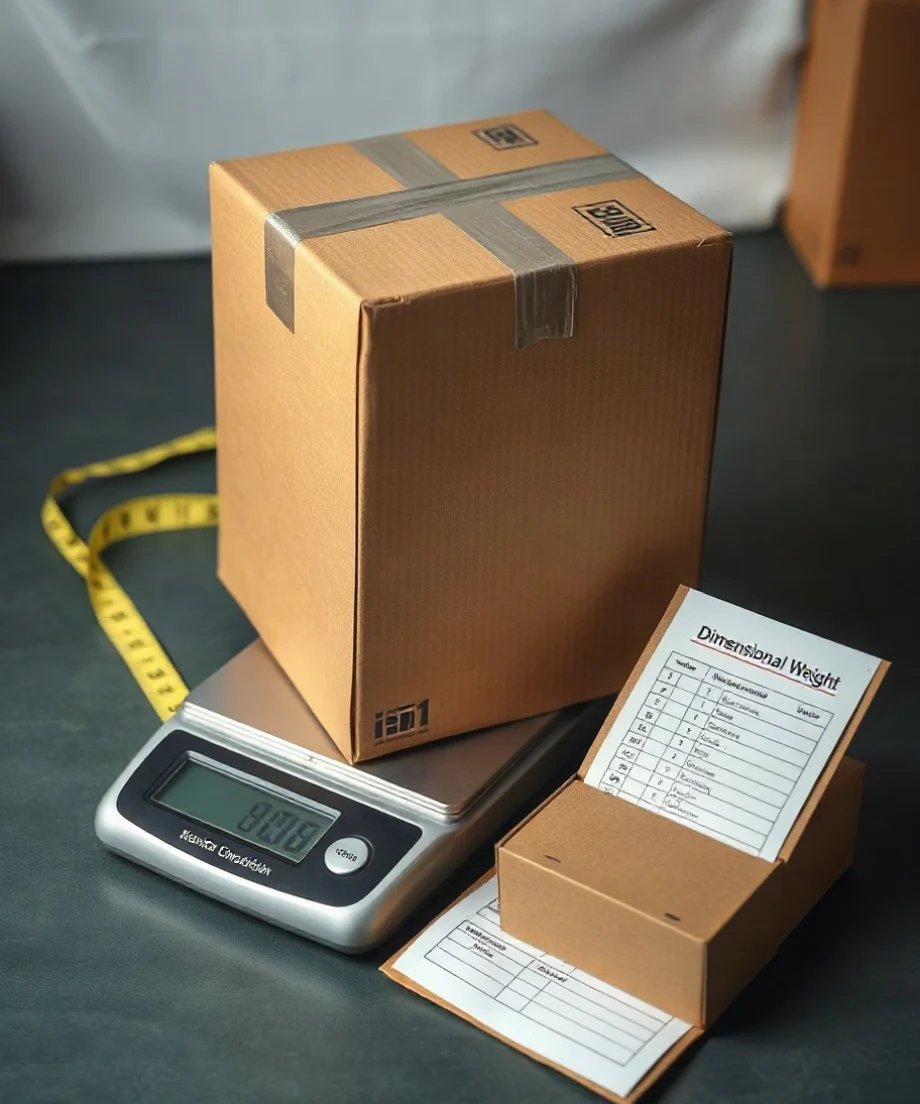
How to compare actual weight and DIM weight
The basic comparison is straightforward:
- Actual weight: the package’s measured weight, usually recorded in pounds or kilograms.
- Dimensional weight: the package’s calculated volume converted into a weight using the applicable carrier divisor.
- Billable weight: the weight the carrier uses for pricing after applying its current rules and rounding requirements.
A common volume-based formula for measurements in inches is:
DIM weight = (length × width × height) ÷ dimensional-weight divisor
The divisor is not universal. It can differ by carrier, service, destination, account agreement, package category, and whether the shipment is domestic or international. Some services also apply minimum billable weights, special handling rules, or separate dimensional calculations. Do not assume that a divisor found in an old label example or online calculator applies to every shipment.
To make a reliable comparison, use the divisor and rounding rules shown in the current official documentation for the specific service. You can also use the Dimensional Weight Calculator as a planning tool, then verify the result against the carrier’s current terms.
A simple DIM-weight example
Suppose a measured shipping box is 20 inches long, 16 inches wide, and 12 inches high. Its outside volume is:
20 × 16 × 12 = 3,840 cubic inches
If the applicable divisor were 139, the unrounded calculation would be:
3,840 ÷ 139 = about 27.6 pounds
Depending on the carrier’s rounding rule, the calculated figure might be rounded to a whole-pound value. If the actual package weighs 10 pounds, the dimensional figure is higher and may become the billable weight. This example demonstrates the calculation only; it does not establish a universal divisor or a guaranteed charge for any carrier.
Small measurement changes can matter. If the box is actually 21 inches long instead of 20, the volume becomes 4,032 cubic inches. If a package is close to a rounding threshold, an extra inch or a measurement taken at a different point can change the result.
How carriers measure the package
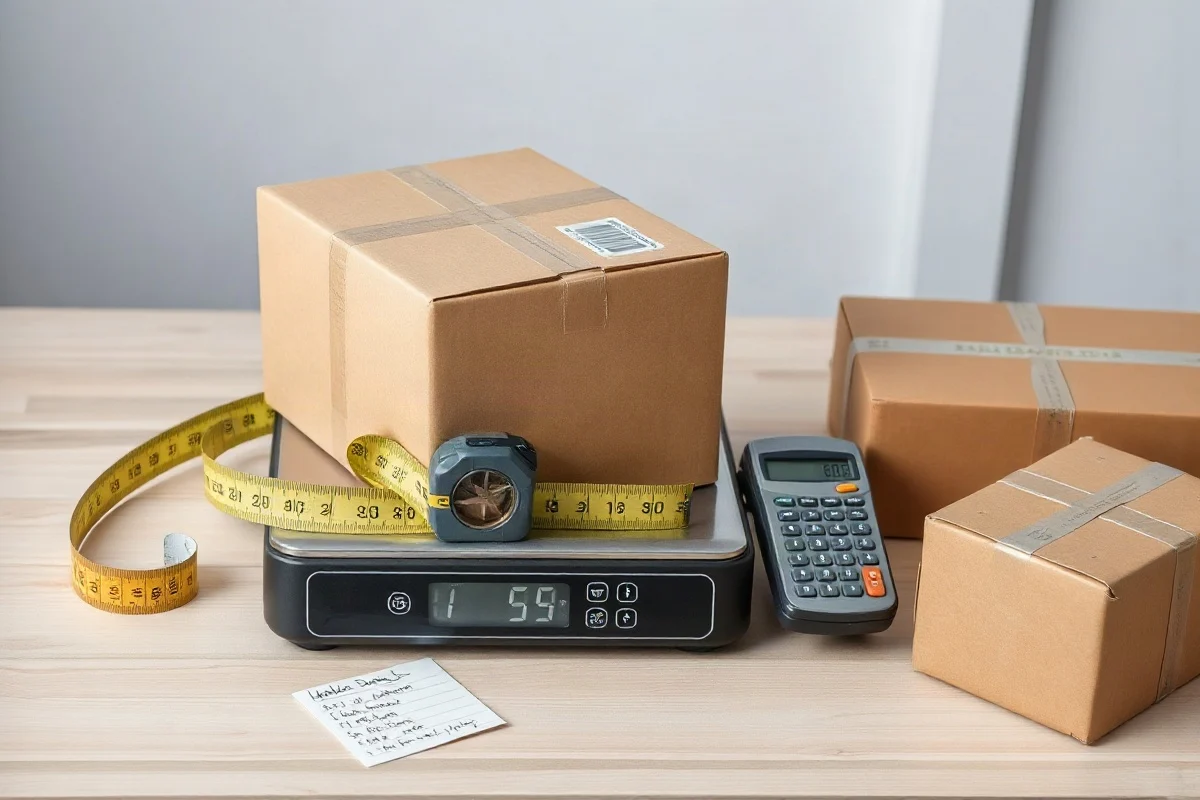
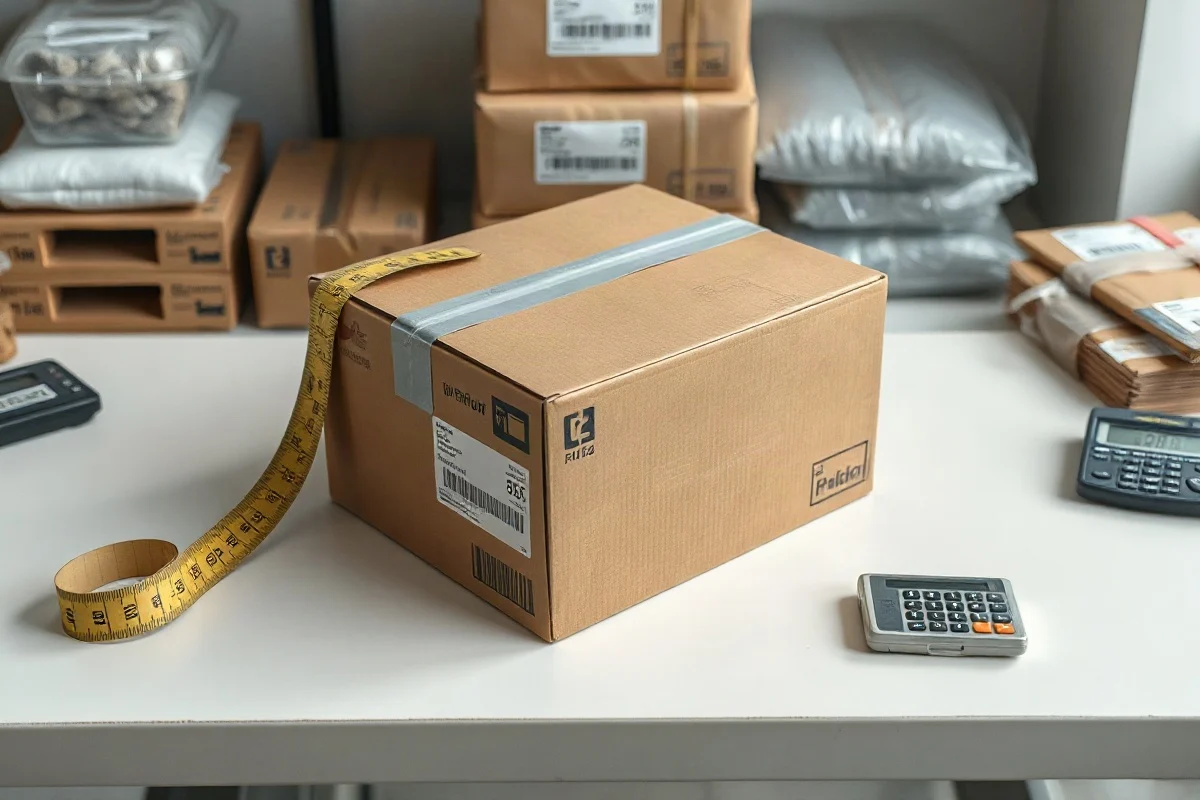
Measure the completed package, not just the empty carton. Use the outside dimensions after the product, cushioning, tape, labels, and other packing materials are in place. Measure the longest side as the length, the next-longest side as the width, and the remaining side as the height.
Practical measurement steps
- Pack the item as it will be shipped.
- Close and seal the box before measuring.
- Measure the full outside length, width, and height.
- Include bulges, uneven flaps, protective corners, and other protrusions when applicable.
- Record the scale weight after the package is complete.
- Enter the measurements and weight into the carrier’s current rate tool or shipping software.
Carriers may round dimensions according to their own rules. A package that appears to measure 12 inches on a household tape measure may be recorded differently by automated equipment or a carrier audit. For recurring shipments, measure several finished packages and use a consistent process rather than relying on the carton’s printed interior dimensions.
What happens after the label is purchased
If the shipping label was created with dimensions or weight that are too low, the carrier may remeasure or reweigh the package in transit. The shipment can then receive a billing adjustment. Depending on the service and account, the additional amount may be charged to the sender, deducted from a shipping balance, or reflected in a later invoice.
An underestimated package can also create operational problems. The original postage may be insufficient, the shipment may be delayed while the charge is reviewed, or the final cost may be higher than the amount shown to a customer at checkout. The exact process is carrier-specific, so consult the current terms for the service you are using.
Keep records of the box dimensions, scale weight, shipping service, and label details for high-volume shipments. If an adjustment seems incorrect, compare the carrier’s recorded measurements with photographs, packing records, or a documented measurement procedure. Contact the carrier or postage provider promptly and follow its dispute process.
How to reduce DIM weight without under-protecting the item
The most effective solution is usually to reduce unused space while preserving adequate protection. The goal is not to make every box as small as possible; it is to choose a package that fits the product and its cushioning appropriately.
Use a better-fitting carton
Compare the product’s packed dimensions with the inside dimensions of the carton. A box that is several inches larger on every side can add substantial volume. If you ship the same product regularly, test a carton designed around the product rather than using one general-purpose box for every order.
Reduce void space carefully
Replace excessive air pillows, loose fill, or oversized inserts with a more efficient cushioning design when appropriate. Do not remove protective material simply to lower the calculated weight. A damaged product, return, or insurance claim can cost more than the original dimensional surcharge.
Review product and packaging design
For repeat shipments, examine whether the product can be nested, folded, disassembled, or protected with a lower-profile insert. Retail packaging may be attractive but inefficient for parcel shipping. A packaging change can reduce both dimensional volume and material use, but it should be validated with drop, compression, vibration, or other appropriate tests.
Compare packaging options before ordering supplies
Use a Box Size Calculator to estimate a suitable carton from the product and cushioning dimensions. Then verify the finished package after packing. Interior box dimensions are useful for planning, but the carrier generally bases its measurement on the outside of the completed parcel.
When actual weight is higher than DIM weight
Not every package is billed by dimensional weight. If the actual weight is higher than the calculated DIM weight, the actual weight may be used instead, subject to the carrier’s applicable rounding and billing rules. Dense items such as books, tools, canned goods, and some hardware products are more likely to be limited by actual weight than by volume.
The comparison still matters because a packaging change can move a shipment from one pricing basis to the other. For a dense package, reducing box size may not change the billable weight if actual weight remains higher. For a lightweight product, the same change can materially reduce the dimensional figure.
Questions to check before shipping
- What are the completed package’s outside dimensions?
- What does the package weigh after sealing and labeling?
- Which carrier, service, destination, and package type apply?
- What dimensional-weight divisor and rounding method does the current service use?
- Does the carrier apply additional size, handling, or oversize rules?
- Could a smaller carton protect the item just as well?
- Does the checkout or marketplace system use its own packaging or shipping requirements?
For carrier-specific planning, compare the current guidance from the relevant USPS package guide, UPS package guide, or FedEx package guide. If you are shipping internationally or using another carrier, review that provider’s current official documentation as well.
The key takeaway is simple: when DIM weight exceeds actual weight, the package may be priced according to its calculated volume rather than its scale weight. Measure the sealed parcel accurately, use the current rules for the exact service, and reduce unnecessary box volume without compromising protection.
Comments
0No comments yet. Be the first to share a helpful note or question.
Leave a Comment
Your email address will not be published. Comments are reviewed before appearing on the site.