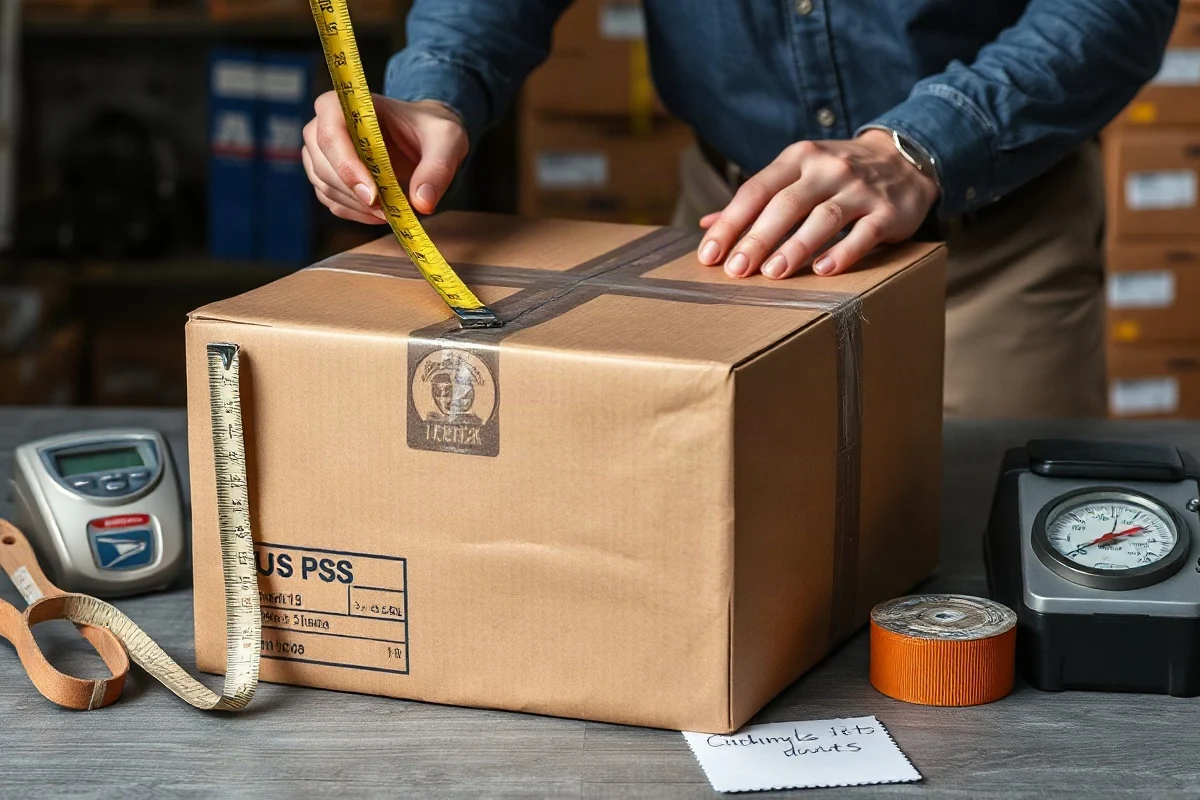
USPS package size limits depend on the mail class, package type, destination, and the service rules in effect when you mail the item. For many common domestic services, a package must stay within a maximum weight and a combined length-and-girth limit. Priority Mail and Priority Mail Express commonly allow packages up to 70 pounds and 108 inches in length plus girth, while Ground Advantage commonly allows packages up to 70 pounds and a larger combined length-and-girth limit. Because USPS rules and service offerings can change, confirm the current requirements in the official USPS postage or service guide before buying a label.
How USPS Measures a Package
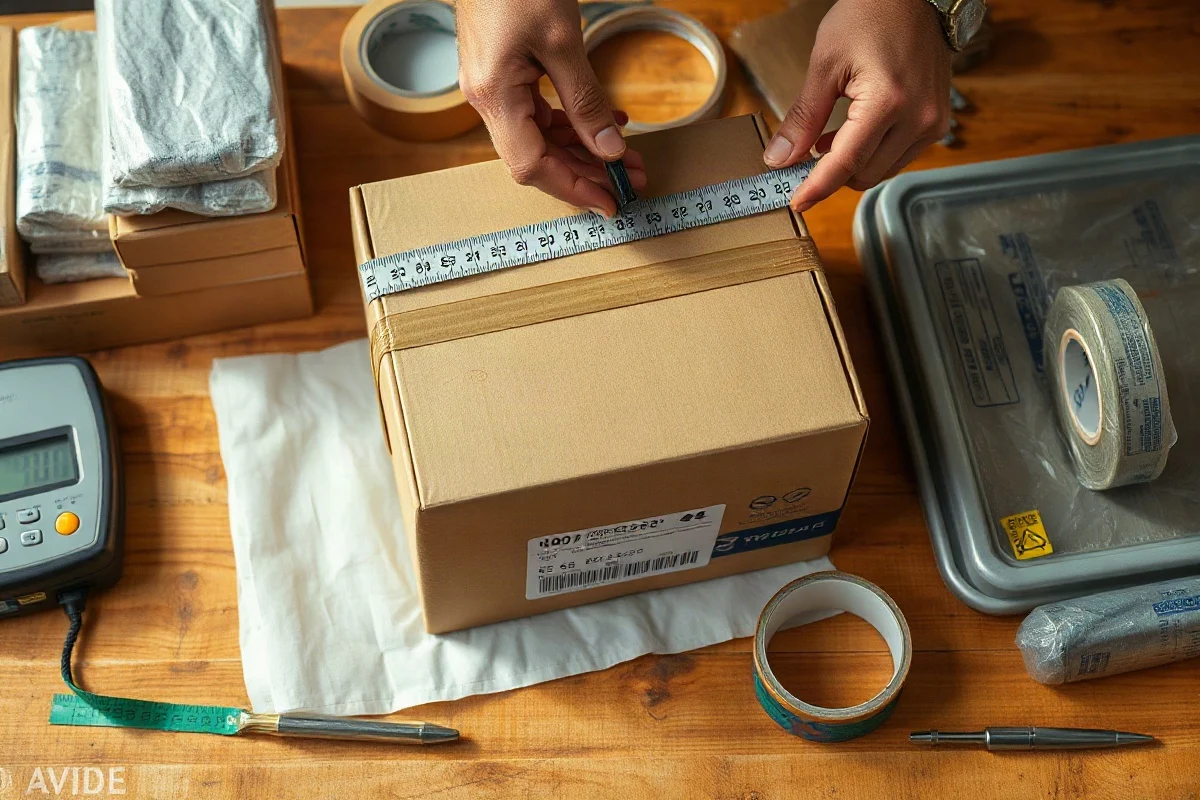
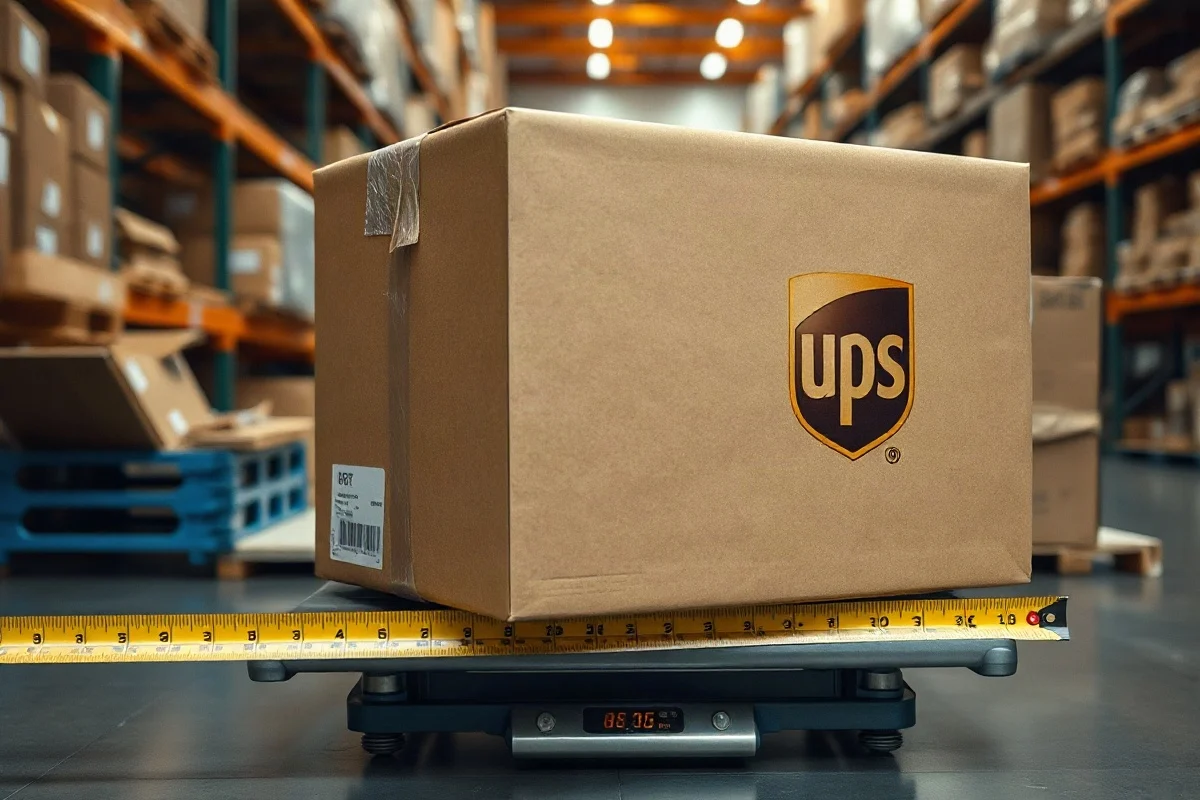
USPS uses the outside dimensions of the completed package. Measure after the box is packed, closed, and taped. Do not measure only the product inside or rely on the manufacturer’s nominal box size if the flaps, bulges, or protective materials increase the exterior dimensions.
Length, width, and height
For a rectangular box, identify the longest side as the length. The other two sides are the width and height. Measure each dimension at its greatest point and round up to the next whole inch when the measurement is not a whole number for postage purposes.
The common USPS size calculation is:
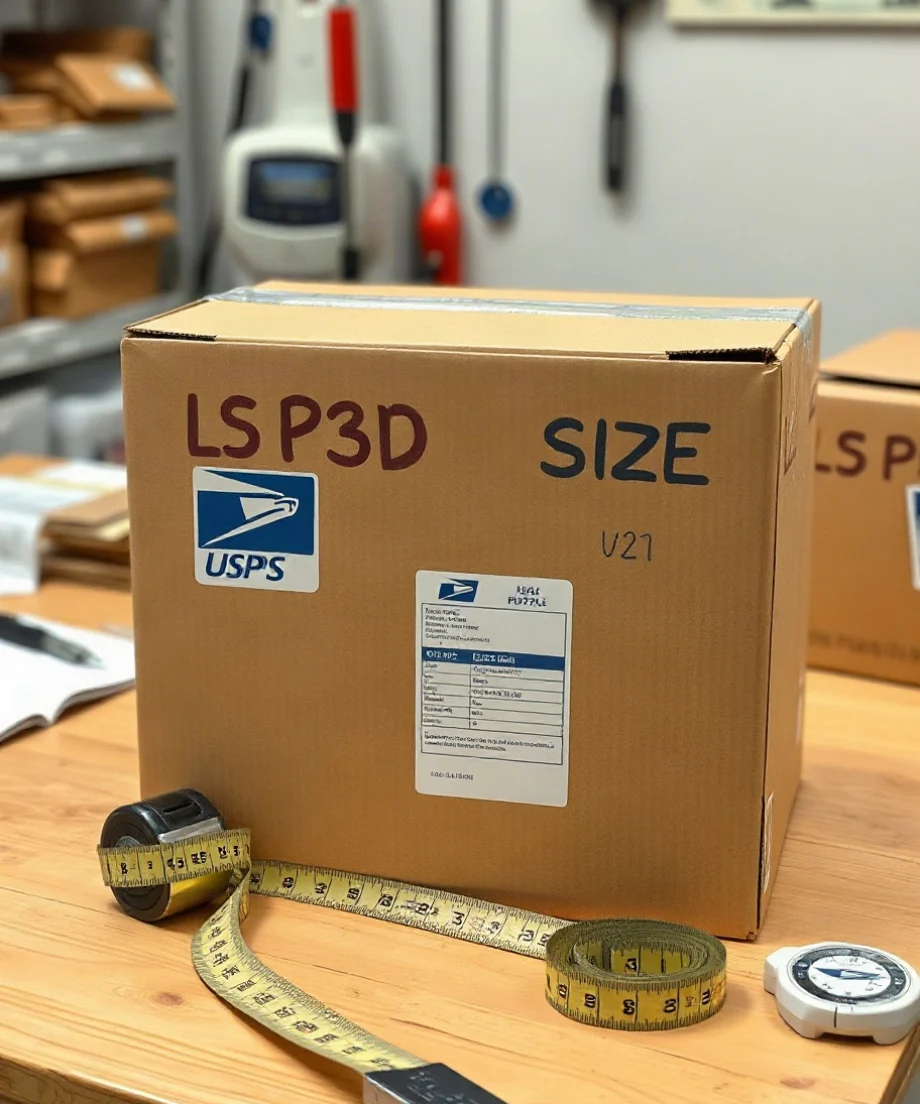
Length plus girth = length + (2 × width) + (2 × height)
For example, a box measuring 24 × 16 × 12 inches has a girth of 56 inches:
24 + (2 × 16) + (2 × 12) = 80 inches
That 80-inch result is the package’s length-and-girth measurement. It is not the same as cubic volume, which would be 4,608 cubic inches. Both measurements can matter: the length-and-girth result helps determine whether the package is eligible, while volume can affect dimensional-weight pricing.
USPS Size Limits by Common Mail Class
The limits below are practical reference points for common domestic packages, not a substitute for the current USPS service standard. A maximum limit does not guarantee that every online postage provider, retail counter, destination, or package shape will accept the item under every mail class.
USPS Ground Advantage
USPS Ground Advantage is the standard ground service for many merchandise shipments. The commonly published maximum weight is 70 pounds. The maximum combined length and girth is commonly 130 inches, although packages near the upper end may be subject to additional handling rules, surcharges, or service restrictions.
Ground Advantage replaced several older USPS ground options for many shipments. If an older shipping guide tells you to use First-Class Package Service or another discontinued service name, check the current USPS product list rather than assuming the old limit still applies. Oversized, unusually shaped, or nonstandard packages may not receive the same treatment as an ordinary rectangular carton.
Priority Mail
Priority Mail commonly has a 70-pound maximum for domestic packages and a 108-inch maximum for length plus girth. Priority Mail Flat Rate packaging follows a different pricing structure: the USPS-produced container and its closure requirements matter more than a custom box’s dimensional calculation.
If you use a Flat Rate envelope or box, do not alter the container in a way that changes its form or prevents normal closure. If you use your own packaging, measure the exterior dimensions and check the current Priority Mail rules. A custom package that is too large may be ineligible for the service or may receive a different postage calculation.
Priority Mail Express
Priority Mail Express commonly permits packages up to 70 pounds and up to 108 inches in length plus girth for domestic mail. However, availability, delivery commitments, cutoff times, and destination eligibility can vary. A package that fits the physical size limit may still require a different service if the destination or requested delivery option does not support it.
Use the current USPS price calculator or service documentation for the exact service available to your ZIP Code pair. Do not treat the delivery date shown by an older article, label tool, or saved shipping profile as a current guarantee.
Media Mail
Media Mail is limited to qualifying educational media, not ordinary merchandise. The commonly published maximum weight is 70 pounds, and the maximum length plus girth is commonly 108 inches. Eligibility is based on the contents, so a box of clothing, toys, office supplies, or general retail products does not qualify simply because it fits the size and weight limits.
USPS may inspect Media Mail packages. Pack only eligible materials, and review the current USPS definition before choosing this service. If the contents do not qualify, select a service intended for merchandise instead.
Library Mail
Library Mail is a restricted service for eligible items mailed by qualifying institutions and organizations. Its commonly published maximum weight is 70 pounds, with a maximum length plus girth commonly set at 108 inches. Eligibility is not determined by size alone. Before using Library Mail, confirm both the sender and contents requirements in the current USPS rules.
Parcel Select and other ground products
USPS offers ground products through different channels, including retail, commercial pricing, approved postage providers, and contracted shipping platforms. Maximum dimensions, oversize treatment, and available packaging options can differ by product and account type. Do not transfer the Ground Advantage limit to Parcel Select or another ground product without checking that product’s current specifications.
Weight Limits Are Only One Part of Eligibility
A package can meet a weight limit and still be unacceptable because it exceeds the dimensional limit, has an unsafe shape, contains a restricted item, or is packed poorly. USPS may apply additional requirements to hazardous materials, liquids, perishables, fragile items, batteries, and other regulated contents.
For ordinary domestic shipments, weigh the sealed package rather than estimating from the product weight. Include the box, cushioning, tape, label, and any outer wrapping. If your scale displays fractions of a pound, follow the postage provider’s rounding instructions. Different tools may display the weight differently, so use the measurement required by the label system you are using.
Dimensional Weight and Oversize Packages
Some packages take up more space than their actual weight suggests. In those cases, USPS or a postage provider may use dimensional weight or another size-based pricing rule. The exact formula, divisor, rounding method, and service applicability can change, so never assume that one dimensional-weight calculation applies to every USPS mail class.
A general dimensional-weight formula is:
Length × width × height ÷ the applicable divisor
Use only the divisor and rounding method shown in the current USPS or postage-provider instructions for the selected service. A calculator that uses a carrier-specific divisor may produce a wrong result for USPS. For a broader explanation of volume-based pricing, see our guide to dimensional weight.
Large packages can also face special pricing or handling treatment even when they are below the absolute maximum. Before shipping a long, lightweight carton, enter the complete dimensions into the current USPS postage tool and compare the result with a smaller box.
How to Check a Package Before Buying Postage
- Pack the item completely. Add cushioning and close the box as it will travel.
- Measure the outside. Record length, width, and height at the largest points.
- Calculate length plus girth. Use length + 2(width) + 2(height).
- Weigh the sealed package. Include all packaging materials.
- Choose the exact mail class. Do not select a service based only on a similar name or an old shipping template.
- Check restrictions. Review rules for contents, packaging, destination, and special handling.
- Verify the current price and eligibility. Use USPS or your authorized postage provider before printing the label.
Packaging Tips for Staying Within the Limit
Choose a box that leaves enough room for protection but not so much empty space that the package becomes unnecessarily large. A smaller carton can reduce both the length-and-girth measurement and the chance of dimensional-weight pricing. Cut down oversized cartons only if the resulting box remains sturdy and the flaps close normally.
Keep the contents from shifting by using an appropriate amount of cushioning. Do not compress a box so tightly that its sides bulge, and do not place heavy objects where they can break through the bottom. For irregular products, use the smallest practical rectangular carton and measure the finished package rather than trying to calculate from the product’s shape.
For more guidance on selecting and measuring cartons, explore our resources on package dimensions and box sizes.
What to Do When a Package Is Close to the Maximum
If your package is within an inch or two of a published limit, treat it as a verification case rather than relying on an approximate measurement. A slightly rounded-up dimension, a bulging side, or a different interpretation of the package orientation can change the result. Repack the item if possible, then measure again with a rigid tape measure.
Finally, check the current USPS service page or postage calculator for the exact mail class, origin, destination, weight, dimensions, and package type. USPS limits, product names, pricing, and special handling rules can change. The official result for the specific shipment should control your decision, especially for oversized packages, restricted contents, international mail, and commercial shipping accounts.
Comments
0No comments yet. Be the first to share a helpful note or question.
Leave a Comment
Your email address will not be published. Comments are reviewed before appearing on the site.