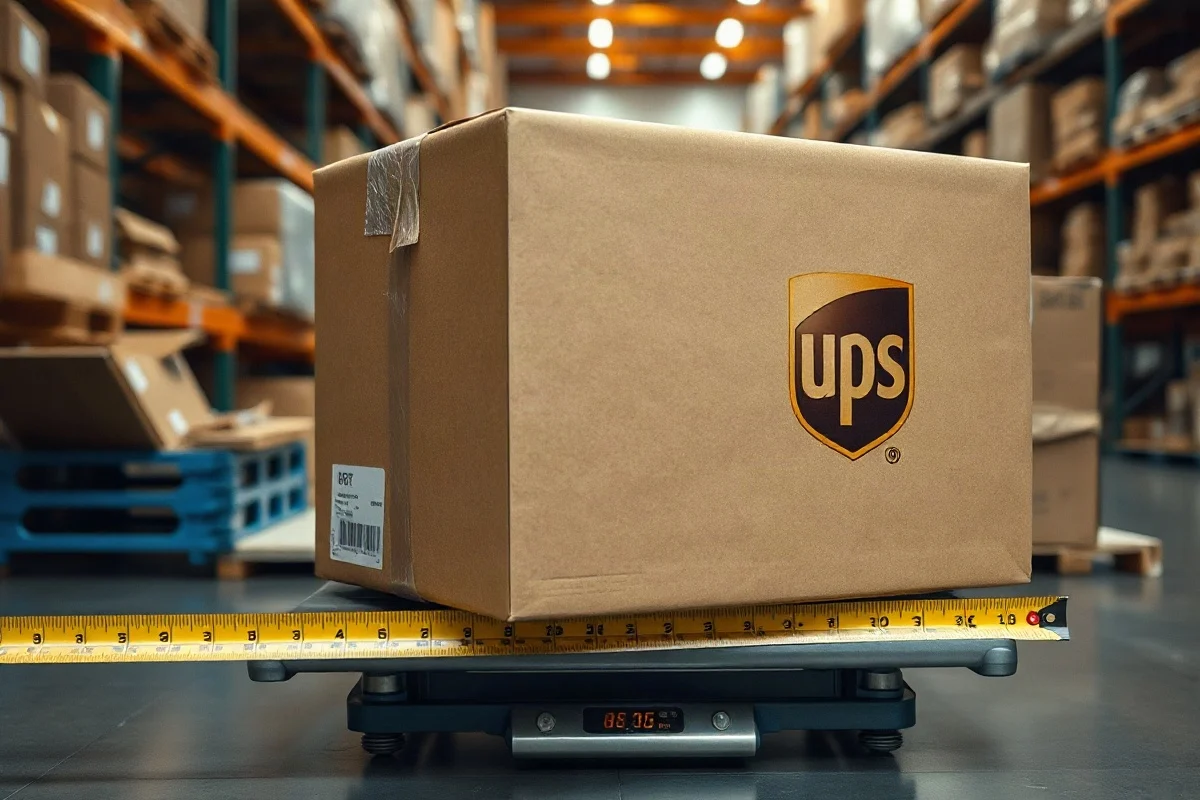
For many UPS services in the United States, a package may weigh up to 150 pounds, measure up to 108 inches in length, and have a maximum length plus girth of 165 inches. These figures are commonly used as UPS small-package limits, but the rule can vary by service, destination, package type, account terms, and current UPS policy. Always confirm the limits and possible surcharges in the current UPS Service Guide or the official UPS shipping tool before sending an unusually heavy or oversized package.
What UPS means by package dimensions
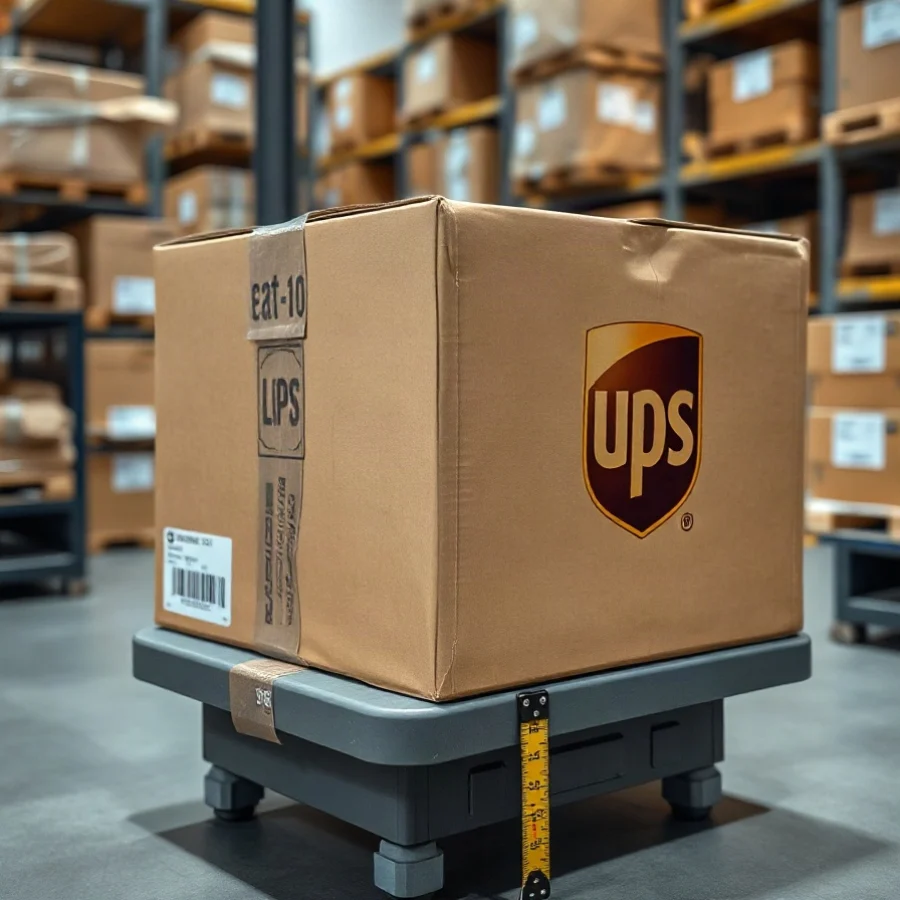
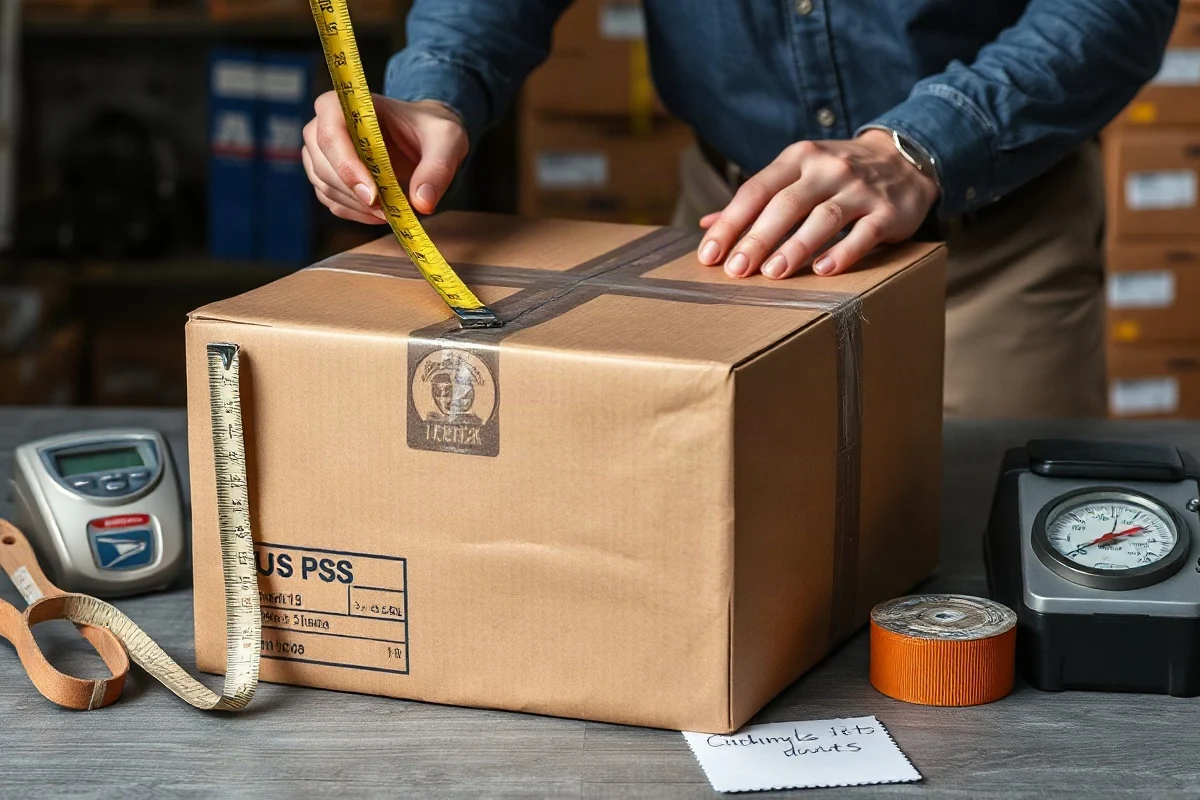
UPS uses the package’s outside dimensions after it has been packed and sealed. Measure the finished carton, not only the product or the manufacturer’s listed box size. Include protruding parts, handles, wheels, bulges, and any other feature that increases the package’s overall footprint.
For a rectangular box, identify the three measurements as:
- Length: the longest side of the package.
- Width: the next-longest side.
- Height: the remaining side.
UPS measurements are normally expressed in inches and pounds for U.S. shipments. If you measure in centimeters or weigh the package in kilograms, convert the results before entering them into a UPS calculator or shipping label system. One inch equals 2.54 centimeters, and one kilogram equals approximately 2.205 pounds. Round only after measuring carefully, because a small difference can affect dimensional weight, oversize handling, or the carrier’s acceptance of the package.
How to calculate length plus girth
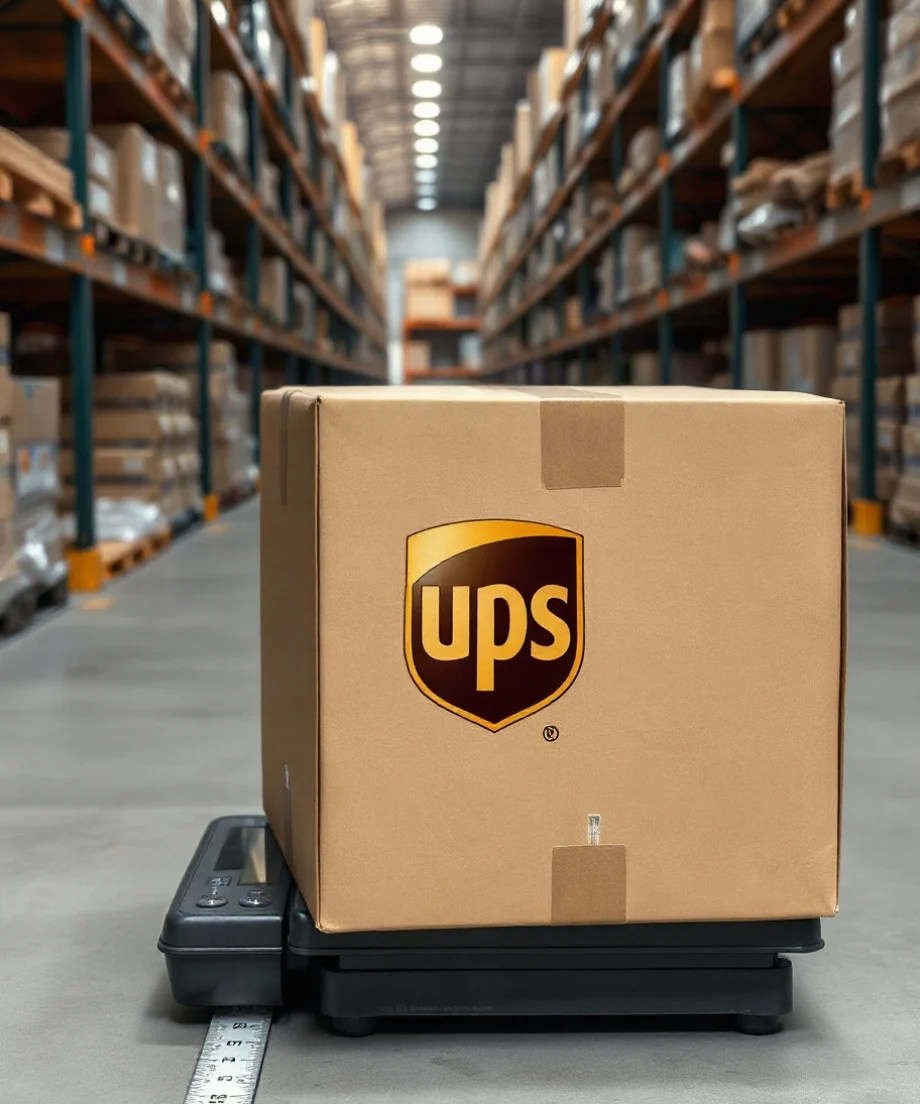
The length-plus-girth measurement combines the longest side with the distance around the package’s other two sides. For a rectangular carton, use this formula:
Length plus girth = length + 2(width + height)
For example, a box measuring 40 by 20 by 15 inches has a length of 40 inches and a girth of:
2(20 + 15) = 70 inches
Its length plus girth is therefore:
40 + 70 = 110 inches
That result is below the commonly cited 165-inch UPS small-package threshold. The package must still satisfy the applicable weight and longest-side limits, and the selected service must accept the shipment. A package that passes one measurement test can still be subject to additional fees or restrictions because of its actual weight, dimensional weight, shape, or destination.
How to measure an irregular package
Irregular packages require extra care. Measure the longest straight-line dimension as the length. Then estimate the width and height using the package’s largest rectangular footprint. If the parcel has a curved, tapered, or uneven surface, do not assume that the smallest section represents the package. A carrier may rate the shipment based on the space it occupies rather than the product’s compact shape.
When a soft package is compressed by hand, measure it in the condition in which it will travel. Do not squeeze out air, flatten padding, or remove protective material just to obtain a smaller number. Use a rigid outer carton when possible, especially for heavy or fragile goods.
Common UPS weight and size limits
The commonly published U.S. UPS small-package maximums are 150 pounds per package, 108 inches for the longest side, and 165 inches for length plus girth. These are useful planning numbers, not a substitute for checking the service-specific rules that apply to your shipment.
Several details matter:
- The 150-pound figure is a per-package limit, not a combined limit for an entire shipment.
- A shipment with multiple cartons must be evaluated carton by carton.
- Packages above ordinary size or weight thresholds may require special handling, additional charges, or a different freight service.
- Not every UPS service accepts the same package types or destinations.
- Remote locations, international shipments, hazardous materials, and restricted commodities may have separate requirements.
UPS may accept a package that falls within a published maximum while still applying an additional handling or large-package charge. These charges and their qualifying measurements can change. The safest approach is to enter the completed package details into the current UPS rate and service tool, then review the service terms before paying for the label.
Actual weight versus dimensional weight
Package size can affect the bill even when the carton is light. Carriers may compare the package’s actual weight with its dimensional weight and charge according to the applicable rating method. Dimensional weight estimates the space a package occupies in a delivery vehicle or aircraft.
A general dimensional-weight formula is:
Dimensional weight = length × width × height ÷ dimensional divisor
The divisor is not universal. It can vary by carrier, service, package type, destination, and current pricing rules. Because UPS can change rating details, do not assume that a divisor found in an old article or spreadsheet still applies. Use the current UPS calculator or tariff information for the exact shipment.
For example, a 30-by-20-by-20-inch carton has a volume of 12,000 cubic inches. Even if the contents weigh only 25 pounds, the package may receive a higher billable weight after UPS applies the current dimensional-weight formula. The exact result depends on the service and the rules in effect when the label is created.
For more background on the calculation, see this guide to dimensional weight. The important packing lesson is simple: use the smallest safe carton, avoid excessive empty space, and measure the sealed package before purchasing postage.
How to measure a UPS package accurately
1. Pack the item first
Place the product, cushioning, paperwork, and any required accessories inside the carton. Close and seal the box with strong packing tape. Flaps that remain open can change the final dimensions, so measure the package in its shipping-ready condition.
2. Measure from the outside edges
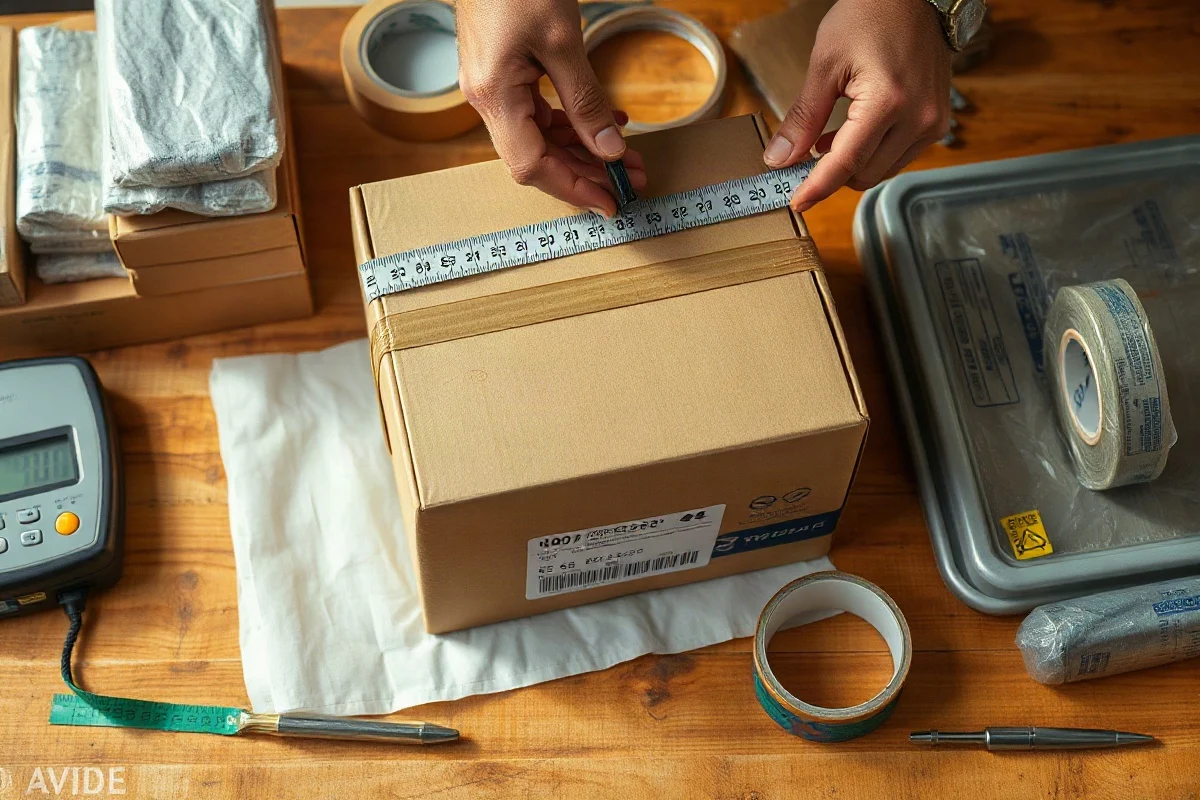
Use a tape measure or ruler to measure the exterior length, width, and height. Measure at the widest or tallest point when the carton is not perfectly square. Record each dimension to the nearest practical fraction or whole inch, then follow the rounding instructions in the UPS label or rating system.
3. Weigh the complete package
Use a scale that can support the package without touching the floor or a nearby wall. Include the box, tape, labels, cushioning, and all contents. For heavy cartons, verify the reading on a second scale when the result is close to a service threshold.
4. Recheck the measurements
Confirm that length is the longest side, calculate length plus girth, and compare the result with the current service limits. Keep a record of the package dimensions and weight for your shipping documentation. If a carrier audit later finds that the submitted measurements were too small, the shipment may be rebilled.
Ways to reduce the chance of extra charges
Choose a carton that protects the product without leaving large empty areas. Fill voids with suitable cushioning, but avoid adding unnecessary layers around the outside of the box. If a product can be shipped safely in a compact rectangular carton, that shape is usually easier to measure and rate than an irregular package.
Do not round dimensions down. A box listed as 18 inches long may measure slightly more after tape, bulging cardboard, or a protective overpack is added. Entering smaller measurements can create an adjustment later. It is better to measure honestly and compare the total cost of a slightly smaller carton, a different UPS service, or a freight option.
For heavy shipments, distribute weight evenly across the bottom of the carton. Use a box designed for the item’s weight, reinforce the seams, and make sure the package can be lifted safely. A carton that breaks open can cause damage, delays, and additional handling even when its measurements meet the stated maximums.
When a package exceeds the normal UPS limits
If a package exceeds 150 pounds, is longer than 108 inches, or goes beyond the applicable length-plus-girth limit, do not assume that a standard small-package label will be accepted. The shipment may need a different UPS service, freight transportation, split packaging, or a special arrangement. The right choice depends on the commodity, origin, destination, number of pieces, and delivery requirements.
Splitting one large shipment into two cartons can reduce dimensional or handling problems, but it is not automatically cheaper. Each carton receives its own transportation charge, and fragile products may need additional protection. Compare the complete quoted cost and confirm that the goods can legally and safely be divided.
Check the current UPS rules before shipping
UPS limits, dimensional-weight practices, surcharges, and service availability can change. International and special-service shipments may also use requirements that differ from ordinary domestic packages. Before printing a label, check the current UPS Service Guide and the official UPS rating tool for your origin, destination, service level, package dimensions, weight, and contents.
For more carrier-specific shipping information, visit the UPS section of Package Size Guide. You can also compare general package dimension measurement practices and use a shipping calculator after you have measured the sealed package accurately.
Comments
0No comments yet. Be the first to share a helpful note or question.
Leave a Comment
Your email address will not be published. Comments are reviewed before appearing on the site.