
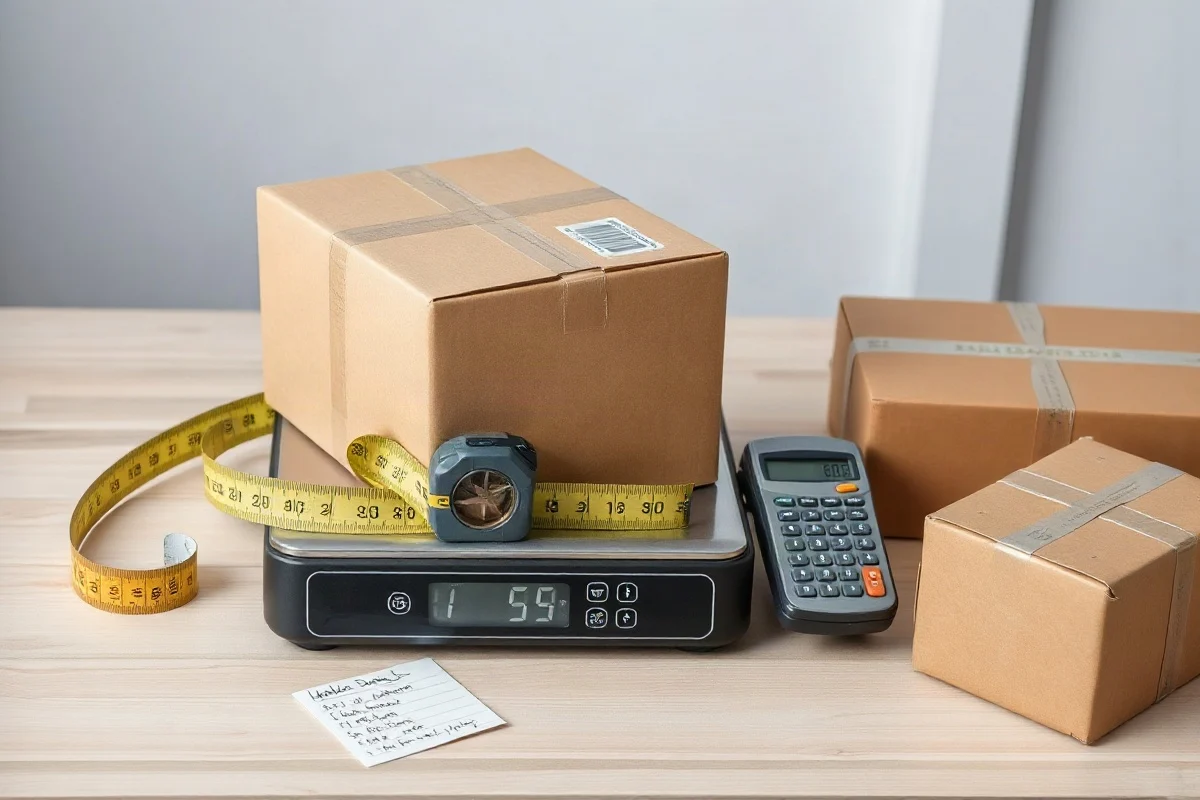
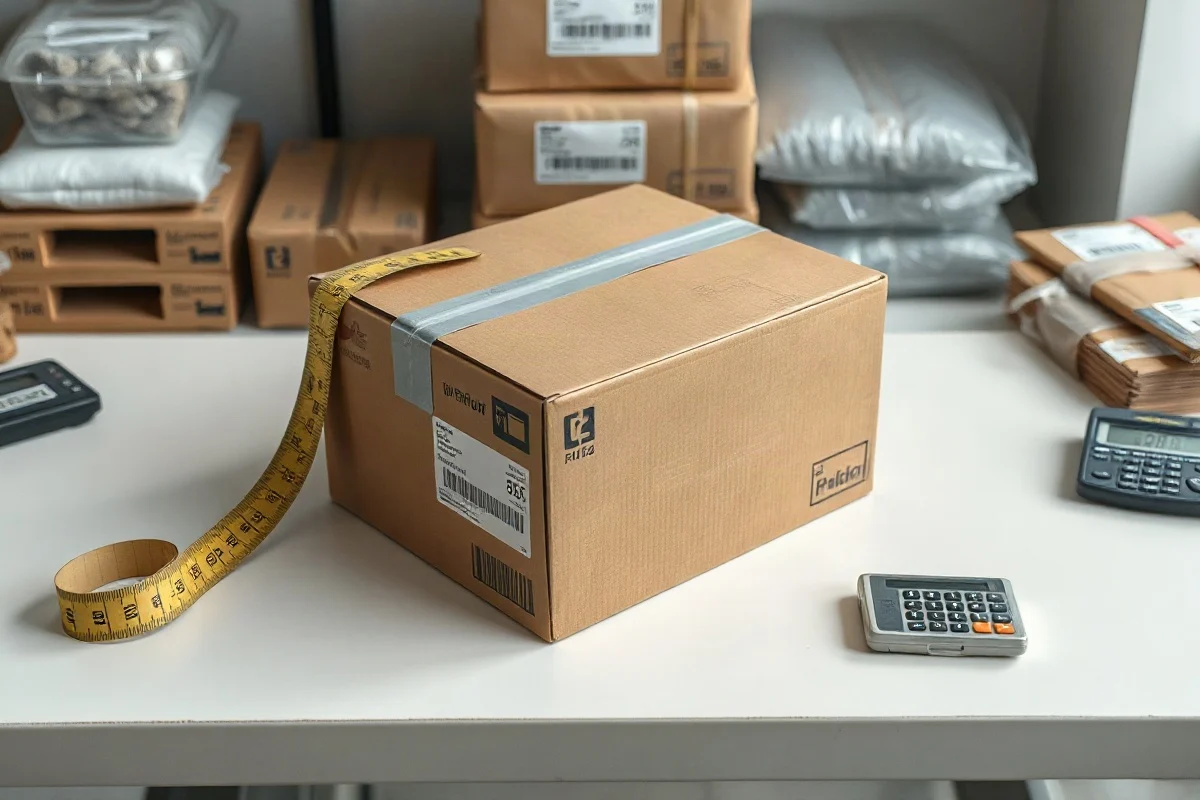
To measure a box for dimensional weight, measure the package after it is fully packed and sealed. Record the outside length, width, and height at their largest points, then multiply those dimensions and divide the result by the dimensional-weight divisor required by the carrier and service. Compare the calculated dimensional weight with the package's actual weight, because the billable weight may be based on whichever is greater under the applicable shipping rules.
Why box measurements affect shipping cost
Carriers do not price every package only by how much it weighs on a scale. A large, lightweight box can occupy valuable space in a delivery vehicle or aircraft, even when the contents weigh very little. Dimensional weight, sometimes called volumetric weight, estimates the space that package uses.
For example, a box filled with pillows may be light but take up much more room than a small box containing metal hardware. Dimensional-weight pricing helps account for that difference. The exact calculation, rounding method, minimum billable weight, and package rules can vary by carrier, service level, destination, and date. Always confirm the current requirements with the carrier or shipping platform you plan to use.
For a broader reference, see the dimensional weight guide or use a dimensional weight calculator after you have measured the package.

Measure the packed box, not the empty carton
The most important rule is to measure the final shipping package. Do not rely only on the manufacturer's listed box size or the dimensions of an empty carton. Tape, labels, protective padding, bulging contents, and the way the flaps close can all change the package's outside dimensions.
Pack and seal the shipment first
Put the actual items, cushioning, inserts, and paperwork inside the box. Close and seal every flap as it will be presented to the carrier. If the contents push against a panel or cause the box to bow outward, measure that larger profile rather than the nominal carton size.
If you are comparing several packaging options, pack each option in the same way. A smaller box may reduce dimensional weight, but it must still protect the contents and leave enough room for appropriate cushioning.
Use the outside dimensions
Measure from the outside of the package. The dimensions should describe the space the sealed parcel occupies, not the usable interior space. A rigid ruler, tape measure, or box-measuring tool can work, provided it is held straight and does not follow a curved or crushed surface.

Measure each dimension at its largest practical point:
- Length: the longest side of the package.
- Width: the side perpendicular to length and usually the next-longest side.
- Height: the remaining side, measured from the bottom to the top.
For a rectangular box, the order of the three dimensions does not change the multiplication result. However, recording them consistently makes shipping forms easier to complete and helps you compare package limits correctly.
How to measure an irregular or bulging package
Not every parcel is a perfect rectangular box. Soft mailers, tubes, padded envelopes, and boxes with protruding parts may require additional care.
For a package with uneven sides, use the greatest overall length, width, and height. Do not compress the parcel simply to obtain a smaller measurement unless the carrier's current rules specifically allow that type of packaging and measurement method. A soft package that expands after it is placed in a shipping container should be measured in its normal sealed condition.
For a cylindrical package, measure the full end-to-end length and the diameter at the widest point. Some carrier systems use different instructions for tubes or nonrectangular packages, including special rounding or additional measurements. Check the current official guidance for the service you are using before submitting the dimensions.
For unusual shapes, it can be useful to place the parcel inside the smallest rectangular box that would contain it without compression. The outside dimensions of that box provide a practical rectangular measurement, although the carrier may have its own requirements.
The dimensional-weight formula
The general formula is:
Dimensional weight = (length × width × height) ÷ dimensional-weight divisor
When using inches, the result is typically expressed in pounds after applying the divisor specified for that shipment. When using centimeters, the carrier may require a different divisor and the result may be expressed in kilograms. Do not mix units in the same calculation.
The divisor is not universal. It can differ among carriers, services, international and domestic shipments, account agreements, and package types. Because these values can change, use the divisor displayed in the carrier's current rate guide, shipping label system, or official calculator. If a marketplace or shipping platform calculates the charge for you, review its current documentation as well.
Example using a carrier-provided divisor
Suppose a sealed box measures 18 inches by 12 inches by 10 inches. First calculate the cubic volume:
18 × 12 × 10 = 2,160 cubic inches
If the applicable shipping service specifies a divisor of D, the dimensional-weight result is:
2,160 ÷ D pounds
Using a letter instead of assuming a universal number is intentional. The correct result depends on the current divisor for the shipment. Once you obtain that value, compare the result with the package's actual scale weight and apply the carrier's rounding and billable-weight rules.
Actual weight versus dimensional weight
Actual weight is the physical weight shown by a properly calibrated scale. Dimensional weight is a calculated estimate based on package volume. Shipping systems may compare the two and use the higher applicable weight, but the exact rule can vary.
For example, a compact box might weigh more than its dimensional calculation, while a large box filled with lightweight clothing might have a higher dimensional result. The package's chargeable weight may also be affected by minimums, rounding increments, oversized-package rules, or special handling provisions.
Do not assume that a dimensional-weight calculation alone gives the final shipping price. The rate can also depend on origin, destination, service level, delivery speed, surcharges, declared information, and the carrier's current pricing structure.
Rounding and measurement details to check
Small differences can matter near a pricing threshold. A carrier may instruct shippers to round measurements to a particular increment, round each dimension before multiplying, or round the calculated weight after division. These procedures are not necessarily the same across services.
Check the following before creating the label:
- Whether measurements must be entered in whole inches, centimeters, or another unit.
- Whether each dimension is rounded up, rounded normally, or entered as measured.
- Whether the calculated weight is rounded to a whole unit or another increment.
- Whether the carrier measures the package again and adjusts the charge.
- Whether the package qualifies as a tube, irregular parcel, oversized shipment, or special packaging type.
When in doubt, use the carrier's official instructions for the exact service. A shipping counter, online label form, or third-party platform may display its own data-entry requirements, but the carrier's current published rules should be the final reference.
Common measurement mistakes
Measuring the product instead of the parcel
The product's dimensions do not include the carton, cushioning, air space, tape, or exterior packaging. Measure the completed package.
Using interior box dimensions
Interior measurements describe the space available for the contents. Dimensional weight generally concerns the outside size of the shipment. Exterior panels and seams can add enough to change the calculation.
Ignoring bulges and protrusions
A bowed side, raised flap, handle, or attached component can increase the package's maximum dimensions. Measure the largest overall profile rather than a flat section of the box.
Rounding too early
Rounding every measurement before you know the carrier's method can produce an inaccurate result. Keep the measurements as precise as practical, then follow the applicable instructions for rounding.
Using the wrong divisor
A divisor copied from an old label, another carrier, or a different service may produce the wrong dimensional weight. Confirm the current divisor for the specific shipment instead of assuming one number applies everywhere.
Ways to reduce dimensional weight safely
The most effective approach is to reduce empty space without compromising protection. Start by choosing a carton that fits the product and its cushioning closely. Remove unnecessary inserts, use appropriately sized protective materials, and avoid oversized outer cartons when a smaller box will provide equal protection.
Do not squeeze fragile products into a box that is too small. Damaged merchandise, crushed corners, and inadequate cushioning can cost more than the savings from a smaller package. Test the packed carton by checking that the contents cannot move excessively and that the box closes without bulging.
If you ship the same product repeatedly, record the final sealed dimensions and weight for each packaging configuration. This creates a reliable reference for label preparation and helps reveal when a new carton or packing method increases shipping costs.
You can also compare package options with the box size calculator and review related carrier guidance through the shipping calculators resource.
A practical measurement checklist
- Place the actual contents and cushioning in the selected carton.
- Close and seal the box as it will be shipped.
- Measure the outside length, width, and height at their largest points.
- Record all three dimensions in one consistent unit.
- Weigh the sealed package on a suitable scale.
- Find the current dimensional-weight divisor and rounding rules for the exact carrier service.
- Multiply the three dimensions and divide by that divisor.
- Compare dimensional weight with actual weight and apply the carrier's billable-weight rules.
- Check current size, packaging, and surcharge requirements before purchasing the label.
Accurate measurements make the shipping estimate more dependable, but they do not replace a current carrier quote. Carrier policies, dimensional-weight divisors, package limits, and fees may change, so verify the final details with the official source or label system before shipping.
Comments
0No comments yet. Be the first to share a helpful note or question.
Leave a Comment
Your email address will not be published. Comments are reviewed before appearing on the site.