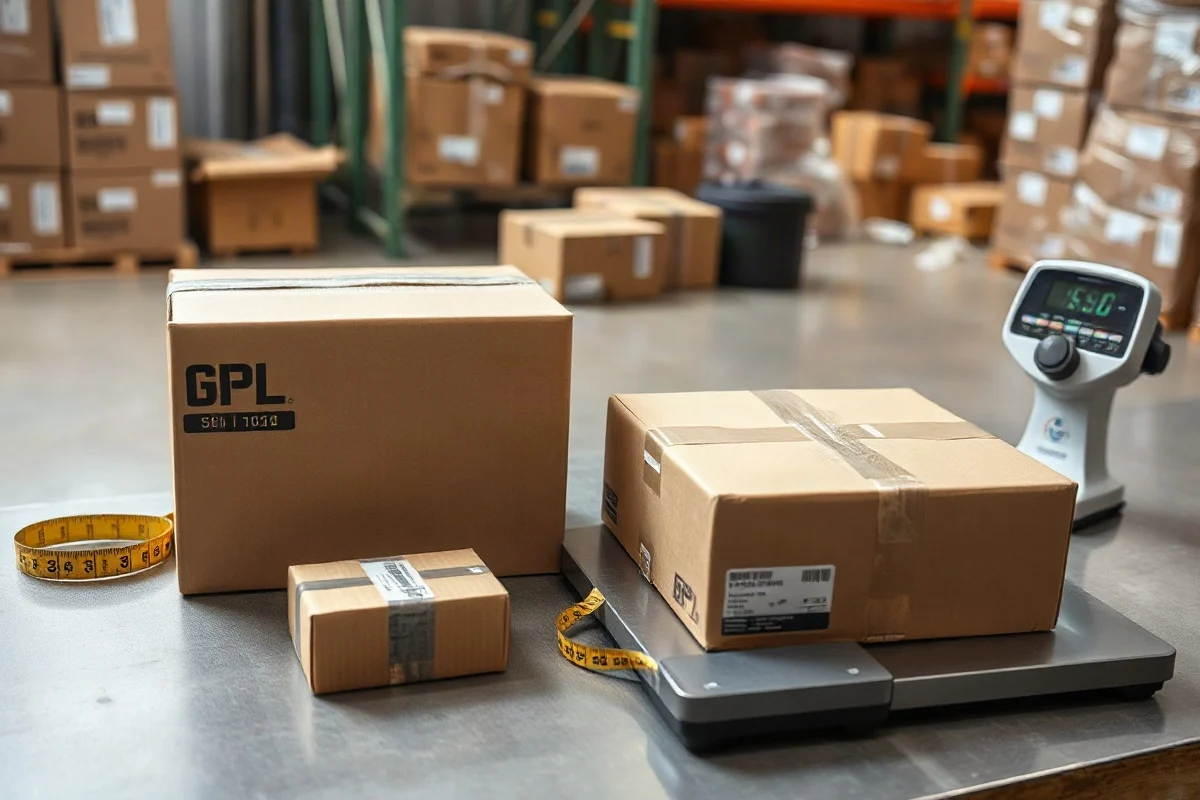
Empty space can cost you in three ways: it can increase dimensional weight, require more expensive packaging, and allow products to move during transit. A box that is physically light may still be billed by its volume when a carrier uses dimensional-weight pricing. The practical fix is to choose the smallest protective package that fits the product, measure the sealed package correctly, and compare its actual weight with the dimensional weight calculated under the specific service’s current rules.
Why empty space affects shipping cost
Carriers have limited room on trucks, aircraft, and delivery vehicles. A large box occupies more space than its scale weight alone suggests. Dimensional weight, sometimes called volumetric weight, converts a package’s volume into a billable weight for pricing purposes.
The carrier may compare the package’s actual weight with its dimensional weight and charge using the higher figure. The exact formula, dimensional-weight divisor, rounding method, minimum billable weight, and services covered can vary by carrier, service level, package type, destination, and account agreement. These details can also change, so check the current official rate and service documentation before relying on an estimate.
For an overview of the calculation, use the Dimensional Weight Calculator. Treat the result as an estimate unless you enter the current divisor and rounding rules required by your carrier.
How to calculate the space you are shipping
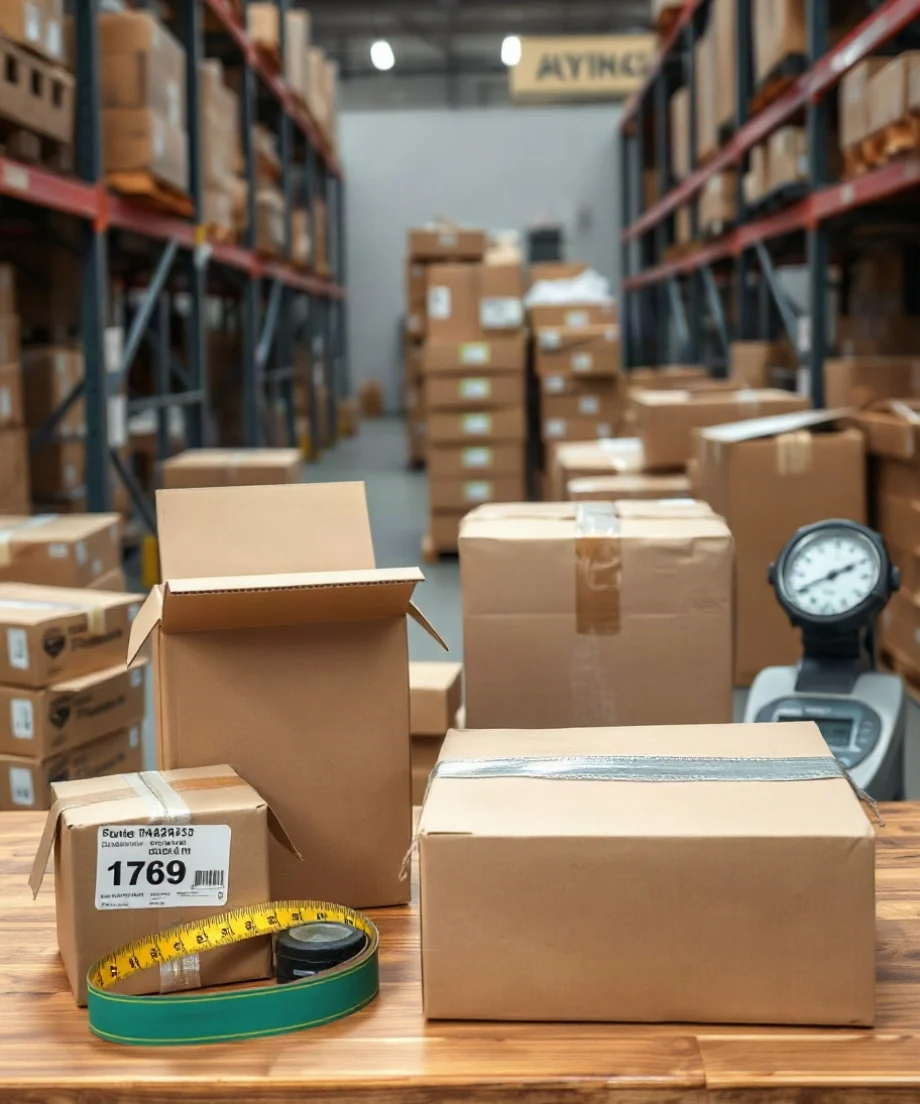
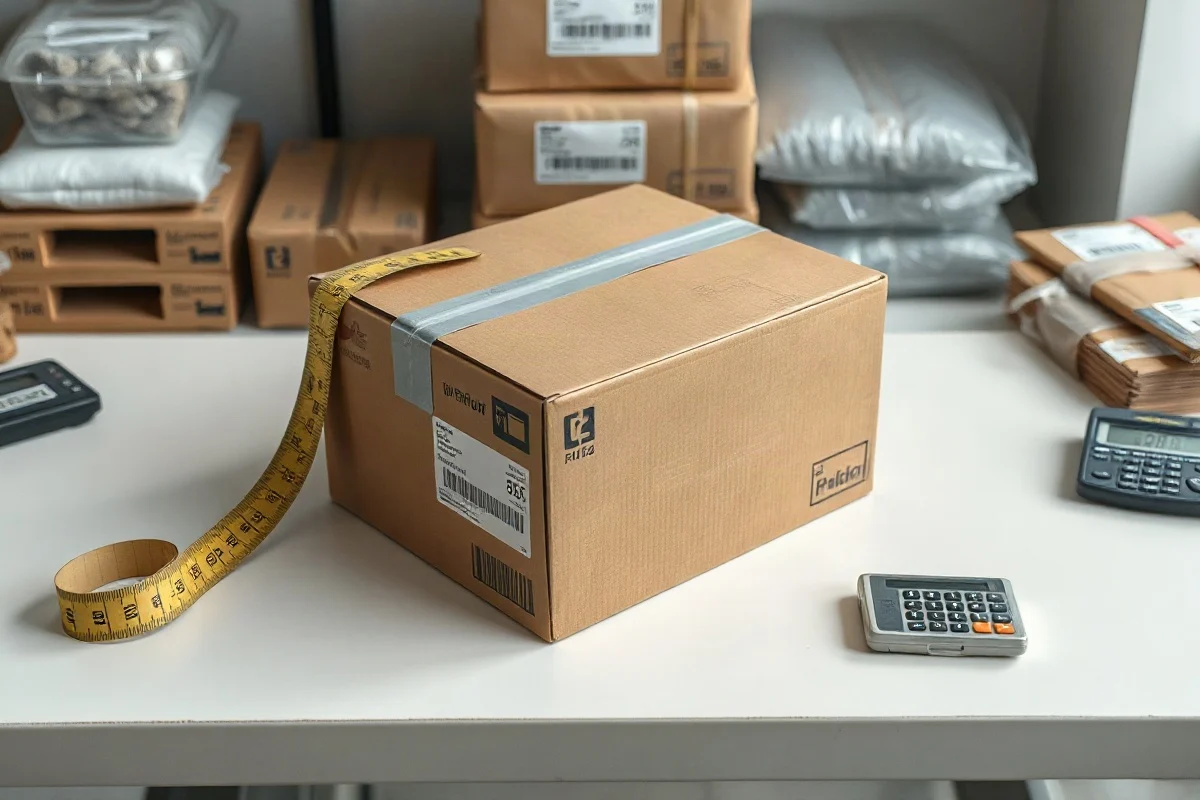
Start with the outside dimensions of the finished package, not the product dimensions. Measure the sealed box at its longest points. Record the length, width, and height in the same unit, usually inches for domestic U.S. shipping.
Multiply the three measurements to find the package volume:
Length × width × height = cubic volume
For example, a box measuring 18 × 12 × 10 inches has a volume of:
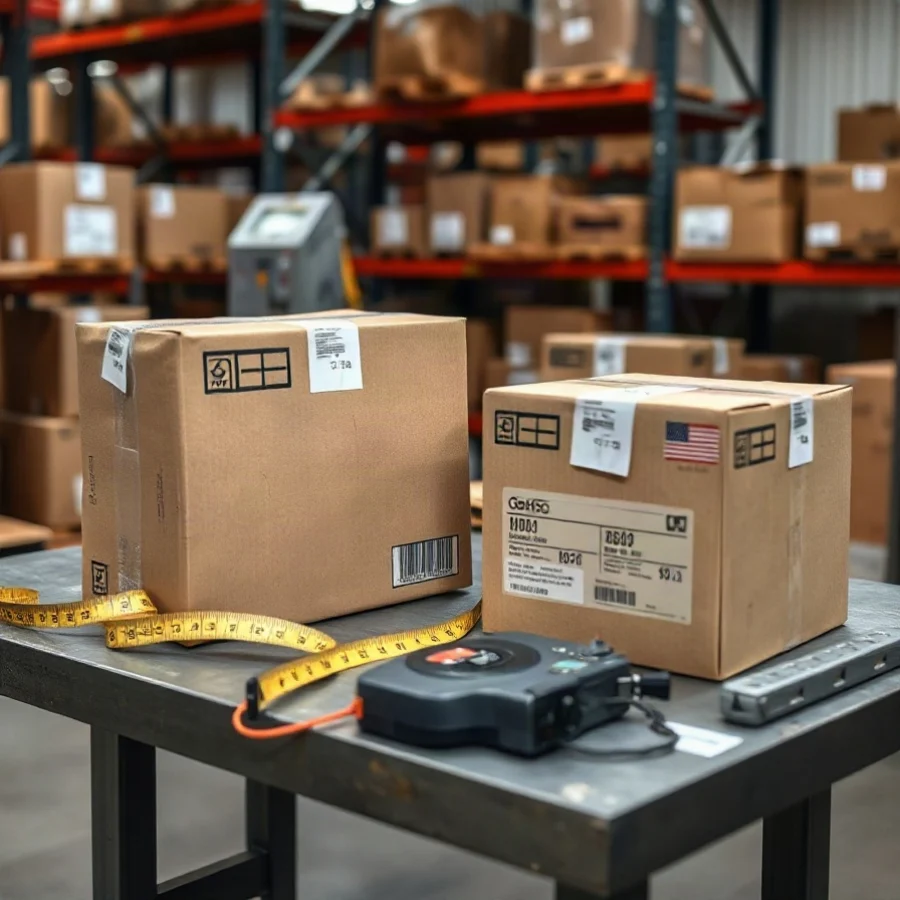
18 × 12 × 10 = 2,160 cubic inches
If a carrier uses a dimensional divisor of D, the basic dimensional-weight formula is:
2,160 ÷ D = dimensional weight
Do not assume that one divisor applies everywhere. The correct divisor may depend on the carrier, service, shipment type, and billing agreement. Some services also apply their own rounding rules. Enter the current divisor from the carrier’s documentation, then compare the result with the package’s actual scale weight.
Measure the package after packing
A common mistake is calculating from the empty box’s listed size or the product’s dimensions. The billable package may be larger because of bulging cardboard, protruding tape, protective corners, or an oversized outer carton. Measure the final package after the product, cushioning, and paperwork are inside.
For a rectangular package, round each measured outside dimension according to the applicable carrier rules before calculating. Because rounding can affect the result, avoid treating a measurement such as 11.6 inches as exactly 11 inches. If the package is irregular, oversized, cylindrical, or packaged in a soft mailer, consult the carrier’s current measurement guidance. The way a carrier measures nonrectangular packaging may differ from a simple box calculation.
A simple empty-space example
Imagine a product that measures 12 × 8 × 4 inches and weighs 3 pounds. It is shipped in a 16 × 12 × 8-inch box because the seller wants extra room for cushioning.
The box volume is:
16 × 12 × 8 = 1,536 cubic inches
Now compare it with a better-fitting 14 × 10 × 6-inch box:
14 × 10 × 6 = 840 cubic inches
The smaller box uses 696 fewer cubic inches, a reduction of about 45 percent in outside volume. That does not automatically mean the shipping charge will fall by 45 percent. The actual result depends on the carrier’s divisor, rounding, service rules, and whether either package remains above the actual-weight threshold. Still, the smaller carton gives the shipment a better chance of avoiding or reducing dimensional-weight charges.
It may also lower material usage and storage space. If a business ships hundreds or thousands of orders, a modest reduction in package volume can affect carton purchasing, warehouse organization, pallet density, and the amount of void-fill material used.
Where the hidden cost of empty space appears
Dimensional-weight charges
The most direct cost is a higher billable weight. A lightweight item in a large box can be priced as though it weighs much more than it does. This is especially important for products such as apparel, pillows, toys, household goods, and other items that are light relative to their packaged size.
Use your actual shipping history when possible. Weigh a sample package, record its outside dimensions, and compare actual and dimensional weight under each service you use. This identifies which products are genuinely affected instead of assuming that every package needs the same redesign.
Packaging materials
A larger box usually needs more kraft paper, air pillows, foam, molded inserts, or other cushioning to keep the product from moving. The cost is not limited to the material itself. Larger cartons may also take longer to pack, occupy more shelf space, and require more storage locations.
Void fill is useful when it protects a product, but it should not compensate for choosing a box that is routinely too large. If the product consistently sits in the center of a carton with wide gaps on every side, test a smaller box or a package designed around the product’s actual shape.
Damage and returns
Empty space can allow an item to shift, tumble, or strike the package walls. Too little protection creates one problem; too much open space creates another if the cushioning does not stabilize the contents. Damaged shipments can lead to replacement costs, return postage, customer-service time, and lost repeat business.
The goal is not the smallest possible box. It is the smallest package that keeps the product protected through normal handling. A slightly larger package may be justified for fragile, sharp, heavy, liquid, or temperature-sensitive items.
How to reduce wasted package volume
1. Measure the product in its shipping condition
Measure the product after folding, compressing, assembling, or placing it in its immediate packaging. Include handles, caps, fragile projections, and any parts that cannot be safely removed. If the product ships as a set, measure the complete set in the arrangement you intend to use.
2. Add only the clearance protection requires
Allow room for the cushioning thickness and the closing method. Fragile items may need separation from the box walls and from one another. Heavy products may need stronger corrugated packaging rather than simply more empty space. Follow the packaging supplier’s or product manufacturer’s handling guidance where applicable.
3. Test several standard box sizes
Create a short list of cartons that fit your most common products. Compare their outside volume, inside clearance, material cost, and packing time. A standard box that is slightly less compact may be more economical than a custom carton if it is easier to source and use, but measure the shipping impact rather than guessing.
The Box Size Calculator can help you compare box dimensions around a product. Confirm the calculator’s assumptions before applying the result to a carrier invoice.
4. Consider product-specific packaging
Mailers, book-fold boxes, telescoping cartons, die-cut inserts, and fitted product packaging can reduce unused volume when they suit the item. However, a flexible mailer is not appropriate for every product. It may offer limited crush protection, and some carriers or marketplaces may have packaging requirements that must be checked separately.
5. Review the final package, not just the packing station
Inspect packed orders for bulges, crushed corners, loose flaps, and inconsistent dimensions. A carton that looks compact before sealing may expand after cushioning is added. Record the final length, width, height, and weight for a sample of completed shipments. That data is more useful than a catalog dimension alone.
How to decide whether a smaller box is worthwhile
Compare the total cost of each packaging option. Include the estimated shipping charge, carton price, cushioning, labor, storage, and damage rate. A smaller carton is not automatically better if it increases breakage or packing time enough to offset the shipping savings.
For each product, make a simple comparison table with these columns:
- Outside length, width, and height
- Cubic volume
- Actual packed weight
- Estimated dimensional weight under the current service rules
- Carton and cushioning cost
- Observed damage or return rate
Repeat the test across the services you actually use. A package that is economical with one carrier or service may not produce the same result elsewhere. For carrier-specific guidance, review the current documentation linked from the shipping rules guide, then verify important details directly with the carrier.
Check marketplace and fulfillment requirements separately
If you send inventory to a marketplace fulfillment program, do not assume that the lowest shipping volume is the only consideration. Fulfillment programs may impose packaging, labeling, carton, prep, storage, or size requirements that change over time. Amazon FBA requirements, for example, should be checked in the current official seller documentation before changing a packaging design.
Even when a fulfillment program sets its own rules, reducing unnecessary space can still improve handling efficiency. Just make sure the redesigned package remains compliant and protects the product during inbound transportation and fulfillment operations.
Use a repeatable packaging review
Review the largest or most frequently shipped products first. Select a representative sample of packages, measure them after sealing, and compare actual and dimensional weight. Then test one smaller carton or one redesigned insert at a time. Track shipping cost, packing time, material use, and damage results for enough shipments to make a useful comparison.
Do not judge success from one unusually large order or one carrier invoice. Shipping prices and rules can vary by destination, service, surcharge, negotiated account terms, and package characteristics. When the savings matter, validate the estimate against current carrier documentation and recent invoices.
Empty space is not merely an aesthetic packaging problem. It is measurable volume that can affect billable weight, material consumption, warehouse capacity, and product protection. Measure the finished package, apply the correct current dimensional-weight rules, and reduce space only where the product remains secure. That approach turns packaging changes into a practical cost-control decision rather than a guess.
Comments
0No comments yet. Be the first to share a helpful note or question.
Leave a Comment
Your email address will not be published. Comments are reviewed before appearing on the site.