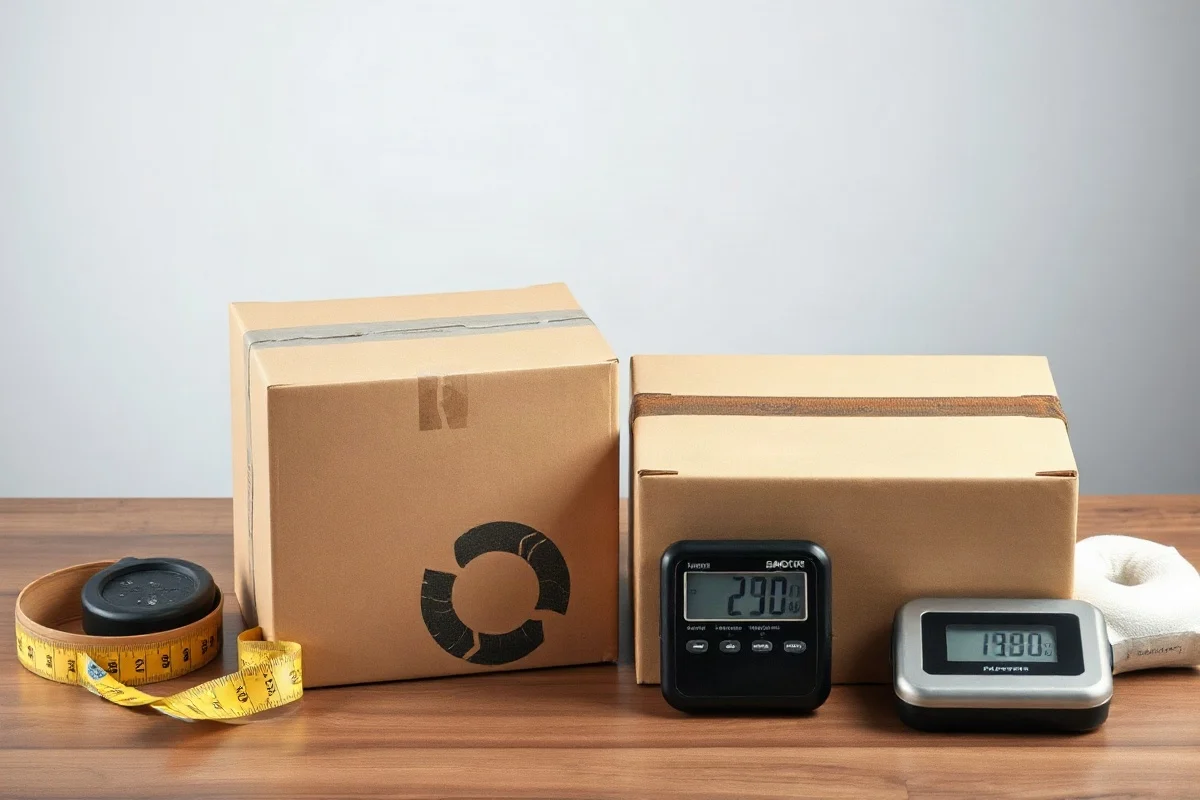
Yes, a smaller box can save on shipping, but not automatically. The savings depend on how the carrier prices the package, whether dimensional weight applies, the package's actual weight, and whether the smaller box still protects the contents. Reducing empty space can lower the package's billable size, but cutting dimensions by a small amount may make no difference if the shipment remains in the same pricing tier.
Why box size affects shipping cost
Carriers generally consider more than the weight of the item inside. For many services, the shipping charge is based on the greater of the package's actual weight and its dimensional, or volumetric, weight. Dimensional weight estimates how much space a package occupies in a delivery vehicle or aircraft.
The usual calculation is:
Dimensional weight = length × width × height ÷ dimensional divisor
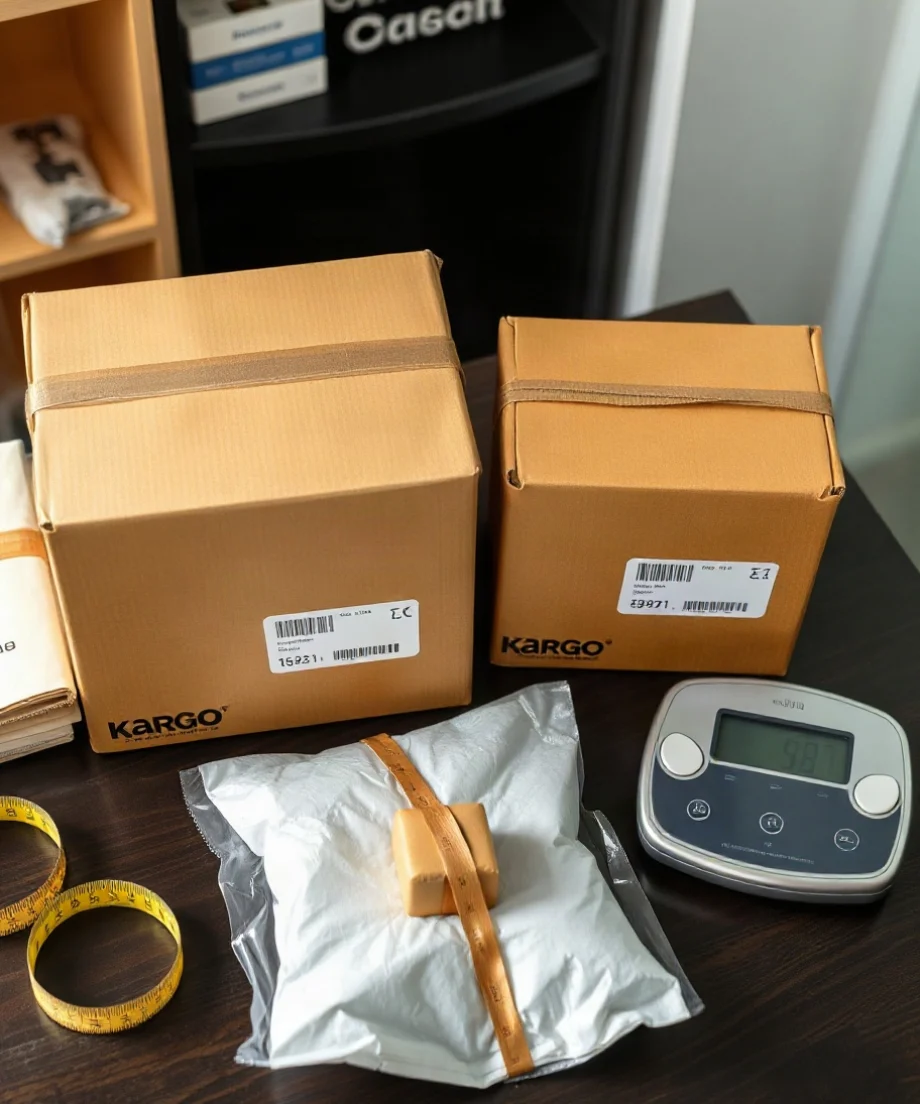
The divisor is not universal. It can vary by carrier, service, package type, destination, and current pricing rules. Some shipments may also be subject to minimum billable weights, additional handling charges, oversize rules, or other conditions. Before relying on a specific number, check the current terms for the carrier and service you plan to use. You can also compare the inputs with this dimensional weight calculator.
If dimensional weight is higher than the package's actual weight, the carrier may charge using dimensional weight. In that situation, reducing the outer dimensions can reduce the billable weight. If actual weight is already higher, however, a smaller box may not change the base transportation charge unless it also affects another rule or surcharge.
When a smaller box is most likely to help
Light items in oversized packaging
The clearest opportunity occurs when a light product is shipped in a large box filled with air or loose material. For example, a lightweight sweater in a box with several inches of unused space may have a much higher dimensional weight than actual weight. A snugger box can reduce the length, width, and height used in the calculation.
Because the dimensions are multiplied, reducing more than one measurement can have a noticeable effect. A package that becomes shorter, narrower, and less deep may occupy substantially less calculated volume than a package reduced in only one direction.

Packages close to a pricing threshold
A smaller package can also help when the original measurements place it near a carrier's threshold. Depending on the service, thresholds may relate to billable weight, additional handling, oversize treatment, or other package characteristics. These rules are service-specific and can change, so do not assume that a particular dimension always triggers a fee. Verify the current requirements on the carrier's official website before changing your packaging program.
Shipments sent over long distances or by air
Dimensional weight is especially important when space is more expensive or limited. A bulky, lightweight package may cost more than its scale weight suggests. A compact design can improve the economics of these shipments, although the exact result still depends on the selected service and destination.
When a smaller box may not save money
A smaller box does not guarantee a lower price. If the product is dense and heavy, actual weight may already control the charge. In that case, reducing the box might save a small amount of material or storage space without changing the shipping price.
There is also a measurement issue. Carriers may use the package's outside dimensions, not the inside dimensions printed on the box. If a box bulges, has loose flaps, or is measured differently from the way it was entered during label purchase, the final billable dimensions may be higher than expected.
Some packaging changes can create new costs. A box that is too tight may require more labor, stronger tape, special inserts, or a replacement shipment if the product arrives damaged. A smaller package may also be harder to stack or may need extra protection around corners and fragile parts. The relevant comparison is total fulfillment cost, not just the price shown for postage.
How to measure a package correctly
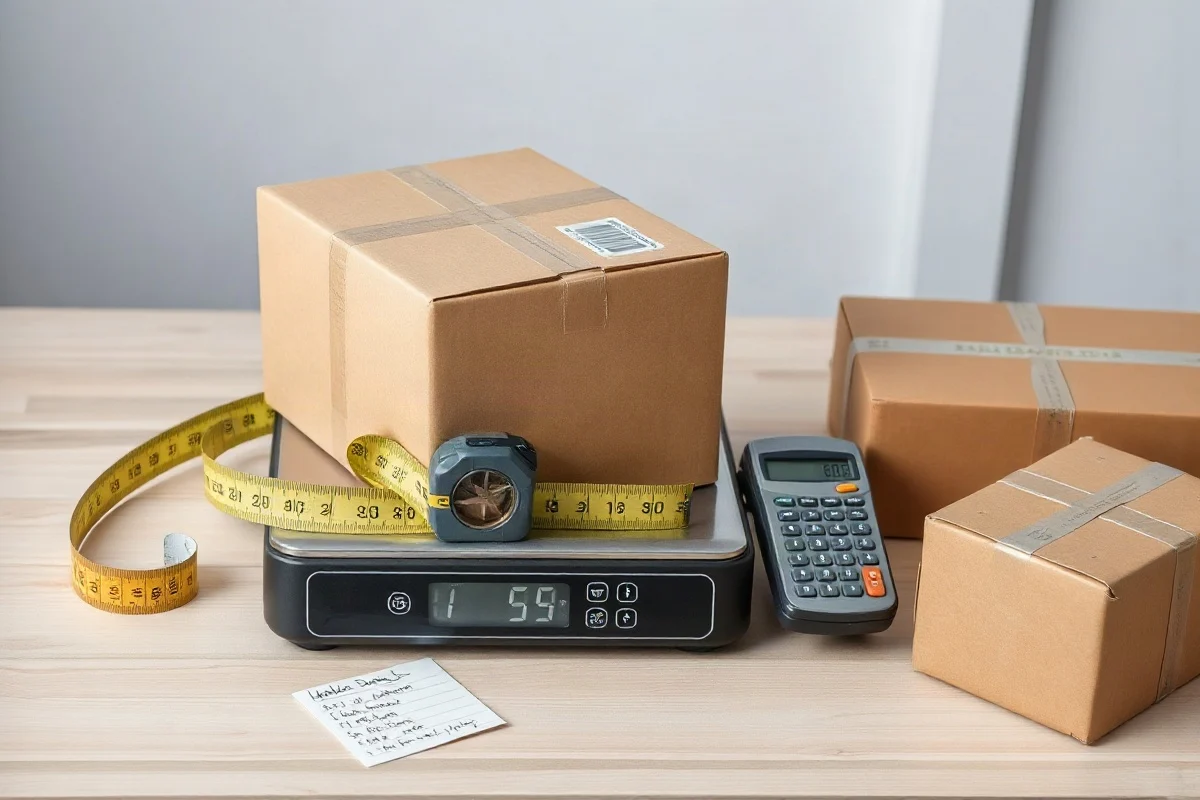
Measure the completed package after it is sealed and ready to ship. Use the outside length, width, and height, including any bulges or protruding parts.
- Length: Measure the longest side of the package.
- Width: Measure the side perpendicular to the length.
- Height: Measure the remaining dimension.
- Round according to the applicable carrier instructions: Carriers may specify how measurements are recorded or rounded, and those instructions can vary.
- Record actual weight: Weigh the sealed package using a scale that can measure the shipment accurately.
For rectangular packages, use the measured outside dimensions in the dimensional-weight formula. For irregular shapes, cylinders, tubes, soft mailers, or packages that bulge, the applicable measurement method may differ. Review the current carrier guidance rather than applying a rectangular-box formula automatically.
A simple box-size comparison
Suppose a product can safely be packed in either a 16 × 12 × 8-inch box or a 14 × 10 × 6-inch box. The first package has a measured volume of 1,536 cubic inches. The second has a volume of 840 cubic inches.
The smaller box uses about 45 percent less cubic space than the larger one. To convert either volume into dimensional weight, divide by the divisor specified for the shipment. Since that divisor can vary, the example demonstrates the effect of package volume rather than promising a particular billable weight or shipping price.
The comparison also shows why reducing all three dimensions can matter. The smaller box is two inches shorter, two inches narrower, and two inches less deep. A modest reduction in each direction compounds through multiplication. Still, the final invoice may remain unchanged if both packages fall under the same billable-weight or service rules.
How to reduce box size without causing damage
Start with the product, not the existing carton
Measure the product and its required protection before choosing a box. Include the space needed for cushioning, corner protection, dividers, retail packaging, and a safe closing area. A carton that matches the product more closely is usually more useful than simply cutting down an oversized box.
Choose the right protective material
Different products need different types of protection. Flexible items may need only a mailer or light cushioning, while glass, electronics, ceramics, and products with sharp edges may need rigid inserts or generous clearance. Do not remove protective material solely to reduce dimensional weight.
Test compression and closure
After packing a trial unit, close the box without forcing the flaps. Check that the product does not press against the walls and that the carton does not bulge. Shake the package gently and inspect whether the contents move excessively. For fragile goods, perform a documented test based on your product and handling risks before changing all shipments.
Compare standard box sizes
A custom carton can reduce empty space, but it may not be the cheapest option for low-volume shipping. Compare the cost of custom packaging with commonly available stock cartons, storage requirements, minimum order quantities, and packing labor. The best box is often the smallest readily available size that protects the product consistently.
For more ways to compare dimensions, review this guide to common box sizes or use the box size calculator to estimate a suitable carton from product measurements.
Other ways to lower the total shipping cost
Box size is only one part of the calculation. Review the full package design and shipping workflow:
- Remove unnecessary secondary packaging while keeping required protection.
- Use a mailer when the product is flexible, durable, and appropriate for that format.
- Prevent void fill from forcing the carton to be larger than necessary.
- Check whether labels, straps, handles, or other attachments increase the measured dimensions.
- Compare actual weight and dimensional weight for representative shipments.
- Use accurate package data when buying labels instead of relying on the product's dimensions alone.
- Review carrier-specific rules for additional handling, oversize treatment, and package shape.
- Audit invoices occasionally to identify recurring differences between entered and billed dimensions.
For a broader comparison of package-related charges, see the dimensional weight guide. If you ship with a specific carrier, confirm the current rules directly with that carrier because service conditions, divisors, fees, and measurement requirements can change.
A practical decision process
Before switching to a smaller box, pack a representative sample and record its sealed outside dimensions and actual weight. Calculate the dimensional weight using the current rule for the intended service. Compare that result with the actual weight and check for any relevant size, handling, or packaging conditions.
Next, estimate the complete cost of the change. Include the new carton, inserts, tape, labor, storage, product damage risk, and possible returns. If the smaller box changes the billable weight or avoids a verified surcharge, the savings may justify the redesign. If it does not change the carrier's pricing outcome, the smaller format may still be worthwhile for warehouse efficiency or material reduction, but it should not be described as a guaranteed postage saving.
The most reliable approach is to test several box sizes with real packed units, not empty cartons. Record the results by product, destination, and service level. Then confirm the final choice against the current official carrier documentation before making it your standard package.
Comments
0No comments yet. Be the first to share a helpful note or question.
Leave a Comment
Your email address will not be published. Comments are reviewed before appearing on the site.