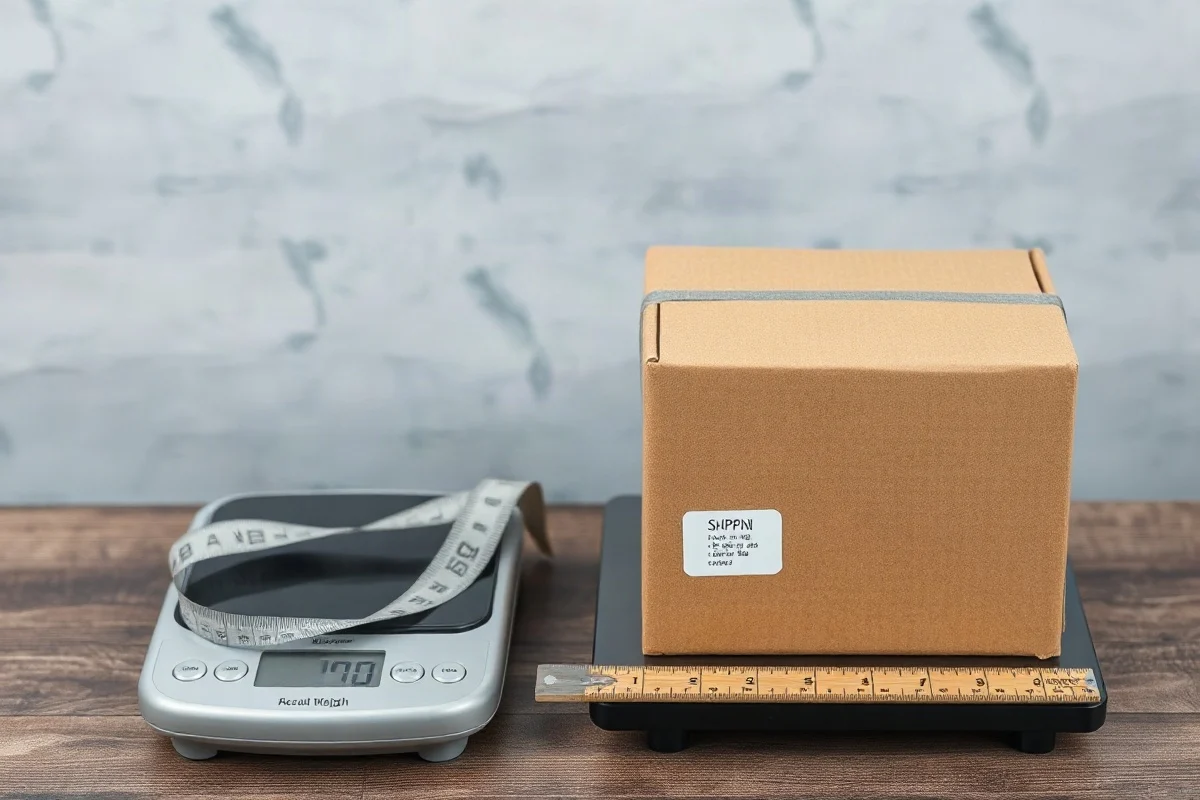
Actual weight is what a package weighs on a scale, while dimensional weight is a calculated weight based on how much space the package occupies. Carriers may compare both figures and charge for the higher applicable weight, often called the billable or chargeable weight. The exact formula, divisor, rounding method, and service rules vary by carrier, service level, package type, and destination, so always verify the current details with the carrier before buying a label.
What is actual weight?
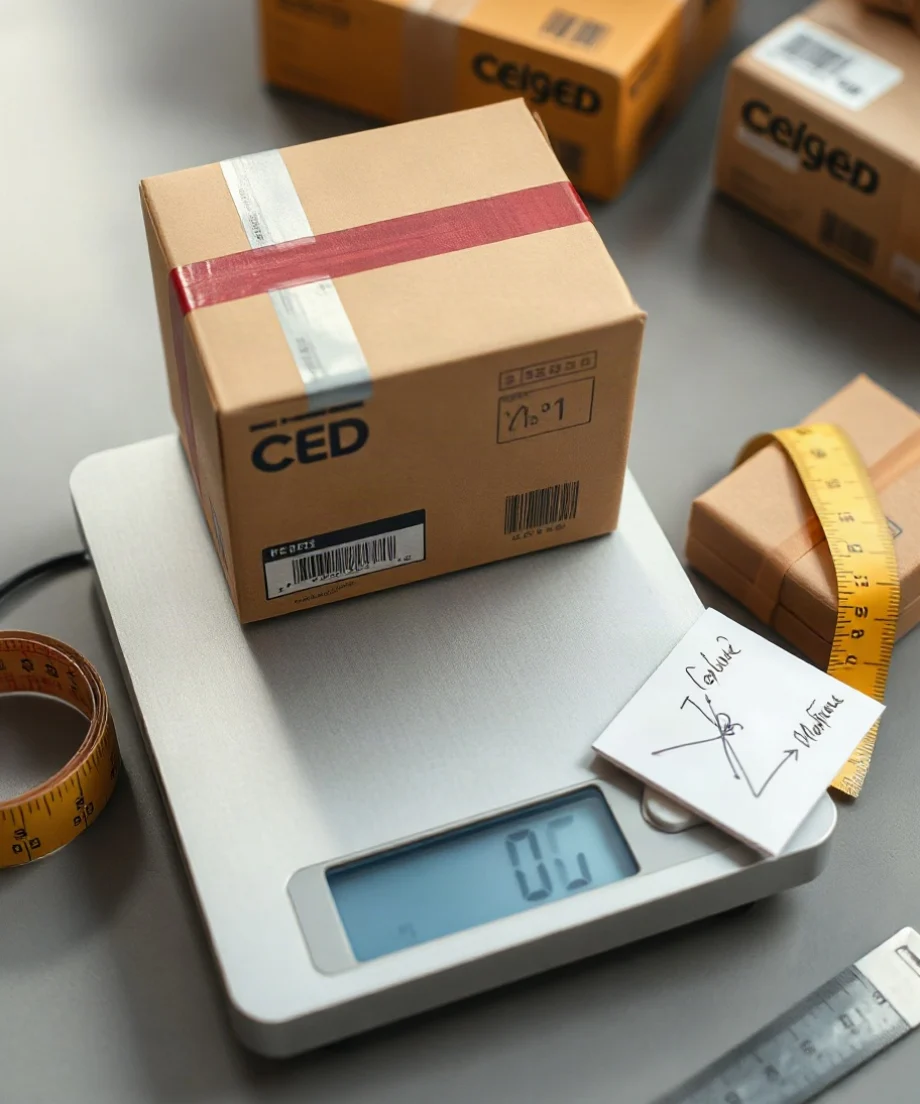
Actual weight, sometimes called scale weight, is the package's physical weight. It includes everything shipped together: the product, retail packaging, protective materials, the shipping box or mailer, tape, labels, and any other material attached to the shipment.
For the most useful measurement, weigh the package only after it is fully packed and sealed. A product's listed weight is not enough because the box and cushioning can make a meaningful difference. If you are comparing shipping options, record the packed weight in the same unit used by the carrier or shipping software, such as pounds or kilograms.
For example, a small shipment might have these components:
- Product: 2.6 pounds
- Protective packaging: 0.4 pounds
- Box, tape, and label: 0.5 pounds
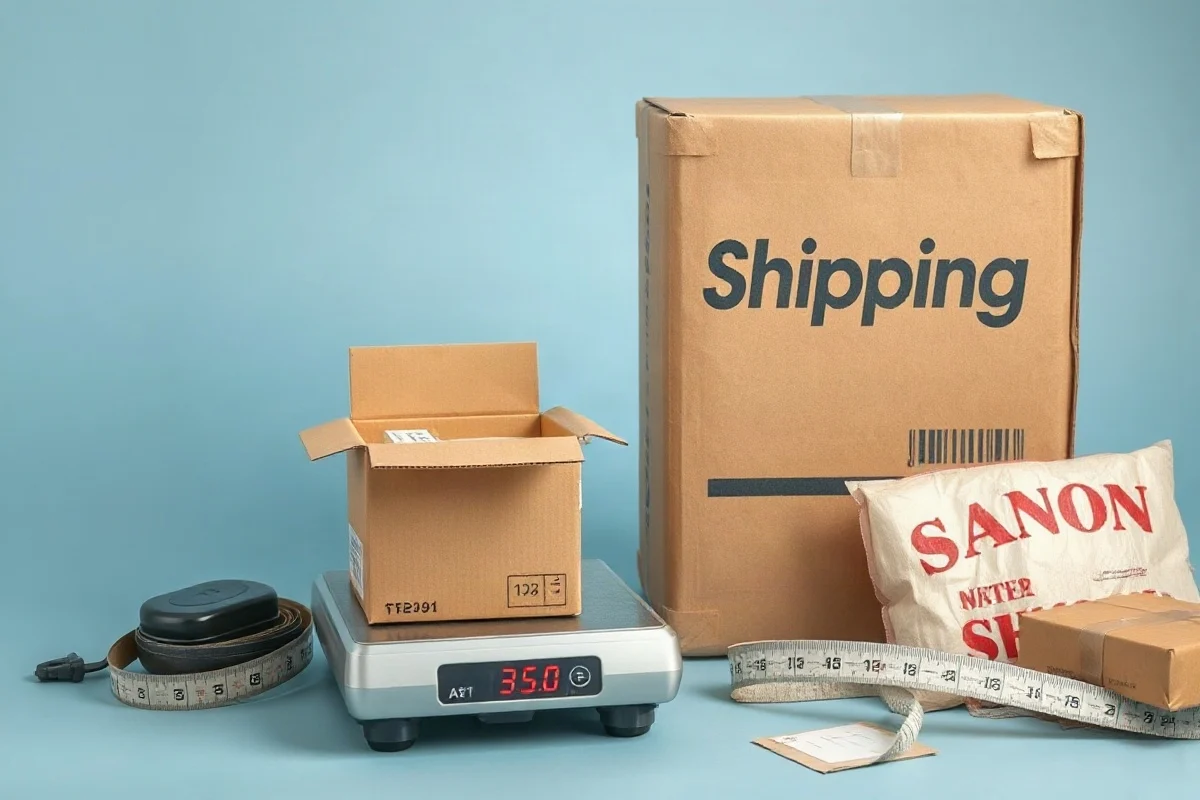
- Total actual weight: 3.5 pounds
That 3.5-pound figure is the actual weight. It does not describe the outside dimensions of the parcel, which may also affect the shipping charge.
What is dimensional weight?
Dimensional weight, also known as volumetric weight, estimates how much a package weighs based on its exterior volume. It is used because a large, lightweight box can take up as much vehicle, aircraft, or sorting space as a much heavier compact package.
The general formula for a package measured in inches is:
Dimensional weight = length × width × height ÷ dimensional-weight divisor
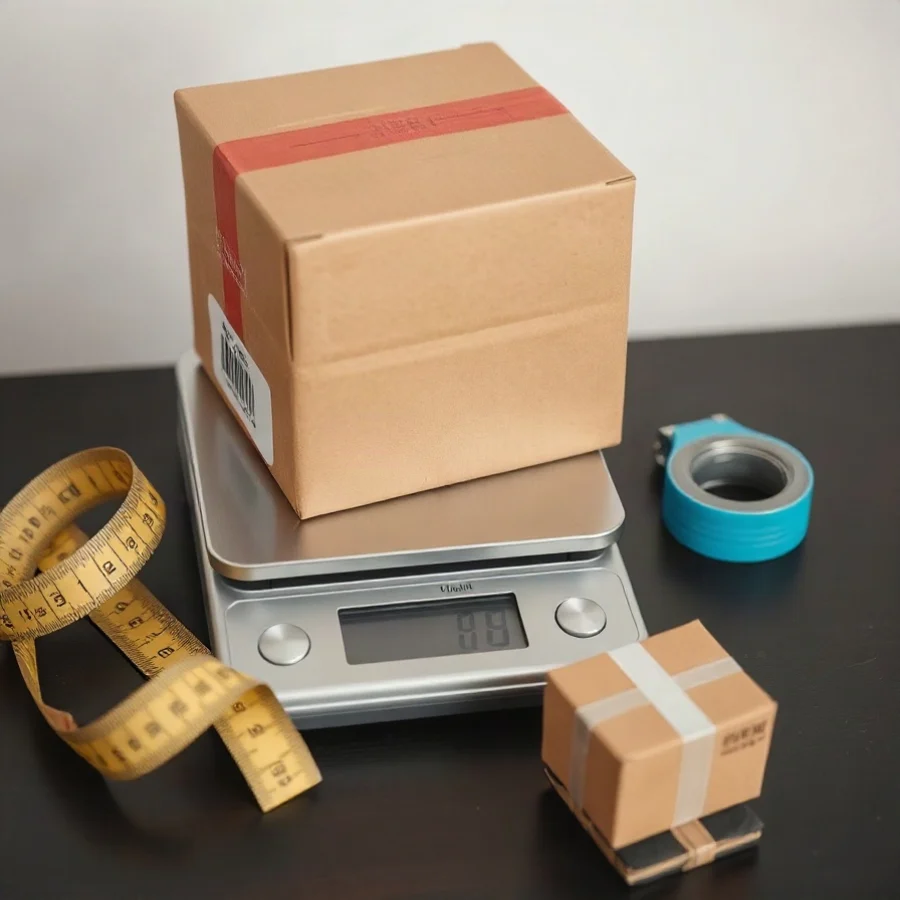
The divisor is set by the carrier or service and may differ for domestic and international shipments, transportation modes, package types, or account agreements. Some services also apply rounding rules or minimum billable weights. Do not assume that one divisor applies to every shipment.
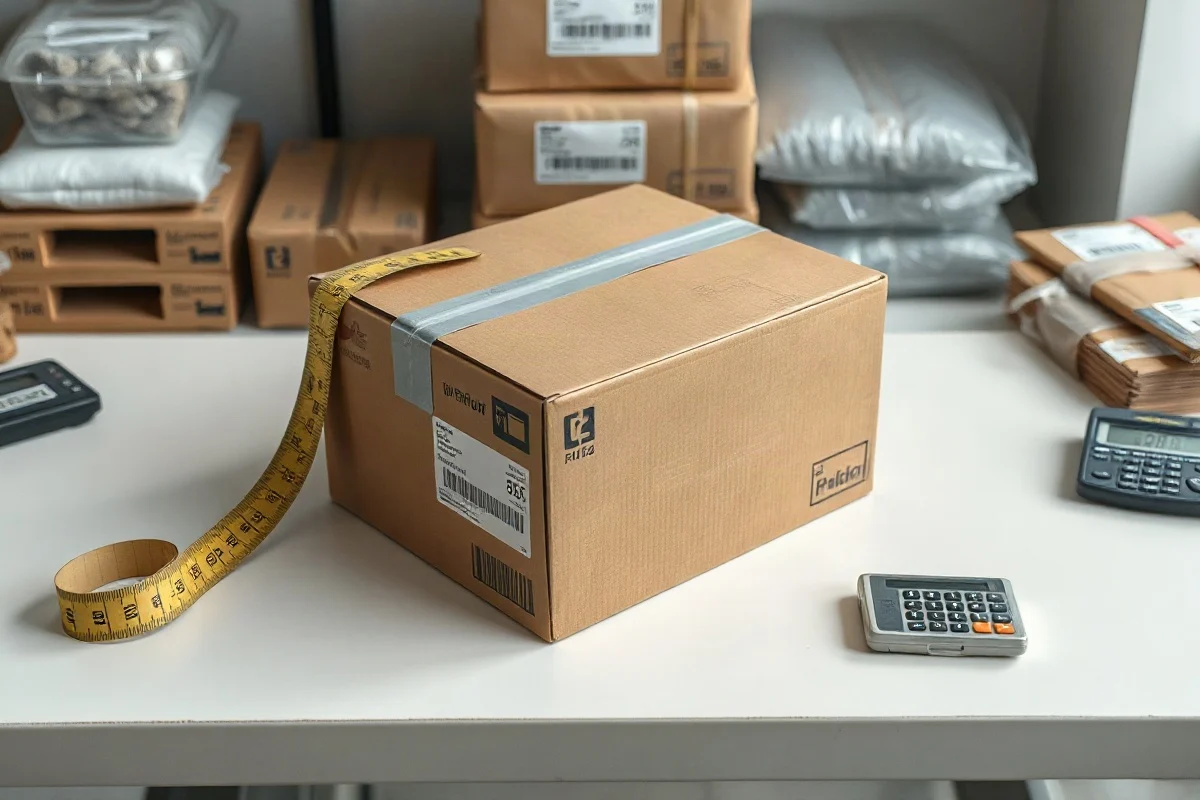
Measure the package's outside length, width, and height after it has been packed. Use the longest side as the length, and measure the widest and tallest points. Include bulges, protruding packaging, and irregular shapes when they affect the parcel's maximum dimensions. If a carrier instructs customers to round measurements before calculating volume, follow that carrier's current instructions.
How carriers compare the two weights
When dimensional weight applies, the carrier generally compares the actual weight with the calculated dimensional weight. The higher figure may become the billable weight, but the exact rule depends on the service and shipment details.
Consider a rectangular package measuring 24 × 18 × 12 inches with an actual weight of 6 pounds. Its volume is 5,184 cubic inches. If a particular service uses a divisor of 139 for this example, the unrounded dimensional weight would be approximately 37.3 pounds. If that service rounds up according to its published rules, the billable weight could be treated as 38 pounds rather than 6 pounds.
This example is for illustrating the calculation only. A divisor of 139 is not a universal rule, and the result does not predict the charge for every carrier or service. Check the current official rate or packaging guide for the service you plan to use. You can also compare the inputs with this dimensional weight calculator, then confirm the result against the carrier's current terms.
Actual weight vs. dimensional weight at a glance
| Measure | What it describes | How it is determined |
|---|---|---|
| Actual weight | The physical mass of the packed shipment | Measured on a scale |
| Dimensional weight | The space occupied by the shipment | Calculated from outside dimensions and a carrier divisor |
| Billable weight | The weight used to rate the shipment | Determined under the applicable carrier and service rules |
A compact, heavy package is more likely to be priced primarily by actual weight. A large box filled with lightweight items is more likely to be affected by dimensional weight. Some packages can be influenced by both, especially when the actual and dimensional figures are close.
How to measure a package correctly
1. Pack the shipment first
Place the product, cushioning, inserts, and paperwork inside the box. Close and seal the package as it will be shipped. Do not calculate dimensional weight from an empty box if the contents change the box's shape or cause the flaps to bulge.
2. Measure the outside
Use the finished package's exterior dimensions, not the manufacturer's nominal box size unless the carrier specifically allows that method. Measure length, width, and height at the largest points. For a standard rectangular box, identify the longest side as length and use the other two sides as width and height.
3. Weigh the sealed package
Use a scale that can handle the parcel's size and weight. For small packages, a postal or shipping scale can provide more useful precision than a household bathroom scale. Make sure the scale is on a stable, level surface and that the entire package is supported.
4. Keep units consistent
If dimensions are in inches and the carrier's divisor is expressed for cubic inches, do not mix in centimeters or meters. To convert centimeters to inches, divide by 2.54. To convert kilograms to pounds, multiply by approximately 2.20462. Use the carrier's stated unit and rounding requirements when preparing the final shipping information.
Why box size matters more than many shippers expect
Dimensional weight responds to volume, so small changes to all three sides can have a large effect. A box that is only a few inches longer, wider, and taller may occupy substantially more space than necessary.
For instance, compare two hypothetical boxes:
- Box A: 16 × 12 × 8 inches = 1,536 cubic inches
- Box B: 20 × 16 × 10 inches = 3,200 cubic inches
Box B has more than twice the volume of Box A, even though each individual measurement may not look dramatically larger. If both shipments contain similarly light products, the larger box can produce a much higher dimensional-weight result.
Use a box size calculator when comparing packaging options, but treat its output as an estimate unless it reflects the exact rules of your selected carrier and service.
Ways to reduce dimensional-weight charges
Choose a closer-fitting box
Select packaging that protects the item without leaving large empty areas. Avoid automatically placing every product in the next larger standard box. A smaller carton may reduce volume, material use, and void fill at the same time.
Use protective materials efficiently
Protection is still essential, particularly for fragile products. The goal is not to eliminate cushioning, but to use the appropriate amount and place it where impact protection is needed. Excessive padding can force the product into a larger carton without improving protection proportionally.
Review packaging design
For products shipped regularly, test whether a custom carton, mailer, or folded insert can reduce the finished package's outside dimensions. Packaging changes should be tested for drop protection, compression, moisture exposure, and sealing reliability before being used at scale.
Check whether a different package type is allowed
Some services treat envelopes, tubes, irregular parcels, and boxes differently. A package type that appears smaller may still have special measurement or surcharge rules. Review the current official guide for the service rather than assuming that a different container will automatically cost less.
Common mistakes to avoid
- Using product dimensions instead of package dimensions: Carriers rate the shipment as presented for transportation, so measure the sealed exterior.
- Ignoring packaging weight: The actual weight includes the box, cushioning, tape, and label.
- Estimating dimensions by eye: Small measurement errors can compound when three dimensions are multiplied.
- Using the wrong divisor: Divisors can vary by carrier, service, destination, and shipment type.
- Forgetting irregular shapes: Bulges or protrusions may affect how a carrier measures the package.
- Relying on an old rate chart: Carrier rules and pricing can change, so check the current official source before shipping.
Which weight should you enter when buying a label?
Enter the actual package weight and accurate outside dimensions whenever the shipping platform requests both. The platform or carrier may calculate dimensional weight and determine the billable weight automatically. If a form asks only for weight, do not guess which figure it expects; check the platform's instructions or the carrier's current documentation.
After the label is purchased, retain the measurements and scale reading for repeat shipments. If a carrier later adjusts an invoice after measuring the parcel, your records can help identify whether the difference came from weight, dimensions, rounding, a surcharge, or an incorrect package description.
A practical workflow for every shipment
Start by choosing packaging that fits the product securely. Pack and seal the shipment, then measure the outside length, width, and height. Weigh the completed parcel and record both the actual weight and dimensions. Apply the current dimensional-weight formula for the selected carrier and service, including its divisor and rounding rules. Compare the result with the actual weight if the service uses that comparison. Finally, review the carrier's current restrictions, surcharges, and acceptance requirements before purchasing the label.
For carrier-specific research, the shipping calculators section can help organize common calculations, while the relevant package dimensions guide provides additional measurement guidance. Use these resources to prepare an estimate, then verify changing prices and official policies directly with the carrier or marketplace involved.
Comments
0No comments yet. Be the first to share a helpful note or question.
Leave a Comment
Your email address will not be published. Comments are reviewed before appearing on the site.