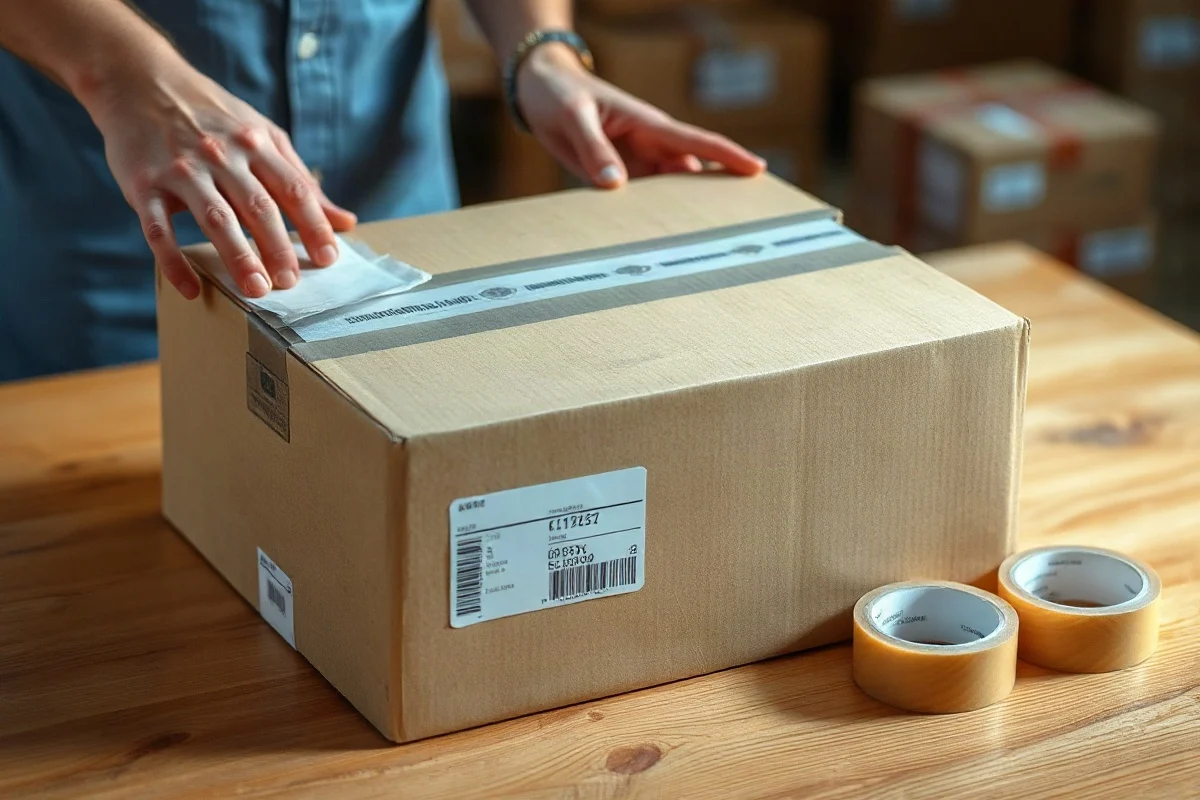
Yes. Remove old shipping labels, barcodes, address labels, and routing stickers from a reused box before applying a new label. If a label cannot be removed cleanly, cover it completely with an opaque sticker, plain paper, or a new label of sufficient size. The goal is to leave only the current shipping information visible and scannable.
An old label may contain a previous recipient’s address, a tracking barcode, a return address, or handling instructions that no longer apply. Automated sorting equipment and employees may encounter more than one barcode or address on the same package. Removing or fully covering outdated information helps reduce the chance of confusion during processing.
Why old labels can cause problems
Shipping labels are designed to communicate information quickly. A carrier may scan a barcode without relying only on the large printed address. When a reused box has several visible labels, the current label may not be the only one that appears readable to a scanner or a person handling the package.
An old label can create several avoidable issues:
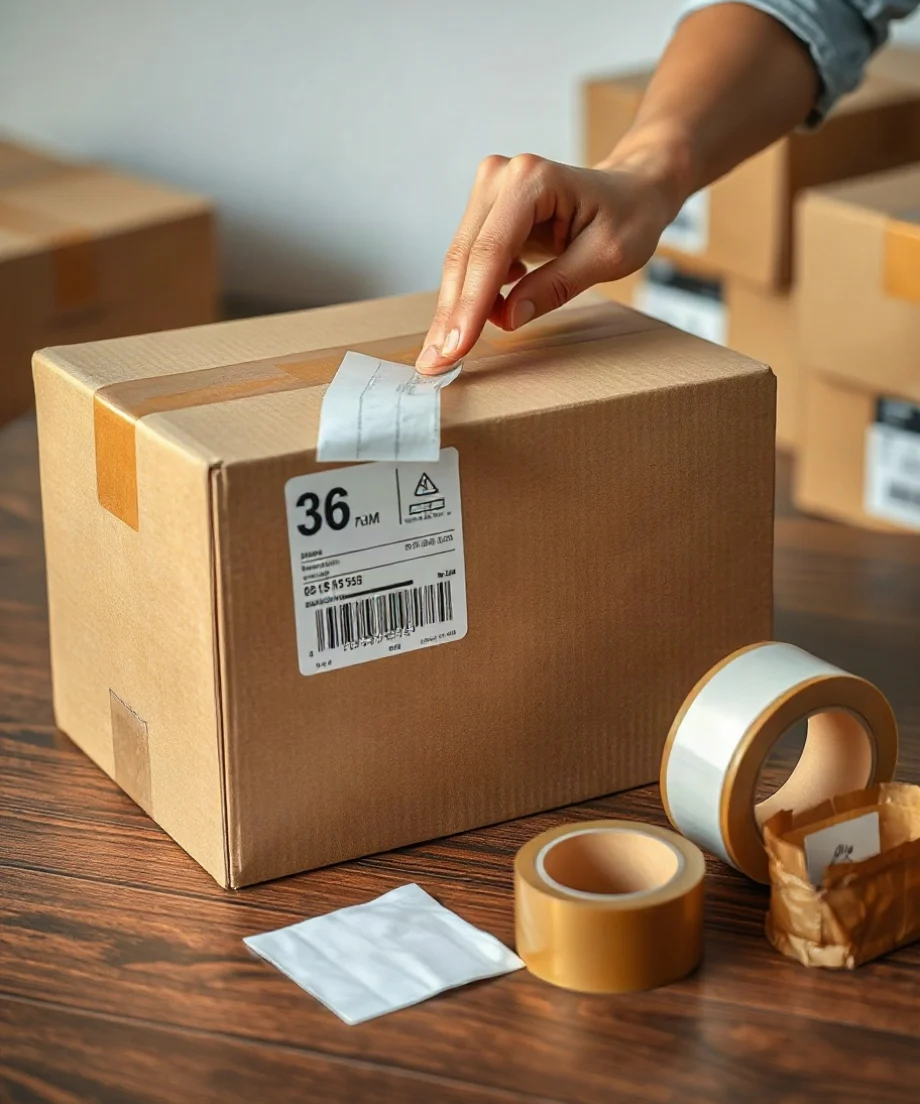
- Conflicting addresses: A previous destination may remain visible beside the new address.
- Multiple tracking barcodes: An old barcode may be scanned instead of, or before, the current one.
- Outdated service markings: Express, ground, return, signature, or other service-related stickers may no longer describe the shipment.
- Incorrect handling instructions: Fragile, orientation, lithium battery, or other markings may be inaccurate for the new contents.
- Delivery delays: A package may require additional review if its outside markings are unclear or contradictory.
Removing the old material does not guarantee that a package will move without delay, but it is a simple way to make the shipment easier to identify and process.
What should be removed from a reused box?
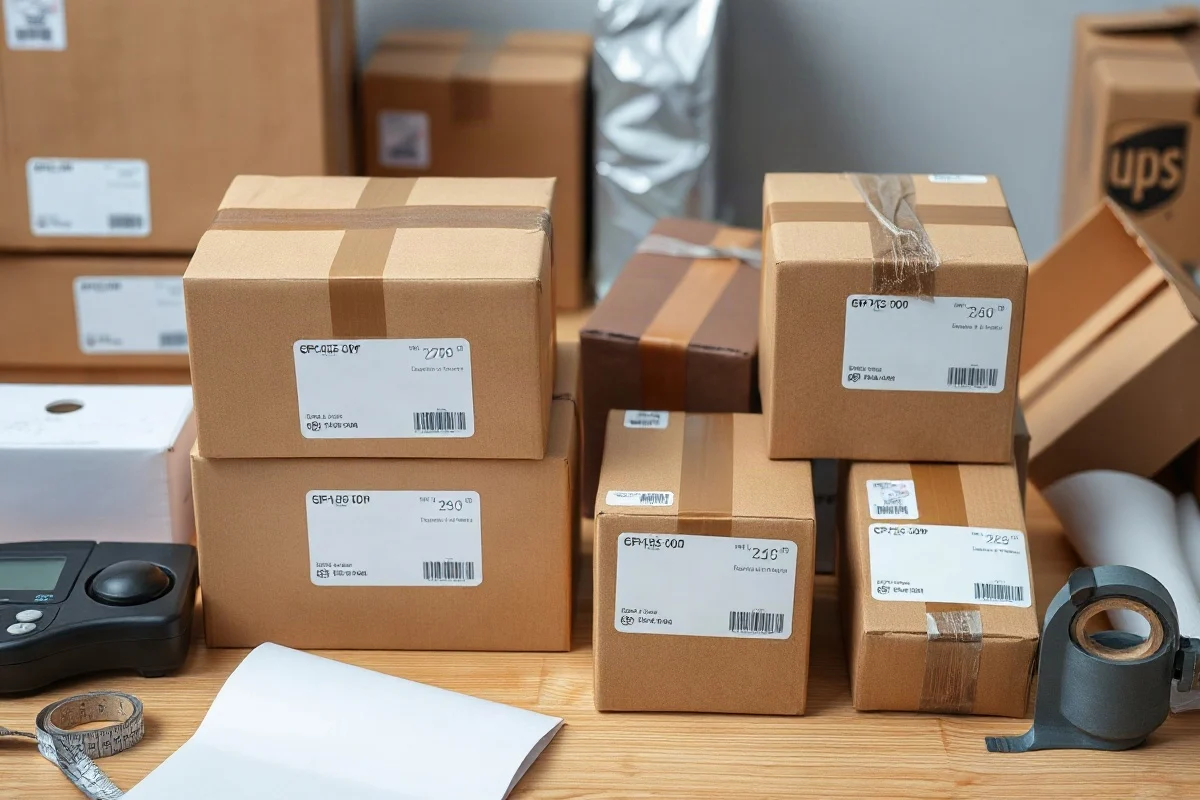
Inspect every side of the box, including the top, bottom, ends, and inside flaps. Remove or cover anything that identifies a previous shipment or could be mistaken for current instructions.
Shipping labels and return labels
Take off the previous carrier label and any return label attached to the box. Return labels are especially easy to overlook because they may be smaller or placed on a side panel rather than the top of the carton.
Barcodes and QR codes
Cover or remove stand-alone barcodes, QR codes, routing stickers, and inventory labels. This includes labels from a previous online order, warehouse, retailer, or fulfillment service. A barcode that is not part of the current shipment should not remain visible on the outside.
Address information
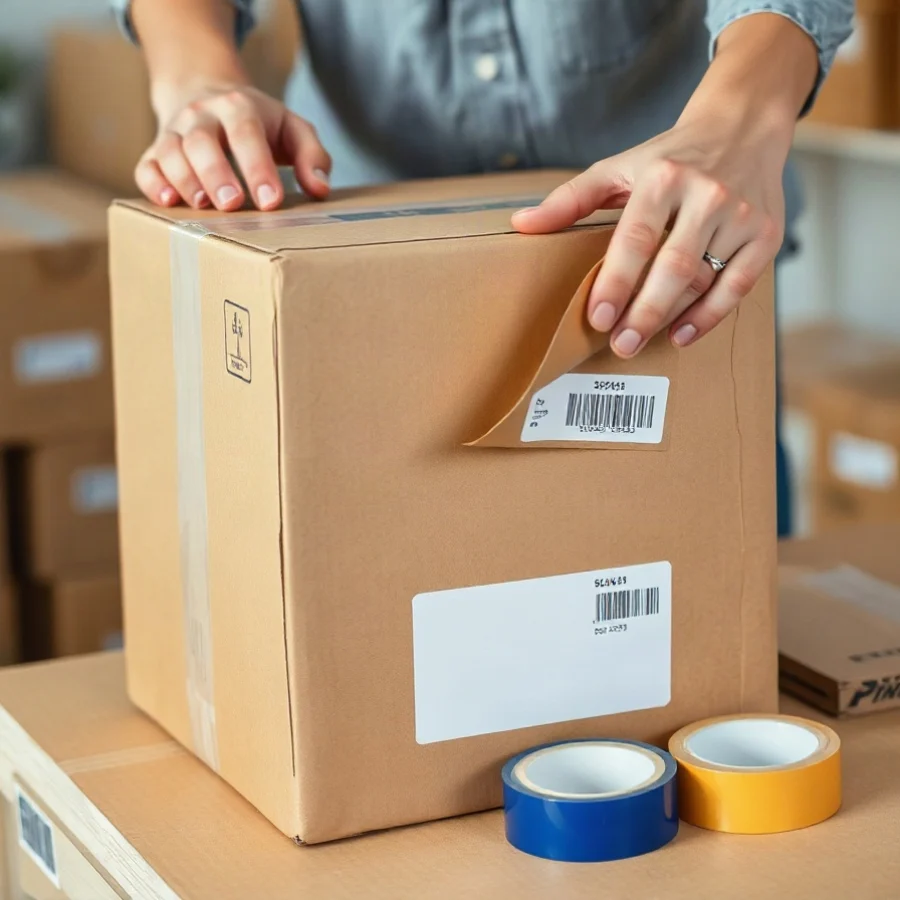
Remove old names, street addresses, apartment numbers, phone numbers, and email addresses. If the box has a printed address directly on the cardboard, cross it out thoroughly or cover it with opaque material. Simply drawing one thin line through an address may leave enough information visible to cause confusion.
Handling and regulatory markings
Do not leave old handling instructions on a box if they do not apply to the new contents. Examples include “This Side Up,” “Fragile,” temperature-related markings, and dangerous-goods or battery labels. However, never remove a marking that is required for the current contents without first confirming the applicable shipping requirements.
Hazardous materials, dry ice, lithium batteries, and other regulated items may require specific packaging, labels, documentation, and carrier approval. Requirements can vary by material, transportation method, destination, and service. If the new shipment contains a regulated item, check the current instructions from the carrier and the applicable government authority rather than relying on markings from the previous shipment.
How to remove an old label without damaging the box
Start with the least aggressive method. Pull one corner of the label slowly and keep it close to the cardboard rather than pulling straight upward. A slower angle can reduce the chance of tearing the outer paper layer.
If the adhesive is strong, try gently warming the label with a household hair dryer on a low setting for a short time. Keep the heat moving and avoid overheating the cardboard, tape, or any contents inside the box. Some labels will still tear, especially when they have been exposed to moisture or cold.
Do not use a sharp knife in a way that could cut through the cardboard. Avoid soaking the box, because moisture can weaken the corrugated layers and cause labels or cardboard to separate. Solvents and aggressive adhesive removers may also stain the box, damage printing, or weaken the surface.
When a label will not come off cleanly, covering it is usually safer than damaging the carton. Use an opaque label, thick paper, or a purpose-made shipping-label cover. The covering material should remain attached during normal handling and should not hide the new label.
How to cover an old label correctly
Cover the entire old label, not just the address or the largest barcode. The edges should be secured so that part of the previous label cannot peel up or become visible. If the old label is glossy, translucent, or darkly printed, ordinary thin paper may allow information to show through. Use material that blocks the underlying text and barcodes.
Do not place the new shipping label over a surface that is loose, wrinkled, wet, or heavily damaged. If the box surface is unsuitable, place the new label on the largest flat area available or use a fresh outer carton.
Clear tape can protect a label from light moisture, but avoid covering the barcode with wrinkled, bubbled, or heavily reflective tape. The label should remain flat and readable. Follow the carrier’s current label-placement guidance for the service being used, since package types and services may have different instructions.
Preparing the box before applying the new label
Label cleanup is only one part of preparing a reused carton. Complete these steps before printing or attaching the current shipping label:
- Inspect the box: Check all panels, seams, corners, and flaps for crushing, punctures, water damage, or separation.
- Confirm the box is strong enough: The carton should support the contents and the expected handling conditions. A previously used box may have lost strength even if it looks acceptable.
- Remove unrelated markings: Clear away old labels, barcodes, address panels, and instructions that do not apply.
- Pack the contents securely: Fill empty space so the contents do not shift, but do not overfill the carton or force the flaps open.
- Seal every required seam: Use appropriate packing tape and secure the main opening and any weak seams.
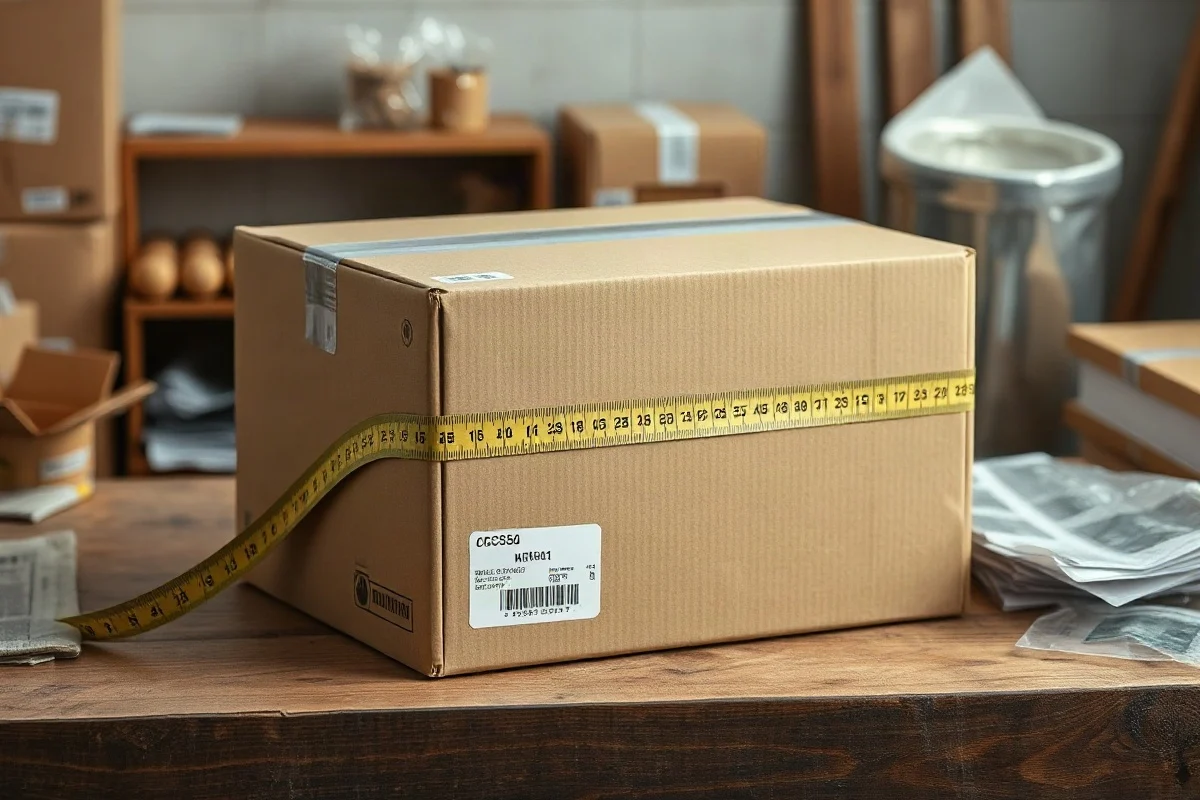
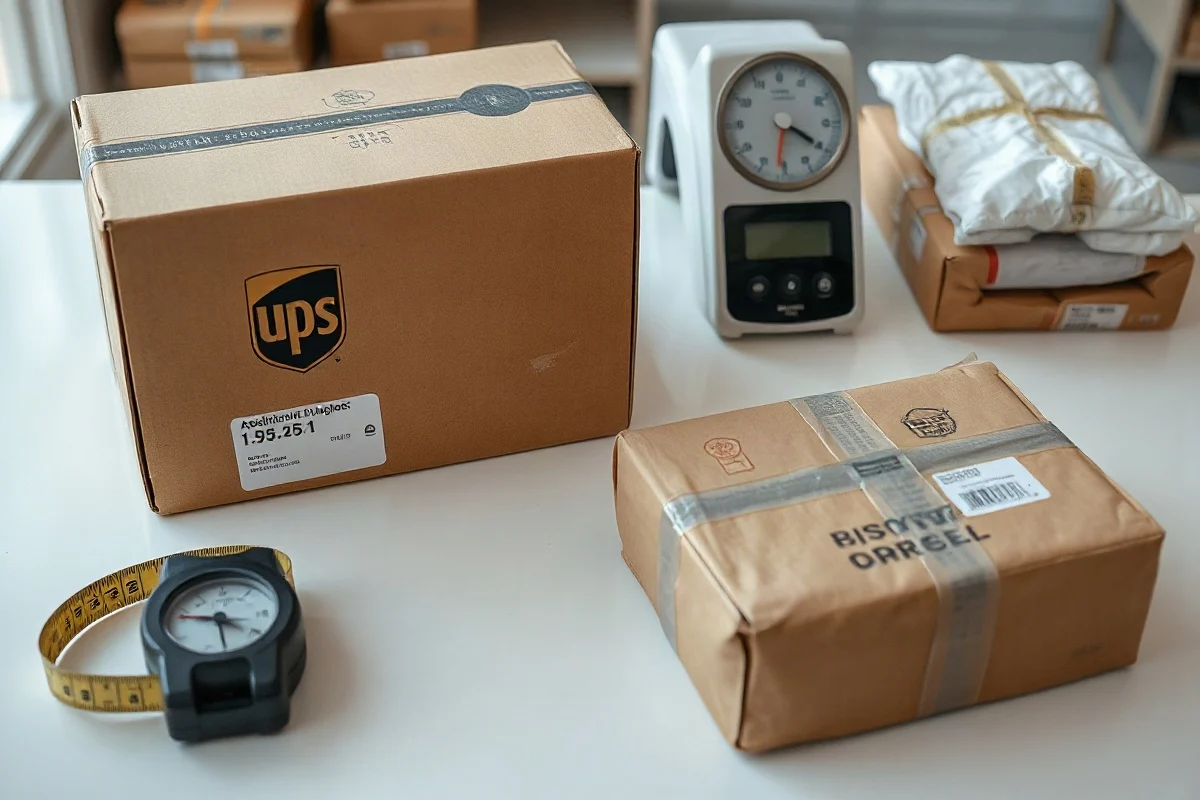
- Measure the finished package: Measure after packing and sealing, not while the box is empty.
- Apply the current label: Place it on a flat, visible surface and keep it away from seams, corners, and edges when possible.
- Perform a final inspection: Look at every side and confirm that only the current address and relevant markings are visible.
For a practical reference on measuring a sealed carton, see this guide to package dimensions. If you need to estimate measurements for a box before printing a label, the box size calculator can also help organize the dimensions.
Where should the new label go?
Place the new label on the largest flat surface of the package, usually the top of a standard rectangular box. Keep it away from the edges, corners, tape seams, and areas that curve or flex. A label that crosses a seam may wrinkle or tear when the carton is opened or compressed.
Do not wrap the label around two sides. A scanner or handler should be able to view the complete address and barcode on one surface. If the package has a small or irregular shape, follow the carrier’s current instructions for that package type.
If you print multiple pages, attach the complete label securely and remove any duplicate pages or older versions. Do not leave a previous label underneath a clear pouch if its barcode or address remains visible.
Does a reused box affect shipping cost?
Removing an old label does not directly determine the shipping price. Cost may depend on factors such as the selected service, destination, package weight, dimensions, package type, and any applicable surcharges or account terms. Those details can change, so confirm the current terms for the specific UPS service before shipping.
The condition and size of a reused box still matter. A box that is larger than necessary may increase the package’s dimensional weight, depending on the service and current carrier rules. Dimensional weight is generally based on the package’s volume and a carrier- or service-specific divisor, with the billable weight determined according to the applicable pricing method.
To review the calculation concept, use the dimensional weight calculator. For an actual shipment, compare the result with the current UPS rate information and service terms rather than assuming that one divisor or rule applies to every package.
When should you use a new box instead?
Reuse a carton only when it is clean, dry, rigid, and structurally sound. Choose a new box when the old one is crushed, softened, split, punctured, heavily creased, or covered with too many layers of labels and tape. A new carton is also preferable when the old box has printed markings that cannot be removed or covered without making the package confusing.
Use a box of suitable size for the contents. Excess space may require more cushioning and can increase dimensional weight, while an undersized box can place pressure on the contents and seams. The finished package should close normally without bulging or relying on excessive tape to hold it together.
Final label check before handing over the package
Before giving the package to UPS or scheduling a pickup, rotate it and inspect all sides. Confirm that the current label is flat, readable, and firmly attached. Make sure old barcodes and addresses are removed or completely covered. Check that the package does not display conflicting service labels or outdated regulated-material markings.
Keep a record of the current tracking number and, when appropriate, a photo of the sealed package and label. If a carrier, marketplace, or fulfillment program provides special packaging instructions, use its current official guidance because those requirements may change by service, destination, product, or date. For broader UPS-related packaging information, visit the UPS Package Guide.
The basic rule is straightforward: a reused box should present one clear shipment. Remove or fully cover everything from the previous shipment, apply the current label to a clean flat surface, and verify that the carton is strong enough for its contents and size.
Comments
0No comments yet. Be the first to share a helpful note or question.
Leave a Comment
Your email address will not be published. Comments are reviewed before appearing on the site.