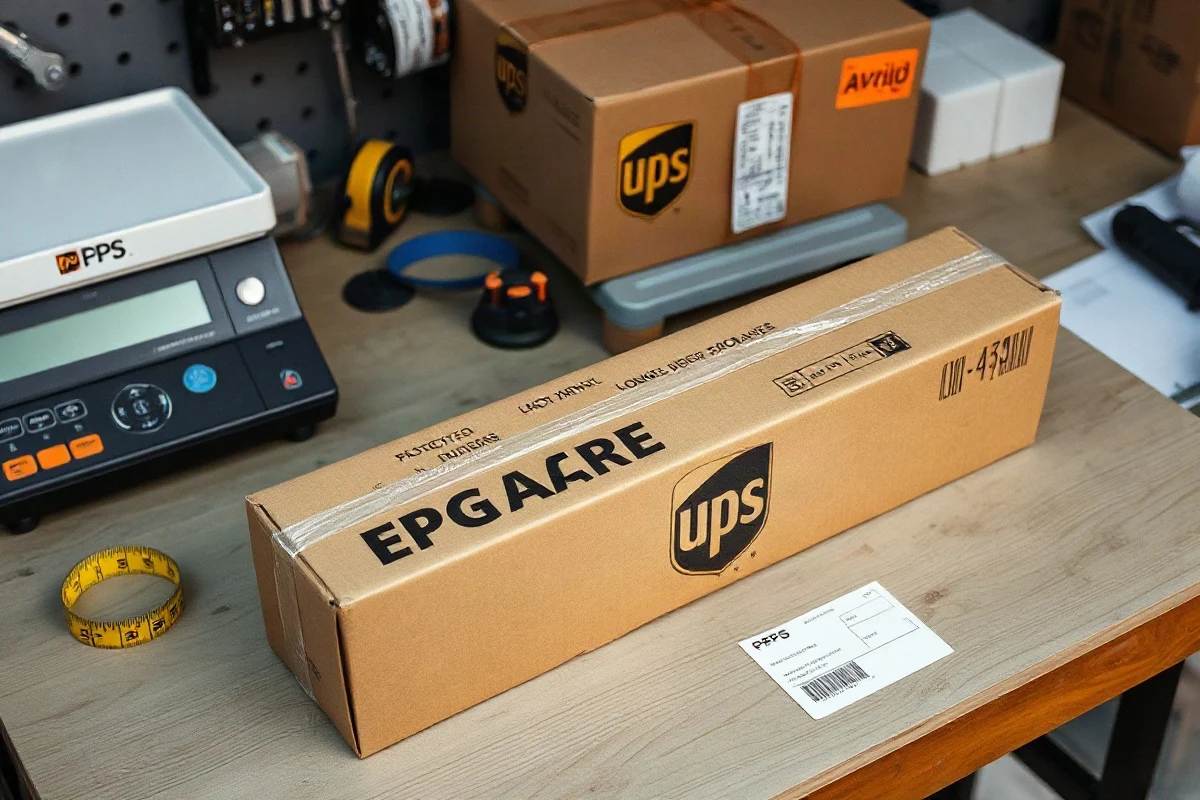
To ship a long and narrow package with UPS, choose a rigid box that fits the item closely, measure the package after it is fully sealed, and check the current UPS rules for the service and destination you plan to use. Long packages can trigger special handling, oversize treatment, or higher charges even when they are relatively light, so the package's final dimensions matter as much as its actual weight.
Why long, narrow packages need extra planning
A long package creates several practical problems during shipping. It may flex more easily, be difficult to place on conveyor equipment, or require additional protective material at the ends. A narrow box also leaves less room for cushioning around an item such as a poster tube, fishing rod, golf club, architectural drawing, trim piece, lamp part, or long tool.
UPS charges and handling rules can depend on the package type, service level, origin, destination, package dimensions, weight, and the current terms for that shipment. A package that appears acceptable for one service may receive different treatment under another. Before paying for the label, review the current UPS requirements and the rate shown for your exact shipment rather than relying on an old size chart or a rule from another carrier.
Measure the package after packing
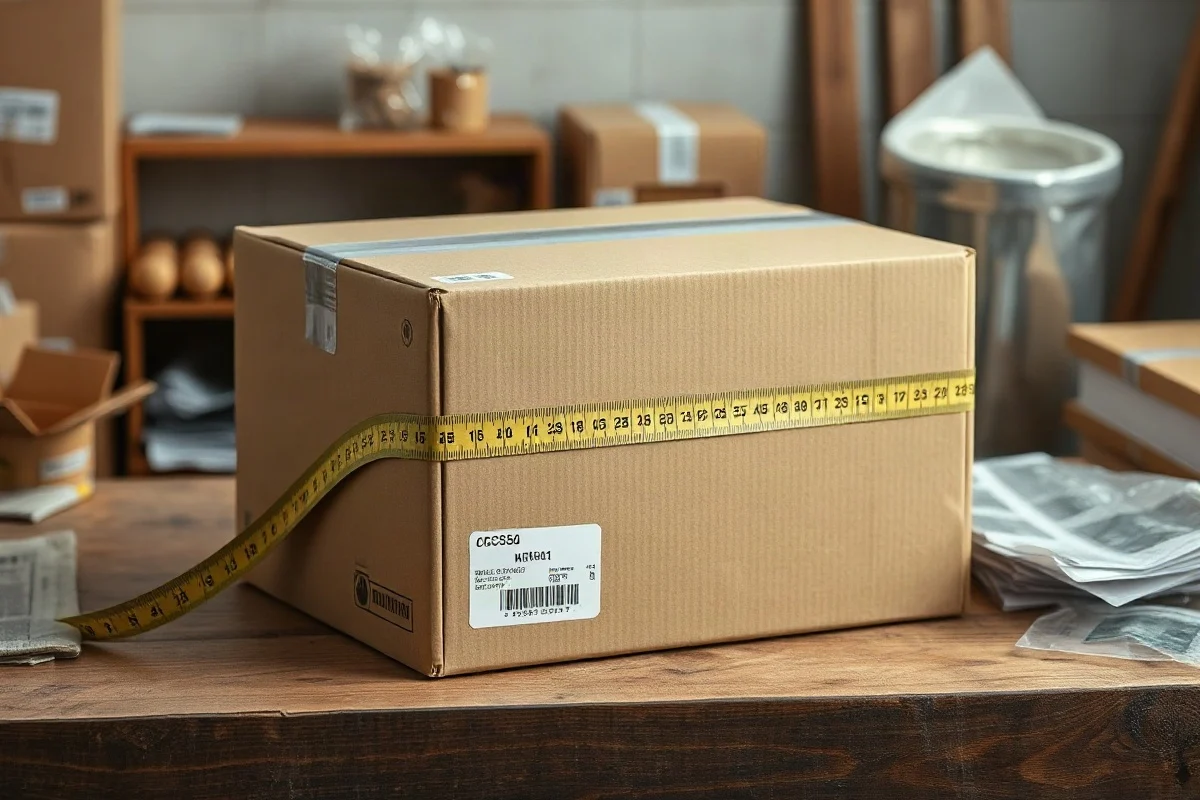
Measure the outside of the sealed package, not the product by itself. Use a tape measure and record the longest side as the length. The other two sides are the width and height. Round measurements consistently, following the instructions in the UPS rating or label system you are using.
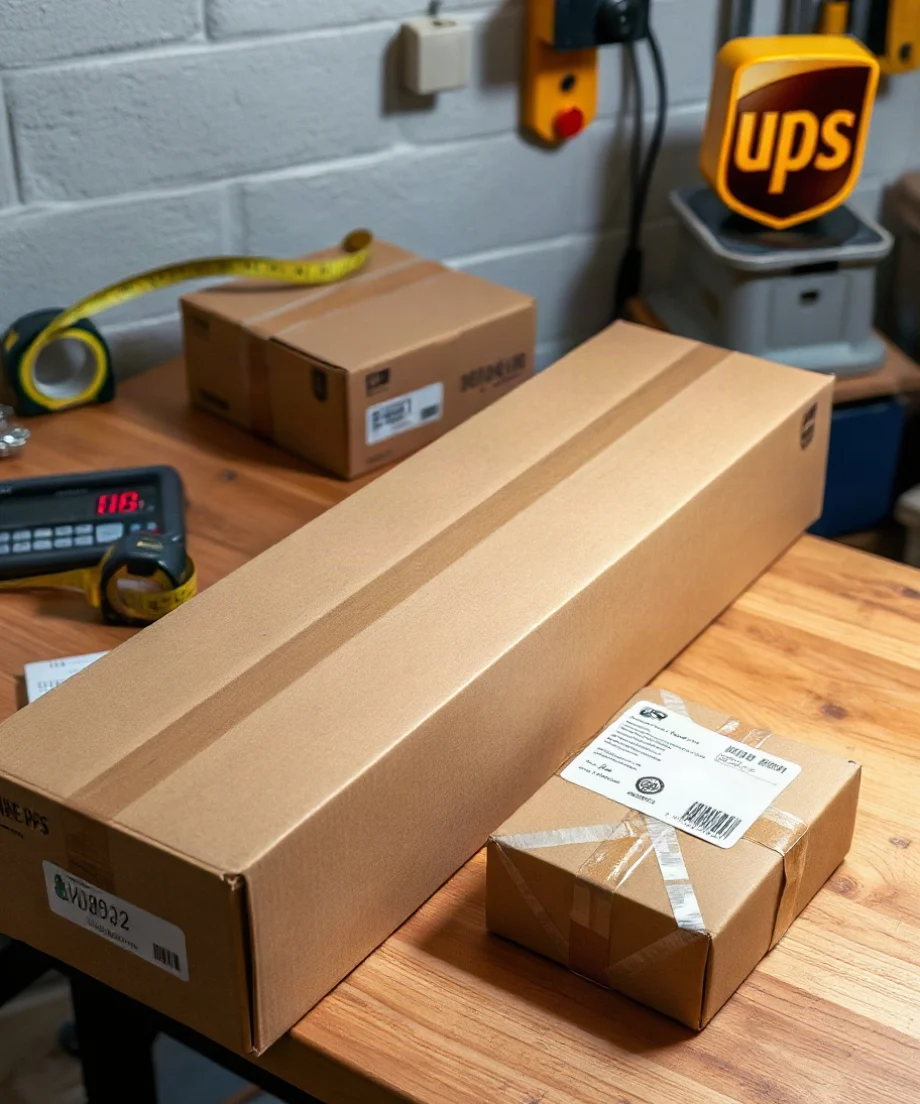
For a rectangular carton, measure these three dimensions:
- Length: the longest side of the package.
- Width: the shorter side across the package.
- Height: the remaining side.
Do not measure only the box manufacturer's listed interior dimensions. Tape, end caps, corner protectors, labels, and bulges can increase the final outside measurement. If the carton is uneven or has protruding parts, measure the greatest overall dimensions. A small difference can affect rating when a package is close to a carrier threshold.
Calculate girth correctly
For a rectangular package, girth is calculated as:
Girth = 2 × width + 2 × height
The common combined measurement is:
Length plus girth = length + 2 × width + 2 × height
For example, suppose a sealed carton measures 48 inches long, 6 inches wide, and 6 inches high. Its girth is 24 inches, and its length plus girth is 72 inches. That calculation does not by itself confirm that the package qualifies for every UPS service. It simply gives you a consistent way to describe the package and compare it with the current requirements shown by UPS.
If you work in centimeters, convert the measurements before entering them into a calculator or shipping platform that expects inches. One inch equals 2.54 centimeters. Avoid mixing units, such as entering length in inches and width in centimeters.
Check both actual weight and dimensional weight
A long box can be light but expensive to ship because it occupies more vehicle and warehouse space than its scale weight suggests. Carriers may compare actual weight with dimensional weight and rate the shipment using the applicable billable weight. The dimensional-weight formula and divisor can vary by carrier, service, package type, and current pricing rules, so do not assume that one divisor applies to every UPS shipment.
For a general estimate, calculate the package volume first:
Length × width × height = cubic volume
The applicable dimensional divisor is then used according to the current UPS rules for the service. Because that divisor and related conditions can change, verify the result in the current UPS rating tool or use a calculator that lets you enter the correct carrier and service information. You can also compare the numbers with this dimensional weight calculator, but confirm the final charge in the official UPS checkout or account system.
Weigh the completely packed box on a reliable scale. Include the carton, end caps, cushioning, tape, and any documentation. If the actual weight and dimensional weight are close, small changes in packaging can affect which figure is used for rating.
Choose a box that supports the item
The best box is not necessarily the narrowest box available. It should be long enough for the item without forcing it against the ends and wide enough to provide a protective layer on every side. Excess space increases dimensional weight and allows the contents to move, but insufficient space can lead to crushed ends, punctures, or bending.
For a long, rigid item, use a strong corrugated carton with intact corners and a closure that will remain secure during handling. A square or rectangular cross-section is usually easier to protect and measure than an improvised package with irregular sides. If the product is flexible, consider whether it should be shipped flat, rolled in a tube, or supported between rigid panels. The right choice depends on whether creasing, bending, or pressure could damage it.
Before buying materials, estimate the final package size with our box size calculator. Allow space for cushioning and end protection, then compare that outside size with the current UPS requirements for the selected service.
Protect the ends first
The ends of a long package are especially vulnerable. They may be dropped, pushed into other cartons, or compressed against a conveyor surface. Place properly sized cushioning or rigid end blocks around the item so it cannot slide lengthwise inside the carton.
- Cover sharp edges and points that could puncture the box.
- Use foam, molded inserts, corrugated pads, or other suitable cushioning around fragile sections.
- Keep the item from touching the carton walls where impact is likely.
- Fill empty space without forcing the product into a bent or compressed position.
- Shake the closed carton gently before sealing completely. If the item shifts, add better blocking or cushioning.
For very long items, support should be distributed along the package rather than concentrated at only the two ends. A long, thin product can sag in the middle even when its ends are well protected. Add internal supports only where they will not create pressure points.
Seal and label the carton for handling
Use strong packing tape designed for shipping and seal the main seams completely. Long seams may open when a carton flexes, so apply tape across the full closure and reinforce weak areas without creating loose flaps. Avoid relying on household wrapping paper, string, or thin retail packaging as the outer shipping package.
Place the shipping label on the largest flat surface, away from a seam, corner, or curved section. Do not wrap the label around the box. Remove or cover old barcodes and addresses so automated scanners and handlers do not receive conflicting information. If the contents require orientation or handling markings, treat those markings as helpful instructions rather than a substitute for strong packaging.
Keep the tracking number and a record of the package dimensions until delivery. If a carrier measurement or invoice later differs from your estimate, your original measurements and photographs of the sealed package can help you review what happened.
Review UPS limits before buying the label
UPS limits and surcharges are not one universal rule for every shipment. They may vary by domestic or international service, destination, package category, account arrangement, and the current UPS rate guide. The way UPS handles a long package can also differ from how USPS or FedEx handles a similar carton.
Check the current official UPS source for:
- Maximum package length and combined size requirements.
- Maximum actual weight for the service you selected.
- Oversize, additional handling, large-package, or other applicable charges.
- Whether the package shape or packaging material affects eligibility.
- International documentation, customs, and destination-specific requirements.
Do this check after you have the final packed dimensions. Published requirements and price tables can change, and an online shipping platform may apply a different service or account setting than the one you expected. The current UPS website, rating tool, and shipment review page should be treated as the final sources for a live shipment.
Ways to reduce cost without weakening the package
Start by reducing empty space, not by removing necessary protection. A box that is several inches longer than the product can increase volume and create movement inside the carton. Trim only when the carton can still maintain its strength and the item has adequate end clearance.
Compare a few packaging designs. A rectangular carton may have a higher volume than a close-fitting triangular or specialty tube, but the specialty package may not be accepted or rated the same way. Check the carrier's current rules before changing the package shape. If the product can be safely disassembled, a shorter package may reduce both handling risk and dimensional weight, but only if the parts can be protected and reassembled reliably.
Do not flatten or compress packaging until it no longer protects the item. Saving a small amount of material is not worthwhile if the contents arrive bent or damaged. For a broader comparison of package formats, see our guide to package dimensions.
Final pre-shipment checklist
Before handing over a long and narrow UPS package, confirm the following:
- The item is blocked against lengthwise movement and supported along its vulnerable areas.
- The carton has no exposed sharp edges, crushed corners, or weak closures.
- You measured the sealed outside package, including all protrusions.
- You recorded length, width, height, actual weight, and the unit of measurement.
- You checked dimensional weight using the current UPS service information.
- You reviewed current UPS size, weight, handling, and surcharge requirements.
- The label is flat, readable, and placed on the largest surface.
- Old labels and barcodes are covered or removed.
When the package is close to a UPS size or weight threshold, leave room for measurement differences and verify the shipment directly in the current UPS system. Careful packing and accurate final measurements are the simplest ways to avoid preventable delays, reclassification, damage, or unexpected charges.
Comments
0No comments yet. Be the first to share a helpful note or question.
Leave a Comment
Your email address will not be published. Comments are reviewed before appearing on the site.